
Jun 082017
 

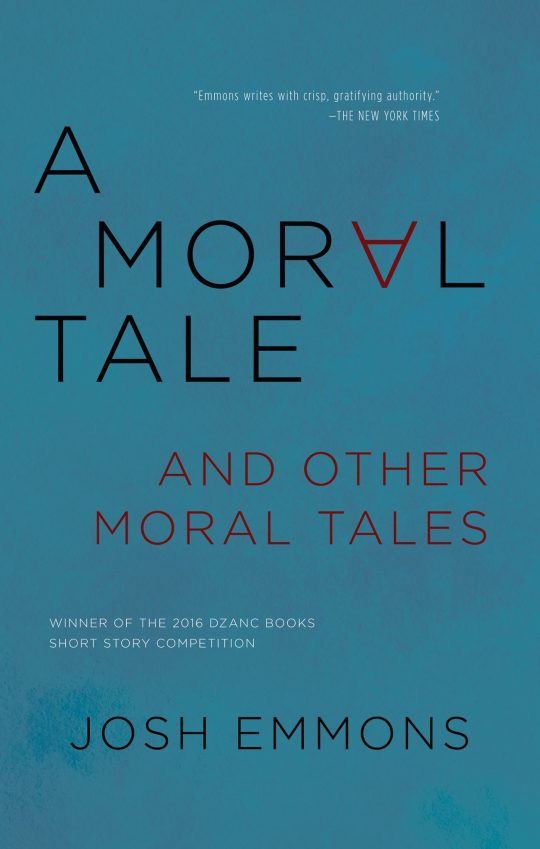
A tiger has lost his pride and seeks direction from a snake crushing apples in a tree. I’m not usually one for animal parables. But in this moral tale, the fifth in Emmons’ collection—A Moral Tale and Other Moral Tales—the elegant prose, precise plotting, and ingenious dialogue transform a relatively straightforward—and often comic—exchange between two species into a remarkable meditation on futility and free will. —Michael Carson


.
The tiger stopped at a break in the rain and realized he was no longer on the path he’d been following. He scratched the side of his belly against a coleus bush, shook free of the water coating his back and legs, and studied the ferns and mosses growing all around him, a blurred patchwork of greens. He listened for the rasp of Cousin, which like a gnat’s buzzing at his tail had annoyed him all through the hunt, and for the whelps of Sister’s underweaned cubs, and for the irregular footsteps of 2nd Cousin, but heard nothing.

“I’m six furlongs west of the den,” he thought, catching the scent of the dead opossum. “At most nine.”

He was tempted to scoop up with his tongue an ant dragging a webbed mass of tsetse flies, but refrained. What could be seen of the sun seemed to shift and ripple in the sky like its reflection in disturbed water. Was he west of the den, or north? Perhaps he was northwest. Cousin, despite his uselessness in a kill, had a perfect sense of direction, and the tiger felt his absence. Not long ago, for example, Cousin had found the way home after a two-day journey through alien trees that had marooned them in an unfamiliar glade, where they were so famished that Aunt had proposed eating 2nd Cousin.

“Sister!” he called out. “Niece!”

The chittering whir of life in the forest slowed and then sped up again.

“Can I help you?” came a voice from above.

The tiger looked up and saw a snake wound around the gnarled branch of a tree that curved at its base into thick tumorous roots burrowing underground. “Yes, you can go up to a good vantage point and look east for a pride of six tigers. One has a limp, another is missing both ears, and a third has no tail.”

The snake’s mouth opened slightly.

“They can’t be more than a furlong away. Maybe two.”

After making a complete revolution around its branch, the snake glided toward the trunk and then up to another branch. “What happened to your left eye?”

“It was removed by a great rhinoceros. You’re not high enough there to see any real distance.” The tiger sat on his haunches and felt the sharp pain in his groin that had troubled him since the last famine. He covered the furless patch on his stomach with his right foreleg, and the long, sparsely plotted whiskers on his face hung like wilted plume grass. “The rain must have disoriented them. They’ll be desperate to find me. 2nd Cousin already suffers from nerves. Go to the topmost branch and scan the area and you are sure to spot them.”

The snake projected a third of its body into midair and peered up at the tumescent sky. “There is an eagle circling.”

“You are too large to be carried off by such a small bird.”

“Just as you are too powerful to be maimed by a rhinoceros?”

The tiger considered leaping up to seize the snake in his mouth but suspected, with his injury, that he couldn’t.

The snake remained motionless.

“If you don’t help me,” said the tiger, “I will find them on my own and then return to kill you.”

With its tail the snake plucked an apple from a leafy nest and squeezed until it liquefied and streamed to the ground. “Before you arrived, I saw six tigers to the southeast, standing in an attitude of respect around a young tiger half again your size. When he trotted away they followed him in single file, and there were a tail-less male and limping female among them.”

The tiger protracted his claws deep into the earth and objects around him grew less distinct. His heart beat erratically. “You saw a different pride that coincidentally and superficially resembled mine.”

“Yes, certainly.”

“There is no possibility of one being the other.”

“I didn’t mean to suggest there was.”

After a minute in which he shivered as if still wet—a ringing in his inner ear, a cold hard trill, made him wish for the sun’s full return—the tiger squinted at the snake and said, “You are lying about what you saw. It is your nature to trick noble animals, as you did man.”

The snake dropped what remained of the apple to the ground, where it landed on a pile of rotting cores around which flies were buzzing ecstatically, and slid down to hang suspended with its tail coiled around a short spiky branch. From close up the tiger could see its skin reticulated into a network of fitted, glistening scales that were honeycombed with tiny red diamonds. A change occurred in the opossum scent; a new bloody aroma mingled with the old decay, as though its body had just been torn open; he could almost hear skin being ripped away and flesh stripped from bone.

“I will not tell—”

“How old are you?” asked the snake.

“I will not tell you again: either go up and look for my companions or prepare to die.”

“You shouldn’t blame them for following another tiger now that you can no longer procure food or protect them.”

The tiger rose from his seated position and paced back and forth unsteadily, trying to determine how high he could jump without further straining his groin muscle. If the snake descended another two branches and then lowered its head and relaxed, he’d have a chance. “I can procure enough food for twenty tigers; at this very moment I am hunting prey. As for guarding them against danger, in the last six months I have fought off two jackals, a wombat, a marbled cat, an olingo and a sambar deer. The few among my pride who have been injured during that period understand why I was unable to prevent it, such as, during our encounter with the rhinoceros, my own loss of an eye. They are loyal in a way that you, a solitary creature hated the world over, cannot understand.”

The snake seemed to consider this and then said, “I wonder how a sambar deer, or a marbled cat or an olingo, could threaten a tiger. An olingo! The smallest cub could swallow one whole without thinking. Though the real question here is why your pride has waited so long to abandon you.”

The tiger sprang up at the tree from a meter away, felt a sharp bolt of pain, and fell to the ground.

The snake said, “Despite your obvious helplessness, if your former pride comes this way its new leader will have to kill you. The old must ever make way for the young.”

The tiger turned away and tensed his muscles and clenched his jaw and didn’t make a sound. From between his legs agony radiated out in regular, insistent waves. It would soon subside. He watched a chameleon blend into a fern stem as hardy as a shoot of running bamboo; the wind moaned and the sky darkened two shades with the sun’s full retreat behind layered clouds. He felt a drop of rain, heavier and more deliberate than any in the shower that had fallen earlier. The opossum scent was faint. He said, “I look forward to meeting this other tiger. Before ending your life, I will beat him in front of you so that you can see your error.”

The snake plucked off another apple and reduced it, as he had the one before, to pulp. “Let us stop this absurd talk of you harming me, because the only animal you can hurt now is yourself. It would be best for you to accept this and everything to follow.”

The tiger said, “Do you want to know why you are everywhere despised?”

The snake said nothing.

“It isn’t just your willful insincerity, the way you manipulate the truth and consider honesty to be a sign of mental frailty, as though animals who treat each other fairly are too stupid to do otherwise, but rather that, unable to build anything yourself, you concentrate on destruction. I almost pity you.”

“Then we might start a mutual pity society.”

“Friendless, heartless, and deluded into thinking cleverness worthier than love and affection, you could vanish and no one would miss you.”

The snake’s head rested on its coiled body, ten feet off the ground. “And how are you any better off, since your life has come to the same solitary end?”

“I am not solitary or at an end.”

The snake looked meaningfully at the empty space around the tiger. “It’s especially unfortunate because your solitude is not the result, as mine is, of your possessing taste and refinement in a place that values neither, but because when young you used brute force to dominate all the creatures of the earth. Those you didn’t eat you frightened, displaced or ignored. How love and affection, which you claim to value, have operated on or through you beyond the limited confines of your immediate family, is a mystery.”

“Having limited sympathy is not the same as having none at all. Everyone privileges his own and his relatives’ survival above that of others.”

The snake’s forked tongue moved up and down in its open jaw at an invisible speed. “Whether or not that’s true, you’re exceptional insofar as power and compassion are directly correlated; the more one has of the former, the better able one is to bestow the latter. You, being all-powerful, have the potential to be all-merciful. You have chosen not to be, however, which is both convenient and beneficial to you, and which eliminates the moral advantage you might otherwise have had over me. In fact, it is safe to say that your obligation to help instead of hurt weaker animals equals or even exceeds your capacity to do so, making it the greatest mandate in the forest now that man is gone, something only a monster could ignore. And yet you think that having been born a tiger you can pursue your pleasure regardless of its cost to others.”

The tiger caught no more scent of the opossum. He did not need to keep listening to the sophistry of a snake when somewhere in the vicinity Cousin and Aunt and Sister and Great-Niece and Niece and 2nd Cousin were either huddled together, too hungry to move or cry out, praying to the hidden sun for his return, or under the influence of a young pretender stealing what belonged to him.

As he considered where to look for them, a rustling sound to the east preceded the appearance of fifteen zebras galloping across the clearing in a westward direction, followed immediately by a herd of long-necked giraffes. The rain was falling steadier now and vast puddles formed on the ground. Then from opposite corners of the clearing two new sets of animals emerged—from the southeast peacocks, and from the northeast rabbits—to unite on the path trampled first by the zebras and then by the giraffes.

“Where are they going?” shouted the tiger to the snake, who had ascended to the topmost branch and was staring into the distance.

The snake didn’t answer for several minutes, during which bunches of toads, rhinoceroses, goats, horses, gorillas, short-haired cats, mice, beetles and marmots filed past, until finally, with an unreadable expression, it returned to its perch on the fourth lowest branch and said, “They are headed west.”

“But why?”

Rain poured down so heavily now that the tiger felt a uniform pressure on his back. A flock of geese flew above while an assortment of chimpanzees and foxes and deer raced by. The puddles converged into an unbroken pool. Next came wolves and bears and badgers and lambs, and it was a marvel to see the peaceful—the non-murderous—lockstep of predators with their prey.

The tiger said to the snake, who still had not answered, “Is there higher ground to the west, or perhaps a fire to the east?”

“No.”

“Then what did you see?”

“Earlier you said that I delight in destruction and trick noble animals such as man. I’ll tell you what I saw, but first you must hear something.”

The rain fell insistently and the tiger was too weary to protest.

“When Eve came here she was a child. Not biologically, but in temper and intellectual development she was little better than the clay from which she and Adam were formed. I lived on the ground then, and ate a sparse diet of mice and other small fry, with little interest in this tree. Eve used to stand where you are now and ask herself whether she should or shouldn’t eat its fruit. Her life was tiresome, she’d say, without variation or intrigue or intensity of feeling—everything she did produced the same dull note—and eating the fruit would change that. Unless it wouldn’t. What if, she’d say, an unpredictable life of alternating pain and joy and mystery was as unsatisfying as the one of regular contentment and predictability she currently led? What if the afterwards were different from the before in kind but not in substance? And while the prospect of death might invest life with greater meaning than it currently possessed, on the theory that something’s value rises in proportion to its scarcity, it might do the opposite and fill her with a sense of life’s futility.”

The water level had reached the halfway point on the tiger’s legs, and he decided to start walking west with the blind hope of finding his companions, who might intercede on his behalf with their new leader. There was no reason to stay here.

The snake said, “One day, after months of ignoring me, she asked what I thought she should do. Stay and suffer in a familiar manner, with an inevitable increase in boredom as time passed meaninglessly, or eat the fruit and be banished to a place and mode of being that might as easily be worse as be better, and that would come to an end? She couldn’t ask Adam because he wanted nothing more than to love and admire creation; he wouldn’t condone her eating the fruit of this tree because he was not dissatisfied. I told her that if that were the case she could do no wrong that would not also be right.”

The tiger’s stomach now grazed the water’s surface, along which a thousand raindrops ignited in tiny explosions that added to and overlapped and canceled one another out. A memory came to him of standing on an open plain during a heat wave when he was young, under a bleached white sky dirtied in the distance by specks of vultures circling over the elk he had just slain, at which time, stupefied but not yet made frantic by thirst, and for a moment on the other side of a small hill from the others, a single droplet of water had fallen on his nose. There had been no clouds or birds above him, and no rivers within sight to produce this moisture. He’d licked it away and in the fraction of relief it afforded him he’d felt his yearning for more spike to an unbearable degree, and he’d had a vision then of endless water, of a flood like the one now arising, and he’d understood that the leadership responsible for taking the pride so far from a fresh drinking supply, and which just moments before had failed to help him bring down the elk, needed to be replaced.

“Do you know what she did then?” asked the snake.

The tiger could clearly see his father’s body perched that evening at the mouth of the cave where the pride was sleeping, his muscles thin and shrunken, his ears perfectly still, lost in a memory of the world as someplace new, when the cycle of rise and fall was not yet known.

“She walked away and never returned.”

A strong current ran through the water. The tiger’s feet were firmly on the ground, though he couldn’t say for how much longer they could stay there. The rain stripped leaves and pine needles from the trees around him and left bare branches stabbing the blackened sky. A bolt of lightning lit up the clearing in a white flash as the tiger bent down to lap up a mouthful of water, which tasted of loamy soil and bones and aloe and bark and insects and iron and sap and stone and the dust of an ended drought, diluted by tears and thickened by blood. As he drank more the tiger became thirstier, with every drop coming from nowhere and the last of its kind.

“To the west,” said the snake, now on a lower branch, “not far from here, no more than two furlongs away, is a giant ship. A gangway connects the ground and its deck, and is being used to convey up pairs of animals. Even in your condition you could reach it in time.”

The tiger kept his eyes down and drank away his recent hunger and the whelps of Sister’s cubs and the illusion that there would never be a young tiger half again his size. He swallowed his father’s murder and the years he’d led his pride through a shrinking forest and the moment he’d known that his confidence was built on a decaying foundation. He consumed the love and hatred that had once given him vitality, and the times when his survival had been in question, and when it had been a foregone conclusion, and when it had been a matter of neither indifference nor consequence.

The snake came down to the lowest branch and extended its head to within a foot of the tiger’s and said, “We could go to the boat together. I could ride on your back and navigate.”

The tiger didn’t look up or stop drinking. There was so much more to take in. He’d only just begun.

—Josh Emmons

N5

Josh Emmons is the author of two novels — The Loss of Leon Meed (Scribner, 2005) and Prescription for Superior Existence (Scribner, 2008)and the short story collection A Moral Tale and Other Moral Tales (Dzanc, 2017). Read a review of A Moral Tale and Other Moral Tales here by Numéro Cinq‘s Michael Carson

N5

Dec 052012


George Singleton lives in South Carolina and teaches at South Carolina Governor’s School For The Arts & Humanities. He is the author of two novels—Work Shirts for Madmen and Novel—one book of writing advice, and five books of short stories, including The Half-Mammals of Dixie, Drowning in Gruel, and Stray Decorum. In 2009 Singleton was a Guggenheim Fellow, and in 2011 he was awarded the Hillsdale Award for Fiction by The Fellowship of Southern Writers.

It was a real treat to talk to George Singleton, a writer I’ve admired since early 2004, when the friend I was with at Davis-Kidd Booksellers in Nashville, Tennessee, put a copy of The Half-Mammals of Dixie in my hand and told me how great it was. I sat there in the store and read “It Itches, Y’all,” a story about a kid whose life is ruined after staring in an educational video on the prevention of head lice.  His life-ruining line: “It itches, y’all.”

While talking to Singleton, he reminded me of what another Southern writer, Harry Crews, once said, “Stories [is] everything and everything [is] stories… It a way of saying who [you are] in the world.” George doesn’t have answers to questions—he has stories, stories to illustrate the question and dramatize it. From everything to his stray dogs to his Whitmanian list of items on his desk, George Singleton is the real deal—modest, funny, individualistic—a writer hell bent on preventing you from becoming a rhinoceros.


Jason DeYoung (JD): Let’s talk about how Stray Decorum came about.

George Singleton (GS): I have to go all the way back to about 2005 or 2006.  I had this copyeditor who was great, but he had to go off for a while.  He subcontracted my manuscript out to an eighty-five-year old woman who used to work at The New Yorker.  So, she sends back my manuscript—this was for a novel called Work Shirts for Madmen—and she had really changed a lot, especially the voice. One of the big things she changed was when one of the characters said something like, “I only want to go home and take a nap.”  She’d change it to, “I want only to go home and take a nap.”  She kept changing that “only” word—I didn’t realize how often I used it, and evidently incorrectly. And she wrote about the third time I’d used it: “Do you people in the South not know this rule of grammar?”  So then next time she marked it, I wrote “I want only to kill you,” off in the margins.

Well, as I was correcting her corrections, I’d been writing stet. stet. stet. forever.  [Stet being an editorial term for “let it stand.”]  And I mean forever. A bunch of them.  Like if I’d written, “I ain’t got no money.” She’d corrected it to “I have no money.” (Sighs) I’d write: “stet.”

And so I decided to write a bunch of stories about this character named Stet.  And I wrote like fifty of them, and about thirty-five came out in magazines, and I got a collection together, and I sent them to my agent—about 450 pages of short stories.  She said,  “No one is going to publish this.  (And, by the way, George, I don’t even want to try to sell another collection of yours until you write a novel I like.)”  So, I said, “You’ve never liked anything I’ve written, so I break up with you.”

Now I’ve got a new agent—her name is Kit Ward. And she said, “No one is going to print 450 pages of short stories. But you’ve got all these dog stories.” And I said, “I’ve already written a God-damn dog-story book, you know, called Why Dogs Chase Cars.”  And she said, “You can write another one, you idiot.”

So, she’s the one who got Stray Decorum together. And then next year No Cover Available will be coming out, which will be the rest of the stories.

JD: Let’s talk about opening paragraphs. In your story “I Think I Have What Sharon’s Got,”—one of my favorites—you start with what amounts to a page-length paragraph, in which you smash together about eight or ten topics. How do you think about opening paragraphs?

GS: Sometimes, when I’m starting off a story, and I don’t really know what I’m going to write, I’ll just start writing real fast, like a 500-word sentence or something, just to see what comes out of my walnut-size brain. A lot things will show up.  And then I go back, in that 500-word sentence, and say, “Okay, where’s the main conflict?”

What I want to do, most of the time—and it’s kind of cheating—is just get some of that journalistic who, what, where, how, why into the first paragraph, so that the reader will say “I see the direction of this story, and I’m comfortable with that.”  Normally, I do a reader-friendly first paragraph.  Except “I Think I Have What Sharon’s Got” doesn’t follow that model. (Laughs)

JD: I’ve been reading David Byrne’s How Music Works.  In it he talk about how music is often written sonically for the particular space—a club, a cathedral, a car stereo.  Do you have a particular reader in mind when you write, a particular place you have in mind for that reader to be in—including perhaps a particular “head space”?

GS: The reader I have in mind is probably me. And I’m just writing, thinking this may not get pass the vacuum.

I’m not sure there are a whole lot of people out there—and I hope there aren’t—who are like me. So, my reader, in my mind, is a liberal, probably a democrat, probably scratching his or her head, going what the hell is going on in America—this doesn’t make any sense.

You know, I went to see a production of this play, The Crucible. And I thought, this is what’s going on right now in America: People caught up in a fervor. Reminds me of Ionesco’s play, Rhinoceros, where everyone is turning into rhinoceroses.  Why can’t we step back and say, “This doesn’t really make any sense.” The reader I’m looking for is that person: the one who is stepping back saying, “This world isn’t making a whole lot of sense.”

JD: And how do you think about structure and building a story?  What’s your “habit of art”?

GS: Consciously I don’t sit down and think, “okay, word 4,000, I need a climax.” Normally, what I’m doing is in my opening paragraph is trying to get the reader accustomed to the water’s temperature and then I usually start off with some dialogue between two characters, and that causes some kind of action, some kind of conflict going on. And then I just kind of see where it goes.  Rarely do I know where it’s going to go, except I usually have a vague sense of the ending.  For instance, if I start a story off in a used car lot, it’s either going to end in a used car lot, or with the characters talking about a used car lot, or driving pass a used car lot.

JD: So, how much revision do you do?

GS: I sort of rewrite the whole time, rereading what I wrote the day before, and then rewriting as I reread.  And then I’ll send it off to a magazine. And the editor will say, “I love the beginning but the ending sucks.” And I’ll send it to another magazine, and they’ll say, “Hated the beginning, but I loved the ending.” And then I’ll go, “You sons of bitches.” And then I might tinker with it some more.

JD: You’ve published five books of short stories and two novels, are you still being influenced by writers you read? And, if so, who are the most recent?

GS: Yeah, of course. When I read a short story and go “God-damn, I wish I’d thought of that,” that’s my highest compliment.  I read like crazy. Just finished a collection by Dan Chaon, and went, “These are great stories.” I’m reading an advance readers’ copy of Jamie Quatro’s new book, I Want To Show You More, and I keep saying, “God almighty, that’s a great story” after I finish one. I read a book of essays by John Jeremiah Sullivan called Pulphead, which has a great voice.  But also my buddies like Ron Rash and Tom Franklin.  I read a lot of people who aren’t similar to me. They’re kind of darker, more gothic, and usually not very comedic.  Lewis Nordan is just great.

JD: While we’re on books, what book or books are you an evangelist for?

GS: The Complete Flannery O’Connor I reread over and over.  And, oddly enough, John Cheever, who from a technical point of view is just brilliant.  A lot of times, I’ll ask while writing, How am I going to go from point A to point C?”  And how I do it is a section break, and how Cheever does it is just seamless. But there’s a bunch more—William Gay, Cormac McCarthy, Raymond Carver—and they all, in a way, feed me well.

JD: Some of your best stories, in my opinion, are about fathers and sons, and in these stories the father is usually off-kilter somehow.  I’m thinking here of “The First to Look Away” and “Perfect Attendance” in Stray Decorum but also some stories in previous collections.  What is it with fathers and sons?

GS: When I was about forty years old, I wrote my very first dad-and-lad story, and The Atlantic took it. And I went, Jesus Christ, why hadn’t I written any of these stories before?  They’re so easy. I can dip into the well of my childhood since my father was kind of eccentric.  My father died when I was twenty-four, and he had gone through a shitload. He’d had cancer in 1960 when he was thirty-five, he’d fallen forty-five feet into the hold of a Merchant Marine ship when he was thirty-eight, breaking his hip and back and a number of other bones.  He was a morphine addict. He was an alcoholic.  He had all these artificial hip operations.  And he was kind of nuts—in a good way, though. He made sure I met people in different stations in life. We were a lower-middle class family. So, I don’t have to use much imagination to remember these feelings of a kid—a little bit embarrassed by his father, a little bit curious about what his father is doing—which makes the dad-and-lad stories easy to write and fun.

JD: In “Perfect Attendance” the father gives his son several pieces of advice, one of which is “always have a dog with you…get a stray… don’t go buying some kind of fancy pedigree.”  Is this good advice?

GS: That’s probably just autobiographical. (Laughs) In my experience, stray dogs—and I’ve had a zillion—have been loyal, smart, and not finicky. They’ll eat anything. They’ll eat the worst dog food—George Jones Dog Food or whatever.  Also, it makes me feel better about myself for taking in a stray instead of buying some thousand dollar spaniel. Strays have just been good.  Like us, they seem to be animals who are doing the best with what they’ve got.

JD: You talk about rifle writers and shotgun writers in Pep Talks—which are you? Is one better?

SG: Not sure either’s better.  I’m a shotgun writer because I’m just writing story after story. If I were a baseball player, I’d be a solid .250 hitter.  A rifle writer will bat .500, but it takes a long time. I’m not going to spend six months writing a story, which I think is crazy.

JD: In Pep Talks you tell your reader to keep certain items on their desk—an Allen wrench to remind yourself to tighten up sentences; a picture of a chimpanzee to remind yourself to proofread; a whetstone to remind yourself to keep your wits sharp.  What’s on your desk?

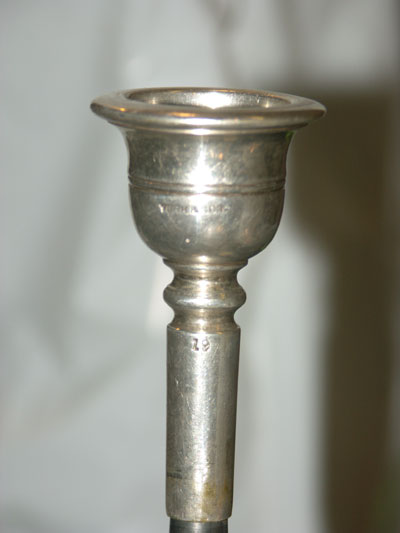
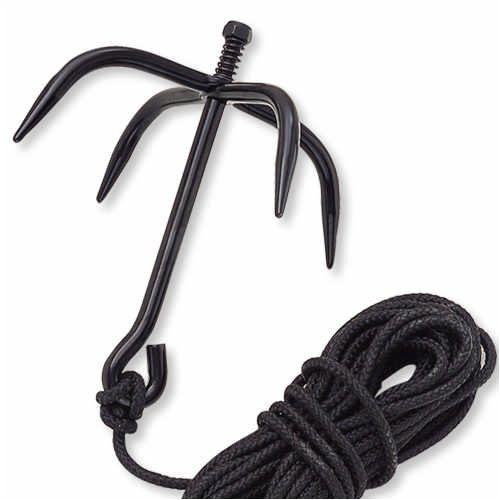
GS: (Laughs) I’ve got my father’s first artificial hip.  I’ve got something called a Cherokee marble that I found in the Reedy River.  My father’s old pocket watch.  I’ve got something… (Laughs) Oh, man, I shouldn’t tell you this. Okay, this comes from a printing press, and it’s from where you put the letters up, and this thing is called a butt plug, and an Allen wrench goes into it to hold the frame onto a printing press. I have a mouthpiece to a tuba I found on Kure Beach. My old stopwatch. A knife. But you know what I’m missing? My grappling hook. I think my dog sitter stole it. Let’s see… A baseball signed by Charlie O’Brien, saying “catch you later,” which kind a cracks me up.  Old feathers.  A Playboy Mansion swizzle stick. An old cat’s paw. A bunch of dog chews for when the dogs come back here.  I have an arrowhead.  My zippo lighter, pens, a dictionary, my father’s other (second) artificial hip—he had a lot of artificial hip operations. I’ve got the top off of something called Begonia Salad that I got in Kentucky—I think they meant baloney salad.  Up above me I have a Howard Finster plywood cutout of Santa Claus, and on it, it says “Santa in the kids’ world. He only teaches kids to be good. He is just another toy.” I don’t know what that means. (Laughs) Is that enough?

JD: Yeah, thanks. I heard that for The Half-Mammals of Dixie you hung around flea markets. Were there places you hung around for this collection?  There are a lot of original bar scenes in this book.

GS: No, not really.  I don’t go to bars anymore, like in town.  If I’m out of town, I’ll go to a bar.  So, I try to get out of town four or five times a week. (Laughs)

No, these stories just kind of came to me.  It’s funny you should mention that about the flea markets, because I’m kind of out of ideas, and have been thinking I should go hang out in bars. But basically I get ideas in Wal-mart, K-Mart, Bi-Lo, which is the closest grocery store. I’ll just walk through there, pick up on the odd things people are saying, and I’ll go, “Oh, I’ve got to go home and write.”

JD: You’ve written and talked about how literary fiction doesn’t sell well.  Why do you think the figures for literary fiction stink?

GS: I don’t know, but I came across this guy the other day who has this novel out, and it’s a detective novel (and I’m not going to say his name or anything).  It’s the worst written thing in the world, and this guy was telling me how to write. He said, “What you want to do is take out all of your adverbs”—which I don’t use that often—“and you only want to say ‘said’ when writing dialogue.”  And then I looked in his book, and everything was “he sputtered,” “he opined,” nothing was like “he said.” So, what the guy was telling me he didn’t do himself. And this book of his is selling well.

My only theory on this… my only analogy is that people in the United States eat a lot more baloney than they do filet mignon, but that doesn’t mean baloney is good for you.  For some reason, people read and eat a lot of baloney.  And I know that sounds highfalutin, and I feel bad about it, but sometimes I just go “Good God, what are these people buying?!” And it’s bad.  And it’s going to get worse because all the independent bookstores are dying off, the newspapers are dying off along with their book review pages. There’s just going to be people going into a big chain outfit and buying whatever they see on that big stand, saying “I’m a big rhinoceros and I’m going to do what all the other rhinoceroses are doing, etc.”

JD: I’m going to ask forgiveness for this next question in advance. You have a lot of scamers in your fiction—at times it seems everyone is on the make.  Is fiction writing a kind of scam?

GS: (Laughs) Man, that’s a good question. (Pause) I guess in a way it is.  You’re trying to put something out there in the world; you’re trying to say, “Hey, this is something you need to read.” Just in the same way, like in an info-commercial, you’re saying, this is a pill you need to take, or this is a chair you need to sit in. In a weird way, it is.  It’s like holding a Tupperware party.  And I’m saying, buy this book, because this is going to be more laughs than you’re going to have otherwise.  Man, I’ve never thought out it like that. Geez, thanks a lot. I’m going to commit suicide—I’ve been a prick all my life. (Laughs)

JD: I didn’t mean to make you re-think your life. But it reminds me of what Annie Proulx says, “I try to make the stories I write interesting and entertaining. I don’t write to inspire social change.”

GS: What I think is that there’s a weird continuum.  If you had a big spectrum, you’d have entertainment on one end and knowledge on the other end, and somewhere in the middle you have what I’m trying to do.  I’m trying to make you laugh and teach something about humans.  I’m trying to get in that middle area.

—George Singleton and Jason DeYoung


Dec 042012
 

In George Singleton’s new sly collection of short stories, Stray Decorum, strays take human form—from a paranoid gambler to a kinky sociologist, from a braless hippie to a down-on-his-luck basket weaver and other manner of humans in between—especially those we love and fight.  With his fathers and wives, inventors and barflies, Singleton reminds us over and over that not just the lesser animals can be strays, but we too can be just as shiftless and discarded as the wooly mutt digging in the garbage.   —Jason DeYoung

Stray Decorum
George Singleton
171 pages
Dzanc Press, 2012
$15.95

“Your good, heroic characters are mixed-breed, lovable, loyal mutts adopted from The Humane Society. Your antagonists are AKC-registered purebreds with all the quirks, limitations, and personality flaws inherent to such inbreeding.”[1] Such is George Singleton’s aphoristic writing advice. Such are Singleton’s sympathies for strays.

What’s a stray? A domestic animal wandering at large or lost, right?  In George Singleton’s new sly collection of short stories, Stray Decorum, strays take human form—from a paranoid gambler to a kinky sociologist, from a braless hippie to a down-on-his-luck basket weaver and other manner of humans in between—especially those we love and fight.  With his fathers and wives, inventors and barflies, Singleton reminds us over and over that not just the lesser animals can be strays, but we too can be just as shiftless and discarded as the wooly mutt digging in the garbage.  And what of the actual dogs in this collection? They are all strays, beasts without pedigree, sired by men without direction, raised by women of grit.

George Singleton has published a total of eight books—two novels, five collections of stories, and one book of writing advice. While his novels make for outstanding reading and his book on writing is one of the funniest how-tos I’ve read, it’s Singleton’s short fiction that always leaves a mark on me.  Most of the stories in Stray Decorum were originally published in such journals as The Georgia Review, Oxford American, and Ninth Letter. Stray Decorum is the first half of a longer series of short stories, and Dzanc Press plans to publish the second half in 2014 in a book titled No Cover Available.

Although born in Anaheim, California, George Singleton was raised in Greenwood, South Carolina, and he is a Southern writer who understands his rural characters well: “For the record, I would rather be in a bar with a possible gun toter on the loose than with a drifter book critic.”  And his fiction brings to mind the work of Barry Hannah, Tom Franklin, and William Gay.

Singleton graduated from Furman University in Greenville, South Carolina, with a degree in philosophy and attended the University of North Carolina at Greensboro for his MFA.  He currently teaches at the South Carolina Governor’s School for the Arts & Humanities.  In 2009, he was a Guggenheim Fellow, and in 2011 he was awarded the Hillsdale Award for Fiction by The Fellowship of Southern Writers. (By the way, you can go here to hear Singleton tell his Rube-Goldberg-like beginnings as a writer.)

Stray Decorum leads off with a story called “Vaccination.”  Here are the opening few sentences:

My dog Tapeworm Johnson needed legitimate veterinary attention.  It had been two years since she received annual shots. I read somewhere that an older dog can overdose on all these vaccinations, and I have found—I share this information with every dog owner I meet—that if you keep your pet away from rabid foxes, raccoons, skunks, bats, and people whose eyes rotate crazy in their sockets, then the chances of your dog foaming at the mouth diminish drastically. I also believe that dogs don’t need microchips embedded beneath their shoulder blades…

Wry, opinionated, suspicious first person narrators dominate this collection (though there are a few stories in the third person). Within these stories the reader is secluded with a narrator who is convinced of certain concepts or views that are askew from those around him.  Most of the time, their world-view derives from isolation, as in “Vaccination,” the narrator’s only companion is his dog, Tapeworm Johnson.  Of course, the madcap conflict of the story comes from him meeting another isolated, off-kilter person: “What should a divorced basket weaver do when tempted by a microchip-believing hippie woman intent on drinking before noon?”

With his narrative sensibilities grounded in Samuel Becket and the Romanian playwright Eugène Ionesco, many of George Singleton’s stories are predicated on absurd themes and he locates his narrative pathos beneath the humor in human misery. In “Durkheim Looking Down,” a pair of couples try to hide their proclivities and eccentricities from each other, only to have their deepest fears revealed during one drunken night—spoiler, the couple that wear the no-bark collars to bed turn out to be the normal ones. Absurdity takes fuller shape in “The First to Look Away,” when a father conscripts his son’s fifth grade class to dig a moat around the family’s log cabin.  He tells his son’s teacher that the children are there to “dry mine” for rubies. The Mao-quoting school principal cheers the children from the moat’s edge: “‘To link oneself with the masses, one must act in accordance with the needs and wishes of the masses.’”  Digging disinters several of the father’s childhood dogs, and as the father grieves afresh for his losses, his son sees his father’s humanity for the first time.

Excess absurdity gets toned back in some of these stories, and we see Singleton’s talent and sensitivity for writing finely textured works about human misfortune and spirit. In “What Are The Odds?,” the narrator goes out searching for his missing dog sitter who has stolen his social security card and driver’s license.  Unemployed, addicted to playing the lottery, unhappily married the narrator wonders, “What are the odds of someone wanting to steal my life?” And in “Perfect Attendance,” the best story in the collection, a boy who has never missed a day of school his whole life takes a second look at his loser father and the podunk community he grew up in and realizes that perhaps they are not as bad as his mother would have him believe, that always doing “right” and getting your pats on the head aren’t what living is about.

For all of its deadpan humor, non-sequiturs, and oddities, Stray Decorum is overall a collection about feeling that often-overwhelming desire to be accepted and understood.  And the final story in the collection, “Humans Being,” may contain the best paragraph in the whole book that clearly defines the stray’s vision:

I could see, for once, in the future, where I’d drive around in my truck with this great dog who would be loyal and trusting. We’d cruise around the entire country, erasing what young men and women thought necessary to exclaim, or about their territory, or unrequited love. I would tell Tennessee to stay on the bench seat, and she would. We’d go through drive-through windows and I’d buy her hamburgers without onions or condiments, plain hot dogs, the occasional stand of French fires.  I envisioned our taking a vacation together and driving to the coast where she could chase gulls and dig for whatever mollusks relished living underground.

Here, we get the humor and compassion that defines Singleton’s fiction. In this story the narrator’s wife has left him, and he’s living in a house full of his ex-brother-in-law’s stuff.  He is without. Not shelter, per se, but loyal companionship.  In the story, a woman comes to his house under the pretenses of looking for her runaway dog, but she is really there to get something that belongs to her from the boxes filling the narrator’s home.  The dog returns, but it’s clear that she has no strong love for this animal. The narrator sees something of himself in this dog who has the “eyes of a good nun, of a grieving Appalachian widow, of a disappointed vintner.”  He trades the woman her gold panning equipment for this downtrodden pooch.  It’s a symbolic trade—wealth for loyalty.  He fantasizes early in the story something like this could happen between him and the woman, but as she reminds him in a sentence that takes on double meaning—“It’s you and me against the Humans.”  And that is what binds these stories together: the restless need we feel for wanting to be found.  The wisdom of this collection is that we can find a home amongst the strays.

—Jason DeYoung

—————————

Jason DeYoung lives in Atlanta, Georgia.  His fiction has appeared most recently in Corium, The Los Angeles Review, and The Best American Mystery Stories 2012.


Footnotes    (↵ returns to text)

  1. Pep Talks, Warnings & Screeds, George Singleton. Writer’s Digest Books. 2008.