Douglas Glover

May 212011
 

Time to get serious. DG is on his second g&t (saving the Talisker for later). This is an important moment in human history, viz., THE  END OF THE WORLD (as we know it). Numéro Cinq wants to know what you’ll be reading on today OF ALL DAYS. What is the last literary work to cross your earthly mind? Please respond in the comment box below.

DG, for example, is going over to the Skidmore library to see if he can find a copy of Friedrich Schlegel’s Letter about the Novel which he cannot find anywhere on the Internet (and it’s been irritating him).

dg

May 212011
 

This is just to remind everyone that as I write this we have less than 18 hours to Rapture (also 24 hours til the end of the NC Villanelle Contest—get your entries in before the “dead” line).

dg

Calculating rapture day

Harold Camping, who has gone on record as saying the world was created in 11,013B.C., believes the Bible teaches that the flood of Noah’s day was in 4990 B.C.

Camping, leader of the Oakland-based ministry Family Radio Worldwide, then points to the Apostle Peter in the 1st century writing of Noah’s flood in an epistle where he also warns that God will one day destroy the world by fire.

Camping often quotes from 2 Peter 3:8, which reads: “But, beloved, be not ignorant of this one thing, that one day is with the Lord as a thousand years, and a thousand years as one day.”

According to Camping, who takes literally Genesis 7:4, where God warns Noah, “For yet (in) seven days” he would cause it to rain on the Earth for 40 days and 40 nights, the seven days can be interpreted as 7,000 years.

So, says Camping, when God told Noah there were seven days to escape the flood, he also was warning that there would be 7,000 years to escape the final judgment.

Camping’s math says that when one subtracts a year in moving from “an Old Testament B.C. calendar date to a New Testament A.D,” the 7,000 years take the world from Noah’s flood to 2011.

He also teaches that May 21 corresponds to the exact day Noah’s flood started.

via Rapture preacher says today is Judgement Day – ContraCostaTimes.com.

May 202011
 

Meet Cyrus Chutt Chutneywala of Baroda, Gujarat, waiting for a friend in the the Factory Tavern on Andy Warhol Square in Pittsburgh. His friend, Romesh, calls the bar to let Chutt know he’ll be late and the waitress inadvertently hits the speaker phone and public address switch and lets the entire clientele know she has a hard time getting past that name, Chutneywala. Thus begins Clark Blaise’s comic story “Waiting For Romesh” from his brand new collection  The Meagre Tarmac, just out from Biblioasis. (See Philip Marchand’s review in the National Post.)

Clark is an old friend (dating back to the early 1980s and dg’s Iowa Writers Workshop experience) who once made the mistake of inviting dg to stay the night. Clark and his wife, Bharati Mukherjee, were sharing an appointment at Skidmore College in Saratoga Springs and living in palatial splendour in a huge house on Circular Street with an octagonal carriage house and mistress apartment in back. DG somehow managed to stretch that night into three months (this was in the days of dg’s impoverished apprenticeship, um, actually, he is still an impoverished apprentice), the walking definition of a Horrific Guest. Clark moved away, dg stayed in the house til it was sold. He wrote his story “Dog Attempts to Drown Man in Saskatoon” in the little glassed in conservatory.

Clark Blaise is brilliant story writer and memoirist, intelligent, cosmopolitan, a master of point of view. He has lived multiple lives and written about all of them, from his impoverished childhood in Florida, Pittsburgh and Winnipeg to his extended sojourns in India and his long and eminent teaching career. He is the author of 20 books of fiction and nonfiction. He has taught writing and literature at Emory, Skidmore, Columbia, NYU, Sir George Williams, UC-Berkeley, SUNY-Stony Brook, and the David Thompson University Centre. He has received a Lifetime Achievement Award from the American Academy of Arts and Letters (2003), and in 2010 was made an Officer of the Order of Canada. Nowadays, he divides his time between New York and San Francisco, where he lives with his wife, Bharati Mukherjee.

dg

.

WAITING FOR ROMESH

By Clark Blaise

.

These are the random thought’s, over a late afternoon and early evening, of a balding man waiting for his friend. What is the evolutionary advantage of thinning hair? Could it be that balding apes sensed heat and rain before their hirsute brethren, knowing to seek shelter, thus having more playtime to pass on their genes?

According to theory, one monkey out of an infinite number working on an infinite bank of typewriters will create a flawless draft of King Lear. It puts a human face on the notion of “infinity.” Two or three might come close, misspelling a word or deleting a comma, which seems somehow even more miraculous, more human, and tragic. It signals a failed intent. Perfection seems just a more refined form of accident.

Higher altitudes are cooler because fewer molecules are available for collision, thus releasing energy. Given infinite time, every molecule in a confined space – even if the molecules represent the world’s population and the confined space is earth itself – makes contact with every other.

All roads lead to Rome. It is said that if one sits long enough at a café on the Via Veneto, everyone he has ever known will eventually pass by. This has not proven to be the case, however, for Cyrus Chutneywala of Baroda, Gujarat, seated this afternoon at The Factory Tavern in Andy Warhol Square, Pittsburgh. Cyrus, called Chutt by his Indian friends and Chuck by his colleagues at the Mellon Bank, has been waiting through a long afternoon, dinnertime and now early evening for his Wharton batch-mate, Romesh Kumar.

“I hope you weren’t offended,” the waitress said half an hour earlier, when she set his third narrow flute of beer – this one on the house – in front of him. She is tall and thin, wearing black jeans and a slack, black cutaway T-shirt. He searches for the proper word: singlet? Camisole? Her dark, krinkly hair is gathered in a ponytail. It was she, standing at the end of the bar, who had received Romesh Kumar’s “please-tell-Mr.-Chutneywala-I’m-late” phone call. She accidentally hit the speakerphone and public address system at the same time, alerting indoor and outdoor customers to a Chutneywala in their presence, and that she thought “Chutneywala” sufficiently amusing to ask for a repeat. Everyone had heard her giggle. They overheard her half of the conversation. “His name is what? Chutneywala? Come on, man. Who shall I say is calling? Everyone also heard “Romesh Kumar.” He had no secrets.

Continue reading »

May 192011
 

Volvox, first described by van Leeuwenhoek in 1700, is a close relative of Chlamydomonas.

.

Reasons to Rejoice in Green Algae
By Lynne Quarmby

.

Every once in awhile you get shown the light
In the strangest of places if you look at it right
– The Grateful Dead

.

We’ve had three hundred years of microscopy and some of us are still fascinated with the beautiful creatures that swim in pond water. To the naked eye, to the unpracticed observer, they look like cloudy, icky scum and we don’t want to swim with them. But they are also delightfully alive, they congregate, they swim (and wouldn’t care if we swam with them), they even “see” or at least sense light. And under the microscope, in the lab, in experiment after experiment, these tiny green algae are yielding discoveries that are important to you and me, in terms of health and the environment and, yes, in the revelations they bring of the wondrous reality of the molecular world.

Continue reading »

May 192011
 

Itinerary for Douglas Glover:

Departure: Gansevoort, NY, Saturday, May 21, 6pm

Arrival: Heaven, Saturday, May 21, 6pm

Flight Time: Est. 0 hrs. 0 mins.

Checklist:

1. Eat a good breakfast.

2. Phone mother to say goodbye (listen to her talk about chem trails, organic food and cataract surgery for half an hour).

3. Eat a good lunch. (You never know.)

4. Pack small camera and extra batteries.

5. Charge toothbrush and pack.

6. Call close friends (2) and other relatives even though they are hard to reach and never call back. Leave heartfelt messages of condolence for missing the trip.

7. Clean underwear and socks (pack spares—you never know–I assume I’ll be supplied with clothing but my experience of large bureaucracies tells me to expect inefficiencies).

8. Pack favourite snacks: peanut butter, mayonnaise and banana sandwiches, Sun Chips, thermos of green tea, flask of Talisker, second flask of Talisker, spare flask of Talisker. Note to self: We’re out of sandwich bags. Buy some at Walmart before Saturday.

9. Bring copies of own books to pass around to influential people when I arrive. Bring a book to read and last week’s New Yorker which I haven’t finished yet. Note to self: Decide what book to bring. Bible or something light.

10. Pack mp3 player with Bible lectures in case there is a test.

11. Pack Ibuprophen and anti-anxiety medication. Note to self: Refill prescriptions before Saturday.

12. Let the dog out. Leave food. Say goodbye. Note to self: We’re almost out of Talisker.

dg

May 182011
 

Stanley Fogel’s ¿Que Coño Pasa? Snapshots of my Wonderful Cuban Life is the first book-length text ever published on Numéro Cinq, another first, another huge milestone in our adventure in digital publishing. I am calling it a “What it’s like living here” because, in fact, it tells us what it’s like living in Cuba today. But, of course, it doesn’t fit the pattern: it’s a book. The first chapter, the introduction, takes the lesson of Edward Said’s Orientalism and applies it to the West’s construction of the so-called Cuban historical fact. The next three chapters are very much a memoir of the years Stanley Fogel has spent living and teaching in Cuba, the personal facts behind the wall of words. Snapshots is thus a blend of the critical and the personal (with a dash of Fidel Castro’s own rhetoric added for flavour). Stanley Fogel is in a good position to see what he sees. A Canadian scholar with a yen to be “displaced,” he has spent about four months a year since the early 1990s in Cuba. He is a quirky, perceptive, thoughtful (critical in the best sense) guide to that other world. He tells a story different from the received wisdom, he fills his story with people and anecdote—our Virgil.

dg

Me: I spent 36 years at the University of Waterloo/St. Jerome’s University where I was overcome by deconstruction and taught critical theory. A travel book, Gringo Star, ECW Press, only partly captures my desire to be displaced in the world. In 1999 I was awarded an honorary degree from Instituto Superior de Arte in Havana. Re. the opus at hand: I have spent c. 4 months per year since 1991 living in Havana, discovering the richness and distinctiveness of Cuban life–culture and politics transformed by the Cuban Revolution. I am retiring there shortly. (Do come visit if you’d like an ‘insider’s’ sense of Havana.) —Stanley Fogel

.

¿QUE COÑO PASA?

SNAPSHOTS OF MY WONDERFUL CUBAN LIFE

By Stanley Fogel

.

clip_image002

.

A mi hermano, Mario Masvidal, y la revolución cubana

.

Thanks to Elizabeth Effinger and Trieneke Gastmeier
for typing and grooming the manuscript.
Thanks, also, to St. Jerome’s University for grants
towards the preparation of the manuscript.
The photos, man with libreta and man with eggs,
were taken by Giorgio Viera.

.

Chapter 1: ¿COÑO, QUE PASA? An Introduction

.

A loose translation of “¿Coño, Que Pasa?” is “Jeez, whazzup?” “¿Que Coño Pasa?” is a grammatically skewed version of the first phrase. Its speaker is betraying more bewilderment and/or astonishment at what s/he has witnessed or heard than in that initial formulation. Both, though, transmit the effusive, gestural nature of Cubans’ speech and flamboyant responses to what is happening locally or beyond. Indeed, to absorb the import of the remark most fully, it is best to hear it uttered by someone, steeped in Cubans’ idiomatic lexicon and delivery, who shortens the noun to “’ño,” confident its meaning will survive. If you’re planning on spending time in Cuba and want to sound authentic, work on your “’ño”; remember, the shorter the syllable the better: taking the first, small bite out of the word “gnocchi” will suffice. Despite the possibly sexist dimensions (coño=cunt) of the formulations, no offense, feminist or otherwise, should necessarily be taken by the addressee of either remark, given that both men and women have been heard to repeat them, most often in gender-free contexts.

Too often, however, the voices of individual Cubans have been muffled or overwhelmed, most noxiously, of course, by pervasive U.S. media disseminating their political leaders’ rabid and hawkish views regarding the island. “A Caribbean gulag” is the mantra incessantly uttered, one which erases any sense of the lively, polyphonic voices existing there. Much more persuasive and compelling than dogmatic right-wing comments, to my ear at any rate, are Fidel Castro’s speeches which offer the vision of utopian and egalitarian possibilities for Cuba’s inhabitants and, indeed, for the world. That impressive voice, however, has come to represent, metonymically and univocally, the diverse people who live in Cuba. In addition, it often offers idealized visions that can by no means always or easily be translated into quotidian life. Nonetheless, not least because Fidel’s speeches have been so influential in shaping Cuban government policy and because they have not had the widespread reach of American anti-Cuban material, excerpts from some of those speeches are presented here, interspersed with my own commentary. They are meant to act more as a parallel discourse than as a countervailing commentary. While it is true, that they can draw attention to a discrepancy between the ideal and the real, they also point to genuine achievements as well as noble aspirations.

These pages, it is hoped, give some hint of the richness of Cuban life, a fecundity jammed, again, to a significant extent by American efforts to isolate the country and to caricature its unique political, cultural and social dimensions. While the U.S. bombards Cuba with messages, threatening, hectoring and proselytizing, Cuban versions of itself and its interpretations of world events and tendencies don’t get a hearing of any kind in North America, unless one subscribes to Granma International or accesses granma.cu on the web. With globalization of an American-capitalist kind that has produced homogenization in much of the rest of the world, the idiosyncratic qualities of Cuba since the Revolution are even more worthy of examination, respect and transmission. In Orientalism, his groundbreaking work that in many ways launched postcolonial studies and strove to articulate a postcolonial sensibility, Edward Said pronounced on the dangers and distortions inherent in a Western imposition of meaning on the East. Surely, U.S. constructions of Cuba are no less pernicious; they may, in fact, be more deleterious given Cuba’s size, its proximity to the belligerent presence immediately to the north and its pre-revolutionary interconnectedness with the U.S.A. To that list, one could add the current constellation of political forces in Florida which dictates, in large measure, the direction of Washington’s policies towards Cuba.

I have lived in Havana for approximately three months a year since 1992, the epicentre of the “periodo especial” [special period], when, after the fall of the Berlin Wall and the collapse of the Soviet Union, then Cuba’s sponsor and ally, food, gasoline and electricity all but disappeared for a time from the lives of ordinary Cubans. I witnessed the seismic shift firsthand when, early in my time spent in Havana, I happened to be passing by the University of Havana Library. Just outside the doors was a large, unsightly pile of Russian language books dumped there unceremoniously by the staff. The special period’s duress may have begun; at least, though, there was the satisfaction of jettisoning a Soviet presence that many felt was joyless, arrogant, oppressive and, possibly even, racist. Traces of that occupation do remain, principally in the numerous Ivans, Liubas and Vladimirs registered in Cuba’s census. Freed from naming their children from such imperialist sources, many parents opt for such freewheeling monikers as Misleidys (my lady) or Roelvis (you’re Elvis) that augment the sense, readily apparent, of Cuban expressiveness and buoyancy. Not that politically-based nomenclatures are passé; there is always the chance of encountering a Usnavi (U.S. Navy) or, more in line with official Cuban sympathies, a Hanoi. Famously, a kid with that latter name in the early 1970s was a “one hit wonder,” singing a song demanding the release of American dissident, Angela Davis, then in a U.S. jail. When she was freed, one of her first stops was Havana where she appeared at a huge rally in her honour.

Continue reading »

May 172011
 
clip_image001

Photo by Pedro

.

Here’s a topical, relevant, heartening essay on the e-revolution and web-publishing from Martin Balgach who, incidentally, has just joined the NC masthead as a Contributor with a special portfolio in poetry. Martin and I became friends at the Vermont College of Fine Arts summer Slovenia residency in 2008 where Martin was in my workshop (a mixed workshop—poets, fiction writers, memoirists and some walk-ins from the planet Cepphebox). For a better introduction read Martin’s poem “Fighting” published earlier on NC. His poetry and criticism have also appeared in The Bitter Oleander, Cream City Review, The Dirty Napkin, Fogged Clarity, The Puritan, Rain Taxi, and elsewhere. He holds an MFA from Vermont College of Fine Arts, works in publishing, and lives near Boulder, Colorado. More of his work can be found at www.martinbalgach.com.

.

Move It or Lose It

By Martin Balgach

.

These days, many of us feel like cosmonauts orbiting an era of hyperbolic digitalization, seemingly infinite bandwidth, and awe-inspiring technologies that boast space-age ingenuity vis-à-vis a pre-determined essence of almost-antiquation. We’re living in a world that redefines itself overnight; so it’s easy to nurture a curmudgeonly preoccupation with mourning “what once was.”

But for those inflicted by the age-old, pen-to-paper desire to transcribe our hearts and guts into stories and poems and essays, we must adapt or face extinction. Friends, the literary journals have moved to the back of the store near the restrooms. Yes, ostensibly, it’s a bleak testament to the viability of our craft, but the future is rewriting itself before our eyes and I’ve decided to become part of the story.

As a longtime writer and relative newcomer to publishing, I’ve been sending out work for a few years, hundreds and hundreds of submissions to journals of all creeds and colors, from the esoterically academic, to the newly crowned cool kids and the autonomously avant-garde. After mounds of rejection, I have finally enjoyed a modicum of “success,” having seen my poems published in print and online. And do you want to know the truth? I’m rather enjoying the electronic venues: they get read, a lot, by lit snobs and family, by Facebook friends and co-workers who equate poetry with rhyme, by strangers and who-knows-how-many-more virtual viewers.

Sure, whose eyes don’t get fatigued by a computer screen’s mechanized glare? I’ll admit it—my online reading attention span is shorter than its print counterpart. But regardless of medium, as a reader, I like instantly accessing great poems, essays, and stories. And as a writer, I appreciate having an editor respond to me in a few weeks or months, agreeing to publish a piece, to give it an audience, to make it part of a collective vision and creative endeavor. I want to participate in an artistic community, to have my work become an integral component of a curated statement. Yes, I like seeing my poems sharing pages with low-fi indie rock tunes, color-soaked digitized paintings or photographs, all these consciousnesses breathing the same pixilated air.

I was fortunate to recently have a poem published in Fogged Clarity, an evocative online journal (with an annual print anthology component) that embodies editor Ben Evans’s vision that art, in its varied forms, represent a collective human experience, an emotional testament to our time. Fogged Clarity is easily one of the most vibrant, engaging, inclusive yet defined collections of contemporary creativity, music, literature, interviews, criticism, and thought on the scene. And content is added monthly! But don’t take my word for it, see for yourself—any of us can go there instantly, with a click: www.foggedclarity.com.

I’ve never believed any writer who claims that writing is primarily a personal endeavor. Sure, the solitary satisfaction is part of the act’s cathartic charm, but it can’t be the ultimate aim. Intrinsically, writers want to be read. And in a world where art budgets have been slashed and paper, printing, and shipping costs are only sky rocketing, maybe it isn’t a tragedy to see struggling print journals transmuting into online entities, going away completely, or never gaining enough traction to even get off the ground. After all, isn’t survival of the fittest evolution’s integral denominator?

Continue reading »

May 172011
 

The other day I posted a BBC story that pondered the lack of socially committed writers in America today. Where are today’s Steinbecks? the author asked (and I asked by extension). Mark Lupinetti wrote such a passionate and inspiring comment to that post that I decided to lift the comment out of the box and put it up as an essay. Flavian Mark Lupinetti, a writer and cardiothoracic surgeon, obtained his MFA from the Vermont College of Fine Arts.  His work has appeared in Barrelhouse, Bellevue Literary Review, Cutthroat, and ZYZZYVA.  He lives in central Oregon with his dogs, the Four Weimaraners of the Apocalypse.

Here’s what he wrote:

The salient features of 2011 America include hyperconcentration of wealth for the few, increasing vulnerability for the majority, and impoverishment for many. Wasteful wars motivated by expansionist goals consume vast resources, jeopardizing minimal standards of social welfare. While corporate power rages unchecked, fundamental rights of workers are subject to relentless attack. Were Steinbeck alive today he would recognize a society little changed from the first half of the last century, a time when he wrote his era’s most moving and cogent novels of the class war. DG raises the pertinent question, “Where are today’s Steinbeck?”

 All right, Doug. I’ll take a crack at it.

.

Where are today’s Steinbecks?

By Mark Lupinetti

.

I

Before we search for today’s Steinbeck, let us consider our treatment of the Steinbeck that we have. I use the present tense because Steinbeck will be with us always, whether we’ve read the text or listened to Henry Fonda narrate Tom Joad’s soliloquy. We can take comfort that, “Whenever they’s a fight so hungry people can eat, I’ll be there. Whenever they’s a cop beatin’ up a guy, I’ll be there.” And so on.

When The Grapes of Wrath appeared in 1939 it received a generally favorable response from both critics and the public. Some, however, called it sentimental. Others condemned Steinbeck’s portrayals of “the greedy bastards responsible” for the Depression, as if the tender feelings of politicians and landowners might ache from this characterization. Still others accused him of being a socialist or a communist.

Steinbeck’s personal politics defied simple characterization, as exemplified by his support for American aggression in Vietnam. Yet today his reputation and his standing in the literary canon is jeopardized less by attacks on his politics than by those directed at his craft. Even some who sympathize with the politics of his novels consider him a propagandist.

A peculiar feature of the modern literary establishment is its demand for drilling into the core of the human being in terms of psychology, sexuality, relationships, spiritual beliefs–but as soon as the political aspect of the individual is brought into play, an additional test presents. Now it becomes necessary to prove one has no “agenda.”

And there can be no doubt that Steinbeck did write with an agenda. No one can conceive of Steinbeck contemplating, “A middle-aged guy . . . I’ll call him Tom . . . suffering from ennui. He lives in New York City and he writes books. No, he’s an accountant. Oh, wait, I’ll put him in Oklahoma, and make him bored by life in the Midwest. I’ll call it Ledgers of Wrath.”

Nobody would argue that even the most compelling and articulate political position can stand the test of literary excellence by itself, that craft does not matter, that storytelling and character may be dispensed with if the politics are sufficient. To accuse Steinbeck of melodrama or sentimentality, however, suggests that he inflated the harsh conditions of cannery work or sharecropping or itinerant labor for dramatic purposes. In fact Steinbeck softened these portrayals, believing a truer reflection would prove too troubling to the reader.

Contemporary educators show limited respect for Steinbeck. If he appears on the curriculum at all, it is mostly at the high school level, where the historical and sociological value of his work receives the greatest emphasis. Creative writing classes at any level tend to disparage his literary merit. Thus, if today’s writers don’t aspire to be Steinbeck’s heirs, perhaps one cause is the lack of honor paid to the original.

Continue reading »

May 162011
 

The space shuttle Endeavour is set to launch in about an hour.  This will be the penultimate mission of the shuttle fleet, a program of manned space flight that has spanned most of my life.  As a geeked-out, aviation-obsessed kid, I clipped newspaper articles and pictures of the first shuttles being built, watched in captivated awe as the prototype, Enterprise, was released from it’s piggy-back position on top of a NASA 747 and floated towards the runway at Edwards. (Later, I built the scale model of those two craft, laboring for hours over the intricate plastic parts…ah youth!)

I watched all the early missions, knew the names of the first astronauts.  And then space flight became routine, commercialized, and I grew older.  The cynical part of my brain began to question, and still sometimes wonders, why we spend so much money on space flight.  It’s hard not to wonder about who’s going to benefit from these tax-payer funded junkets to outer space.

But this morning I stumbled across the NASA site and read a summary of the mission.  The shuttle is taking up the Alpha Magnetic Spectrometer-02 (AMS-02)in its cargo bay.  The purpose of this device is to gaze out into the very deepest reaches of the universe and measure the delicacies of time and space—dark matter and anti-matter and radiation sources from far beyond our own galaxy.  Somehow, this comforted me.

Reading the technical fact sheet about this billion dollar spectrometer helps me believe that there is nothing to be gained by this device except pure research, the expansion of human knowledge about our universe. The AMS-02 will not be the focus of the press reports-wounded Congresswoman Gabrielle Gifford’s husband is the shuttle commander and will garner any headlines-nor will it make sense to most of us lay readers (at least it didn’t make a lot of sense to this reader.)  Our continued interest in the origins of the universe will bear no economic fruit, except the odd research grant.

But to me, this type of mission represents the poetry of science, the simple, albeit esoteric and technically complex, human mind expanding its reach toward questions which it can’t stop asking itself.

Who would have thought that a fact sheet from NASA could have provided so much optimism this early in the morning? Time to go brew a pot of coffee and watch the launch.

-Rich Farrell

May 142011
 

NC, going fearlessly where no other lit mag has gone before, dares to reveal the newest in American art forms—Amazon.com customer reviews. Possibly this is the NEW THING. Inventive, witty, and ENDLESS. (Thanks to Melissa Fisher for pointing out yet another cultural weirdness—she seems to have an eye for this stuff.)

These customer reviews are from an ad for Uranium Ore (yes, you can buy anything at Amazon.com—it’s not just about books). Look at the whole list. Then forget writing short stories and poems and unleash your creativity here.

dg

Better Than Steroids, May 8, 2011

By TheGilmore

This review is from: Uranium Ore

I’ve always wanted to be an IFBB Pro Bodybuilder, but I never had the means to do it. Steroids are hard to find for a college student with little means. As I was walking to the bus stop from class, I saw some Libyans in the parking lot. I can never resist their deals at the swamp meet, so I decided to check out what they were selling. Lo and behold, they had this wonderful yellow cake. I asked them what it could do, and they told me I would gain muscle mass like you wouldn’t believe. They also muttered something about tumors, but I’m sure they were joking. Those crazy Libyans.

Eager to use the stuff, I opened it up before getting on the bus. I noticed the effects right away. A vein in my hand burst open, but that means it’s working. By the time I came to my stop, I couldn’t fit through the door without turning sideways. My lat spread was incredible. I’ve already contacted the IFBB officials that they need to reinforce the stage for the Mr. Olympia contest. I’m coming for you Jay Cutler.

By the way, the yellow eyes are a neat little feature.

It killed my neighbors, and made my son a zombie., April 10, 2011

By
retard chris
This review is from: Uranium Ore

When I first picked up Uranium Ore for my son’s science project, he wanted to make a nuclear reactor, so in his three wolf moon t-shirt, he worked tiredly at it.He picked up a spoonful of Uranium ore powder and dropped it on his three wolf moon t-shirt, the moon on the shirt started to glow and the wolves eyes turned red, and a cloud of smoke and lightning picked up items around his room, makaing them into a reactor. When he stepped out of our house with his three wolf moon t-shirt and reactor in tow, women immediatly started to crowd him, but quickly bled to death from the radiation exposue. He was appearently a walking corpse form the dead at this point, seeing he wore no NBC suit and had no teeth. The three wolf moon t-shirt kept luring the women to my son, and they started dying in piles. He won first place, however, but some guys showed up in suits and took him to some place called “gitmo”. It sounds like some sort of tropical island so im sure that was his prize from the fair. We can’t visit or call him though, and I need to tell him that we arn’t allowed within 15 miles of our town,

Pros: Upgraded three-wolf moon t-shirt, won him a lifetime vacation

Cons: Destroyed our town

via Amazon.com: Customer Reviews: Uranium Ore.

May 142011
 

Here’s a brilliant PBS video about the brilliant South African artist William Kentridge (have I emphasized enough how brilliant this is?). Something here that should be hugely helpful to anyone who wants to be an artist, whether a musician, visual artist, writer or a plain human being artist, something about about playfulness, about openness, about accidental or incidental quality of art and attention, about giving up on silly things like career and jobs, about politics, about making beautiful things, about being really, really smart. Unfortunately, I can’t embed a PBS video into a WordPress post, so you must click the link below and watch the video on the PBS site (well, that’s not really “unfortunate,” I suppose). Thanks to Dawn Promislow for drawing my attention to this.

dg

William Kentridge: Anything is Possible (Click Here)

May 132011
 

Um, just hilarious.

dg

Okay, I know it doesn’t seem THAT bad from the plot. But I haven’t begun quoting yet. Mark Twain said, “The difference between the right word and the almost right word is the difference between lightning and the lightning bug.”

Rayburn wasn’t even close.

“Spiers’s eyes popped extraneously from their sockets, as his face turned from a deep red to a sickly purple.”

“Extraneous” means “irrelevant.” I don’t think that’s what he meant. At least, I hope not.

Here’s my favorite:

“The lamp’s glow was very weak compared to the blue glow emancipating from the basement.”

Emanating, Rayburn, EMANATING. When will people learn never to trust their SpellCheck without verifying it’s the word they meant??? There are, in total, 11 instances of Rayburn using the wrong word, and believe me, each one is funnier than the last.

via Amazon.com: C.’s review of The Shadow God.

May 132011
 

Here are four videos of Ira Glass talking about storytelling. The quote below is from the third segment.

dg

Nobody tells this to people who are beginners, I wish someone told me. All of us who do creative work, we get into it because we have good taste. But there is this gap. For the first couple years you make stuff, it’s just not that good. It’s trying to be good, it has potential, but it’s not. But your taste, the thing that got you into the game, is still killer. And your taste is why your work disappoints you. A lot of people never get past this phase, they quit. Most people I know who do interesting, creative work went through years of this. We know our work doesn’t have this special thing that we want it to have. We all go through this. And if you are just starting out or you are still in this phase, you gotta know its normal and the most important thing you can do is do a lot of work. Put yourself on a deadline so that every week you will finish one story. It is only by going through a volume of work that you will close that gap, and your work will be as good as your ambitions. And I took longer to figure out how to do this than anyone I’ve ever met. It’s gonna take awhile. It’s normal to take awhile. You’ve just gotta fight your way through. —Ira Glass

May 132011
 

Keith Maillard2

Because he had a difficult time pronouncing “Keith” when he was a child, Keith Maillard called himself “Keats.” Because he was sick a lot, he made up stories; he drew stories on the bathroom tiles and his grandmother cleaned them off every day so he could do more the next. Because he was a kid during the Second World War, he thought Kilroy was a magical, ubiquitous person. Herewith is a second excerpt from Keith Maillard’s memoir Fatherless (NC published “Richland” in March). It goes straight to the heart of childhood, that gorgeous, magical moment in time when adults are mythic creatures, the night holds unspeakable terrors, words are mysterious and difficult to control, illness visits and strange medicines applied, and the self applies itself fiercely and joyously to the task of understanding. Keith Maillard was born and raised in West Virginia. Currently the Chair of the Creative Writing Program at the University of British Columbia, he is the author of thirteen extraordinary novels and one poetry collection.

dg

.

I’ve always had the impulse to tell stories. It must have started with wanting to hear stories. When I was little, my mother put me to bed by telling me the adventures of Bucky the Bug, a tale that she made up on the spot, that evolved day to day. I was so little that I had to go to bed before it was dark. “You never minded,” my mother told me. “You always wanted to hear the next part of the story.” Those summer nights, as they settled down on me, felt as huge as continents. The light would be fading out at the windows; I’d be tucked into bed but not sleepy yet, and my mother would be telling me what was happening to Bucky the Bug right now. I don’t remember the stories, but I do remember the sense of living inside them. When my mother stopped telling me stories, I begin to tell them to myself. As soon as I could, I notated them—first with stick figures, then, much later, with words.

The lower half of our bathroom walls was tiled. Each tile—cream-colored and blank—looked to me like the panel of a comic strip. I’d sit on the bathroom floor and draw on the tiles with a soft lead pencil, filling in each one with the drawing that went with the story I was telling myself, working my way around the bathroom walls until I had filled all of the tiles as high as I could reach. Every evening my grandmother would scrub them clean with Ajax Cleanser so I could start over the next day and do it again. I felt no sense of loss when my comic strips were wiped away. I loved waking up in the morning knowing that I had all those shining blank tiles to fill—more than I could count—unending rows of cartoon squares where I could tell myself stories.

When I got older, I moved from bathroom tiles to paper. I was sick so much as a child that they bought me a bed table and a special wedge-shaped pillow so I could sit up and draw. Whenever I got sick, I had to take unbelievably nasty blue pills called “pyrobenzamine.” My grandmother would smear my chest with Vicks Vaporub, cover it with a layer of cotton, then a layer of cloth—thin t-shirt material. She’d set the vaporizer going in the corner of my bedroom; it hissed quietly, making everything steamy and scented of camphor. She turned on the radio for me—a box made of Bakelite with a green dial. Voices from the radio told me stories as I drew my own stories. The first two fingers of my right hand became callused from holding pencils and crayons. Sometimes I had fever dreams as thick with images as wallpaper. In my earliest years I had visitations that were worse than nightmares.

Night terrors occur in the early part of the sleep cycle when there’s no rapid eye movement. They afflict toddlers and young children, can be deeply frightening to adults if they don’t know what’s happening—as my mother and grandmother didn’t. Adults often describe the children as looking possessed. They cry out. They’re obviously deeply distressed, and sometimes stare fixedly at something just beyond their field of vision. Most children, when they have night terrors, don’t remember them, but I remembered mine. My mother and grandmother kept saying, “Look at his eyes, look at his eyes, look at his eyes.” I don’t know what my version of “Oh, my God!” would have been, but that’s what I was feeling. My mother and grandmother’s voices sounded rumbly, echoey, as though they were in another room, a huge one with stone walls. I couldn’t move a muscle—Wrong with my eyes, wrong with my eyes, what could be wrong with my eyes?—heard them saying over and over again, “Look at his eyes.” My eyes, my eyes?

Another time it was a shower of pins that were many different colors. They weren’t nice colors, like rainbow colors; they were sharp nasty colors—blue and black and red—and they were falling in a thick cloud of little pins all lined up together, not dispersed, coming down all together. From the way I was seeing them, they were above me and to the left—a countless number, millions of tiny pins raining down on me, trying to do something pitiless to me. I don’t know how long I had night terrors, but they made the night dangerous. I tried to keep them out by pushing on the front door to hold it shut. I might have sleepwalked there; I was not fully awake—I know that—and the radiating glow of that awful yellow light, threatening, disgusting, smeared through the curtain on the door, on our door that led outside to where there were things. I drew that shower of pins. “Like that, like that. It looked like that.”

When I’d first been learning to talk, Keith had been hard to say, so I had become Keats. That’s how I thought of myself, and for years that’s how I signed the cards I gave my mother and grandmother at Christmas and on their birthdays. While I was still inside that eternity of “not-in-school-yet,” I consumed comic books like peanuts, and the classic, iconic pop-culture images from the late Forties flowed into my own stories. Like Batman, I drove a sleek, murderously fast car jammed with amazing modern gadgets; mine was called “the Keatsmobile.” My headquarters was a complex series of interlinking caves deep underground beneath our apartment; the walls were lined with jewels—diamonds and rubies and emeralds and sapphires—and I could see them in my mind, fabulously glittering, as I strode down the corridors. This wondrous place, my home inside myself, was called “the Keats Cave of Splendor.” I lived there with a dozen or so of my friends, and I was the ruler of that world, the fearless hero in charge of the whole works. Like Superman, I wore a uniform with a cape; the letter K was emblazoned on my chest. My best friend and constant companion, my advisor, my right hand man in the Keats Cave of Splendor, was Kilroy.

In the war that was just ending—the terrible exciting war I saw in movies and newsreels and magazine photographs—Kilroy had been everywhere. Wherever our soldiers had gone—even into the most dangerous, bombed-out, desolate, death-ridden cities of Europe—Kilroy had always been there ahead of them. He left drawings of himself, two little dots for eyes, his big nose hanging over a fence, and his eternal message: “Kilroy was here.” The GIs kept trying to find some place, any place at all, where Kilroy had not been there ahead of them, but they’d never been able to find it. That’s the story of Kilroy as my mother had told it to me, and I was lucky to have Kilroy as my best friend. Because he’d always been there first, he understood everything. If I was ever confused or upset, Kilroy would come and explain to me what was going on and why things were happening the way they were. He was a magician, a shaman—my tutelary deity, my guide, my mentor—and these are all adult words. In my childhood he was simply my pal. He was a wise man who knew everything, who could tell me everything I needed to know. He was—and it’s taken me sixty years to see this—someone like a father.

My first work of fiction, written in my head and notated in stick figures that were wiped away every evening, was entitled “Kilroy and Keats.” What we did in the Keats Cave of Splendor was fight against evil. I knew what evil was because I had stared at it when no one else could see it, because it had rained down on me like pins. I knew that evil sometimes sniffed around outside our front door. Evil is what the Japs and the Nazis had done to people—the worst things that anybody could imagine—and they’d done it happily and laughing like the villains in Superman and Batman stories. There were things called “concentration camps” where the Nazis had done really evil things, but Kilroy had been there, and he could explain it to me—how people could have done things like that.

I can remember—just barely—when the War was still going on, imagining it on the other side of the river, but I can’t remember it ending. I told my mother that I wanted to build a fort in our back yard. She said she’d help me do it, but that we’d better put little American flags on it so that when our planes came over, they wouldn’t bomb it. I was terrified. If there was even the faintest possibility that our planes would bomb my fort, then I simply would not build a fort, and I never did. Later—how much later, I don’t know—it came to me in a flash: Nobody would bomb a little fort in our back yard. My mother had lied to me. Kilroy would never lie to me.

We were Americans, and we’d won the war. We’d beat the evil Japs and Nazis. We’d beat them with the bombs that I saw in newsreels, atom bombs brighter than a thousand suns. Kilroy knew all about them. He’d been in Hiroshima and Nagasaki and watched them fall.

—Keith Maillard


May 122011
 

Here is a question to gnaw your brains at night. Who is writing fiction and poetry and memoir about the Great Recession? Not about the migrant farm workers of the Great Depression (now the migrant day laborers and farm workers scattered across America), but the people going under water on their mortgages, families living in shelters, the middle class dropping off the edge. Is it because we’ve now managed to romanticize the Great Depression that we cannot find the literary fire in the meanness and terror of our current fate? Have we managed to convince ourselves that we need only write about the current chi-chi Cause of the Moment (immigrants, sex trafficking, genocide in Africa)? Who is going to catalogue the deep sadness, hopelessness of the present, and where are their stories?

dg

I can hear my screenwriter and novelist friends saying it is too soon for work reflecting the human cost of the downturn – the Lehman Brothers collapse was only three years ago.

“We writers need time to let these events percolate through our sub-conscious before we turn them into art,” they might argue.

I’m not sure about that. Three years into the Great Depression Steinbeck had already written Of Mice and Men, a tale of migrant farm workers, and had started on The Grapes of Wrath.

At the same time, Henry R Luce, founding editor of Time and Fortune, a right-wing Republican, sent writer James Agee and photographer Walker Evans to the rural American South, to report on the Great Depression’s devastating effects.

Their report was so grim that Fortune declined to publish it. The pair published it as a book instead, the classic Let Us Now Praise Famous Men.

I’m not certain that today’s editors at Fortune have sent top talent out into the field to document the slow-motion collapse of middle-class life in America.

via BBC News – Where are today’s Steinbecks?.

May 122011
 

Here’s a lovely addition to the growing list of Numéro Cinq “Childhood” essays from Court Merrigan who grew up in Nebraska and lives just across the state line in Wyoming. Court was raised on a farm. He has that authentic Western voice, a voice bred in the  dirt and heat and the smell of oil from the farm machines and the chink of irrigation pipes and sound of distant thunder (farmers watch the sky far more than city folk). I have a fondness for the piece based on personal history—the first story I published was about a hail storm on the farm where I grew up. Court’s father towers over this story, his laugh, his exhortations and his reading. What’s really particular and authentic here is that father, Catholic, Jesuit-trained, literate, and wise. He’s appeared before on NC, just in passing,  in Court’s “What it’s like living here.”

dg

.

Childhood

By Court Merrigan

.

The Nebraska Panhandle, 1988

First water, we called it—the first water of the summer irrigation season—first water was coming. On the Fourth of July, 1988, the summer before I entered seventh grade, my father had my whole family at the end of a field of Great Northerns laying ten-inch irrigation pipe over new corrugations.  It was 111 degrees in the shade and all I wanted was to be at the lake with the guys, riding in a motorboat, waterskiing, maybe sneaking a can of beer from a cooler to pass around.  But beans don’t irrigate themselves.

My father was talking about Cincinnatus, the hero that saved Rome and then refused to be dictator, returning instead to his fields.

“This country could use a Cincinnatus or two,” he said.

My grandparents, resolute Catholics, had deemed it their duty to apportion a son to the Church.  My father had been shipped off to seminary at age thirteen, joining the last wave of men to receive a pre-Vatican II education.  Just shy of ordination, he decided celibacy was too heavy a cross to bear.  He bolted for co-ed college and Vietnam and this farm, toting along his classical education like sharp jeweled shards.  It has always seemed to me that these shards jab his brain even when he is about the grittiest of farm labor.  Perhaps more so then.

Cincinnatus was a favorite theme.  We heard the story many times.  I think about him still in moments of reverie, dreaming of accomplishing heroic deeds myself in the camera’s unblinking eye, refusing all offers of position and prestige, returning to my farm with a final wave to the hushed TV masses.

Continue reading »

May 112011
 

It’s a good thing the world is ending in 10 days. That’s all I have to say about this. Thanks to Chad Post for putting this up at Three Percent.

dg

Digital Reviews are the same as print ForeWord reviews in many respects: the books must meet our quality standards; we use the same proficient reviewers; and the reviews are featured on our Web site and iPhone app and licensed for publication in the top title information databases used by booksellers and librarians: Baker & Taylor’s TitleSource III, Ingram’s iPage, Bowker’s Books in Print, and Gale’s licensed databases.

Digital Reviews are different from ForeWord reviews in that they are a fee-for-service review. A $99 fee covers the expense of writing and posting the review.

via Three Percent.

May 112011
 

photograph by Jessica Pezalla

When he was young (in the last century), dg had a thing for that 1936 (definitely before dg was born) Clark Gable movie San Francisco (with Spencer Tracy and Jeanette MacDonald). DG actually used to want to be Clark Gable when he grew up. Unfortunately, things turned out otherwise. But he did go around for a number of years humming that song to himself even though he lived in Ontario and did not see San Francisco until, um, 1969. But enough about dg. Here’s a lovely “What it’s like living here” piece from Danielle Frandina who actually lives in San Francisco and perhaps never even saw that ancient movie (forever twined in dg’s mind with SF)—a pleasant and striking contrast to the economic doom-sayers and the plate geologists who all see the state sliding into the Pacific figuratively or actually pretty soon. After reading Danielle’s words, I think we should all join Jeanette MacDonald for a rousing chorus or two of “San Francisco!”

dg

.

What it’s like living here

From Danielle Frandina in San Francisco

.

I grew up in Colorado, and if you’re from the West, but not the West Coast, you’re born with an innate suspicion and resentment of Californians.  Back in high school, my boyfriend wanted us to move there after graduation, but I refused, choosing the deserts of New Mexico instead.  During the mudslides and fires that plagued the Golden State in the mid-Nineties, I remember thinking some very insensitive thoughts about Californians, something along the lines of, “They’re getting what they deserve.”  In my mind, California was Los Angeles, and Los Angeles represented all that was despicable and embarrassingly indulgent about Americans.  But eight years ago, I loaded up a borrowed car with little more than my clothes, books and music and headed to the Bay Area for the sweet shelter of my two best friends, the debris of my former life smoldering in the rear view mirror.

.

The Apartment

photograph by Joe Frandina

I live in a lemon-yellow building on Dearborn Street in the heart of San Francisco’s Mission District.  It was built in 1910.  This date matters.  It means it was constructed after the 1906 earthquake, so I can’t gauge how the structure will hold up when another one of that magnitude hits. The Bay windows of my studio apartment face street-side onto three palm trees that guard a locally famous community garden, the oldest in the city.  During a storm, the palms sway and shake so violently that it’s easy to imagine I’m witnessing a tropical storm.  This sight always sends me back to the beach town of Mui Ne in Vietnam, where, as a lone backpacker, I was once bedridden for three days.  In my fevered state, all I had the energy to do was watch the palm trees dance through the glassless windows of my bungalow as monsoon season really took root.  Strangely, this is a soothing memory.  I recall feeling no fear, no resistance, just letting the illness course through my body, being completely at ease with my surroundings and circumstances.  I rarely feel that way.  At ease.

My apartment is around the corner from what is now called the Gourmet Ghetto.  Slow Foods Movement and Farm to Table restaurants line 18th Street.  To explain to San Franciscans where I live, I just tell them my street is catty corner to Tartine, arguably the best artisan bakery in the city.  On any given day, at any given time, there is a line around the block to get in and order a Morning Bun or Croque Monsieur.  And it’s worth the wait.

Continue reading »

May 102011
 

.

“Academic labor is becoming like every other part of the American workforce: cowed, harried, docile, disempowered.”

.

But the tenure system, which is already being eroded by the growth of contingent labor, is not the only thing that is under assault in the top-down, corporatized academy. As Cary Nelson explains in No University Is an Island (2010), shared governance—the principle that universities should be controlled by their faculties, which protects academic values against the encroachments of the spreadsheet brigade—is also threatened by the changing structure of academic work. Contingent labor undermines it both directly—no one asks an adjunct what he thinks of how things run—and indirectly. More people chasing fewer jobs means that everyone is squeezed for extra productivity, just like at Wal-Mart. As of 1998, faculty at four-year schools worked an average of about seven hours more per week than they had in 1972 (for a total of more than forty-nine hours a week; the stereotype of the lazy academic is, like that of the welfare queen, a politically useful myth). Not surprisingly, they also reported a shrinking sense of influence over campus affairs. Who’s got the time? Academic labor is becoming like every other part of the American workforce: cowed, harried, docile, disempowered.

via Faulty Towers: The Crisis in Higher Education | The Nation.

May 102011
 

Kim Fu is an exuberant young Canadian writer whose work is popping up all over the place, including two poems in the recent issue of The New Quarterly that also features a short story by our beloved dg. Kim is currently finishing her MFA in Creative Writing at the University of British Columbia where she studied poetry with Keith Maillard. I have the good fortune of knowing Kim personally by way of her being a dear friend of my son, Jacob. Kim is kind and gentle with a fierce intellect. Read her poems and you’ll see.

— Lynne Quarmby

.

Let us change bodies

Let us change bodies
as we might change seats.
Everyone move one to the left,

now you are someone else.
Your teeth are misaligned in a different way,
your vision is wrecked or perfected,
you box people and art with new prejudice.

Your mouth is still mindlessly full: a street pakora,
or clear noodles made of bean curd,
or goat meat shredded and tamped down, or raw liver,
or an electric toothbrush, a lover’s finger, a deep-fried scorpion
all and any of these things suddenly routine.

Now you’re someone else,
the sun is crushing your eyelids shut,
sending you fleeing from noon, thirsty
down to the palms of your hands and the soles of your feet.
Now you’re someone else,
and the air is tepid bathwater, the grey inoffensive,
leaving you docile and confused about the time of day.

Now you are watching a window
as a wasp trembles in
and ricochets off the kitchen chair like a drunk.
Now you are in a bed that bows as deeply
as a suspension bridge,
cradling a man’s head to your chest as he weeps
and you feel your resolve drain away.

Now you are climbing the outer cliffs of a mountain
on a spiritual pilgrimage,
the marker at the top an upstretched hand.
Now you are climbing a mountain
because the landscape forms the profile of a witch
and you were drunk and wanted to prove a local legend wrong.

Now someone is taking your picture,
and you’ve forgotten how your mouth works;
you mash your lips together with one canine exposed
thinking it’s a closed-mouth smile.
Now your grown child is begging you to eat,
but grief has severed the ties between your hand and the spoon.

Now you are paralyzed by your own importance.
Now you are counting fireflies, or stars,
or lit-up homes in a valley.
Pinpoints lives that blink on and then off
or blaze like meteors in the Pleiades,
eclipse the night.

.

Tree Exposed by Lightning

The tree lies on the crushed house
looking startled, a man who wakes up
in a heap of alley trashbags, kidneys gone.
His rounded back is the still image
of a Tesla ball, a violet tattoo of branches.
The fastest path to the ground passes shoulders
and coils to the spine.

Look at the pulp heroine with her clothes ripped open,
backgammon points of breast,
insides of a tree: under black cinder,
raw sienna, a jagged reveal.
Was there a sound? A whipcrack,
less certain than thunder,
mild vertigo of expecting an extra step.
Then the creak, a warning to the house:
sorry, old friend.

Why do you know where you were
when so-and-so was shot,
when so-and-so pushed the button
and the bombs fell,
when the faces went stern on the television?
Why do those get to be the moments?

When the tree came down,
we ran out into the eye.
We ran from our homes,
from the store and the gas station,
the diner and the bank.
We knew each other’s names.

.

No-Fault Divorce, Winter

Gave a stranger fifty-five cents to ride the last bus
rumbling slowly along the unplowed streets.
He saluted me through the window. I pressed on,

past cars abandoned sideways at the bottom of a hill.
Decorative hedges shorn, branched as coral made of ice.
Street signs pressed in crystal. The city looked wild,

snow stacked haphazardly in the middle of the road,
lost hats and gloves, futile tire tracks. Somewhere,
blankets contoured to bodies, a glimpse of flesh:

glancing light off smothered patio furniture,
indistinct shapes to be dug out or forgotten.
Twenty blocks from home, sky relit by reflection,

I passed under dammed gutters, stalactites glistening.
Home: newly empty bed and sulphurous gas heat,
creak of water pipes almost audible. Cyclical,

inevitable, still no one was prepared. In the wind,
a poignant sting. Such pleasure in our defeat.

—Kim Fu

.
.

May 092011
 

I’ve mentioned this before. But this is a timely reminder in case you have any last minute packing to do or want to enter the NC Villanelle Contest as your last act on Earth (kind of a neat send-off).

dg

The end of the world is nigh; 21 May, to be precise. That’s the date when Harold Camping, a preacher from Oakland, California, is confidently predicting the Second Coming of the Lord. At about 6pm, he reckons 2 per cent of the world’s population will be immediately “raptured” to Heaven; the rest of us will get sent straight to the Other Place.

If Mr Camping were speaking from any normal pulpit, it would be easy to dismiss him as just another religious eccentric wrongly calling the apocalypse. But thanks to this elderly man’s ubiquity, on America’s airwaves and billboards, his unlikely Doomsday message is almost impossible to ignore.

via US preacher warns end of the world is nigh: 21 May, around 6pm, to be precise – Americas, World – The Independent.

May 082011
 

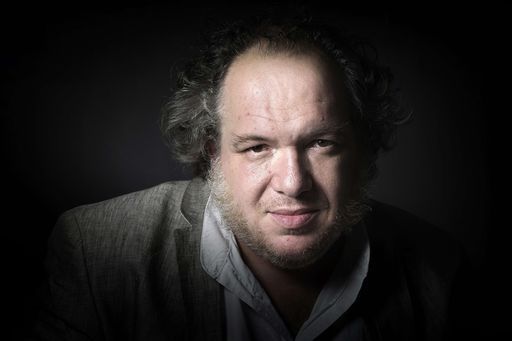
Enard

zone

.

The following excerpt is from the seventh chapter of Mathias Énard’s novel, Zone—his first novel translated into English from the French by Charlotte Mandell. Before Zone’s publication by Open Letter Books in December 2010, it won multiple literary awards including Prix du Livre Inter, Prix Décembre, and Prix Initiales. The excerpt finds Zone’s narrator, Francis Servain Mirkovic, amid a journey from Milan to Rome to sell the Vatican information he acquired as a spy for French intelligence. Indicative of the novel in its entirety (you can read an NC book review of Zone here), Mirkovic drifts between stories—stories of his past as a soldier for the Croatian army, stories of former comrades, stories spanning mythological epochs, and stories of lovers. Mirkovic crosses the boundaries between his present reality and the prismatic chaos of his traumatized mind, hoping this trip to sell information from the zone will be his last.

— mcs

§

VII

everything is harder once you reach man’s estate, living shut up inside yourself harried destitute full of memories I’m not taking this trip for nothing, I’m not curling up like a dog on this seat for nothing, I’m going to save something I’m going to save myself despite the world that persists in going forward laboriously at the speed of a handcar operated by a man with one arm, blindly a train at night in a tunnel the dark even denser I had to sleep for a bit, if only I had a watch, I just have a telephone, it’s in my jacket hanging on the hook, but if I take it out I’ll be tempted to see if I have any messages and to send one, always this passion for writing into the distance, sending signs into the ether like smoke signals gestures with no object arms hands stretching out to nothingness, to whom could I send a message, from this prepaid phone that I took care to get a tramp to purchase for me in return for a big tip, as luck would have it he had an identity card and wasn’t too wasted, the seller didn’t cause any trouble, I left my apartment dropped off a few things at my mother’s sold my books in bulk to a bookseller at the Porte de Clignancourt took three or four things, as I was sorting through things I of course came across some photos, I saw Andrija again in his over-sized uniform, Marianne in Venice, Sashka at twenty in Leningrad, La Risiera camp in Trieste, the square chin of Globocnik, Gerbens’s mustache, I took everything, and I can say that everything I own is above me in a slightly scaled-down bag, next to the little briefcase that’s going to the Vatican and that I plan to hand over as soon as I reach Rome, then tonight in my room at the Plaza on the Via del Corso I’ll go drink at the hotel bar until it closes and tomorrow morning I’ll take a bath buy myself a new suit I’ll be another man I’ll call Sashka or I’ll go straight to her place I’ll ring at her door and God knows what will happen, Zeus will decide the fate that’s suitable to allot me the Moirae will bustle about for me in their cave and what will happen will happen we’ll see if war will catch up with me again or if I’ll live to be old watching my children grow up the children of my children hidden away somewhere on an island or a suburban condo what could I possibly be living on, what, like Eduardo Rózsa I could tell the story of my life write books and screenplays for autobiographical films—Rózsa born in Santa

Cruz de la Sierra in Bolivia of a communist Jewish father a resistant in Budapest was the special correspondent for a Spanish paper in Zagreb before he became a commander in the Croatian army, I met him once or twice on the front and later in Iraq, an admirer of Che Guevara and war who founded our international brigade, a group of volunteers who spoke English among themselves Warriors of the Great Free and Independent Croatia who all arrived like me after the first images of the Yugoslav madness, Eduardo was already there, he landed in Croatia in August 1991 one month before me during Osijek and the first clashes, he came from Albania and before that from Budapest and Russia where he trained for espionage for guerilla warfare for comparative literature and philosophy, a poet—today he writes books collections of poems and plays himself in films, maybe Che Guevara would have ended up the same if he hadn’t made Achilles’s choice, if he had been given life he too might have become—weapons put away, life over—an actor, he was so good-looking: like Hemingway Eduardo Rózsa wrote fast, I picture him on an August night on the terrace of the Hotel Intercontinental in Zagreb where all the foreign press stayed, the Vanguardia from Barcelona re­­proached him for describing the fighting too much and for not talking enough about politics, he downed shots as he described the first battles, the Yugoslav tanks against the shabby Croats, his hotel room was transformed into a real War Museum, pieces of shrapnel ammunition the tail-ends of rockets maps relics of all kinds, Eduardo a funny character idealist warrior converted to Islam after having fought for the Catholic crucifix, vice president of the Muslim community of Hungary, formerly press secretary for the first free Iraqi government, men want causes, gods that inspire them, and in that scorching August of 1991 in front of the Intercontinental’s pool his R5 riddled with bullets in the garage his pen in hand he thought about the Bolivian sierra about socialism about Che and his old hole-filled uniform, he had just been shot at by Serbs on the highway from Belgrade, he writes his article, it was the first time he was under fire, the half-open window shattered to pieces, the passenger seat opened up suddenly spitting out its stuffing with hisses and metal clangor, with the speed and distance he probably didn’t hear the explosions, he swerved turned off the headlights instinctively and kept going straight ahead his hands damp clutching the steering wheel sweat in his eyes up to the suburbs of Zagreb, up to the hotel, up to the foreign colleagues the two French photographers who were sharing his room, they see Eduardo arriving dripping with sweat beside himself those two twenty-five-year-old journalists also came to Croatia to get shot at and to run around the countryside with Yugoslav tanks on their tail, to them Eduardo is a master, a man of experience and now he’s arriving trembling and sweating, he says nothing, he takes out his notebook and quietly goes to get drunk on plum brandy by the pool watching the American reporters laughing in the water at their cameraman’s jokes, that’s where it happens, touched by Zeus Eduardo Che Rózsa chose his camp, the next day in Osijek he’ll go see the Croatian officers, he’ll enlist, join the Achaean ranks in a fine rage, a rage against the Serbs: the journalists saw him one fine day in a khaki uniform, a rifle on his shoulder and when I arrived at the end of September he had abandoned the pen to devote himself to war, he would come back decorated medaled honorary citizen of the new Croatia, a hero, godfather of I don’t know how many children, and he would write his exploits himself, play his own role in the film—the first time I saw him it wasn’t on the screen, he was sitting in the middle of the trench in which I was crawling in Osijek, I was scared stiff, absolutely clueless, the shells were raining down in front of us there was the Yugoslav army its tanks and its elite troops, I didn’t know where I was going I climbed up the trench my nose in the autumn smell, in the humus, to escape, to go home, to find again the attic room and Marianne’s caresses, I couldn’t hear anything and I couldn’t see much I had glimpsed my first wounded man fired my first cartridges at a hedge, the uniform of the national guard was just a hunting jacket that didn’t protect much I was shivering trembling like a tree under the explosions Rózsa was sitting there I crawled right onto him he looked at me and smiled, he gently moved the muzzle of my gun away with his foot, had me sit down, he must have said something to me of which I have no memory and when our people began firing he’s the one who propped me up against the parapet with a pat on the back so I’d start shooting too, before he disappeared, Athena comes to breathe courage and ardor into mortals in battle, and I fired calmly, I fired well before jumping out of the trench with the others, fear evaporated, flew away with the shells towards the enemy and the farm we were supposed to take, far from Zagreb, far from the Hotel Intercontinental from its covered pool its terrace and its sauna that I had never seen, far from Paris, Che Rózsa would continue his career, I heard his name many times during the war, heroic and other more mysterious deeds, like the murder of a Swiss journalist accused of espionage for I don’t know whom, some people thought he had come to infiltrate the brigade: he was found dead by strangulation during a patrol, a dozen days before the British photographer Paul Jenks was shot in the back of the head as he was investigating the previous man’s death, heroes are often wreathed in shadows, marked by Hades great eater of warriors, Eduardo as well as others, even though in those days journalists were falling like flies, in Croatia at least, or later on around besieged Sarajevo—in central Bosnia, between Vitez and Travnik, they made themselves much scarcer, aside from a few reporters from the television channel owned by the HDZ, the Croatian party in Bosnia, who had the strange habit of emerging from nowhere, like a jack-in-the-box, of appearing at the unlikeliest times and some British reporters clinging to the white tanks of the nuisances from BRITFOR—those photographers and journalists were plying a strange trade indeed, public spies in a way, professional informers for public opinion, for the majority, we saw them that way, high-end informers who hated us as much as Her Majesty’s soldiers scorned us, frustrated by inaction their hands on the triggers of their 30-millimeter guns, perched on top of their Warriors painted white, ice-cream trucks they were called in Croatia, what possible use could they serve, they collected the corpses and negotiated cease-fires so they could go on leave to Split, where they swam, danced, drank whisky before returning to count the shots in Travnik, through binoculars at their windows, or to jog around the stadium—Eduardo Che Rózsa ex-secret agent ex-journalist ex-commander of one of the best-organized brigades in eastern Slavonia writer poet screenwriter turned Muslim and activist for Iraq and Palestine, in Budapest in his suburban house, is he thinking about the Chetniks he killed, about his first two dead, torn to pieces by a grenade in a barn by the Drava River, about his comrades fallen like mine, is he still thinking about the war, about Croatia, he a Catholic by his mother a communist by his father, a murderer by the grace of God, does he remember the freezing rain of the winter of 1991 in the outskirts of Osijek, Eduardo who grew up in Chile until the coup against Allende, deported to Budapest on a chartered flight of foreign “Reds” who couldn’t be sent to the firing squad or tortured, Eduardo going in the opposite direction from me began in intelligence before he became a journalist, then a volunteer to fight with the Croats, by our side, and re­­turned, enriched with wisdom’s store, to live in Hungary through his remaining years, in poetry screenplays books strange missions, plus everything I don’t know about him probably, Eduardo Che Rózsa who didn’t recognize me when we met in Baghdad by the Tigris not long after the invasion, between a cheap restaurant and a peanut-vendor, during the fleeting euphoria of victory, of dictatorship overthrown, justice restored—the treasures of Troy were still burning, manuscripts, works of art, old men, children, while already the coalition forces were congratulating each other on the river’s shores, not worrying about the first attacks, the signs of a catastrophe of the same caliber as the one in the 1920s, or even worse, Eduardo Rózsa was strolling in the company of a few officials by the eternal Tigris, I was eating a corncob from a street vendor with a guy from the embassy, I had just met Sashka and I didn’t want war or peace or the Zone or to remember Croatia or Bosnia I wanted to go back to Rome even for just twenty-four hours to be with her, and then Commander Rózsa walks by without seeing me, a ghost, was I the ghost or him, I had already begun to disappear I was burying myself little by little in the contents of the suitcase, in Sashka whom I thought I’d seen for the first time in Jerusalem years before, in Iraq the heat was incredible, a damp vapor rising from the slow Tigris bordered with reeds where from time to time corpses and decaying carcasses ran aground like the Sava River in 1942 without perturbing the American patrols who were still strolling about like Thomson and Thompson in Tintin a blissful look on their faces as they observed around them the country they had just conquered which they didn’t know what to do with, Baghdad was drifting, ungovernable like Jerusalem or Algiers, it was de­­composing, an atom bombarded by neutrons, hunger, sickness, ignorance, mourning, pain, despair without really un­derstanding why the gods were persecuting it so, destroyed, sent back into limbo, into prehistory the way the Mongols did in 1258, libraries, museums, universities, ministries, hospitals ravaged, Rózsa and I the ex-warriors come to share the spoils or inhale its re­­mains, as specialists of defeat, of victory, of the New World Order, of the peace of the brave, of weapons of mass destruction that gave the soldiers a good laugh, they slapped each other on the back as they drank their Budweisers like after a good joke, in Basra the British were the same as in Bosnia, very sportsmanlike, professional and indifferent, they unloaded hu­­manitarian aid trucks as I’d seen them do in Travnik, as Rózsa had seen them in Osijek, except this time they were authorized to use their weapons, which they weren’t shy about using: they hunted former Ba’athists the way others hunt deer or rather wild boar in the Ardennes, the English soldiers were returning to Basra, to the same place where their grandfathers had been stationed in 1919, after the Dardanelles, after the Hejaz and Syria, the ex­­hausted Tommies rested their legs in the country of palm trees and dried lemons, by the edge of the swamps and meanderings of the Shatt al-Arab, they stuffed their faces with dates and lambs stolen from native shepherds, wondering how much longer the war would last, it lasts forever, almost a century after Gavrilo Princip’s Balkan gunshot, the referee’s pistol shot in a long-distance race, all the participants are already at the starting line, ready to dash forward into the world of Ares great eater of warriors, hoping to return loaded with treasure and glory: Che Rózsa commander covered in medals from the great patriotic Croatian war, Vlaho or me decorated with the order of the grateful nation, Andrija with a fine black marble tombstone with no corpse, To our brother the Hero, he no longer has a body, Andrija, no bones beneath his slab, no gold pin on his jacket he’s a name a phrase a brother and a hero, I was thinking of him in Baghdad conquered humiliated subjected and pillaged as I passed Rózsa the Hungarian from Bolivia a convert to Islam and to international aid, president of the Muslim community of Budapest, or something like that, after having been a fervent defender of Opus Dei, was he informing for the Hungarians, or the Russians, or the English, were we still colleagues, colleagues of the shadows—in the night of war, of the Zone, of memories of the dead, we were living together, without seeing each other, we were sharing the same life, passing each other by the edge of the Tigris, that Styx like the Tiber like the Jordan the Nile or the Danube like all those deadly rivers running into the sea

—Mathias Énard translated by Charlotte Mandell

.
.

May 082011
 

This Ancient World
A Review of Mathias Énard’s Zone
by Mary Stein

Zone
By Mathias Énard
Translated by Charlotte Mandell
Open Letter Books
ISBN-13: 978-1-934824-9

I am lucky enough to have experienced the horrors of war only indirectly in the form of newspaper articles and television newscasts. I remember small blue-on-black explosions of sparkling shards arching through Iraq’s sky, ticker tape reeling across the bottom of the screen attempting to quantify casualties like stock market quotes. But in 1991 during the First Gulf War, a series of wars began tearing Yugoslavia apart—a nation splitting at cultural and political seams—and in Serbia, Croatia, Bosnia and Montenegro, people were faced with an entirely different wartime experience: Instead of watching dim explosions on the television, they found war erupting in their cities, backyards, homes and bodies.

Translator, Charlotte Mandell

Zone, Mathias Énard’s fourth novel (of five), his first novel translated into English is an attempt to articulate the experience of the Balkan wars from the inside. Charlotte Mandell’s deft translation from French highlights Zone’s lyric quality, conveying the retroactive point of view of a narrator who condenses the personal and cultural impact of the Yugoslav wars along with historical war crimes, genocides and ethnic cleansings dating back to Troy.

Zone’s narrator, Francis Servain Mirkovic, is a French-born Croat, a former soldier who fought “…for a free and independent Croatia, a free and independent Herzegovina and finally for a free and independent Croatian Bosnia…,” thus, in his own mind, straddling the boundary between victim and perpetrator. In the present story of the novel, Mirkovic is a spy for French intelligence collecting stories of war crimes “…like someone who becomes a referee having been a boxer and himself no longer touches the faces that explode beneath fists, he counts the blows…”

Under the influence of alcohol and amphetamines, Mirkovic has just boarded a train from Milan to Rome intending to sell the Vatican another “sad piece of the past in an entirely ordinary plastic suitcase wherein is written the fate of hundreds of men who are dead or on the point of disappearing…” Using the identity of a childhood friend, Yvan Deroy, as a cover, Mirkovic finds himself “lost now with an assumed name between Milan and Rome, in the company of living ghosts.” A bizarre interaction with a stranger further unhinges Mirkovic, inciting a state of post-traumatic stress. As Mirkovic’s train crosses city boundaries, his erratic mind wanders, and he finds himself unable to separate his own trauma-tainted memories from the stories and names of the dead that fill his suitcase.

Continue reading »

May 072011
 

Herewith Diane Lefer’s startling look at Los Angeles, the city where she lives. But this isn’t the Los Angeles of glitz and glamour, of Hollywood and Beverly Hills. Diane’s Los Angeles has more in common with the LA of the movie Chinatown, a city of murky secrets and vast, ancient corruption. Finding her inspiration (she tells me to thank him) in Keith Maillard’s essay “Richland” recently published on NC, she takes an apocalyptic look at what is known as the Santa Susana Field Laboratory, now a toxic nuclear Superfund site. Diane’s view of LA is trenchant, bracing, and passionate. It will surprise you and sadden you, much the way we were surprised and saddened reading Keith’s memoir.

Diane is a dear old friend, also a constant reader of NC. You should also check out Diane’s story “The Tangerine Quandary” published here last year. In the intro to that story, I mentioned Diane’s work with a California prison inmate, Duc Ta. For readers interested in following the Duc Ta story, here is a link to Diane’s essay “Facing Life,” from Connotation Press.

—dg

What It’s Like Living Here

from Diane Lefer on Los Angeles, California

.

.

As a New York City transplant to LA some years back, I dreaded having to drive. I found an apartment a block from a major intersection where I can walk to most of what I need and have pretty good—at least for LA—access to public transportation. But once I got used to being behind the wheel, having a car liberated me. The New York subway system is such a gift to humanity, it ought to be recognized as such by UNESCO, but without a car, New Yorkers are confined to urban life. In Los Angeles, a short drive takes me to canyons, mountains, desert where I can cross paths with coyotes or turn back on sighting mountain lion tracks. (I also once cut a hike short when I encountered a Charles Manson lookalike not far from where The Family once lived.)

Some of my favorite trails are up through the sandstone and shale rock formations and cliffs in the northwest corner of LA at the Ventura County line. I long thought if I could ever bring myself to leave the center of town, this is where I’d want to be, in one of the residential communities tucked among the cliffs or at the base of all this fabulous sedimentary rock that was deposited 65-85 million years ago. I did wonder if I’d be able to find congenial company in an area where it seemed the main employers were the adult entertainment industry and various defense contractors. I haven’t met any porn stars, but whenever I headed up Woolsey Canyon Road to Sage Ranch Park, it was impossible to miss the Boeing checkpoint and guardhouse.

. Continue reading »

May 062011


Here’s a gorgeous “What it’s like living here” piece from a former student and old friend, Laura Catherine Brown, who lives, yes, in Manhattan. I can’t even date our first meeting. I was teaching novel-writing at the New York State Writers Institute Summer Workshop; Laura had lovely growing-up in upstate New York novel-in-progress about a young woman from a place called Ransomeville, about the death of a parent, unexpected pregnancy, and the struggle to find some moment of control in a world of poverty, limited chances and no support systems (since the Great Recession more and more of America has fallen to this estate; this is a must-read book against despair).  That novel became her debut book, a fine first novel called Quickening, which Random House published 2000. Her shorter pieces have appeared in two anthologies, Before: The Big Book on Parenting, from Overlook Press and The Bigger the Better the Tighter the Sweater with Seal Press. She has been a resident at The Virginia Center for the Creative Arts, Djerassi Program, Millay Colony, Vermont Studio Center, Ucross Foundation, Ragdale Foundation and The Hambidge Center.

dg


What It’s Like Living Here

by Laura Catherine Brown in Manhattan


Any time of day except, perhaps, early Sunday morning, I cross the threshold of my building and step out onto an obstacle course generated by people. In the swarming thick of it, there is no clear line where they end and I begin. We’re parts of an incomprehensible whole. The clamor and din, the grit and anxiety, the need for haste, all swirl inside me. Any time of day. Breathe it in, breathe it out. It’s enough to make me dizzy.

Approximately eight million people dwell in New York City, a million or so in Manhattan. Two hundred fifteen thousand of them pass through Union Square, my neighborhood, on a typical busy day. Considering the volume, considering how each person rules their individual space, a remarkable accord prevails, and somehow everyone negotiates, barely touching anyone else. Amazing how we manage that.

Read the rest of this entry

May 052011
 

DG judged the FreeFall poetry contest this year. The winners were just announced in the current issue (which also contains the interview Gabrielle Volke did with dg plus a short Gabrielle wrote). Some of the poetry entries were very good indeed.

First place went to Catherine Owen for “Reincarnation Redux.” Second place went to Mark Sampson for “On Choosing a Mattress.” Third place went to Leslie Timmins for “Caravaggio to his Critics.” And honourable mentions went to Leslie Timmins again for “What is Served” and Catherine Owen (again) for “Solace/No Solace.” DG read the poems blind and did not know the names of the winners til the announcement was made. (You can listen to the first and second place poems read by their authors here.)

Here are dg’s comments as they appeared in the magazine. FreeFall is edited by Micheline Maylor—you may remember her poem “Bird at the University” published earlier on these pages.

Good writing, poetry or prose, dares to make large statements, to teach us about life, to parse existence and tell what is valuable and what is not. The top three poems I read for the contest all made this leap into the oracular. They were also all clearly aware of being inside a tradition of art; they spoke knowingly to and of other works.

First place goes to “Reincarnation Redux” which I adored because of its subversive (it uses the word) anti-sentimentality over the death of a loved one who, the poet imagines, has been reincarnated as a fly. The poem takes a sly, knowing jab at Jack Gilbert famous poems mourning his dead wife which are lauded in America but are also a bit self-pitying and, yes, sentimental. (In the one mentioned here, the poet imagines his wife coming back as the neighbour’s Dalmatian.) This poem sweeps away bushels of easy literary emotions and stock stances. It renders a lot of other poems impossible and thus is incredibly refreshing (also very funny).

My vision, I console myself, if it’s not as faithful or warm as Gilbert’s
has, nonetheless, a numerical advantage; even in wintertime one finds that flies
are quite populous, cleaning their delicate subversive limbs on windowsills.

Continue reading »

May 052011
 

One of dg’s discoveries during the marathon Danuta Gleed Literary Award reading process was a slender first collection of stories by the South African born writer Danila Botha (she lives in Halifax, soon to decamp to northern Ontario). The book is called Got No Secrets. Botha’s great subject is young wild women; her stories are confessions, full of dirty secrets, hangovers, indiscretions, drugs and alcohol, often scabrous or Rabelaisian epics of contemporary city life, clubs and hookups and the grim mornings after (when her heroines drag themselves to jobs that seem somehow beside the point). This is the female version of the Bukowski-Burroughs-Easton-Ellis macho drug romanticism, the romance of going over the cliff with bravado and style. “Jesus Was a Punk Rocker” is reprinted from the book with the author’s permission; it’s a wild ride.

dg

—–


I really have to take a piss.

I have to piss, but I can’t, because I’m lying on my back, legs spread, and I can’t get up.

My bed is collapsing. The planks of wood holding my mattress up have snapped in half one by one. It happened slowly over a few months. I felt the last one break this morning, just before I woke up. That’s what happens when you buy a bed from Ikea. Think like a student, get the back of a geriatric woman.

I reach onto my side table for a cigarette. It hurts to sit up, so I don’t. I look down to find that I’m still wearing my jeans from the night before. I’m glad. It means I have matches in my pocket. I smoke a cigarette staring at the ceiling.

I still have to piss, so I grab the vase next to my bed that once held eighteen long-stemmed red roses. It’s been empty for a while. I undo my fly and peel my jeans off. I manage to take care of business without getting a single drop on my sheets—a small miracle, since it’s a long thin vase, made of glass. I briefly consider sending it to him, with a note: This is what a sincere sentiment looks like, asshole.

I finally get up. It’s 8:35. I’m going to be late.

I step into the shower, turn the water on to the hottest it can get. I use my foot pumice to scrape the stamps off the backs of my hands, the ones that tell me what clubs or bars I went to last night. Apparently I went to the Horseshoe, and the Rivoli. My hair is greasy and stinks of smoke. I douse it in shampoo, wash it twice, then rinse like crazy.

I don’t eat because I can’t. I still have vomit lodged in the back of my throat, between my teeth, under my tongue. No amount of rinsing will get the taste out. I feel like I need to run through a car wash, clean the crevices, the part of me that can’t seem to get clean. I can’t remember anything, which worries me. I need an eternal cleansing of my spotless mind. I need to remember, and then erase.

I have fifteen minutes to get to a place that’s forty-five minutes away. I find my clothes, then my shoes, and race down the street to grab a taxi. My scrubs, as always, are wrinkled, and I’ve lost my name tag.

I get the joke about nurses in porn a lot, so I fucking hate it that the smart-ass taxi driver tells me I’m the kind of good-looking nurse that could be a star. I have no idea what cheesy movies with bleached blondes with fake tits and equally fake moans have to do with work that’s exhausting and not glamorous at all. My job means I’m constantly reassuring people, which makes me feel better about my own life, but only temporarily. A lot of people complain about the hectic pace of Toronto hospitals, but I like it. I like working ten- to eleven-hour days. The busier my hands are, the less likely I am to do something stupid, to over-think, or make a bad decision. I’ve spent ninety-nine percent of my life over-thinking everything. I once had a fight with a friend who said I mull over things until they don’t exist anymore. He was right, that used to be true. I used to consider and discuss everything until I drove everyone away. My mission in life is to not think as much as I do, and I take it very seriously.

I put my headphones on so the taxi driver will stop talking to me. It works for most of the trip. I blast punk, like the Ramones and Black Flag, bands that were my favourites in high school, and, for a minute, it makes me smile. I used to draw their logos in black ink on the insides of my arms until I was old enough to get tattoos. I stare out the window and notice some teenagers skateboarding. It makes me feel like I’m seven years old again, with my nose pressed to the window of a toy store the day before Christmas, knowing I won’t get any presents because my parents are Jews. I mean, how terrible is that? I always hated being Jewish. Chosen people, my ass. Cheap people is more like it. Other kids got dolls and books and bikes, and all I got was mouldy chocolate, wrapped up in gold foil to look like money. My parents never believed in Hanukkah presents either. They were Orthodox. They believed that presents took away from the spirit, turned something Jewish and wonderful into something Christian and terrible. It never made sense to me; it always bothered me, even then.

When I see these carefree kids skating now, it gets to me in the same way, the injustice of it. Three years ago, I could get drunk in parks, make out with strangers in the middle of the day, buy cheap wine that tasted like sunshine in a bottle. Now I have to be responsible. Now I have to think ahead. I hate the financial responsibility that comes with being able to move out of my parents’ house and party as much as I want. I could eat ice cream for breakfast, but I can’t quit the job I hate so much because I’d be out on the street. My parents would rather eat used condoms they found on the sidewalk than help me. I’m the biggest disgrace my family has ever seen. They pray for the day I get married and change my last name, or just get it legally changed, so nobody knows I’m theirs. Sometimes I can understand how they feel. I’m unconventional and strange, and they’re deeply conservative. I’ve embraced my freakishness, while they cower and hide from it.

When I was in high school I was angry all the time. I talked back to teachers, skipped class, and got kicked out when I did go. I was a rebel. When I graduated and went to college, I decided I wanted to try to challenge the system from the inside. I realized that was pointless after I got fired three times. Now I’m just a regular clock-punching employee with sensible black shoes. Most days, when I look at myself I feel sick. I feel like a hypocrite and a jackass. My job is supposed to be fulfilling, but it’s exhausting. I don’t feel like I’m in any position to help people, but I have to act like I am, act like a professional. If they only knew me, if they knew what my life was really like, they’d never trust me to do anything.

People open up to me because I don’t look like a typical nurse. I have six earrings and eight tattoos you can sometimes see, depending on what I’m wearing. My nail polish is always black and chipping. I have nose and labret piercings, but I take them out for work. My boss hates the way I look, I can tell, but patients relate to me better than they do to other nurses. I tell them to call me Mack, instead of Mackenzie, or Ms Moore. I go out of my way to make them feel at home, so that they open up to me, so that they tell me the truth. I can’t help them if I don’t know what’s really going on. I hear a lot of crazy stories. I never tell them anything about me, even when they ask. They wouldn’t want to know, anyway.

When I finally get to the hospital I jump out of the cab and speed up the stairs as fast as I can. Despite the fact that I’m thin, which is another of my serious obsessions, I’m winded by the time I get to the fourth floor. I am totally unfit. The head nurse, my boss, Mary, yells at me for being late. I have patients to see in fifteen minutes and I have no time to review their files. She grabs me by the arm so hard I wince.

I only have five minutes to go to the bathroom. I duck into the stall and role up my sleeves. I take the Swiss Army knife out of the back of my left shoe, where it’s covered by my pants. I don’t remember how old I was the first time I cut myself. I was in my parents’ kitchen, and I was having a really bad day. I wanted to eat ice cream, but we didn’t have any. Plus, it would have made me really sick anyway—I’m allergic to dairy. I decided to be good and started slicing one of those awful, healthy vegetables—I think it was a red pepper. I took a bite and it tasted like shit, so I figured it had to be good for me. I was concentrating on the taste, wondering if I should’ve just taken a multi-vitamin instead, when I accidentally sliced my fucking palm open. It was so gross. I spread my fingers open in front of me. I bled all over and didn’t even feel it. The blood spilled onto the white counter and I stared at it for at least a minute. I ran into the bathroom, grabbed a towel and held it there. I applied pressure to the wound, cleaned it with iodine, and put a couple of Band-Aids over it.

I felt so good—I’d made a mess that I’d managed to clean up. I had taken care of myself and the situation. I didn’t even feel the pain—so I just kept doing it. I have scars up and down my arms now—puffy red lines that poke out of the flesh, scabs that have no desire to heal. I’m young—I bet they’d heal eventually if I just gave them a chance. Maybe one day. My legs look fucked up, too, because I went through a burning phase. I threw hot oil from a frying pan onto my thighs for a couple of months. It hurt like hell so I didn’t do it for long. People used to say my legs were my best feature. I never saw it. But now there’s something beautiful about them—like I decided how they’d look, like I’m in control.

I cut myself every day, sometimes twice or even three times a day if I have a lot of stress. It gives me a release like nothing else. It helps me feel real, brings my anxieties and fears down to earth—it makes me feel like I’m taking all the shit I feel on the inside and putting it in a place I can see it, so I never forget it. If someone hurts me, I never forget it now. If a guy betrays me, even if I try to forget, my body will always have the scar.

I’ve been a wreck ever since the guy I fell in love with decided he didn’t want to be with me anymore. He had these liquid brown eyes that just seemed to melt even more every time he talked to me about something serious. He was so intense and so passionate. He was kind—gave change to the homeless, made small talk with everyone, even strangers. He made me want to be a lot nicer, be a lot more conscious of how I treated people. He challenged me intellectually. He was everything I ever wanted, and even though I hadn’t had a steady boyfriend since I was in grade eleven, I just wanted to be his. I wanted to belong to him more than anything in the world. He thought I was nice, too, just not anything special. I didn’t make his knees weak like he did mine. I didn’t make him want to pen bad poetry, or think about nothing else for hours while he lay in the bath, getting wrinkled fingers. I was just a passing fancy for him.

His last words to me were, “I think you’re a nice girl, but . . .”

I never even heard the rest of the sentence.

I had never tried so hard to be what I thought someone else wanted me to be. For the first time in my life, I really wanted to be good, I wanted to be loved. It’s physical: I want him to love me so much, I can feel it in every part of my body. But there’s nothing I can do about it.

I’ve been trying to sleep with other guys to get over it, but it doesn’t help. It sometimes feels empowering, like I’m starting to get over it, but it usually just makes me hate myself more. I have no idea how many guys I’ve slept with in total now, I lost track after ninety-nine. By which I mean the year, not the number. What scares me is if I counted, I’d find I’ve slept with way more than a hundred guys by now. So I ignore it. I lie to men. I told him the truth, and look where it got me. Most of the time, being myself hurts me more than anything. It’s easier to be what I think, or even know, people want.

Once I get out of the bathroom, the day passes by in a blur. I’m in the ER and then the psych ward. I see addicts and teenagers. I skip lunch and see more mental cases. I scribble notes in pencil and promise myself I’ll rewrite them tomorrow. I even make a list of their files so I can do it the next day. I see a guy who tried to kill himself by swallowing lots of Tylenol 3. His mother looks genuinely distressed and worried. I wish my parents cared that much.

I stop at Wendy’s on my way home. I just want to stuff my face. There’s something about grease, about knowing that I’m doing something bad for me that feels so good sometimes. I mean, I know how bad it is. I paid to see that documentary about that guy who eats nothing but McDonald’s for a month then nearly dies. But, on the other hand, it tastes so good. I can eat and be full for less than five bucks. I had a friend who worked at Taco Bell who said all fast food restaurants use Grade F meat. It makes me wonder if I’m eating a Chihuahua right now. Oh well. At least if I die tomorrow, I successfully beat lung cancer and liver failure, partied a lot, and don’t have to go back to work or pay rent. At least, for once, I actually managed to save money.

I have plans with a friend tonight. It’s a guy I met who’s a little younger, but really into me. Even though I don’t like him like that, it’s good for my ego. It feels really good sometimes to be wanted. Plus, if I remember right, the sex was good. At least I hope so. I go home and put on some tough-looking jewellery and my studded belt. I line my eyes with black and wear a see-through studded mesh top with a black bra underneath. I feel slut-tastic.

We meet at the Reverb at Queen and Bathurst at eleven. An all-ages punk show was his idea, and I thought it might make me feel good. Reconnect me with my past.

The walls are plastered with homemade flyers for bands I’ve never heard of. I feel so old and out of touch. We catch the second-last band and the headliner. They’re ska punk, which I’ve never liked. It’s loud and thrashing. It just sounds like noise to me. I never thought that would happen this soon. I gulp down a Scotch on the rocks and stare at the kids around me. They’re wearing Ramones T-shirts they probably bought at Bluenotes. It’s funny ’cause I see Dead Kennedys T-shirts, skulls, and studded belts, but I feel no connection to these kids.

A fourteen-year-old stops me at the bar and asks me if I can buy her and her friends some drinks. I’m drunk myself so I say sure, why not? I get them some beer—a pint for four little girls—and keep walking. They stop me and ask if I want to share some, and even though it’s crappy draft, I say yes.

I wonder if I was like them at their age. I wonder if I seem like a mom or a dinosaur to them. We sit in their booth and talk. They ask me how old I am, and when I tell them, the blonde says I give them hope. When they’re twenty-seven, she says, they want to be like me. I don’t want to tell them how I’m faking my way through every second of my life, including this conversation. I keep ordering more drinks until none of us know what we’re saying.

“To be punk all you have to do is be a rebel,” one of them says. “Everyone you’ve ever liked is punk,” she continues. “I mean, if you think about it, even Jesus was a punk rocker.”

She is giddy with excitement. I shake my head.

“He was such a blue-collar, working-class hero. He was a badass: drinking a lot, like us, hanging with whores. He took the ultimate hit for standing by his ideals. Everyone must have thought he was insane.”

I tell them it’s time to go. They try to high five me, but I move away so fast I nearly elbow a girl in the face. This religion stuff is starting to freak me out. I need to get the fuck out of here.

My date and I stumble down the street. He puts his arm and around me as I puke all over the sidewalk—booze and water and my burger come up in chunks. I look up and see neon signs and store windows spinning. I see Young Thailand with its purple and yellow lettering and rotting yellow steps. I see the crack house beside it. He walks me to my door, and I puke on his shoes, so he doesn’t ask to come upstairs and I don’t offer. I fall up the first five flights of stairs, then take the elevator up another seven flights. At least for once I’m here alone. My head is pounding like a jackhammer. I lie down and squeeze my temples. I’m going to be hungover tomorrow—again.

When I wake up it’s late and I can’t even walk straight. I take another cab to work. At this rate I’ll be broke by the end of the week—six days before I get my next paycheck. I hate my life.

I have a bunch of patients I forget immediately, until I meet a kid called Jared. He’s nine, and three months ago he lost his sister in a freak accident. His mom took them to an amusement park and they all went on a rollercoaster. Kelly had been sitting in the back, behind them both. Suddenly they heard a crash. His mother starting yelling, begging someone to stop the ride. He assumed she’d dropped her purse. When he and his mom got out they realized Kelly had fallen. They saw the height she’d fallen from. He had to see his sister in a bloody, tangled mess, her glasses smashed, her face smeared and bleeding. He had to live with the fact that if she’d been sitting where he was, she would have been fine. This beautiful nine-year-old boy was blaming himself for his sister’s death.

I can’t stop myself from crying right there, in front of him. I feel so out of my depth. I recommend an art therapist who might be able to help him express his feelings. I feel so helpless, so useless, I just want to make myself hurt. I can’t wait to get home and get into my kitchen. I duck into the staff bathroom with my knife. Just another few quick stabs around the ankle. I pull my pant leg farther down and pull my sock up higher when I’m done. I feel a little more relaxed, and I walk out smiling a little.

When I get home it’s so quiet, that it hits me—I miss him more than anything. I check my messages and—nothing. No email, no calls. A while ago I stopped bothering to keep in touch with friends. I don’t even know who to call. I could call the dude from last night, but I’m embarrassed. I never keep their numbers anyway; what’s the point?

I stare into the mirror behind my bed and decide I want to make a change. I start cutting my hair. I use the scissors on my knife that I use for opening the mail. After a while I’m not even looking. I hate having long hair. I’ve had it this long, past my shoulders, spilling onto my chest, for almost two years. It’s stringy and falls into my eyes. I don’t want to be pretty. It doesn’t help. No matter how good they say I look, guys only want to sleep with me. No one ever wants to be with me; they can sense that I’m trouble and they stay away. I want my outside to reflect my inside. I want to be ugly, messy, undeserving of a second look, never mind love.

I light a cigarette, inhale, and stare at the ceiling. A lot of people say that when they cut themselves they feel more alive. Like their pain makes them feel more real. For me it’s about being honest, showing people how hideous I am.

I’m wildly cutting now, and my hair is building up in piles on the floor. I’m shocked at how disconnected I feel from my body. What’s nice is that when I cut myself I don’t think about anything. I don’t feel sad at all. The scissors come dangerously close to cutting my cheek. I look in the mirror. My cheek is bleeding, but I don’t feel it. It takes the sight of the blood running down my face for me to know it’s happening.

I tell myself that I’m a person of ideas. That I could start a revolution, change the world. I keep telling myself that it’s not too late. But when I feel like being honest with myself, I point out that my disciples have lost interest and the only person who’s ever understood me, the only equal I’ve ever known doesn’t want me around. I wanted to be a renegade and here I am, as misunderstood as I was when I was fifteen. Only now, there’s no excuse for the angst. Now, not only does no one understand, no one really cares.

I crawl under the blankets and close my eyes to keep from crying. Half an hour later I hear my phone ring.

—Danila Botha

___________________________________________________________________

Danila Botha was born in Johannesburg, South Africa, and move to Toronto in her teens. She studied Creative Writing at York University and at Humber College School for writers. Her first book, Got No Secrets, was published by Tightrope Books in Canada, and by Modjaji Books in South Africa in May 2010. Her next book, a novel called Too Much on the Inside, will be published in September 2012. She is currently working on a book of short stories called For All the Men (and Some of the Women) I’ve Known.

May 042011
 

Foran’s Version

A Review of Mordecai: The Life and Times by Charles Foran

By Darryl Whetter


Mordecai: The Life and Times
Charles Foran
738 pp.
Knopf Canada
$39.95 hardcover


Author Charles ForanUntil Charles Foran’s recent Mordecai: The Life and Times, the various biographies of Mordecai Richler suggest that an interesting subject for biography does not necessarily an interesting biography make. Great lives don’t always inspire great books. In the decade since Richler’s death in 2001, four books entered a biography’s race between early market share, thoroughness and accuracy.  Globe and Mail journalist Michael Posner pre-excused the scattershot tone of his 2004 The Last Honest Man by subtitling it An Oral Biography. Posner splices together 150 interviews to raise questions (How much did he drink? Why the rift with his brother? Did he really seduce his high-school English teacher?) but refuses to affix any answers. The fatuousness Richler often mocked in the CanLit establishment didn’t leave him completely ignored by the Canadian academy. Reinhold Kramer’s Mordecai Richler: Leaving St Urbain (2008) examines many of the same formative experiences as Foran’s (the fall from Jewish orthodoxy, his parents’ loveless marriage and rare divorce) but also suffers the congenital blind spot of interpretation and begins to read a creative life of decades through a few childhood events. Like Foran, M.G. Vassanji is first and foremost a novelist. Vassanji’s peripatetic life within diasporic and intellectual communities could have made his 2009 Extraordinary Canadians: Mordecai Richler the most attentive to Richler’s dual citizenships as Canadian and a member of the Jewish diaspora, as Canadian novelist and cosmopolitan writer. However, Penguin’s insistence on a short biography denied Vassanji the archival time of the Kramer or the Foran and doesn’t find it as emboldened by extensive quotations from letters and manuscripts.
Continue reading »

May 042011


St. James’s Palace released the details of the dress just as Miss Middleton stepped out of a royal Rolls-Royce with her father, Michael, to walk down the aisle at Westminster Abbey.”  – New York Times, April 29th, 2011

Osama bin Laden, the mastermind of the most devastating attack on American soil in modern times and the most hunted man in the world, was killed in a firefight with United States forces in Pakistan on Sunday, President Obama announced.” –New York Times, May 1st, 2011

For the better part of the last two weeks I’ve been reading and rereading Jean Baudrillard’s essay “The Precession of Simulacra,” trying to make some sense of it and figure out something to say.  I want to keep my thoughts under a thousand words, but it’s an elusive essay.  How I think about it keeps changing.  Baudrillard critiques contemporary Western culture—from religion to politics, from Egyptology to molecular science, from the Pirates of the Caribbean ride at Disneyland to the discovery and subsequent ‘replacement’ of Tasaday Indians in the Philippine jungles—as being based on “models of a real without origin or reality.” In short, he says that we no longer have a tangible relationship with reality, that we’ve mistaken the simulacra for the authentic. The myth, the model of reality since civilization began, now (and for the first time) precedes the objective fact, a situation he calls “hyperreality.”

I needed examples, one or two snapshots of so-called origin-less reality, of models without an authentic reference.  Providence smiled upon me, offering up two perfect media bookends in a hyperreal world.  On Friday, the world watched the choreographed celebration of a royal wedding in London.  And then, as if on cue, on Sunday night with  symmetry too sublime to craft, came the strange, jingoistic jubilation after the announcement of the death of Osama bin Laden.

The gods of the absurd had granted my wish.

Continue reading »

May 032011
 

DG is one of the judges (along with Claire Rothman and J. Jill Robinson) for the $10,000 Danuta Gleed Literary Award. He read dozens of story collections over the last few months (fresh crates of books seemed to arrive every week). He mulled them over and conducted lengthy negotiations with his co-judges (gracious and intelligent writers, both of them). Then he managed to keep his mouth shut about the shortlist until its official announcement today. The winner will be trumpeted abroad May 28.

The shortlist is:

  • Darcie Friesen Hossack, Mennonites Don`t Dance (Thistledown Press)
  • R.W. Gray, Crisp (NeWest Press)
  • Billie Livingston, Greedy Little Eyes (Vintage Canada)
  • Alexander MacLeod, Light Lifting (Biblioasis)
  • Teri Vlassopoulos, Bats or Swallows (Invisible Publishing)

Here is a lovely CBC photo display with the judges’ comments on each author.

dg