
.
Writing a War Story
by Richard Farrell
.
For the better part of two years, I wrote a war story that wouldn’t come together. No matter how hard I tried, the damned thing refused to work. It’s not that I spent six-hundred days toiling away at the same pages like Jack Nicholson in The Shining, though at times it did feel that way. No, my devotion to this story meandered over those two years. I would chip away at it for a few weeks, abandon it for a while, and then come back to it. I deleted scenes and added new ones. I switched from a first-person narrator to cascading, multiple third-person points of view. I changed the title, the main characters, the setting, the tone. Every so often I sought help, from my writing group, from workshops and from trusted grad school advisors. The consensus was always the same: the story floundered.
But I couldn’t let it go.
I was writing about the firebombing of Tokyo, a particularly horrific incendiary attack by U.S. bombers in March of 1945. The ensuing firestorm was more grisly, more deadly even, than the atomic bombs that were later dropped. It is estimated that over 100,000 people died in a single night. Shadows of the dead were burned into sidewalks. Downtown Tokyo was obliterated. Many consider it to be the deadliest day in history. The target of the attack was not Japan’s munitions factories, electrical grids or coke ovens; it was not enemy harbors or troops or barracks; the target was the citizenry of Tokyo, non-combatants, women and children.
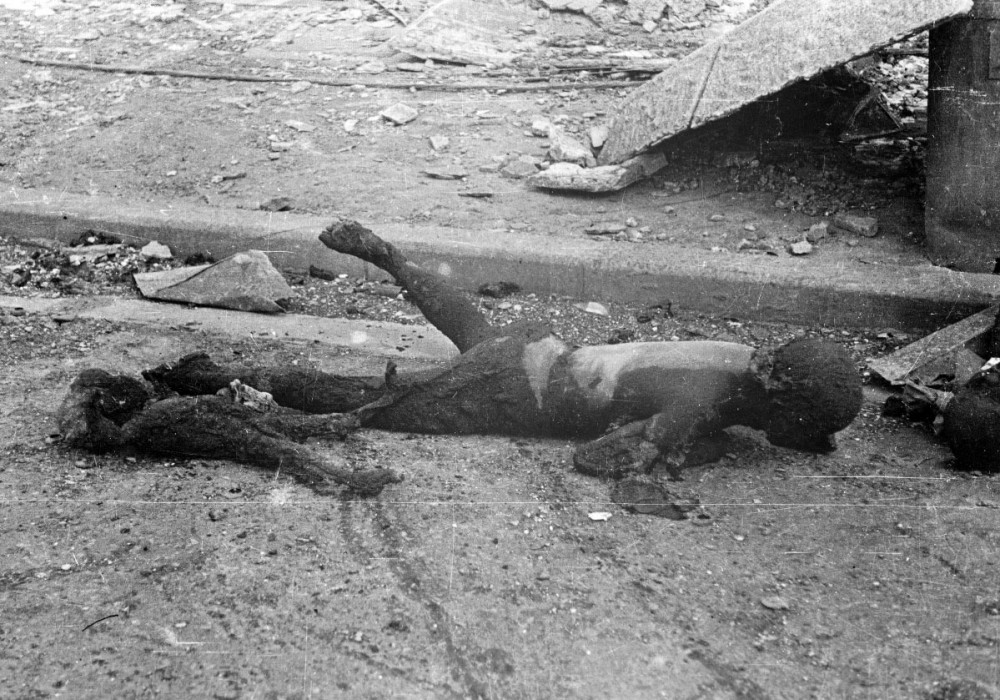
Mother and daughter after raid on Tokyo. (Note: This famous photo is often associated with atomic attacks. Either way, the impact is obvious.)
Almost as troubling as the stark reality of this raid is the fact that the firebombing of Tokyo rarely warrants more than a footnote in the history books. I was (and am) both fascinated and terrified by the casual way we forget these things.
Still, these were only facts, and none of them made for a good war story. I wanted to understand why.
In Tim O’Brien’s “How to Tell a True War Story,” he writes:
A war story is never moral. It does not instruct, nor encourage virtue, nor suggest models of proper human behavior, nor restrain men from doing the things they have always done. If a story seems moral, do not believe it. If at the end of the story you feel uplifted, or if you feel that some small bit of rectitude has been salvaged from the larger waste, then you have been made the victim of a very old and terrible lie. There is no rectitude whatsoever. There is no virtue. As a first rule of thumb, therefore, you can tell a true war story by its absolute and uncompromising allegiance to obscenity and evil.”