
Mar 012014
 

Robin Oliveira

Passion may be the very essence of romantic love, as it is of art, thus Berthe and Mary’s torment becomes as vital to their overall happiness as pleasure. The lyricism with which Oliveira conveys this fact – in particular, through dialogue and narration – illustrates the dual nature of love, for instance when Mary and Degas share an intimate moment and she notices that “he smelled of graphite and oil and turpentine; he smelled of work, of Paris, of all of art, everything she wanted.” —Laura K. Warrell

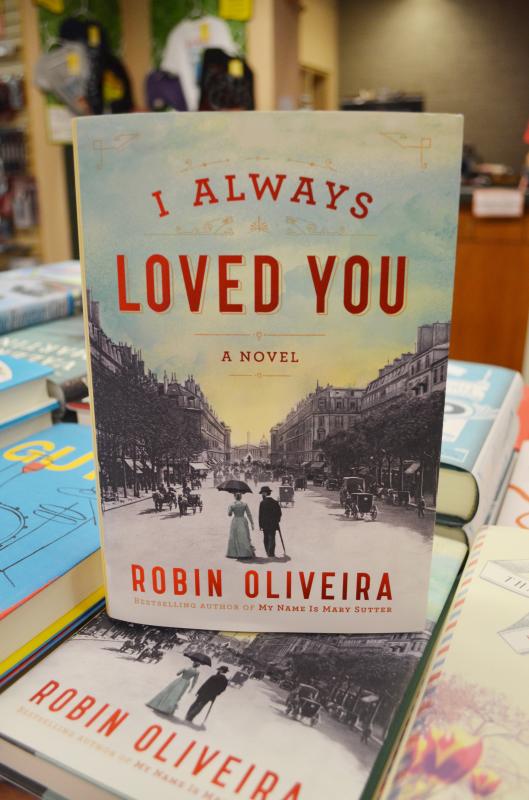
I Always Loved You

I Always Loved You
A Novel
Robin Oliveira
Penguin, $27.95


In a literary culture where explorations of romance are often relegated to lightweight, Hollywood–ready love stories with contrived happy endings, Robin Oliveira distinguishes herself.  Her latest novel, I Always Loved You, is romantic in the truest, most intellectually compelling sense of the word. The narrative travels elegantly across the topography of love while simultaneously exploring the agony and exultation of the human experience as it manifests in life and art.  The relationship between artists Mary Cassatt and Edgar Degas sits at the center of this novel set amongst the salons and exhibition halls of Belle Époque Paris, which means Oliveira has given herself a challenge unique to writers of historical fiction: faithfully representing a time and cast of characters readers know well while also telling a story that is fresh and contemporary. Oliveira meets this challenge masterfully while also creating an air of romance too often missing in modern fiction.

This is Oliveira’s second novel. Her first, My Name is Mary Sutter, won the James Jones First Novel Fellowship, while she was writing it, and the Michael Shaara Prize for Excellence in Civil War Fiction after it was published. I Always Loved You is a story about another strong-willed Mary forced to find her way in male-dominated society. Oliveira considers women’s struggles among men as “one of the unifying conflicts across cultures,” one which she likes to showcase in her work.

Indeed, Mary Cassatt was a quintessential woman of courage.  Not only did the young American painter uproot her life in Philadelphia to relocate to Paris alone, but she also managed to become one of the only women to exhibit alongside the likes of Degas, Manet, Monet and Pissarro.  In I Always Loved You, Cassatt is presented as a headstrong female who bends to no man’s will and even overwhelms her male counterparts with her pluck. After Degas introduces her to the impressionists at a salon, Mary realizes “what it was to be a woman at a party in Paris.  One either fed the men or was consulted about the time, but was not expected to speak beyond pleasantries.” She asserts herself by openly disagreeing with Émile Zola’s views on literature versus art, suggesting the writer’s work is “less vivid” than Degas’ paintings, then watches as Zola’s “wine-flushed face blushed an even deeper shade of vermillion.”

But it is her friendship with Degas that constitutes the greatest conflict of Mary’s life. Though the true nature of the artists’ relationship remains a mystery to this day – Cassatt burned all of their correspondence – Oliveira places them in a will-they-or-won’t-they love affair in which Mary’s desire for Degas occasionally surpasses her desire to create art, while Degas’ obsession with his work drives the lovers together and apart for years.

The novel begins in 1926 after Degas has died and Mary is sorting through boxes of old letters made up of “so many pages, you would think they had been in love.”  The narrative then steps back to 1887 after Mary has returned to Paris to build a life having studied briefly in the city the year before.  She attends a salon with her friend Abigail Alcott, sister of Louisa May, where unbeknownst to her, she is ogled by Edgar Degas. Unbeknownst to Degas, this attractive woman is Mary Cassatt whose painting he admired weeks before at an exhibition.

Later, an introduction by a mutual friend seals their shared destiny. Mary asks Degas, whose work she also admires, whether he believes art is a gift, to which he replies, “Art does not arise from a well of imaginary skill, obtained by dint of native ability…Art is earned by hard work, by the study of form, by obsessive revision. Only then are you set free. Only then can you see.”

This is the first in a lifetime of conversations about craft, and most interestingly the notion of “seeing,” in which the lovers engage, grow intimate and fight.  Degas proves to be an unpredictable, argumentative cynic and wayward friend who nonetheless adores Mary and her work. He brings her into his circle of artist colleagues where Mary cuts through “the clannish nature of Parisians” with her challenge to Zola. Though her path to acceptance by the circle is bumpy, she eventually becomes an integral part of one of the most celebrated communities of artists and thinkers in Western history.

Through the course of the novel, Mary struggles with her muse and attempts to mold her art to the conventions of the time until Degas inspires her to stay true to her singular vision. In her creative life, she experiences great successes and humiliating failures, while in her personal life she struggles with her family, including a sick sister and disapproving father, who come to live with her in Paris. All the while, Degas flits in and out of her life, fawning over her one moment then maintaining his distance the next.

A subplot between Édouard Manet and painter Berthe Morisot, the wife of Manet’s brother Eugene, reinforces the novel’s overarching theme of elusive love. Manet and Morisot spend the novel stealing glances, sneaking away for trysts, smiting one another with jealous jabs and suffering the consequences of choosing fidelity to family over true love.

I Always Loved You is not romantic simply because it deals with matters of the heart, but because Oliveira adheres to many of the attitudes and aesthetic qualities of romanticism: an emphasis on the self and creative freedom, the elevation of the human soul and pursuit of wonder, the use of extravagant language to reflect the poetry of life and an acceptance, even glorification, of the agony of existence. The characters exemplify the romantic notion that pleasure, beauty, love, even artistic achievement requires pain to be meaningful and real.

Oliveira develops the romantic soul of the novel through the ideas and choices her characters make, and the lyricism with which she tells their stories. Degas acts as a champion for the self and the struggle for art over commerce. Several times during the course of the novel, he withdraws his work from exhibitions, even if it puts Mary and his friends in difficult positions, because he prioritizes the private experience of creation.

“Nothing public matters,” he tells Mary. “What matters is what happens inside the studio. Your work. That is where genius lies, where it is born…It is not born on the walls of an exhibition.”

Mary begins the novel striving for recognition outside of her studio but only discovers her individual style, and consequently finds success, once she heeds Degas’ wisdom, abandons the “academic values” set by the establishment and “renders a portrait she knew the Salon would undoubtedly reject.” Mary is blissful whenever inspiration strikes, but in true romantic fashion, also feels “a wash of sadness, for that sensation happened rarely for an artist, and was in turn fleeting.” Her work becomes as rewarding as it is “punishing,” just like her love for Degas.

Of course, love is at the heart of the novel, especially the love emotionally faithful women feel toward emotionally faithless men like Degas who is too egotistical to love. After a frustrated Mary asks him, “Do you love anyone, Edgar?  Anyone at all?” Degas ponders the question; “Why not love her? Why not say it? What had quickened when he had kissed her had at least been lust. But he was not a romantic man.”

Meanwhile, Manet is simply a cad, parading his lovers in front of not only his loyal wife but Berthe, the woman he loves. Berthe is torn between a tempestuous affair with Manet and a dependable marriage to a devoted husband, who just happens to be Manet’s brother; “I have found a good man who will forgive me anything, even the gossip of others. Even the truth.  What, then, was love? The incessant whisper of passion, or the tedious murmur of caring? The ragged tear at your heart, or the gentle caress that rendered you safe? Perhaps there was no one thing that was love.”

Passion may be the very essence of romantic love, as it is of art, thus Berthe and Mary’s torment becomes as vital to their overall happiness as pleasure. The lyricism with which Oliveira conveys this fact – in particular, through dialogue and narration – illustrates the dual nature of love, for instance when Mary and Degas share an intimate moment and she notices that “he smelled of graphite and oil and turpentine; he smelled of work, of Paris, of all of art, everything she wanted.” The exalted feeling with which the romantic lover relates to her mate is exemplified by such hyperbolic language: Degas does not simply smell like a man she loves but he smells like the world and everything in it Mary cherishes. When he disappears in the weeks following their intimacy, she thinks, “all things she would abandon at the slightest encouragement if he would only grasp her wrist or whisper, I missed you.” Oliveira’s novel lays bare the inherently romantic nature of elusive love, which makes lovers experience the ecstasy of union and the torment of loss again and again.

Likewise, the tragedy of unfulfilled love has greater consequence in a well-lived life than love fulfilled as suffering makes life meaningful. Mary, still smarting from the cruelty Degas has inflicted upon her, asks Berthe whether her relationship with Manet has been worth the pain. “Live without having loved?” Berthe answers.  “I don’t know if I would have wanted that…I can’t help that I love him.  I wish that I could, but no amount of wishing has made it so.’”

This romantic spirit is further accentuated by the presence of light, and by extension vision, as a recurring image in the novel.  Light plays a major role in the evolution of the plot as these artists are inspired by, work by, covet and capture light, thus, it features heavily in their interactions with one another and their work.  “‘I’ve visited your country,’” Degas tells Mary when they first meet. “‘The light was horrid.’” Later, the lovers see the light hitting the Seine a certain way and “longed for a brush to record it before it slipped away.”

Oliveira uses light to symbolize the characters’ internal experiences and artistic impulses. When Berthe’s father dies she agrees to marry Eugene because “all the light had gone out of the world” while a character in the midst of dying feels “the light trickling away.” Light finds its way into the novel through other words: glimmer, shimmer, glare, flickering, brilliant, luminous, reflect, brighten, candle, sunlight.

But Oliveira’s most stunning handling of light is how she uses it to tell her story the way her characters use it to paint. She manipulates the light in the rooms and streets to give texture to the scenes, for instance when Manet confesses to Berthe that he has contracted syphilis and the “dull light” outside the window makes “pale marble of his hands.” Oliveira uses light to signal changes in mood as well, like when Degas breaks the news to Mary that he has called off the publication of a journal they created together and “a cloud passed over the sun, casting a cool shadow over the lake, dulling the reflection of the trees in the water.”

In yet another scene, Mary has been weakened once again by Degas’ cruelty as “the glimmer of the candle [in the room] fading now, and with it all her vague dreams of a life lived beside this man…The flame trembled in its puddle of molten wax and went out, rendering the studio a place of shadows and depth.”  These scenes are as provocative and beautifully rendered as the paintings the characters create.

Certainly, light enables one to see and when, in the beginning of the novel, Degas tells Mary she must learn to “see” in order to create great art, she becomes obsessed with clarifying her vision. Oliveira uses sight as powerfully as she uses light: Mary wonders if she “would she ever truly see” and later realizes in order to do so she must “unsee” everything she has known before, from her creative habits to her view of herself and the world.

“Paint what you see, paint what you love,” Degas tells her, suggesting that artistic vision and love are one in the same or are at least rooted in the same place in the human soul.  Perhaps then it is no coincidence when Mary finally finds her way that Degas tells her, “You’ve painted love…You must never paint anything else. You have found it. Your obsession is love.” How ironic that Mary is able to paint love and Degas is able to see it in her work, yet they are unable to experience it together.

Even more ironic is the fact that both artists are going blind. In the beginning of the novel, Degas is being fitted for special eyeglasses because there is a hole in his vision casting dark shadows. Blindness has stolen from him “the mass of things, their shape-ness, their roundness, their solidity. Edges wavered and blurred and doubled until forms became hallucinating shape-shifters, liquid impersonators of what had once been reliable, immutable matter.” Once again, the richness of Oliveira’s narration paints a vivid picture of the world seen through the eyes of an artist.

Certainly, there is no way to know whether Oliveira’s portrayal of her characters and their relationships are completely faithful to history but in the end it doesn’t matter. I Always Loved You is an engaging read because the author has recreated a world of romance and color populated by characters whose challenges mirror those of modern times. But for all the characters’ musings about artistic integrity and creative freedom, perhaps the words spoken by Manet best capture the novel’s enduring message: “It is love, my frightened ones.  Love.”

—Laura K. Warrell


Laura K. Warrell

Laura K. Warrell is a freelance writer living in Boston. She teaches writing at the Berklee College of Music and the University of Massachusetts Boston and is a July, 2013, graduate of the MFA program at Vermont College of Fine Arts. She has previously published both fiction and nonfiction in Numéro Cinq.


Jun 022013
 

Robin Oliveria 

Herewith a cogent, revelatory, insightful essay on the inner complexities of novel construction, to be precise, the often ignored (unthought, unimagined) techniques of character gradation and grouping. Don’t scratch your heads and ask what character gradation is. It never fails to amaze me how few people who want to be writers have the vaguest idea of how a novel is put together. Plot and subplot, for example. How are they related, how is the subplot introduced through the text? Too many proto-novelists naively assume that a novel is just a 300-page story (um, without having thought much about what a story is either). Character gradation and grouping is related to subplotting; it’s a technique for deploying other characters (plots) as devices that reflect the concerns and themes of the main plot characters. It’s a form that helps the novelist invent content and also create a consistence and cohesive thematic whole. It is an old technique (though few readers actually notice it).

Robin Oliveira has thought long and hard about the structure of novels. She is a former student of mine, a graduate of Vermont College of Fine  Arts, who rocketed into the ranks of published novelists with her well-received Civil War novel My Name is Mary Sutter. Her second novel, based on the painters Mary Cassatt and Edgar Degas, is due out with Viking next year. She has contributed to Numéro Cinq from the outset. And it is always wonderful to have her back.

dg


For the most part characterization in novels has not been discussed in terms of coherence, that is, in the scientific meaning of the word as the intermolecular attraction that holds molecules and masses together.  Coherence is important because a novelist must corral the differing, wayward elements of a novel into a whole, making associations and connections between characters and events.  An efficient way to do this is through character gradation and grouping.

Character gradation is a cousin of the tried and true literary device of comparing and contrasting characters, but it is more than that.  In his book The Enamoured Knight, Douglas Glover explains that parallel and contrasting characters do not just share traits, but that “traits are varied, diminished or intensified from one character to another, that is, they are graded.”[1] I like to think of gradation as a spectrum, with the full shade of a trait, from fully realized to fully opposed, deliberately manifested in the population of a novel.  This spectrum is crafted by the careful writer in order to flesh out the themes and story question presented.  Grading ensures that the novel’s central issues reappear again and again in a number of guises.  In essence, grading does the difficult work of achieving the coherence necessary to reinforce the meaning of the book.  In addition, groupings and cross-groupings have a kind of cascading effect that helps to build momentum.  As Glover explains, “The effect of character grouping and gradation is…to create a thematic and structural cohesiveness, a critical intensity of focus which prevents the long story (with all those extra characters) from sprawling and dissipating its energy.”[2] These gradations cause echoes, reminding the reader of how the characters are connected and also what they have at stake, what emotional issue is tantamount, and ultimately what the story is about.

Character gradation is the child of echoing and repetition, which E.K. Brown discusses in his book, Rhythm in the Novel.  In his first chapter, “Phrase, Character and Incident,” he comes to the conclusion that repetition, combined with variation of action or character trait or even phrasing, establishes the “rhythmic process, the combination of the repeated and the variable with the repeated as the ruling factor.”[3]In his discussion of James and Thackeray, he makes another point, which is that “flexibility” and the use of “antithesis” “irradiates the characters.”[4]   Therefore, variation of character traits combined with alternating groupings of characters achieves a sense of connectedness that is a powerful tool when devising a novel’s population.  This coherence not only solidifies theme, as Glover says, but these variations and repetitions graded on a spectrum amplify the story, which gives the novel vibrancy and the sense of a larger world.

With these principles in mind, I begin my discussion of gradation and cohesion as manifested in novels by Jane Austen, Anne Tyler and Mark Haddon with assertions fundamental to my thinking on characterization.  They are: that a novel is a story about people, and people act in such a way as to secure that which they desire.  They desire something because of who they are, where they have been, who they love, of what they have been deprived, what they perceive they need, and what they do not consciously understand about themselves (though the author does, or will come to, as the characters develop).  That a novel by design is a cohesive entity.  That nothing is inserted into a novel by accident.  That each element of the story serves the larger whole.  That a novel or story is built, brick by brick, rather than spilled onto the page, and each brick is the result of who the characters are and what they want; their desire dictates plot.

With these assertions in mind, I will argue that in Austen’s Pride and Prejudice, Anne Tyler’s Dinner at the Homesick Restaurant, and Mark Haddon’s The Curious Incident of the Dog in the Night-time, character gradation is a fundamental and indispensable tool.
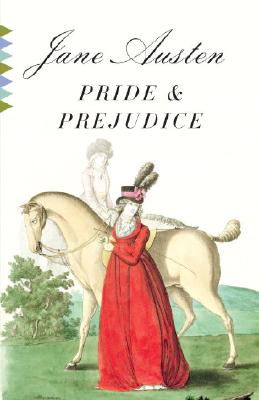
pride2In Pride and Prejudice, Austen populates her novel about the Bennet family daughters’ romantic fortunes with neighbors, family friends and extended family.  But it is how she characterizes them that gives the novel its cohesive feel of being about one thing.  The story revolves around the question that if one wishes to marry for love, as Elizabeth and Jane Bennet do, how does one choose a marriage partner when faced with class and financial obstacles?

The principal characters in this story are the two eldest daughters of Mr. and Mrs. Bennet, Jane and Elizabeth, and the two men with whom they will fall in love, Mr. Bingley and his friend Mr. Darcy.  Again, if we think of gradation as a spectrum, diminished to heightened, or opposite to opposite, we see how Austen crafted her principal characters.  Notice how alike Jane and Bingley are, and how singular Mr. Darcy and Elizabeth are; how opposite Jane and Elizabeth are, how dissimilar the two male friends are.  Elizabeth is lively, playful, witty and can easily see peoples’ base motivations, though she fails to perceive, at first, Mr. Wickham’s base character.  She is a more vibrant character than Jane, who is sweet, kind, never finds fault in anyone, and would never ascribe dishonorable reasons for anyone’s actions.  Mr. Bingley, who will eventually marry Jane, is described in terms similar to Jane: he is gentlemanlike with a pleasant countenance and excellent manners.  Mr. Darcy, Elizabeth’s opponent and future husband, is deemed by all to be proud, class-conscious and disdainful of those beneath him; different from Bingley, but like the vivacious, independent-thinking Elizabeth in that both share the trait of pride, causing them each to prejudge the other, resulting in dual, unfavorable impressions that are not easily unseated.

Austen uses these principal characters’ gradations to craft a spectrum of attitudes toward the story question.  She employs this method by setting off Bingley and Darcy as opposites, though they are also grouped as friends.  This opposition is interesting, since they are not opponents in this story.  They are parallels.  Bingley’s courtship of Jane runs a very close second plot to the Darcy/Elizabeth romance.  But from the beginning, Austen writes:  “Between him and Darcy was a very steady friendship, in spite of a great opposition of character.”[5] They act out this opposition of character in a variety of ways:  Darcy refuses to dance at a party where Bingley dances every dance; Bingley falls in love with Jane immediately despite her poor family connections while Darcy must overcome his pride; Bingley yields to his friends’ and sisters’ opinions, while Darcy defies them.

Jane and Elizabeth are at odds as well, though they are grouped as sisters.  Jane quickly falls in love with Bingley, while Elizabeth initially despises Mr. Darcy before comprehending his true character and falling into love.  Jane pines away for Bingley in London, accepting her fate, while Elizabeth visits Darcy’s home, Pemberley, accepts dinner invitations from him, and fights his aunt, Lady Catherine de Bourgh, even when Elizabeth has no evidence that Darcy is in love with her.  These articulate variations are a type of repetition.  Both the sisters are in love, they are in love with two friends, yet their personalities and actions are dissimilar.  Furthermore, Austen groups each pair of lovers.  Jane and Bingley are parallels.  As Mr. Bennet says to Jane, “Your tempers are by no means unlike.  You are each of you so complying, that nothing will ever be resolved upon; so easy, that every servant will cheat you; and so generous, that you will always exceed your income.”[6] Elizabeth and Darcy, however, remain in opposition, and everyone is amazed when they are engaged—sisters, father, mother, friends, relations.  But the careful reader knows that they acted in the same way, just as Jane and Bingley did: they each disliked the other at first.  This variation of action and intention in groups has a wonderful, dynamic effect on the novel as the reader experiences all the permutations of love and desire.

How does this pair of lovers feel about marrying despite class and financial obstacles, the story question at hand?  Again, they are graded.  Jane and Bingley provide the calm backwater to the more tempestuous love affair between Darcy and Elizabeth. For Bingley and Jane there is no obstacle.  Jane wishes to marry for love, falls in love and remains true despite the class and financial obstacles in her path.  Bingley perceives neither class nor financial obstacles, and is only persuaded not to marry Jane because his sisters and Darcy, who are very conscious of the issue, persuade him that Jane is not in love with him.  Elizabeth and Darcy, however, confront the issue and each other.  When Darcy proposes the first time, and Elizabeth wisely but pridefully turns him down, Darcy verbalizes the class and financial differences between them, saying he is proposing in spite of them.

Reinforcing the central question of how to choose whom to marry, Austen presents a series of couples to echo the two main couples.  Elizabeth’s dear friend Charlotte Lucas, who eventually marries Mr. Collins—Elizabeth’s second cousin who proposes first to Elizabeth and then, when refused, applies to the acquiescent Charlotte—is drawn in opposition to Elizabeth by a differing perspective on marriage.  Charlotte believes that “Happiness in marriage is entirely a matter of chance…It is better to know as little of the defects of the person with whom you are to pass your life.”  Elizabeth counters, “It is not sound.  You know it is not sound, and that you would never act this way yourself.”[7] But Elizabeth is wrong.  Charlotte will and does act exactly in this way, marrying Mr. Collins, a man invariably described as absurd, conceited and obsequious.  This direct opposition of Charlotte to Elizabeth, though they are friends, serves to dramatize the story conflict and further illuminates Elizabeth’s desire to marry for affection, not money or class associations.  Were Charlotte merely a friend who did not wish to marry, she would have no parallel plot, and Charlotte as a character would neither resonate nor reflect on the story question.  But she is constructed in such a way that she serves as an antithesis to Elizabeth’s desire to marry for love, then enters into a marriage that will serve as the antithesis to her marriage to Mr. Darcy, all the while being grouped with Elizabeth as a dear friend.

Furthermore, Austen inversely mirrors the Charlotte/Mr. Collins marriage to the coupling of Mr. and Mrs. Bennet.  In the elder Bennet marriage, it is Mrs. Bennet who is universally considered absurd, and Mr. Bennet the man who chose poorly.  Mr. Bennet, however, upon learning that Collins and Charlotte were about to be married, thinks “Charlotte Lucas, whom he had been used to think tolerably sensible, was as foolish as his wife….”[8] But while Mr. Bennet believes himself to be sensible, he is as foolish as Charlotte, a sober person marrying for the wrong reasons.  Elizabeth contemplates her parents’ marriage thusly: “Her father, captivated by youth and beauty, and that appearance of good humour, which youth and beauty generally give, had married a woman whose weak understanding and illiberal mind, had very early in their marriage put an end to all real affection for her.  Respect, esteem, and confidence, had vanished for ever.”[9] So, ultimately, Mr. Bennet was the foolish one, not his wife.  This question of who exactly is the foolish one again reinforces the story question of how to choose a desirable marriage partner.  This inverse mirror reinforces the theme and aspiration of both Jane and Elizabeth that choosing well in marriage will provide the only possibility of future happiness, and fattens the peoplescape, or population, of Austen’s novel.

Yet another iteration of a poor coupling is that of Lydia, Elizabeth’s youngest sister, with the officer George Wickham, a dissipated fortune hunter who preyed first on the young Miss Darcy, the very minor character Miss King, and finally Lydia, who was deluded and silly enough to behave without any deliberation, on the basis of flirtation alone.  Lydia’s actions serve as the brightest opposite to the more sober method of obtaining a husband adopted by both Jane and Elizabeth, and Wickham and Lydia as a couple are the stunning opposites of both Bingley and Jane and Darcy and Elizabeth.

The Gardiners, Elizabeth’s aunt and uncle, are yet another couple echoing the main couples, serving as an example of a fine partnership to which Elizabeth and Jane aspire.  They are also relatives.  Darcy has an aunt, too, Lady Catherine de Bourgh.  Note the symmetry here, another kind of grouping. But here is where the similarity ends. While the Gardiners are egalitarian and helpful, Lady Catherine is autocratic and obstructive.  Where the Gardiners hope for the union of Darcy and Elizabeth, Lady Catherine campaigns against it.  Where the Gardiners cooperate in helping Darcy mend the miserable connection of Wickham and Lydia, thereby tacitly agreeing to a union between the two families, Lady Catherine visits Elizabeth to sunder the possibility of her marriage to Darcy and to decry the poor family connections that Darcy also once disdained.  At the close of the novel, Mr. and Mrs. Gardiner are grouped with the Darcys as representative of the happiest of couples, as well as Jane and Bingley.

These couples populate the novel as echoes of the main characters, providing numerous contrasts to the way Jane and Elizabeth are going about their romantic affairs, showcasing imprudence and resignation (Charlotte) and foolishness (her mother and Lydia) in order to highlight Jane’s and Elizabeth’s more prudent approaches.  Their stories of course are subplots, but they are subplots because of how they mirror and magnify the main characters’ plots, and they mirror and magnify those plots because their desires and character traits are grades of the main characters and their conflict.  These multiplications not only populate the novel but also give it coherence, imparting that sense of a whole world with teeming inner connections.

Austen also groups individual characters.  Elizabeth’s three younger sisters are all shades of Mrs. Bennet.  Austen echoes Mrs. Bennet’s character in the headstrong, silly Lydia.  Lydia is a younger variation of Mrs. Bennet, who also once loved a redcoat: “I remember the time when I liked a red coat myself very well—and indeed so I do still at my heart; and if a smart young colonel, with five or six thousand a year, should want one of my girls, I shall not say nay to him.”[10] When the regiment leaves Meryton and Lydia is pining for the loss of the officers’ society, Mrs. Bennet says, “I cried for two days together when Colonel Millar’s regiment went away.  I thought I should have broke my heart.”[11]


Kitty is first grouped with Lydia—considered by their father to be “two of the silliest girls in the country.”[12] —but toward the end of the novel, when she is “removed from the influence of Lydia’s example, she became, by proper attention and management, less irritable, less ignorant and less insipid.”[13]

Mrs. Bennet has lesser echoes in her sister Mrs. Phillips, whose behavior is likewise “vulgar”[14], and in Lady Lucas, who echoes Mrs. Bennet in her singular desire that her daughter Charlotte be married, no matter what the cost.

The other sister, Mary, is a minor echo of Mr. Collins and, though it is never directly stated, is the obvious marriage partner choice for her double.  She sounds like Mr. Collins when she speaks: “ [Lydia’s elopement] is a most unfortunate affair; and will probably be much talked of.  But we must stem the tide of malice…loss of virtue in a female is irretrievable—that one false step involves her in endless ruin….”[15] He stupidly ignores her, underpinning the theme that most people make foolish marriage choices.

I think it is important to note that the techniques of grouping need not be as obvious as those previously discussed.  Notice that Austen makes Mary seem the best choice for Mr. Collins only by inference.  Mary’s opinions are his opinions; when she speaks, she mimics his self-righteousness.  Never are the two described as being alike, yet every reader knows that Mr. Collins should have chosen Mary, an association achieved merely by this more subtle method of grouping.

Elizabeth’s suitors are also graded.  Mr. Collins appears at first to be primary on the least desirable.  However, Mr. Wickham, at first grouped with Bingley in appearing to be the best choice for Elizabeth, is revealed instead to be the worst when Darcy reveals Wickham’s attempted elopement with his younger, vulnerable sister.  And when Wickham instead succeeds in eloping with Lydia and extorting a fortune from Darcy, Mr. Bennet has this to say of him:  “He is as fine a fellow…as ever I saw.  He simpers, and smirks and makes love to us all.  I am prodigiously proud of him.  I defy even Sir William Lucas himself, to produce a more valuable son-in-law.”[16] This reevaluation regroups Mr. Wickham at Mr. Collins’ end of the spectrum.  A fainter echo is Colonel Fitzwilliam, who is presented and grouped with Mr. Bingley as a better alternative to the proud, disagreeable Darcy.  In Charlotte’s mind, Fitzwilliam was “beyond comparison the pleasantest man,”[17] but in the end, he remains nothing but a faint echo of Mr. Bingley and yet another contrast to the incomparable Darcy.

The lesser characters of Miss Bingley and Mrs. Hurst serve as opposites to Elizabeth.  Miss Bingley wishes to marry Darcy and goes about it all the wrong way, using teasing and jealousy in an attempt to alter his emerging affection for Elizabeth.  Mrs. Hurst is an echo of her sister, and her marriage to the frequently drunken Mr. Hurst echoes the ill-advised marriages of other couples in the novel.

In summary, in Pride and Prejudice, grouping and regrouping of the characters magnifies the theme of the novel and coheres the whole.

dinnerDinner at the Homesick Restaurant, by Anne Tyler,is the multi-generational story of the Tull family: Pearl, the matriarch, her husband Beck and their three children, Cody, Ezra and Jenny.  Like Austen, Tyler uses character gradation to enhance, emphasize and reinforce her novel’s essential question, which is: Can a family, divided by a history of pain, come together?  Like Pride and Prejudice, Dinner at the Homesick Restaurant is populated by family members, their spouses and friends.  But Tyler’s novel employs a more interior POV and hence the characterization is less firm.  The reader’s view of the characters in Dinner shifts as the characters regard themselves and each other at different points in their lives.  Memories are unreliable, conflicting; assessments change, not in the way that Elizabeth’s opinion of Mr. Wickham and Mr. Darcy changes, but in a more complex, unstable way.  Therefore, the characters can be viewed only in their shifting relations to one another.  But this shifting characterization still provides its own kind of cohesiveness, because the shifting groupings further link each of the characters one to the other.  In effect, Tyler has taken this technique to its most articulate expression, further enhancing her story of this unstable, troubled family. It is important to note that Tyler tells the story in third person, shifting from one character’s view point to another as the novel progresses, a perfect approach in this instance since Dinner is the story of a broken family. Still, Tyler’s employment of character gradation works in much the same way that Austen’s does.  The foundational principle is the same: repetition and variation of character traits in order to group the characters to reinforce theme and story.

Dinner at the Homesick Restaurant begins with Pearl’s story.  The matriarch is on her deathbed, having willed herself to die by deliberately catching pneumonia through self-induced immobility.  Intermittently conscious, she reviews her life: her relationship with the husband who deserted her, and her life with their three children, Ezra, Cody and Jenny.  We learn that Pearl experienced moments of explosive anger, that she was never very happily married, that she considered herself unreliable, at times, as a mother.  She wonders why her children did not find themselves a substitute mother: “You should have got an extra mother, was what she meant to say.”[18] Before she dies, she instructs Ezra to call everyone in her address book, knowing full well that the only one left alive is Beck, the absent husband.  It is this dual wish/act—dying and having Ezra call her estranged husband—that will ultimately unite this sundered family.

The characters in this novel shift associations as in a kaleidoscope of literary Venn diagrams, in which character traits and associations are grouped and regrouped again and again.  The shifting and regrouping, both of desire to reunite and the characters’ assessments of one another, are so fluid that they are difficult to outline.  As in Pride and Prejudice, the groupings in this novel are based on desire.  In this case, the groups shift on the basis of whether or not reunion is desirable.  In the first grouping, Pearl and Ezra want the same thing, for the family to be reunited.  Pearl wants the family to be together so much that she does not tell the children that their father has left, and pretends to them and the neighborhood that someday Beck will return.  Ezra spends the novel trying to unite the family over meals, adopting the traditional mother role and thereby becoming the substitute that Pearl insists her children need.  He is also grouped with her by both her and his siblings.  We’re told that “Ezra was her favorite, her pet…The entire family knew it. ”[19] And Pearl thinks Ezra will stay with her, “the two of them bumping down the driveway, loyal and responsible, together forever.”[20]

But the novel’s Venn diagrams constantly shift as the characters make associations with the other characters.  At various times, Ezra is grouped with Luke, (Cody’s son) and Ruth, the woman Cody will steal from Ezra.  However, as soon as Cody marries Ruth, his regard for her, and therefore the way he associates her, changes.  Where once he grouped her with Ezra, he now groups her with his mother, using the same description he used to describe Pearl.  Later, Cody reassociates Ruth with Ezra because she, too, tries to feed him.  But just after Cody steals Ruth from Ezra and marries her, he encounters an old girlfriend whom he had dropped because he thought she preferred Ezra instead of him.  As soon as she relates that she had always considered Ezra “a motherly man,” Cody develops an heretofore unheard-of affinity for Ezra because “she really hadn’t understood Ezra; she hadn’t appreciated what he was all about.”[21] You see the cascade effect here, the kaleidoscope.  One character is grouped to another, is grouped to another, then is regrouped again.  These subtle cascading impressions link Cody to Ezra, enhancing in the end the plausibility of this damaged family being able to reunite.  Gradation, therefore, serves to cohere and reinforce the story question.

Pearl is grouped with others beside Ezra and Ruth.  Pearl and her daughter Jenny are both characterized as tidy, though later Jenny will abandon that trait when she becomes a substitute mother to her third husband’s brood of children, whose mother abandoned them, an act which creates two more groupings: one of abandoned children and another of parents who abandoned their families.  To further reinforce the theme, Becky becomes a substitute mother to all of Joe’s children, a split off from Pearl thinking they all should have found a substitute.  Also, Jenny leaves her first husband Harley and never tells the family, just as her mother did when Beck left.  And Jenny loses her temper with her daughter just as Pearl did with her: “’No,’ said Becky, and Jenny hauled off and slapped her hand across the mouth, then shook her till her head lolled, then flung her aside and ran out of the apartment…All of her childhood returned to her: her mother’s blows and slaps and curses, her mother’s pointed fingernails digging into Jenny’s arm, her mother shrieking, ‘Guttersnipe!  Ugly little rodent!'”[22] In another cascade, Jenny’s daughter Becky later develops anorexia, as Jenny had as a child—Jenny was once referred to as looking as if she had come from Auschwitz.  And to further illustrate how complex the groupings are, in an even more convoluted reflection, Jenny thinks Cody perceives that everything she says “carries the echo of their mother.”[23]

The men, too, are linked in this cascading fashion.  Previously, we observed the cascade from Ezra to Luke and Ezra to Ruth.  Tyler groups Cody with Beck—the father he could never please—in that he takes a traveling job like his father and ends up living the life he lived as a child, unconnected to his neighborhood.  Unlike his father, however, Cody takes his family with him wherever he goes, echoing Ezra’s desire that the larger family be reunited.  Note here the subtle method of grouping by action.  While Darcy and Bingley acted in opposite ways, Cody and Beck act alike.  Yet Cody would never be able to consciously admit that he is anything like his father.  Indeed, he prides himself on being the exact opposite.  But he is the same.  While Ezra takes on motherly qualities, Cody takes on paternal characteristics.  It is a way for the reader to see the grouping without the character ever being aware of it; indeed, if Cody ever admitted to being like his father, I am not certain he could survive the psychological blow.  Toward the end, when Ezra has invited Beck to the restaurant for the funeral meal just as Pearl wanted and Beck, feeling out of place, leaves, it is Cody who ultimately finds his father and, more importantly perhaps, recognizes his son in his father: “There was Luke, as if conjured up, sitting for some reason on the stoop of a boarded-over building.  Cody started toward him, walking fast.  Luke heard his footsteps and raised his head as Cody arrived.  But it wasn’t Luke.  It was Beck.  His silver hair appeared yellow in the sunlight, and he had taken off his suit coat to expose his white shirt and his sharp, cocked shoulders so oddly like Luke’s.”[24] This grouping has, again, the effect of delineating the associations between characters and answering the story question of whether or not a family can reunite after pain.  And the answer is, Yes.  Cody, the one who feels most responsible for the breakup of the family, the one who develops the paternal qualities, the one who thinks, “Was it something I said?  Was it something I did?  Was it something I didn’t do, that made [Beck] go away?,”[25]and the one regarded by his mother as “Always cheating, tormenting, causing trouble…”[26] is the one who ultimately invites Beck back into the family circle.

Other characters’ situations reflect and comment on the Tull family situation.  Echoing the abandoned children plot are Joe’s children, most specifically embodied in Slevin: Slevin is Jenny’s stepson, whose mother walked out on them, an inversion of Jenny’s history.  Mrs. Scarlatti is portrayed as Ezra’s substitute mother because she is also husbandless and had a deceased son who was a soldier, as Ezra is about to become at one point.  She also acts as Ezra’s mother, calls him her dear boy, and upon her death leaves him her restaurant, supporting his dreams in a way that Pearl could not.  And Ezra attends Mrs. Scarlatti in the hospital (as he will later tend his mother on her deathbed).  Mrs. Payson is also presented as a surrogate: “[Ezra] has been like a son to me.”[27] In a further iteration of the substitute mother idea, Ezra replaces the waiters in the restaurant with “cheery, motherly waitresses.”[28]

These connections, Venn Diagrams, and shifting groupings have the effect of, again, “reinforcing theme,” as Glover saysThese groupings are wrapped up with desire: Ezra wants the family to stay together, as does Cody, as does Jenny, as does Pearl.  Tyler sets her characters to act as one whole as they stumble about trying to achieve this.  Again, it is character associations and gradation that accomplish the task of coherence most successfully.
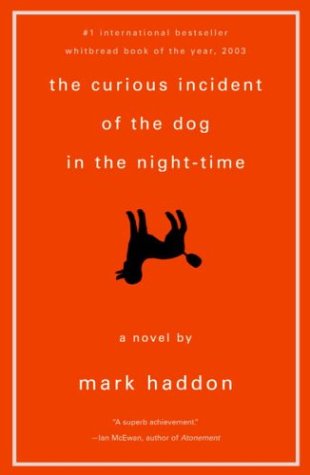
curiousWe even find this device of character gradation in Mark Haddon’s book, The Curious Incident of the Dog in the Night-time, which would at first seem impossible, because this story is narrated by an autistic, savant teenager, whose disability is distinguished in part by an inability to discern character.  To illustrate how deep a challenge the use of gradation is in this instance, when Christopher, the narrator, describes his two teachers, he writes, “Siobhan has long blond hair and wears glasses which are made of green plastic.  And Mr. Jeavons smells of soap and wears brown shoes that have approximately 60 tiny circular holes in each of them.”[29] This characterization is not even characterization.  It is merely a description, telling us nothing of who these people are.  As Christopher tells us at the beginning of the narrative, he cannot read any other emotion than happy or sad, that all others are far too complex, lead to confusion and cause him to resort to screaming and groaning as coping methods, or to retreat by going outside at night to pretend that he is the only one in the world.  Therefore, it would seem impossible that character gradation could be used as a literary device to convey theme and enhance cohesion in this novel.  But character gradation is nonetheless a significant element in the book and Haddon uses it seamlessly, without ever unraveling the autistic cocoon.  Haddon employs this device to answer the story question in this novel, just as Austen and Tyler did.   The story question in this case at first appears to be Who killed Wellington?, the neighbor’s dog, but percolating underneath is the question of which even the narrator is unaware, though the reader is made aware of it immediately.  It is the question of whether or not Christopher is going to survive emotionally in a world in which he is handicapped.

Because Christopher’s disability prevents him from being able to speculate about the other characters’ thoughts, feelings and motivations, Haddon must resort to subtler ways of grading and grouping characters.  Though Christopher is unable to grade himself, he can, however, grade himself against someone who is not a fully developed, three-dimensional character.  Throughout the book, Christopher compares himself to Sherlock Holmes, a two-dimensional character in another story in which a dog gets killed, The Hound of the Baskervilles.

He says,

I also like the Hound of the Baskervilles because I like Sherlock Holmes and I think that if I were a proper detective he is the kind of detective I would be.  He is very intelligent and he solves mysteries and he says

The world is full of obvious things which nobody by any chance ever observes.

But he notices them, like I do.  And it says in the book

Sherlock Holmes had, in a very remarkable degree, the power of detaching his mind at will.

And this is like me, too, because if I get really interested in something, like practicing maths, or reading a book about the Apollo missions or great white sharks, I don’t notice anything else.[30]

Christopher not only compares himself to Sherlock Holmes, he compares the act of writing his book to Sherlock Holmes solving a mystery:

Also Doctor Watson says about Sherlock Holmes

His mind…was busy in endeavouring to frame some scheme into which all these strange and apparently disconnected episodes could be fitted.

And that is what I am trying to do by writing this book.[31]

He can also grade himself in relation to characters he himself imagines.  He fantasizes about the kind of people he wishes populated the world.  In his dream, “there is no one left in the world except people who don’t look at other people’s faces and don’t know what these pictures mean [in the text there is an illustration of complex facial patterns indicating shades of emotion] and these are all special people like me.  And they like being on their own and I hardly ever see them because they are like okapi in the jungle in the Congo, which are a kind of antelope and very shy and rare.”[32] Christopher is saying that he is special like these imagined people and that they are shy and rare.  It is an indirect way for Christopher to state that he is shy and rare.  It is the most intimate thing he will say about himself, but he expresses it in a dream.

When it comes to real people, not literary characters, Christopher ungroups himself.  He is never like anyone else.  For instance, he might be going to school at a Special Needs school, but he is unlike any of the other students.  “All the other children at my school are stupid.”[33] But while Christopher doesn’t grade or group characters, Haddon does, and he does this by making us aware of parallels and contrasts Christopher is not aware of.  For example, at another point in the book, Christopher says that he does do stupid things: “Stupid things are things like emptying a jar of peanut butter onto the table in the kitchen and making it level with a knife so it covers all the table right to the edges, or burning things on the gas stove to see what happened to them, like my shoes or silver foil or sugar.”[34] Here, Christopher is unaware of himself, but Haddon deftly uses this list to group Christopher with the classmates he scorns and to convey how Christopher is seen not only by society, but by his parents, too.  Christopher knows he is not stupid, because he plans to sit for “A Level maths” and pass them, yet society regards him as stupid.  He may not be willing to make the association himself, though he does without fully expressing it—he says, “I’m going to prove I’m not stupid”[35]—yet Haddon groups Christopher with his Special Needs classmates to make us reflect on the essential question of whether or not Christopher will survive in a society which regards him as incapable and odd.  Haddon also groups Christopher with other characters in the book.  Christopher says he is different from others because “the pictures in my head are all pictures of things which really happened.  But other people have pictures in their heads of things which are real and didn’t happen….”[36]

But as Christopher’s dream about the okapi-like people suggests, Haddon is grouping Christopher with those Christopher is ungrouping himself from.  This is most clear when Christopher reports, as an example of how “others” think, a fantasy very like his own: “And Siobhan once said that when she felt depressed or sad she would close her eyes and she would imagine that she was staying in a house on Cape Cod with her friend Elly, and they would take a trip on a boat from Provincetown and go out into the bay to watch the humpback whales and that made her feel calm and peaceful and happy….”[37]

Through these fantasies, both of which involve rarely seen animals, Haddon subtly groups Siobhan with Christopher.  This grouping reinforces the story question yet again, because one of the reasons Christopher begins to come out of his autism is that Siobhan encourages him to investigate the death of Wellington, an investigation that forces him at first only minimally out of his shell—talking to the neighbors—but ultimately leads him to the previously impossible solitary train trip to London to find his mother.  By encouraging him to investigate and write the book we are reading, Siobhan enables Christopher to believe in the end that he can move away to a university in another town.  She has helped him to survive.  They are a team.  Siobhan and Christopher act in the same way, dream the same things, work toward the similar goal of solving both the small mystery of the death of Wellington and the larger mystery of his survival.

All of these groupings are indirect—implied rather than stated—but there is one direct instance of grouping in the novel, that of Christopher and his father.  But Christopher does not make this connection, his father does.  When Christopher is unable to control other people, when they cross the bubble of his self-protection, he becomes angry and hits.  He hits a policeman, he hits his father, he hits a girl at school.  When his father is revealed as the murderer of Wellington, and the two get into a fight, his father says: “But, shit, Christopher, when that red mist comes down…Christ, you know how it is.  I mean, we’re not that different, me and you.”[38] Not only does this passage reveal that his father and Christopher are alike, it reinforces the subtler meaning that although Christopher is shy and rare, he is not as unlike others as he thinks he might be.

Through Christopher’s efforts to place himself in the world by comparing himself first to the two-dimensional Sherlock Holmes and then to okapi, the reader understands that Christopher will always be isolated; however, we also believe that Christopher will survive because in the end he is able to face the future and make plans and hope: “And then I will get a First Class honors degree and I will become a scientist.  And I know I can do this because I went to London on my own, and because I solved the mystery of Who Killed Wellington? and I found my mother and I was brave and I wrote a book and that means I can do anything.”[39] There is a tension in the novel between what Christopher understands about himself—that he is different and always will be—and the possibility of being able to make his way in the world.  At the beginning, we fear he will be unable to.  But by the end, the possibility exists that he will have a bright future.  This change in Christopher and in our attitude toward his future is because of the shifting and grouping of characters.

Therefore, even in a novel narrated by an autistic savant, character gradation exists,not as densely, perhaps, as in Dinner at the Homesick Restaurant and Pride and Prejudice, but in all three of these novels, grouping and gradation serve to cohere the theme and answer the story question.

To what end, all this?  What does it matter if a character is grouped, graded or opposed?  Just this: in our daily lives we meet people randomly.  The important and the unimportant pop in and out, at important and unimportant times.  We begin our days with the letter carrier or the clerk at the grocery store, or our spouses after a quarrel or our teenagers sullen over some unrevealed irritation (as teenagers have).  Our daily lives have only the cohesion we assign it.  But whereas we have little or no control over the people in our lives, a novelist has all the control over all the lives in a novel, and this constitutes an obligation to the reader that the world in which she immerses herself will be one of cohesion and import; that the author will not introduce characters willy-nilly; that the author will have something to say, a story to tell, and that the fictional world will be contrived in such a way that it will make sense of the story dilemma presented.

Novelists promise the reader something that real life rarely yields: the illusion that a reader can make sense of her own life.  And an effective tool for accomplishing this magic trick is by constructing subtle associations and connections between characters that reinforce meaning and intent, that help solve the characters’ problems, that yields light on the confusion and tumult of everyday life and helps the reader understand what drives mankind to weep, love, adore, disdain, despair, abandon and sometimes yield to the hope that life matters in some shimmering way.  But a writer cannot achieve this mystical, ephemeral thing without precise craft.  I submit that character grouping and gradation, as daughters of echo and repetition, underpin our fiction with a sturdy backbone that will achieve the goal not only of illumination, but of coherence.

—Robin Oliveira


Robin Oliveira is the author of My Name is Mary Sutter, winner of the 2007 James Jones First Novel Fellowship, the 2011 Michael Shaara Prize for Excellence in Civil War Fiction and the 2010 Honorable Mention from the David J. Langum, Sr. Prize in American Historical Fiction. A Registered Nurse, she also holds a B.A. in Russian, and an MFA in Writing from Vermont College of Fine Arts. She lives in Seattle, Washington with her husband, Drew, but longs to live in Paris where she recently traveled to do research for her historical novel on Mary Cassatt and Edgar Degas, just published by VIKING.

 

Footnotes    (↵ returns to text)

  1. Glover, Douglas, The Enamoured Knight (Ottawa: Oberon Press, 2004), 128.
  2. Ibid., 130.
  3. Brown, E.K.,  Rhythm in the Novel (Toronto: University of Toronto Press, 1950), 17.
  4. Ibid., 27.
  5. Austen, Jane, Pride and Prejudice   Ed. Donald Gray. 3rd ed. (New York: W.W. Norton & Company), 2000. 11-12.
  6. Ibid., 227.
  7. Ibid., 16.
  8. Ibid., 7.
  9. Ibid., 155.
  10. Ibid., 21.
  11. Ibid., 150.
  12. Ibid., 20.
  13. Ibid., 252.
  14. Ibid., 251.
  15. Ibid., 187-188.
  16. Ibid., 214.
  17. Ibid., 120.
  18. Tyler, Anne,  Dinner at the Homesick Restaurant  (New York: Fawcett Books, 1996), 2.
  19. Ibid., 37.
  20. Ibid., 186.
  21. Ibid., 166.
  22. Ibid., 209.
  23. Ibid., 84.
  24. Ibid., 299.
  25. Ibid., 47.
  26. Ibid., 65.
  27. Ibid., 78.
  28. Ibid., 122.
  29. Haddon, Mark,  The Curious Incident of the Dog in the Night-time  (New York: Vintage Books, 2003), 5.
  30. Ibid., 73.
  31. Ibid., 73-74.
  32. Ibid., 198-199.
  33. Ibid., 43.
  34. Ibid., 47.
  35. Ibid., 44.
  36. Ibid., 78.
  37. Ibid., 79.
  38. Ibid., 121-122.
  39. Ibid., 221.
Nov 082012
 

A record snowstorm buried eastern Pennsylvania in December of 2010. While the snow piled up, Ian Thomas, on break from the University of Missouri, slipped back into familiar routines. He slept late, hung out with high school friends, watched football games with his father and helped decorate the Christmas tree with his mother. Ian passed the days scribbling in a notebook. Flopped on a couch as the Philadelphia suburbs disappeared under almost two-feet of fresh powder, Ian wrote out the draft of a short story. He titled this story “The Freak Circuit” and, for the first time, he expressed a desire to seek publication for his work.

This short story also was the last one he ever wrote. Less than two months later, Ian Thomas was dead.

“The Freak Circuit” is a 12-page story about an exceptionally talented high school basketball player named Tim. Though a highly touted recruit, Tim houses a debilitating secret: he is a closeted gay teen on the verge of entering the world of high power, big money athletics, where few (if any) openly gay male athletes exist. Told in one nearly breathless paragraph, with images that tumble and cascade at a breakneck pace, so much of the story looks outward, gazing into distant campuses, into a coming athletic career that seems certain for success and destined for heartbreak. Tim dribbles and shoots, imagining World War II battles and the skinny red-haired boy he once kissed at a frat party in Tennessee. Everything hinges on possibilities. Where will he go to school? Which coach will he play for? How will he hide his homosexuality? The story pivots like a point guard, calculating, choosing. There are doors to open, opportunities to explore, peril at every turn. Precariously balanced between hope and despair, Tim is at once blessed and cursed:

Tim is outside again, thinking about the Battle of Iwo Jima while pounding a deep orange Wilson basketball into the backyard patio’s cracked, uneven stone surface, bounce, bounce, concentrating deeply, thinking of February 1945 while calculating the days until the ball will become smoothed out and useless, its thousands of tiny hills flattened by four hours a day, bounce, six days a week, by gravity and by patio. He’s under strict and emphatic direction from his high school head coach, an aging, wool-haired basketball lifer who can smell, in one’s sweat, the difference between the assigned four hours of home practice and three and a half. Tim thinks about Tennessee and closes his eyes.

In January, Ian returned to school and started sending out “The Freak Circuit.” He submitted to twenty magazines. Ian’s roommate, Dan Cornfield, tells me that most days Ian was a typical college student. He dressed up in black and gold and went to basketball games at the Mizzou Arena. He attended class, went to parties, and played video games at home.

“He never did homework,” Dan says. “If I was trying to study, he’d pester me until I gave in and stopped.”

Ian also suffered from depression and could spiral into darkness. Locked in his room, he would skip class and go days without eating. His friends and family knew about his about his struggles with rage and sadness. And his pain would have been doubly saturated at college, where all around the perception was that life thrummed along. Ian didn’t resemble the tall, lean and muscular ideal that our campus culture demands from its youth. At less than five-and-a-half feet tall and stocky in stature, Ian wore his hair thick and curly, adding bulk and height to his frame. His face was round and his eyes were dark. More often than not, he wore an Eagles’ jersey or a Phillies’ cap. He survived on his wit and a biting sense of humor. Most times, it was enough to keep him going. But when he slid into the darkness, the isolation must have been debilitating, extreme, feeding on itself.

Ian must have felt a part of his own freak circuit.

On January 26th 2011, less than three weeks before his death, Ian submitted the “The Freak Circuit” to upstreet magazine. Most national literary magazines receive hundreds if not thousands of submissions during a cycle. The odds of a story rising through the slush pile and being published are astronomically low. Vivian Dorsel’s magazine is no exception. For its seventh issue, upstreet received 1,119 fiction submissions. From this lot, they would publish only six stories. This means that a submitted story stood far less than a one out of a hundred chance of being accepted. Like many magazines, upstreet selects only the very best stories from its submissions pile. Like many magazines, upstreet is a non-profit. The recompense for the successful author, chosen against these astronomical odds, is two free copies of the magazine. (I should point out that I am the Non-Fiction Editor at upstreet, but I did not play any part in the editorial decisions with fiction submissions. I first read “The Freak Circuit” in October of 2011.)

At upstreet, “The Freak Circuit” moved quickly up through the slush pile. On February 2nd, a fiction reader forwarded the story to the fiction editor with a positive recommendation. On February 9th, the fiction editor read the story and also recommended it. She sent the story back to Dorsel for a final decision. Five days before his death, Ian’s short story was sitting in the front of the magazine’s editor and publisher, awaiting a ‘yes’ or ‘no’ vote for publication.

Maureen Stanton, Ian’s writing professor and mentor at Missouri, tells me that Ian was considering graduate school; she says that he was eager to begin sending work out, even ready to start receiving rejection letters. She describes Ian as one of the most gifted students she’s ever taught.  “I’d seen him that Thursday before he died,” Stanton says. “He was excited about summer writing workshops and applying to MFA programs. He’d stopped by my office to pick up a copy of a magazine I’d saved for him with a list of the best workshops and we chatted for about 20 minutes. I wish I’d had more time to talk to him.”

At times, Stanton’s praise for Ian might be misconstrued as eulogistic. The glowing terms she uses—words like visionary, charming, poetic, extraordinary—outshine the complex reality of any twenty-one-year-old undergrad with a non-existent publication record and middling grades. But the more we talk, the more Stanton’s sincerity seems unforced.

 “His voice was lyrical and poetic,” Stanton tells me.  “He had an extraordinary command of vocabulary, the rhythm of sentences. He could explode ideas—break them open and challenge.”

Stanton also talks candidly about Ian’s struggles with depression, his self-centeredness, his sensitivity to criticism. A bad workshop could send him spiraling back into dark places. In the privacy of Stanton’s office, he would be harsh on other student writing. He could be cavalier in class, opinionated, hard to manage.

He thinks about Henry VIII very quickly before thinking about Ray Allen and How to Line Up the Perfect Three Pointer, The Pro Way©, the way Ray taught him at the elite camp in Boston, bounce, he spreads his feet about a foot apart and lines them up directly parallel to his shoulders like he’s supposed to, but he remembers how, at that same camp, he missed fifteen of twenty three-pointers the Ray Allen Pro Way© (and failed to hit the rim on seven), so he squats lower than he should and jumps higher than he should with his feet where they shouldn’t be, all pressed together with the right side of his left shoe’s toe resting on the toe of the left and the ball sails in.

At 6:45 in the morning on Valentine’s Day, the phone rang in the suburban Philadelphia home of Linda and John Thomas. Linda answered. On the other end of the phone, Ian’s friend, Chris, told Linda that her son had been rushed to an emergency room in Columbia. Ian was still alive, but he was intubated and had already coded once. For a while, in the stillness of their kitchen, Ian’s parents held out hope that their son might pull through. The next phone call obliterated that hope.

So much of the future is assumptive. We assume the sun will rise tomorrow, that our children will grow up and go to college, that hard work will pay off. But often, those assumptions rest upon the frailest of armatures.

During the many times I speak with Ian’s father, I never directly ask him how Ian died. John Thomas refers his son’s death as an accident. John also candidly talks about his son’s depression.

John flew to Missouri on Wednesday, February 17th, two days after Ian’s death.  He talks about the open friendliness of Midwesterners. He speaks of this quality as if it were due to some fact of geography, and not by the grim reality that John had gone there to retrieve his son’s body. Ian’s mother, too grief-stricken to consider travelling, stayed home in Pennsylvania.

Ian’s roommate, Dan, describes the days following Ian’s death:

“Our apartment was just full of people,” Dan says. “My mom drove down from Chicago to be with us. My brother was sleeping on the couch. People just kept showing up. We had more brownies and cookies than we could eat.”

A lingering note of innocence tinges Dan’s voice. The shock, the disbelief, the sheer magnitude of losing a close friend at twenty-one is still settling in almost a year after the fact. He tells me that after a few days, his roommates cleared everyone out of their apartment. They wanted to be alone when Ian’s dad arrived on Wednesday.

“I didn’t know what to say,” Dan says. “None of us did. There were these long pauses. The whole time, Mr. Thomas tried to make us feel comfortable.”

John met Ian’s college friends for the first time on that trip. He would also meet Maureen Stanton. People gathered, cried, told stories, and shared laughs. On Friday, John packed up the last of his son’s belongings. He collected Ian’s clothes, books and notebooks. He packed up his laptop and, for the very last time, stripped his son’s bed. Then John flew back home with Ian.

He thinks of the peculiar way his stomach burned and twisted and ached and how he nearly soiled his compression underwear under his black mesh shorts when that huge black center at the Mississippi elite camp looked Tim in the eye and said you know, white boy, you shoot like a fucking faggot, how he almost burst into powder at that moment, how he almost booked his own last minute flight home, back to the safe dull colorless center of Pennsylvania, how he nearly collected every basketball and every piece of equipment he owned and every signed jersey and every letter of interest from every big-time American basketball university and every framed photo of NBA stars and neatly piled all of it in the middle of the cracked stone patio and burned it, doused the spot in lighter fluid and burned it to fucking hell. Bounce. He thinks about the eerie exhibitionism of this whole freak circuit, his leisurely (borderline immoral) little traipse from university to university, how they can all see through him (probably), how his coaches and maybe even his own father are carving what Tim thought Tim was into a 21st– century kind of bearded lady.

On February 23rd, nine days after Ian’s death, upstreet’s editor, Vivian Dorsel, read “The Freak Circuit” and decided to take it for publication. She sent a congratulatory email to Ian.

Dorsel then waited over two weeks for Ian’s reply, which never came. On March 7th she sent another email, but there was still no response. Two days later she did a Google search and found an Ian Thomas on the University of Missouri website. Ian was listed as an English major, a senior, a staff writer on the student newspaper. She found his university email address and contacted him yet again: “If you are the Ian Thomas who submitted a story to upstreet in January,” Dorsel wrote, “please get in touch with me. I have sent you two messages and you haven’t responded.”

Later that same day, Dorsel called the university’s English department. They passed her on to an undergraduate advisor who provided Ian’s home phone number and address in Pennsylvania. No one at the university told her that Ian Thomas was dead.

Dorsel’s pursuit of this story seems paradoxically single-minded. Why did she care so much? Aren’t editors, with a thousand stories to wade through, cold and unyielding? Editors read until the first mistake, or so goes the old adage.  Dorsel describes her interest in “The Freak Circuit” this way:

What struck me about “The Freak Circuit” was the voice, which I found intense, compelling, and consistent throughout. William Faulkner, in his Nobel Prize acceptance speech, spoke of “…the problems of the human heart in conflict with itself which alone can make good writing because only that is worth writing about, worth the agony and the sweat.” I think Ian’s story is an example of what Faulkner was talking about, and it is a very sophisticated and well written piece of work for someone so young; I also thought the ending was perfect, which is rare. I was so convinced it was right for upstreet that I was not willing to give up until I had exhausted every possibility. When I was laying out number seven, I decided to lead the issue with “The Freak Circuit.” It just seemed like the right thing to do.

On the evening of March 9th, Dorsel called Ian’s parents at their home. John Thomas answered and informed her that Ian was dead. He also told her that he wanted upstreet to go ahead and publish the story. It would mean a great deal, he said, to see his son’s story in print.

Over the course of several months, Johan Thomas and I exchange a flurry of emails. I also talk with John Thomas twice on the phone. The first time is on Halloween, eight months after burying his son. It is a gray Monday in Melrose Park, Pennsylvania, where John and his wife, Linda, live. The Philadelphia suburb has just received its first dusting of snow, a full six weeks before winter officially begins. When John and I finish talking, I will drive beneath San Diego’s seventy-five degree blue skies to pick up my kids at their school. We will come home, have an early dinner, and go out trick-or-treating.

John puffs on a cigarette as we speak. He and I are, for all intents and purposes, strangers. In the background, I hear voices from a television. I picture a living room, a recliner, a smoldering ashtray. We talk for almost two hours.

“He was born a writer,” John says with a father’s recalcitrant pride. “He wanted to write since he was three.”

John is a youth crisis counselor, but hasn’t worked since the summer, when his hospital was all but destroyed by Hurricane Irene. Repairs at the hospital are on-going, but he doesn’t know when he is expected back at work.

“Sometimes I think it would have been easier,” John says, “if we’d had more kids. But who knows?”

It’s difficult not to wonder about the suffering imposed on people like John Thomas and his wife, the Job-like quality of their despair and the bare-knuckled perseverance in the face of it.

John is also a craftsman. He makes stained glass windows and sells them at trade shows and craft fairs. Only in the last few days, more than eight months after his son’s death, has John returned to his studio and begun working again.

“It’s a destructive art,” John says of working in stained glass. “You’re always cutting and breaking and splintering things.  You’re always covered in shards of glass.”

We talk about simple things, about sports, the Mummer’s parade in Philly, cheese steaks, the Phillies and the Eagles. He tells me about Ian’s decision to switch majors at Missouri, from journalism to creative writing. John dallies in the banal before stepping over into the abysmal horror of what has happened.

“Everything gets filtered through it,” he says.  “But what can you do?”

The University of Missouri lost eleven students during the 2010-2011 academic year. This number seems staggeringly high. What was happening in Columbia to cause so many young people to die? This is only one of the many questions which will never be answered for me. When talking to John Thomas, I realize how little I will ever know of Ian, or of the particular pain that his death has brought.

“There is no name for this,” John says. “For this kind of grief, when a parent loses a child.”

Thinking too much too closely, holding it all too close to his body. He thinks of Tennessee, the funny long shape of it on the huge map in his room, the boy who kissed him in the orange. Tim takes two more steps backwards and launches his deep orange ball towards the black rim with that shot, that unique hurricane of elbows and limbs mashed together, and watches it slip through the net without making a sound, without even a little swish.

John and I speak again in January. He tells me that the holidays were brutal, that the time since Thanksgiving has been especially grim. He and his wife didn’t celebrate. They didn’t even put up a Christmas tree.

He tells me that Ian never had a curfew, never had a bedtime. John is trying to paint a picture for me, a picture in words and anecdotes, of his son. He tries his best to make the image real.

Again, the conversation swings wildly, from seemingly normal chit chat to raw grief. John switches in and out of the most emotional topics quickly. The conversation turns back and forth, from stories of Ian’s struggles with math assignments to his lingering battle with depression. John tells me about his son’s eagerness to receive rejection letters.

“He figured that it was part of the job. That getting rejected would make him a real writer. He didn’t want to be a writer,” John says, stressing the indefinite article.  “He wanted to be the writer.”

John also tells me that Ian ripped out “The Freak Circuit” in no time. Only a year earlier, Ian was home over winter break, lounging around on the couch as the snow fell, writing in a notebook.

“He just was playing around with it,” he says.  “He didn’t even write fiction most of the time. Who knew it would end up getting published?”

John concludes our conversation by asking me to throw a ball with my son, a mundane acts which suddenly explodes with significance.

“I miss him,” John says. “He was a good kid.”

At Ian’s elementary school, his parents have established a writing award in their son’s name. Etched into the plaque for the award are the famous words of Maya Angelou: “The bird doesn’t sing because it has an answer, the bird sings because it has a song.”

Perhaps those who knew Ian can seek and find solace in this, in the gesture of young writers being touched by Ian’s memory and in the words of a poet who speaks to the ineffable mystery of life and death. Angelou also wrote, “There is no greater agony than bearing an untold story inside of you.”

At least Ian’s story gets told. “The Freak Circuit” defies the odds. This speaks to Ian’s abilities and his devotion to writing. It also speaks to the dedication of people like Dorsel and Stanton who championed the work of a young writer still taking his tentative first steps.

But these conclusions are hollow and arc toward sentimentality. I have no doubt that John Thomas, Dan Cornfield and Maureen Stanton and everyone else who knew Ian would happily trade every one of his words, published and unpublished, for a few more days with him.

If I find any possible conclusion, it might be in the twenty-five pages of “The Wellbutrin Diaries.” This long essay, written by Ian the autumn before he died, traces a season in the life of Ian Thomas. It was written in Stanton’s non-fiction seminar and it is Stanton who sends it to me. In places angry, in places broken and shattered, in places sublime, the diary is an intimate look into the mind of a young writer whose talent and passion seemed to grow the more I searched.

If there is to be an epitaph for Ian Thomas, it must be through his words. If there is to be even the hint of an answer for his family and friends, it must gesture out from that darkness, the darkness of depression, from the struggle of a young man trying to create something beautiful.  Ian’s words once announced a certain talent, a raw voice which spoke with clarity and wisdom, cut down long before that voice could sing. If there is to be a conclusion, it must belong to Ian:

One day, though, it will happen. Simplicity will win, or at least tie. I will write—and think—like my mind is at peace. Shit, maybe even it will be. I can see it manifested and it looks like this: I’m on a boat, in the middle of a pond, in the middle of the night. The water is still, and the moon is casting an ivory glow over me as I row, as I maneuver into silence. I see it like it’s in front of me right now. My thoughts will be short, and they will be happy, and I know, for however long the ride lasts, I’m in the right place, on the right planet, in the center of the right universe. For good. I’ll make my own kind of comfort. And I’ll think (no, I’ll know). It’s all just that easy.

— Richard Farrell


Richard Farrell earned my B.S. in History at the United States Naval Academy in Annapolis and an M.F.A. at Vermont College of Fine Arts.  He is a Senior Editor at Numéro Cinq and the Non-Fiction Editor at upstreet. In 2011, his essay “Accidental Pugilism” was nominated for a Pushcart Prize. His work has appeared in Hunger Mountain, Numéro Cinq, and A Year In Ink.  He is a full-time freelance writer, editor and a faculty member at the River Pretty Writers Workshop in Tecumseh, MO. He lives in San Diego, CA with his wife and two children.


Sep 232011
 

.

Writing a War Story

by Richard Farrell

.

For the better part of two years, I wrote a war story that wouldn’t come together. No matter how hard I tried, the damned thing refused to work.  It’s not that I spent six-hundred days toiling away at the same pages like Jack Nicholson in The Shining, though at times it did feel that way. No, my devotion to this story meandered over those two years. I would chip away at it for a few weeks, abandon it for a while, and then come back to it. I deleted scenes and added new ones. I switched from a first-person narrator to cascading, multiple third-person points of view. I changed the title, the main characters, the setting, the tone. Every so often I sought help, from  my writing group, from workshops and from trusted grad school advisors. The consensus was always the same: the story floundered.

But I couldn’t let it go.

I was writing about the firebombing of Tokyo, a particularly horrific incendiary attack by U.S. bombers in March of 1945. The ensuing firestorm was more grisly, more deadly even, than the atomic bombs that were later dropped. It is estimated that over 100,000 people died in a single night. Shadows of the dead were burned into sidewalks. Downtown Tokyo was obliterated.  Many consider it to be the deadliest day in history. The target of the attack was not Japan’s munitions factories, electrical grids or coke ovens; it was not enemy harbors or troops or barracks; the target was the citizenry of Tokyo, non-combatants, women and children.

Mother and daughter after raid on Tokyo. (Note: This famous photo is often associated with atomic attacks. Either way, the impact is obvious.)

Almost as troubling as the stark reality of this raid is the fact that the firebombing of Tokyo rarely warrants more than a footnote in the history books. I was (and am) both fascinated and terrified by the casual way we forget these things.

Still, these were only facts, and none of them made for a good war story. I wanted to understand why.

 In Tim O’Brien’s How to Tell a True War Story,” he writes:

A war story is never moral. It does not instruct, nor encourage virtue, nor suggest models of proper human behavior, nor restrain men from doing the things they have always done. If a story seems moral, do not believe it. If at the end of the story you feel uplifted, or if you feel that some small bit of rectitude has been salvaged from the larger waste, then you have been made the victim of a very old and terrible lie. There is no rectitude whatsoever. There is no virtue. As a first rule of thumb, therefore, you can tell a true war story by its absolute and uncompromising allegiance to obscenity and evil.”

Continue reading »

Dec 162010
 

Here’s a lovely “What it’s like living here” piece from Robin Oliveira, former dg student, Vermont College of Fine Arts MFA graduate, winner of the James Jones First Novel Fellowship and author of the novel My Name is Mary Sutter

For a complete list of “What it’s like living here” texts, click here.

dg

What it’s like living here

By Robin Oliveira on Cougar Mountain, just outside Seattle

You live on Cougar Mountain, the first mountain on the right as you leave Seattle. The children—your reason for moving to the mountain—have moved out, and yet you cling to the house in which you raised them, unable to let go of the memories. Cougar Mountain hovers between wilderness and civilization. Sometimes you wake up in the middle of the night to yapping coyotes surrounding and terrifying some poor mammal they then eat. Before they die, the animals cry, a sound so human you leap from your bed and peer out the window. Black bears sprawl on the hillside behind your house, watching passing cars. Startled deer wander in the former meadows houses now occupy. They seem puzzled, these animals, incapable of altering their patterns in the face of encroachment. One day, on a bike ride, you gut out the steep climb from Puget Sound to the top of Magnolia, a hill long ago urbanized. A cougar has been spotted in the park, where for days, the fields of tawny grass camouflage him. You wonder what ancient memory has led him back into the city. You are sad when the park rangers capture the animal. Where do they take it? You don’t know. Maybe to your mountain, where the historical society exhibits pictures of the old days, when men hunted cougar for sport, then hung them upside down and posed beside them. Another day, flames shoot above the red cedar and Douglas fir behind your house. You turn on all the hoses and water the roof while your husband and neighbor attempt to douse the advancing fire. The flames lick thirty feet high; you breathe smoke; embers fall onto your shoulders and into your hair. Then the fire trucks arrive and unleash a spray of white foam that in two minutes extinguishes the blaze.

Now that the children are gone, you have all day every day to work. In your office, you turn on a sun light to ward off S.A.D., seasonal affective disorder, which struck you down about the middle of the nineties, fifteen years into your interment under the drizzly menace that is the Pacific Northwest sky. With the fake sunlight bathing your retinas, you write. Ten thousand luxes a day are the prescription for your well-being—about thirty minutes worth—but you indulge and keep the light on all day. When the real sun breaks from behind the clouds, you play hooky. Microsoft money has littered the mountain with mansions of ridiculous dimension, but you climb on the paths above them, through preserved corridors of wilderness, where it is still possible to meet a cougar or a lone coyote, so you carry a stick. You climb until you see the fingerling glacial lakes that strike northward and the snow-topped Cascade Mountains, coolly indigo against the eastern sky. To the west, the Olympic Mountains shimmer jagged against the western horizon. If you had a pair of binoculars, you could see the Space Needle floating beneath them.

Continue reading »

Aug 212010
 

Okay, this topic evolves out of the comments attached to the “What I think” post below. Court and Gary and others are frustrated with the current literary scene, finding it difficult to get a toehold in terms of publication. The idea here is to try to establish a forum for NC readers and lurkers and the editors we have in the community. Vivian Dorsel is the publisher of upstreet. Robin Oliveira is the fiction editor (hopefully she can join in). I edited fiction at The Iowa Review during my stint at the Writers’ Workshop. I edited Best Canadian Stories for over a decade. I’ve judged innumerable contests. We can start here.

This is me talking from my experience as an editor, not as a writer or a teacher. Years ago, when I was at The Iowa Review, I easily received 50-70 stories a week, from writers like Joyce Carol Oates down to complete neophytes. The magazine then published four times a year, with 4-6 slots for short stories, at most 24 stories could find a place in a year (so, yes, obviously LENGTH makes a difference, a fact of life and economics). I suspect the odds are a lot worse now with the proliferation of writing programs. Typical for editors at this level, I was not paid well (the English Department gave me a research assistantship) and it was a part-time job. Most literary magazine editors and readers make nothing. With those kinds of odds you can afford to have a hair trigger rejection finger. You read so many awful or mediocre manuscripts (let’s be honest here) that it gets easy to say no to perhaps 80% of those 50 or more stories a week. Most of those stories you don’t even read past the second page. A cliché, a lame sentence, or a grammatical error automatically knocks them out. (Also sending clips and a c.v. along with that 3-page cover letter guarantees rejection—sure signs of an amateur.) It’s a simple as that. Ask yourselves a) How perfect is my first page? b) Is there enough panache and intelligence evidenced in my first two pages to make me stand out from the herd? After the first 80% of the stories (or essays or poems—it’s the same) get turned down, the work begins. The next 19% are the stories you come to loathe because they are often earnest and competent and second-rate to the core. These stories have plots that start up pretty decently and characters that move through their paces the way they should and they express the regular story-like emotions. But they are ordinary. They have no panache, no real surprises, no blazing excitement. Often you have to read right to the end of these stories because, you know, you’re rooting for the author, hoping against hope that he or she will pull off the terrific ending or suddenly bring a character to life. Sad truth is they never do. And the other sad truth is that there will be enough stories with panache, surprise, intelligence, and delightful linguistic turns, etc. that you can safely reject this 19% as well. The final, final sad truth is that even with that 1% of stories left to read, you know you’ll have a hard time filling the magazine slots with stories you really think are first class, superlative, all the way through—they are so rare.

There really is a perspective trick here. From the writer’s point of view, here is a story he has rewritten 20 times over three months, polished and perfected, and he looks out at the current scene and sees all the schlock that gets published here and there, and he thinks, My God, I am going to save the publishing world with this story! Editors are going to greet me as the saviour! And then that envelope or digital submission shows up at the editor’s desk along with 200 other equally earnest and brilliant (from their author’s perspective) submissions (and there will be MORE tomorrow!). Think of it. Two hundred Messiahs a day! But from the editor’s point of view it’s a triage situation, wave after wave of awful to pretty good stories, all looking about the same after a few months on the job, most of them DOA.

This shouldn’t discourage anyone, except those who want an excuse. I don’t think it’s ever been different. To stand out for an editor you have to be very, very good. And not just very good in spots—all the way through the text. That’s the key. Competent and nice aren’t enough. Tryers go to the end of the line. Stories need to ring with truth, linguistic pizzazz, mystery, life, passion and excitement from the first word. This isn’t to say that there aren’t bad editors, sycophants, people led by fads, provincials, people driven only by marketing models and bottom lines. And lots of schlock gets published—although that’s mainly because certain kinds of schlock actually sell well to an undereducated market that likes schlock (yes, honestly). And, yes, editors often lean toward established names, partly because those established names have figured out how to separate themselves from the herd (not just because names sell). And some magazines and editors have preferences in terms of style (e.g. avant garde or conventional realism)—we all have different tastes. But most editors are trying to fill their magazines with good exciting writing. It’s not a conspiracy.

But it is awfully hard to get published, to get started, and even to keep getting published over a lifetime. The art is difficult and long to learn, and the competition is brutal. And there certainly have been cases when editors have missed a work of genius (scary thought). And, yes, if your work is eccentric, or out of the mainstream in some way, editors will have an even harder time deciding if you are really good or not. And there certainly are cultural troughs and bents that militate against certain kinds of art (classicism yields to decadence and vice versa over time). All this comes and goes, lean times and fat (pretty lean right now). The main thing is to learn to write well and drive yourself with a realistic sense of how good your work has to be to attract an editor’s attention. The rest is in the hands of the gods.

dg

Apr 242010
 

ENTRIES ARE OFFICIALLY CLOSED. COMMENTS STILL WELCOME.

Herewith the first ever (annual) Numéro Cinq villanelle writing contest. I am announcing it early so that you can work on your entries. Entries will be accepted between May 1 and May 15. Entries, as with the aphorism contest, should be posted as comments on this page. Entries are open to anyone in the world, but only if they are written in  English, French, Latin, or classical Greek (the only languages anyone can speak in this house). As with the aphorism contest, I encourage you to familiarize yourselves with the form. See the craft and technique page for help. Roughly speaking, we’re talking about a 19-line poem written in tercets (except for the last stanza which has four lines). The first and last line of the first stanza become the last lines of the following stanzas and also turn into a couplet at the end of the last stanza. These are fun to write and can actually turn out surprisingly well if you arm yourselves with strong refrain lines (think: panache, drama, obsession, schizophrenia). You need not be a poet to enter. And it’s always a good thing for prose writers to extend themselves; it makes their prose more interesting. One lesson to be drawn from writing a poem like this is the way form drives content instead of the other way around.

Continue reading »

Mar 152010
 

THE FIRST EVER NUMÉRO CINQ APHORISM CONTEST

Submissions March 15-31, 2010

Submit by commenting on this post

Submissions must be no more than 150 words in length

Do not enter a submission unless you have figured out what an aphorism is first

Wit and arrogance appreciated

Contest open to everyone including employees of Numéro Cinq, their significant others, children, and small pets

First Prize — Instant Worldwide (e)Publication w/ commentary

Plus honours & laurels

Feb 282010
 

oliveira

Robin Oliveira is one of my former students at VCFA. She won a $10,000 James Jones First Novel Fellowship, edits fiction for upstreet, and has a new novel My Name is Mary Sutter about to roll off the presses. Watch for it. You will be tempted to read the following as a thinly disguised version of student life at Vermont College, but for the most part I think this would be misleading. For the most part…(I keep reminding myself this is the Internet. Do I have to explain irony here?)

dg


/

When I call my writing instructor for a conference, he complains about how much hand-holding I need.

I remind him that I already warned him how much trouble I am and besides, he was the one who established the telephone conferences in the first place.  If he is living such a busy life, I say, why doesn’t he just hang up now?

And he says, Oh, shut up.  Then he talks to me for an hour about a problematic story I am writing.  Before he rings off, he says, meet me at that bar in Bonner at six.

I seem both to exasperate and intrigue him.

His name is James Pierce.  He lives on the edge of campus, on tree-lined University Avenue in an old Missoula house with a sagging porch that has definitely seen better times.  It needs a good coat of paint if it’s going to make it through the winter that is rapidly sweeping a particularly blistering variety of cold through the Hell’s Gate Canyon into the glacial slice of valley where William Clark—yes, that Clark, of the Lewis and Clark—floated his canoe down the River that Runs Through It, which, if you know your literature, was a rhapsodic hymn to beauty and the fucked-up-edness of life.  (The river he is referring to in his little tome is actually the Bitteroot, another river that runs through the Missoula Valley, but here begins the lie that makes up a story, which is nothing but pseudo facts rearranged into fiction.)  Seduced by the lushness of a Missoula summer fragrant with lilacs, Clark was caught, like James Pierce is now, in a long winter that sapped strength and discouraged the soul.  I believe that one of the reasons James Pierce’s heart heaves in a stutter-step of desolation is because he is on tenure track at a university located far from anything that resembles actual culture.  (A culture, that is, that does not include a requisite gun rack in the back of a pickup truck, a cliché I had a hard time coming to terms with again when I returned to Montana from Connecticut after my most recent disaster.)  I think this is one of the reasons why James Pierce is so damned grumpy.  Why he hunches around campus, student papers clutched in his arms and flapping in the bitter wind, refusing, like the rest of the professors, to use a backpack, thinking it somehow less dignified, less professorial, less East Coast.

At six, the November wind funnels a steely blast through the rocky canyon walls of Hell’s Gate.  I always feel as if I am on an epic quest in search of a ring when I drive through the canyon into Bonner, a town of limited housing but abundant saloons. James Pierce is waiting at the booth where we always sit—scarred, curved wooden benches and a low-hanging stained glass lamp—a sweating tankard of beer cupped in one hand, his sad, droopy face, untrimmed moustache and dark, green eyes vacant and staring, even when I sit opposite him and order my usual, Shirley Temples.  Over his beer, he tells me again that he was raised in Connecticut, too, and, I wonder if this is what my appeal is, except that there is no real appeal, not in the traditional professor-bonks-the-student way.  I am too standoffish for one; I had heard stories, for two; and I don’t like lonely men except as drinking companions.  I am morose enough on my own, and except on the rare occasions when I do drink, I prefer not to wallow.  Too painful. I can be a professional wallower, so recently I have trained myself not to do it too much.  Professional wallowing can lead to bankruptcy, insanity, and the worst, suicide.

Been there already.  (I hope you are thinking, Of course, because if I have done my job as a writer, I have already established that I am needy in a rescuer kind of way: hint, hint, meeting my writing instructor in a bar outside of Missoula on a night that is telegraphing blizzard-on-the-way; the sharp knife of serious cold is, of course, your other clue that cold and its corollary, death, will have something to do with this story.)  Anyway, back to me.  Yes, suicide.  Two recent, neat slices across my wrists.  The wimp’s way, of course.  If you are really serious, you have to dig deep along the radial artery, tearing an irreparable, vertical cut that will empty you of a good liter in a minute.  My cuts, however, were so shallow that no doctor or nurse scurried when my parents brought me into the emergency room, despite the crimson-soaked towels which resembled handcuffs of despair.

But these medical people had seen such obvious, shallow cries for help before.  Medicine is a profession sated with drama; you have to really do it up right to get much of a rise out of them.  Even my parents took on the nurses’ blasé affect and drove me home after the mere dozen stitches I required, no psychiatric visits arranged, no doting how are you’s, just the smear of defeat across their shoulders.  Such a disappointment, their 23-year-old daughter.  So lost, so infinitely fucked-up.  I left for my alma mater the University of Montana and the MFA program where I had been admitted by some miracle three months later.  And fell into the company of this fellow Connecticut Yankee and drinker and writer who appears to like my companionship for reasons I have yet to ascertain.  Because I am not beautiful, though, if I want, I can project a kind of shimmer that can reel a man in across a barroom.  It is this trick I rely on when I venture out alone.  The bars along the railroad tracks near Frenchtown always provide the shade of anonymity I require when I do not wish to sleep unaccompanied.  Indians, pulp mill workers, loggers in from the sticks thinking they’ve found heaven when I shimmy in.  It’s too easy, I think, but a girl has needs.  And a reputation to protect, at least in the world of the university, where sex is free like water, but tallied, discussed, dismissed and its participants ultimately resented for a coupling that was so easily abandoned.

Sorry for the digression, but every story needs a little sex.  This will be important later, as you will see.  Besides.  Two single adults?  In a bar?  It’s got to have crossed your mind already, especially after the earlier bonking reference.  If I didn’t mention it, you would think I was being disingenuous.

Anyway, back to the story issues at hand: how is it, I wonder, that two such morose and needy souls as James and I have found one another?  Is there a musk of despair, a heat of magnetic need, a black hole of gravity that draws unstable souls together?

James leaves off talking about Connecticut and begins to stare off into space.  This requires drastic measures.  I signal the bar maid for a second Shirley Temple, and say out loud that life can be hell, I know, a non-sequitor from the Connecticut theme, and James begins to show signs of the aforementioned exasperation.  His face has a pale, distant aura, slightly yellowed, giving the impression of a slow decay, a general fatigue with life, absolute anguish that his life has distilled to listening to his young, female student make statements about life in this pseudo-meaningful way.  I talk on despite his depressed affect, because he is not talking and because he asked me to come and I simply will not stare off into space with him.  And the story has to go somewhere.  It simply cannot be about me thinking in a Montana bar on the eve of winter; this would be writer’s suicide and would also bore the reader to tears.  Far too many students, like I have done countless times, forget that there has to be action in a story.  Desire and resistance.  James Pierce rails on and on about it  in the hallowed halls of the Liberal Arts building that story is action is life is Everything, damn it.  A bit of an exaggeration, but he can get away with it, because he loves teaching and gets carried away, which is endearing and might be the reason I am at the bar with him. It’s hard to say.

James is unwilling to engage me in conversation on this new subject, so I ask him another rhetorical question.  Where are all the happy people?  Where are the people who ponder bright, shiny thoughts like what color to paint the new baby’s room, or what kind of invitations to send for the baby shower, which, if I were to attend would soon curdle into something along the lines of the Mad Hatter’s bash, dash upon excess upon garish distortion of out-of-hand exuberance that would eventually tip all the other guests towards fear.  Where are the people for whom life is a perpetual fest?  Are they all stupid?  Do they never attend MFA programs to colonize and infect the minds of the budding, fearful student writers?  I want to find these happy people, become one of them.  I want to be a woman in pedal pushers and red shoes carrying flowers in one hand and a baby in another, reasonably assured that life will never spring surprises of infinite sadness upon her.

Sometimes I see women like this whizzing past in their minivans, not completely Stepfordized, but comfortably placid, worried about mundanities like juice box stains on the family room carpet. (They have family rooms! With the inherent implication of an actual, cozy room where family interactions take place!  I imagine not the suburban Sodom and Gomorrah of John Updike—sex with the neighbors—nor John Irving’s tweaked universe of wounded, tattered souls—instead, I imagine Iowa in the mountains (Missoula), where mothers with love on their minds rear children who wear reasonable clothes for the weather and eat protein without protest.) Anyway, sometimes I see these women and their single overriding worry is whether or not the kids will insist on McDonald’s when they pass it up ahead. These are minor, plastic, enviable worries. I want these worries.

James Pierce begins to gulp his beer while I complain that the only thing aspiring writers ever worry about are all the possible ways a character might resolve a painful made-up situation in a manner that will satisfy a reader.  Ergo, we are worrying about things we have made up.  We are seeking resolution and satisfaction for ink on paper.  The irony of it hits me in the face, and I shout,  I want to satisfy ME! pounding on the thick, Formica slab for dramatic emphasis (dramatic emphasis is important in a story, it goes back to all that business about stuff happening), rousing the bar patrons with a transitory hope that perhaps there is the possibility of sex involved, making them glance my way, but upon seeing James, resume staring at the liquor bottles.  But this mention of satisfaction makes me think of Mick Jagger, who might be the answer.  I can’t get no…oo— pause—sat-is-fac-tion. Famous, pouty lips, a reputation for dalliances with tall, leggy models, crooning about satisfaction in a way that surely has gotten him some over the years. I can’t get no…. good sex, peace of mind…what?  What do I really want?

I am fairly certain it no longer involves torturing myself.

I should know what I want, of course.  I am the writer, the one who is supposed to know what the character wants.  Rule one.  Make sure you know what the character wants.  Make sure.  (James Pierce’s eyes are glazing over at this point, because he has been saying this for a long time, it is his liturgy, his pedagogy, his didactism, his fetishistic Sermon on the Mount.)  But he is right.  You have to know what your characters want, because otherwise you end up in the wilderness of vagueness.  The wilds of non-specificity, the sinkhole of imprecision.  A farcical, sophomorish penitentiary of non-talent and despair.  A hideous place into which I wander with some regularity.  Funny how you can know something and not know it. For instance, I know all these rules, but following them?  In the heat of creative fervor?  How is a student supposed to translate them effortlessly onto the page?  Besides, I think I mightknow what I want.

What I want, I think, is James Pierce.

Of course, this is an idiotic, stupid idea which I dismiss immediately.  The man can’t even walk across campus without depressing the hell out of everyone around him.  He is damned good company in a bar, though.  Damned good.  He projects a sufficiency of weary generosity.  Sit with me, his silence says.  I will listen.  Sigh.  I don’t even like the way he looks.  He’s too….ragged.  He looks as if he requires much shoring up and after all, I’m the one who needs shoring up, if anyone does.

I actually have very little sanity to spare.  In fact, spare is the word.  I have a spare amount to spare.  Don’t you just love words?  They are all little cousins of one another.  For instance, earlier in the story I wrote that I shimmer and then that I shimmy.  They are not quite the same are they?  No.  (Don’t worry if you didn’t notice this detail before.  You have to be a writer to notice and then appreciate these things, a skill spawned solely from hours upon hours of staring at a computer screen, your mind in a veritable pretzel of determination to be original.  Another rule.  Be original!  But don’t forget to emulate Chekhov, either!  However do not write in his outdated style!  Make a new style!  And also, Make it a story and not a story!)

Do you see the impossibility of this, James Pierce?  (He doesn’t even respond.  He is listening like we listen to him, without awareness.)  The antitheses that slither through a writer’s mind?  Why, for instance, suicide seems like such a handy dandy option?  I mean, because if you are trying to divine the nature of life by sitting alone in a room making your fingers hit buttons on a board that are emblazoned with symbols that mean things when they are strung together, and then you affix little pinheads and half-moons at various points, and then you print them out, and pray that some editor sitting somewhere scanning an endless river of symbols will deem yours important enough to reproduce on paper, bind, and truck to a big building to be placed on shelves so that people can spend their hard-earned money on this river of symbols, and it is this that will mean you are a success, an interpreter of life, a great thinker, someone who should be paid attention to, then the objective, futile nature of this activity might just might induce a character to slit her wrists.

You see? Suicide.  I wrote that before, remember?  In fact, I have mentioned it a lot.  It is a little theme, maybe even a major one, you don’t know yet because you haven’t read the entire story yet, and me, I don’t know because I haven’t written the end yet.  What’s really going to cook your noodle later on (this phrase is blatantly stolen from The Matrix, a stream of consciousness, highly crafted, musing on the nature of life) is whether or not I knew the ending when I started.  Plagiarism aside, this final objective is important for a writer, the highly technical rule being something like, Know the fuck where you are going.  Anyway.  Writing is little circles of meaning that reflect the circle of our lives.

The circle of life!!!!  Pardon moi, James Pierce, but I think Mr. Disney was on to something, don’t you?  (I am not sure James is following my drift.  He is on his third ale, and has slid into a hunched bullfrog position with his head resting at a tilted angle.)  Even though Walt, Jr. presented it in a commercial, nifty, humorous way, that lion story definitely had a thematic point.  Circles.  I need more circles in my life.  In my fiction.  This supplants what I stated before, about wanting James Pierce, and before that about wanting to be a placid, suburban mom.  You have to catch these little transitions that writers put in.  What I, the writer, am telling you, the reader, is that something matters more to me than the superficial, stated want.  An undercurrent, either a sewer or a bubbling spring—sometimes it’s hard to tell which—that drives the character.  Joy or despair?  What does that character want underneath?  People hide things, so characters have to, too.  So rarely do people understand their own psyches that a writer has to be a psychiatrist, a diviner of need, a wise, empathic soul who reveals the workings of human desire so that the reader understands something big about his own life.  This is the way to build a readership.  Because basically, what people want is to know what life is all about, because mostly, they don’t have a clue.

Another rule: make it big. (The wilderness of non-specific words; you are wondering what I mean when I say it.  Does she mean theme, plot, image?  By it, I mean action.)  Don’t make the action small.  Small is boring, dull.  Every day.  Old shoes.  Old hat.  Old, old, old, slit your wrists don’t make me read this stuff.  In real life, people go to the grocery store enough.  You put that in a story and it’s gonna be snooze-fest city.  Or, for instance, laundry.  Or how about mopping the floor, which I recently put into a story because the character is about ready to leave one life behind and move into another, more exciting life, so I could use mopping, but hoo boy, for a second here I get nervous and almost abandon this short story I am writing now—it seems like a conversation in a bar, but it’s not that, it’s just those symbols all strung together.  Literature is magic on so many levels—anyway, I almost abandon this story to rewrite my entire novel.  Beginning writers like me can panic about the littlest things.  It takes wisdom and sometimes marijuana to calm them down.  This is why MFA programs hiss along on a percolating bed of tentative attack and hasty retreat, because beginning writers are trying to demonstrate they belong in the program, but for the most part, they are simply scared, earnest beings who only want to know if this pursuit of writing is going to matter.  At all.  Ever.

Basically, they just want to know the Meaning Of Life.

Now, James Pierce, I know that if I could just see the connection between my life now as a budding writer and my life before, when I was troubled by David’s disdain…  (Oops.  I have to pause at this point because I have done a terrible thing writer-wise.  I have introduced too late a VIP of a character, one on whom the story hinges.  This was quite clumsy in a crafting matter.  No doubt you, the reader, are disoriented.  You are thinking, who is David?  Why does he matter?  You thought this story was about James Pierce and this narrator who hasn’t even revealed her name.  I apologize.  There is just so much to learn and to try to jimmy all the important elements into a story at the proper time sometimes takes so much more brain energy than a girl possesses so that she just gives up, just flat out abandons the story, but I won’t do, because I know you are engaged, I can tell, it’s like that shimmying thing, a girl just knows.  And you will be pleased to know that even though I have made a mistake, I will press on.  Tenacity is the secret to being a writer, even though most people will tell you that it is talent.)

I wish I had been able to slice right through that little charade David was playing with me and my sister Susan.  David, I mean, make up your mind, have a clue, do not exhibit such weakness of character!  Honestly, in what lifetime is it not clear that sisters are not interchangeable?  Maybe in the Middle Ages when the bubonic plague ravaged civilization and courting both sisters, (ie, playing the odds on which sister might survive) was a necessary ploy that was admirable, if you think about it in a sperm-banking kind of way.  But that is the only time in the history of civilization that sister-switching was acceptable.

Sperm. Yes.  Sperm was the issue, I remember now.  I wanted David’s sperm.  That was when I really knew what I wanted.  (I feel compelled to point out that this want is a past want, not a future or a current want, deftly handled when I slipped into past tense.  It is important to note this if you are paying attention to the way I am writing the story.)  I wanted David’s sperm, not in a catch-the-man way, but in an I-really-want-to-be-a-mother way.  I did, too.  Babies.  The soft, brilliant shine of them, the smell, like the sweet insides of you.  You, David.  Isn’t that what this is all about?  You and me David, making out in the front seat of your car on the back road near the airport where girls got pregnant all the time.  The baby, conceived on a glacial night in November just after the policemen made their rounds with their heavy searchlight and their polite, Do you wish to be here young lady? questions, so damned considerate, though they could have been more to the point, as in, Is he raping you and keeping you against your will?, but even policemen can be delicate.  A delicate policeman, as in the one my parents called the night I first went deep into bloody hell after the abortion I needed because David, the dread pirate David—no, wait, that’s The Princess Bride, (except in that book it was the dread pirate Roberts) that would be plagiarism again, but damn, it works so well here, I wish I could use it—stole my confidence, my joy, my belief that I deserved his child after he found Susan more to his liking.

Now, that’s an unsolvable pickle.  How do you keep loving a sister after a betrayal like that?  My older, delicate sister Susan.  Love and hate, attraction and anger.  They are the same little bundle, I think, like the little bundle of love I wanted.  I was so far gone that I needed three blood transfusions.  And Susan?  I haven’t spoken to her since I learned she eloped with David soon after he impregnated me.  And David?  I’m thinking of changing his name to Robert, because maybe the memory of him will hurt less.  They moved to upstate New York, to the Loudonville Road, to live near an elementary school, which I hear is the best school, if you can’t afford private.  The suicide attempt happened years later, of course, after I first graduated undergrad from UM, and returned home.  It happened, of course, because of the lingering, unresolved pain stemming from the Series of Unfortunate Events.  (It’s such a shame that so many good phrases are already taken.  It’s getting harder and harder to be a writer.)

I think James Pierce needs a rest.  The fifth beer has made him nearly comatose, but he is still upright, so I talk on.  But you should know that I have broken rule number four.  (Have I skipped some?  No.  I have artfully dropped them into the manuscript without your seeing), Rule Number Four is Do Not Cluster Tragedies.  Suicide and abortion together creates just a big, black hole that tires and confuses the reader.  I mean, real life can be hellish, yes, and unfair and piling on in a rugby sort of way, and certainly has been for me, but the reader wants one thing to worry about.  One need.  What is the one thing this character wants/needs?  Back to Rule Number One.  Writers are always going back to Rule Number One.

Am I boring you, James Pierce?  I mean, you’ve taught me some of these rules yourself.  They’re not exactly mine.  Well, they are now, because I’ve earned them by repeating them over and over to myself in a desperate attempt to infuse them into my consciousness.

I know them so well that I could teach a course now.  Teaching assistant!  This might distract me from my difficulties.  And I could use my near suicide as a cautionary tale.  Never ever make love to hot high school boyfriend anywhere near airports in hopes of having baby.  It tends to have a bad effect on the future.  But it’s good for the writing stuff.  Despair is, anyway.  It’s like, AMAZING.  No better news for a writer than upcoming or preceding hell.  It’s a heady, glowing aphrodisiac that seduces the writer to wait at the computer screen, breath-bated, to see if her little life anecdote, so painful, so soulful, so life-changing when lived, proves to contain good fictional bones that can be manipulated, rearranged, taffy-pulled into some kind of recognizable form that will not get you kicked out of the MFA program, because I tell you, what with rampant worry over well-meant criticism, a girl could just kill herself, I mean DO AWAY with herself if she believed half the stuff she heard in workshop.

You know what that is, don’t you?  An all out free-for-all located in Hades, better known as the Liberal Arts building on the second floor where I used to take Russian as an undergraduate but where I sit and have to keep my lips zipped while my classmates—hungover or caffeinated or sometimes both (the worst)—get to fire vicious bon mots of esoteric disdain over some piece of writing that that very morning I thought was brilliant, I mean publishable, we are talking Pulitzer!  Won as a student!  Oh, the awards, the acclaim, the glory, but of course, the truth, the absolute truth is that they are justified in their criticism because the piece of writing I have submitted is absolute trash.

Have you ever noticed this phenomenon, James Pierce?  I mean, how long have you been doing this, twenty, thirty years?  I take a deep breath and wait for him to answer, but his head has fallen forward onto the table.  Sometimes I fancy myself a nurse, I mean, after all, two emergency room visits under twenty-three years of age for very serious bleeding episodes, that’s a record right?  So I reach over to take James Pierce’s pulse to see if he is still alive, because it would be quite a shame to lose the man over beer in a Bonner bar.

But then I think, Alliteration!  A device much admired in the past but severely maligned now, but, still, I abandon my Florence Nightingale-like intention and write beer in a Bonner bar as well as Pierce’s pulse on a napkin stained with maraschino cherry juice to take home and use in some future piece of writing, picturing in my mind the absolute glow of praise I will receive in workshop for resurrecting a little-used, ancient literary device.  (By the way, in case you didn’t notice, I commandeered the whole jar of cherries from the waitress and have been eating them non-stop while I’ve been talking, abandoning the pretense of the Shirley Temples and mainlining the sugared cherries, in an honest, though embarrassing strip-tease to show James Pierce that I am really a kid at heart and this sophisticated, worldly, oh-so-tired air I have affected is nothing more than a charade, not unlike the charade of listening that he is pulling off.)  Of course, of more import in a literary way, the cherry juice is a nice echo back to the previous bleeding scenes, and thereby reiterates the life and death nature, of, well, life.  Which it is important to emphasize in stories.

And it is especially important for a writer to repeat things, because repetition, also known as image patterning, is the soul of fiction, I tell you, its very soul, though I was once ridiculed for even thinking that fiction had a soul, way, way too much perversion of pathetic fallacy which is another old-fashioned device that a Canadian writer named Alice Munro—the high priestess of short stories, the goddess of psychological acuity—uses all the time and which she can get away with because she is Alice blank (I don’t like too much swearing in a story) Munro, someone James just loves, and oh, yes, that’s right, I was supposed to be checking James’s pulse.  I touch my fingers to his limp wrist.  A slow, rhythmic surge bulges under the cool skin.  He’s alive!  James Pierce is alive!  (Mary Shelley I am certain wouldn’t mind this oh-so-homage-filled reference to Frankenstein, since we just passed Halloween.)

I hold his hand for awhile, because life is lonely, it is definitely lonely.  Especially for a writer  in his fifties with it all behind him and a girl in her mid-twenties with it all before her, a girl whose only friend is a semi-comatose—he is now snoring—drunk who does not freak out when his student confesses all manner of personal and private things in the name of holy friendship.  I check my watch.  Whoa, five hours, how the fuck did I talk for five fucking hours?  (Although, as you see, sometimes swearing is effective.  Think pepper, not salt, just a taste, here and there.  Besides, if my mother were to ever read this story I wouldn’t want her to think I had lost all my breeding.) It is late late late and James Pierce is in no shape to drive.  I perch on the bench next to him, put my arm around his waist and slide him toward me.  Then I alley-oop him and stumble with him out of the smoky bar and into the blizzard, which has arrived like news of a suicide, to my little beat-up Honda, flop him into the seat, buckle him in, scrape the ice crystals and snow from the windshield and drive the man home, holding his hand all the way, even though this is a dangerous and near-suicidal act, because one wrong move and we are floating down the Clark Fork, and then I haul him up the sagging steps into his ill-painted house and tuck him into bed, of course, first removing his shoes and belt, because, as I’ve told you, I have nurse-like tendencies.

Here, of course,  is the part where you, the reader, and me, the character, think about sex again.  Here, too, is the part where the character has to sort out what it is she really wants.  She thinks, here is a man, not too shabby (raggedy appearance aside) and here is a woman.  She thinks, what man isn’t willing to engage if a woman should give him a shimmy?  She thinks, I could climb into bed, warming both him and me, because winter is barreling down like death, and life is a brief shot through hell, and heaven can sometimes be just this: two people in a bed with the wolves at the door.  (When I first came to Missoula as an undergrad my father warned me about the wolves that would howl at night, but the only animals doing the howling were the wildlife majors who bent double laughing when I asked them how close the wolves got to campus.)  I could climb in, wrap my soul around this man, give him my young body, my confused heart, my pain and my adoration.  In his drunken sleep, James Pierce breathes as if he is on the verge of the wilderness, animated and excited.   He is dreaming.

But he is not dreaming of me.

I make certain the comforter is piled high on his bed and shut the door to his room.  Then I feed his cat and wash his dishes and mop the kitchen floor—the man can make a mess—and lay down to sleep on his couch with only a throw blanket as cover.  Tomorrow I will rise early and make him coffee and then I will sit at his kitchen table and talk with him about who needs to hold whose hand, no more resisting my caring efforts with feinted drunkenness and resulting unconsciousness, because I noticed when I was mopping the floor that no message light was blinking on his answering machine.

And I know one other thing, too.

I know for a fact that his wife, a writer too, committed suicide last year, lost in dismay that her fiction was not true enough, or maybe it was the vision of all those symbols strung together, a hallucination of Tolstoyan objectivity that drove her to slit her wrists this very night one year ago.  This is the real reason he is so grumpy.  The reason he has let me into his life.  The reason he endured my insufferable soliloquy at the bar tonight.  He needed to make it though the night.  And so did I.  Because November is a hell of an anniversary month for me, too: the six-year anniversary of my less-than-immaculate conception, the second anniversary of my suicide attempt.

I apologize, for I withheld this bit of information from you, the reader, letting you think this was a simple story impressed with its own playful irony.  I enacted a deception, building this story brick by brick, installing each essential element with care, letting you think the story was going one way, which was writing-teacher-beset-by-slightly-crazy-but-earnest-student-who-might-or-might-not-sleep-with-him, when I fully intended it to take another path at the end.

The stated desire has changed a lot, hasn’t it, which may cause you to accuse me of being unreliable, though I have tried to direct you through the story as best I could, but, I confess, subterfuge was my intention all along.  I did it in order to tell you what the story is about.  It is a little known rule that sometimes you have to tell the reader what the story is about.  So, here it is: this story is about the fact that only one thing matters in life and one thing alone: Generosity of spirit and helping people through the tough times in their lives.  This is it.  The secret of life.  The reason I write.  The reason anyone writes.

While I was making you think that I bored poor James Pierce to tears in that bar in Bonner, in fact, I was writing myself right into your hearts.  Why?  Because now you know that James Pierce was grateful to me for droning on and on about my woes and fiction and psychology and desires and wants and literary devices and Alice Munro because if anyone’s hand ever needed to be held, it is his.  He is lost.

So, what I really want, despite all those shifting statements of desire, what I want, and this is the truth, you can trust this, is to guide James Pierce through the thicket of pain that I myself know something about: the rough country of suicide as literary nightmare as tenure-track hell as bloody mess as lost baby as lost wife as parental disappointment as sisterly betrayal as unfaithful boyfriend as wintry night as wolf-inhabited wilderness of desolation.

Perhaps, however, I want one thing more, which you as the reader may have picked up.  Writers are sometimes unaware of what they are trying to communicate.  Sometimes, it just unfolds, or if you are fortunate, a reader finds it for you and points it out. The one thing more that I want is to be a writer.  That singular desire is both my sewer and my bubbling spring, my unconscious and conscious aspiration.

Writing shapes your mind.  It forces it into a disciplined, critical cipher of the lives lived around you, makes you think about your own life and what you want and what is most important.  And if I, the student writer, am attentive enough, tenacious enough, deluded enough, persistent enough, stubborn enough and crazy enough, I might just achieve my goal.  No one knows who will succeed.  It is a mystery wrapped in an enigma wrapped in a puzzle.  That, I know I stole from someone, but I am too tired to get up and reference it.  Besides, it is a truth apparent enough to anyone who even attempts this sorcery of word on page.  Writing matters because writing is about life and it is life and somehow this Bermuda Triangle of ink on papyrus makes a difference and shapes the Mind of the World.  But even more important than this truth is that there is a man I admire asleep in the next room, a dear, wreck of a man, and he needs me.  And I need him.  And somehow, we found each other.

—Robin Oliveira

/
/

Jan 182010
 

I am still reading Adorno’s essay on Spengler.

Jonah and I went to see The Book of Eli Saturday night and then last night, pursuing our quest for the roots of dystopian movie-making, we rented Mad Max Beyond the Thunderdome. The Mad Max movie was infinitely superior–wittily baroque and light at the ending with great 80s music (sounded like Maurice Jarre). The weirdly touching ironies of the “tell” are parodic, human and funny (the girl framing each cave drawing with sticks tied together at the end of a pole). Both movies have the same plot: stranger wandering through dried up, post-apocalyptic landscape comes to a town run by evil-doers and adventures happen. Both strangers are really good at fighting. But The Book of Eli is a violent pseudo-Christian strangeness. It reveals the paranoia, selfishness and self-righteousness behind some (not all) recent threads of Christian discourse (surprising to a Canadian who grew up in a country where Christian-based political parties fired the push for universal medical care in the 1950s). Denzel, intent on his mission (to save the book), can’t stop to help a woman being raped and murdered by a bunch of motorcycle thugs. Whereas Mel as Mad Max gets into trouble repeatedly for showing pity and forgetting to save his own skin. There are no children in The Book of Eli, but Mad Max is surrounded by innocence. (Both movies make young women look great in animal hides and rags.)

I’m not sure what this has to do with Adorno except that in my head I keep thinking about how he tells us the culture industry has rolled over for the unnameable powers of repression contained in our late stage capitalist so-called democracy, pouring out infotainment, reality tv and comforting or distracting folk tales which lull our pulverized synapses. All the modern dystopian, end-of-the-world movies have happy endings, often sneakily Christian (remember the “arks” that save the world at the end of John Cusack’s latest).

Mad Max Beyond the Thunderdome doesn’t escape unscathed by Christian symbolism. The cave painting of Captain Walker is Christ on the cross. What does this mean? The Bible is a paradigm of a novel with a happy ending? The Biblical message has turned inexplicably dark between the 1980s and 2010?

dg