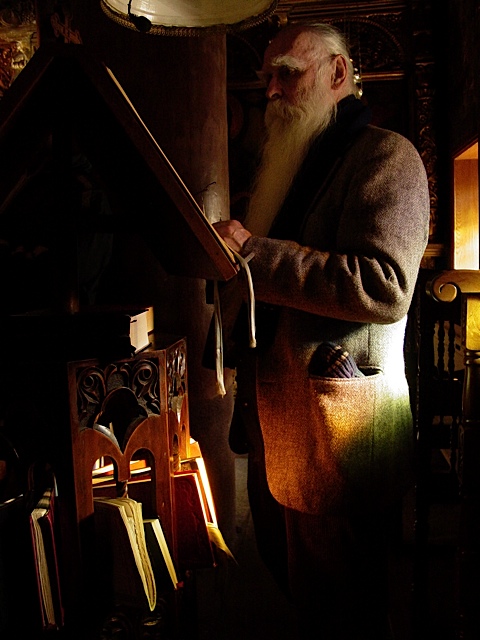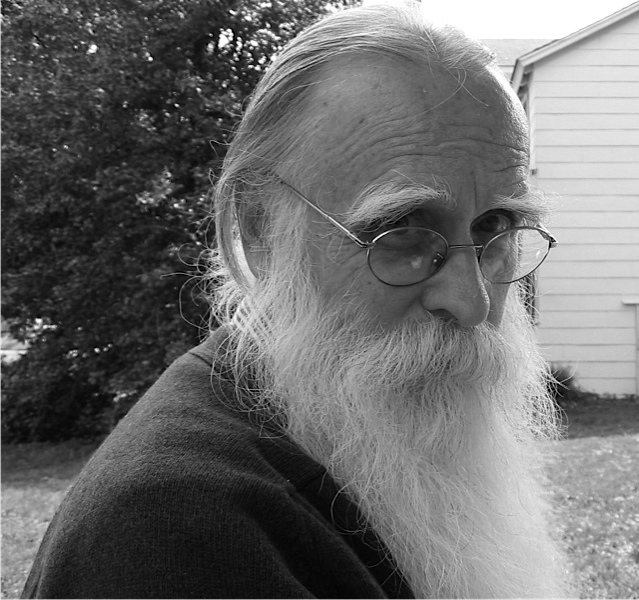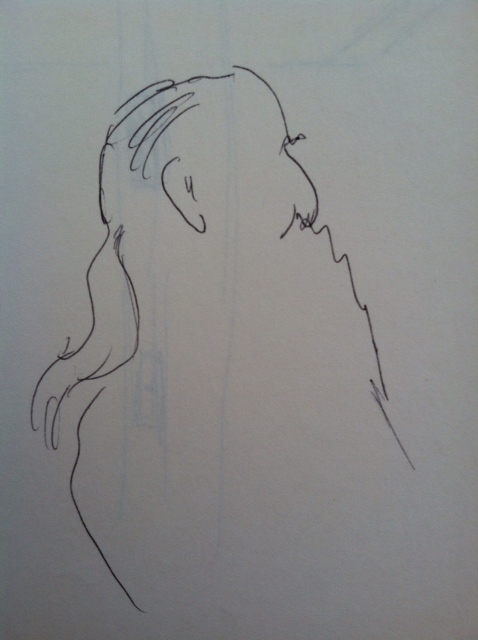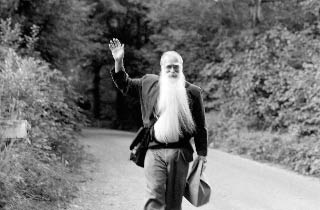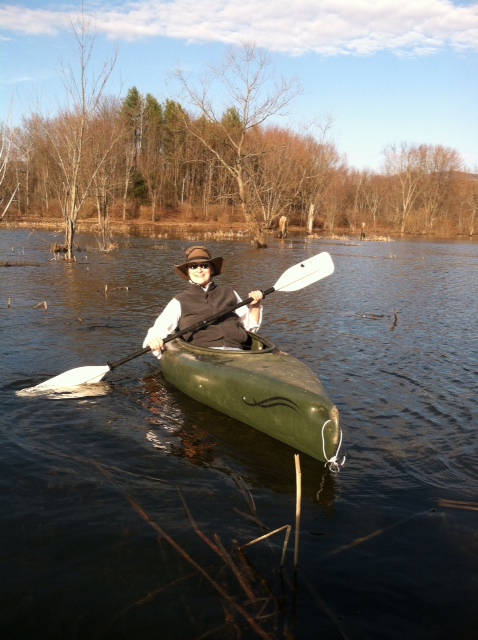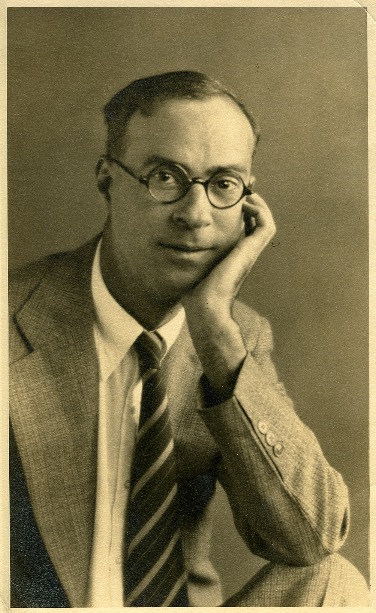
Robert Francis 1901-1987
This is the second in a series of essay by Contributing Editor Julie Larios on the undersung, underappreciated, underpublicized, forgotten, unknown, unread, lost (I could go on) poets of America (and beyond). There is so much chance and luck involved in becoming a famous author and so little chance and luck to go around. Little things like birthplace, the language you write in or whether or not some bigger poet is already there taking up all the air before you arrive on the scene all fresh and anticipatory. So Julie pays homage here to the great but lesser lights, the overshadowed and underrated. Julie Larios is an especially gifted poet and writer of essays about poetry. She seems to have read everything, have a scholar’s grasp of the tradition and the culture but with a poet’s eye and ear. I cannot imagine a better psychopomp into the Land of Shades; NC is amazingly lucky to have her.
dg
—
“Sing a song of juniper / That hides the hunted mouse / And give me outdoor shadows / To haunt my indoor house” (from “Sing a Song of Juniper,” published in The Sound I Listened For, 1944.)
Robert Francis, once called “the best neglected poet” by his mentor Robert Frost, lived many years of his professional life like a maple sapling not getting enough sunlight to thrive. There must be a technical name for that condition – it has something to do with photosynthesis (turning the sunlight into growth?) or chlorophyll or damping off or root rot or….Well, I’m no arborist. But whatever the term for that pathology, the tree fails to thrive because it lives in the shade of larger trees. To carry the analogy to completion, let’s just say that Robert Frost, despite his encouragement of the younger poet, cast a very big shadow over poets living in New England in the first half of the twentieth century.
The poet and editor Louis Untermeyer, approached by Frost as a possible reader and publisher for Francis’s work, said once that Francis’s poetry “reminded me so much of Robert’s that until I learned better, I thought my leg was being pulled and Robert Francis was an alter ego Robert Frost had invented by slightly altering his last name.” It was Francis’s poem “Blue Winter” that Frost offered up to Untermeyer for consideration:
Blue Winter
Winter uses all the blues there are.
One shade of blue for water, one for ice,
Another blue for shadows over snow.
The clear or cloudy sky uses blue twice-
Both different blues. And hills row after row
Are colored blue according to how far.
You know the blue-jays double-blur device
Shows best when there are no green leaves to show.
And Sirius is a winterbluegreen star.
In fact, “Blue Winter” does sound like Frost – the focus on nature as both independent of and analogous to the human condition, the contemplative mood, the fine control of rhyme scheme, and the structure which hints at becoming a classic sonnet but is satisfied instead to end without an Elizabethan bang. The language itself falls into the iambic rhythms of “plain speech” (a quality Frost mentioned often in association with his own work); Francis even seems quite casual in places, as in his decision not to name those “different blues” in Line 5, and in his unusual repetition in Line 8 of the word “show(s)” which both opens and ends the line – that’s something we do all the time when speaking, but which a poet seldom does in a single line. Frost and Francis deliberately sought out this quality of relaxed speech to avoid the over-constructed and inflated diction of their predecessors (you can hear that sound even today in poems written by poets who mistake inflated diction for serious thought.) The words of Francis’s poem are common one- or two-syllable choices until we reach that lovely neologism “winterbluegreen” in the last line, suggesting a playfulness and an approach to words as constructed, man-made objects. That approach is more Franciscan than Frostian.
Take a look at this poem by Robert Frost:
Nothing Gold Can Stay
Nature’s first green is gold,
Her hardest hue to hold.
Her early leaf’s a flower;
But only so an hour.
Then leaf subsides to leaf.
So Eden sank to grief,
So sun goes down to day.
Nothing gold can stay.
Again, the focus on nature as a metaphor for the human condition, the contemplative mood, the iambic rhythm, the plain speech, the fine control of rhyme, the almost anti-climactic last line. Without a name attached to some of their poems, it’s difficult to tell which poet wrote them. For example:
Sheep
From where I stand the sheep stand still
As stones against the stony hill.
The stones are gray
And so are they.
And both are weatherworn and round,
Leading the eye back to the ground.
Two mingled flocks –
The sheep, the rocks.
And still no sheep stirs from its place
Or lifts its Babylonian face.
What do you think – is it Frost or is it Francis? Actually, it was written by Francis and published in his second book, Valhalla and Other Poems, in 1938. To me, it is indistinguishable from Frost.
The desire to imitate, as Francis seems to have done in his early work, is not necessarily a bad one in a young poet. By imitation a poet learns to look carefully at the technical strategies behind a particular artistic voice. Visual artists are encouraged in studio classes to imitate famous artists as they study technique. But imitation can be dangerous – as Untermeyer’s assessment of Francis’s third book of poetry (The Sound I Listened For) reveals:”It is nothing against Francis that [his poetry] resembles Frost….But we know who wrote [the poems] first.” Imitation begins to suggest a lack of personal imagination, akin to forgery.
Francis might not have felt that his poems imitated Frost so much as honored him, but reverence, too, can be dangerous. Listen to what Francis wrote in his autobiography, The Trouble with Francis, about his feelings for Frost as their professional relationship developed: “If I ask myself what it was in Frost that impressed, attracted, and fascinated me most in the years before I met him as well as in the years afterwards, the answer is power. He was a poet and he had power; the combination was striking. …He was a match for any man he ran into on the street, and usually more than a match….You had only to catch a glimpse of him anywhere to sense his solidarity, his weight, his sanity….But though the poems were the basis of his ascendancy, the man himself kept increasing and enriching that ascendancy. Unlike some poets he always seemed more than his poems, inexhaustible. What he said was fresher and terser than what others said. Like a boxer his mind stood on tiptoe for the next parry and thrust. People listened because they were too fascinated not to.”
Initially then, Francis might have been too fascinated not to listen. His early work, remarkable as it is, might have suffered in terms of theme and structure due to the powerful opinions expressed by his mentor. In his autobiography, Francis published not only the text of a letter written to him by Frost, but a facsimile of the letter, as if even the Great Man’s handwriting had a solidarity and weight that Francis could not ignore. In the letter, Frost wrote, “I am swept off my feet by the goodness of your poems this time. Ten or a dozen of them are my idea of perfection.” Imagine how Francis felt when he read that kind of praise. But isn’t there something unnerving about the idea of Frost’s “idea of perfection”? Couldn’t that intimidate a young poet who, when composing future poems, found himself asking “What will Frost think of it?” and altering the piece accordingly? There is sometimes a fine line between influence and intimidation.
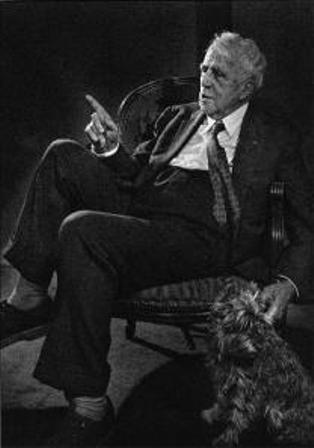
Frost as mentor….
My concern about Frost’s influence might sound pinched and mean. But as someone who has seen that kind of reverence for an influential teacher, and who has watched the effect of it on a wide circle of fellow students, I can say that our awe of that poet’s talent and intelligence probably kept us imitative of him for too long. It was our own fault, not his; he was nothing but generous. But his students, those who felt his “power,” as Francis describes it, sometimes neglected the development of their own idiosyncrasies in favor of his.
Compare “Blue Winter” (published in 1932) to a poem written much later in Francis’s life (listed in the “New Poems” section of his Collected Poems 1936-1976):
Yes, What?
What would earth do without her blessed boobs
her blooming bumpkins garden variety
her oafs her louts her yodeling yokels
and all her Brueghel characters
under the fat-faced moon
Her nitwits numskulls universal
nincompoops jawohl jawohl with all
their yawps burps beers guffaws
her goofs her goons her big galoots
under the red-face moon?
In that poem, Francis is both big-boned and playful, like a bear with a honey buzz. He emerges from the shadows and invites the reader to join him at play, and the language is anything but measured or contemplative – in fact, it’s positively giddy. Rhyme as a formal element has disappeared, though other poetic strategies are clear. The pronounced alliteration puts me in mind of how it feels to face several Coney Island bumpers cars – they’re impossible to avoid, slightly lowbrow, confusing, almost out of control, but you still laugh and enjoy yourself until the ride is over. So, too, with the poem. And despite the fat-faced, red-faced moon, the poem addresses no other nature than human nature.
It’s no coincidence, I think, that Robert Francis titled his fourth book of poetry, published two years after Frost died, Come Out Into the Sun. But by then Francis was no longer an emerging poet and his books did not make much of a ripple. Poet and teacher Samuel French Morse, however, got it right when he said in one of the few reviews of the book, “The quiet excitement with which one reads Come Out Into the Sun generates the conviction that Francis is considerably more than ‘a poet, minor’ as he modestly calls himself. His work has humor, as well as wit, and it may be this idiosyncrasy that accounts in part for the otherwise unaccountable neglect into which the taste-makers have allowed it to fall. On the other hand, the freshness which marks almost every poem here may derive in part from the poet’s awareness that he has nothing to live up to except his own standards of excellence: he is free to be himself in ways that the poet with the burden of reputation may not be free.” The poem Morse uses as an example of this standard of excellence is one of my favorites:
Hogwash
The tongue that mothered such a metaphor
Only the purest purist could despair of.
Nobody ever called swill sweet but isn’t
Hogwash a daisy in a field of daisies?
What besides sports and flowers could you find
To praise better than the American language?
Bruised by American foreign policy
what shall I soothe me, what defend me with
But a handful of clean unmistakable words-
Daisies, daisies, in a field of daisies?
And in the “New Poems” section of his Collected Works 1936-1976 there are even more poems headed in this playful direction, such as the following:
Poppycock
Could be a game
like battledore
and shuttlecock.
Could be.
Could be a color
red
but none of your Commy red
damn you!
Red of a cocky cock’s
cockscomb
or scarlet poppies
popping in a field of wheat.
But poppycock
after all
alas is only
poppycock.
In other words bilge
bosh
buncombe
baloney
ballyhoo from Madison A
ballyhoo from Washington DC
red-white-and-blue poppycock
Hurrah!
There are other cocks
to be sure.
Petcocks
weathercocks
barnyard cocks
bedroom cocks
cocksure
or cockunsure.
But to get back to poppycock
what a word!
God, what a word!
Just the word!
Keep your damn poems
only give me the words
they are made of.
Poppycock!
It’s as if a spring has been sprung and Francis is sailing out into the air, whistling as he flies. Yes, there is weight to what is said; the poem delivers its payload. But those exclamation marks! That full-feathered rooster-ish display! And what on earth would Frost have thought of the “purest purist”?
Francis is definitely undersung, but it’s not as if his work is unknown among poets. If you read enough poetry, you eventually make your way to some of his poems. And he got a sprinkling of fine awards. He was invited to participate as a fellow in the Breadloaf Writing Conference after the publication in 1936 of his first book, Stand with Me Here. In 1938 he received the Shelley Memorial Prize (contemporary winners include Robert Pinsky, Ron Padgett, Lucia Perillo and Yusef Komunyakaa.) But nearly twenty years elapsed before the awarding of that prize and his Rome Fellowship, and almost thirty more years passed after that honor before the Academy of American Poets named him, in 1984, the recipient of a Fellowship Award, citing his “distinguished achievement.” Philip Levine was just named the 2013 winner of this prize, and recipients in the years surrounding Francis’s award are true stars now in the world of poetry: John Ashbery, Philip Booth, Maxine Kumin, Amy Clampitt. Still, the header on Francis’s obituary in the New York Times says it all: “Robert Francis, A Poet Hailed by Frost, Dies.”
So how to explain the “unaccountable neglect” of critics and the reading public, other than to say that Robert Frost cast a big shadow? Plenty of ambitious poets make their way either in spite of or because of influential mentors.
Maybe the key word there is “ambitious.” Certainly something that contributed to Francis’s failure to ascend was his parallel failure to engage in the practical art of building a reputation. He did not hob-nob, he did not schmooze, he did not self-promote, he did not teach or become a mentor himself. Why not?
As Easily as Trees
As easily as trees have dropped
Their leaves, so easily a man,
So unreluctantly, might drop
All rags, ambitions, and regrets
Today and lie with leaves in sun.
So he might sleep while they began,
Falling or blown, to cover him.
It’s interesting that in his autobiography, Francis recalls something about ambition and reputation-building that Frost said to him: “Sitting in my home on the evening of December 10, 1950, he remarked casually that he had never lifted a finger to advance his career and that what had come to him had just come to him.” Francis apparently believed Frost, and was disappointed to read, when Frost’s letters to Louis Untermeyer were published, how far from the truth it was: “…what I had taken him to mean by not having lifted a finger was evidently not what he meant.”
Francis was also startled when Frost asked him what he did when he wasn’t writing. Francis lists the things he did for himself: “Marketing, cooking, dish-washing. Washing, ironing, mending, bed-making, floor-mopping. Gardening, grass-cutting, leaf-raking, snow-shoveling. Storm windows off and screens on, screens off and storm windows on. ….If I wanted wild grape jelly to sweeten the coming winter, I had to find and gather the wild grapes and do everything to the pouring of the hot wax….I knew I could not make my situation intelligible, and, what is more, I didn’t altogether want to. I was not proud of my incessant busyness. I could have envied the miraculous sense of leisure that Robert Frost carried around with him at all times.” It seems that a little doubt, a little bitterness, swelled up in Francis when looking back on this mentor who “never smiled in greeting me at the the door.” The leisure Frost took for granted bewildered Francis, and he admitted finally that there were many Frosts to Robert Frost. “I don’t want to be a farmer,” Frost once wrote. He also wrote, “There’s room for only one person … at the top of the steeple, and I always meant that person to be me.” He admitted to ambition of “astonishing magnitude.”
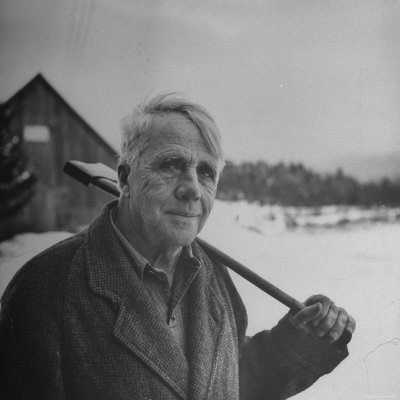
Frost as the independent and crusty New England farmer….
In his wonderful essay about these two poets, “Robert Frost, Robert Francis, and the Poetry of Detached Engagement,” Andrew Stambuk details Frost’s studied self-idealization by showing how carefully Frost constructed and protected the image of himself as the crusty old New England farmer who stands up to Nature’s brow-beatings. In discussing one of Frost’s most famous poems, “Stopping by Woods on a Snowy Evening,” Stambuk says, “Frost’s evocation of ‘barrenness’ is a conscious tactic that extends to a strategy of self-idealization, whereby the poet, in shrugging off this condition and asserting his will, disguises his characteristic wariness as tough-minded resistance.” Few high school students in America have not been asked their opinions of “The Road Less Traveled” or “Stopping by Woods on a Snowy Evening” after having been taught that Frost was the man who took the road less traveled and had “promises to keep /and miles to go” before he slept.
Stambuk goes on to say that Frost “helped shape the public’s perception of him as a tough-minded realist, one strikingly at odds with the poet who was insecure about his reputation….” Maybe Stanley Kunitz described it best: Frost’s “most successful work of the imagination was the legend he created about himself.”
Francis, on the other hand, turned away from reputation-building. He gave up his 15-year dependence on income which kept him out and about in town, teaching violin lessons; he gave up his high school teaching job after only one year, and he decided to rely exclusively on the money his poetry produced, which was meager. He lived alone for more than forty years outside Amherst in a hand-built two-room house he called “Fort Juniper.” Aside from the residential fellowships he was awarded, none of the honors he accumulated paid enough money to live on. In 1955 he was the Phi Beta Kappa poet at Tufts; in 1960, he taught for a year at Harvard. He spent one year in Italy on his fellowship from the Academy and returned ten years later after being awarded the Amy Lowell Traveling Scholarship.
Most of Robert Francis’s life was lived Thoreau-style, in a cabin in the woods, in the shade cast not only by Robert Frost but by a suitably transcendental forest of birch trees. He died in 1987, relatively unknown, alone, 85 years old, still writing, chopping wood, sweeping the floors, ironing, mending, and making that wild grape jelly at the kitchen stove.
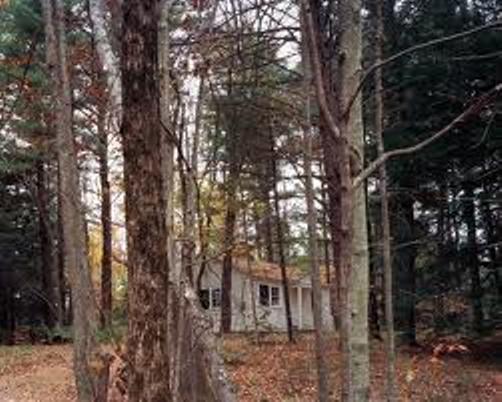
A house in the shade of birch trees.

Fort Juniper Kitchen

Desk at Fort Juniper
Come
As you are (said Death)
Come green, come gray, come white
Bring nothing at all
Unless it’s a perfectly easy
Petal or two of snow
Perhaps or a daisy
Come day, come night.
Nothing fancy now
No rose, no evening star
Come spring, come fall
Nothing but a blade of rain
Come gray, come green
As you are (said Death)
As you are.
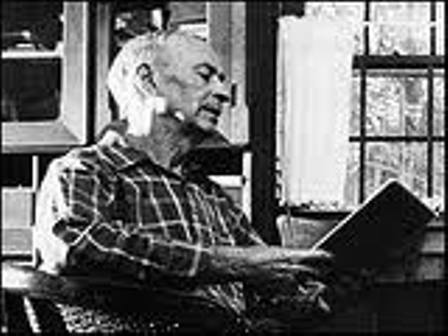
Robert Francis reading at the window…
—Julie Larios
———————————–

Julie Larios is the author of four books for children: On the Stairs (1995), Have You Ever Done That? (named one of Smithsonian Magazine’s Outstanding Children’s Books 2001), Yellow Elephant (a Book Sense Pick and Boston Globe–Horn Book Honor Book, 2006) and Imaginary Menagerie: A Book of Curious Creatures (shortlisted for the Cybil Award in Poetry, 2008). For five years she was the Poetry Editor for The Cortland Review, and her poetry for adults has been published by The Atlantic Monthly, McSweeney’s, Swink, The Georgia Review, Ploughshares, The Threepenny Review, Field, and others. She is the recipient of an Academy of American Poets Prize, a Pushcart Prize for Poetry, and a Washington State Arts Commission/Artist Trust Fellowship. Her work has been chosen for The Best American Poetry series by Billy Collins (2006) and Heather McHugh (2007) and was performed as part of the Vox series at the New York City Opera (2010). Recently she collaborated with the composer Dag Gabrielson and other New York musicians, filmmakers and dancers on a cross-discipline project titled 1,2,3. It was selected for showing at the American Dance Festival (International Screendance Festival) and had its premiere at Duke University on July 13th, 2013.