Jan 162014
 

HlaskoPhoto

Set in Warsaw in the wake of the Second World War, the world Hłasko presents is one of Stalinist media control and pervasive police presence. “Do you like it or don’t you,” is the officers’ constant refrain. That is: are you content, or are you the enemy? — Adam Segal

CoverPhoto2


The Graveyard
Marek Hłasko
Translated by Norbert Guterman
Melville House Books
Paperback, 140 Pages, $15.95 US/CAN


What happens when a man is set against a narrative? There is a curious moment in the book of Job in which Eliphaz the Temanite – one of the four men with whom Job passionately argues about God’s justice – seems to tell a heinous lie for the sole purpose of maintaining his understanding of the world. Job, once the wealthiest and most righteous man in the land of Uz, has seen his livestock slaughtered and stolen, his family obliterated by heavenly fire and crushed under the weight of his crumbling house, and now sits on a pile of ash, his skin crawling with boils and filth, his every breath a burden. The only comforting thought is the infinite rest of Sheol: “My Spirit is crushed, my days run out;/ The graveyard waits for me.”

Job knows that God has wronged him, while Eliphaz knows that God can do no wrong. Only the wicked are punished, the Temanite insists, therefore Job must be a wicked man. “You know that your wickedness is great,/ And your iniquities have no limit./ You exact pledges from your fellows without reason, /And leave them naked, stripped of their clothes.” This is a lie, but it is a lie fervidly expressed, because it is his only means for conforming Job’s pain to his perception of reality.

Marek Hłasko’s 1956 novel Cmentarze, republished as The Graveyard this past December by Melville House, is full of such harrowing brushes with the dogmatic. Set in Warsaw in the wake of the Second World War, the world Hłasko presents is one of Stalinist media control and pervasive police presence. “Do you like it or don’t you,” is the officers’ constant refrain. That is: are you content, or are you the enemy? After spending the night in jail for a rare bout of public drunkenness, left overnight in a cell alongside drunkards and discouraged men – themselves locked up for singing the wrong songs and listening to the wrong radio stations: broadcasts from Madrid, the Vatican, or (god forbid) New York – Franciszek Kowalski is informed by the police that while “one would say you’re decent, quite probably a good comrade… You’ve unmasked yourself” as an enemy of the state.

This is news to Kowalski, a hardworking and contented forty-eight-year-old “assistant technical director” at a car repair plant, a single father of two exceptional adult children. He is, further, a veteran of the Polish anti-Nazi resistance. Shot through the lungs during the war, the then-young partisan fighter joined the communist party so that he might have something worthwhile for which to die. He cannot remember what he shouted, though by all accounts it must have been rather seditious. “You have insulted the People’s Poland,” says the officer at the station, “You abused the party and the People’s government in such language that I’m ashamed to repeat it… By this token you have shown what you really are.” So what is Franciszek Kowalski, really?

“Here I sit behind my desk,” muses Kowalski’s boss, the First Secretary, “everything seems to be all right; but wherever you look – the enemy is vigilant…” Kowalski survived the war, only to learn all these years later that he has may just be one such vigilant subversive.

Marek Hłasko’s cynical treatment of authoritarian censorship and paranoia carries extra weight when one considers that Cmentarze was rejected by Polish censors, and had to be published abroad by Kultura, a Polish-émigré magazine then printed in Paris. Hłasko was born in Warsaw in 1934, became a celebrated author in Poland in his early twenties, only to become a reviled public figure for his Kultura writings. In 1958 he fled Poland, beginning an eleven-year nation-hopping exile ending in his death by drug overdose in 1969. He was thirty-three years old; some call it a suicide. In photographs Hłasko always sports the same cigarette hanging off his lip; sports the same dour expression, as if he’d eaten something truly unpleasant as a child and the bitter taste had never left him.

So it’s appropriate that the Warsaw Franciszek Kowalski navigates is dismal, unwelcoming, and at times downright nightmarish. Kowalski stumbles “over empty milk bottles and pieces of junk that had lain there for years; he trampled on innumerable dogs and cats and groped in the darkness and clouds of dust.” He encounters bottomless holes in the street, hurries past posters of American soldiers spearing Korean infants on their bayonets, meets children chained to banisters by overworked mothers, looks in the puddles of dirty streets and sees that even the stars reflected from above “swam like fat worms.” The legacy of the war, during which eighty-five percent of all buildings in Warsaw were destroyed, is painfully evident. But Kowalski’s observations are also a matter of perspective: the more loss he experiences, the bleaker the city becomes. And Kowalski’s life falls apart almost immediately after his arrest.

At a party meeting, in a room so choked with smoke that “the open, smiling faces of the dignitaries in the portraits on the wall were scarcely visible,” Kowalski hopes to prove to his comrades that he is not the enemy. But first, in a darkly comic monologue showing the necessity of hewing closely to the empty rhetoric of a party narrative, Kowalski must sit through the “self-criticism” of Comrade Jablonka:

“And I went off the deep end, comrades. When I was little, I tore wings from beetles, and from flies; and I did things with cats and frogs that – well, to put it bluntly – I had fun that wasn’t our kind, the workers’ kind. Once a man died under my window… There was starvation, and misery, and capitalism; until a man named Lenin came along.”

The crowd of course erupts in cheering and applause. But Kowalski, unable to invoke the savior Lenin in such a way, finds no support. Instead, he is kicked out of the party.

“Who is right,” asks Kowalski’s son Mikołaj, “you or the party?” Kowalski insists on his rightness, but the son is unimpressed. “Whom shall I believe – you, an individual, you who shout something you don’t feel, something you can’t account for – or the party?” Kowalski tepidly agrees, “We must believe in the party.”

Why is it so essential to believe in the party? Because there is little else to have faith in, evidently. In a flashback to the day he first joined, Kowalski recalls a conversation with his partisan commander, Jerzy, who sees communism as the only bulwark against innate human badness. “People are nothing but a herd of swine wallowing in a sea of shit… [Man] is infinitely beastly; he is capable of everything; he’ll believe everything and befoul everything. Courage in the truest sense is the ability to find a man’s upper, ultimate limits… That is how I understand Communism.” Mikołaj, in the present, echoes this sentiment: “If they tore the fronts off the houses, we’d see pigsties. I can’t afford to believe any individual. I can only believe the party.” Mikołaj disowns his father and moves out, promising only to return if Kowalski can clear his name. A test of faith, thinks Kowalski. He sets out to find his comrades from the war, certain they will help to redeem him.

Kowalski enters those houses, finding behind the façades not swine but phantoms; mere projections of men. Hłasko’s Warsaw is a junkyard of a city, but the men who occupy it are themselves derelicts, broken down and hollowed out by Soviet oppression. “Bear” is so fearful of informants that he ceaselessly plays music lest neighbors equate silence with conspiracy. Warding off suspicions now by forcing his son to recite vapid Soviet poetry, the hamstrung Bear insists Kowalski give up his fight and make way for “something beside which we mean nothing at all,” asking “can’t you die like a strong animal, alone and in silence?” “Birch” has chosen another route, securing his safety as an interrogator, a communist lecturer, and a propagandist. Birch despises the working class and has no real faith in the narrative he is perpetuating – the man makes Kowalski listen to a speech of his while simultaneously admitting to its outright falsity – but he is happy to keep the myth alive so long as it keeps him comfortable.

The novel’s second half sheds the chitinous outer shell of cynical humor that characterizes its earlier scenes. Gone are the drunk tank pranks and the hypocritical concerns of workingmen in smoky chambers. Humor, in Hłasko’s Warsaw, is a product of the crowd, and here Kowalski finds himself alone with his former comrades, alone but for the looming specter of the repressive state. Granted, the final sequence – Kowalski engaging his former comrades sequentially, driving inevitably toward an encounter with Jerzy – does feel a bit predictable and hurried. But it’s also the novel’s most exhilarating portion. Hłasko expertly narrates the verbal skirmishes between these damaged men. And Hłasko’s chronicling of Kowalski’s ideological development is likewise impressive, particularly considering The Graveyard’s brevity.

Hłasko uses his protagonist’s drunken outcry to great narrative effect. The original complaint – recall that Kowalski has no actual memory of it – was initially denied, then justified to Mikolaj as something he did not mean. But soon he is explaining to Birch “I said that I didn’t believe that… it was possible to build anything valuable by means of crimes and lies, by destroying human dignity, by transforming Communist loyalty into slavery.” By imposing his newly discovered oppositional politics on the earlier complaint, Kowalski is suggesting that he really has been the enemy all along.

So, do you like it? Or don’t you? The embattled protagonist is soon challenging the preposterous binary those questions suggest.  “Ah, my friend,” says Kowalski to the arresting officer in a later encounter, “if you had gone through what I have, you’d realize that it isn’t enough: you like it, you don’t like it.” Kowalski’s concerns soon extend far beyond the abuses of the current regime, which only hint at the greater problems facing mankind. “I raised my hand against things which neither conscience nor reason can grasp, which are beyond human understanding.”

Return, for a moment, to the book of Job. The man’s complaints are full of blasphemy against God, but there is one particularly subversive passage about the powerlessness of mankind against the unknown. God is so powerful that “though I were innocent,/ My mouth would condemn me;/ Though I were blameless, He would prove me crooked.” To Job, God transcends questions of right and wrong merely by being a superior entity. This is a fairly accurate prediction of what occurs when God finally appears to settle the debate. God’s argument is less about proving his point through reason than it is about establishing superiority and unquestionable power. “Where were you when I laid the earth’s foundations,” the deity asks, “Speak if you have understanding.” Job capitulates, and is rewarded.

Franciszek Kowalski is the more compelling character. Do you like it? Or don’t you? “No,” he finally admits. “I really don’t.”

—Adam Segal

Adam Segal is a writer and culinary professional in Portland, Oregon. He graduated from the University of Iowa some time ago, and has since interned for Graywolf Press and contributed extensively to Whole Beast Rag magazine, among myriad other adventures.

Adam Segal

.
.

Dec 052013
 

keun

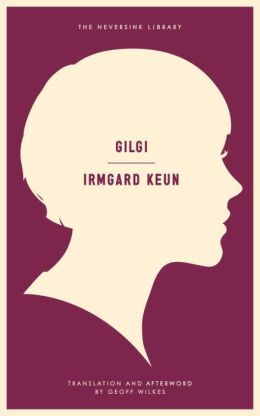
Gilgi

Gilgi
Irmgard Keun
Translated by Geoff Wilkes
Melville House Books
Paperback; 229 pages; $16.00 US/CAN

In the spring of 2011, Melville House published as part of their Neversink Library a compact but tremendously potent little novel by German author Irmgard Keun called After Midnight. First published in 1937 as Nacht Mitternacht, After Midnight is Keun’s third novel, written in exile after the Nazis banned her books and effectively prevented her from further publishing. A tale of censorship and acquiescence, of nationalistic fervor and vile human pettiness, of disappeared persons, of vengeful murders and polite suicides, After Midnight contemplates above all the moral obligations of a writer in times of government oppression and blind patriotism.

Keun secreted herself back into Germany in 1940, protected by rumors of her demise, and lived long enough to see her novels receive renewed critical attention in the 1970s and ‘80s. Her life is easily romanticized (defying the Nazis, wandering in exile, staging her own suicide), but Keun’s time away was no holiday. As an aging writer explains to the protagonist during the party scene that is After Midnight’s climax, “You’ll find any other country is smooth and hard as a chestnut shell. You become a trial to yourself and a burden on others. For the roofs you see are not built for you… And the language you hear is not spoken for you.”

Now Meville House has released Keun’s debut novel, the 1931 bestselling Gilgi, ein von uns. Translated by Geoff Wilkes (and conspicuously missing the “one of us” subtitle), this is the first time Gilgi has been fully published in English. The eponymous Gisela – she prefers the name Gilgi because “the two i’s are better suited to slim legs and narrow hips like a child’s” – inhabits a seemingly free Germany, a Cologne that is worlds away from the party demonstrations and concentration camps spoke of in After Midnight. Still, a painful recession is bankrupting whole companies and ruining personal fortunes, the Weimar government is clamping down on individual freedoms, and all the while gangs of communists and Nazis are beating each other up in the streets. Keun shows complete awareness that something terrible was about to happen, even if Gilgi, not much interested in politics, doesn’t seem to care.

What does interest Gilgi is ambition. Aged only twenty years at the novel’s outset, Gilgi works as a typist by day, studies in a rented room by night, and only ever allows herself some fun when she feels she’s earned it. Any activity she deems unproductive or unenjoyable is simply “a pointless waste of time, and completely incompatible with Gilgi’s character and her conscience.” She is quite sure, furthermore, that all her successes are a direct result of such diligent work; that the unemployed and the poor, “these people who don’t work, ambling so idiotically, frivolously, dozily through their lives,” simply aren’t trying hard enough.

Gilgi’s work ethic, her independence, and even her boyish-but-alluring body are all indicative of Gilgi’s life as a New Woman, a concept popularized by Henry James but prevalent in German society in the wake of the First World War. The German New Woman of the Weimar era was – according to popular magazines of the time like Die Dame and Uhu – intelligent and athletic, sociable and sexually liberated, while still being beautiful and refined.

Gilgi’s (perceived) firm grip on her life’s trajectory begins to fall away on the morning of her 21st birthday, when her mother informs her she was adopted as a baby from a poor seamstress named Frau Täschler. Täschler, a “faceless” old woman whose poverty Gilgi finds repulsive, reveals that Gilgi is in truth the daughter of the enormously wealthy Frau Kreil, though the birth was hidden away to avoid a scandal. But before Gilgi can dissolve into an absurd melodrama of confused identity and lineage, the protagonist is distracted by that most unrelentingly force of destruction: love.

Enter Martin Bruck, world-traveling writer and romantic adventurer; a man of forty-three years who scorns money and finds steady employment far too quotidian for his taste. Gilgi of course falls desperately for Martin, in a fit of passion that rips her away from her work, from her ambitions, and ultimately from her once-firm sense of self. Gilgi’s lover, alternately worshipful and condescending, wastes no time in imposing upon her his image of an ideal woman.

While she’s no stranger to flirtation or male attention, Gilgi learns for the first time what an absolute chore it is to care deeply for another human being. “The hours of happiness come at a high price. The bill is presented promptly,” she muses. “Pay it! With what? With fear and twinges of pain. No, I don’t think the price is too high, I just find the currency strange.” Gilgi wants her love to fit into a rational economic system, a scheme she can control or at least plan for, but finds sorely that one cannot make a budget of one’s desires.

Martin comes across as a bit of a type, the Writer, what with his penchant for swapping drunken stories with old sailors, dreaming up romantic narratives for backstreet curio shops, and punctuating long periods of inactivity with furious, flittering frenzies of writing. (Gilgi, desperate to justify the relationship to herself, lies to friends about the frequency of these frenzies, “then she believes it, because she wants to believe it.”) Keun is expert at charting of his and Gilgi’s relationship – as the currents of euphoria flow alongside terror and anxiety and self-doubt.

In fact, many of Gilgi’s supporting cast bear resemblance to common character tropes. From the beautiful and carefree artist Olga, to the brooding and sexually frustrated off-brand Raskolnikov named Pit, to Gilgi’s three mothers (working-class, bourgeois, and wealthy), Keun’s characters feel oddly familiar. But this is precisely the point. Just as Gilgi is a (fictional) living product of New Woman ideals, so the other characters may be seen as reproductions of tropes from other serialized popular novels. The connection is explicit: all the characters, most evidently the three mothers, read the very magazines they’re being pulled from. “My beautiful love shouldn’t turn into a kind of Strindberg play,” opines Gilgi, and Keun here knows exactly what sort of joke she’s making.

Of course it’s nothing new to have fictional characters read and reference fiction. Any believable facsimile of the world will include its own references to novels and films, and the rather fun irony here is that nothing is more life-like than a human being comparing her life to a work of fiction. But Keun’s efforts are particularly pointed. When Gilgi finally meets the true mother, locked away behind her wealth in labyrinth of chambers and antechambers, she is described dismissively as a “title character in a mediocre magazine serial.” Gilgi insists that Frau Kreil explain herself, “so that you become a living being for me.” Kreil, shocked into silence by the meeting, says nothing. So Gilgi constructs Kreil’s narrative herself, and a “magazine-lady” she remains.

Gilgi herself is a remarkably complex protagonist, occasionally naïve but also fiendishly clever, particularly in her understanding what it means to be a young woman in a male-dominated society: “the shape of Gilgi’s little breasts is clearly visible under her blue-gray velvet dress, convincing Herr Reuter that Gilgi is ‘the’ woman who understands him.” Even when she is overtaken by desire for Martin, she never ceases being cognizant of what love is costing her: “What I see in the mirror is what someone else has made out of me.” Martin rarely allows Gilgi to have her say, casting doubt as to whether Martin can really see her as “a living being.”

The novel is told in a fluid third person, but so close is the narrator to Gilgi’s thoughts that “she” and “I” are used almost interchangeably. Certain of her thoughts and actions are described from without, others as if Gilgi herself were the narrator (a version of free indirect discourse), and – increasingly so as she becomes more disconnected from her firm concept of self – the action is described even with the universal “you.” Some of Gilgi’s most profound revelations about what fierce desire can bring upon a human animal (“…and deep down you sense the purpose of pain and inevitable loss…”) are directed as much at the reader as they are at Gilgi herself.

Keun brilliantly depicts every change in Gilgi’s constantly evolving understanding of her love for Martin; the narratives by which she justifies her actions, the cynical resignations to self-loathing. Gilgi can casually joke to a friend in one moment that she has “been stung by a wild hormone,” and spend a sleepless, tormented night waiting for Martin to come home in the next. Keun here hints at something her protagonist slowly begins to suspect. Gilgi, though she believes as we all do that she is a cohesive, self-motivated individual with a consistent identity, may actually be something far more fragmented.

Beneath her athletic figure and her daily routines, Gilgi is an absolute mess of warring desires. “There are two layers in me,” she realizes, “and the upper one, it dictates – everyday words, everyday actions-little girl, little machine girl, little clockwork girl- the lower layer underneath it-always wanting, always searching, always longing…” She asks, finally, “WhatamIreally?” This, then, is the real horror of love: not that it weakens our resolve or compels us to compromise our individual interests and ideals, but that it forces us to reconsider the commonplace notion that we are firm, consistent entities. The concept of a singular Gilgi, a young woman who is the same from day to day, or even from moment to moment, is revealed to be an illusion.

All the while, Gilgi undergoes a second curious transformation, one that parallels her growing dependence on Martin. She begins to stray from a Randian self-importance and acquires a slightly more liberal, sympathetic view of her fellow man. Having lost a concrete knowledge of her origins, Gilgi considers that her successes stem as much from her bourgeois upbringing as they do from sheer hard work. As a result of the hemorrhaging economy (and of love-induced slothfulness), Gilgi also comes face to face with real poverty. The poor continue to repulse her, but it’s more out of a subconscious understanding of belonging to poverty than a feeling of being above it. And finally, the protagonist’s weakening selfhood makes her more likely to experience her life not as Gilgi, but as a universal you. It’s worth noting that while the socialist Pit is arguably more interested in the welfare of the common man, Gilgi makes the firm distinction between “people” as an abstract intellectual concept and “human beings,” real knowable entities with thoughts, feelings, desires, and pains.

Crisis strikes, and Gilgi is shocked into abandoning Martin and reasserting her independence. On a train platform waiting to depart for Berlin, Gilgi assures Pit that she will inevitably prevail. “There’s a whole heap of people I can beat,” she says, “because my will is stronger and more durable.” And yet she’s also learned humility, “because you belong in the overall structure, you’re not created to stand outside it.” This final conflict – between a human sense of belonging to the crowd while simultaneously feeling that she alone stands above and apart – perhaps confirms more than anything that Gilgi really is ein von uns.

—Adam Segal

———————————-

photo

Adam Segal is a writer and culinary professional in Portland, Oregon. He graduated from the University of Iowa some time ago, and has since interned for Graywolf Press and contributed extensively to Whole Beast Rag magazine, among myriad other adventures.

Oct 012013
 
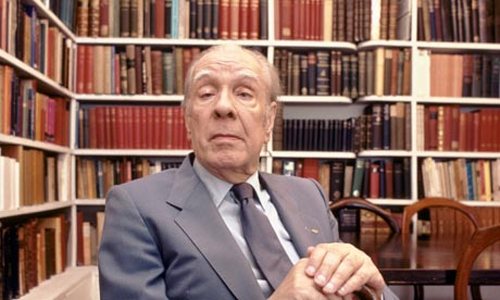
Photograph: Christopher Pillitz/Getty Images

Photograph: Christopher Pillitz/Getty Images

borges3

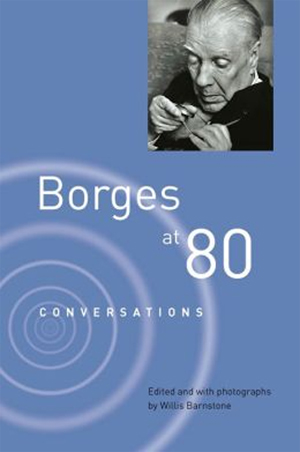
Borges at 80: Conversations
Edited by Willis Barnstone
New Directions, 192 pages, $18.95

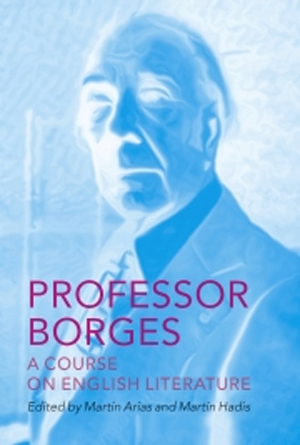
Professor Borges
Edited by Martín Arias and Martín Hadis
New Directions, 288 pages, $26.50

Jorge Luis Borges: The Last Interview
Translated by Kit Maude
Melville House, 176 pages, $15.95

Jorge Luis Borges is a dead, white male. But he isn’t European. So he lacks imperialist cred and isn’t taught among the typical classics. As editor and translator James E. Irby remarks in the 1961 New Directions edition of Labyrinths, “Not being French has undoubtedly also relegated Borges to comparative obscurity in the English-speaking countries, where it is rare that a Hispanic writer is ever accorded any major importance at all.”

A lover of contradictions, he would appreciate the paradox of his current position: he is sometimes overlooked, often mislabeled. Some lazily lump him in with Marquez, with magical realism. Others tie him to dadaism, surrealism, modernism, post-modernism. Borges was a dreamer who described himself as constantly puzzled, stuck in a labyrinth, so perhaps he won’t mind being labelled so haphazardly. Probably aware of the futility of the exercise, David Foster Wallace attempted to classify him more accurately, calling him the “great bridge between modernism and post-modernism.”

He was barely even a writer—more a librarian, a professor of literature and philosophy who just happened to translate and write free verse poetry and brilliant experimental stories. His prose is usually short—compact yet expansive, deeply-rooted in a mixture of traditions yet simple in its fascination with time and eternity. A symbolist, Borges thought in metaphor from the beginning, but turned deeper into his imagination when he began losing his eyesight in his fifties. What results are his story-puzzles of infinite regression and infinite possibility.

New Directions was the first to bring Borges to an English-speaking audience when they published Labyrinths in 1961. That same year he and Samuel Beckett shared the Prix International, awarded by the Formentor Group (created by Carlos Barral). This brought more attention to his work. That collection of stories and short essays remains the essential primer to Borges. Now New Directions has released in short succession Borges at Eighty: Conversations and Professor Borges: A Course on English Literature. The former presents the interviews he gave to Willis Barnstone, Dick Cavett, Alastair Reid, and others during a visit to the U.S. in 1980. The latter is a transcription of twenty-five classes Borges gave in 1966 at the University of Buenos Aires. This spate of new material was just barely preceded by Melville House’s Jorge Luis Borges: The Last Interview, which came out in June, and contains a 1968 dialogue with Richard Burgin, a fantastic discussion with the editors of Artful Dodge, and of course the last interview Borges gave before his death.

In a short meditation written at Borges’ death in 1986, Sven Birkerts called him “the Euclid of the secret orders of time.” Birkerts, writing in the Boston Phoenix, captured the Argentine’s writing in as close to a nutshell as one can: “These are not stories at all. These fanciful narratives are the author’s way of telling us his truth; they are whimsical-looking ciphers in a most serious code.”

Nothing in Borges is superfluous or forgettable. But he was not much interested in character. Borges obliquely addressed this in The Last Interview. Burgin asks about writers like F. Scott Fitzgerald who have (Burgin’s words) “no metaphysical feeling.” Borges says, “They take the universe for granted […] They don’t think it’s strange that they should be living.” His stakes were metaphysical and only somewhat existential. One of his most memorable characters, Pierre Menard, decides to rewrite Don Quixote. To do this he seeks to immerse himself in old Spanish, recover his Catholic faith, and fight some Turks so as to become Cervantes. Menard’s work would be more formidable than the original, because Cervantes had the benefit of living in the sixteenth century. Cervantes had the benefit of being Cervantes. And the story is about identity and authority instead of personality.

In one article-cum-story, Borges invents a world where the spoken language contains no nouns (among other deformities). In the logic of Wittgenstein, the language dominates the world. On Tlön:

…they do not conceive that the spatial persists in time. The perception of a cloud of smoke on the horizon and then of the burning field and then of the half-extinguished cigarette that produced the blaze is considered an example of association of ideas.

Borges was a poet steeped in Leibniz and Spinoza, with a preference above all for Schopenhauer. He loved Whitman and Stevenson. He admired but also criticized Kafka and was fascinated by Zeno’s paradox of Achilles and the tortoise. He described himself not as an author but rather as an interpreter through which writers of the past were filtered. He found a fascination in mirrors and labyrinths, in the distortions not only of the senses but of the mind. Everywhere he saw tradition, variation, and the fictional hrönir.

Centuries and centuries of idealism have not failed to influence reality. In the most ancient regions of Tlön, the duplication of lost objects is not infrequent. Two persons look for a pencil; the first finds it and says nothing; the second finds a second pencil, no less real, but closer to his expectations. These secondary objects are called hrönir and are, though awkward in form, somewhat longer. […] Curiously, the hrönir of second and third degree […] exaggerated the aberrations of the initial one; those of fifth degree are almost uniform; those of ninth degree become confused with those of the second; in those of the eleventh there is a purity of line not found in the original. The process is cyclical. (Labyrinths)

borges4

Born in Buenos Aires in 1899 to a bookish father and a mother whose forefathers were criollo soldiers, Borges was outspoken against Argentina’s support for Mussolini. Early in his life he took firm liberal stances—especially against the ruling Perón family. He became disenchanted by his home country, or at least he became more careful in public proclamations, which lack nuance. He also became less productive in general when he began to lose his sight. As with Milton, blindness did not end Borges’ writing career. But it slowed him down and hampered his reading of contemporaries, which might have contributed to the complaints that he ignored his country, its literature, and its politics.

Meanwhile he was too shy (and, perhaps, too clever) to fully embody a public persona, presenting himself as humble and apologetic for all the fuss made over his work. In his short essay “Borges and I,” he plays with the duality of his life as both a public figure and a quiet, sociable person. Just read this and shudder:

I like hourglasses, maps, eighteenth-century typography, the taste of coffee and the prose of Stevenson; he shares these preferences, but in a vain way that turns them into attributes of an actor. It would be an exaggeration to say that ours is a hostile relationship; I live, let myself go on living, so that Borges may contrive his literature, and this literature justifies me. It is no effort for me to confess that he has achieved some valid pages, but those pages cannot save me, perhaps because what is good belongs to no one, not even to him, but rather to the language and to tradition. (Labyrinths)

Twenty-seven years after his death, these new books show how much he affected to prefer the non-writing Borges to the controversial, acclaimed writer. That said, whether at the podium or in an interview, it’s not always clear which one is speaking. Though he says he hopes his work will be forgotten, and that he’d like to become Ellison’s “invisible man,” he seems to enjoy these conversations too much to completely disown the public Borges.

borges2

Though Borges tells Richard Burgin in The Last Interview that he hates cameras (because “a camera is a kind of mirror”), Borges clearly enjoyed being interviewed, and evidently also loved to teach, to converse about the writers he felt a closest kinship to—not Marquez or Cortazar or Joyce but Whitman, Shaw, and James. In Professor Borges, he covers a selective history of English literature from kennings to Stevenson, for Spanish-speaking students who have never encountered the tradition before. The main pleasure of this collection is to wade into the mind of a lover of books, the one-time head librarian of the National Library of Argentina. Borges again seems more like a curator of tradition than an inventor of fictions.

In Borges at Eighty, the writer comes alive, touring various universities and the New York PEN Center. Of all places, he is most revealing on The Dick Cavett Show. The discussion ranges from the differences between Spanish and English, to Hitler, to Citizen Kane. When Cavett asks about Argentina’s fascist past, Borges sounds resigned:

Look here. I think the Argentine Republic cannot be explained. It is as mysterious as the universe. I do not understand it. I don’t profess to understand my country. I am not politically minded either.

Borges’ literary games were so much more than clever tricks—they were metaphors through which he conveyed as poetically the strange, lonely world he inhabited. Cavett asks whether they are artistic flourishes or “something alive.” Borges replies:

I am always being baffled, perplexed, so a maze is the right symbol. They are not, at least to me, literary devices or tricks. I don’t think of them as tricks. They are part of my destiny, of my way of feeling, of living. I haven’t chosen them.

In other conversations from Borges at Eighty, he explains why free verse is as difficult as prose, and how either is more challenging than structured verse. He describes immortality as a threat, rejects his early work as too baroque, and explains simply that he never wrote novels because he could not do it. He admits, “I am a bit of a prig,” and expounds on the importance of saving humanism. He bemoans his inability to reason, finding in himself instead a preference for dreaming.

In these new books there is much to like about Borges the dreaming librarian, but, oddly, neither the writer nor teacher seems interested in including women in the library. He will say things like, as he tells Burgin, “I think men are more prone to metaphysical wondering than women. I think that women take the world for granted.” When asked to identify significant women in literature, he offers Emily Dickinson. When asked whether there are more, he says, “Yes of course.” He then suggests Silvina Ocampo, “who is translating Emily Dickinson at this moment.” Sometimes his remarks borders on the condescending. In The Last Interview, he tells Burgin:

I have known very intelligent women who are quite incapable of philosophy. One of the most intelligent women I know, she’s one of my pupils; she studies Old English with me, well, she was wild over so many books and poets, then I told her to read Berkeley’s dialogues, three dialogues, and she could make nothing of them.

It can be argued that Borges’ gender gap is also a gap in the tradition he so loved. Borges might have recognized this flaw, though he did not address it very well. As Colm Tóibín notes when discussing the Menard story, Borges is keenly aware of his difficult role as a writer and “the concept of the writer as a force of culture imprisoned by language and time.” Like many of his compatriots, Borges faced a crisis of identity: embrace Western modernism or turn back to the “gaucho” sensibility and poetic style of the earlier Argentina, exemplified by José Hernández’s poem El Gaucho Martín Fierro. But nothing captures better Borges’ conflict with identity—personal, visual, aesthetic, national, gendered—than the short epilogue to Borges at Eighty, from an interview held at the National Library in 1979. The statement touches on a number of problems with the notion of universality:

Reading should not be obligatory. Should we ever speak of ‘obligatory pleasure’? […] I have always advised my students: If a book bores you, leave it; don’t read it because it is famous, don’t read it because it is modern, don’t read a book because it is old. […] If a book is tedious to you, don’t read it; that book was not written for you.”

It is a shame Borges did not recognize his weak position on female writers. His critics either will not forgive him this, or perhaps they do not understand the Argentine’s general appeal to cosmopolitanism. His accepting of an award from Pinochet and professed admiration for Franco did not help either. Such utterances form one contradiction too many for the contradictory universalist.

 Borges

Of the three new books, The Last Interview stands out in that it brings us the English translation of Borges’ last interview, with journalist Gloria López Lecube. He spoke with her right before his departure for Geneva, where he planned to die. In this “last” interview, he speaks fondly of his mother and describes for López Lecube how he dreams in color. We see a man anticipating his death with the air of a giddy boy who will finally learn how the magic trick worked.

Spinoza says that we all feel immortal, yes, but not as individuals, I assume, rather immortal in a pantheistic way, in a divine way. When I get scared, when things aren’t going well, I think to myself, ‘But why should I care what happens to a South American writer, from a lost country like the Republic of Argentina at the end of the twentieth century? What possible interest could that hold for me when I still have the adventure of death before me, which could be annihilation; that would be best, it could be oblivion…

This is the most interesting thing about these new books, ultimately—not the lectures on Stevenson, but the description of his late solitary walks through Buenos Aires, or the colors of his blindness:

It came like a slow summer twilight. I was head librarian of the National Library and I began to find that I was ringed in by letterless books. Then my friends lost their faces. Then I found out there was nobody in the looking glass. And then things grew dim, and now I can make out white and gray. But two colors are forbidden me: black and red. […] I live in the center of a luminous mist. […] Grayish or bluish, I’m not too sure. It’s far too dim. I would say that now I live in the center of a bluish world. (The Dick Cavett Show)

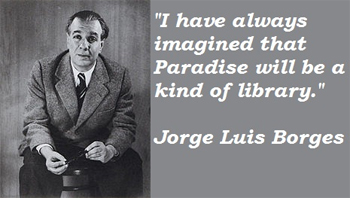
One of the problems with writing a review of three recent books about Borges is the books do not bring much new attention to Borges’ texts, but rather to his persona. He comes off sounding self-deprecating and amiable, curious and perhaps a bit embarrassed by his fame. Though the books are by no means a definitive take, readers will enjoy immersing themselves in the wandering, conversational writer/non-writer Borges. Professorial dictums and self-deprecating jokes aside, his writing is more important. It must be read, reread, and played with. His work is universal and cosmopolitan in nature, and generally runs shorter than the average New Yorker article. Within a five-page story you will find a new language, a labyrinth, a library.

—Tom Faure

———————

Tom Take 4

Tom Faure is an MFA in Fiction student at Vermont College of Fine Arts. His work has appeared in Zocalo Public Square, Splash of Red, Chattanooga Times Free Press, The Journal News, and undergraduate magazines at Columbia University. He lives in New York, teaching English and Philosophy at the French-American School of New York. Contact: tomfaure@old.numerocinqmagazine.com