Aug 042015
 

armand-agora-in-neukc3b6lln-berlin-20-11

Louis Armand is no stranger to the faithful readers of  Numéro Cinq. At the end of 2013, we published an excerpt from Cairo, a swirling novel that found itself shortlisted for the Guardian newspaper’s 2014 Not-the-Booker Prize. And we’re pleased to now present a snippet from Armand’s latest, Abacus. Publisher Vagabond Press calls Abacus, “A decade-by-decade portrait of 20th-century Australia through the prism of one family … a novel about the end times, of generational violence and the instinct for survival by one of Australia’s leading contemporary poets.” Like his earlier novels, Abacus sinks its teeth deep within an environment—this time Armand’s homeland—providing the reader with a visceral understanding of the territory, and thus a greater empathy for the individuals who roam each page.

This excerpt is a condensed version of a later chapter in the novel, titled “Lach,” though it was originally titled “King Shit.” In the following, childhood carelessness butts heads with the lingering aftereffects of wartime trauma. This is, of course, just a taste of what Armand has to offer. For the full picture, seek out the novel itself. It’s well worth the time.

— Benjamin Woodard

.
Armand_Abacus_front_cover_grande

The morning the spastic girl walked out in front of morning assembly with her undies down, bawling for her arse to be wiped, was the last time they ever had to sing “God Save the Queen.”

It was March and the Drover’s Dog had just won a landslide victory for the ALP in the federal election. A republican was made Governor General. “We’ve got our own bloody anthem,” Lach imagined him saying to the knobs at Buckingham Palace, Sir Bill, because you couldn’t have a Governor General, even Billie Hayden, who wasn’t a “Sir.” Just like their headmaster, Crazy Crittendon, who went purple when the spastic girl came up in front of the whole school like that, skid-marked knickers round her ankles, you had to call him “Sir” if you didn’t want a caning or detention for a week.

“Bwoo! Mnaaa!” the spastic girl wailed.

The teachers were all standing out the front singing the nation’s praises while all the kids just mumbled along not knowing the words, they’d only ever heard it on the tellie when someone on the swimming team won a medal at the Commonwealth Games. “Australia’s suns let us rejoice,” what was that supposed to mean? But when the spastic girl did her thing everybody suddenly went silent. Three hundred kids sweating under the hot sky in turd-brown uniforms, waiting to see what Old Cricket Bat’d do next.

Which was exactly the moment Buzik, standing in the middle of the back row, chose to crack the loudest fart in history.

*

“They make a lie so big, no-one can see it,” Wally Ambrose said once. Reg could hear the old bloke’s voice in his head clear as day. Could see him, too, sitting on the verandah, handing him a model spitfire. Who knew how old he was back then? Wally’s voice came to him while he was sitting in the parking lot at the Holsworthy Army Base, across the river in Liverpool, waiting for Eddie. They’d called him in for some medical checks. Ever since Eddie’d come back from Vietnam, he’d been having trouble sleeping at nights, couldn’t breathe properly, kept getting headaches, skin rashes, sometimes couldn’t feel his hands.

The doctors said there was nothing wrong with him, but one doctor thought it might be something to do with the war. Agent Orange. The stuff the Yanks dropped by the metric tonne to kill-off jungle cover along the Ho Chi Minh trail. There’d been talk in America of child birth-defects. Both of Eddie’s kids had the worst kind of asthma. As a matter of course the Fraser government denied everything. The army wanted their own doctors to have a look, so Eddie got the call and Reg’d offered to drive him over to the base, knowing his brother’d be too shook-up afterwards to manage the traffic alone. The vets had been bullshitted all along the line, it was just a question of time before enough of them cracked and took matters into their own hands.

Finally, now Fraser’d got the boot, there was talk of a Royal Commission. “Yeah,” Eddie said, “Royal fuckin’ Whitewash.” Reg switched on the radio and got Rex Mossip in mid-stream, then dialled across to a different station — Billy Thorpe and the Aztecs — and tilted his seat back, closing his eyes with the music on low. Politics didn’t mean anything to him anymore. He had enough drama of his own to worry about, a fucked-up marriage, a smartarse kid and a job that had him pegged for a cardiac before he hit forty. He never did get called to the bar, working his way through the NSW Public Service instead, “faster than a rat up a drain.” It didn’t take long to earn a name for himself as a hatchet-man. They sent him to balance the books in every dysfunctional underperforming redundant backwater of government. From Attorney General’s to Education to Consumer Affairs and finally Premier’s, kicking heads at the personal behest of Neville “Wran-the-Man” on a Grade-11 salary. Another ten years, he could sign-off in style with a harbour view.

But Reg wanted out. Besides, there was nowhere left to go, he’d already bagged the number two job to the biggest hatchet-man in the service, Gerry “Bottom of Darling Harbour” Gleeson. To get his job, he’d have to stiff the fucker. Only alternative was to bide time till the next election and hope Nifty Nev took a nose-dive at the polls, but even then. Besides, in this game, you sat still and you were a dead duck.

Reg dialled-up the volume on the car radio so as not to think about his glorious future any more. A commercial ended and he found himself listening to Acker Bilk. He stabbed at a button blindly and got a different station. “History never repeats,” someone sang over background guitar in a high nasally voice, “I tell myself before I go to sleep…” He made a wry grin, seeing himself exactly like that, stuck in a vicious circle of his own making and trying to bullshit his way out of it. Bullshitting a bullshitter. It was a sure way to fame and glory, peace and happiness, whatever the fuck he’d been pretending all these years he wanted out of life. And what did he want? He didn’t know. To be King Shit maybe.

There was a tapping on the passenger-side window. Reg lent over and flipped the handle. Eddie pulled the door open and slumped into the seat. His face looked sunken and puffed-out at the same time, dark around the eyes, bloodshot. His fingernails were yellow from chain-smoking, to give his hands something to do so he wouldn’t scratch all the time. Had to drink himself to sleep, too, because none of the pills the doctors gave him worked. “Fucking placebo shit.” Whatever they’d been sprayed with over in ’Nam had its claws in deep and wasn’t letting go.

“What’d they say?”

“Usual,” Eddie said, rolling the window down and reaching for the car lighter, a Winfield already wedged in the corner of his mouth.

“Any chance of compo?”

Eddie dragged on his cig, killing half of it in one go while plugging the lighter back in the dash.

“Buckley’s, mate,” he said, exhaling a long plume of smoke out the window. “Only way the government’s forking-out’s if someone proves liability. But to prove liability, they’d hafta prove they used the stuff in the first place. And since they deny the stuff even exists, we may as well just hand ourselves straight to the head-shrinkers, ’cause as far as the experts are concerned, this whole Agent Orange shit’s in our fuckin’ imaginations.”

*

Buzik had freckles and was the shortest kid in the sixth grade, though he acted like he was some sort of Daniel Boone. He lived on Kingarth Street, near the park ruled by an ancient magpie called Big Eye. A strip of concrete in the middle of the park served as a cricket pitch, but no-one ever wanted to field at long on, because that was right under Big Eye’s tree. Legend had it Big Eye once tore a ball to shreds mid-air on its way for a six. All that was left of it were bits of string and leather and scabby cork raining on the boundary. Or maybe Buzik just made that up.

Short-arse though he was, Buzik was the undisputed king of the tall tale. He could cook-up an adventure out of anything. One day he came to school with a copy of Huckleberry Finn and decided their gang was going to build a raft. Buzik, Lach, Robbo and Robbo’s lisping kid brother, White-as-Wayne. He drew up the plans from a Scout’s handbook. To make a raft, he explained, first you had to find some empty forty gallon drums, then some timber to make a frame, some rope to square-lash the drums to the timber, and finally some planking to build a deck. There was a dam just off South Liverpool Road he knew about, past Wilson’s, all they had to do was find the stuff they needed and get it there, then they could lie about on the water pretending they were floating down the Mississippi.

The rope was the easiest bit, the drums were trickier. Buzik found a dozen lying around among the car wrecks in the wasteland behind the Liverpool Speedway, but most were rusted full of holes. They managed to salvage four that looked like they’d float, but the problem was how to get them across to Wilson’s — you couldn’t haul a forty gallon drum on a BMX. White-as-Wayne said they ought to use shopping trolleys, so they hiked across to the gully where the drain at the end of Orchard Road emptied out, to see what they could find. People dumped all sorts of stuff there, but especially shopping trolleys. There was always at least one upended in the grass whenever they went by on the way to school.

You’d never know the dam off South Liverpool Road was even there. It was trees and dense bush all the way along the roadside with a three-strand wire fence. But if you climbed through the fence at the right spot there was a path into the undergrowth that about fifty metres from the road forked left and right, and to the right it ran smack into the reeds along the shoreline of a wide dam. To the left, the path eventually found its way along the top of the dam wall, a berm of compacted earth with a steep run-off into a ditch where a farmer’s septic tank overflowed. You could follow the path half-way around to the other side of the dam or veer left again where soon you came across old chicken coops stacked high against the side of a barn, a tower of corrugated rust with a wrecked school bus parked in front of it. On the other side of the bus was the farmer’s house.

The four of them must’ve made a queer sight ferrying old diesel drums balanced on a shopping trolley across South Liverpool Road, then wrestling them through the fence and into the bushes, but who would’ve seen them? White-as-Wayne stood sentry on the corner of Wilson’s and shouted the all-clear when no cars were coming. And whenever one did, they dived for cover among the weeds that grew waist-high. The trolley and the drum were just more of the usual wreckage camouflaged into the scenery. It took all morning, but eventually they had the drums stashed in a clearing under the canopy of a low-hanging she-oak. Then they went off scavenging.

Buzik, crawling on his belly, snuck into the creaking barn and found a cool-box full of beer bottles. He came back with six of them slung inside his shirt. Robbo and Lach meanwhile had wandered off onto the other side of the dam and found some corrals and a pile of timber that’d been cut once upon a time for fence posts. The posts looked ideal. White-as-Wayne guarded the drums. Buzik had already cracked one of the bottles and was down by the water sucking beer when Robbo and Lach came back with the news. The rest of the beers were bobbing at the edge of the reeds, keeping cool. White-as-Wayne was busy climbing a tree.

“Where’d you get the Tooheys?” Robbo said.

“That’s for me ta know ’n’ youse ta find out,” Buzik grinned.

They parked themselves beside him and cracked a couple of more bottles and sat there drinking thoughtfully.

“This stuff tastes like piss,” Lach gagged.

“In one end, out the other,” said Buzik and proceeded to whip out his dick right there in front of them and, holding the bottle of Tooheys upended in his mouth, arced a stream of piss into the water.

When the beer was finished the four of them tramped back to the horse yards to collect the timber Robbo and Lach’d spotted.

“Jesus Christ,” Buzik said, trying to haul one of the fence posts off, “this stuff weighs a tonne.”

“Yeah,” Robbo gloated, “solid as. The raft’ll never break, no matter what.”

“Give us a hand, will ya?”

Two-by-two they carried and dragged the wood all the way back around to the other side of the dam. The dam was bigger than it looked. It was getting dark by the time they’d hauled the six posts they needed. Four for the frame to lash the drums to, and two for cross-beams to keep it square. There was an old tarpaulin in the barn, Buzik said, which they could use for a deck, and even a couple of oars that must’ve belonged to a row-boat once. They trudged off home in the twilight and pulled the splinters form their hands and next morning went back for the canvas and oars and set about putting Buzik’s grand design into effect.

Lashing the posts to the drums took some finesse, the rest was easy by comparison, it was just a question of getting the ropes tight enough so the whole thing wouldn’t just come apart. Then they had to cut a path through the reeds down to the water. They cracked a few more of the farmer’s beers and poured some over the raft to christen it. The Graf Spee, Buzik wanted to call it. But in the end they just called it “The Raft.” On the stroke of midday they pushed off. It was heavy work, hauling their contraption out of the clearing and down the bank. Then all of a sudden it slid out into the water and down, down, catching the sunlight faintly through the murk. The raft came to rest about a metre beneath the surface, a faint trail of bubbles rising from the drums, the hardwood posts making immobile shadows beneath the canvas as it flapped in the cold current.

*

Robbo’s house was a block east of Buzik’s, on Trevanna Street. Lach lived on the other side of Whitlam Park. All three of them played footie for the under-11s. Maroon-and-blue were the locals colours. The school colours were yellow-and-brown, like flying-monkey guano Buzik said. On weekends when they weren’t kicking a ball in the park or roaming about on their bikes, they’d hang out at Robbo’s place. If no-one else was home they’d stuff about on the phone impersonating Robbo’s neighbour, ringing the taxi companies or the pizza delivery man for giggles. Their record was three taxis at the same time, parked one behind another outside the Hogans’s front gate, honking their horns. Mr Hogan knew who the culprits were and bawled at them over the side fence. Said he’d kick their arses so hard his boot’d poke them in the back of the teeth. So then they phoned a towing service, an undertaker, and the Jehovah’s Witnesses as well.

There were three Roberts brothers, the eldest played guitar in an AC/DC cover-band and was the stuff of legend. White-as-Wayne was in fourth grade, short and skinny with blond hair and a lisp. They teased him a lot but let him tag along, though he had to swear on his life not to tell anyone about The Raft.

Buzik was never one to let a minor setback get in his way, so the weekend after their first effort sank they went back with their shopping trolley and hauled four more empty drums up to the dam. This time they found a couple of planks from a scaffold on a building site and tied them crosswise like an outrigger. They pushed off and this time it kept afloat. White-as-Wayne, who was the lightest, sat up front with Robbo at the back. Buzik and Lach, one oar each, sat on the outside drums and rowed, careful to avoid the snags.

They could’ve floated around the dam for days, it seemed to go on forever, one fjord opening onto another, and yet you could’ve walked the long way around it in an hour beating through the bush.

“There’s eels,” Buzik said, peering down into the black water.

White-as-Wayne pulled his feet up and crossed his legs at stern. Robbo stared glumly over the side.

“I’m goin’ in,” Buzik said, “see if I can catch one.”

He propped the oar on the cross-beam and stood up on the barrel. They were all wearing only their shorts. Buzik bounced on his feet, jumped, did a donkey kick mid-air and splashed down into the black. The outrigger swayed and bobbed. Lach paddled it in a half-circle towards one of the fjords. The undergrowth came down thick to the water’s edge, overhung by dangling willow trees. Dragonflies hovered. Skaters raced about on the surface. It was a warmish spring day and the air was full of insects. White-as-Wayne shivered.

“Hundreds of ’em,” Buzik shouted, flinging his head above the water. “Huge. Big as morays!”

“Bullshit,” Robbo moaned.

“What we need’s a fishin’ line,” Buzik said, catching hold of the port-side drum. “A bloke showed me ’ow to do it. You catch eels wiv a pin, tied to the line, like this.” He made gestures with his hands none of them could decipher. “We’ll catch ’em ’n’ roast ’em on a fire.”

Lach was busy with a pencil working on a map of the dam. He had a square of paper in a plastic bread bag which he kept wrapped up and tucked in the waist of his shorts. Right now he was adding the fjord they’d drifted into. There were roots jutting out from the bank and slimy reeds under the water and a tree stump with a skink lying flat atop it with only its head sticking up.

“What d’ya reckon we should call it?” Lach said.

“Call what?” Robbo shouted.

“This place,” he gestured with his pencil at the fjord in general.

“Something different from the last place,” Buzik said, clambering aboard. “Like Fuckwits’ Cove. Or Silly Cunts’ Bay.”

“Yeah, but it ain’t a cove, or a bay neither.”

“Haiwee Quack,” lisped White-as-Wayne.

“The Arsehole’s Arsehole,” crowed Robbo.

“You bastards’re no help. We’re meant to be explorers. Yer s’posed to give things proper names.”

“What like?” Robbo said. “Sydney Harbour?”

“Call it Lizard’s Bight,” Buzik said, grabbing his oar and pushing off from the tree stump, so they wouldn’t get snagged on its roots.

The outrigger drifted around on its axis. Lach stuffed his map in his pants while Buzik manoeuvred himself into position and they worked the paddles out to deeper water.

“Who d’ya reckon’s better looking, Jenny Carter or Helen Heckenberg?” Robbo said from the back.

“Carter’s a stuck-up bitch,” Buzik yawned, “’n’ Heckenberg’s an old stuck-up bitch.”

“Helen Heckenberg’s the biggest piece of class in these burbs,” Lach drawled.

“Helen Heckenberg’s got melons out to here,” said White-as-Wayne, hands groping the air in front of him.

“How d’you know?” said Robbo, splashing water at his younger brother’s back.

“Piss off!”

“Jenny Carter’s got a head like a sucked mango,” Buzik yawned again, “but I’d still root ’er.”

“You’d woot anythin’,” lisped White-as-Wayne. “You’d even woot one a tha spazos at school!”

“I ’ope ya can bloody swim,” Buzik growled, launching himself between the crossbeams and knocking White-as-Wayne right off his perch.

The two of them thrashed around in the water for a while before Buzik swam away towards the shore where their secret base was. White-as-Wayne clung to the drum at the head of the outrigger, sulking. Lach climbed onto the middle of the cross-beams and paddled legs-astride.

“Don’t ya reckon Jenny Carter’d be a real goer, but?” Robbo said.

“Bit skinny,” Lach said pensively, “’n’ she’s got more freckles than Buzo ’as. They might be related, you never know.”

“Yeah, but Buzo’s sister’s fat’n’ugly.”

And as if on cue the three of them started singing, “Who got beaten wiff tha fuggly stick? Buzo’s, Buzo’s. Who got beaten wiff tha fuggly stick? Buzo’s sister did!”

*

Lach had never seen his father fall down drunk before, but that’s what he did after the taxi driver helped him in the front door the night Lach and his mum stayed up to watch The Battle of Britain on the old twelve-inch black-and-white tellie. Midnight matinee. In the movies, people drank coffee when they had too much booze, to wake them up, so Lach took the matter in hand and brewed up a pot while his mum tut-tutted over the prostrate figure in the hall. He made a couple of guesses at how much of what went where and came back a few minutes later with a scalding cup of black sludge.

Various enigmatic expressions coursed his mum’s face as she watched him kneel down beside the groaning lump Reg Gibson made on the floor and with commendable effort pour the vile stuff down the paternal throat, not spilling a drop on the new carpet. Until, that is, Reg Gibson screamed, hurling a mess of steaming black bile down the length of a polyester suit that looked like it might dissolve on impact.

Lach was on his feet in the blink of an eye, fleeing on instinct, before his father’s paws could get a grip on some part of him and throttle him blue. The drunken mass heaved bellowing into life and stumbled up, ricocheting between the walls. What Lach remembered was the hallway getting longer and narrower the harder he tried to run and Reg Gibson charging up behind him, mad as a bullock, fumbling blind at his belt buckle and then the singing of the leather as it swung through the air. He remembered his mum’s face, just the way it always was, blurring at the edges.

Somehow he made it to his room & dived under the bed as the blows began to rain. Just because of the coffee! And then something went crash and all was silent before the light came on. As quietly as he could, Lach manoeuvred among the junk under his mattress and peered out. Reg Gibson seemed to be standing stock-still in the middle of the room. The room somehow had been altered by the silence. With utmost stealth, Lach inched forward for a better look. His father, belt hanging from his right hand, arm limp at his side, was teetering as if in a trance, staring wide-eyed at the floor.

There between Reg Gibson’s feet were the remains of a model spitfire, the one Lach’d found in a box on the top shelf of the linen press at his Nana’s house. A pair of green-and-brown camouflaged wings with the red-and-blue bullseye decal projected from a wrecked fuselage. Like in The Battle of Britain, when the Heinkels were blitzing the RAF airfields. Only instead of a hundred-pounder, it was Reg Gibson’s Florsheim that did it. The blind rage seemed to’ve drained out of him, replaced by an emotion Lach was unable to decipher. The lull, perhaps, before an even more terrible storm.

He’d meant to keep the spitfire a secret, but in his excitement before the film he’d taken it out of its box to look at and see if the wheels still turned. Behind the smudged cockpit window was a pilot done in so much detail you could even see his eyes. But there was no sign of the pilot now. Bits of the cockpit lay scattered on the floor. The gun sights. The radio set. A shattered prop, piston rods, landing gear. Then all of a sudden Reg Gibson booted the wrecked fuselage across the room and stomped out, muttering how it served someone right, only Lach couldn’t hear who it served right and he huddled there, under the bed-head with his feet touching the wall, and shivered, trying not to cry.

*

Uncle Eddie kept all his stuff from Vietnam in a drawer in the back bedroom at Nana’s house on Dartford Street. Slouch hat, poncho, tie, a couple of belts, mozzie net, jungle greens, dress uniform. Whenever he could, Lach snuck in there to try everything on in front of the mirror, like a midget on parade. He asked Eddie if he could take some of the stuff home and Eddie shrugged.

“Just leave the hat. Ya can do what ya like wiff the rest of it. It’s only there ’cause Mum kept it.”

“What’s special ’bout the hat?”

“Nothin’.”

Lach couldn’t make sense of that so gave up trying. His uncle’d always been a bit strange, though they didn’t really get to see him very often. He lived way out in Campbelltown on a dead-end street. It was the war that made him like that, his mother explained. Lach wondered how she knew.

He took the belt and poncho and mozzie net up to the dam, for the secret base they were making in the clearing under the she-oak where they’d put the raft together. They’d woven branches into a camouflage that hid the whole thing from view, and hung stuff inside, trophies from their raids on the farmer’s barn and the old school bus, bottles of beer, centrefolds from mildewed porno magazines, hubcaps. Lach draped the mozzie net over one side. Buzik and Robbo dragged a couple of car seats over from the back of the Speedway, stinking of sump oil. They scrounged some ratty drop-sheets to spread over them. The ground was littered with dead cicada skins, like the husked shells of aliens zapped by a secret particle beam, the death ray or the doomsday box.

White-as-Wayne dug up a billycan from somewhere and they built a fireplace out of rocks, close to the water, with a smoke hole in the canopy. Buzik scooped dam water into the can and a fistful of gum-leaves, to make billy-tea. They sat around waiting for it to boil, smoking tubes of coiled-up bark as if they were cigars. White-as-Wayne gazed at the pin-ups. Christy Canyon, Sharon Kane, Amber Lynn. Big hair and parted lips making the kind of invitation a ten-year-old’s nightmares are made of. Robbo absently flicked dead cicada skins into the fire and watched them flare and crackle and dissolve into white flame. Buzik blew out a smoke ring that rose up through the twilight of the branches. Faint shafts of sunlight filtered down.

“We should bring a girl up ’ere,” Buzik said at last.

“What’d a you want a girl for, it’d just ruin it,” Robbo said, pulling the legs off another husk.

“No girl’d come ’ere anyway,” said Lach.

Steam gusted up from the billycan. White-as-Wayne crawled over with a stick and lifted it off the coals. There was a sharp hiss.

“Don’t spill it all over the bloody place,” Buzik growled.

“It ain’t spilt,” White-as-Wayne protested.

Robbo set out the tin camping mugs and went to pour the tea.

“Yer s’posed ta whack it wiv a stick first,” Lach said.

“Wot’s that for?” said White-as-Wayne.

“Makes it taste right or somethin’. Me uncle said that’s wot you’ve gotta do when ya make billy tea. Gotta whack it wiv a stick.”

White-as-Wayne tapped the side of the blackened billycan with his stick. Lifted the lid and peered inside. Shrugged.

“Can’t see tha diffwence,” he said.

Gingerly Robbo poured the yellow brew into their mugs. Buzik reached over and took one, tossing the remainder of his bark roll into the smouldering campfire. All four of them blew into their mugs to cool the tea, stirring it sluggishly with their breaths. Buzik was the first to taste it, his face gave nothing away though. When Lach tried it he almost spat it straight out. Robbo had a sip.

“Jesus,” he gagged, “it tastes like friggin’ tadpole piss.”

They all hooted with laughter. Buzik splashed his tea on the coals.

“Give us one a them beers,” he grinned.

Robbo pulled out his Swiss Army knife with the bottle-opener on it and cracked three stubbies, passing them around. Only White-as-Wayne kept hold of his mug, gazing into it and swishing it about like he expected to find something alive in there, some sort of primordial guppy perhaps.

*

The art was in somehow not gauging your ribs with the valve when you slid up through the tyre tube. It was mid-morning before they started across the river to the island. “Wide as the Mississipi,” Buzik said. They had to dodge the water-skiers spraying up plumes of yellow-brown and the speedboats slapping their bellies on the water as they throttled up and down between the bridges. Lach’s uncle, Pete, owned a caravan on the Hawkesbury. He’d sit out under the awning in a deckchair with an esky of beer and get sunburnt feet. With a little persuasion he let the kids spend the weekend as long as they kept out of his hair. Uncle Pete’s mates usually showed up around five and barbequed some prawns and sank Tooheys. “Get yerself some fish’n’chips,” he’d say to the kids, handing them a couple of dollars and waving in the direction of the shops. Deep sea bream with salt and vinegar on the chips, wrapped in newspaper, though really it was shark. They’d sit down under a jetty, tossing the butt-ends of chips to the guppies mouthing about in the shallows.

The sand on the shore of the island was dark and wet, with a bog smell and mangrove roots worming up through it that stabbed into their feet. In from the water the ground turned solid and dirt paths wound through the undergrowth, so thick you couldn’t see more than a couple of metres at a time. They left the tractor inners by the shore and went exploring, but couldn’t get to the other side of the island, all the paths seemed to wind back. And then, starting out of nowhere, was a clearing with a tin shack and voices. The voices sounded drunk, a couple of men and a woman, so the two kids slipped away again into the bushes.

“Wouldn’t it be awesome if we had our own island,” Buzik whispered, “wiv a house on it ’n’ everythin’. ”

Of course they hadn’t been alone in taking possession of the dam off South Liverpool Road, either. A gang of local kids had set up headquarters in the old school bus in front of the farmer’s barn. When they’d discovered the secret base Buzik, Lach, Robbo and White-as-Wayne had built, they smashed it up and burnt the mozzie net and poncho and centrefolds and slashed the car seats and scuttled the “raft” by unscrewing the caps on the forty-gallon drums. “I’ll chop their bloody skulls in ’arf,” raged Buzik, who went and broke all the remaining windows in the wrecked school bus, but he never found out who the other gang was.

When they got back from the island, Uncle Pete was asleep under his awning, fist clenched around an empty beer bottle. With nothing better to do, Lach and Buzik grabbed a couple of Pete’s fishing lines and a bait box and wandered down to one of the jetties to see what they could catch. Past the jetty was all thorny blackberry bushes hanging over the water. Someone had snagged a lure in one of the bushes and Lach spotted it glinting in the sun. With a scaling knife in one hand he waded down the jetty to cut it free. Buzik meanwhile was scooping among the green slime that wafted off the jetty for fresh bait. He caught some guppies and threaded them on a hook and was just casting out when Lach slipped arse over tit on the algae, only just failing to disembowel himself with the scaling knife but almost taking his thumb clear off.

“Ya silly bugger,” Uncle Pete said, laying a role of sticky plaster aside, “yer old man won’t be too impressed.” He’d rinsed out the flap of skin hanging from Lach’s thumb with Detol then stuck some gauze on it and wrapped the whole thing in plaster. “Lucky it ain’t too deep or you’d need stitches.”

There was blood everywhere, it looked a lot worse than it probably was. Lach was all pale around the gills, with his head leaning against the side of the caravan. Uncle Pete faked a tap on his chin.

“You’ll be right,” he grinned, gathering up the first aid kit. “Just a scratch. Next time, do it proper ’n’ see if ya can cut yer ’ole arm off.”

The sun had gone down and there was a halo of bugs around the kerosene lamp slung under the awning. Buzik lounged in one of the deckchairs breathing in the river stink. Lach stared at his cartoon thumb swaddled in plaster.

“Reckon there’s bull sharks in the river?” Buzik said. “Wouldn’t wanna go in there bleedin’ like that, they’d smell it ’n’ come after ya.”

“Ain’t no sharks in the river.”

“There is. I saw it in a documentary.”

“You kids talkin’ bull again?” Pete lurched down the caravan steps. He held out a couple of longnecks. “Now don’t tell yer folks, ’cause they mightn’t like it.”

Buzik smirked like an idiot.

“Thanks Mr Gibson,” he said, grabbing one of the beer bottles.

“Call me Pete,” said Pete.

He handed the other one to Lach who sat there with his wounded thumb sticking up, holding the bottle in both hands like it was Communion.

“Cheers,” Pete said, settling back. “Youse fancy some prawns fer supper?”

*

“Aw, Miss,” Lach moaned.

It must’ve been thirty-five degrees, but still they had to stay in the classroom and finish the problem that’d been set on the board.

“And if you don’t get it right,” said Mrs Hajek, “you’ll stay here all afternoon until you do.”

The class fidgeted with their books. Buzik fired a wad of chewed up paper from his pea-shooter at the back of Robbo’s head. Robbo, marooned in the front row, tried to look diligent as the Dragon Lady turned towards him. Lach jabbed at his workbook with a blunt pencil. He got half-way through the sum and then gave up, hacking at what he’d written with a dirty eraser before starting over again. He could feel the sweat working down his back between the shoulder blades. The ceiling fan creaked. The Dragon Lady stopped in front of his desk and peered at the mess he’d made. The moment he dreaded had arrived.

“Can’t you perform one simple calculation?” she snapped.

Lach gazed morosely at the tangle of symbols he’d smudged all over the page. The Dragon Lady huffed, grabbing his pencil from his hand and leant over his desk to cross out the mistakes. He glanced up into a pair of huge sweaty boobs swaying in a white lace bra. They were so close, he could count the pores. Her perfume made his eyes and nose water. Rancid patchouli. Lach grabbed at his nose so as not to sneeze all down the front of Mrs Hajek’s blouse and in the process grazed the teacher’s fat left nipple.

The Dragon Lady jerked upright and gave him a funny look that made him gulp, nose gripped between thumb and forefinger, so now his ears popped as well. He tried to nod at least, like he understood whatever it was, trigonometry, she’d been scribbling in his workbook. There had to be something strange about her, anyhow, he thought, to make them do trigonometry on the last day of school. Maybe she was some kind of sadist, like they showed on the news, who got a thrill letting schoolkids ogle her jugs while she stood over them with a cane or whatever and made them recite the logarithmic tables.

“Lachlan Gibson,” Mrs Hajek proclaimed, “I have my eye on you!”

“Yes miss,” he honked, still clutching his nose.

There was general relief when Crazy Crittendon announced over the PA that they could have the rest of the day after lunch for cricket on the front oval and other sports activities. “Other” meant sitting in the shade and picking your nose while netball girls jumped around with their skirts flapping up. Anyone who wasn’t an outright sissy tried to get onto one of the two cricket teams. Sadleir and Buzik were picked as captains and chose their sides accordingly, one gang against the other, with sundries filling-out the lower order. Crittendon in his big floppy Denis Lilley hat was umpire. He pulled a shiny fifty-cent piece out of his trouser pocket and flipped it in the air. Sadleir called the toss heads and elected to bat. Robbo groaned at the prospect of a long innings standing out in the heat.

“No fear,” Buzik grinned, shinning the ball on his shorts before chucking it to Lach. “This bastard’ll ’ave ’em all carted off on stretchers before the end a the sixth over.”

Lach grinned. He made a lanky slinging motion with his right arm.

“Bodyline the fuckers,” Buzik said, pulling on the keeper’s gloves as they all trudged out to the middle, Crittendon with his knee socks and long sleeves, Sadleir and his chief lieutenant, “Pig Shit” Partlett, with their pads flapping and a pair of battered Duncan Fearnleys.

Lach dug his heel into the dead grass to mark his run-up, making a scar of fine reddish gravel. Buzik crouched down behind the stumps. Robbo and White-as-Wayne stood well back in the slips cordon, hands-on-knees, waiting. Partlett swatted at the weeds with his bat while Sadleir, lazily guarding middle stump, brushed a fly from his nose. The rest of the fielders shuffled forward expectantly as Crittendon, like a scarecrow sagging under its own weight, dropped his left arm and bent towards the batsman. Lach, seam gripped at a cunning angle across his fingers, fixed a beady eye on Sadleir’s stumps and loped into his run-up. The ball flew in a wide arc, bounced, leather crunched into wood. A shout went up. Sadleir and Partlett, unconcerned, jogged down the middle of the pitch, stopped and leant on their bats as scarecrow Crittendon signalled the first boundary of the day.

— Louis Armand


Louis Armand is a Sydney-born writer who has lived in Prague since 1994. He is the author of six novels, including Breakfast at Midnight (2012), described by 3AM magazine’s Richard Marshall as “a perfectmodern noir,” and Cairo, shortlisted for the Guardian newspaper’s 2014 Not-the-Booker Prize (both from Equus, London). His most recent collections of poetry are Indirect Objects (Vagabond, 2014) and Synopticon (with John Kinsella; LPB, 2012). His work has been included in the Penguin Anthology of Australian Poetry and Best Australian Poems. His screenplay, Clair Obscur, received honourable mention at the 2009 Alpe Adria Trieste International Film Festival. He directs the Centre for Critical and Cultural Theory in the Philosophy Faculty of Charles University where he also edits the international arts magazine VLAK.
 

Jul 312014
 

Election count

The Guardian has unveiled its massive longlist for the annual “Not the Booker” prize, an alternative to one of the UK’s (or, perhaps, THE) biggest literary awards, and the titles are quite exciting: Louis Armand’s Cairo, which we published an excerpt from back in December, is included, as are books from Lee Rourke, Dave Eggers, Susan Barker, and the list just goes on and on and on. Here’s what The Guardian has to say about the longlist:

Those are the books you’ve selected for this year’s Not the Booker prize. I’m not even going to count them, there are so many. The thought makes my brain ache. And that’s just the way we like it: challenging, overwhelming, diverse, divisive, full of books of every imaginable type. Interesting, in short.

But wonderful as that list may be, we now have to cut it down. We have to choose the six books that will go though into the next round. And when I say “we”, I really mean you.

So chime in and cast your ballot! You have until August 3rd.

— Benjamin Woodard

Dec 022013
 

Louis Armand at Jazz Republic 23.5.13

L

ouis Armand’s fiction saunters through the darkest underbelly of society, illuminating the forgotten and the discarded. His recent novel Breakfast at Midnight (2012) reads like a twisted, brilliantly savage acid noir: amid a decaying Prague, rechristened Kafkaville, a quasi-mystery unfurls through the addled mind of a nameless fugitive, a man looking to solve a murder and piece together his own history. Canicule, released this past April, finds purchase through the lens of cinema: a man commits suicide, forcing his friends—failing screenwriter Hess and terrorist-sympathizer Wolf—to reenter each other’s orbit. A narrative revealed in snippets—“I’m not able to put the pieces back together, because I don’t understand them,” Hess confesses. “They’re pieces of an alien life, a completely alien life.”—the novel’s elasticity feels like an experimental film, spliced together on a dusty Steenbeck. Constantly moving forward and backward in time, Armand refuses to coddle his audience, and the result is a tale full of irony, repetition, and alcohol-fueled remorse.

Now comes Cairo. Set for publication in January (Equus Press), the following excerpt fuses themes and beats from Armand’s earlier novels: a murder, followed by a mystery left for men out of their element to decipher. Cinema bubbles throughout, as well, as Armand’s characters employ film tropes to handle their increasingly odd situation. And yet, while these ideas resurface, Cairo’s aura is nothing like that of Breakfast and Canicule, for while those settled on a far more serious plain, Cairo is downright playful. What makes this excerpt so very interesting is that it showcases Armand’s gift for language, both in his wickedly funny character exchanges and in the way he describes locations: senses are explored, filling us in on not only the tangible space, but also its sonic properties, its perfume, truly creating in three dimensions the underbelly of the underbelly.

Benjamin Woodard

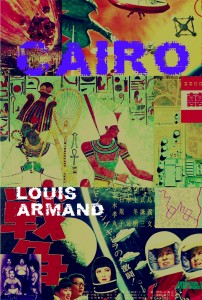
louis armand_cairo_front cover

ELEPHANT’S EGG 

T

he East Ham Mortuary off Barking Road was a squat cube of dark brick with a set of blue doors at the entrance. Nicky Cohn was waiting under a yellow CCTV sign, collar up, cigarette drooping from the corner of his mouth, somehow still alight in the drizzle, when Joblard wheeled up riding the clutch. A naked fluorescent blinked over the doorway, lending the journalist’s features a decidedly funereal cast. The light glistened on the wet chrome of the BSA’s petrol tank, catching the steam as it hissed up from the single cylinder. Then it didn’t. Then it did.

“You’re looking bright and chirpy,” Nicky Cohn said as Joblard yanked off his helmet, face a blur behind frozen breath. “Not half bloody cold.”

“Nice night for it alright,” Joblard said, “though I’d rather be in the back lounge getting intimate with a pint. You been in yet?”

“Nah, just got here. Thought I’d have a fag before trying to blague my way past the Homicide and Serious Crime boys. I recognised two of them when I peeked in through the door. They can be right cunts when it suits them.”

Joblard stuffed his gloves inside his bellstaf jacket, helmet under one arm.

“That’s good, I could fancy a couple of cunts on a night like this.”

“Not like these you wouldn’t. Speaking of which, what’s your Spielberg up to these days?”

“You on the square brother?”

“Eh?”

“Freemasons. Grand Lodge. He’s got some notion about poking a camera into the holy of holies. Ladies of the Illuminati.”

“The what?”

“Yeah, I reckon our mate Johnny Fluoride might’ve been getting him some of the more candid stuff. Kind of spank-and-tell exposé of the secret handshake brigade.”

“Tell me about it after,” Nicky Cohn said, tossing the unsmoked half of his cigarette on the ground. “I’m freezing my balls off out here.”

Behind the blue doors was a corridor and an office with a little window where Nicky Cohn showed his press credentials and signed in. Joblard took in the atmosphere. A couple of plods eyeballed him from where they were sitting beside a pair of swing-doors, like they were on stakeout duty waiting for a corpse to show up and trying to outguess each other about whose it might be. Joblard grinned at them. It was a rule he had with cops: you never break eye contact and always smile, drives the fuckers nuts. Nicky finished with the forms and they waited for a technician in a blue smock to come and give them the grand tour. He was a tall and skinny, with a straggly goatee and hair down past his collar and acne on his neck. Student-type. Taking full advantage of the opportunities society had on offer.

“This way gentlemen,” he said, taking a chit from the receptionist behind the window. “My name’s Zack and I’m your guide for this evening. The main attraction’s just through here and on the left.”

They ran the gauntlet of the two Homicide boys, busy giving Joblard the business with their cop stares, tongues working the backs of their teeth, but not making any more than a show of it.

Joblard jerked his thumb back at the swing-doors, behind them now as their guide steered them left along an underlit tunnel of half-tone green:

“What’s with the local entertainment, Zack?”

“One of our residents has attracted special attention.”

“Zack,” Nicky said, “I have a confession to make. That’s who we’re here to see.”

The technician stopped and scrutinised the chit he was holding.

Joblard, trying to get a look at it over the technician’s shoulder, found himself with an unobstructed view of a dandruff condition on the verge of spiralling out of control. Greenish flakes of dead scalp layered the back and shoulders of Zack-the-mortuary-technician’s smock, sifting down between greasy cords of black hair. Joblard edged back to maintain a safe interpersonal distance. Dandruff always made him think of leprosy. It was an association he’d had ever since childhood and the smell of antidandruff shampoo in the change rooms. Afraid he’d catch the stuff. At least they’d had the decency to wash. Some people, he thought, ogling the back of the technician’s head, lack the very basics of self-respect.

“You’re not here to see 856?”

“No.”

“We’re supposed to report anyone who wants to visit the new guy.”

Nicky slipped a freshly minted portrait of Queen Liz into the pocket of the technician’s smock.

“Put this towards your scholarship fund, Zack. No-one ever need know. You just got the numbers mixed up, that’s all.”

Zack glanced at the bill, which in the light of the corridor was the brown of a freshly minted turd.

“She looks kind of lonely, don’t you think? Got another one of those to keep her company?”

Nicky slipped the technician another royal likeness. The kid grinned.

“Right through here then, gents,” Zack said, leading the way.

Once when he’d been KO’d in the ring by the southpaw Mickey “the Hammer” Mulligan, Joblard had woken up on the floor staring at a light thinking he’d died already and was stretch out on one of those mortuary slabs they have in movies and any minute some geezer in a white labcoat was going to come in and poke a scalpel in his brain and pronounce the cause of death. Telling himself how “Hammer” wasn’t a name Mulligan earned in the ring but operating a protection racket off Brick Lane. But the room Zack the technician ushered them into wasn’t like anything in a film, more like a wholesaler’s stockroom. The far wall was lined with time-warped refrigerator doors you’d expect to find racks of frozen meat behind. Sides of beef, lamb, pork. A whole raffle bonanza.

The technician went straight to the third door down and yanked it open. Behind it there were three more doors, square, one above another, old paint a dozen hues of off-white cracked and flaking. Johnny Fluoride had taken up residence behind the door third from the bottom. Like those Japanese coffin hotels. Zack trundled out the slab. Joblard shivered. Johnny Fluoride’s body, sans head, was wrapped in semi-opaque plastic. The swim hadn’t done him any kindnesses. Even with the plastic on he looked terrible, like he’d been force-fed through the proverbial wringer. But whatever took his head off, that sure as hell hadn’t beaten around the bush.

“Jesus!”

The corpse, Joblard duly noted, had bare feet. Eventually, he supposed, the Coroner’s Office would release a report. He wondered what they’d make of the fact Johnny here had gone swimming without his boots on. Getting a head start, so to speak. The violent crime boys hadn’t made a positive ID yet. Their floater had washed up not only sans head but sans anything in his pockets. According to Nicky’s mate at the yard, Johnny Fluoride’s body had still been zipped into his army surplus when they found him. Which was how he knew it was Johnny Fluoride. The anorak had somehow kept him afloat, otherwise he mightn’t’ve turned up at all till next week, if ever.

Still, Joblard supposed, it’d only be a matter of time now before the Homicide boys rang the old widow’s doorbell over in Greenwich and got themselves an earful. And then from Greenwich to Canvey, which was all they’d need to put him on the spot. A knock on the door in the middle of the night. But at that moment, all Joblard could really think of was how the fuck…?

The three of them stared at the body for a while in silence. Nicky flicked at the chipped paint on the freezer door. The room seemed to Joblard to’ve grown noticeably colder. Nicky pulled a splinter of old paint from under a fingernail and held it up to the light.

“You know,” he said, breaking the silence, “they reckon lead paint’s accountable for half the violent crime on the planet. God’s truth. But just try telling that to the Homicide boys. And the people responsible for the stuff? Why, only the honest-living folk at Innospec, up on the Manchester Ship Canal, flogging tetraethyl lead wherever it hasn’t been banned yet. Fun places like Burma, Iraq, Afghanistan, North Korea. The fact it’s illegal to sell in good old Blighty doesn’t mean they can’t manufacture and export the stuff. Now if it was anthrax…”

“Somehow I don’t think it was lead paint did that,” Joblard said, pointing at the mess where Johnny Fluoride’s head formerly resided.

“The interesting thing,” the technician said, fingering the tag affixed to the big toe of Johnny Fluoride’s right foot, “is they found river water in your man’s stomach, but not in the lungs. Whoever blew his head off gave him a soaking first. Must’ve had something they wanted. That’s my guess. Held his head under till he talked. Then pop. No further use. Seen it before. The Albanian they found in a suitcase last year? He’d swallowed half a gallon of Thames water too, and not from any tap. Except they used a saw on him instead of a canon. Never found the head, either. Your mate involved in any funny business, then?”

“Nah,” Nicky said. “He ran nostalgia tours for old pub-rock fans. Didn’t know shit from clay. Probably a case of mistaken identity.” Turning to Joblard: “What do you reckon?”

“Yeah, mistaken identity,” Joblard echoed. “Poor sod.”

“Did he have a name?”

“Mmm,” Nicky said. “Can’t remember.” To Joblard: “D’you remember his name?”

“Frank maybe? Don’t rightly think he ever told us.”

“Too bad,” Zack said. “Too bad.”

A wedge of lemon floated in the glass of water Nicky Cohn was holding up to the light, eyeballing the citrus bits drifting around in it. He’d watched the waitress closely while she filled the glass straight from the tap.

“That stuff comes direct from the river, you realise?” Joblard said, trying on the tone of voice of someone attempting to be helpful. “If you’re lucky, there might even be a couple of particles of Johnny Fluoride in there. Not to mention all the other crap they dump in the Thames. London’s Pride.”

Nicky Cohn snorted and set his glass down in front of him. The bar they’d retreated to from the East Ham Mortuary was slowly filling up for the evening with what looked like a regular crowd. Joblard counted at least a dozen different types of Adidas tracksuit. The only beer they had on tap wasn’t beer at all but some foreign crap called Carlsberg, so he’d settled for a cup of tea. The publican had given him one of those looks. The de rigeur TV in the corner was running the day’s Ashes highlights. Depressing viewing. They’d’ve done better switching to one of the disaster channels. BSkyB or whatever. Rapping out the small print on why the world was going to shit. Global warming conspiracy nuts. The latest candidate for World War Three.

On cue the box cut from the cricket roundup to the news desk. Some joker in a flash suit talking to himself in a studio with lots of high-tech graphics making up the décor. Lip-syncing to a soundtrack that’d been swapped for the usual pub banter in competition with some sort of Kylie Monogue remix. Text scrolled across the bottom of the screen. Then cut to footage of what looked very much like riots on Wall Street. Archive material on the Twin Towers going down. Joblard registered crowd shots and helicopters. Something brewing on the other side of the pond, he thought. Nicky Cohn was still eyeing his glass in a manner you might describe at pensive.

“Gone to a better place, if you believe that stuff,” Joblard offered, thinking condolences of some sort might be in order. Though exactly what Nicky’s connection with Johnny Fluoride was, he didn’t know. Nicky looked up from his glass at the bulge Joblard’s gloves made inside his jacket.

“Your tea’s getting cold.”

“Don’t really fancy it anyhow.”

“My mum used to say cold tea’s good for piles.”

“That right?”

“She made my old man drink the stuff till the day he died. Sure enough, never did get piles. Fucked his liver good and proper though.”

“Eh?”

“Used to slip rum in the tea to make the stuff drinkable, when the old girl wasn’t watching. She’d keep a pot cooling on the windowsill for all occasions. Earle Grey. By the time he finished his third cup of an evening, the poor bugger could hardly stand up. Which the old girl attributed to the tea’s potent medicinal effect.”

Joblard sniffed his cup then set it back down on its saucer.

“Just regular tea, this. Probably doesn’t work.”

Nicky squinted up at him.

“They put out a call for witnesses. A couple of those lugs might want to have a talk with you. Canvey jetty. How many people saw you together?”

“Just the barman. And maybe this scarecrow character with some sort of skin disease on his face.”

“Mmm. Barman’ll probably just mind his own business, unless they make a point on it. Who’s the scarecrow?”

“Dunno. Followed me, though.”

“Followed you?”

“Yeah, him and a dwarf. They both followed me when I went over to Johnny Fluoride’s gaff. After the shithead decided to take a swim. That’s the bit I can’t figure out.”

“Dwarf?”

“Former associate of our headless friend, I do believe. Seems Johnny accidentally snapped a pic of him and he didn’t like it. Kind of, in flagrante delicto, as they say.”

“You’re not making much sense, old chum. Care to fill in the blanks?”

Joblard, against his better judgement, took a sip of the tea. Grimaced. Resisted the urge to spit it back out.

“Disgusting.”

“Like I said.”

Joblard wiped his mouth on his sleeve, pushed the cup and saucer aside, then folded his arms.

“Bludhorn paid Johhny Fluoride to take some candids. Some geezer getting his jollies being tickled with a riding crop. High class stuff. In the middle of which, this dwarf turns up, blows the geezer’s head off. On film.”

“Kosher?”

“One hundred percent.”

“So Johnny was tied up with Bludhorn, too, eh? And that’s why you were out on Canvey? Because of these pictures?”

“Except I never knew anything about what was in the pictures till after.”

“And I suppose Bludhorn has them safely under lock and key?”

“Curious are you?”

“Curious, old chum, is hardly the word.”

“Doesn’t look like you’re the only one.”

“You think whoever nixed Johnny might be after the pictures?”

“Stands to reason, doesn’t it? Besides, I spotted scarecrow and his mate hanging around Bludhorn’s club in Soho.”

“Maybe we should give the old bugger a call.”

“Maybe.”

“Got anything better to do for the next five minutes?”

Joblard creased his brow like someone trying hard to think, glanced sidelong at his teacup, then fished his mobile out of his inside pocket. Nicky Cohn looked at him in disgust.

“Knowing how you hate these things…”

“You’re begging for cancer of the brain, you realise that?”

Joblard grinned, fingered the keypad, stared at the screen. The background noise covered the dial tone, but a little icon on the screen indicated that the phone at the other end, Bludhorn’s, was ringing. Joblard had counted to five when the icon was replaced by a message saying his call had been interrupted and please try again later.

“Not answering?”

“Nope.”

“Mmm. You know, this could be one hell of a story.”

“Could be. Could also just be a coincidence.”

“Come off it. Why the heck’d anyone go to the trouble of saving a clown like Johnny Fluoride from drowning just to blow his head off?”

“Beats me. Maybe he washed up all by himself, emptied his own pockets, then blew his head off just for the hell of it. Or maybe he got sucked into another dimension. Dr Who stuff. And his head’s still on the other side, mashed into the vortex. One thing I do know, he was scared shitless of somebody. Said they were out to get him. Thought it was because he saw something he wasn’t supposed to see and they found out about it. Or maybe they wanted to send a message further up the line. Join the dots, you know, so whoever arranged to take the pictures in the first place’d get the connection. So they’d know not to fuck with it. Masonic conspiracy stuff, maybe.”

“Is that what Mr Undertaker says?”

“Bludhorn knows who the geezer is but he’s not saying. In the pictures you can’t really make out his face. There’s just this geezer tied to a chair getting whipped. Stiff upper-lip type. Then there’s a flash. Next thing the dwarf appears out of nowhere and the geezer’s head’s vanished. Just like that.”

“Too bad.”

“Hey, did you hear about that coke-dealer, blew some kid’s head off in Wapping last night?”

“Twelve gauge? Yeah. Sodomised the corpse. Made a real mess of himself afterwards, too. Think there might be a connection?”

“You never know.”

“Nah. It’s too crazy. The lunatic shot himself in the head.”

“What if it only looked that way and someone else shot him in the head?”

“Nah.”

“It’s a possibility.”

“Shit. That’d make four. Four headless fucking corpses in one day. One of whom we don’t know anything about. It’s too much.”

“Don’t forget the tart with the whip. If she copped the same treatment, that’d make five.”

“Five? I don’t buy it.”

“Why not ask your mate to scan the register. See if anyone else’s checked into a morgue lately without their head attached.”

“Bodies could’ve ended up anywhere. In a bleedin’ meat factory, for all we know. Fed into a mincer. Bzzzz. Like they keep finding horse DNA in beef paddies. What if it was human DNA instead? Soylent Green stuff. Kid munching on quarter-pounder spits out a couple of fingernails. Not the sort of thing they’d want to see on the six o’clock news. Imagine it. Wozzie the Cannibal Clown! Bad for business.”

“I’ll stick to being vegetarian.”

“You could do far worse, chum. Say, what’re the chances you can actually find this dwarf character?”

“Dunno. All look the fucking same to me. I was figuring they’d probably show up again by themselves. Unfinished business. You know Bludhorn’s got a thing about midgets?”

“Size.”

“Eh?”

“It’s all about size. Midgets. Small.”

“I know what a fucking midget is.”

“Same reason they go for the oriental girls, you know. Little hands.”

“What’re you talking about?”

“Nothing, chum. Over your head.”

“There’s a freak running around blowing people’s heads off and you’re on about some slanty tart’s manicure?”

“A dwarf. Blowing people’s head’s off. Apparently connected in some way to your Mr Undertaker. Capische?”

“What’s that mean, then?”

“What’s what mean?”

“Capische?”

“Don’t you watch films?”

“Not those sort of fucking films I don’t. You want to have a conversation with fucking subtitles, go to fucking Poland.”

“Maybe the dwarf’s fucking Polish, you ever consider that?”

Joblard blinked, looked thoughtful, creased his brow. Nicky Cohn shook his head, muttering to himself. He sniffed at his glass of water, took a sip.

“Oh, and I forgot to mention,” Joblard said, “they were driving a smartcar.”

Nicky Cohn peered over the rim of his glass, set it carefully on the table, picking a sliver of lemon seed from is lip.

“What?”

“You know,” Joblard said, “one of those poxy little jobs, like a golf buggy with an M.O.T.…”

Nicky Cohn made a sucking sound with his teeth, poking his tongue up under his lip.

“I’ll tell you something, chum,” Nicky Cohn said, straightening his mouth out. “If I hadn’t just seen Johnny Fluoride’s headless corpse with my own eyes, I’d swear you’re flaming nuts.”

Back during what used to be called The Troubles, old Uncle Hugo, ex-Sandhurst, had the good fortune to spend a tour of duty behind eight inches of plate glass in a pillbox in the fair city of Armagh. He’d been standing there one day watching the drizzle slowly mutating from bad to worse when some Fenian fucker, parked on a hillside a mile away, took a pot-shot at him with an elephant gun. He’d seen the shell embed itself three-quarters the way through the glass, big as his thumb. When he told the story afterwards, he’d always joke that if there’d been a tailwind, the bullet would’ve caught him right between the eyes. And taken his whole bleeding head off.

Joblard had been thinking of Uncle Hugo’s story while he watched the helicopters circle the Shard. It looked like the flattened head of an enormous glass prawn, sticking up above the Canada Square towers. Some Mujahadin types had tried to blow it up a week ago and now they had half the RAF up there every night at tax-payers expense, searchlights criss-crossing the rooftops. Every wisearse on the South Bank was probably laying bets on how long it’d be before some trigger-happy Afghan vet in a chopper went bezerk and did the job himself, like the one that smacked into the crane over in Vauxhall. Maybe blame it this time on a meteorite.

What killed Uncle Hugo in the end was a brain tumour. “Size of an elephant’s egg,” he’d say, while the nurse prepared his bed-bath. “Elephants don’t lay eggs, Captain Banks,” the nurse would tell him. “This one did.” And that, as they say, was the end of the matter. Joblard remembered the picture the doctor showed his mum. You could see the skull and what he supposed was brain tissue with a void right in the middle of it. Like that Fenian bullet had a bad karmic vibe that’d lodged in his uncle’s head and grown there for forty years into a knot of dead cell tissue, invading whole swathes of cortex till his motor neurons finally packed it in.

Joblard had tried calling Bludhorn once more after leaving Nicky Cohn, but the proverbial Undertaker still wasn’t picking up. Piss-taker, more like, Joblard thought. If things keep the way they’ve been going. He decided to swing by the Hindu’s hole-in-the-wall for a bucket of soy Vindaloo, papadums and sweet mango. Then back to the Fridge. Upstairs one of the regular parties was in full-swing, sub-sonic bass shaking the windows in their frames. He killed the engine and wheeled around to the service lift, chained the BSA to the grill and hung a tarp over it. The basement lights weren’t on, so he figured Bird Girl probably wasn’t back yet. Decided to go in quietly anyhow, in case she was there asleep. Though how anyone could sleep with that Moby shit playing, he didn’t know.

The basement wasn’t exactly luxurious, but it was big. A single room, about ten yards wide, ran the length of the building, a kitchenette with garret windows at the back. It’d been used once upon a time for storage. Upstairs was where the meat processing had gone on. Some of the residents practiced a type of voodoo to ward of bad spirits, appease the bovine gods. Joblard wasn’t interested in animal karma. The place stank of rat bait. Every other morning he took a bag of dead rats out to the trash. He burned incense. Told Bird Girl there must be some sort of rat disease going around. Had to be careful what he left the bait around in, though, in case one of the resident freaks from upstairs got to scrounging munchies on a comedown.

Joblard left the takeaway by the door, tiptoeing through the basement obstacle course in his boots and trying not to bang his head on any fixtures. The sound of snoring was audible despite the thumping bass. Joblard peered into the bed – a king-size mattress on trestles high enough for a dwarf to camp under. On account of the rats. The bed, though, was empty. The snoring came from the other side of it. Joblard made out something moon-like wrapped in an overcoat, lying on the couch. It didn’t look like Bird Girl. He went over and flipped on the lights. Ol’ Pasty, with his head back, felt hat tipped forward, mouth open, was snoring like a bullfrog. His coat was gathered at the neck in the ball of a skinny fist, blotchy like his face. His other hand was wrapped around the butt of a service issue .45.

By the time the scarecrow got his eyes open, Joblard already had an elasticated ocky strap round his wrists and was in the process of cocooning the bastard with an industrial roll of kitchen wrap. Ol’ Pasty’s eyes bugged. They bugged even more when Joblard shoved the .45 in his mouth and asked him very politely to sit still. Wearing about fifty feet of kitchen wrap, the scarecrow looked like a sick grub. He squirmed when Joblard pulled the gun out of his mouth. It made Joblard think of his first day in school.

“You’re not going to piss on my couch, are you?”

Scarecrow shook his head. His grey felt hat had tipped to one side, revealing a serious case of eczema. It gave Joblard the creeps.

“Where’s your mate?”

Scarecrow just looked at him.

“You’re not fucking Polish, are you? Rozumiesz anglielskiego, ty głupi pizdy?

Scarecrow glared.

“Suit yourself.”

Joblard tore off a strip of kitchen wrap and somehow got it around the scarecrow’s head without making contact with the eczema.

“Since you’ve got nothing to say,” Joblard pocketed the gun. “Any trouble breathing, just remember to holler.”

Joblard went to the kitchenette and grabbed a six-pack of Guinness from the fridge, then back to collect his vindaloo. He pulled up an armchair by the door and killed the lights, letting his eyes adjust to the gloom. Maybe, after he’d enjoyed a decent meal, he’d get the jumper leads out and see how the scarecrow responded to a little encouragement. Maybe the fucker was mute, hehe. That’d be a laugh. Better him than me.

Outside, the same Moby track was still echoing in the stairwell. There was the sound of the DLR rattling by. The usual peace and quiet. Joblard grinned to himself, spooned some rice into his curry, popped a can of stout and settled back, munching on a papadum, to see what the remainder of the evening might bring.

Nicky Cohn was standing in the middle of the room, toeing an orange-and-brown paisley rug Bird Girl had said blended with the couch. Joblard couldn’t help thinking she was right. He spooned some instant into two give-away Wozzie Burger coffee mugs and snapped off the kettle. Poured. Doused the mix with soy milk.

“Sugar?”

Nicky Cohn pulled a face like the very idea appalled him.

“Nice place you’ve got here. Pity about the stiff.”

Joblard brought over the coffee and stood beside Nicky Cohn. They both sipped their coffee, surveying the couch. The scarecrow’s brains had made a complete mess of it. But there was no denying it had a certain affinity with the rug. Little fractalised blobules of red, black and grey floating in a type of Rorschach amber that continued half-way up the wall, punctured by bone shard. Bits of the scarecrow’s brains were even stuck to the ceiling. Joblard thought he recognised a patch of eczematous scalp glued to the lightshade – a paper globe that’d once been white, but now looked like a sepia pock-marked moon. Sea of Tranquillity and all that.

At some point in the night Joblard had dozed off under a dusting of papadum crumbs and pilau rice. What woke him was a sound like rats trying to burrow out through the walls. He’d been dreaming of a boat, somewhere on a river. A sort of funeral barque. Egyptian. Head of a jackal at stern. Anorexis, or whatever it was called. Dog god. With a gold sarcophagus in the middle of it. Like Bludhorn’s museum. Naked midgets at the oars. Ol’ Pasty there, too, beating a big drum. A sail with billowing Rosicrucian eye. And Joblard himself, trapped inside the sarcophagus, gasping for breath, tangled in mummy wrappings, trying desperately to escape.

He spilled what was left of the vindaloo grabbing for the .45 wedged in his Bellstafs, lucky the safety catch was still on. At first he thought the scarecrow had gotten away. The place was quiet. The party upstairs must’ve ended. And then he saw it, a faint mock of paracelene from the back windows glinting on the kitchen wrap, casting a long shadow up the wall. Only it was no shadow…

“What d’you know,” Nicky Cohn slurped his coffee. “Looks like your pal must’ve wore falsies.”

“Eh?”

“Unless those are yours?”

He poked his mug towards a splotch on the back of the couch. Joblard squinted at it. A pair of dentures was embedded in the muck. They seemed to grin back at him.

“Yikes.”

“Think someone’s trying to finger you, old chum?”

Joblard pulled out the scarecrow’s gun. Sniffed at it. Nicky Cohn glanced at him with a vague look of apprehension.

“Hasn’t been fired. Beside,” he held the gun out for Nicky Cohn to inspect, “no .45 on Earth could’ve done that.”

 Nicky Cohn demurred.

“Still, doesn’t exactly look good, does it?”

Joblard stuffed the gun back in his pants.

“What’re we going to do?”

Nicky Cohn held out his empty mug, Wozzie-the-Clown smirking sideways from it.

“I’ll take another one of these, if you’re offering.”

It’d been just after four o’clock when Joblard called Nicky Cohn. Figured he slept in his office. Got the answering machine. Shouted something incomprehensible at it. Rang again. Third go, the answering machine cut-out mid-message and the real-life Nicky Cohn came on.

“D’you know what time it is?”

“Of course I know what fucking time it is!”

“This better be good, old chum.”

“What if I told you there’s a headless fucking corpse sitting on my couch?”

He’d made it there in fifteen minutes. The sort of thing possible in London only around four a.m.

“You weren’t kidding,” Nicky Cohn said, when he saw the scarecrow. “There’s a corpse with no head sitting on your couch. What’s he wrapped in plastic for?”

Joblard spieled it out while Nicky Cohn clicked his tongue, shook his head, toed the rug. Sniffed.

“Rat bait,” Joblard explained.

His visitor appraised the room without moving from the spot, keeping an eye out for stray rodents.

“Nice place…”

Handing Nicky Cohn a fresh mug of coffee, Joblard pondered the situation. Nicky was right. If the cops got hold of this, they’d be all over him. Wouldn’t matter what he said. Wasn’t a single alibi he could think of that’d hold water. So to speak.

“In the films,” Nicky Cohn offered, warming is hands around his coffee, “they always search the body first, get rid of any I.D., then put it – the body, that is – in a bin liner and dump it somewhere. Got any of those housewife gloves? You know, for washing dishes and stuff?”

“What about his mate?”

And that’s when Joblard knew he’d have to find the dwarf. But even then, none of it made any sense. He’d spent half-an-hour scrubbing the wall and ceiling, scooping bits of brain matter off the floor, then bundling the stiff into a couple of bright yellow bin-liners – the ones they sold cheep at the local Sainsbury’s. The couch was a goner. He tried getting the stains out with diluted bleach. It only made matters worse. Nicky Cohn sat over by the door and watched, throwing in the odd suggestion from time-to-time. Like why not just toss the carpet over the back of the couch and be done with it?

The only thing Joblard had been able to find on the scarecrow was a roll of tenners and a pawnshop ticket. Castle Square, Brighton. He could dump the stiff and get down there on the bike before the place opened. See what he could find out. But the first thing was where to do the dumping. He’d never been all that conscientious about recycling. And riding about with a couple of bright yellow bin-liners on the back of a vintage BSA wasn’t exactly low-key. But then, nothing he ever did was. He figured the best thing to do was drop the lot into the canal, over by Tequila Warf. It was only a block away. Nicky Cohn didn’t like the idea quite so much. It wasn’t the headless corpse that bothered him. It was being a possible accessory that gave him the heebie-jeebies.

“Don’t tell me you’re suffering from a case of journalistic ethics?”

“Do I work for the Sun?

“Thought you type were all the same.”

“Listen, chum, some of us have a future to think about.”

“What about the poor fucker with his head blown off. You reckon he didn’t have a future to think about?”

“Not sure I get your point, chum.”

“Nicky. There’s a headless stiff on my couch. If we don’t get it out of here, I’m screwed. You think I popped Johnny Fluoride? There were witnesses.”

“I just want to be able to write the story without calling down any heat. My mate at the Yard already smells a rat. Like where I got the tip-off on the floater. This could end up ruining my expense account.”

“Shut up and give me a hand, will you.”

Joblard bundled the disposal job in Bird Girl’s rug and left the stain on the couch to look after itself. Between the two of them they got the rug out into the yard, along the alley behind the Rajasthan Café. Nicky Cohn huffed and puffed at the back while Joblard shouldered most of the weight up front.

“For a skinny bastard, he sure weighs a bloody tonne.”

Once they’d made it across the parking lot off Brunton Place, it was easy going. Trees lined the canal, shrouding it in shadow. Bits of concrete rubble lay piled hither and yon. Bricks. Steel piping. Coiled wire. A body-disposal paradise. Across the water, a billboard stood up from the wharf, facing the Commercial Road Bridge, as if the plan was to get your average out-bound commuter worked up for the homeward run, and the missus-and-three-veg. Miss Big Tits in the Wonder Bra ad. Hello Pikers! Some local vigilantes had sprayed out the offending bits, adding WHORE across Miss Big Tits’s face. The marketing geniuses had really picked their demographic. It wasn’t called the East End for nothing. Any further east, you’d be in fucking Cairo.

“I heard somewhere,” Joblard said, hoisting the weighted bin-liners across the tow-path to the edge of the canal, “that if you cut the guts open, a body won’t float. On account of the gas. When it decomposes.”

“Not much good when it’s wrapped in a plastic bag, is it?”

“Shit. He’ll blow up like a fucking balloon.”

“Forget it. Your man ever floats, he’ll wash up in the locks. Maybe get pulled down to the river. Means they’ll have company for Johnny boy. Give the fuzz something to think about.”

“Shame about the rug.”

It made less of a splash than either of them expected, swallowed by the dark water. Joblard tossed the gun in after it. There were lights coming on over at the wharf. The six o’clock shift. Time to get a move-on. It was going to be another long day.

— Louis Armand

——————————

Louis Armand is the author of seven collections of poetry and five novels, most recently Breakfast at Midnight (2012) and Canicule (2013), both from Equus (London). His screenplay, Clair Obscur, received honourable mention at the 2009 Alpe Adria Trieste International Film Festival. He is an editor of VLAK magazine and has worked as a subtitles technician at the Karlovy Vary Film Festival. He lives in Prague.

Feb 262013
 

Louis Armand’s acid noir tale Breakfast at Midnight is a real delight, the kind of book that both embraces and breathes life into the standard tropes associated with the hard-boiled genre. In an upcoming review (forthcoming from Rain Taxi), I describe the novel as “a pinball fever dream, sopping with sweat, booze, and sex, that bathes its confines in an unsettling atmosphere of grime.”

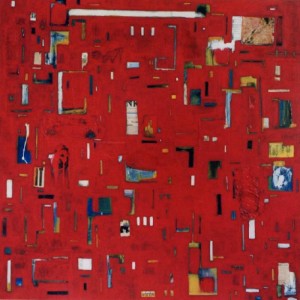
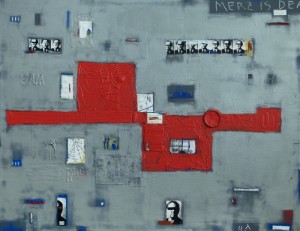
Armand is not only a writer, but also a photographer and painter of some wonderful abstract canvases. Here below are two examples of his work. His website contains multiple galleries, all certainly worth a view.

untitled-red-1999-1

merz-is-dead-2002

(via atelierlouisarmand)

—Benjamin Woodard