Sep 172013
 

.

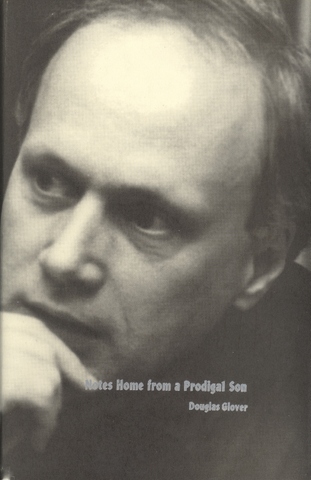
This is the beginning of things, the Ur-essay, the thought-lode out of which most everything else I have written about literature has evolved. It was written in the late 1980s and so, to an ever so slight extent, is a period piece. It forms the centre piece of my book of essays and memoir Notes Home from a Prodigal Son (Oberon Press, 1999). The ideas here expressed evolved out of my philosophical background, long reading, and the lessons I learned during my time at the Iowa Writers Workshop. I mention specifically the novelist Robert Day (who now contributes mightily to NC), but I would be remiss if I didn’t also recall the influence of the late Claude Richard, who was a visiting professor from the University of Montpellier at the time.

I reprint the essay here because the book and the essay were both published long ago; such is the nature of readership that older things fall out of the line of vision. But in fact this essay (and Notes Home from a Prodigal Son), along with The Enamoured Knight and Attack of the Copula Spiders and my long essay “Mappa Mundi: The Structure of Western Thought” form a consistent, coherent and elaborated system of thought about writing, criticism and philosophy.

dg

…there is an other [irony] besides the irony of the learned man; there is the poem, in the sense that it is rhythm, death and future.

— Julia Kristeva

1

The best writing teacher I ever had was a Kansas cowboy named Robert Day who showed up at the Iowa Writers’ Workshop as a last minute, one-semester replacement for a sick colleague in January, 1981. The first day of classes he strode into the room wearing Fry boots, jeans and a checked shirt. Without saying a word, he picked up a piece of chalk and wrote across the full length of the blackboard in huge looping letters: REMEMBER TO TELL THEM THE NOVEL IS A POEM.

At the time, Day had only published one novel, a book called The Last Cattle Drive. He was a tenured English professor at Washington College in Maryland. He was a past president of the Associated Writing Programs. As a young man, he had worked at G. P. Putnam’s in New York and could recall for us the excitement over the publication of Vladimir Nabokov’s Lolita. Summers he went back to western Kansas where friends ran a borderline ranch. He kept a horse there, a horse which at various times had eaten loaves of bread through the kitchen window, or Day’s hat. All summer long he would hand out with his friends, their cattle and his horse.

That semester we read Queneau, Musil, Rulfo, Achebe, Nabokov, Tutuola, Abe and Marquez. Day did not tell us what he meant — REMEMBER TO TELL THEM THE NOVEL IS A POEM. Maybe he forgot. Half-way through the semester he read the second draft of my novel Precious, three hundred typed pages of plot, dialogue and scene that stubbornly refused to come alive. I still have the notes I made during our conference, fifty-four words. It took less than fifteen minutes. But like a skilled surgeon he had opened the novel up for me and shown me its heart still beating, its bones, nerves and veins.

He taught me four basic devices. The first  was what he called the language overlay. My first person narrator was a newspaperman, he had printer’s ink in his blood. Day said I ought to go through the novel, splicing in words and images, a discourse, in other words, that reflected my hero’s passion for the newspaper world. So, for example, Precious now begins: “Jerry Menenga’s bar hid like an overlooked misprint amid a block of jutting bank towers…” Or, in moments of excitement, the narrator will spout a series of headlines in lieu of thoughts.

Second, Day taught me about sub-plots. The main plot of a novel, he said, is like a pioneer wagon train moving across the prairie. The sub-plot is like the Indians coming in out of the hills to attack from time to time. The pattern of the sub-plot must reflect or parallel the pattern of the main plot, Day said, just as the gene inside a cell contains the pattern for the whole body.

Third, he showed me how to use background and revery. My protagonist must have been somewhere before the novel began, he must have a story to tell that will give texture and depth to his thoughts and, by extension, to the narrative. In Day’s words, he wanted me to “give the novel a memory.” Once again, the background must reflect or parallel or bear the seeds of the main action. A revery that does not bear a relation, in pattern, to the main plot is wasted. It diffuses the reader’s attention. It makes the book foggy and boring.

What this means in practice is that far from being “loose and baggy monsters,” to use Henry James’s phrase, in which the author has room to digress, expand or linger, a good novel is a tight, formal production with very few wasted words.

Finally, Day told me how James used the confidante device to modulate the weight of a given speech. In Precious, I had two secondary characters who were both close to the hero. What if I created a pattern of giving and withholding information? What if I made one of the secondary characters the hero’s confidante, the person to whom he told his secrets? He could then maintain an ironic distance from the other, giving opportunities for lightness and humor. The reader would sit up and pay attention when the confidante was on the scene.

Day then lied and told me I could splice all these changes into the novel in three weeks. Actually, it took me five months, and I rewrote the thing from beginning to end. I remember those months as being the best time of my life; the woman I lived with then says otherwise. She says she never remembers me being more miserable. What that means, really, was that the work was hard but also amazingly exhilarating.

What I had learned was far more than a collection of four devices. I had learned a secret about writing stories, novels and poems. Also painting pictures and composing symphonies. I had learned that a novel is not a string of seventy-five thousand words, all different, all pressing the plot forward. If you think about it, the stories of most novels can be told in a page or two of summary. Then imagine me trying to stretch that summary over another two hundred and ninety-eight pages.

Or, to use an image I had carried in my head through two earlier failed novels, think of a novel as a bridge thrown across a bottomless gorge with nothing to support it from one end to the other. In my mind I had to get a running start and write fast for fear of not making it across. I wrote my first novel in six weeks in a state of terror. As a bridge it was a shambles.

What I had learned was that besides story, plot and characters, the novel needs patterns. That in fact the story, plot and characters don’t begin to come alive until they are submitted to a pattern. I had made a common mistake. Before Robert Day, I had assumed that a novel’s “aliveness” depended upon its verisimilitude, i.e. how closely it resembled what we call real life, whereas in fact it depends upon patterns. I think this is what Day meant when he wrote REMEMBER TO TELL THEM THE NOVEL IS A POEM. He meant for us to notice that, like a poem, the novel should be seen as an arrangement of materials of which one, but only one, is the story. This patterning is the poetic quality of prose.

2

In a poem it is much easier to see the patterns. We’ve all had to map out sequences of stressed and unstressed syllables, the ABBAs of rhyme, the internal rhymes of alliteration, the surprising anti-patterns of sprung rhythm and free verse. We’ve all dissected extended conceits, noted the effects of diction and imagery. These are the things we focus on in a poem. Narrative, story and verisimilitude are secondary to the poetry of poetry, by which I mean the effect of patterns.

With novels and stories, the reverse is true. We tend to read a novel first for plot and character and the narrative’s relation to reality, what post-Saussurean critics call its “aboutness,” and only secondarily, if at all, for pattern. This is a little like Ludwig Wittgenstein’s duck-rabbit argument. You know how you can draw a little circular figure with an elongation here and a dot there. If you squint your eyes one way, you can see it’s a rabbit with long ears. But if you squint another way, it becomes a duck with a protruding beak. With poems and novels, you can read for pattern or you can read for aboutness, depending on how you squint your eyes.

It happens to be the case, though, that we rarely read novels for patterns. One reason for this is that the novel’s very aboutness gets in the way. It is the easiest and most natural thing in the world to read a novel for plot and character. In fact, in most cases you have to read for plot and character in order to situate yourself, as an observer, in the world of the novel. The shift of focus, the new squint, if you will, from plot to pattern only happens on rereading. A good reader, as Nabokov wrote in his essay “How to Read, How to Write,” is a rereader.

When we read a book for the first time the very process of laboriously moving our eyes from left to right, line after line, page after page, this complicated physical work upon the book, the very process of learning in terms of space and time what the book is about, this stands between us and the artistic appreciation. When we look at a painting we do not have to move our eyes in a special way even if, as in a book, the picture contains elements of depth and development. The element of time does not really enter in a first contact with a painting. In reading a book, we must have time to acquaint ourselves with it. We have no physical organ (as we have one in regard to the eye in a painting) that takes in the whole picture and then can enjoy the details. But at a second, or third, or fourth reading we do, in a sense, behave toward the book as we do toward a painting.

When Nabokov makes a distinction between “what the book is about” and our “artistic appreciation” of the book, he is separating our reading of the subject, story and characters — the book’s aboutness — from our appreciation of the book’s so-called artistic qualities, the details we would notice if we looked at a novel the way we look at a painting.

Nabokov assumes that we all look at paintings for more than the resemblance they bear to old dead people in funny clothes, for more than romantic seascapes and sunsets. He assumes that we see, for example, Whistler’s mother as something other than an elderly lady in a plain black dress and that we know, perhaps, that the painting of Whistler’s mother was originally titled “Arrangement in Grey and Black” and that when Whistler talked about painting he would say, as he did in a letter to his friend Fantin-Latour:

…it seems to me that color ought to be, as it were, embroidered on the canvas, that is to say, the same color ought to appear in the picture continually here and there, in the same way that a thread appears in an embroidery, and so should all the others, more or less according to their importance; in this way the whole will form a harmony.

Whistler is talking about patterns, patterns of color that exist over and above and through the subject of the picture, its aboutness. And when Nabokov talks about “artistic appreciation,” he is talking about appreciating the patterns of the novel in the same way, the repetition of certain verbal events or structures in a novel like the colors in a painting. This is precisely the way we appreciate poetry, where it is, as I have said, much easier to see that sounds and words are like oil paints or, for that matter, like notes in a piece of music.

3

Other ages and times have provided writers with pattern books, with instructions on rhetoric and composition. They put names to commonly used devices: paronomesia, periphrasis, prosopopoeia. Even in the 1920s at the University of Toronto’s Victoria College, my aunt was taught to write, to compose sentences, by translating back and forth from Latin to English. But no one teaches composition any more except in remedial programs to students who patently can’t write at all.

Instead we teach creative writing with the emphasis on “creative” (which, I guess, implies that there is “uncreative” writing as well, though I have never seen it). At Iowa, outside of Robert Day, teachers tended to urge us to “write what you know.” If we managed to do that, they said, whatever we wrote would come out all right. Ernest Hemingway, that most brazen of liars, once wrote, “All you have to do is write one true sentence…,” sending generations of his competitors chasing vainly after a will o’ the wisp reality. Why people choose to believe what he says about writing and not what he says about his manliness is a curious instance of intellectual willfulness and self-deception.

In university English departments, on the other hand, students are taught criticism — Arnoldian, Freudian, New, Structuralist and Post-Structuralist, etc. Archetypes, symbols, influences, foreshadowing, metaphor and theme. Academic critics tend to see a novel as full-blown, not something built; as something found, not constructed. Academics are romantics — they see, or prefer to think they see, romantic intention in a novel as opposed to the bricks and mortar. I tried to tell a friend of mine, a person partway through a PhD. in English, what I meant by a pattern in a novel. She said, “Well, we call that recurring imagery.” A singularly bloodless phrase. But fair enough. Yes, that is sort of what I mean.

But why does it recur? And who made it recur? And is that all there is to it? Does the phrase “recurring imagery” help a writer? Academic critics generally see recurring images as evidence of a point the author is trying to make, part of the aboutness of the work. Deconstructionists, on the other hand, look for recurring images that the author may not have intended so as to “deconstruct” the aboutness of the work. In either case, they are wedded to thematics, to aboutness, to truth. Write what you know, throw in a little recurring imagery, and it’ll come out right. That’s what the creative writing schools and the English departments teach us.

In general it’s not terribly bad advice. Many writers get by with no other. Every writer borrows to a greater or lesser extent from the real world the images which he or she deploys in his or her novel. Every writer who has read significantly has an instinctive feel for rhythm, pacing and the repetition of images. But to go through life believing “Write what you know and throw in recurring imagery” is like going through life believing in God and free enterprise — it leads to a conservative and narrow view of life and art.

4

Pattern is an ambiguous word and I want to keep it that way. Writing a novel, Faulkner once said, is like a one-armed man nailing together a chicken coop in a hurricane. It helps to be open-minded and undogmatic about the rules of the operation.
Experience itself rests on our ability to recognize patterns — Forms Plato called them — in the sensory flux. A pattern that does not repeat itself is not a pattern, it is chaos, or it is something like God, or it is nothing. And the ability to recognize patterns is tied up with out ability to remember. Pattern, repetition and memory are the foundations of consciousness.

The same happens in a novel. On a very rudimentary level the author depends on pattern, repetition and memory to give the reader confidence in the world of the book, what we call verisimilitude, the quality of seeming to be real. In Leo Tolstoy’s Anna Karenina, Anna appears on almost every page. Anna is a pattern, a group of words and characteristics that repeat. If Tolstoy had changed Anna’s name, age, hair color and social background every chapter or so, we would throw the book down in disgust.

Pattern can mean a model or design upon which something else is constructed. Or it can mean the systematic repetition of certain design elements as in the pattern in wallpaper.

Pattern can, for example, refer to something large such as a plot.  All romances are based on, say, the model boy meets girl, boys loses girl, boy gets girl. We also say there are no new plots under the sun. And we refer to coming-of-age novels, which have plots based on myths and rites of passage, or adventure novels, which are based on the quest model. What we call genre is a sort of pattern.

But pattern can also refer to something minute, a device such as, say, the list or the epic simile or even the structure of a sentence. Here is Nabokov talking about Flaubert’s Madame Bovary:

Gogol called his Dead Souls a prose poem; Flaubert’s novel is also a poem but one that is composed better, with a closer, finer texture. In order to plunge at once into the matter, I want to draw attention first of all to Flaubert’s use of the word and preceded by a semicolon. This semicolon-and comes after an enumeration of actions or states or objects; then the semicolon creates a pause and the and proceeds to round up the paragraph, to introduce a culminating image, or a vivid detail, descriptive, poetic, melancholy, or amusing. This is a peculiar feature of Flaubert’s style.

Now, though the actual number of usable patterns may, for practical purposes, be infinite, we always choose to use a finite number in any given piece of writing. This finite number of further reduced by the fact that many of the patterns are repeated throughout any given work. The more patterns a writer knows, however, the better his or her chances of being published, being read, or of writing a masterpiece that will endure. The way a person learns patterns is by reading; literature is an encyclopedia of patterns and devices.

Though it is possible to invent a pattern that no one has ever used before, originality in a writer generally amounts to an ability to vary the pattern in fresh ways. One might, for example, decide to use Flaubert’s semicolon-and sentence pattern in a contemporary rites-of-passage novel set in Montreal’s Jamaican emigre community. The pattern would be Flaubert’s, but the variation, the unique application, would be the author’s own.

Repetition, as I have said, is also a pattern. But it is a pattern of a different order, perhaps the pattern of patterns. To me, it is the heart of the mystery of art, of novel-writing. Without it, the novel becomes a strung-out plot summary.

I have tried to think out why repetition is appealing, why it is aesthetically pleasing as a pure thing. I think there are two reasons, or sorts of reasons. The first is essentially conservative — repetition is allied to memory, to coherence and verisimilitude.

The second is biological or procreative or sexual. Repetition creates rhythm which on a biological level is pleasurable in itself, the beating of our hearts, the combers rolling up on a beach, the motion of love. This is the sort of thing Lyotard is talking about when he writes about “intensities” or patterns of intensities in his book Économie Libidinal, or what the Spaniard Madariaga meant when he talked about the “waves of energy” in Tirso de Molina’s El Burlador de Seville.

In Anna Karenina there are two sub-plots: Levin’s marriage and Anna’s brother’s marriage. The novel actually begins with a sub-plot scene — Anna’s brother banished to sleep in his study for having an affair with a maid. These subplots are not simply tacked on. They repeat the marriage theme of the main plot, Anna’s marriage. Anna’s brother’s marriage is, like her own, a marriage on the rocks because of infidelity. Levin’s marriage is, by contrast, dutiful and steadfast.

Tolstoy created three identical patterns which twine and leapfrog and reverberate through the novel. Of course, the details, the contents, are different (this is one sort of variation); and, in the case of Levin’s plot, the structure, the pattern, is inverted, a positive to the negative of the other two plots (repetitions of abstract structures such as plots or relationships can vary in three ways — congruence, contrast or inversion, and the tree in the seed).

References to plot and subplot form a kind of rhythm in the novel. This rhythmic repetition of structures has something to do with what we call pace. As each plot comes round again for scrutiny by author and reader, it is like a new wave of energy, a drum beat. Anna’s story is the melody; Levin’s is a kind of booming base note thudding in counterpoint to Anna’s; Anna’s brother’s rhythm is lighter, more frenzied and comic. Or they are like Whistler’s colors, threading through a painting, darker, lighter, heavier, fainter.

There is another sort of repetition in Anna Karenina, one more mysterious yet. Just after Anna meets Vronsky, there is a train accident. A station guard, either drunk or muffled up too much against the cold weather, fails to hear the train approaching and is crushed to death. This station guard returns in Anna’s thoughts over and over again. He begins to inhabit her nightmares. He even migrates into Vronsky’s nightmares — transformed now into a dreadful-looking little man with a bedraggled beard, bending over a sack, groping in it for something and talking in French about having to beat, to pound into a shape a piece of iron. At the end of the novel, Anna sees him again just as she throws herself beneath the wheels of the train: “A peasant muttering something was working at the iron above her.”

Obviously train imagery is repeated as well, at the beginning and the end. Why? Coincidence? Or is Tolstoy telling us something about the 19th century Russian transportation system? Of course not. Is it foreshadowing? Well, sort of. But foreshadowing is a word I don’t trust. Does this mean Tolstoy is telling us ahead of time that Anna is going to die in a train accident? I think not. I think there is some other motive at work, that the repetition of trains and bedraggled peasants, this bookending of image and incident, the beginning and the end, has a pleasing quality all its own, symmetry, if you will, a rightness, that is felt and appreciated, not “known.” Overture and coda, rather than prediction. A symmetry that would be lost, say, if Anna drowned herself or beat herself to death with a hatchet.

As a pattern, this terrifying little peasant just seems to pop up. He is just there — and there and there and there. He “means” nothing, except insofar as he is associated by juxtaposition with a larger pattern of trains, death, dreams and Vronsky. Somehow he manages to accrue all the potential horror of that pattern. He reminds us, not of the end to which Anna journeys, but of the beginning; so that when she dies, her end is freighted with a kind of fatedness that makes it all the more horrible and pathetic. The peasant is a tiny thread in the tapestry of the novel, a hint of color in the painting, a grace note in the symphony. Nothing more. Yet without him, how much shallower a book Anna Karenina might be.

It is worth noting that certain kinds of patterning, e.g. the repetition of character traits, enhance verisimilitude, while others, e.g. Anna’s peasant, work against it. We might distinguish between these by calling the one sort patterns of verisimilitude and the other patterns of technique. Every novel uses both, so every novel is a little balancing act between the two, or a war. John Hawkes, the experimental novelist, for example, says that “plot, character, setting and theme” (which are generally what I mean by patterns of verisimilitude) are the real enemies of the novel. “And structure,” he adds, “–verbal and psychological coherence — is still my largest concern as a writer. Related or corresponding event, recurring image and recurring action, these constitute the essential substance or meaningful density of writing.”

But, oddly, though patterns of technique and patterns of verisimilitude tend to destroy one another, like matter and antimatter, both are necessary to the work. Depending on how heavily the author plays up one or the other, his or her novel will be more or less “realistic” or more or less “experimental.”

Getting the balances right in any given work is part of the art of art and its mystery and is a skill that cannot be taught. It leads to the feeling, a feeling I have had twice, once with each of my novels, of submission, of loss of freedom, of loss of expressiveness. Because there is a point in the process of writing a novel at which you must submit to the strictures of pattern that you have chosen. All of a sudden, there are things you can no longer fit into this novel, things you must cut, and other things that you must put in. And, of course, with something as complicated as a novel, you never get it right. And you end up wanting to slash your wrists.

As Paul Valéry once said, “A work of art is never completed, only abandoned.”

5

I have already noted that some patterns in novels, those patterns which tend to create verisimilitude, are like the patterns of experience in the world. This is as much as to say that a conventionally realistic novel reflects a certain metaphysics or philosophy of being and knowing. Modern novels of a less conventional sort also reflect a metaphysics, but it is a new metaphysics, a radically new way of talking about the locale of existence.

Vladimir Nabokov, whom I have quoted extensively and who has influenced a whole generation of North American writers (in Canada, at least two Governor-General’s Award winners, Robert Kroetsch’s The Studhorse Man and Hubert Aquin’s Trou de Memoire, owe huge debts to the structural and verbal pyrotechnics of Nabokov’s novel Pale Fire), was an intellectual heir of the Russian Formalists. Formalism was an aesthetic and critical movement that thrived in St. Petersburg and other eastern European cities early in the twentieth century. The Formalists pegged a whole philosophy of language and literature on the split between meaning and signifiers, between aboutness and pattern.

What they did was put a theory to the things painters like Whistler and, soon after, the French Impressionists, and Surrealist poets like Breton, Eluard and Ponge — all the way back to Mallarme (Nabokov sneaks Mallarme quotations into his novels) — had been doing ten, twenty, thirty or more years before. They simply recognized that aboutness and pattern were two aspects of the things we call art and language, and that you could, in fact, have pattern without aboutness.

Since it seem impossible to have aboutness without pattern, a corollary of this is that aboutness is somehow secondary, a poor cousin, on the aesthetic scale of things, to pattern. Nabokov again:

There are…two varieties of imagination in the reader’s case… First, there is the comparatively lowly kind which turns for support to the simple emotions and is of a definitely personal nature… A situation in a book is intensely felt because it reminds us of something that happened to us or to someone we know or knew. Or, again, a reader treasures a book mainly because it evokes a country, a landscape, a mode of living which he nostalgically recalls as part of his own past. Or, and this is the worst thing a reader can do, he identifies himself with a character in the book. This lowly variety is not the kind of imagination I would like readers to use.

This is what the post-Sausurrean critics, recently so popular in Europe and on American university campuses, are saying. Aboutness is old-fashioned, authoritarian, and patriarchal. Signs — read, pattern, poetry — are playful, subversive, and female. How a thinker can jump from a purely logical incongruence — the fact that, apparently, you can have pattern without aboutness but not vice versa — to these strings of value-loaded predicates is marvelous indeed and evidence that the instinct for narrative and romance has not died behind the ivy-covered walls of academe.

Another corollary of splitting the categories of pattern and aboutness is that there is a sense in which pattern itself creates meaning. Or to put it another way, the novel is about its own form. Or every book is about another book, or books. And every work of art is a message on a string of messages which begins nowhere and ends nowhere, to no one and from no one, and about nothing except the field of pseudo-meaning created by previous and future messages. It is all a game of mirrors and echoes. A little dance of images, words, and patterns. The of the Hindus, or all is vanity, all is dust, sure enough.

Keats wrote, “A man’s life is an allegory.” Nothing else. Or conversely, Korzybski says, “The map (read, the allegory, the pattern, the words) is not the territory.” Which is to say, as Jacques Lacan does, that all utterances are symptomatic and that the real is impossible.

6

Form (or pattern) and aboutness (or content, or reality) are the binary opposites of thought. The stance of the modern, whether he or she is a novelist, critic, theologian, or psychologist, is that ontology begins and ends with the former, that so-called reality is a highly suspicious article.

We are pressed back to a position of washed-out Cartesianism: I think, therefore, I think; or more precisely, I think, therefore something is thinking. Structuralists like Levi-Strauss say things like, “There is a simultaneous production of myths themselves, by the mind that generates them, and, by the myths, of an image of the world which is already inherent in the structure of the mind.” Linguistic philosophers like Wittgenstein say, “The world is my world: that is shown by the fact that the limits of language stand for the limits of my world…I am my world.” Except that this “I am” is not the body but language itself.

Reality, meaning, aboutness, the good, God and the self are pushed away into the realms of the unconscious, the unknowable, the unspeakable, and the unfathomable. In a very logical sense, they no longer concern us here as we race toward the end of the twentieth century. To say you are writing “realistic novel” is to commit as much of an intellectual solecism as, say, the Reverend Jimmy Swaggart does when he says God spoke with him before breakfast. The words “realistic novel” can only be spoken by a person who is speaking in the discourse of an earlier age or in parody.

Think of yourself in a room with bare plaster walls and no windows or doors. You have an infinite supply of variegated wallpapers. You paper the room with something in blue with a skylark pattern, then you do it over with angels, then an abstract, decorative pattern.

The first thing you notice is that you can’t see the wall anymore. This is the first effect of language, according to the philosophers and critics. As soon as you begin to use language, describe the world, you can no longer see it. You can only see your description. In fact, since we can’t even begin to describe something without language, then the existence of the wall itself becomes moot.

The second thing you notice is that each layer of wallpaper covers the previous layers. They’re lost, though you know they’re under there. In a sense the old wallpaper, the past, becomes part of the reality you are describing with each new layer of wallpaper. And sometimes you wake up in the morning and wish you still had the skylarks. You might even try to scrape some of the new wallpaper off. But that only makes a mess.

All you have is the design of each successive layer of wallpaper, and, just possibly, the shape of the room, its broad outlines, its cubic form. Life and art are a little like this. We only see the current wallpaper, remember bits and pieces of the old in the form of myths and memories of memories and fragments of discourse which no longer “mean” what they once meant. And, if we’re lucky, we intuit, or think we intuit, some vague outline of the something which may or may not be the room or the womb of reality.

To be a writer is to write with this knowledge, that the wallpaper is wallpaper and not the room, walls and plaster. It is to have that quality which Keats said went to form a man of achievement “especially in literature and which Shakespeare possessed so enormously,” what he called Negative Capability — “that is when a man is capable of being in uncertainties, Mysteries, doubts, without any irritable reaching after fact and reason.”

Negative Capability is the artist’s ability to suspend belief in any particular conceptual system (or wallpaper) or to see the conceptual system as pattern, as opposed to reality, as material in itself to be juggled and juxtaposed. Or, to put this another way, aboutness is illusory. What we see as aboutness the artist sees as just another pattern or part of a pattern. Or again, everything is pattern, infinitely plastic and malleable. A person who believes in a particular conceptual system believes that everything can be explained by reference to that conceptual system. Whereas the artist sees the pattern and feels the mystery that looms beyond the pattern.

The truth of the matter, everything that seems supremely important in life, begins when the talking, writing, painting, sculpting, filming and singing of discourse stop. All talk or art that says it’s telling you the truth about life is second rate. Of course, you can write something second rate that’s very popular, even quite good, for all these categories are relative. But great art is pattern over mystery, it is juggling words over whirlpools of silence.

7

In the extended sense, this view of language, life and art can seem exceedingly austere, if not forbidding and bleak. “The ultimate goal of the human sciences is not constitute, but to dissolve man,” says Levi-Strauss. (Just as Nabokov says that one of the functions of a novel is to prove that the novel in general does not exist.) Few of us can help feeling a nostalgia for the old ways, or what we think are the old ways, of talking. For ancient beliefs. For certainty and immortality. For familiar stories with plots and characters and recognizable locales. For adventure, romance and magic.

A lot of fictional, intellectual and political hay has been made out of this nostalgia, a nostalgia expressed, say, in the phrase “breakdown of values.” When an old way of talking disappears, many people are forced to apply narrative in order to explain it to themselves. They often feel they have a stake in the old way. They invent metaphors and analogies — machine breakdowns, erosion, war, disease — to make themselves feel easier. And to sell books.

You can see where nostalgia led Levi-Strauss in his wonderful autobiographical novel Tristes Tropiques. The annihilation of the self, of meaning and aboutness, by structural anthropology drove him into a quest for theological support, which he may or may not have found wandering amongst the Buddhist temples of the Far East. Or think of Sartre turning from the barrenness of existentialism to the warm, sloppy infantilism of Chairman Mao’s Little Red Book. Or of Michel Foucault leaving his university office every afternoon to pursue a gruesome and self-destructive quest through the bath houses of New York until his death from AIDS.

One can look at people like Sartre, Foucault and Levi-Strauss as contemporary monks whose intellectual vigor and honesty led them to the conclusion that God, man and reality cannot be reached through words. (On December 6, 1273, at the age of fifty, Thomas Aquinas suffered something like a nervous breakdown and never wrote again.) That, by analogy, telling a story is a logically impossible project. That our only recourse (save for silence) is to take a step willy-nilly into narrative, or faith — Keat’s Negative Capability is something like Kierkegaard’s Leap of Faith. It can’t be done — all the critics and philosophers tell us — but some of us will jump in anyway and start the story “Once upon a time…”

In this regard, the American Catholic novelist Walker Percy once wrote:

…a novelist these days has to be an ex-suicide. A good novel — and, I imagine, a good poem — is possible only after one has given up and let go. Then, once one realizes that all is lost, the jig is up, that after all nothing is dumber than a grown man sitting down and making up a story to entertain somebody or working in a “tradition” or “school” to maintain his reputation as a practitioner of the nouveau roman or whatever — once one sees that this is a dumb way to live, there are two possibilities: either commit suicide or not commit suicide. If one opts for the former, that is that; it is a letzte Losung and there is nothing more to write or say about it. But if one opts of the latter, one is in a sense dispensed and living on borrowed time. One is not dead! One is alive! One is free! I won’t say that one is like God on the first day, with the chaos before him and a free hand. Rather one feels, What the hell, here I am washed up, it is true, but also cast up, cast up on the beach, alive and in one piece. I can move my toe up and then down and do anything else I choose. The possibilities open to one are infinite. So why not do something Shakespeare and Dostoevsky and Faulkner didn’t do, for after all they are nothing more than dead writers, members of this and that tradition, much admired busts on the shelf. A dead writer may be famous but he is also dead as a duck, finished. And I, cast up here on this beach? I am a survivor! Alive! A free man! They’re finished. Possibilities are closed. As for God? That’s his affair. True, he made the beach, which, now that I look at it, is not all that great. As for me, I might try a little something here in the wet sand, a word, a form…”

—Douglas Glover

Apr 262011
 

Herewith a gorgeous and protean reading of Joseph Conrad’s story “Youth” by the noted Dutch maritime historian and scholar J. N. F. M. à Campo. “Poiesis of the Past” is a special paper, prepared and delivered as a farewell address, which thus contains personal as well as scholarly and critical perspectives, which, yes, accumulates critical vectors not always available to the pure literary critic and thus reaches beyond the conventional approach. Joep à Campo teaches World History and Historical Research Methods at the Faculty of History and Arts of the Erasmus Universiteit, Rotterdam. He received his PhD degree cum laude in 1992 (Rijksuniversiteit Leiden). His dissertation has been published in English as Engines of Empire, Steamshipping and State Formation in Colonial Indonesia (Hilversum 2002). He has published widely on research methods, historical consciousness, economic, maritime and cultural history. His current research topics are Maritime History of Indonesia, Memo-history, Conradian studies, and Tango studies. NC has the great privilege of publishing this paper due to the good offices of our mutual friend, Haijo Westra, of the University of Calgary (see his essay on dg’s novel Elle here).

dg


POIESIS OF THE PAST

A historian’s reading of the short story ‘Youth, a narrative’ by Joseph Conrad

By J.N.F.M. à Campo


clip_image002

Farewell paper for the Center for Historical Culture

ErasmusSchool of History, Culture and Communication

18 January 2011


Foreword: a personal note

… and I remember my youth and the feeling
that will never come back any more …

Joseph Conrad, Youth: a narrative

The closing of my academic duties is an appropriate opportunity for looking back on my lifelong engagement with history. As a mirror of my reflections I have chosen the short story Youth: a narrative written by Joseph Conrad, pseudonym of Joseph Korzeniowski, in 1898. It offers an opportunity to overlook some central themes in my work, and also to hark back to some formative experiences in my own childhood.

I was born and raised in the roman-catholic countryside of Southern Limburg in the after war years amidst deserted weapons and recurrent stories of the war, the content and flavour however varying according to the temperament of the narrators.[1] There was a stark contrast between the rural and industrial sectors in the region, where natural hills contrasted with mine deposits, and where the traditional countryside was interspersed with modern mining villages, called colonies, inhabited by migrants from all Europe. At the age of six I migrated to the IJsselmeer polder, and the change from the luxuriant hillside to the chilly plain below sea level was felt as a real break. For days on end I roamed the reclaimed bottom of the sea and stuffed my trousers-pockets with clay pipe bowls lost by former Zuiderzee fishermen, daydreaming of the flat bottomed vessels that once had sailed above my head, over the past as a bygone yet nearby world. The sense of loss was as captivating as the sense of innovation. Memorable were the frequent trips to the encapsulated former islet of Schokland, nearby ultra-orthodox fishing-villages like Urk, with their old houses and inhabitants in traditional costume, or to Staphorst where children were literally tightened on leashes against the dangers of the modern world.

As a showcase of post war economic innovation, the polder was set up as a social project for national integration based on planned denominational segregation (verzuiling) of settlers from all over the country. It accentuated the contrast between old and new land, tradition and modernity, historical growth and social malleability. Just like the native surroundings, the new setting provided many incentives for social diversities and historical consciousness. History also intruded from the outside. The most exiting images were exotic glimpses from Indonesia, which were gleaned from disparate sources ranging from visiting missionaries to picture books with wonderful colour-plates. At the local gymnasium I became acquainted with mythic, narrating and analytic history as exemplified by Homeros, Herodotus and Thucydides respectively. From the interest in the canonized history in school, however, I was much detracted by Sam Cooke’s 1960 hit ‘Don’t know much about history … But I do know that I love you …’

Gradually the relevance of history for contemporary problems dawned upon me. History popped up in discussions about the cold war and its fire-blazes overseas, decolonization and deconfessionalisation. It became clear that historical imagery is not just carefree musing, but is involved in mental maps, social attitudes and political choices, – that history does matter indeed. The present was experienced as history. That background became the motivation for studying political science and modern history and the moving spirit of my academic activities.

My research focused on the maritime history of Indonesia, as a meeting ground of eastern and western history. While I was dedicated to an academic attitude and writing format of solidly fact-based history, I intermittently turned towards the fiction of Joseph Conrad, in particular his stories set in the Eastern seas. It proved inspirational because of its critical stance towards common contemporary historiography, and it helped balancing fact and fiction, romance and reality, documentation and imagination. As an academic historian, however, I felt puzzled, challenged, even provoked by his assertion that artful fiction is ‘nearer truth’ than academic historiography. Before addressing this statement, I want to summarize and discuss a historical reading of one of his short stories, Youth: a narrative, first published in Blackwood’s Magazine in 1898. It was included as the first story in the 1902 volume Youth, a Narrative; and Two Other Stories, the other stories being Heart of Darkness and The End of the Tether, featuring maturity and old age, respectively.[2]

clip_image004

Continue reading »

Footnotes    (↵ returns to text)

  1. This experience has been elaborated in my research report on historical consciousness in: De Nieuwste Tijd 10 (2000) p. 87-114.
  2. Ian Watt (1979, 133-34) maintains that the ‘relatively slight’ story – relative to Heart of Darkness – owes its success to the ‘relative simplicity of its story, characters, and theme’. While appreciating its charm, he regards Marlow’s romantisation of ‘youth’ and its confirmation by the audience just trite rhetoric. Jocelyn Baines (1993, 73) called the story ‘a gorgeously romantic evocation of the impact of the East’. Richard Ambrosini (1991, 80) regarded the tale just a ‘nostalgic song of lost youth, a wistful regret for the passing of time’ and thus they have skipped its significance as critical discourse.
Mar 242011
 

Here’s a fascinating biographical interview with critic J. Hillis Miller that spans decades of the development of literary criticism in the U. S. Lovely to watch his exposure to new ideas, his growth as a thinker and reader. Especially interesting is the influence of Kenneth Burke, an American critic not often talked about these days, followed by Miller’s exposure to Derrida and the French.  Also not the now laughable academic career-making activity called “indexing.”

dg

Miller: I learned a lot from myth criticism, especially the way little details in a Shakespeare play can link up to indicate an “underthought” of reference to some myth or other. It was something I had learned in a different way from Burke. Burke came to Harvard when I was a graduate student and gave a lecture about indexing. What he was talking about was how you read. I had never heard anybody talk about this. He said what you do is notice things that recur in the text, though perhaps in some unostentatious way. If something appears four or five times in the same text, you think it’s probably important. That leads you on a kind of hermeneutical circle: you ask questions, you come back to the text and get some answers, and you go around, and pretty soon you may have a reading.

An example of that would be the color red in Tess of the d’Urbervilles. You say, “There sure are a lot of red things in the novel.” You see the red inside Tess’s mouth at some point, and the red sign that she sees painted on a barn. It says, “Thou shalt not commit [adultery],” as she has done, or, strictly speaking, fornication. Then you say, “Hmm, what do you do with all these red things?” That leads you back to the text.

via ns 71-72 (Winter/Spring 2009) // the minnesota review.

Feb 032011
 

haijo-sailingHaijo Westra sailing on the Strait of Juan de Fuca

 Adam-Westra1Adam Westra

Here is an amazingly perceptive essay about dg’s novel Elle, written by a University of Calgary classics professor, Haijo Westra, and his son, Adam, who is currently living in Berlin while pursuing a doctorate in philosophy at the Université de Montreal (NC readers will remember Adam’s earlier contribution to the magazine here). Haijo sent dg an earlier version of this essay cold three or four years ago, just to try it out on the author. Subsequently it was published in French (“Elle de Douglas Glover: Une satire ménippéene,” by Haijo Westra and Adam Westra, Littoral, Numéro 5, autumne 2010). What is really impressive, if not to say brilliant, about this essay is the intuition that Elle follows the ancient model of the Menippean satire, which, in fact, it does—hard to credit, yes, in this day and age, but dg was thinking of Menippean satire, mixed form, and so on when he wrote the novel. No one has ever noticed this before (while dg’s apparent post-modernism is often remarked upon). Actually, these formal ideas lurk behind much of his fiction after the first two novels. It took a classics professor and a Kant philosopher to notice this (thus the currents of literary criticism can always do with a bit of refreshment from the ancient past). It’s a great pleasure to give the English version of this essay a home at Numéro Cinq.

Haijo Westra teaches Latin and Greek at the University of Calgary. Adam Westra is now working on his Ph.D. in Philosophy in Montreal and Berlin on the role of analogy in philosophical thinking, with a particular emphasis on Kant. (Coincidentally, or not, dg wrote a chapter on Kant’s use of analogy in his thesis at the University of Edinburgh.)

dg

/

The tradition

The report of a French woman, identified as Marguerite de la Roque, abandoned on an uninhabited island of the Harrington Harbour Archipelago in 1542, has only the slightest basis in fact.[1] Yet the story of how she was caught in flagrante delicto with her lover and how she was subsequently marooned by her Calvinist uncle, Sieur de Roberval, the leader of the first expedition to bring permanent settlers to Canada, and how she (barely) survived for three summers and two winters, spoke to the European imagination from the sixteenth century on. It is a story of passion, involving transgression of social boundaries, punishment, expulsion, and exile. It is a story of colonization, turning into a trial of survival and a threatening loss of identity through colonization in reverse by a dystopia of screeching birds and polar bears. It is also a story of gender about a young woman both victim and hero, and of gender role inversion, as she outlives her lover and takes over the traditional role of the (male) hunter. In Douglas Glover’s prize-winning novel Elle, translated under the title Le pas de l’ourse, the situation of the protagonist in between Europe and Canada becomes the locus for the exploration of the contemporary crisis of identity.

Arthur Stabler has surveyed the various literary treatments of the legend of Marguerite in literature from the sixteenth to the twentiethcenturies.[2] Since Glover has woven many of the motifs of earlier versions into his novel and uses the tradition to link his nameless main character Elle intertextually with Marguerite as well as to redefine her in opposition to her legend, I will review them briefly with an eye to the role of the female protagonist in other genres, before analysing the novel Elle as a Menippean satire and positing the suitability of this Centaur-like genre of inversion for Glover’s novel and the appropriateness of the North Shore as a site for examining the contemporary crisis of identity.

The first version of the story is by Queen Marguerite de Navarre in her Heptameron (1558), a woman’s answer to Boccaccio’s Decameron.[3] In Stabler’s summary, the Queen of Navarre, a Protestant sympathizer and an early feminist, has the abandoned woman survive through God’s mercy as well as her greater ability to survive the rigors of an uncouth diet. She even takes over and uses her dead husband’s gun (arquebus) to defend his grave against the wild animals, so his body will not become carrion meat. At the same time, in spirit, she lives an angelic life of prayer and meditation while reading the New Testament, all of which makes a great impression on her rescuers and on the ladies of La Rochelle, who send their daughters to her upon her return to France to teach them to read and write, in which honourable profession Marguerite spends the rest of her life. The Queen of Navarre turns the story into an exemplary tale of fidelity, Protestant devotion, and hardiness, as well as a triumph of a literate identity over the dispiriting nature of the wilds, turning the main character into a self-employed professional woman who was clearly strengthened by her experiences and acquired an identity and fame along with a profession. (In Elle she conducts a letter-writing business for illiterate merchants: 196). This first elaboration is an exemplary tale in which Marguerite is not a wanton delivering herself to sexual passion, but instead a faithful married wife, who saves her craftsman-husband’s life by a plea to have his death sentence commuted to being marooned, voluntarily joining him in his exile. This treatment of the story inscribes itself in the narrative tradition of examples of virtuous women, the ancient, medieval, and early modern answer to the denigration of womanhood.[4] As such, it is quite different qua genre and social milieu and outcome from subsequent elaborations of the story.  Glover actually has Elle comment on this version in a self-conscious protest against her own legend: “I became the parable of the pious wife … who shoots bears with an arquebus”.[5]

In 1570/72, a second version appeared, written by Nicholas de Belleforest in the form of an histoire tragique[6], an extremely popular genre at the time, with its own requirements for character and action. Marguerite is cast as a beautiful, spirited, and passionate young noblewoman, curious to see foreign lands, who falls in love during the journey with a young gentleman, lusty and hale, who wins her affection by writing verses and playing the lute (Elle observes that Canada is a place inimical to literature and books: 42-43). After appropriate resistance and agonized reflection the young lady finally consents to an informal wedding ceremony and is persuaded by her lover that they are man and wife in the eyes of God. De Roberval finds out and tricks both of them by marooning them on the “Isle of Spirits” off the East Coast, thickly wooded and inhabited only by wild beasts. Marguerite’s tears and laments fail to sway her cruel relative’s heart and she is left lamenting her loss not unlike Ariadne abandoned by Theseus on Naxos, the model of the  woman abandoned by her lover in classical literature, most famously in the Roman poet Catullus, poem  64. Glover actually uses a different story from classical antiquity, namely that of Iphigenia (32-33) sacrificed by her father, Agamemnon, for the greater ‘good’ of the expedition to retrieve Helen from Troy, to point to the epic theme of revenge: De Roberval, like Agamemnon, “must have known that this would come back to haunt him” (33; 198-201). In Belleforest’s version, the lovers’ initial stay on the island is idyllic but the child that is born, as well as her lover, die within a year. She is reduced to inhuman appearance and worries about being eaten by wild animals when she expires, a recurring motif of atavistic horror in the tradition. Finally rescued after two years, she is told by her rescuers that her cruel relative has perished.

The differences with the Queen of Navarre’s version set the tone for subsequent treatments. From this point on, Marguerite is a noblewoman, a requirement of the genre of the histoire tragique, as is the courtship, seduction, and transgressive sexuality, and the generally operatic character of the tale. Yet Marguerite is not a mere victim. She is characterized by Belleforest as unusually brave, begging her relative to take her on the expedition. Her passionate nature makes her yield to her lover’s seduction, yet in the end she is more vigorous than him. (It is Elle who pursues her tennis-playing lover Richard in France: 20). After his death, hunting is her only pleasure; hunting, then, is related to aristocratic leisure as well as survival. The motif of Marguerite killing bears with a large gun in this version became very influential. The image of the armed female hunter inscribes itself in the traditional topos of the upside-down world, combining an exotic setting with a temporary inversion of European norms, rules, and gender roles. Canada has this effect on European culture and cosmology (58, 67).

The third version, by André Thevet, dates from 1575, expanded in 1586.[7] Thevet was a cosmographer and reports the story as fact, explicitly naming Marguerite for the first time and claiming as his sources both Marguerite and her uncle, the Sieur de Roberval. In Thevet the love interest takes on an even more trangressive character with the introduction of a Norman maid, Damienne, a cunning bawd who holds watch while the lovers disport themselves onboard ship, turning Belleforest’s genteel operatic tale into a fabliau or a bawdy farce. She is clearly the model of Glover’s Bastienne (39), a name that also occurs in the legend.[8] There is a woodcut in Thevet’s Cosmographie depicting Marguerite as holding an arquebus over two dead bears.[9] She is said to have killed three of them in the Cosmographie, four in the Grand Insulaire after the death of her husband, child, and maid. She is rescued after two years and five months by Breton fishermen, but at this point she is seized by a desire not to leave the place where her dear ones had died; back in France, she wishes she were still in Canada.[10] Glover explicitly borrows this detail (115) suggestive of a first, problematic Canadian identity expressed as nostalgia for the place of exile and loss, a recurring motif (157, 164, 176, 190) used to define a strange and equivocal attraction to Canada as the “Land of the Dead”(167), or as “a place that teaches us yearning and grief” (164), or as a version of the myth of the “Fortunate Isles” where St. Brendan’s companion asks to be left behind alone (157), or as an incomprehensible attraction to a savage place, or as a form of melancholy affecting old Canada hands (176). Glover also invokes the explorer Jacques Cartier’s characterization of the North Shore of the St Lawrence as the accursed, infertile land of exile God gave to Cain (159), east of Eden (Gen. 4.1-16).[11] As a character in the novel, Cartier is unable to textualize his memoirs of Canada on account of a similar melancholy.[12]

Subsequent literary treatments come in a variety of genres: as an exemplary tale by the seventeenth-century Dutch Calvinist Jacob Cats who presents Marguerite’s plight as the just rewards of premarital sex;[13] as an eighteenth-century French novella by Feutry; and as part of a nineteenth-century collection of tales about shipwreck and adaptation under the title Les vrais Robinsons, adding the detail that Marguerite returned mad to France.[14] Feutry writes about a young woman with a charming face, a sensitive soul, and a firm spirit by the name of Elise who is adaptable and hardy and who learns to hunt and whose daughter is raised in Rousseau-esque fashion. Together mother and daughter develop a “superior philosophy of life” due to their unconventional experience outside the artificial constraints of society.[15]

The first Canadian version is in the form of a dramatic monologue delivered by Marguerite who has retired to a convent, written by an Irishman, George Martin (1887).[16] Initially, the lovers are depicted sentimentally as living in an earthly paradise, where the wild beasts do not attack them, “…as if they felt/Love’s universal breathing melt / Their savage instincts”.[17] Out of necessity, Marguerite learns to hunt; the theme of gender inversion is intensified through her disguise as a male naval officer designed by her uncle -unsuccessfully- to keep her out of trouble, as she was “volatile and gay”.  The association of the female with a weapon almost seems to call for transvestism to reify the gender inversion.[18]

The first dramatic treatment in Canadian literature by John Hunter-Duvar (1888)[19] has Marguerite rescued by a Native woman, the first time a Native person enters the story, clearly as a cultural intermediary and saviour, since she also averts a massacre of Sieur de Roberval’s men because of her love for the unlovable Roberval, a construction suggestive of Elle’s rescue by Itslk, the Inuit hunter. However, the native man’s encounter with Elle and their cohabitation is presented by Glover as a manifestation of the destructiveness of European contact for native culture.

Finally, in 1899, the first, full-length treatment appears in a Canadian historical novel by Thomas G. Marquis.[20] During the winter, a she-bear and her cub arrive on the island riding on an ice berg. The mother bear is shot by Marguerite and her male companion but the cub is tamed.  When madness threatens the lonely Marguerite, she finds comfort in her pet bear, François, who is abandoned and returns to his natural ways instantly by killing a seal when Marguerite is rescued.

/

Glover, Atwood, Engel: Of  bears in novels

As Glover indicates in his Author’s Note (8), these earlier versions brutally summarized here were known to him from Stabler’s book. Taken together, they present the encounter with the New World as a complete inability to come to terms with the natural environment other than through the ultimate imposition of European firearms. Nature is a place to die in and the essential task of the European in this savage land is to survive until rescued and returned to Europe, a quintessentially Canadian motif identified by Margaret Atwood in her guide to the Canadian literary imagination, Survival.  Emblematic is the relationship with wild animals, either as mortal threat or as superficially domesticated pet in the story of Marguerite. In the literature of the second half of the twentieth century this opposition of culture versus nature changes, most notably in Atwood’s Surfacing and in Marian Engel’s Bear.[21] There are several obvious reasons: the return to nature and the prominence of the Great Mother myth in the sixties and seventies; the importance of Jungian ideas in Canadian literature, in particular the role of animus and anima manifesting as animals, as in Robertson Davies’ Deptford trilogy; and the inclusion of Native mythology where the boundary between human and animal, nature and culture, is more fluid, with myths of women disappearing into the forest to have children with a bear or other (totemic) animals.[22] Atwood’s protagonist, rejecting a failing marriage and the return to city life, is imagined as taking on some of the physical characteristics of a she-bear at the end of the cottage season; Engel’s main character even tries to initiate sexual contact with a captive bear, only to be sharply reminded of species boundaries and her place outside nature. In Elle one finds the most far-reaching identification of the female protagonist with the bear, but with a very different emphasis and outcome, introducing a new, post-colonial phase in the reception of the story. Glover uses the motif of theriomorphism to thematize the problem of identity and loss of the self (165, 167) through an imagined process of colonization in reverse, of a European woman, the anonymous Elle, by Canada.

Initially, Elle is saved from starvation by a starving old she-bear that  collapses on top of her (94), like a deus ex natura. In clear opposition to the tradition, she never kills a bear (181), and her lover’s arquebus remains “rusty and useless” (69). From the first encounter Elle identifies with this old mother bear that is skin and bones like herself. She talks to it like a companion, an alter ego. Behind Elle’s identification lie the humanoid appearance and habits of bears, which make them actors in Native mythology, where bears and humans take on each other’s shape. In Glover’s novel this identification is profoundly ambivalent. At its best, the mythical co-existence of human and bear encompasses a spiritual world of wisdom (93) and a vision of the ultimate oneness of humans and nature; eventually it becomes a nightmarish obsession for Elle, a loss of self. Yet, initially the bear is a saviour. Elle even takes shelter from the cold inside the gutted stomach[23] of the bear and is so reborn as it were to the Native hunter who has been following the bear on a vision quest (93). To him, the white woman has acquired the polar bear’s power. She now dresses in the bear’s skin and dreams of a bear lover (95). By contrast, her uncle, de Roberval, has grown terrified of bears (140). Yet her bear-ness becomes a dangerous obsession of which she has to be ‘cured’ (120, 145) by an old Native shaman, whose own identity switches back and forth from human to she-bear, both self and other, both cure and disease. Elle becomes a changeling herself with physical symptoms of bear-ness:  barely recognizable, she is ‘rescued’ by a European ship of fools who relate her appearance to the character dressed as a bear in a charivari, an inversion ritual of medieval Europe (161: hence the Lords of Misrule, 107). She is returned to France and builds a camp outdoors together with a Native Canadian girl, Comes Winter, brought to Brittany by the explorer Jacques Cartier.  Elle dreams and pines for Canada while walking the captive bear brought back from Canada as a cub, equated with her lost child (167), on a leash, dog-like. Leon, the dog that went to Canada with her, has shed his domesticity and refused to leave Canada, but the wild bear, brought to France, is pathetic in its domestication, bondage and decay, an image of the colonized self. Elle is said to have returned “infected with savagery” (183); physically and mentally she is in an in-between place, “in a state of being neither one nor the other” (167). Conversely, the Native girl, Comes Winter, has become “infected with Christianity” (183) and is thoroughly alienated from her own culture, a condition reified by the mortal European disease she has contracted. All three of them are exiles, alienated from their homelands, Elle doubly so.[24] Comparing colonization with lovemaking (119), Glover suggests the intensity of the relationship between Old and New Worlds as well as the inevitability of human isolation and alienation (108).  Glover refuses, however, a possible reading of the novel as an allegory of the (failed) ascent of the soul to mystic union (116). The locus for the discovery of this permanent alienation is Canada, the “Land of the Dead”, but also the land that signifies but itself (134), that is pure otherness, since both nature and culture connote.  The status of the bear, from salvation to obsession to captivity, marks Elle’s passages as she moves from Canada back to France. The gothic ending of the novel suggests an ultimate redressing of the balance between captive nature and savage culture in a final, violent act of revenge against de Roberval in which Elle becomes indistinguishable from the captive bear.

/

Genre

The introduction of a thinly disguised Rabelais as Elle’s partner in the second half of the novel invites reflection on its generic structure and how this relates to its content. In Bakhtin’s analysis, the work of Rabelais is associated in particular with the carnivalesque impulse in ritual and literature and with Menippean satire as a basis for the novel as a literary mode.[25] Little remains of the work of Menippus (second half of the third century C.E.) who received a unanimously bad press in antiquity as a philosopher who went over the top by mocking philosophy and its claim to truth – too much of a mad dog, even for his fellow Cynics, who aimed at shocking their audience by questioning conventional moral assumptions in their diatribes. Menippus drove this critique to its ultimate conclusion by making it nihilistic and self-parodic. In the second century C.E., the Greek satirist Lucian actually casts Menippus as a character in his dialogue Bis Accusatus (The Double Indictment)[26] in order to define the genre as a biting satire and as a comic mixture of literary elements, “like a Centaur”. The ambiguous state of the Centaurs in between humans and animals is emblematic of Elle’s situation. In classical mythology the wise Chiron is a teacher of natural medicine and a helper of heroes, but the other Centaurs run wild.[27] At the same time, Glover’s novel is strongly reminiscent of the genre as analyzed by Bakhtin, presented below in its reformulation by Anne Payne.[28] As the genre and Glover’s novel are fond of catalogues (86, 105, 196)[29] or ‘anatomies’ as Frye would call them, I shall use this device to try and ‘capture’ some of the elements of  the novel. Ultimately, the generic form has significant bearing on the interpretation of the novel.

Generally, Menippean satire is characterised as a mixed bag, a potpourri or farrago. The Latin satura (not to be confused with Greek satyr) actually refers to stuffed sausage. These terms all connote an unconventional mixture of genre, style and tone, and an absolute absence of inhibition on freedom of speech, the Cynic ideal of parrhesia. Classical and neo-classical theory of genre was highly hierarchical, so the combination of comedy and philosophy, high and low style and serious and burlesque was a shocker.[30]

Paraphrasing Bakhtin, Payne notes the following[31] specifics of Menippean satire:

/

1. Character

There is often an investigation of unusual psychic states: insanity, split personalities, unrestrained daydreaming, strange dreams, suicidal thoughts. These phenomena destroy the epic-tragic integrity of man and his fate; in him the possibilities of another man and another life are revealed; he loses his “finalizedness” and singleness of meaning.  He ceases to coincide with himself …. [T]hese traits … afford a new vision of man.  The dialogical attitude of man to himself also destroys his “finalizedness.”

With a change of gender, we have the precise situation of Elle. The state of mind invoked on almost every second page is that of the dream, along with nightmare, vision, obsession/possession and madness. Occasionally Elle contemplates death as an escape from the Canadian condition. There is no return to her unreformed French-ness after her return to France: she has become permanently split between Old and New, both bear and woman, permanently double. The narrative takes the form of a dialogue of the main character with herself, constantly examining alternative or opposite positions, echoing the split personality and the double point of view. This affords a “new”, essentially tragic view of “man” as permanently alienated, inauthentic selfhood.  Not mentioned by Payne is the characteristic of the fumbling, bumbling author/main character of Menippean satire, who learns basic things about existence the hard way, allowing for survival lessons in the wild and making the Canadian setting an existential one, both physically and symbolically. Dream visions are typical in which the main character is transported from everyday reality to an exotic location (heaven or hell) and so obtains a glimpse of other worlds and ultimate realities. Elle becomes a dreamer as she acquires her second, Canadian self; for her, as for Native people, dreams are real (139)

/

2. Subject Matter and Plot

[Menippean satire] is characterized by extraordinary freedom of invention in philosophy and plot …. The purpose of the fantastic is “to create extraordinary situations in which to provoke and test a philosophical idea”.

The extraordinary setting of Elle allows for an almost continuous series of reflections on her existential situation, i.e. alienation through colonization in reverse. This condition is explored through the drastic motif of theriomorphism as well as through a continuous, obsessive dialogue of the self with the self. Her ironic wit (131) and self-mockery, recurring features of Menippean satire, are symptoms of that divided self. The philosophical problem of the self is approached semiotically. Canada is said to signify only itself (134): it does not connote, i.e. it is empty of any association whatever and therefore constitutes utter emptiness/otherness. Similarly, Elle in the end has no home, no self, no soul (167). Her existence has lost all meaning.  In literary terms, hers is an anti-quest, her return is that of the anti-hero (167). In fact, “instead of returning you find yourself frozen on the periphery, the place between places, in a state of being neither one nor the other” (167). Her counterpart is the Native hunter on the ever smaller ice floe drifting across the Atlantic towards Europe, never to reach it. She is said to be “infected with otherness” (157), reified by the physical symptoms that correspond with bearishness: hirsuteness, polythelia or supernumerary nipples, and claw-like hands (117).  There is slippage from the mythical to the medical and vice-versa in Elle’s metamorphosis. Conversely, the New World has been infected by the Old (166). Linguistically, she is a “garbled translation” (147), culturally an exile (159), outsider (151) and intruder (162) in not one but two cultures. Menippean satire likes to confront two irreconcilable points of view, here an interminable dialectic of Old and New Worlds (141-2, 167, 178, 193-4), and is in effect aporetic: there is no comforting, mediatory solution, no compromise.

/

3. Genre, Style and Tone

“Menippean satire is frequently an organic combination of free fantasy, symbolism, and mystical religious elements with … extreme, crude underworld naturalism.”

The combination of theology with the sensual and the bawdy is evident from the first episode of the novel. Philosophical reflection is combined with elements of fantasy, fabliau and farce: the ridiculous and the sublime meet and clash. Elle’s dream journey into Native myth, magic and religion has its own bearish symbols and feverish mystic visions. Her bear-ness is an equivocal symbol of divinity, difference, and even the inauthentic self (144, 147).  Learned reflections and references alternate with low life observations. Characteristically, there is display of learning and a ridicule of it in the same breath. Rabelais is a fountain of encyclopaedic knowledge (a favourite butt of Menippean satire) but he treats knowledge as a game and a joke: he is the rhetorician of ironic reversal (173, 179).

European literacy is confronted with Native orality as an expression of knowledge. Books are valued intellectually and erotically (30, 31, 33, 59, 65) but eaten for physical sustenance in Canada (42). Generically, Glover’s Elle has elements of the writer’s diary, travelogue, exploration narrative, philosophical tract, religious broadsheet, satire, encyclopaedia, allegory and myth.  The novel presents a version of a myth, and at the same time, provides a self-conscious commentary on that myth: therefore, it combines, in Frye’s terms, both first and second-phase writing.[32] The procédé is to break all formal conventions of literary expression as well as the entire aesthetic canon of classicism, and to deny grand narratives and unequivocal solutions. There is no idealisation of nature in Elle. The story of Elle, her extreme dislocation correlated with utter alienation of the self, finds an appropriate and convincing expression in Menippean satire, a genre that mocks conventional answers to fundamental questions.  It is also essentially rebellious, as is Elle (and Rabelais), “a headstrong girl” and a heretic, and characterized by a total freedom of speech, the parrhesia of the Cynics who deliberately affected a savage life style, living on the margins of society, in a barrel and dressed in rags or animal skins, in order to point out their fellow citizens’ hypocrisies, biting the bourgeois like the dogs after which they were named.  The broad humour and burlesque serve to turn the world upside-down in carnivalesque fashion, to shock the public out of its comfortable assumptions through inversion (62, 66, 67, 77, 115), a process that characterizes the New World. The Old World is based on a dream of order which is undone in the New (107). The setting of the novel, Quebec’s North Shore, is the crucial site where the crisis of contemporary identity is examined through the imagined experience of the first European woman settler in a landscape where the problems of human existence manifest themselves as starkly as the features of the natural environment. The North Shore represents Canada metonymously as well as the archetypal experience of Canada as a place that signifies only itself. , the scene of confrontation of a human being with total Otherness, where the drama (and the comedy) of the search for identity is enacted to this day. In Glover’s words: “The Côte-Nord is part of the country of my imagination.”[33]

—Haijo Westra & Adam Westra

/
/
/

Footnotes    (↵ returns to text)

  1. In his Author’s Note (Douglas Glover, Elle: A Novel [Fredericton, NB: Goose Lane, 2003] 8 ) Glover states that he first came across the story in the history of New France by Francis Parkman, who gives the version by Nicolas Thevet (see below, n. 7). It is reproduced by Samuel Eliot Morison in The Parkman Reader (Boston and Toronto: Little, Brown, 1955) 82-84. Although the earliest versions by Marguerite de Navarre (see below, n. 3) and Thevet differ significantly, the report is held to be historical: see the entry “La Roque, Marguerite de”, in Dictionnaire Biographique du Canada, vol. 1 (Montréal:  Université Laval, 1966) 437.  The island is variously called Ile de la Demoiselle or Ile des Démons.
  2. Arthur P. Stabler, The Legend of Marguerite de Roberval (Seattle: Washington State University, 1972).
  3. Simone de Reyff, Marguerite de Navarre: Heptameron (Paris: Flammarion, 1982) 458-460; Stabler, Legend 3-4.
  4. Cf. Emily Wilson, “Loves Unseen”, TLS 22 & 29 August  2008, p. 12.
  5. Elle, p. 114. All subsequent references to the novel will be given in the body of the text in parentheses.
  6. Stabler, Legend, 5-11; for the genre of the histoire tragique see ibid.  p. 6, n. 5; see also his “The Histoires Tragiques of François Belleforest: A General Critique, With Special Reference to the Non-Bandello Group”, diss. University of Virginia, 1958.
  7. Stabler, Legend, 11-24; 37. For Thevet’s sources of the story of Marguerite, see Roger Schlesinger and Arthur P. Stabler, André Thevet’s North America: A Sixteenth-Century View (Kingston and Montreal: McGill-Queen’s University Press, 1986) xxii-xxiii.
  8. Stabler, Legend, p. 37.
  9. Stabler, Legend,  213.
  10. Stabler, Legend, 17.
  11. Robert Melançon,  « Terre de Cain, Age d’Or, prodigues du Saguenay : représentations du Nouveau Monde dans les voyages de Jacques Cartier » , Studies in Canadian Literature / Etudes en Littérature Canadienne 4 (1979) 22-34.
  12. The account of Cartier’s third voyage is no longer extant: see Schlesinger and Stabler, North America, xxxvii.
  13. Cf. Donald Haks, Huwelijk en gezin in Holland in de 17de en 18de eeuw (Utrecht : HES Uitgevers, 1985),  70-72.
  14. Stabler, Legend, 33-42.
  15. Stabler, Legend, 42-45
  16. D.W.S. Ryan, ed.  The Legend of Marguerite by George Martin (St. John’s: Jesperson’s, 1995).
  17. Stabler, Legend, 45-49, here p. 47.
  18. Similarly, in the Memoir of a Basque Lieutenant Nun Transvestite in the New World of 1599 by Catalina de Erauso, the female protagonist is associated with a sword that is unsheathed at every possible (and impossible) opportunity.
  19. John Hunter-Duvar, De Roberval, A Drama; also The Emigration of the fairies and The Triumph of constancy, a romaunt (St. John, N.B. 1888; rpt. Toronto: J & A. MacMillan, 1980); Stabler, Legend,  49-52.
  20. Thomas G. Marquis, Marguerite de Roberval (c. 1899; Toronto: Copp, Clark, 1986) ; Stabler, Legend,  52-57.
  21. In Shirley Barrie’s play, I Am Marguerite (Toronto: Playwrights Union of Canada, 1996), she shoots three bears and kills a deer with a knife.  Anne Hébert’s play, L’ île de la demoiselle, in La cage, suivie de L’ile de la demoiselle (Montréal: Boréal, 1990), features the screeching birds of the legend as told by Thevet and adds a black raven which Marguerite would like to kill in order to adorn herself with its feathers (p. 229).
  22. See Gary Snider, The Practice of the Wild (San Francisco: North Point Press, 1990) 155-61 for a version of this myth that thematizes the problems of cross-species co-habitation.  See also Paul Shepard and Barry Sanders, The Sacred Paw: The Bear in Nature, Myth and Literature (New York: Viking Penguin, 1985) and Stith Thompson, Motif Index of Folk Literature, rev. ed., vol. 1 (Bloomington: Indiana University, 1955), p. 461, # B 601.1 and p. 465, #B 632.
  23. This is turning into a peculiarly Canadian motif: see the opening scene in Guy Vanderhaeghe, The Last Crossing.
  24. Double displacement (in England and Nigeria) is the theme of  The Icarus Girl by Helen Oyeyemi (Toronto: Viking Canada, 2005)
  25. Mikhail Bakhtin, Problems of Dostoevsky’s Poetics, trans. R.W. Rotsel (N.p.: Ardis, 1973)  87-113.
  26. A.M. Harmon, Lucian, vol. 3 (Cambridge, MA and London: Harvard University and William Heinemann, 1921, rpt. 1969)  84-151.
  27. Geoffrey Kirk, Myth: Its Meaning and Function in Ancient and Other Cultures (Berkeley and Los Angeles: University of California, 1973) 152-162.
  28. F. Anne Payne, Chaucer and Menippean Satire (Madison: The University of Wisconsin Press, 1981)  3-37 is the best short introduction to the genre.  See Joel C. Relihan, Ancient Menippean Satire (Baltimore and London: Johns Hopkins, 1993) for late antiquity and W. Scott Blanchard, Scholars’ Bedlam: Menippean Satire in the Renaissance (Lewisburg, London and Toronto: Bucknell University Press and Associated University Press, 1995).
  29. Cf. Bruce Stone, “Douglas Glover”, The Review of Contemporary Fiction, 24 (2004) 1-55, at p. 46.
  30. Blanchard, Scholars’ Bedlam, 33-36: Dryden did not approve.
  31. See Payne, Menippean Satire, 7-9 for the next three quotes and  Bakhtin, Problems, 92-97.
  32. Northrop Frye, The Great Code: The Bible and Literature (Toronto: Academic Press Canada, 1982) 5-16.
  33. See the epilogue, “Elle, Sept-Iles, 2003, pp. 203-205, and  https://numerocinqmagazine.com/2010/06/10/gens-dici-gens-de-paroles/