May 312015
 

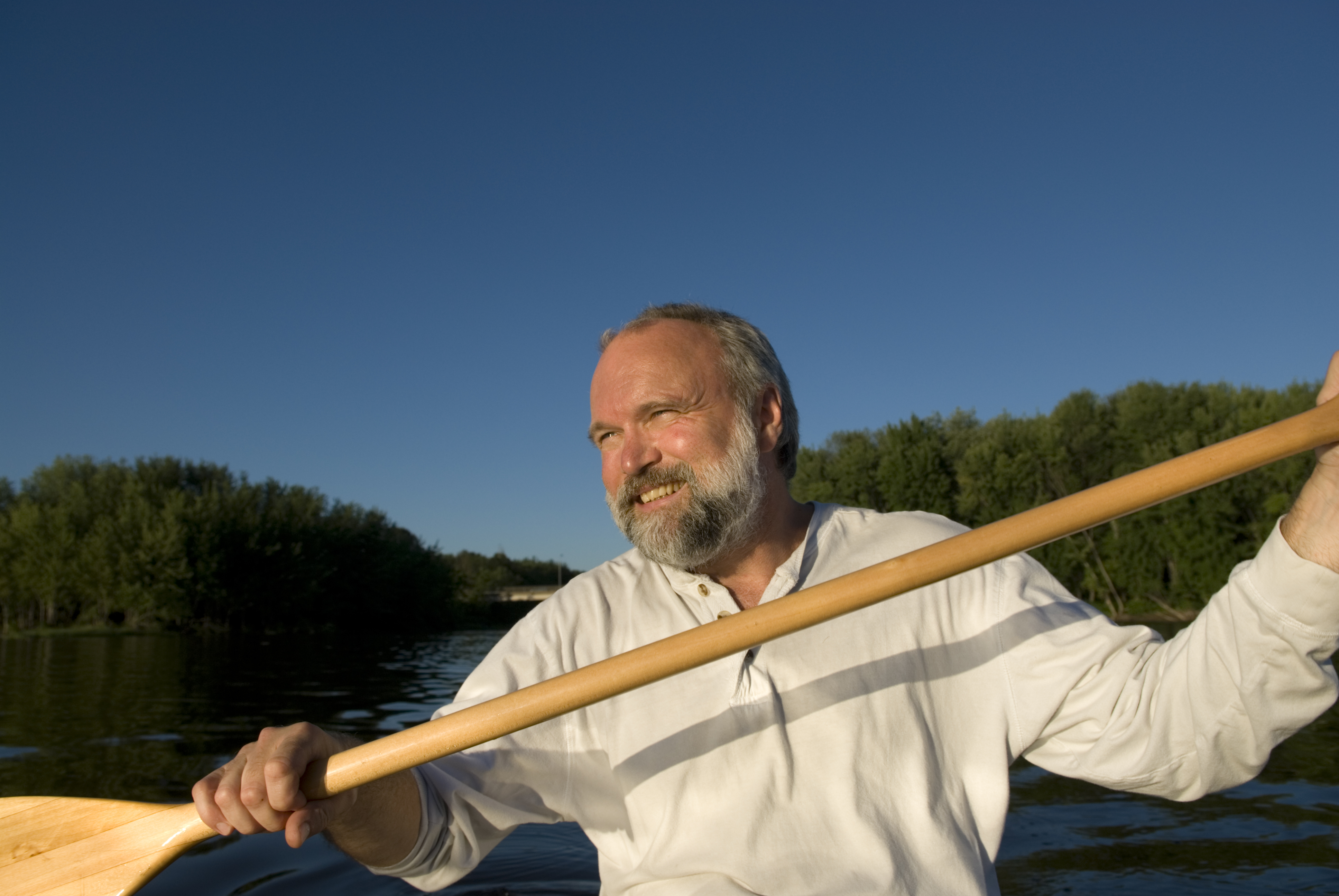
Mark Jarman Story- St. John RiverMark Anthony Jarman

…in the end the strength of the writing itself is like magic, few authors can pull this off, and the final impression is absolute: Italy – dry, beautiful, graffiti strewn, tourist ridden, sexy, fake – and the narrator – lost, bored, amused, searching, lustful – are far too complementary and this is no haven for lost souls seeking redemption, and no one will be rescued from firestorms of ash and lava. —Lee D. Thompson

cover

Knife Party at the Hotel Europa
Mark Anthony Jarman
Goose Lane Editions
HC 285pp.; $29.95

.
The twelve short stories in Mark Anthony Jarman’s fifth collection, Knife Party at the Hotel Europa, form a strange, wandering, quite aimless narrative that runs throughout the book. I almost wrote “throughout the novel,” because by a third of the way in, as characters and settings reappear, it begins to feel like a novel, though not a typical novel. The sections do work as short fiction, and Jarman, one of Canada’s most-respected short story writers, is no stranger to the form, and the stories here have all appeared separately in journals or online. So, is this a story collection, or a novel? Well, it’s a bit of both, really, and it also feels like a travelogue, though this is no Fodor’s Guide to Italy.

Not that I think it’s important what category Knife Party at the Hotel Europa fits into. This lack of definition is part of the appeal and likely Jarman’s design.

As is the aimless narrative, the wandering narrator.

This narrator, who is never named, this I in Italy, is in turns all mind, and all… cock.  Can I say that? Well, I already have. He is on a vacation, or in exile (it’s hard to tell), renting an apartment in Italy, where there is something he is trying to forget (so says a gypsy woman). He’s down, he’s dour, he has unconvincing thoughts of snuffing himself, but he’s invited to join an ‘art group,’ a tour run by one Father Silas, who owns an illegal art school in Italy and is a friend of the narrator’s aunt. The nature of the art group or school is never really specified (but you’re in Italy, so there’s art, and there are tours), but does act is a kind of binding thread to the collection, as do the few recurring characters on the tour. We never get to know Father Silas, or Ray-Ray, or Tamika much, or the narrator’s dear aunt, but we need bearings, even if the actual viewing of art seems of little importance to the narrator (but he catches on, follows, drifts away). Adding to the man-adrift theme is the narrator’s current life-mess: he’s middle-aged, in existential crisis, separated/divorced from his wife, reeling from the loss of an all-consuming affair with Natasha (who had cancer, but also left him), and suffering a general lack of direction.

The book’s themes are ones of wandering, of gypsies, tinkers.

And decay, and false idols.

It’s a dense, rich book, but the opening story, “The Dark Brain of Prayer”, hides little:

My tainted life, my travels: vaguely free to travel to Italy, Ireland, Death Valley, to ski distant peaks on a whim, mobile, but always a trade-off, no stable home life, no one to depend on. Perhaps because no one can depend on me?

A strong story in its own right, “The Dark Brain of Prayer” also serves to situate the reader in the narrator’s life. We see that he’s Canadian, lives in a city with streets called Queen and King and travels to towns with names like Sackville.  These touches serve to keep us close to the narrator, who, like Jarman, appears to live in Fredericton, New Brunswick, a city of flooding rivers, fiddleheads, and crab-apple blossoms.

“Butterfly on a Mountain” follows. It’s meditative, mostly plotless, meandering, funny. And, importantly, we meet Eve. She’s all old world temptation to his new world snake.

Eve is the narrator’s cousin, though their relationship is never explained beyond that, she lives in Switzerland  and she comes in and out of the stories (in the recursive Eve entries and with the occasional return also of Natasha we can see how the collection has been purposefully linked, though it’s not quite a novel, but right, that’s not important), meeting up with the narrator, and they stray from the tour, and she, inevitably,  becomes his lover (but there’s no sin here, sin in their minds having been worn to rubble like ruins in Rome). Eve is well drawn, sophisticated, educated, unpredictable.  The narrator can never get to know Eve, he muses, just as he can never get to know Italy. But he is, once again, infatuated, and Jarman’s stunning prose captures it all.

The bone-green air between the tree trunks, the green shadows between the trunks; who owns that property? I feel Eve owns any part of the world where my eye strays.

Introduced to Eve, we come to the book’s glittering gem, the harrowing, surreal, and utterly believable story “Knife Party”, a nightmarish, drug-induced excursion to a party of strangers, of cocaine and Italian testosterone and a crazed neighbor with a staple gun. There’s a menace throughout the story, and as the title lets us know, it won’t end well, but Jarman’s ability to introduce both humour (“I want to start a new dance craze […] do the Lazy Lawyer, do the Dee-vor-cee dividing his assets into shekels.”) and suspense (“The neighbour makes it to the door, but falls in the hall like a Doric column. He has bled out. […] Spying blood and a body, the woman dials her silver phone, whispers, Madonna save us.”)  gives the story a gory, car-crash appeal. We can’t turn away; it’s too lurid, too new. Too life affirming?  A strange thought, but in the quieter, meditative story that follows, “Hospital Island (Wild Thing)”, a retreat to Rome, the narrator does feel this trauma has somehow lessened the impact of the loss of Natasha, providing “gruesome perspective,” he says.

But disaster now follows the narrator and Eve, as if they’ve been cursed in their journey (in fact, the narrator is cursed by a gypsy woman in the opening story, though he complains that her curse is far too unspecific to be believable). They flee the knife party into the night, only to stray into the next story, another of the book’s highlights. “Adam and Eve Saved from Drowning” is a story that muses on Canadian soldiers and tanks in World War II rolling through Italy, on a dear uncle killed in battle in Ortona, and where our less-than-adamant narrator and his Eve stroll upon a Roman explosion, a mail bomb at an embassy and man’s lost hand, and where, later, a brilliant day of sea kayaking leads to a small cove and men fishing men from the sea, fishing drowned boat people, migrants to a country that allows so many migrants, yet seemingly welcomes none. The bodies are lain upon the shore:

Men with mustaches and suitcases with wet sand glued to their black coats; this crescent beach was not their destination, but now they are stopped on the sand, their mouths stopped, now they are at their destination. Their skiff sank in riptides, and long lines of spray, their hands let go and their mouths let in sea and sky.

This is a turning point. At the end of the story, Eve leaves at handwritten note under his door while he’s away, writing that while the thought of never seeing him again is intolerable, it might be best. “You do make me happy, but I can’t seem to feel calm.” The narrator then muses:

Eve said I was detached, difficult, maddeningly stubborn.

I thought I was easygoing.

It’s this introspection that gives the book much of its uncanny appeal. Do we even like the narrator? Yes, we do; everyone does.  Throughout Knife Party at the Hotel Europa we see a mind at work, a mind that’s endlessly male, musing, heat-addled, a mind made vivid through Jarman’s jazzy, poetic, associative prose. We see his mind’s inner workings, the intimate thoughts, the fantasies, the reveries, the trivia. In a book of travels, Jarman often goes farther afield in his head than on the map, and the book at times takes on the feeling of a confessional stall.

Take, for example, the final section/story, “The Pompeii Book of the Dead”, a near novella-length story that for all its surreal touches, has the feeling of non-fiction, but it’s as if Orwell, before writing one of his book of travels, came across a clump of peyote and found narrative liberation. When approached by a prostitute in Pompeii (at a cafe called Irish Times), the narrator muses:

I flirt with the Croatian maid, I flirt with the cryptic Spanish woman, I stare at my cousin’s form, I stare at every waitress. Then a woman and I share a tiny table in Italy, in Europe, on the planet, and for a handful of Euros I can do certain things for a certain time. How perfect it no longer seems.

There is a young American traveler, an attractive Iraqi refugee, there are women at every corner, in every dream. But Jarman, before getting too deep in his narrator’s self analysis, pulls us into a surreal section involving the narrator and several small statues (come alive from his apartment windowsill and which include a distractingly priapic Priapus) and sends us prowling the alleyways for deep-fryer grease with this ridiculous gang of lard thieves:

The Italian PM must pay his estranged wife a hundred thousand Euros a day; how can he have that much and we don’t? The grease in our alley reeks. Lewd Priapus is with us, but he is not doing well, is not popular, his huge phallus gets in the way of lugging the sloppy plastic drums.

Why does this work? Why can certain writers lead us down a path of folly and not lose our interest? There’s something always on the cusp with Jarman’s fiction, beauty quickly turns to horror, play turns tragic, reality loses all meaning, and we accept that this world, his world, is unstable. It makes for thrilling reading.

In this final story, a masterpiece of pacing, tension, and setting, we also have Jarman’s most haunting touch, the narrator’s observation of a young Italian couple in love. They could have been plucked off a postcard, or tourism billboard. He observes their tenderness, their perfectness as they lie on a bench above a cliff, and wonders if anyone (Natasha) had ever been as tender with him. But he forewarns us, tells us they will die when his tour bus collides with their scooter along the Amalfi Coast. When the scene comes pages later we still hope for another outcome. Surely he won’t? But the young lovers die horribly, almost tragicomically. Jarman seems to be saying there is no postcard Italy, just as there is no postcard love, everything is throwing itself into the sea.

So Knife Party at the Hotel Europa is not a  novel with a happy conclusion, and it shouldn’t have one. The narrator does appear to have learned something about himself, but it’s a vague, sloppy realisation. He is who he is.

Does the book have flaws? At times Jarman’s riffing may be predictable (not in what’s written, but that it’s coming), something that works for an individual story can seem repetitive after 285 pages. The tendency to go off on tangents till reason falls off a cliff, or add an absurd third thing to a previously serious list, might wear on a reader. But in the end the strength of the writing itself is like magic, few authors can pull this off, and the final impression is absolute: Italy – dry, beautiful, graffiti strewn, tourist ridden, sexy, fake – and the narrator – lost, bored, amused, searching, lustful – are far too complementary and this is no haven for lost souls seeking redemption, and no one will be rescued from firestorms of ash and lava. Like Pliny the Elder rowing to Pompeii, there’s not much he can do to save the situation, but it’s quite the spectacle and well worth watching.

—Lee D. Thompson.

.

Lee D, Thompson.

Lee D. Thompson was born and raised in Moncton, New Brunswick. His fiction has been published in four anthologies, including Random House’s Victory Meat, New Fiction from Atlantic Canada and Vagrant Press’s The Vagrant Revue of New Fiction, and in more than a dozen literary journals across Canada and the US. Lee’s first novel, S. a novel in [xxx] dreams, was published in 2008 by Broken Jaw Press. An e-book, Diary of a Fluky Kid, appeared with Fierce Ink Press in February 2014. In addition to writing fiction, Lee is a guitarist and songwriter who records under the name Pipher..

.

Aug 092014
 

Lee Thompson


George and Chiara spotted the sea monster not far from where they had set down their picnic blanket and basket.  It was George who had recommended this spit of rocky tongue that overlooked the sea, but not because he thought a monster might be floundering a stone’s throw from Chiara’s smooth, tanned knee, but because he wanted to be alone with her, away from the hotel, and on Chiara’s map she had written ‘hidden lover cove’.  But it was while gazing at her knee – which had small, pale scars – and while letting his gaze slip higher that something beyond her hip caught his eye.  That hip now, the hip he had held and pulled to him last summer, that hid beneath a thin summer dress, there was no reason for his eye to leave that hip, especially as his cock began to stir against his thigh.  It is not so easy this time, Chiara had said as they set the blanket down.  There are… complications.

It is hungry, was what Chiara said, after they had wandered to the shore.

It was green-black, serpentine, had a dog’s head and fur here and there where its stubby limbs joined the body. The fur was more a bronze colour, and thick.  It didn’t look real.  It had nostrils that flared and closed, like a seal, and Chiara said it is just a weird sea lion, George, and George remembered her way of saying weird, and other strange inflections.  Its mouth, when it opened its mouth, was wide, sucker-like.  OK, it is not one of those, said Chiara.

I do not like it.

But we should feed it.

.           

If there was divine form in the universe, it was that sweep of hip, that fall and cradle for a cheek or a palm. In bed last summer, in Chiara’s childhood bedroom, her mother having stepped out to get a few things at the market, George had thought this and tried to tell Chiara.  You think too much, George, she said.  Once, I thought too much.  But no more.  Do you understand?  And she had moved over him so slowly, like a curse, and took him in her mouth.  She did not stop when her mother returned, calling out from down the stairs, nothing George understood for he was distracted and not good at Italian.

How did he feel when she went below and then kissed her mother on the forehead?

And how did he feel when her mother kissed her, on the lips, and then met George half way up the stairs and kissed him, too?  I love… this man, she said, proud of her daughter’s choice, and her own passable English.  Keep him.  And they ate.

.

Why does it not like fish, George?  It is a thing of the sea, it has the smell of the sea, but look, you throw it fish, dead fish, alive fish, and it is like you give it shit.

George told her not to stand so close.

Why, it won’t eat me!  Chiara stuck her foot toward the monster, told it to take a bite, and before George could move – for they were on slick rock – the thing had lunged and perhaps only her falling back had saved her, that and her swearing.  She had bloodied her elbows but was never one to feel pain, unless it was the pain of the past.

It needs a pig, she said.

So they left it in its shallow pool on the edge of the spit and gathered their picnic blanket and basket and hopped in her old French car and drove inland, to the mountains, where she said they would catch a pig, a wild boar, with their hands, no, but with the blanket and put it in the basket, yes, that was a better idea.  George recalled last summer when she would not make love in the forest for fear of boars, and now she wanted to scoop one into a basket?  She laughed.  Just a baby one, but you will have to keep the mama away.

They did not catch a wild boar.

But she told him about the complications.

.

There once was a man and a woman, George.  And the man and the woman lived very far from each other.  They lived so far from each other that there was water between them.  So much water.  And the water was full of salt, like tears, like crying tears, not tears like rips.  Am I saying it right?  Tears. Teers.  Stupid language.  Why is your language like this?  Why do you not fix it?  How do you English talk to each other without every body saying what, eh, huh, excuse me?  Squid!  Stop the car, turn around, George!

It’s context.

What? Turn around.

At the roadside market she bought too much squid, but she liked it, too.  And squid was also a weird word, she said.  She squeezed her hands together, delighted.  Squid squid squid, she said, pretending to squirt something then looking him in the eye and saying oh Georgie, I want to squid you.  I am very serious. So they drove back to the serpent while the sun sank through the sea and set the blanket down once more and made love.  The serpent thrashed in its shallow pool.  Its odour, and the odour of the squid in the bag, and the scent of Chiara’s hair and the musk of her body lotion and the breeze from the shore had George drunk and not worrying about anything beyond Chiara’s movements.  Her mouth covered his and she held him between her thighs, would not let him pull out.

I am pregnant, she said afterwards.  So do not worry.

Naked, they threw squid into the tidal pool.

But it did not eat.

.

It wasn’t his, and that was the complication.  She would not say whose it was, saying only there is so much water, George. He had his hand on her brown belly, his pinky finger in her pubic hair and his thumb over her navel.  A baby?  She shrugged.  Are you sure?  She nodded.  I stopped bleeding, did the stupid test, now it grows in me.

Could he make love again?

She took hold, tried to tease it back to life.

Why won’t you eat, she said to it, then laughed.  She spread her thighs.

They left the motel and stopped the car alongside the highway, for there was a stench.  A bag of hot squid in the trunk.  George said it was a waste but Chiara said the sea birds and homeless cats would not let it go to waste.  But yes, it is sad to throw it out.

The tide had ebbed, flowed, left behind wrack and dreck, had easily washed over the sea monster’s pool, but had left the creature behind.  It is dead, said Chiara.  And I am hungry.  Throw a stone at it.  George lobbed a stone underhand and the sea monster sloshed its tail.  Chiara swore, said she would not spend her vacation doing this, said let’s grab it and George said we should just tell someone.  Who?  Isn’t there a marine centre, or?  They have seals and dolphins, George, not these.  She took off her sandals and before George could stop her – he had returned to the car for his camera – she  entered the pool.  Are you fucking crazy, George shouted. Chiara, turning, made a small sound deep in her throat and collapsed.

.

He would rescue his beloved with her car.  He would put it in neutral and push it over the edge where it would tumble down the rocks and land atop the beast. He stood at the edge of the pool and saw the car topple, pin the sea monster. Just kill it, kill it.  But how do you put a standard transmission in neutral?  Where are the keys? Hit it with a rock!  Who had she fucked?  Why did she do that?  There was a metre of water between them.  If he leaped in?  Distracted it? Call, call for help.  If it ate her it would also eat her baby.  He couldn’t watch it eat her.  He was doing nothing.  How could she just stroll in like that?  Really, how messed up is that?  It’s like you’re that kid who strolls into the tiger exhibit holding out his sandwich.  But that’s it, isn’t it?  That explains why she had fucked around.  And come on, there was Paul, remember?  George, Paul will not be happy with me, I should not see you.  What about Ringo?  She paused, then laughed, was sputtering, was crawling for the edge of the pool reaching for George, who pulled her out.

If anything, the sea monster had moved farther from her.

It won’t even eat me now, George.

It was electric, she said, lying in his arms.  Zap.  Zap zap.

____

Days later, when Chiara could walk again, for she had indeed taken quite a shock, they returned to the tidal pool. It was dusk and high thin clouds swirled.  On the salmon-hued horizon a sailboat’s mast swayed and they could hear the sea crashing.  This is the Ostro, Chiara said, or the unhappy wind, so we mustn’t stay long.

He told her he wished she wouldn’t.

My hair?  It is mine to do with.

But I love your hair.

You are leaving, George, what do you care?

On the drive along the rocky spit she had said she could feel it in her hair, the creature, that it had discharged in the pool, peed or squirted something, but you wouldn’t understand.  This is because no one understands.  She placed her hands on her stomach.

She hadn’t lost the baby.

At the hospital George changed the story Chiara had burbled while under pain killers.  Not a monster, he said, non e monstro, non e animale, era… uh, lightning… rumble sounds and sky gestures.  The doctor’s brow furrowed, una tempesta? ieri sera?  Si, George said, ieri sera, tempesta, ma… piccola tempesta.

You should not even try, Chiara had said.

Little storms pop up all the time, George had said.

You are foolish, Chiara had said.

And the mood was no better an hour later.  Why should he be bothered if she wanted to cut her hair?  It was long and black and cutting it would make her much less attractive and, but what did that matter, too?  She was expecting another man’s child.  How did that happen?  With him she was always  insistent on condoms, saying a baby would be a disaster, there would be rumours in her hometown, her father would know she’s not a virgin (she laughed), she’d have to quit her job teaching kids to dance, which would leave those kids with nothing to do all summer and maybe they’d start smoking, drinking, get pregnant…

The sea monster was still there.

.

We will get gasoline and set the pool on fire.  But we should do this at night, when no one will see the smoke.  I know what you are thinking, but smoke will hide the flames.  No, I do not have experience with this, George. But it is common sense.  This is cruel, though, so we won’t do this.  We should get a shark and put it in there.  Well, a small shark, please George I am not stupid.  But we have to do  it. It is our responsibility.  What if children come here to play?  It will kill them all.  We will be guilty.  Maybe you can throw a stone at its head?  You throw stones well.  But that could take a long time.  A gun?  No that is crazy, you cannot get a gun on the island.  Why are you looking like that?  You don’t think we should kill it?  It tried to eat me, George.  Let’s wear boots and drain the pool, OK?  Yes, this is the best way – it will leave the pool when there is no water, or it will die.  Both of these things are the best things.  So we need the little buckets and rubber boots.  But you cannot buy rubber boots here, we must steal them from fishermen, who buy them off the island.  They only sell sandals here, and flip flops.  No, no we don’t need to stand in the water, we’ll just scoop the water out.  We will do this tonight.  I will make us sandwiches. 

.

To Chiara, a sandwich was a brick of dry bread with a chunk of brie stuck in the middle and George wondered what kind of wife she would be.  She had a fear of corners, and she talked about this as if it were a common thing.  My fear of corners is worse than most.  She didn’t allow him to touch her clitoris directly, but would tear the hair from her loins with a brutal, buzzing device.  He watched her while she did this, one leg set on the bathtub ledge.  You like to watch me torture myself, George?  But everything was a kind of torture. 

In bed she was erotic, but a prude.

She often called him a sorcerer.

You have a big belly (he didn’t!), so how do you do this to me?

They lay in bed, the sheets soiled from two weeks of heat and secretions, his cock aching and his underarms rank.  She was two months along, she’d said.  She liked not having her period, not bloating like a seal.  It hadn’t set in, really, that she’d be a mother.  She asked if he was angry?  She said no you are not, you do not anger, and George shrugged.  Or is it only fucking, George?  He said it wasn’t, but it was, though it wasn’t, so he didn’t say anything for he saw her as volatile, not dangerous, not a storm, just…  Well, admittedly, if he’d arrived and she’d said I’m pregnant and we cannot have sex, it would have been different.  He’d be unhappy, yes.  She started to stroke him, no longer surprised that he was hard again.  She wondered if it, the monster, had a cock.  Maybe he only wants a girlfriend?  Maybe he is the last of his kind.  Poor guy.  She stroked him slowly.

.

As midnight approached and the rising moon slipped in and out of mackerel clouds, the creature began to keen.  Above the falling surf it keened, a sound that was not like a baby’s mewling, though that’s what George thought of.  It keened as they scooped seawater from the dark pool and Chiara said it knows what we are doing, George, but George said perhaps it keens every night.  Chiara started to cry.  George held Chiara.

They were racing against the tide.

There is too much water, said Chiara through her tears.

.

They slept in the car, the back seats set back and Chiara sprawled over George, who woke to the sound of rain.  The remnants of a dream slid across the rear windshield and the car shook.  His heart raced.  It had been in here, or it had tried.  Through the rust it had moved, the vents.  The car shook and it was the wind, he knew, lashing from the sea. The Ostro whistled through the rocks below and he moved out from under Chiara, an arm numb, moved out and slipped into the front seat, started the car and turned on the headlights, saw sheets of rain and white crests of waves, tried to put it into gear, stalled, remembered that she had parked too close to the edge, the drop was there, the passenger side.  He turned the headlights off, then the car, slept in the front seat until the sun woke him.

When it did, his lover was not there. The car’s rear hatch was open.

And he did not find her down at the shore, sitting at the edge of the tidal pool, watching over the  serpent, which was gone.  He walked, then ran along shore, stumbling over rock, seaweed, stung by plump purple jellyfish when taking to the water, thought he saw her offshore, on a jagged excuse of an island the locals called Scoglietta, the Little Stone, so he stripped nude and swam part way, but nothing was there and the current took him far from the spit.  He drifted, tread water, trusted the tide would return him to shore.  After an hour he stopped calling her name.  After two a local on a surfboard helped him to a beach, which was filling with sunbathers.  His nudity did not shock them, but the violet blisters from the stings did.

____

George, wake George.  Wake up please.  Why can’t you wake up, George?   We don’t have all day.  Can I slap him?  Why did he swim?  What kind of fool swims with jellyfish before breakfast?

George.

He felt a soft touch on his face, then his cheek being pinched.

Were you looking for me, George?  You were?  Yes?  No?  He heard her ask if people swim in their sleep, heard a grunt in reply, heard her say he talks in his sleep all the time, talks nonsense.  He could see her gestures, but the rest was a blur.

You are a mess, George. You are like… bubble wrap.

Crap, he said.

I don’t think we can have much fun on your last week.

Damn, he said.

She whispered, Well maybe you can watch.

She said that, he knew, to wake him, rouse him under the sheet.  Was there stirring?  He was very tired, he said, but tried to smile.  You swim for, like, ever, George.  They found you in the lido next over!  I drove to the hotel for my phone, and then there are sirens so I thought yes, those are for George….

You know me well, he said.

And then I thought no it’s just a crazy man showing his penis to every body.

Oh…

She sat on the bed next to him.  But I kind of recognized…

.

Chiara drove George back toward the hotel the following morning, happy that he’d only truly been suffering from dehydration and exhaustion.  The stings would heal, but leave purple scars.  She liked scars, she said, scars told the truth.  Her mother, she told him, was arriving later that evening, so they had to meet her at the port.

My mother likes you, George.

The sea monster, she said, laughing, it was some kind of plant.  Like a vine.  She’d gone down to the pool while he’d slept snoring like a toad, and everything was a mess, seaweed and sand and garbage and there it was, George. I gasped. It was trying to get out. It was crawling toward the car and I had no time to wake you so I grabbed a piece of drifting wood and I thought it’s going to eat me and my baby but I smashed it.  I am a tiny woman, you know, but when I get angry, bam bam bam.  She laughed, then shuddered.

It had strings in it, and green blood!

Strings?

You know, like rope, like… sedano.

Fibres?

It was a stupid stupid plant. That is all.

Well, but… no, Chiara, that’s not

Yes, and it lives in the ground, George.  I bashed it and it started to move, just a little bit.  And I said George, George come and see and then like, like a noodle it was sucked back in.  Into the hole, George!  And then all the water, too.  I must be hallucinating, I must be dreaming this.  And then I go back to the car and you are gone, so I run down the road looking for you.

Crazy, crazy morning.

.

Chiara did not stop at the hotel, but drove on through the royal palms and roadside agave saying she hated the hotel and wasn’t it too much like a hospital room?  You smell like a hospital, my lover.  On the west side of the island there will be no one, she chirped, the beaches are too rocky, but the wind is happier.  It is the Mistral. We will lay you out on the shore, George, take off your bandages, cover you with a soothing balm and we will kiss you where you have not been stung.  Will you show us where you have not been stung?

George’s cock stirred against his thigh.

And then we will go get mother.

—Lee D. Thompson


Lee D. Thompson was born and raised in Moncton, New Brunswick. His fiction has been published in four anthologies, including Random House’s Victory Meat, New Fiction from Atlantic Canada and Vagrant Press’s The Vagrant Revue of New Fiction, and in more than a dozen literary journals across Canada and the US. Lee’s first novel, S. a novel in [xxx] dreams, was published in 2008 by Broken Jaw Press. An e-book, Diary of a Fluky Kid, appeared with Fierce Ink Press in February 2014. In addition to writing fiction, Lee is a guitarist and songwriter who records under the name Pipher.