May 132011
 

Keith Maillard2

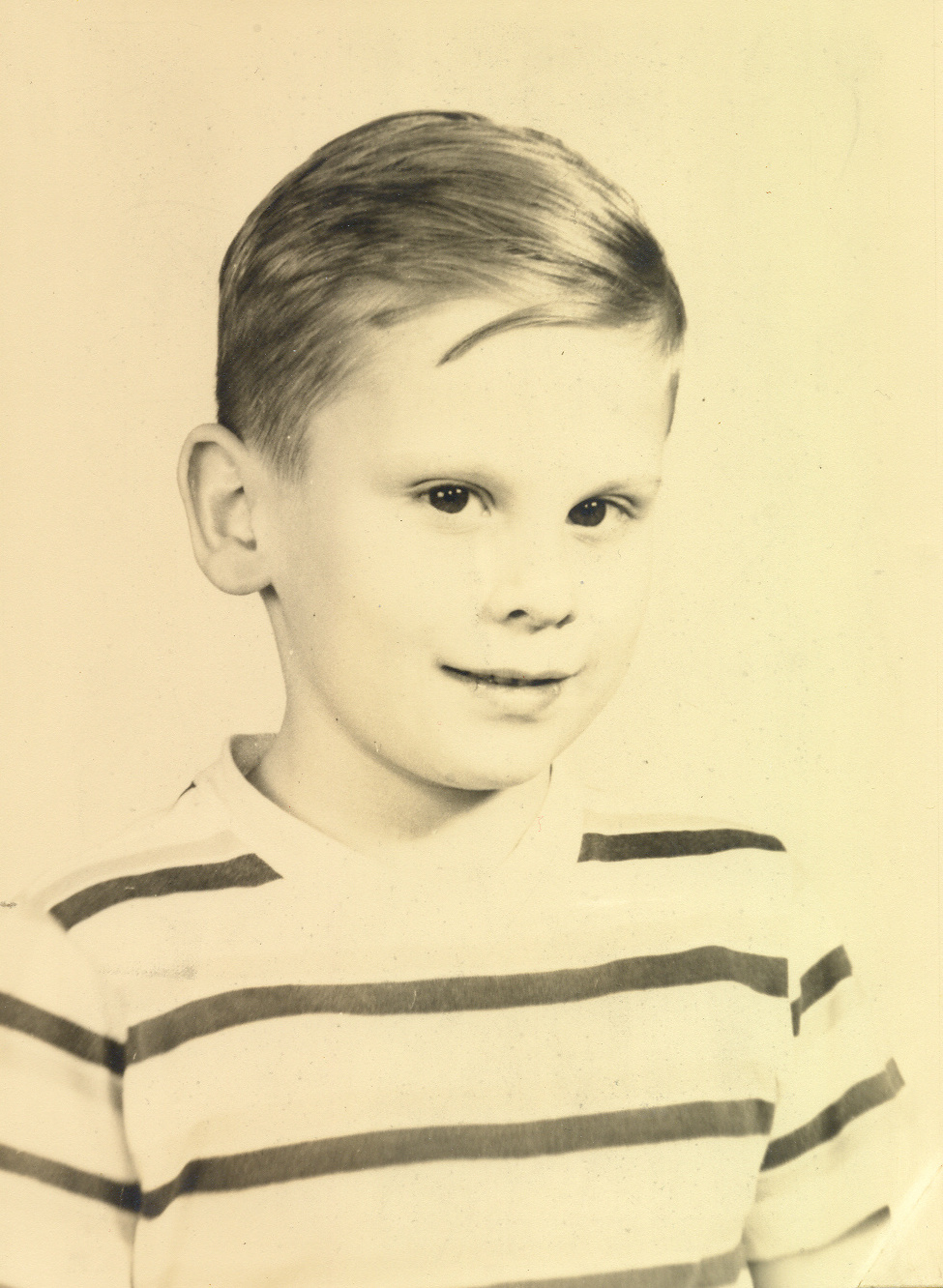
Because he had a difficult time pronouncing “Keith” when he was a child, Keith Maillard called himself “Keats.” Because he was sick a lot, he made up stories; he drew stories on the bathroom tiles and his grandmother cleaned them off every day so he could do more the next. Because he was a kid during the Second World War, he thought Kilroy was a magical, ubiquitous person. Herewith is a second excerpt from Keith Maillard’s memoir Fatherless (NC published “Richland” in March). It goes straight to the heart of childhood, that gorgeous, magical moment in time when adults are mythic creatures, the night holds unspeakable terrors, words are mysterious and difficult to control, illness visits and strange medicines applied, and the self applies itself fiercely and joyously to the task of understanding. Keith Maillard was born and raised in West Virginia. Currently the Chair of the Creative Writing Program at the University of British Columbia, he is the author of thirteen extraordinary novels and one poetry collection.

dg

.

I’ve always had the impulse to tell stories. It must have started with wanting to hear stories. When I was little, my mother put me to bed by telling me the adventures of Bucky the Bug, a tale that she made up on the spot, that evolved day to day. I was so little that I had to go to bed before it was dark. “You never minded,” my mother told me. “You always wanted to hear the next part of the story.” Those summer nights, as they settled down on me, felt as huge as continents. The light would be fading out at the windows; I’d be tucked into bed but not sleepy yet, and my mother would be telling me what was happening to Bucky the Bug right now. I don’t remember the stories, but I do remember the sense of living inside them. When my mother stopped telling me stories, I begin to tell them to myself. As soon as I could, I notated them—first with stick figures, then, much later, with words.

The lower half of our bathroom walls was tiled. Each tile—cream-colored and blank—looked to me like the panel of a comic strip. I’d sit on the bathroom floor and draw on the tiles with a soft lead pencil, filling in each one with the drawing that went with the story I was telling myself, working my way around the bathroom walls until I had filled all of the tiles as high as I could reach. Every evening my grandmother would scrub them clean with Ajax Cleanser so I could start over the next day and do it again. I felt no sense of loss when my comic strips were wiped away. I loved waking up in the morning knowing that I had all those shining blank tiles to fill—more than I could count—unending rows of cartoon squares where I could tell myself stories.

When I got older, I moved from bathroom tiles to paper. I was sick so much as a child that they bought me a bed table and a special wedge-shaped pillow so I could sit up and draw. Whenever I got sick, I had to take unbelievably nasty blue pills called “pyrobenzamine.” My grandmother would smear my chest with Vicks Vaporub, cover it with a layer of cotton, then a layer of cloth—thin t-shirt material. She’d set the vaporizer going in the corner of my bedroom; it hissed quietly, making everything steamy and scented of camphor. She turned on the radio for me—a box made of Bakelite with a green dial. Voices from the radio told me stories as I drew my own stories. The first two fingers of my right hand became callused from holding pencils and crayons. Sometimes I had fever dreams as thick with images as wallpaper. In my earliest years I had visitations that were worse than nightmares.

Night terrors occur in the early part of the sleep cycle when there’s no rapid eye movement. They afflict toddlers and young children, can be deeply frightening to adults if they don’t know what’s happening—as my mother and grandmother didn’t. Adults often describe the children as looking possessed. They cry out. They’re obviously deeply distressed, and sometimes stare fixedly at something just beyond their field of vision. Most children, when they have night terrors, don’t remember them, but I remembered mine. My mother and grandmother kept saying, “Look at his eyes, look at his eyes, look at his eyes.” I don’t know what my version of “Oh, my God!” would have been, but that’s what I was feeling. My mother and grandmother’s voices sounded rumbly, echoey, as though they were in another room, a huge one with stone walls. I couldn’t move a muscle—Wrong with my eyes, wrong with my eyes, what could be wrong with my eyes?—heard them saying over and over again, “Look at his eyes.” My eyes, my eyes?

Another time it was a shower of pins that were many different colors. They weren’t nice colors, like rainbow colors; they were sharp nasty colors—blue and black and red—and they were falling in a thick cloud of little pins all lined up together, not dispersed, coming down all together. From the way I was seeing them, they were above me and to the left—a countless number, millions of tiny pins raining down on me, trying to do something pitiless to me. I don’t know how long I had night terrors, but they made the night dangerous. I tried to keep them out by pushing on the front door to hold it shut. I might have sleepwalked there; I was not fully awake—I know that—and the radiating glow of that awful yellow light, threatening, disgusting, smeared through the curtain on the door, on our door that led outside to where there were things. I drew that shower of pins. “Like that, like that. It looked like that.”

When I’d first been learning to talk, Keith had been hard to say, so I had become Keats. That’s how I thought of myself, and for years that’s how I signed the cards I gave my mother and grandmother at Christmas and on their birthdays. While I was still inside that eternity of “not-in-school-yet,” I consumed comic books like peanuts, and the classic, iconic pop-culture images from the late Forties flowed into my own stories. Like Batman, I drove a sleek, murderously fast car jammed with amazing modern gadgets; mine was called “the Keatsmobile.” My headquarters was a complex series of interlinking caves deep underground beneath our apartment; the walls were lined with jewels—diamonds and rubies and emeralds and sapphires—and I could see them in my mind, fabulously glittering, as I strode down the corridors. This wondrous place, my home inside myself, was called “the Keats Cave of Splendor.” I lived there with a dozen or so of my friends, and I was the ruler of that world, the fearless hero in charge of the whole works. Like Superman, I wore a uniform with a cape; the letter K was emblazoned on my chest. My best friend and constant companion, my advisor, my right hand man in the Keats Cave of Splendor, was Kilroy.

In the war that was just ending—the terrible exciting war I saw in movies and newsreels and magazine photographs—Kilroy had been everywhere. Wherever our soldiers had gone—even into the most dangerous, bombed-out, desolate, death-ridden cities of Europe—Kilroy had always been there ahead of them. He left drawings of himself, two little dots for eyes, his big nose hanging over a fence, and his eternal message: “Kilroy was here.” The GIs kept trying to find some place, any place at all, where Kilroy had not been there ahead of them, but they’d never been able to find it. That’s the story of Kilroy as my mother had told it to me, and I was lucky to have Kilroy as my best friend. Because he’d always been there first, he understood everything. If I was ever confused or upset, Kilroy would come and explain to me what was going on and why things were happening the way they were. He was a magician, a shaman—my tutelary deity, my guide, my mentor—and these are all adult words. In my childhood he was simply my pal. He was a wise man who knew everything, who could tell me everything I needed to know. He was—and it’s taken me sixty years to see this—someone like a father.

My first work of fiction, written in my head and notated in stick figures that were wiped away every evening, was entitled “Kilroy and Keats.” What we did in the Keats Cave of Splendor was fight against evil. I knew what evil was because I had stared at it when no one else could see it, because it had rained down on me like pins. I knew that evil sometimes sniffed around outside our front door. Evil is what the Japs and the Nazis had done to people—the worst things that anybody could imagine—and they’d done it happily and laughing like the villains in Superman and Batman stories. There were things called “concentration camps” where the Nazis had done really evil things, but Kilroy had been there, and he could explain it to me—how people could have done things like that.

I can remember—just barely—when the War was still going on, imagining it on the other side of the river, but I can’t remember it ending. I told my mother that I wanted to build a fort in our back yard. She said she’d help me do it, but that we’d better put little American flags on it so that when our planes came over, they wouldn’t bomb it. I was terrified. If there was even the faintest possibility that our planes would bomb my fort, then I simply would not build a fort, and I never did. Later—how much later, I don’t know—it came to me in a flash: Nobody would bomb a little fort in our back yard. My mother had lied to me. Kilroy would never lie to me.

We were Americans, and we’d won the war. We’d beat the evil Japs and Nazis. We’d beat them with the bombs that I saw in newsreels, atom bombs brighter than a thousand suns. Kilroy knew all about them. He’d been in Hiroshima and Nagasaki and watched them fall.

—Keith Maillard


May 072011
 

Herewith Diane Lefer’s startling look at Los Angeles, the city where she lives. But this isn’t the Los Angeles of glitz and glamour, of Hollywood and Beverly Hills. Diane’s Los Angeles has more in common with the LA of the movie Chinatown, a city of murky secrets and vast, ancient corruption. Finding her inspiration (she tells me to thank him) in Keith Maillard’s essay “Richland” recently published on NC, she takes an apocalyptic look at what is known as the Santa Susana Field Laboratory, now a toxic nuclear Superfund site. Diane’s view of LA is trenchant, bracing, and passionate. It will surprise you and sadden you, much the way we were surprised and saddened reading Keith’s memoir.

Diane is a dear old friend, also a constant reader of NC. You should also check out Diane’s story “The Tangerine Quandary” published here last year. In the intro to that story, I mentioned Diane’s work with a California prison inmate, Duc Ta. For readers interested in following the Duc Ta story, here is a link to Diane’s essay “Facing Life,” from Connotation Press.

—dg

What It’s Like Living Here

from Diane Lefer on Los Angeles, California

.

.

As a New York City transplant to LA some years back, I dreaded having to drive. I found an apartment a block from a major intersection where I can walk to most of what I need and have pretty good—at least for LA—access to public transportation. But once I got used to being behind the wheel, having a car liberated me. The New York subway system is such a gift to humanity, it ought to be recognized as such by UNESCO, but without a car, New Yorkers are confined to urban life. In Los Angeles, a short drive takes me to canyons, mountains, desert where I can cross paths with coyotes or turn back on sighting mountain lion tracks. (I also once cut a hike short when I encountered a Charles Manson lookalike not far from where The Family once lived.)

Some of my favorite trails are up through the sandstone and shale rock formations and cliffs in the northwest corner of LA at the Ventura County line. I long thought if I could ever bring myself to leave the center of town, this is where I’d want to be, in one of the residential communities tucked among the cliffs or at the base of all this fabulous sedimentary rock that was deposited 65-85 million years ago. I did wonder if I’d be able to find congenial company in an area where it seemed the main employers were the adult entertainment industry and various defense contractors. I haven’t met any porn stars, but whenever I headed up Woolsey Canyon Road to Sage Ranch Park, it was impossible to miss the Boeing checkpoint and guardhouse.

. Continue reading »

Mar 292011
 

Keith Maillard

Here’s a gorgeous yet chilling excerpt from Keith Maillard’s creative nonfiction book, Fatherless. Keith was five when his father went to work at the Hanford nuclear plant in Richland, Washington, on the Columbia River. Originally part of the Manhattan Project (nuclear material for the bombs Fat Man and Little Boy dropped on Japan came from its reactors), Hanford grew rapidly during the Cold War. Now it is mostly “decommissioned” although vast environmental damage remains. Keith’s memoir is chilling in part because of the very ordinariness of domestic life within the immense and hugely dangerous nuclear manufacturing community but also because, to a large extent, not much has changed—the illustration of the fast breeder reactor bearing Keith’s father’s signature below is eerily like the many plant drawings the press has been using to explain the current nuclear plant disaster in Japan. All of this is aside from the poignant recreation herein of Keith’s search, as a grown man many years later, for the estranged father he never knew. Keith Maillard was born and raised in West Virginia. Currently the Chair of the Creative Writing Program at the University of British Columbia, he is the author of thirteen extraordinary novels and one poetry collection. Many thanks to our mutual  friend, Lynne Quarmby, for bringing Keith to the NC fold.

dg

.

Richland

My father began working at the Hanford nuclear plant in 1947, the year I turned five. He pasted into his scrapbook only one reference to his official work—a pen and ink drawing so anomalous that it jumped right off the page. He’d made a clear, simple, easy-to-understand drawing of a “LIQUID METAL FAST BREEDER REACTOR (LMFBR),” labeled all of its parts, and signed it “E. C. Maillard.”

breeder-reactor

Within his first year in Richland, Gene Maillard had clearly established himself as the number one song-and-dance man in town. In 1948, while living in a dormitory room and composing on a “collapsible” organ, he wrote “Our Richland,” a song that told the story of the building of the “atomic city,” a song approved by the General Electric Company suggestion department.

The Richland Junior Chamber of Commerce produced a brochure to accompany the “Atomic Frontier Days” that were held during the first week in September of 1948. Celebrity guests Roddy MacDowell, the Cisco Kid, and John Wayne entertained, with Rudy Vallee as the Master of Ceremonies. The cover of the brochure is illustrated with a crude silhouette-style drawing in red and black—the skyline of a booming town with smoke rising from smokestacks, a great flair of white-out at the center, the whole works crowned with an atom, its neutrons zipping in orbit around the dot of the nucleus. The white nothingness that represented nuclear power is firing straight lines of white in all directions and hangs over rolling hills where a chuck wagon and three men on horseback are making their way across an empty desert spotted with sagebrush.

Under the heading of “Let’s Look Back,” the Junior Chamber of Commerce presents its version of Richland’s history.

In the year 1943 a group of men sitting around a table in Washington, D. C. seriously watched as one of their number pointed to a tiny spot on a large-scale map of the Pacific Northwest. Richland! Here, they decided, was the place! Thus was sown the seed from which sprouted a great plant and a thriving community.

Within a few months the pastoral quiet of this agricultural region was no more. Giant bulldozers leveled great tracts of ground, massive trucks roared day and night along erstwhile country lanes, new roads appeared and factories exploded into being from the desert sands. The fantastic barracks town of Hanford materialized to house thousands of construction workers. The nucleus of a vast, secret plant, born of wartime necessity, had been created.

The old farming center of Richland was evacuated and transformed into a modern community designed to eventually house thousands of production workers and their families.

Erection of plant and village ended; production of plutonium began. Only a handful knew “What”, and they were not talking. The village kept its secret well, so well that the nation and the world first learned of its existence only after the announcement of the A-bomb.

The Second Annual Atomic Frontier Days was held in August of 1949. The accompanying brochure was no longer free but now cost twenty-five cents; the cover had changed from red to blue, from hand-drawn illustration to photography, and featured “hard hats and assault masks in the northwestern desert.” Gene has pasted a clipping to the front of the brochure—a picture of close harmony being sung by the “Atom City Four” and a shot of himself with the caption: “A soft shoe tap in black face was an Atomic Frontier Days variety show headliner as done by Jean Millard.”

The Richland Chamber of Commerce expressed its gratitude to the people who made the 1949 Frontier Days a success, and one of them was my father. Once again, we are given Richland’s proud account of itself.

Scattered deep within this natural isolation are this nation’s most modern industrial plants. The vaunted American mass production, the assembly line method by which we lead the world in motor cars, in refrigerators, in turbines and egg beaters and pots and pans, is merely a fumbling dress rehearsal compared to the engineering know-how, the construction skill, the unusual operational methods required in this plutonium manufacturing plant.

The product itself, plutonium, is a man-made element which will be usable a thousand years from now for either war or peace. It is a packed power which will not deteriorate with time, which is a million times more powerful than any known fuel. Its manufacturing raises problems of production, storage, worker protection, national security, and world-power-plays, as no other American made package has ever done. It is owned by a free people; it bears a union label.

At the August, 1950, Atomic Frontier Days, thirty-five booths were set up in Riverside Park, offering “fun and refreshment.” Professional wrestlers went at each other in two exciting matches, and there was a fireworks display with “more than a dozen set ground pieces and bursts of two and three aerial displays at the same time.” The Queen of Atomic Frontier Days was crowned, along with her four princesses. And, of course, there was a free variety show—with twenty-three acts that included a comedy routine starring “Tony the Atomic Clown, Little Atom, and Koko, Hydrogen (H20) Bomb.” The night ended with the entire cast doing “Baked a Cake.”

Gene is listed as one of the directors and appears a number of times in the program, dancing twice with his fifteen-year-old student, Gail Muller. He’s a year away from turning fifty but in the pictures looks younger than that—a lean, fit, grinning showman in two-tone oxfords and a theatrical suit. Two shots catch each of them at the height of a “wing”—balanced in the air with arms flung outward, one foot kicking and the other striking the floor with a toe tap. We can almost hear the laughter and shouting voices egging them on, feel the electrifying exuberance of their performance.

The last photograph in the sequence shows Gene and Gail acting out the story of “Chattanooga Shoe Shine Boy.” The image is so crisp that we can see every detail of Gene’s hairline moustache. Gail has one foot resting on the top of a folding chair. Gene is polishing her classic black patent tap shoe with a rectangle of cloth. On the bottom of this photo, Gail has written in a schoolgirl’s careful hand—“To the nicest and best dancing teacher anyone ever had.”

When my father was working there, Hanford’s only business was the manufacturing of plutonium for nuclear weapons. Not until 1963—when the N-Reactor added its bit to the Washington Public Power Supply System—would Hanford’s nuclear energy ever be used for any peaceful purpose whatsoever. Hanford officials constantly reassured those employed at the plant, or living near it, that they were perfectly safe, that “not an atom” escaped, but Hanford is the most contaminated nuclear site in North America. It had always discharged radioactive material into the Columbia River and continued to do so until its reactors were decommissioned. It fouled not only the river but the groundwater beneath it and left behind fifty-three-million gallons of radioactive waste stored in underground tanks that are leaking. Radioactivity from Hanford has been detected as far away as Oregon, northern California, and southern British Columbia. By 1951, the plant had sent more than 700,000 curies up its smokestacks, most of it in the form of iodine-131. For the sake of comparison, the 1979 Three Mile Island accident released less than 25 curies.

On December 2, 1949—in an exercise called “the Green Run”—the Hanford Works intentionally released radiation into the atmosphere so that scientists could monitor the resulting radioactive plume and apply that knowledge to the monitoring of Soviet nuclear production. My father—and anyone else living near the Hanford site—was exposed to twenty times more radiation than the limit allowed by the lax standards of the day. Readings on vegetation afterward were nearly a thousand times over that limit. The Green Run was conducted in absolute secrecy. No one was warned. The public would not know a thing about it for years.  By the time that Gene could have first read a newspaper account of the incident, he would have been eighty-five years old.

On July 31, 1997, I interviewed my father’s old friend, “Brink,” and a younger man, Carl, in the Travel Lodge in Delta, British Columbia. The notes I took are sketchy, cursive. Most of what I heard about my father, I wrote down, but large chunks of the interview didn’t make it onto the page.

We sat in the room as the daylight faded away and no one bothered to light a light. The TV was on, a bunch of pros playing a game of something, somewhere—baseball? The volume was low. Carl—along with a possible shadowy fourth presence—was watching the game, but Brink wasn’t. He was talking to me. In the distorting glass of my memory, the scene is set in twilight, lit with the flickering pixels of the TV screen. Brink was friendly enough, helpful enough, but as blunt and straight as a hammer handle. Initially, I read him as a man who had reached an age from which he figured that there was no reason to speak anything other than the plain truth, and I liked him for that.

I see from my notes that Brink had been an engineer. He and his family moved to Richland in February, 1948. Brink originally worked for DuPont, but his employer kept changing names. DuPont morphed into General Electric, and there were several others—United Nuclear, Martin Marietta, Isocan Rockwell. The word “Hanford” must never have been spoken because it doesn’t appear in my notes at all.

When Brink first arrived in Richland, Gene was already there working as a draftsman. He lived alone and avoided crowds because he didn’t want to “get a bug.” Later he bought a little two-story apartment building in Kennewick, lived upstairs, called it “the Maillard building.” Brink laughed at that—at Gene’s seemingly boundless ego—and so did I.

Gene “performed tap dancing”—yes, that’s exactly what I wrote down, so that’s how Brink must have put it. He’d told Brink a story from his early days on stage. Gene was in a comic role, so he used pecan shells to make himself look cross-eyed, but the effect was too realistic. Instead of finding him funny, the audience felt sorry for him. There was nothing worse, he said, than trying to be funny and not getting any laughs, so he worked out another gag. When he made his exit, he was supposed to tip his derby. He lifted it up, and there was another derby under it. He lifted that derby, and there was another one yet—and then another one. He got a big laugh for that one.

Brink told me that he’d built a little studio in his basement for his daughter, Kippy. He had to dig out the basement first because it was only half dug when they’d moved in. He finished it and tiled it, and that’s where Gene gave Kippy her tap lessons. Gene came every Tuesday night. He charged $2.50 for an hour. Then he’d stay and eat supper with them. As Kippy got older, she gave lessons to other kids in that basement studio.

Carl joined the conversation, and for awhile the two men reminisced about Kippy. Carl was a talkative guy. He’d known my father too, had seen him dance lots of times. Richland had been packed with remarkable people like my father—interesting, talented people. It was a nice little town, a great place to grow up. I’d read a lot about Richland by then, and I agreed with him—it must have been a nice little town. Carl said that he couldn’t imagine any other high school anywhere in America that would have had as many PhDs teaching in it. Yeah, he said, it was a nice little conservative town—making sure I got the point. He didn’t need to do that; I’d got the point awhile back.

“When I was growing up,” I told him, “I imagined my father dancing like Fred Astaire.”

Carl laughed at that. “Oh, no. He wasn’t like Fred Astaire at all. He did fast tap dancing, really athletic stuff… definitely athletic. If you had to compare him to somebody, he was more the Gene Kelly type.”
I wanted to bring Brink back in. “Did Gene talk about his wives?” I asked him.

“Well, he had three wives. He didn’t talk about them too much. One couldn’t be without her mother. She wrote to her mother every day. If she didn’t get a letter from her mother every day, she’d get upset. She’d say, ‘I didn’t get a letter. I have to call her.’ Gene asked her, ‘Do you want to live with me, or do you want to live with your mother?’ She said, ‘I want to live with my mother.’ ”

That was my mother—I’d recognized her instantly. I waited to hear the rest of the story, but there was no rest of the story. Could my mother have actually said something like that—made that admission? If she did say it, maybe it had been on the day she’d left him.

“Gene knew you were a writer,” Brink said.

“Oh?… Did he ever talk about reading anything I’d written?”

“No, he didn’t.”

Before I could find another question, Brink said, “Gene had the impression you didn’t want to see him.”

“That’s not true. I did want to see him.”

“Well, that’s not the impression he had.”

I’d known right from the beginning that there was something going on below the surface, and I couldn’t ignore it any longer. I kept coming up against a hard edge in this man. Gene and Brink had worked together, had known each other for years. They’d been friends. I now read Brink as very much on Gene’s team, so what did that make me? Some unknown guy who’d arrived too late, appearing out of nowhere to ask a lot of dumb questions? It was as though Brink felt it was his duty to present Gene’s point of view as clearly and firmly as possible. “He thought your mother had poisoned you against him,” Brink said.

“Maybe she did,” I said. “I know she tried to do that, but…” I made an expansive gesture. “Here I am.”

“He had cancer, you know… testicular cancer. He had a testicle removed. The day he got out of the hospital, he got into his car and drove into the desert. His car broke down. He got stuck in the desert. He had to walk back. It was right after the operation.”

I didn’t know what to say.

“We could never figure out why he’d done it,” Brink said. “It seems like an odd thing to do… to drive off into the desert the day you get out of the hospital.”

We must have talked about other things after that, but I can’t remember them. The last entry in my notebook might have been the last thing Brink said—“Gene always talked low. I never heard him raise his voice.”

Talking to Brink was as close I was going to get to talking to Gene, and it badly shook me. For days afterward, I woke up feeling not right—a particularly nasty variety of not-right that was like waking up sickened by the stench of bad breath and realizing that it’s your own. I felt as though I had received a message directly from my father—one that predated the “fuck you” he’d sent me in his will when he’d disinherited me. If I was going to continue the conversation, what was I going to say back to him? I’m sorry about the surly letter I wrote to you when I was twenty?  Gene would have been sixty-one when he got it—if he got it. He was still working at Hanford then. He might have talked to Brink about it. I hated the thought, but maybe that had been my only chance to connect with my father.

I knew why Gene had driven into the desert the day he’d got out of the hospital. I couldn’t have explained it to anyone, but I understood it because I could have done the same thing. Walking in the desert with one ball, Gene had been thinking about me, I was certain of that. How the hell do you get testicular cancer? I didn’t have a clue, but I suspected that being dosed with several hundred thousand curies of radioactive iodine probably didn’t help.

—Keith Maillard

.
.