May 022015
 

karl ove
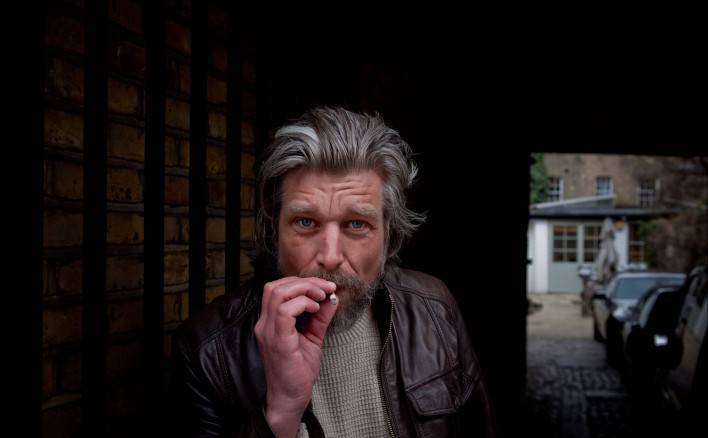
The fraught interplay between the teenage Karl Ove and his father, who is now divorced and living a different life with Unni, his girlfriend, is caught in this extract. One of the first changes the sixteen-year-old notices is the informal way of dress for a formerly carefully put-together man; the second is the steady drinking; the third is that infractions he commits that would have been punished before, such as spilling a drink, smoking, or having another glass of wine, pass by unremarked. The narrator’s disorientation is clear; this is not the father he once knew. However, everything can change back quickly, and the alcohol-induced state of cheerfulness on the part of both adults descends into anger once Karl Ove’s mother is brought up too many times for Unni’s comfort. Abruptly dismissed from their home, Karl Ove boards a bus. He doesn’t dwell on the mood shift any more than we consciously think of the air we breath. The narrative jumps forward a quarter century to when he has possession of his dead father’s notebooks that indicate Karl Ove’s visits, along with other matters.

—Jeff Bursey


.

From My Struggle: Book Four
Karl Ove Knausgaard; Translated by Donald Bartlett
Archipelago Books

The following afternoon I went to Dad’s. I had put on a white shirt, black cotton trousers, and white basketball shoes. In order not to feel so utterly naked, as I did when I wore only a shirt, I took a jacket with me, slung it over my shoulder and held it by the hook since it was too hot outside to wear it.

I jumped off the bus after Lundsbroa Bridge and ambled along the drowsy, deserted summer street to the house he was renting, where I had stayed that winter.

He was in the back garden pouring lighter fluid over the charcoal in the grill when I arrived. Bare chest, blue swimming shorts, feet thrust into a pair of sloppy sneakers without laces. Again this getup was unlike him.

“Hi,” he said. “Hi,” I said. “Have a seat.”

He nodded to the bench by the wall.

The kitchen window was open, from inside came the clattering of glasses and crockery.

“Unni’s busy inside,” he said. “She’ll be here soon.” His eyes were glassy.

He stepped toward me, grabbed the lighter from the table, and lit the charcoal. A low almost transparent flame, blue at the bottom, rose in the grill. It didn’t appear to have any contact with the charcoal at all, it seemed to be floating above it.

“Heard anything from Yngve?”

“Yes,” I said. “He dropped by briefly before leaving for Bergen.” “He didn’t come by,” Dad said.

“He said he was going to, see how you were doing, but he didn’t have time.”

Dad stared into the flames, which were lower already. Turned and came toward me, sat down on a camping chair. Produced a glass and bottle of red wine from nowhere. They must have been on the ground beside him.

“I’ve been relaxing with a drop of wine today,” he said. “It’s summer after all, you know.”

“Yes,” I said.

“Your mother didn’t like that,” he said. “Oh?” I said.

“No, no, no,” he said. “That wasn’t good.” “No,” I said.

“Yeah,” he said, emptying the glass in one swig.

“Gunnar’s been round, snooping,” he said. “Afterward he goes straight to Grandma and Grandad and tells them what he’s seen.”

“I’m sure he just came to visit you,” I said. Dad didn’t answer. He refilled his glass.

“Are you coming, Unni?” he shouted. “We’ve got my son here!” “OK, coming,” we heard from inside.

“No, he was snooping,” he repeated. “Then he ingratiates himself with your grandparents.”

He stared into the middle distance with the glass resting in his hand. Turned his head to me.

“Would you like something to drink? A Coke? I think we’ve got some in the fridge. Go and ask Unni.”

I stood up, glad to get away.

Gunnar was a sensible, fair man, decent and proper in all ways, he always had been, of that there was no doubt. So where had Dad’s sudden backbiting come from?

After all the light in the garden, at first I couldn’t see my hand in front of my face in the kitchen. Unni put down the scrub brush when I went in, came over and gave me a hug.

“Good to see you, Karl Ove.” She smiled.

I smiled back. She was a warm person. The times I had met her she had been happy, almost flushed with happiness. And she had treated me like an adult. She seemed to want to be close to me. Which I both liked and disliked.

“Same here,” I said. “Dad said there was some Coke in the fridge.”

I opened the fridge door and took out a bottle. Unni wiped a glass dry and passed it to me.

“Your father’s a fine man,” she said. “But you know that, don’t you?”

I didn’t answer, just smiled, and when I was sure that my silence hadn’t been perceived as a denial, I went back out.

Dad was still sitting there.

“What did Mom say?” he asked into the middle distance once again. “About what?” I said, sat down, unscrewed the top, and filled the glass so full that I had to hold it away from my body and let it froth over the flag- stones.

He didn’t even notice!

“Well, about the divorce,” he said. “Nothing in particular,” I said.

“I suppose I’m the monster,” he said. “Do you sit around talking about it?” “No, not at all. Cross my heart.”

There was a silence.

Over the white timber fence you could see sections of the river, greenish in the bright sunlight, and the roofs of the houses on the other side. There were trees everywhere, these beautiful green creations that you never really paid much attention to, just walked past; you registered them but they made no great impression on you in the way that dogs or cats did, but they were actually, if you lent the matter some thought, present in a far more breath- taking and sweeping way.

The flames in the grill had disappeared entirely. Some of the charcoal briquettes glowed orange, some had been transformed into grayish-white puffballs, some were as black as before. I wondered if I could light up. I had a packet of cigarettes inside my jacket. It had been all right at their party. But that was not the same as it being permitted now.

Dad drank. Patted the thick hair at the side of his head. Poured wine into his glass, not enough to fill it, the bottle was empty. He held it in the air and studied the label. Then he stood up and went indoors.

I would be as good to him as I could possibly be, I decided. Regardless of what he did, I would be a good son.

This decision came at the same time as a gust of wind blew in from the sea, and in some strange way the two phenomena became connected inside me, there was something fresh about it, a relief after a long day of passivity.

He returned, knocked back the dregs in his glass and recharged it.

“I’m doing fine now, Karl Ove,” he said as he sat down. “We’re having such a good time together.”

“I can see you are,” I said. “Yes,” he said, oblivious to me.

***

Dad grilled some steaks, which he carried into the living room, where Unni had set the table: a white cloth, shiny new plates and glasses. Why we didn’t sit outside I didn’t know, but I assumed it was something to do with the neighbors. Dad had never liked being seen and definitely not in such an intimate situation as eating was for him.

He absented himself for a few minutes and returned wearing the white shirt with frills he had worn at their party, with black trousers.

While we had been sitting outside Unni had boiled some broccoli and baked some potatoes in the oven. Dad poured red wine into my glass, I could have one with the meal, he said, but no more than that.

I praised the food. The barbecue flavor was particularly good when you had meat as good as this.

Skål,” Dad said. “Skål to Unni!”

We held up our glasses and looked at each other. “And to Karl Ove,” she said.

“We may as well toast me too then.” Dad laughed.

This was the first relaxed moment, and a warmth spread through me. There was a sudden glint in Dad’s eye and I ate faster out of sheer elation.

“We have such a cozy time, the two of us do,” Dad said, placing a hand on Unni’s shoulder. She laughed.

Before he would never have used an expression such as cozy.

I studied my glass, it was empty. I hesitated, caught myself hesitating, put the little spoon into a potato to hide my nerves and then stretched casually across the table for the bottle.

Dad didn’t notice, I finished the glass quickly and poured myself another. He rolled a cigarette, and Unni rolled a cigarette. They sat back in their chairs. “We need another bottle,” he said, and went into the kitchen. When he returned he put his arm around her.

I fetched the cigarettes from my jacket, sat down and lit up. Dad didn’t notice that either.

He got up again and went to the bathroom. His gait was unsteady. Unni smiled at me.

“I teach my first course at gymnas in Norwegian this autumn,” she said. “Perhaps you can give me a few tips? It’s my first time.”

“Yes, of course.”

She smiled and looked me in the eye. I lowered my gaze and took another swig of the wine.

“Because you’re interested in literature, aren’t you?” she continued. “Sort of,” I said. “Among other things.”

“I am too,” she said. “And I’ve never read as much as when I was your age.” “Mm.”

“I plowed through everything in sight. It was a kind of existential search, I think. Which was at its most intense then.”

“Mm.”

“You’ve found each other, I can see,” Dad said behind me. “That’s good. You have to get to know Unni, Karl Ove. She’s such a wonderful person. She laughs all the time. Don’t you, Unni?”

“Not all the time.” She laughed.

Dad sat down, sipped from his glass and as he did so his eyes were as vacant as an animal’s.

He leaned forward.

“I haven’t always been a good father to you, Karl Ove. I know that’s what you think.”

“No, I don’t.”

“Now, now, no stupidities. We don’t need to pretend any longer. You think I haven’t always been a good father. And you’re right. I’ve done a lot of things wrong. But you should know that I’ve always done the very best I could. I have!”

I looked down. This last he said with an imploring tone to his voice. “When you were born, Karl Ove, there was a problem with one of your legs. Did you know that?” “Vaguely,” I said.

“I ran up to the hospital that day. And then I saw it. One leg was crooked! So it was put in plaster, you know. You lay there, so small, with plaster all the way up your leg. And when it was removed I massaged you. Many times every day for several months. We had to so that you would be able to walk. I massaged your leg, Karl Ove. We lived in Oslo then, you know.”

Tears coursed down his cheeks. I glanced quickly at Unni, she watched him and squeezed his hand.

“We had no money either,” he said. “We had to go out and pick berries, and I had to go fishing to make ends meet. Can you remember that? You think about that when you think about how we were. I did my best, you mustn’t believe anything else.”

“I don’t,” I said. “A lot happened, but it doesn’t matter anymore.” His head shot up.

“YES, IT DOES!” he said. “Don’t say that!”

Then he noticed the cigarette between his fingers. Took the lighter from the table, lit it, and sat back.

“But now we’re having a cozy time anyway,” he said. “Yes,” I said. “It was a wonderful meal.”

“Unni’s got a son as well, you know,” Dad said. “He’s almost as old as you.” “Let’s not talk about him now,” Unni said. “We’ve got Karl Ove here.” “But I’m sure Karl Ove would like to hear,” Dad said. “They’ll be like brothers. Won’t they. Don’t you agree, Karl Ove?” I nodded.

“He’s a fine young man. I met him here a week ago,” he said. I filled my glass as inconspicuously as I could.

The telephone in the living room rang. Dad got up to answer it. “Whoops!” he said, almost losing his balance, and then to the phone, “Yes, yes, I’m coming.” He lifted the receiver. “Hi, Arne!” he said.

He spoke loudly, I could have listened to every word if I’d wanted to. “He’s been under enormous strain recently,” Unni whispered. “He needs to let off some steam.” “I see,” I said.

“It’s a shame Yngve couldn’t come,” she said. Yngve?

“He had to go back to Bergen,” I said.

“Yes, my dear friend, I’m sure you understand!” Dad said. “Who’s Arne?” I said.

“A relative of mine,” she said. “We met them in the summer. They’re so nice. You’re bound to meet them.”

“OK,” I said.

Dad came back in and saw the bottle was nearly empty. “Let’s have a little brandy, shall we?” he said. “A digestif?” “You don’t drink brandy, do you?” Unni asked, looking at me. “No, the boy can’t have spirits,” Dad said.

“I’ve had brandy before,” I said. “In the summer. At soccer training camp.” Dad eyed me. “Does Mom know?” he said.

“Mom?” Unni said.

“You can have one glass, but no more,” Dad said, staring straight at Unni. “Is that all right?”

“Yes, it is,” she said.

He fetched the brandy and a glass, poured, and leaned back into the deep white sofa under the windows facing the road, where the dusk now hung like a veil over the white walls of the houses opposite.

Unni put her arm around him and one hand on his chest. Dad smiled. “See how lucky I am, Karl Ove,” he said.

“Yes,” I said, and shuddered as the brandy met my tongue. My shoulders trembled.

“But she has a temper too, you know,” he said. “Isn’t that true?” “Certainly is,” she said with a smile.

“Once she threw the alarm clock against this wall,” he said. “I like to get things off my chest right away,” Unni said. “Not like your mother,” he said.

“Do you have to talk about her the whole time?” Unni said.

“No, no, no, not at all,” Dad said. “Don’t be so touchy. After all, I had him with her,” he said, nodding toward me. “This is my son. We have to be able to talk as well.”

“OK,” Unni said. “You just talk. I’m going to bed.” She got up. “But Unni . . .” Dad said.

She went into the next room. He stood up and slowly followed her with- out a further look.

I heard their voices, muted and angry. Finished the brandy, refilled my glass, and carefully put the bottle back in exactly the same place.

Oh dear. He yelled.

Immediately afterward he returned.

“When does the last bus go, did you say?” he said. “Ten past eleven,” I said.

“It’s almost that now,” he said. “Perhaps it’s best if you go now. You don’t want to miss it.”

“OK,” I said, and got up. Had to place one foot well apart from the other so as not to sway. I smiled. “Thanks for everything.”

“Let’s keep in touch,” he said. “Even though we don’t live together any- more nothing must change between us. That’s important.”

“Yes,” I said.

“Do you understand?”

“Yes. It’s important we keep in touch,” I said.

“You’re not being flippant with me, are you?” he said.

“No, no, of course not,” I said. “It’s important now that you’re divorced.” “Yes,” he said. “I’ll ring. Just drop by when you’re in town. All right?” “Yes,” I said.

While putting on my shoes I almost toppled over and had to hold on to the wall. Dad sat on the sofa drinking and noticed nothing.

“Bye!” I shouted as I opened the door.

“Bye, Karl Ove,” Dad called from inside, and then I went out into the darkness and headed for the bus stop.

***

I waited for about a quarter of an hour until the bus arrived, sitting on a step smoking and watching the stars, thinking about Hanne.

I could see her face in front of me.

She was laughing; her eyes were gleaming. I could hear her laughter.

She was almost always laughing. And when she wasn’t, laughter bubbled in her voice.

Brilliant! she would say when something was absurd or comical.

I thought about what she was like when she turned serious. Then it was as if she was on my home ground, and I felt I was an enormous black cloud wrapped around her, always greater than her. But only when she was serious, not otherwise.

When I was with Hanne I laughed almost all the time. Her little nose!

She was more girl than woman in the same way that I was more boy than man. I used to say she was like a cat. And it was true there was something feline about her, in her movements, but also a kind of softness that wanted to be close to you.

I could hear her laughter, and I smoked and peered up at the stars. Then I heard the deep growl of the bus approaching between the houses, flicked the cigarette into the road, stood up, counted the coins in my pocket, and handed them to the driver when I stepped on board.

Oh, the muted lights in buses at night and the muted sounds. The few passengers, all in their own worlds. The countryside gliding past in the dark- ness. The drone of the engine. Sitting there and thinking about the best that you know, that which is dearest to your heart, wanting only to be there, out of this world, in transit from one place to another, isn’t it only then you are really present in this world? Isn’t it only then you really experience the world?

Oh, this is the song about the young man who loves a young woman. Has he the right to use such a word as “love”? He knows nothing about life, he knows nothing about her, he knows nothing about himself. All he knows is that he has never felt anything with such force and clarity before. Everything hurts, but nothing is as good. Oh, this is the song about being sixteen years old and sitting on a bus and thinking about her, the one, not knowing that feelings will slowly, slowly, weaken and fade, that life, that which is now so vast and so all-embracing, will inexorably dwindle and shrink until it is a manageable entity that doesn’t hurt so much, but nor is it as good.

***

Only a forty-year-old man could have written that. I am forty now, as old as my father was then, I’m sitting in our flat in Malmö, my family is asleep in the rooms around me. Linda and Vanja in our bedroom, Heidi and John in the children’s room, Ingrid, the children’s grandmother, on a bed in the liv- ing room. It is November 25, 2009. The mid-’80s are as far away as the ’50s were then. But most of the people in this story are still out there. Hanne is out there, Jan Vidar is out there, Jøgge is out there. My mother and my brother, Yngve – he spoke to me on the phone two hours ago, about a trip we are planning to Corsica in the summer, he with his children, Linda and I with ours – they are out there. But Dad is dead, his parents are dead.

Among the items Dad left behind were three notebooks and one diary. For three years he wrote down the names of everyone he met during the day, everyone he phoned, all the times he slept with Unni, and how much he drank. Now and then there was a brief report, mostly there wasn’t.

“K.O. visited” appeared often. That was me.

Sometimes it said “K.O. cheerful” after I had been there. Sometimes “good conversation.”

Sometimes “decent atmosphere.” Sometimes nothing.

I understand why he noted down the names of everyone he met and spoke to in the course of a day, why he registered all the quarrels and all the reconciliations, but I don’t understand why he documented how much he drank. It is as if he was logging his own demise.

—Karl Ove Knausgaard

.
.
May 012015
 

karl ove

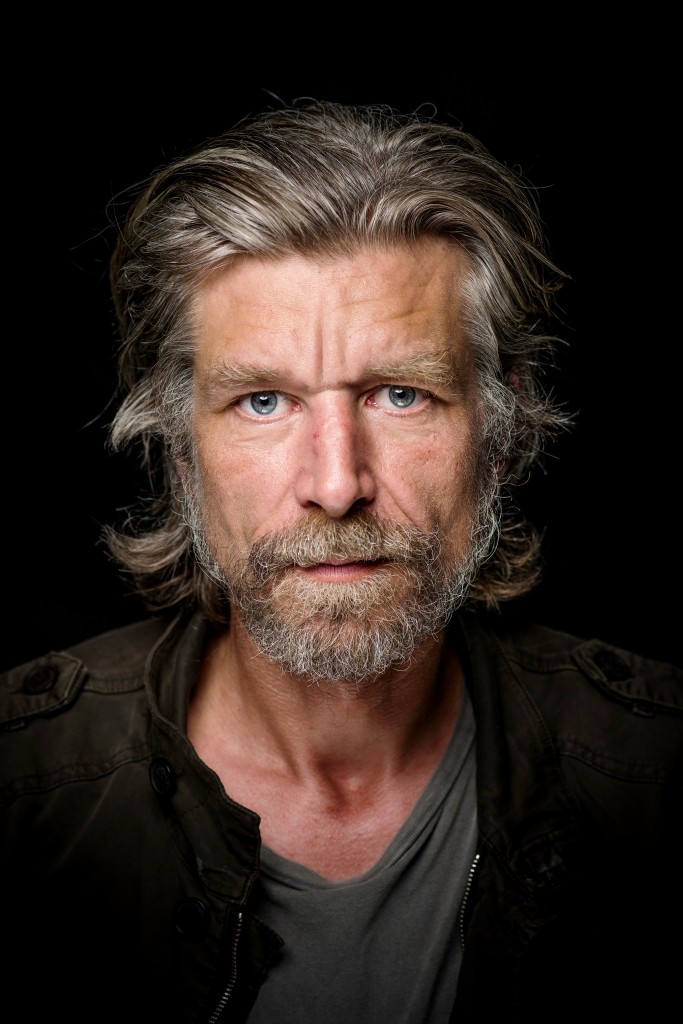
Knausgaard peels back his more youthful self’s skin to reveal confusion, desire, and ineptitude without once asking for pity. —Jeff Bursey

MyStruggleBook4_CatCover

My Struggle: Book Four
Karl Ove Knausgaard
Translated by Donald Bartlett
Archipelago Books
Cloth, 485 pp; $27.00
ISBN: 9780914671176

.
1. Near the end of the latest installment of Karl Ove Knausgaard’s remarkable auto-fiction sequence collectively titled My Struggle, the nineteen-year-old narrator, angered by his family’s lukewarm reception to his short stories, makes a vow:

I’ll damn well show him [his brother Yngve]. I’ll damn well show the whole fucking world who I am and what I am made of. I’ll crush every single one of them. I’ll render every single one of them speechless. I will. I will. I damn well will. I’ll be so big no one is even close. No one. No. One. Never. Not a chance. I will be the greatest ever. The fucking idiots. I’ll damn well crush every one of them.

I had to be big. I had to be.

If not, I might as well end it all.

Born in 1968, Knausgaard won the Norwegian Critics Prize for Literature for his novel Ut av verden (Out of the World is a literal translation; it’s not available in English) in 1998, marking the first time the award had been won by a first-time author. A little over one year after the bulk of the events in My Struggle: Book Four Knausgaard had, if not crushed his family, established that he had talent. Six years later he proved the first book had not been a fluke when his second novel, En tid for alt (2004)—published by Archipelago as A Time for Everything (2009)—was nominated in 2005 for the Nordic Council Literature Prize, and other awards. He had become a notable writer on the Norwegian scene. The ego on display may be repellant or appear ridiculous, but for many writers the fierceness to exceed expectations can be ugly, and is often phrased in crude ways that most choose not to reveal. This passage, like so much else in the book, displays both the separation of a male teenager from his family as he sets out on his own for the first time, with only himself to rely on, and a confessional quality, without the shadow of catharsis often implied when we term poetry confessional. The statement that he’ll “crush every one of them” reminds us subtly that Min Kamp, the Norwegian title, is Mein Kampf in German, and is uttered with the earnest despair found in teenagers everywhere.

What put Knausgaard on the world stage, where he has been considered for the Nobel, the IMPAC, the Independent Foreign Fiction Prize, and other prestigious literary trophies, and seen his books published by Archipelago Books in hardback and in paperback under the Vintage brand, is the sequence of startlingly candid (or candid-seeming) works that, as has often been reported, took Norway by storm when they first appeared. Some are doubtful they are read with such intensity elsewhere. English novelist Tim Parks, resident grump for the New York Review of Books, in July 2014 wrote an article looking into how popular Knausgaard’s books are in English, and by implication questioning if they should be:

The curiosity with Knausgaard, then, is that the impression of huge and inevitable success was given not with the precedent of previous international success, but solely on the basis of the book’s remarkable sales in the author’s native Norway. Norway, however, is a country of only 5 million people—a population that is half the size of London’s—and of course the whole tone and content of My Struggle may very well be more immediate and appealing for those who share its language and culture; it is their world that is talked about.

Parks may have been quite right on the sales figures at the time of his article, but he ventures beyond statistical analysis. It’s always good to be reminded, particularly by an Englishman who has lived in Italy for over thirty years (and translated Italo Calvino and Alberto Moravia), that London embodies the British Imperial standard for literature worldwide. The expression “their world” makes it seem that Norway is Mars and its population so unrepresentative and odd—never mind the rhetorical ruse “may very well”—compared to everyone else that their experiences scarcely resemble what people elsewhere go through. By these standards, English readers everywhere can dismiss Grass and Bolaño, Dostoevsky and Goethe. Yet on a trip in February I noticed, in various Canadian airport bookstores, the first three volumes of My Struggle in paperback, clearly meant for a mass audience, perhaps drawn in by the photographs of Knausgaard on the cover of each volume (already repackaged with explanatory titles for the mathematically fearful as, respectively, A Death in the Family, A Man in Love, and Boyhood Island; now there is Dancing in the Dark).

There are at least three notable constants about these books: they have enlivened the spring release season due to the writing power within them; they contain tension even in those passages, or pages, that some might consider editing out; and they set readers off in either the Zadie Smith way (“I just read 200 pages of it and I need the next volume like crack,” she has been reported as tweeting) or with skepticism about the literary merits of depicting seemingly dull affairs. There seems to be little middle ground. The latest volume will not bring those two ends together.

2.

Focusing on his time in a fishing village called Håfjord (population 250) in northern Norway, where the eighteen-year-old Karl Ove, as he is referred to, takes up a job as a first-time school teacher (who “hate[s] all authority”), My Struggle: Book Four explores several themes: the effects of isolation, especially as the hours of darkness increase; the proximity of females both contemporary and underage (thirteen-year-old students); the break-up of his parents’ marriage and the navigation required in two households; his sexual dysfunction; the importance of music and literature; and drinking. This is by no means an exhaustive list. It might be argued that any good novelist could take two or three of those and consider that sufficient material. Knausgaard is nothing if not ambitious, as his own words indicate, and as the preceding volumes have demonstrated he is able to juggle and combine complex topics as well as banal details.

In Book One the narrator freely moved from addressing one time period in his life to discussing others. (This is a feature of all the books.) Among other topics, that volume introduced his first marriage, his feelings towards his children by his second wife (which we see more of in Book Two), and his views on art. But its two main topics take in different stages of his life: the teenage years—bands he likes, friendships, and drinking, with the lowering shadow of his father present at all times—and, in the last two hundred or so pages, how an older Karl Ove and his brother Yngve deal with the death of their father, and the mental decline of their paternal grandmother, in the wretched house they shared. Few pages have stayed with me in the same way as those. A seemingly sad and normal thing—going through a dead man’s possessions and tidying a home—are packed with insights, incident, drama, believable mood swings, and the fear that their father may not be dead at all, with excellent pacing. In Book Two the father is placed to the side, and the emphasis is on how Karl Ove presses ahead with writing against the demands for more time with the family from his second wife, who he loves, and the requirements of their children. This time the narrator has friends with whom he can talk writing, and his world has expanded. As in the first volume, there are scenes of drunkenness and self-denigration. Book Three is about his childhood, and here we are shown, more visibly than before, the cruelty visited on Karl Ove and Yngve by their father, and how their mother rarely intervened.

In each of the previous books there is one major line of tension that runs throughout. In the first and third volumes this is provided by the presence of the father (even when he is absent), and in the second it is generated by what might be termed as the intransigence of Karl Ove to bow to society’s demands that he embrace the role of father and husband above that of an artist. In the newest volume the strain is provided by his actions when teaching (he often feels nervous) and when drunk; he can’t be trusted not to make a misstep or to do something cringe-worthy. Knausgaard peels back his more youthful self’s skin to reveal confusion, desire, and ineptitude without once asking for pity. Karl Ove regularly embarrasses himself by drinking too much and not being able to recall how he got home, and he ejaculates prematurely with every girl he is fortunate enough to have sex with (and for that reason avoids spending too much time with some of them). His attempts to hide the evidence of his emissions from them and from his mother, who does the laundry, can be seen as pathetic or laughable or, usually, somewhere in between. There are frequent scenes where he is sneaky, belligerent, or a thief, and he is prone to tears when caught or called to account for his behaviour. When two male villagers come by his home he is acutely aware of their masculinity, “it filled the whole flat and made me feel weak and girly.” He regards himself as “a kind of freak, a monster…” Only a portion of this can be attributed to normal teenage angst.

Karl Ove is a social misfit who nevertheless becomes quite popular in Håfjord with the young girls he teaches. Lessons begin well enough, but he doesn’t have the training to keep his composure. When three of his thirteen-year-old students, all girls, visit him at his home—a common practice in a small place where children and teenagers look for escape from boredom—he is discomforted. He has already had to hide erections in class. That he is a virgin, a state of affairs he is desperate to change, sharpens the edge of his appetite. Given the Scandinavian setting, one is inclined to think a porn movie will break out at any moment. There are many lines like this one: “[Liv] was walking beside Camilla as I arrived, and she sent me a stolen glance as she turned into the corridor. I eyed her slim firm backside, formed to perfection, and a kind of abyss opened inside me.” Balancing this, he is trusted by a young boy named Jo when they’re out walking the school grounds. “Didn’t he understand how this would look to his classmates, walking around hand in hand with the teacher?” The unpopular boy draws comfort from his teacher, something that Karl Ove notices, and he does not withdraw his hand despite reservations on Jo’s behalf. It requires work on the part of the sensitive teacher to create distance.

Despite his growing interest in one student, Karl Ove does not cross the line. His more important struggle is with what he wants to do with his life. On his first day as a teacher he emerges from a classroom “almost jubilant” at how things went only to realize, a few moments later, that “this was not what I wanted, for Christ’s sake, I was a teacher, was there anything sadder than that?” Against that he sets aside time to write those short stories his family will read, but that time comes between parties and binges, walks and short trips to other communities, and humiliating himself.

3.

Music and literature play significant roles in My Struggle. Book Four shows Karl Ove deepening his appreciation for both, partly as a way of keeping some semblance of familiarity around him in new surroundings, and partly in an effort to extend his knowledge of what is happening in both fields. At age sixteen he had started writing a new music review column for newspapers. “Thanks to music I became someone who was at the forefront, someone you had to admire, not as much as you had to admire those who made the music, admittedly, but as a listener I was in the vanguard.” He brings Roxy Music, Fripp and Eno, David Bowie, Talking Heads, the Smiths, and Simple Minds, as well as Scandinavian bands, to Håfjord, though in his temporary home there are few who regard his taste with the appropriate respect, “but there were circles where it was seen and appreciated. And that was where I was heading.” In literature, his preference is for regional writers and figures more familiar to English readers (Hubert Selby, Jr., Jack Kerouac, and Charles Bukowski), but he wants to be more aware of new thinking about fiction, such as the innovations of Jan Kjærstad in The Big Adventure. When Karl Ove encounters an article on Ulysses for the first time he slots that unread book alongside works by Hermann Broch, Robert Musil, Arnold Schönberg, Thomas Mann, and Knut Hamsun.

The latter plays more than one role here. The quiet, and natural-seeming, introduction of Hamsun occurs in a book that includes the opinion Karl Ove’s paternal grandfather has on refugees: “‘We’ve slogged our guts out and we’ve done well, and now they want to take over. Without lifting a finger. Why should we allow that?’” (171) Unlike his father, Karl Ove is open to helping the refugees. Hamsun’s own views were racist and right wing, in line with many Norwegians of his time and with the ideology of Nazi Germany. “Tolerance has never been Norway’s strong suit,” wrote Adam Shatz in the London Review of Books, discussing two books on the Norwegian mass killer Anders Breivik, who used a bomb and bullets to murder 77 people on 22 July 2011 (injuring many more) in an effort to staunch, in the words of Hugh Eakin, “‘Islamic colonization’ of the country abetted by the Labor Party’s ‘multiculturalist’ immigration policies.” Karl Ove and Yngve drive by both Hamsun’s “Nørholm property” (259) that the narrator remembers visiting with his ninth grade class, and “the old Hotel Norge, where Hamsun had done some of his writing…” He reads Pan (1894) when sixteen and living with his mother. The most substantial literary reference has Karl Ove preferring his countryman over Milan Kundera because “no one went as far into his characters’ worlds as he did, and that was what I preferred, at least in a comparison of these two, the physicality and the realism of Hunger, for example.”

Reviews of earlier volumes of My Struggle (let alone readers of Norwegian) already know that the sixth and final volume has extended essays on Paul Celan and Adolf Hitler. In Knausgaard’s own words, it “…really does end in Norway, with Anders Breivik killing sixty-nine children on Utøya Island. This happened while I was writing… And the novel ends there, in that place, in that collision of the abstract heaven we have above us and our own physical earth. Which is what Breivik’s killings were.” Much of the content of My Struggle seems to have been written in an associative style, but it is hard not to view the use of Hamsun and, by implication, his political views as foreshadowing a castigation of Norwegian attitudes about people who are considered too different from them.

In a recent Paris Review interview with James Wood (No. 211, Winter 2014), Knausgaard speaks directly on matters in Norway:

There is a new kind of moralism evolving, where the obligation is to the language—there are some words you can no longer say and some opinions you no longer can express. This is a kind of make-believe. It makes everybody comfortable, they feel good about themselves, because they mean well—while at the same time there is a whole generation of immigrants locked out from education, work, and privileges and there is anger growing in the part of the population that doesn’t have its voices heard, or whose opinions are considered evil and kept out.

While ideology has little part to play in Book Four, occasionally there are mentions of politics (but not ideology), and Karl Ove sees himself as a radical. He likes to read Hamsun, too. Another contradiction in a work filled with them.

4.

As he states in the quotation at the top of this review, the price of failure to achieve Karl Ove’s sizeable goals is high: “If not, I might as well end it all.” That can’t be taken lightly. His fellow countryman and contemporary, Stig Sæterbakken (1966-2012), wrote: “The need to become intoxicated bears a close affinity to the desire for death. Which itself is in the same family with an incurable Unfähigkeit [inability], […] vis-à-vis the realities of adult life.” At different points Karl Ove describes his blackouts: “…I was in the void of my soul…”; “we slowly but surely got drunker until in the end everything disintegrated and I drifted into a kind of ghost world.” His reliance on alcohol, from age sixteen to nineteen, to make him at ease in the world, could push him down the road to death his father is already traveling. It’s a coping strategy or inheritance he never explicitly notes, preferring to justify (rationalize doesn’t seem quite the right word) drinking to excess: “I drank though, and the more I drank the more it eased my discomfort.” He recalls one “alcoholic high” as similar to “a cool green river flowing through my veins. Everything was in my power.” The kinship to his father is ignored: “It didn’t matter to me that Dad had clearly split into two different personalities, one when he was drinking and one when he wasn’t… it wasn’t something I gave much thought.” (249) Further: “I wanted to steal, drink, smoke hash, and experiment with other drugs… But then there was all the rest of me inside that wanted to be a serious student, a decent son, a good person. If only I could blow that to smithereens!” It isn’t a surprise that the young Karl Ove does not examine the resemblance of his divided nature to that of his father’s; the farthest he can go is to acknowledge that, like his father, he is seen as “unreliable.”

Amid the teaching and the socializing there is fiction to write. Brief summaries are provided of a few of Karl Ove’s stories, and his thinking about how to write matures as time goes on. He vehemently rejects capturing what a friend and fellow teacher calls “‘God’s wondrous creation! All the colors! All the plants!’” Karl Ove replies that nature is “‘a cliché,’” yet that doesn’t mean he refuses to appreciate his surroundings. As the bus he’s on approaches Håfjord, emerging from a tunnel, he has an emotional reaction:

… Between two long rugged chains of mountains, perilously steep and treeless, lay a narrow fjord, and beyond it, like a vast blue plain, the sea.

Ohhh.

The road the bus followed hugged the mountainside. To see as much of the landscape as I could I stood up and crossed to the other row of seats…. The mountains continued for perhaps a kilometer. Closest to us, the slopes were clad in green, but further away they were completely bare and gray and fell away with a sheer drop into the sea.

The bus passed through another grotto-like tunnel. At the other end, on a relatively gentle mountain slope, in a shallow bowl, lay the village, where I would be spending the next year.

Oh my God.

This was spectacular!

There are many such passages that evoke the beauty, and the smallness, of this village, and of the natural beauty that rings it. Perhaps thinking about nature is not as clichéd as writing about it.

5.

During the course of his interview with Knausgaard, James Wood remarked: “It’s obvious enough that in your work the insane attention to objects is an attempt to rescue them from loss, from the loss of meaning. It’s a tragedy of getting older.” (75) There could be more to it than that. Drinking to the point of oblivion, hypersensitivity to the moods of colleagues, friends, strangers and his pupils, hypervigilance when it comes to determining, on an instinctive level, who may be a threat—“Everything that came from the outside was dangerous”—and the compulsion to remember and recount everything, as if doing so would flush out that one memory or insight that would provide an answer to crucial questions, might indicate something else. Towards the end of Book Four, when recalling his time in Håfjord years after he left, Karl Ove wonders: “Did terrible things happen there? Did I do something I shouldn’t have done? Something awful? I mean beyond staggering around drunk and out of control at night?” It’s impossible to say, but taking into account all that he has said in four volumes, and his general nervousness, Karl Ove’s upbringing appears to have been traumatic.

In this book his father’s dictatorial ways diminish in intensity due to alcohol consumption, but the eighteen-year-old Karl Ove is right to remain wary in his company “…because when I observed him, and his eye caught mine, I could sense he was still there, the hardness, the coldness I had grown up with and still feared.” There are many unpleasant scenes, witnessed by the two brothers, involving their father and his new girlfriend, Unni, who becomes his wife. A family discussion between the two brothers and their mother occurs, and in it the mother admits she had blindly followed her husband: “‘…I always saw it from his side, what happened.’” Despite what happened in the past Karl Ove commits to being a good son. That could be regarded as the father having control without even needing to reinforce it, keeping him in line no matter what he did, or it could be an earnest desire to be a better man than his role model. In Knausgaard’s tactile, tumultuous, at times feverish, world both things could be true at the same time. Lines from Walt Whitman’s “Song of Myself” come to mind: “Do I contradict myself?/ Very well then I contradict myself./ (I am large, I contain multitudes.)”

In My Struggle: Book Four Karl Ove Knausgaard has given us yet another packed work about a fragile, fragmented young man who has his first warranted moments of self-belief, but who slips back from confidence into a miserable dungeon of his own making. There are two volumes left, and though we leave Karl Ove in a changed state, with an acceptance at a writing school in Bergen, thanks to the previous volumes we know an easier life does not lie ahead despite material successes. That may be the best news for those enthralled by this universally appealing and astonishing set of works.

—Jeff Bursey

NC
jeff again (3)

Jeff Bursey is a Canadian literary critic, and author of the forthcoming picaresque novel Mirrors on which dust has fallen (Verbivoracious Press), and the political satire Verbatim: A Novel (2010), both of which take place in the same fictional Canadian province. His academic criticism has appeared most recently in Henry Miller: New Perspectives (Bloomsbury, 2015), a collection of essays on Miller and his works by various writers. Bursey is a Contributing Editor at The Winnipeg Review and an Associate Editor at Lee Thompson’s Galleon. His reviews have appeared in, among others, American Book Review, Books in Canada, The Quarterly Conversation, Music & Literature, Rain Taxi, The Winnipeg Review and Review of Contemporary Fiction. He makes his home on Prince Edward Island in Canada’s Far East.

May 072013
 

KK: The speed is the most important thing. Both challenge the concept of form but the speed has a practical element as well for me because I am a perfectionist in my writing, in my way of thinking and I want to be clever and I want to make it into real art, real literature. But I had to fight against that thing in me because I became so critical of my own writing and I needed to get over that, and the only way I could do it was by speeding up because then you don’t have time to be critical at all.

It also allowed me to escape the notion of knowing what to write. If you know what you’re going to write then that’s death for me, then nothing is happening. If I plan something it’s just dead. And almost everything I write is dead in that sense really, but if I speed up then something, all of a sudden, is happening because I can no longer control it.

There’s also something else in there too. When I was nineteen I went to a creative writing course and we were basically taught that if something is bad then you should just take it away, essentially a very minimalistic approach to writing. It took me ten years to overcome that and to understand it’s possible to do the opposite, that if it’s bad you can just add more in because then something else is happening.

It’s the same thing with the length. If you write a hundred pages then it’s all about concentration, it’s all about sentences or language. But if you write 3600 pages the sentences are no longer the important thing, it is something else that is going on that’s difficult to explain.

via The Light Behind the Bookshelves » 3:AM Magazine.

May 072013
 

author top

What ultimately matters is the magnitude of Knausgaard’s investment in his project, the sense that here is a man writing to save himself, writing to survive, writing because these things mean so much to him. Somehow, he is able to make them mean almost as much to us. Like all great art, whatever the genre, one leaves these books with a renewed feeling for what life and art can be.
—Eric Foley

bookcover


My Struggle: Book Two
A Man in Love
Karl Ove Knausgaard
Translated from the Norwegian by Don Bartlett
Archipelago Books, trade cloth
576 pages, $26.00

A Story of the Struggle to Tell a Story

“Meaning requires content, content requires time, time requires resistance.”
—Karl Ove Knausgaard

The year is 2007. For the past four years, Karl Ove Knausgaard has been trying to write about his troubled relationship with his deceased father. Though the 38-year-old author has two previously acclaimed novels under his belt (Out of the World, 1998, and 2004’s A Time For Everything), this time around the attempt to cast his material into fiction isn’t working:

Wherever you turned you saw fiction. All these millions of paperbacks, hardbacks, DVDs and TV series, they were all about made-up people in a made-up, though realistic, world. And news in the press, TV news and radio news had exactly the same format, documentaries had the same format, they were also stories, and it made no difference whether what they told had actually happened or not. It was a crisis, I felt it in every fiber of my body, something saturating was spreading through my consciousness like lard, not the least because the nucleus of all this fiction, whether true or not, was verisimilitude and the distance it held to reality was constant. In other words, it saw the same. This sameness, which was our world, was being mass-produced . . . I couldn’t write like this, it wouldn’t work, every sentence was met with the thought: but you’re just making this up. It has no value.

Finally, after returning home from a visit to the region of southern Norway where he grew up, Knausgaard stumbles upon a new strategy: to alter the distance between the work and the world by getting “as close as possible to my life.” That evening, after his family has gone to bed, he sits down at his desk and describes what he sees in front of him:

In the window before me I can vaguely see the image of my face. Apart from the eyes, which are shining, and the part directly beneath, which dimly reflects light, the whole of the left side lies in shade. Two deep furrows run down the forehead, one deep furrow runs down each cheek, all filled as it were with darkness, and when the eyes are staring and serious, and the mouth turned down at the corners it is impossible not to think of this face as somber.

What is it that has etched itself into you?

This mini-scene repeats itself in My Struggle. Its first appearance is on page 28 of Book One. There, we read it as a description of the book’s brooding central character, an isolated, conflicted man. In Then, Again: The Art of Time in Memoir, Sven Birkerts writes that the genre “begins not with event but with the intuition of meaning—with the mysterious fact that life can sometimes step free from the chaos of contingency and become story.” 962 pages later, near the end of Book Two, Knausgaard’s mini-scene reappears verbatim. Only at this point do we learn the scene’s greater significance: that it is the turning point in Knausgaard’s attempt to write about his father’s impact on his life, the kernel that contains the six volume autobiographical saga to come.

While the above passage is a good example of how Knausgaard employs repetition across time to build meaning in his work, it also neatly enacts, in miniature, another type of movement the author utilizes in the My Struggle books to powerful effect: a quietly intense attendance to visual phenomenon, always linked to the act of perception/self-perception, with a particular emphasis on the perceiving apparatus (the eyes), will suddenly be followed by a shift to a larger, abstract question. (Indeed, Knausgaard’s epic, relentless attempt to answer the question that ends the passage – “What is it that has etched itself into you? – could rightfully be said to form the true subject of these remarkable books.)

But let’s go back to February, 2007: Knausgaard has just begun his new method. He seeks to “dramatize the inner self” by uncovering his past: first five pages a day, then ten, and near the end as many as twenty pages; he writes as quickly as possible in an attempt to escape his conscious notions of what the form should be, trying to move beyond the desire (amply exhibited in his previous novels) to produce aesthetically beautiful prose. By 2009,  Knausgaard has accumulated 3600 pages. That same year, the first part of his novelistic “autobiography,” entitled Min Kamp (“My Struggle”), appears in Norway to equal amounts of praise and controversy. The controversy is not so much over the title, with its echoes of Hitler’s memoir (Mein Kampf in German, Min Kamp in Norwegian), but has rather to do with the people the author has “exposed.” In a northern European nation that prefers to keep family trauma private, Knausgaard has written directly about the most personal aspects of his family experiences without any attempt to disguise or change the names of his ex-wife, his father, his grandmother, and other friends and family. When the second volume of My Struggle appears, Knausgaard’s mother calls him and begs him to stop. An uncle threatens to sue. Ultimately, author and publisher agree to change a few of the names in subsequent editions, but the media storm grows, first spreading through Scandinavia, and then across Europe. Most agree about the power of the work, but at what cost has it been achieved? The books become a national obsession, selling 450,000 copies in a country of less than five million people. Norway’s culture minister declares the work the “the greatest account of our generation.” On a national radio program, Knausgaard will go on to say that he feels he has made a “pact with the devil.”

Last August, a few weeks before Archipelago Press released Don Bartlett’s excellent translation of My Struggle: Book One in North America, the book received the “James Wood treatment.” Writing in The New Yorker, Wood praised the work as “intense and vital,” stating that it contained “what Walter Benjamin called ‘the epic side of truth, wisdom.” The first volume of My Struggle is indeed a rarity in contemporary literature; part memoir, part unhinged bildungsroman, it ploughs through and ultimately transcends both genres with a driving seriousness of intent, delving more deeply into the human experience than anything I’ve read in a long time. Fixated on the shadow Knausgaard’s father cast over his childhood and teenage years, and ending with the thirty year-old Karl Ove confronting the horrible death of that father from alcoholism, the 430 page book alternates between extended, minutely detailed descriptive passages and essayistic meditations on death. The result is a kind of crackling slow-burn, a fearless examination of, as Carlos Fuentes once said of Frida Kahlo: “internal darkness under midday lights.”

This month, My Struggle: Book Two makes its North American debut. If Book One centered on death (in order to downplay potential controversy over Knausgaard’s Hitlerian title, the work was published as To Die in Germany and A Death in the Family in the U.K.) then Book Two is loosely organized around the concept of love (and has already been published across the pond under its subtitle A Man in Love). While it is possible to read Book Two on its own and still get something out of it, to do so would be like opening up Remembrance of Things Past for the first time at Within a Budding Grove. Much of the power of Proust and Knausgaard’s projects comes from their length and breadth, which allows for a gradual accumulation of patterned detail, as specific themes and moments repeat themselves in subtle and not-so-subtle variations. In both works, repetition is key.

My Struggle: Book Two primarily covers 2003-2008, years when Knausgaard left behind his old life and partner in Norway and moved to Stockholm. For readers of Book One, Knausgaard’s escape to Sweden possesses added significance: it was after Karl Ove’s own father moved away from his family that he began the drinking and isolation that fourteen years later would leave him dead. Knausgaard does plenty of drinking in Stockholm, but rather than fall apart, he falls in love – with the poet Linda Bostrom.


bostromLinda Bostrom

Knausgaard imbues these scenes with the nostalgic power of true love glimpsed in retrospect. He vividly captures the feel of early love, the uncertainty and vulnerability at the beginning, when things could still go either way, as well as the ecstatic heights:

The town sparkled around us as we walked home, Linda in the white jacket I had given her as a present that morning, and walking there, hand in hand with her, in the midst of this beautiful and, for me, still foreign town, sent wave after wave of pleasure through me. We were still full of ardor and desire, for our lives had turned, not just on the breath of a passing wind, but fundamentally. We planned to have children. We had no sense of anything awaiting us except happiness.

Over the course of My Struggle: Book Two, Karl Ove and Linda become parents to three children. One of the pleasures of the work is the associative, non-chronological way Knausgaard unfolds his story, shifting in and out of different periods according to the movement of thought and memory. Because of this, Book Two begins with all three children already born and the early stages of infatuation between Karl Ove and Linda a relic of the distant past.

The first thing one notices about My Struggle: Book Two (other than the fact that it is a hefty 146 pages longer than its predecessor) is a decrease in the level of intensity that filled Book One. With the father figure dead and buried, the sense of dread behind each sentence is palpably lessened. E.M. Forster once remarked that “mystery creates a pocket in time.” Book One utilizes the mystery of Knausgaard’s father (why is he such a cruel, tortured man? How exactly will he meet his end?) to mesmerizing effect. Throughout that first volume, wherever young Karl Ove goes, the father’s shadow follows; there is always the sense of movement towards further revelation. Many of the scenes in Book One possess an aura of somnambulant terror, as if anything could occur at any moment, which provides a momentum that propels the reader through some of the lengthier descriptive passages. A roughly 60-page description of young Karl Ove trying to secure alcohol for New Year’s Eve, for example, unfolds in painfully slow fashion beneath the constant apprehension over whether the father will find out what the son is up to. The tension builds until, at the end of Book One, Karl Ove pays a second visit to his father’s corpse (again, repetition). Here, something opens up in him, and he begins to see the intertwining elements of death, life, and time in a different way:

 . . . there was no longer any difference between what once had been my father and the table he was lying on, or the floor on which the table stood, or the wall socket beneath the window, or the cable running to the lamp beside him. For humans are merely one form among many, which the world produces over and over again, not only in everything that lives but also in everything that does not live, drawn in sand, stone and water. And death, which I have always regarded as the greatest dimension of life, dark, compelling, was no more than a pipe that springs a leak, a branch that cracks in the wind, a jacket that slips off a clothes hanger and falls to the floor.

With this conclusion to My Struggle: Book One, the last two sentences of which rhythmically and thematically echo the final sentences of the first volume of Remembrance of Things Past,[*] the great tension is released. A new point of realization has been reached.

Initially then, Book Two lacks both the momentum and the mystery of Book One. Certainly love can be a mystery, but at the outset of Book Two it seems more like a daily slog, as we are confronted with scenes of Knausgaard’s new family life. Only in the light of what has come before do these scenes gradually accrue a resonant force. The still fearful, still internally isolated Underground Man persona that Knausgaard continues to develop here—picture a 21st century Raskolnikov schlepping a stroller, a diaper bag, and two toddlers up a hill while his wife stands at the top in a foul mood, a third wailing infant in her arms—is understandable precisely because we know what he has come out of. Although the hated father is dead and Karl Ove has escaped to a new country, Knausgaard still struggles to relate his internal and external worlds, and to be around others. Most moving, in these early scenes, is Knausgaard’s depiction of his own quest to be a decent father, as he attempts to raise his young children without duplicating the paternal coldness, cruelty and occasional rage he was treated to during his own upbringing. We come to see that for the adult Karl Ove Knausgaard, love means following through on one’s commitments, regardless of how fucked up one feels inside.

So it goes for 67 pages, with little of what contemporary publishing would call “narrative tension” or “drive.” As with certain sections of Book One, we begin to suspect that the day-in-day-out nature of these scenes, the very mundaneness of their details, is the point; these scenes need to be long for the same reason that the infamous sermon on hell in the third chapter of A Portrait of the Artist as a Young Man needs to be long: to enact, rather than simply describe the interminable, real-time duration of certain life moments. And yet, after a while, we begin to wonder if this is all Book Two has to offer.

Then, on page 68, Knausgaard returns home from the birthday party of one of his young daughter’s friends. He steps out alone onto the balcony, has a smoke, drinks some stale diet coke:

I returned the glass to the table and stubbed out my cigarette. There was nothing left of my feelings for those I had just spent several hours with. The whole crowd of them could have burned in hell for all I cared. This was a rule in my life. When I was with other people I was bound to them, the nearness I felt was immense, the empathy great. Indeed, so great that their well-being was always more important than my own. I subordinated myself, almost to the verge of self-effacement; some uncontrollable internal mechanism caused me to put their thoughts and opinions before mine. But the moment I was alone others meant nothing to me . . . Between these two perspectives there was no halfway point. There was just the small, self-effacing one and the large, distance-creating one. And in between them was where my daily life lay. Perhaps that was why I had such a hard time living it. Everyday life, with its duties and routines, was something I endured, not a thing I enjoyed, nor something that was meaningful or that made me happy. This had nothing to do with a lack of desire to wash floors or change diapers but rather with something more fundamental: the life around me was not meaningful. I always longed to be away from it. So the life I led was not my own. I tried to make it mine, this was my struggle, because of course I wanted it, but I failed, the longing for something else undermined all my efforts.

It is difficult to convey the full force of this passage without also including what preceded it: a forty-plus page description of a middle-class Swedish child’s birthday party, where a Norwegian father remains intensely within himself, unable to connect with the others, even those he likes. This struggle is made more poignant by the fact that we see how Knausgaard’s three-year old daughter Vanya already exhibits these same social tendencies, this same furious need to be accepted by others, coupled with the inability, on a bodily level, to figure out how to join in the other children at play. For Knausgaard and his daughter, a routine social occasion is a source of fear, shame, and longing.

A Few Words About Titles

Given that Hitler’s memoir is often published in North America, even in translation, under its original German title, for some the English “My Struggle” will not have the same resonance it does in Norwegian. The above passage from page 68 of Book Two is the first time we get a direct reference to, and partial explication of, the work’s title. Here, the emphasis is on the struggle to balance being in the world for others versus being in the world for oneself—the struggle to exist, on a moment-to-moment basis. In a recent interview, Knausgaard said that he chose the title Min Kamp on something of a lark. He liked the friction it carried between the daily, personal struggles of the individual and the larger structures of ideology and politics that function in opposition to private life. My Struggle: Book Six reportedly contains an essay that delves further into this issue, focusing on a comparison between Knausgaard and Hitler’s books, but English readers will have to wait a few more years for this.

lyktestolper:Layout 1

If nothing else, Knausgaard’s series does foreground, in immense detail, the struggles of everyday life. By placing this struggle in the background, as the UK version does on its cover, the emphasis becomes reversed. Whether this retitling was done in order to avoid controversy or to more easily market the volume-by-volume content of Knausgaard’s work makes little difference; it interposes a too-large distinction between each book in the sextet, as if there were no significant overlap. The throughline of struggle is downplayed, the totality of the whole sacrificed for an emphasis on each volume as an individual marketable product.

For make no mistake, struggle, in conception and reality, runs through everything Karl Ove does, everything he thinks. Happy or sad, in joy or despair, he suffers apart from the rest, alone. In this, he is a true Underground Man.

Notes From Underground

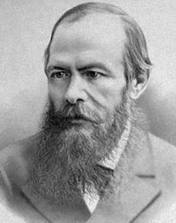
dosFyodor Dostoyevsky

“All the same, if we take into consideration the conditions that have shaped our society, people like the writer not only may, but must, exist inthat society.”
—Fyodor Dostoyevsky

The above words (or rather, their Russian equivalent) were written in 1864 as a description the original Underground Man. Dostoevsky’s name appears 16 times in My Struggle: Book Two. Like Karl Ove in My Struggle, that main character of Notes From Underground is also a writer composing a sort of memoir: “I, however, am writing for myself alone, and let me declare once and for all that if I write as if I were addressing an audience, it is only for show and because it makes it easier for me to write. It is a form, nothing else; I shall never have any readers. I have already made that clear . . .” Interestingly, Knausgaard has said in interviews that he too “didn’t believe that anyone would be interested in this writing, because it’s so personal, so private.” This thought set him free at his desk, to write “for myself, by myself.”

As Dostoyevsky writes in a passage that applies equally to My Struggle’s central character, the Underground Man’s dilemma, “lies in his consciousness of his own deformity . . . the tragedy of the underground [is] made up of suffering, self-torture, the consciousness of what is best and the impossibility of attaining it, and above all else the firm belief of these unhappy creatures that everybody else is the same and that consequently it is not worth while trying to reform.”

While the Underground Man feels isolated from the rest of society, he is also a product of it, and perhaps, in the end, not quite so hideously unique as he imagines. Knausgaard realizes that his is as much a problem of perception as anything else, but does not know how to change:

Oh, fuck. Oh, fuck, fuck, fuck, how stupid I was. I couldn’t find any peace in a café; within a second I had taken in everyone there, and I continued to do so, and every glance that came my way penetrated into my innermost self, jangled about inside me, and every movement I made, even if only flicking through a book, was likewise transmitted outwards to them, as a sign of my stupidity, every movement I made said: “This is an idiot sitting here.” So it was better to walk, for then the looks disappeared one by one, admittedly they were replaced by others, but they never had time to establish themselves, they just glided past, there goes an idiot, there goes an idiot, there goes an idiot.

This paradox of the Underground Man, painfully separate from society, while at the same time yoked to and created by it, is presumably what allows Karl Ove to see himself as outside, different from the rest, and still write “the definitive portrait” of his generation, a work that has resonated so deeply for so many others.

The other reference point for the Underground Man, particularly from a Norwegian perspective, is Knut Hamson’s Hunger. In the course of My Struggle: Book Two, Hamsun’s name is mentioned 11 times. In one scene, a Swedish filmmaker begins jokingly calling Knausgaard “Hamsun,” for his reactionary Norwegian views.

knut-hamsunKnut Hamson

In Hunger, we are again presented with a writer struggling to maintain his dignity in an urban setting. Hamsun’s Underground Man is defined by his extreme refusal to partake in the pleasures of everyday life, to join the crowd by accepting help in the form of food or money. Knausgaard too is interested in refusal. Late in Book Two, Knausgaard’s friend Geir Gullickson informs him that: “Not to strive for a happy life is the provocative thing you can do.” A page or so later, Knausgaard responds: “All I know is that success is not to be trusted. I notice that I get angry just talking about it.”

Style

The prose of Book Two is similar to Book One: the long sentences and paragraphs do not induce anxiety in the way that Thomas Bernhard or László Krasznahorkai’s writing can, but rather project a certain detached calm. A typical Knausgaardian sentence piles independent clause upon independent clause, linking these with comma splices where grammatical convention would seem to call for a period, semicolon or coordinating conjunction. 800 pages into the My Struggle saga, these splices were still tripping me up. I began to wonder if it was a function of the translation; perhaps Norwegian possessed different conventions with regards to sentence structure?

A perusal of Knausgaard’s previous novel, “A Time for Everything,” revealed that the author does indeed know how to “properly” punctuate. A typical passage from that work reads: “Cain felt the gaze of the crowd at his back, but he didn’t turn; in a strange way their exit felt like a victory: it was just the two of them. In a few minutes the festivities would continue, and the wonder would dissipate itself in them.”

47 words in total. The varied punctuation helps to regulate the flow of the two sentences. We stop at the periods. And pause at the semi-colon and colon. Each of the two commas is followed by a coordinating conjunction (but, and). Now, compare this to the writing in My Struggle:

Later that autumn the temperature plummeted, all the water and the canals in Stockholm froze, we walked on the ice from Soder to Stockholm’s Old Town, I hobbled along like the hunchback of Notre Dame, she laughed and took photos of me, I took photos of her, everything was sharp and clear, including my feelings for her.”

One sentence, 57 words: one period, seven commas. My guess is that the run-ons in My Struggle are the result of Knausgaard’s compositional method, and that he decided to leave many of them untouched as a statement about the formal constraints of his project. As he recently told Eleanor Wachtel, length and speed were crucial: “It had to be long, and I had to write very quickly, so I could be ahead of my thoughts all the time.” By consistently eschewing the aesthetics of a properly punctuated sentence, Knausgaard allows data and detail to pile up without the emphasis that more varied punctuation would provide. At one level, the My Struggle books seem to be about getting as much of the world’s content as possible onto the page, rather than arranging this content for artful effect. Knausgaard will sometimes leave a sentence deliberately clunky to enhance this impression. Listen to the repetition of the word “mind” in the final clause here: “The boxer incident, when I hadn’t dared kick in the door, and the boat incident, when I hadn’t dared to ask Arvid to slow down, as well as Linda’s concern about my failure to act, had played on my mind so much that now there was no doubt in my mind.”

Eyes Within a Face

“What is a work of art if not the gaze of another person?”
—Karl Ove Knausgaard, My Struggle: Book Two

Which is not to say that there aren’t still beautiful passages and artful effects, but rather that these are not the point of the work. In particular, Knausgaard has a knack for describing eyes, getting at the essential individuality and emotion they convey. Knausgaard is obsessed, in a conflicting way, with how he sees the world and how others see him. It is little wonder, then, that painting is his favourite art (Book One contains a beautiful passage describing the eyes in a late Rembrandt self-portrait), or that the most frightening creature he can imagine, from a childhood dream, is a lizard-like figure without any eyes.

How Knausgaard perceives his own eyes often provides a clue to his relationship with the world. When he first arrives in Stockholm:

I studied myself in the mirror for a few seconds. My face was pale and slightly bloated, hair unkempt and eye . . . yes, my eyes . . . Staring but not in an active, outward-facing fashion, as though they were looking for something, more as if what they saw was drawn into them, as if they sucked everything in.

Since when had I had such eyes?

There is only one scene in Book Two where Knausgaard’s mother is remotely critical of him: after he moves to Stockholm, she lashes out at how he left his wife and then fell in love again so quickly: “I couldn’t see other people,” Knausgaard summarizes, “I was completely blind. I saw only myself everywhere. Your father, she said, he looked straight into people. He saw immediately who they were. You’ve never done that. No, I said. Maybe I haven’t.”

Later, his love for Linda changes the way he sees by bringing him into closer proximity to reality: “Before, I had always been deep inside myself, observing people from there, like from the back of a garden. Linda brought me out, right to the edge of myself, where everything was near and everything seemed stronger.”

Struggle with Form/Struggle as Form

“ . . . I could counter that Dante, for example, had written just fiction, that Cervantes had written just fiction, and that Melville had written just fiction. It was irrefutable that being human would not be the same if these three works had not existed, So why not just write fiction? . . . Good arguments, but that didn’t help, just the thought of fiction, just the thought of a fabricated character in a fabricated plot made me nauseous, I reacted in a physical way.”
—Karl Ove Knausgaard, My Struggle, Book Two

In Reality Hunger: A Manifesto, David Shields describes being overtaken by a similar feeling: “Every artistic movement from the beginning of time is an attempt to figure out a way to smuggle more of what the artist thinks is reality into the work of art.” It is worth noting that very few of the writers of recent works of reality-based fiction are as wholeheartedly against the traditional novel in the way that Shields can sometimes appear to be (e.g. Sheila Heti’s How Should a Person Be?, Francisco Goldman’s Say Her Name, Ben Lerner’s Leaving the Atocha Station). It is tempting to add My Struggle to the list of contemporary fiction/nonfiction hybrids, the most epic version yet of the novel-from-life.

But somehow Knausgaard’s work displays a less playful attitude towards the division between fiction and reality, as if he is off working in his own mad dimension that paradoxically feels closer to the real. Though Knausgaard’s series was originally published in Norway and other European countries with the word roman on the cover, in Britain and North America it is more often referred to as an epic memoir. In many ways, My Struggle perfectly enact Birkerts’ definition of the genre. While “this really happened is the baseline contention of the memoir,” Birkerts writes, the true “fascination of the work . . . is in tracking the artistic transformation of the actual via the alchemy of psychological insight, pattern recognition, and lyrical evocation in a contained saga.”

Archipelago has wisely decided to publish My Struggle without a genre label. What ultimately matters is the magnitude of Knausgaard’s investment in his project, the sense that here is a man writing to save himself, writing to survive, writing because these things mean so much to him. Somehow, he is able to make them mean almost as much to us. Like all great art, whatever the genre, one leaves these books with a renewed feeling for what life and art can be.

Birkerts also stresses that it is the juxtaposition of multiple timelines, “the now and the then (the many thens) . . . that creates the quasi-spatial illusion most approximating the sensations of lived experience, of recollection merging into the ongoing business of living.” Knausgaard has taken this technique to new heights, returning again and again to his themes, with new insight:

Throughout our childhood and teenage years, we strive to attain the correct distance to objects and phenomena. We read, we learn, we experience, we make adjustments. Then one day we reach the point where all the necessary distances have been set, all the necessary systems have been put in place. That is when time begins to pick up speed. It no longer meets any obstacles, everything is set, time races through our lives, the days pass by in a flash and before we know what is happening we are forty, fifty, sixty . . . Meaning requires content, content requires time, time requires resistance. Knowledge is distance, knowledge is stasis and the enemy of meaning. My picture of my father on that evening in 1976 is, in other words, twofold: on the one hand I see him as I saw him at that time; on the other hand, I see him as a peer through whose life time is blowing and unremittingly sweeping large chunks of meaning along with it.

The overall effect of the first two My Struggle books, despite the seriousness of the subject matter, is both liberating and exhilarating. In any one book, so much has, of necessity, to be pared away. The magnitude of Knausgaard’s project allows him to shine a light on hitherto unknown aspects of being, indulging in immense, 234 page-long digressions into the past. But when we return to the present, it is with a renewed knowledge and understanding of the characters and their situations.

And yet, despite its allegiance to reality, Knausgaard’s art is still an art: it still employs form and illusion. For all its breadth, the writing still only seems to include everything. In reality, it casts its net only over what has come through the author’s mind in the process of writing. Gradually, as Book Two progresses, we move back round to the subjects and questions of Book One: alcoholism, death, paternity. We come to see that death and love are bound up together in myriad ways. But perhaps, with his particular brand of intuitive energy, Knausgaard was setting us up for this all along, right from the very first sentence of Book One:

“For the heart, life is simple: it beats for as long as it can.”

—Eric Foley

——————————————-

ef

Eric Foley holds an Honours BA in English and Literary Studies from the University of Toronto and an MFA from Guelph University. He has been a finalist for the Random House Creative Writing Award, the Hart House Literary Contest, and the winner of Geist Magazine and the White Wall Review’s postcard story contests. His writing can be found online at Numéro Cinq and Influencysalon.ca. He lives in Toronto and divides his time between his writing and teaching at Humber College.


Footnotes    (↵ returns to text)

  1. In the Moncrieff/Kilmartin translation: “The places we have known do not belong only to the world of space on which we map them for our own convenience. None of them was ever more than a thin slice, held between the contiguous impressions that composed our life at that time; the memory of a particular image is but regret for a particular moment; and houses, roads, avenues are as fugitive, alas, as the years.”