Sep 042014
 

Desktop2

rlandonRichard Landon—Photo: Rick/Simon

/

In late 1988 I was hired to develop a series of year-long programs on current Canadian fiction for the Toronto radio station CJRT, now exclusively a Jazz FM station. The station had had an earlier program on Canadian fiction, but it was felt it was time to update as a new crop of writers had emerged, as indeed they had.

I drew up a list, I underwent a series of interviews and trial tapes, and I took a year off from my main gig, which was as a professor of English at a Toronto university. It was an intense year, 1988-89, both for professional and personal reasons, but my focus was the studio and an accompanying workbook for students who might want to enroll in a credit course connected to my programs, and we were off to the races.

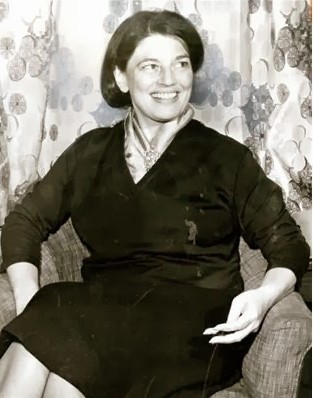
Mavis Gallant was one of a distinguished company of writers and critics and visual artists whom I invited in to the studio to be interviewed.  Of course I wanted the writers to speak for themselves, but I also wanted to have others speak to them, and about them. I spent two days with Mavis Gallant in the fall of 1989, both in studio and in the city proper, but in the summer before I met her I interviewed Richard Landon (1942-2011), then Director of the Thomas Fisher Rare Book Library, University of Toronto, where Gallant’s papers are held.

I felt a conversation with someone who knew her work and also knew her would help me in my planned interview. Over many years of my reading Gallant, I had found her both intriguing and enigmatic. I hoped for some guidance and for some basis for comparison. I wanted to know about the contents of her “living” archives, that crucial period where an artist gets to make a choice about what is to be saved by deposit and thereby directs future commentary and research. And some of the questions which arose in this interview with Richard Landon would surface later in the fall when I spoke directly to Gallant herself.

Although most of her writing life had been spent in Europe, Gallant had been frequently in Canada. Richard Landon knew her well, and was also intimate with her work and of course her papers. He seemed ideal, both as a reader and a scholar, for an introduction to Gallant’s extraordinary talent and her working methods.

— Karen Mulhallen


July 27, 1989

Karen Mulhallen (KM): Richard, I’m looking at a xerox copy of a very brief note from Mavis Gallant. I don’t know when this note was written, it’s not dated, but it is something to do with From the Fifteenth District, Mavis Gallant’s collection of nine stories published in 1979. Toronto. What are these two xerox sheets I have in front of me?

Richard Landon (RL): This is a note Mavis wrote when she sent a batch of her papers to the Fisher Library. Her papers come in little batches and sometimes she puts in notes that are either explanatory or give critical comments from her on the material. Sometimes they are about who edited her work for The New Yorker, normally William Maxwell. This note is amusing, because one of the characters in the title story in From  the Fifteenth District is a social worker named  Alicia Fohrenbach who turned out to have a real life counterpart in the United States.

KM: What does she say in this note? Can you decipher it for me?

RL:From the Fifteenth District was written and published in 1978 and in it the name Alicia Fohrenbach was invented. I received several letters from a Doctor Alicia Fohrenbach in the U.S., a psychologist. These coincidences often arise and are tricky to handle. Luckily Dr. Fohrenbach was willing to believe that I had never heard  of her. However, as she had graduated from some institution called Regius, the coincidence was more than close. This is one of my favourite stories, but my readers were baffled and irritated by it. MG” The reference is to the hospital from which Mrs. Ibrahim is being discharged, which is called Regius  Hospital.

gallant

KM: Yes, I see the passage, a little past page 165 at the centre of the collection, probably in all editions? It is curious, more than an odd coincidence. Writers are, I think, prescient. Do you think Gallant is sensitive to the possibilities of intuiting things. After all, one of the stories is about ghosts.

RL: I think she is. I don’t know that she would claim to be prescient in that way at all, but part of her technique is the accumulation of detail, which is one of the most impressive things about her writing, its precision. There is an easy recognition on the part of the reader of things you don’t normally think about. She describes people’s fingernails, small incidents, very precise details of a scene — I suppose the accumulation does somehow give a notion of prescience.

KM: In rereading the stories in From The Fifteenth District, I noticed sentences that didn’t seem to belong to paragraphs. And it’s just what you’ve said, all that detail by the end of a story is in many ways overwhelming. She does this too with metaphors.

I was looking at the opening story, “ The Four Seasons,” just at the end of the fourth section, page 28: “ ‘That’s not our property’ Mrs Unwin cried. The man said ‘You hired me and I am here,’ and kept on sawing.”

This is a scene where the Marchesa’s date tree has grown up again, and Mrs. Unwin is  feeling the perfume fumes from the tree are noxious and she has a successful court order against the Marchesa and her tree. The Marchesa has long ago left her garden and so in comes this local to cut down the tree, and he decides he will not just cut down the overhanging branches but will cut down the whole tree and he breaks through the fence. That’s why Mrs. Unwin says, “ That’s not our property.” Meanwhile in the scene we’re reminded of the chauffeur of the Marchesa. The Marchesa has fled before the coming Allied forces. Mussolini’s war activities are failing, so people are leaving the country as Hitler is failing. The Marchesa has fled because, despite her Italian title, she is an English woman. Her chauffeur hangs around the garden like an abandoned domestic animal.

The chauffeur had walked the Marchesa’s dogs, and on the road there is a convoy of army lorries moving like crabs on the floor of the ocean. You think my goodness what are these army lorries doing? And we haven’t seen him before. And why are the lorries described like crabs in the ocean. Then you realize that the whole story is shot through with these images of the sea, and the maid Carmela looks out to the sea and is afraid, and then she’s underwater. It’s such an accumulation of detail — the sea, the army, the Marchesa’s dogs, her chauffeur, all together. And yet that’s got nothing to do with the cutting down of the tree at the beginning of the whole movement.

$(KGrHqZ,!qwF!-Frz!GDBQdEV8STnw~~48_35

RL:  But it is not the sea as most people notice the sea; it’s quite threatening and boring, and is often described as a line on the horizon and as unattainable. There is always a road or a railway between them and the sea. It is this sense of alienation which they have by some kind of accident in a particular situation. They’re stuck. The Marchesa might get away, but no one else does.

KM: You know she got away because the story begins with her eating ice cream and anybody who eats ice cream in this story is going to get out some way!

RL: But the principle characters never get out. There’s a kind of universal rootlessness about many of the stories. The one that most affected me on rereading is called “Potter.” It’s quite long, one of the longer ones, about the Polish poet and lecturer in Paris and his American lover, Laurie Bennett, and his reaction to her going off with someone else.

It’s a more complete story in some ways because it has a movement of plot. Laurie goes off to Venice, he’s devastated, and a good deal of it is describing his reaction to her leaving. He then has his visa revoked — he’s lecturing in Paris — and at the same time she sends him a postcard telling him she is coming back. The end of the story is about him going back to Poland, from which he might never again emerge, whereas she thinks she’s resumed the relationship. It sounds a bit banal, but it’s the way it’s expressed that is extremely impressive. It’s quite haunting.

KM: What do you find impressive?

RL: Her observations about how people react to each other and to external forces, and even to the city of Paris, to the weather. It all has a real accuracy and is recognizable. You think that’s right, I would never have expressed that, but in fact, that’s how I might feel.

KM: And Mavis has the girl misspelling the word ‘separate,’ which really impressed me. This is the kind of girl who can’t spell in her love letters: “We’re seperating forever,” she says. And in another she described him as a “really sensative person.”

RL: Yes,  it’s those details..

KM …which are her talent?

RL: Yes, in a real way.

KM: Do you find alterations, revisions in the manuscript?

RL: I have here the first three pages of typescript of a story in From the Fifteenth District.  It’s pretty clean.

KM: Does she write long hand, does she type, does she word process?

RL: She mainly types and then corrects in holograph, that is by hand. She might write drafts, but what we get at the Fisher Library is essentially what is sent to The New Yorker magazine. It’s edited there and then sent back to her. So you get two kinds of marks, her corrections and the odd suggestion by an editor with the technical notes about how to set it for printing.

gallant

KM: How did Fisher acquire these papers, which are an ongoing collection, aren’t they?

RL: Yes. It began when the University of Toronto invited Mavis Gallant to be Writer-in-Residence, in 1980, I believe. She wasn’t able to take it up then, but she did come in ’83-’84 as Writer-in Residence, living at Massey College. Shortly after she was invited she wrote to ask whether we would be interested in having her papers, which she wished to give to us, saying in one of the letters she strongly disapproved of writers selling their papers.

KM; That’s interesting, so she just gives them to you. That’s unusual.

RL: And, of course, there is no tax advantage for her either because she  lives in France.

KM: Do you have other writers who have simply given their papers?

RL: Josef Skvorecky, David Solway, Margaret Atwood, Dennis Lee.

KM: In all those cases, there are also tax advantages.

RL: Yes, they do get evaluated.

But obviously, for Gallant, this is a conscious decision. There is no particular association with Toronto, except that she remembered it from the 1950s. Not everyone’s fondest memory…! One would have imagined because she grew up in Montreal, went to school there, worked there briefly, before going to Paris, which was about 1950, that her Canadian association would be directly Montreal. She did explain that she objected to the Quebec language law and that sort of thing. I think she came to Toronto, was impressed by the city, because it had changed. It would be hard not to be impressed by the difference between 1950 and 1980.

KM: There were no park benches in 1950.

RL:  Right, and so she started sending, every once in a while, a little batch of papers. Mainly corrected typescripts, galleys, some correspondence, which relates directly to her work. Eventually I hope we will get her journals. She adapted her journals for articles on the 1968 disturbances in Paris, and I do hope to see more of them.

KM: So there are no letters, no personal papers, mementos?

RL: My impression is that whatever she decides to give us of that kind of material will be very consciously chosen. She’s not just going to scoop everything into boxes and send it. She will direct, in a way, future critical or biographical work on her.

KM: So an archive can be quite diverse. If you have six archives from six writers they could be quite different in composition. What is your impression of Gallant as a personality. She’s directed, careful, controlled, not only in her prose, brilliantly so, but as a personality.  Is she uniform, enigmatic?

RL: I found her fascinating. First of all, physically she’s quite beautiful and obviously was stunning when she was younger. She’s very direct and a bit quirky. She likes to ask questions that catch you slightly off guard.

KM: You’d like that!

RL: Yes, she asked me to lunch one time. Out of nowhere, in general conversation, she asked me, “What had the men of Canada done to women?”

KM: What did you say?

RL:  I said I didn’t feel I could take responsibility for every man in the country.

KM: What did she mean?

RL: She was asking what was wrong with the women. She’d been traveling around on a promotion for one of her books. Macmillan had sent her across the country on planes, trains, and so on, and she’d fallen into conversation with women. She asked them questions about what they did, how they were feeling, and she found most of them terribly depressed. and the cause seemed to be their relationships with men. So she developed this little theory that the men of Canada were oppressing women, in a kind of spiritual way. This was a new concept to me, and certainly the women I know don’t seem very oppressed. I think she was exploring something in her own mind. That’s another impression I have of her, that she was always exploring, thinking about things, and that someday parts of it would emerge, not this conversation particularly, but some aspect of it might very well come out in a short story. That was one of her methods of working; she talked to people; she listened to what they said, but she asked questions that elicited responses she thought would be interesting.

KM: So she’s one of those people who don’t shut the world out, who keep on processing?

RL: That was my impression. She could be great fun, funny, quite witty, very sharp-tongued. I went to a reading with her one time, she was terribly nervous before, although once she started the reading she was fine, and afterward we sat around and drank wine for hours, and she chatted with people, told stories; it was very amusing.  She got to interview [Maurice] Duplessis because she was so gorgeous. No other reporters could get in to a private interview with him. He obviously fancied her. Funny stories, like that.

She was very engaged with the students, with the junior fellows, when she was at Massey College. They were obviously very fond of her, and people talked to her a lot. She lived in college, and people would drop in and see her. I think she was somewhat less impressed with some of the other people she met around the university.

However, she also said she didn’t get any writing done, although when she’d come to be Writer-in-Residence, part of her plan was to finish her Dreyfus book which she’d been working on for years. She found she couldn’t do it, because her time was taken up or broken up. When people sent her things she read them seriously and commented. She took the job of Writer-in-Residence seriously, I think.

KM: Yes, I think she did. One of the writers I’m interested in and whom I’ve interviewed for these programs is Rohinton Mistry.  In fact he got his start the year she was Writer-in-Residence and sent her a story, one of his first, and she sent it to Leon Rooke who then published it in a New Press Anthology. That was perhaps Rohinton Mistry’s first publication, and after that he just took off. Within a few years he had a Penquin collection of stories, and so that was Mavis.

She’s one of the few writers I’ve heard of who has taken the Writer-in-Residence job with great seriousness. People are in and out of that job everywhere. I know Elizabeth Smart had a position out west and I think enjoyed it, but was not engaged in the way Mavis was. I know Graeme Gibson had a Writer-in–Residence position at the University of Waterloo and I understand he wasn’t very much on campus. It’s the kind of job where the writer decides how to do it.

RL: That was the first time Gallant had lived in Canada for any extended period. She is a Canadian citizen and comes back a lot and is very conscious of being Canadian. More of her books are appearing here and she comes for promotional tours as well. But she has chosen to travel.

At the University of Toronto she was here the whole year, so living on campus, was more engaged than someone coming onto a campus once or twice a week.

KM: Have you been to her home in Paris?

RL: I have never visited her, although I would like to. I am going there next month, but it being August I assume, like the rest of the French, she will likely have left town.

KM: I have been to the house of a friend of hers on the edge of the Marais, Joe Plaskett, who is a painter from Vancouver. There was a group of people who emigrated at the same time and Mavis is close to Joe. He lives near the Place des Vosges in a medieval house which is actually two yoked together. I think she lives not far from Joe. For these programs, I have also talked to Virgil Burnett, who’s part of that group of people. People came and went, but Joe and Mavis were two Canadians who stayed and gathered other people around them over the years. Why do you think she stayed in Paris?

RL: I don’t really know except that it suits her. She has, I think, a fairly highly developed sense of the advantages of a certain kind of isolation. If you live somewhere where you are comfortable, and she obviously is in Paris, but it’s not what you grew up with, it’s easier to investigate in a fictional way; it gives a kind of perspective. Most of her stories are set in Europe, often in Italy or France or sometimes Germany. She did publish that volume called Home Truths ( 1981), which was about Canada, but it still had that sense of distance. I think she finds it useful.

I read an article she wrote for a magazine, a description of Paris. It was in a series by various writers describing places they lived. Hers was very evocative, but it was mainly about Paris in the winter. It rains all the time, it’s dark. It’s only light from 9-10 a.m. Then it’s dark from 10-3 p.m. or grey, and then it’s really dark. The impression was of rain dripping on stone, greyness and the river. There are photographs too. There’s something that speaks to her from the city itself. Although I am sure she has been asked why she stays, I have never read or heard the real answer.
mavis gallant 866

KM: Did she not talk about being in exile when you spent all that time with her?

RL: I think she doesn’t consider herself in exile in the normal sense. She just considers herself someone who lives somewhere else, who did it deliberately when she made her career as a writer. She has been publishing primarily in The New Yorker, so her audience has been in the States and in Britain. From the Fifteenth District was reviewed as her emergence in Canada, but her books were not before then published here. The dust jacket quotes all of these Canadian writers saying how wonderful she is, so they all knew about her — George Woodcock, Mordecai Richler, Morley Callaghan, Alice Munro and so on, but nobody else did.

But, of course, that ignores the audience of The New Yorker. She published her first story there, in 1951, I think, and virtually everything she’s written has appeared there since. The audience of The New Yorker is about half a million readers, and it’s international, not just Americans, and a good many Canadians. So in a sense she was recognized in Canada and  it is slightly surprising  that a publisher didn’t pick up her stories and collect them and publish them earlier.

The New Yorker connection is interesting. I have been mulling this over: Are you born a New Yorker writer, or do you develop yourself  in such a way that you’re a natural for The New Yorker. The manuscripts which I have looked at don’t have any evidence of The New Yorker imposing its famous style.

KM: Not from the sheets we have in front of us anyway.

RL: What is the influence of someone like William Maxwell or the other editors at The New Yorker, not just on Gallant but on a whole series of writers?

KM: Alice Munro? Woody Allen?

RL:  That’s right. Every time you read something by them you recognize that it reads like a New Yorker piece.

KM: It’s an important question. Writers perhaps unconsciously adjust for their market. I heard of Mavis Gallant  in ‘63 or ’64. She was introduced to me by Miriam Waddington who was from Montreal and knew Mavis. So I started reading her then, and, of course, I thought of her as a New Yorker writer. I was just a student, and just beginning to read those sorts of magazines. Do you think there is a New Yorker style, which Mavis fits into, or perhaps she has helped to create it, too?

RL: I think both those things are true.  When she sent in her first couple of stories, someone there recognized that here’s someone who writes  the kind of fiction that we’re identified with, that our readers want, and we should seize that, and they did. It is true that there are several writers who are so closely identified with The New Yorker that you don’t see them as publishing anywhere else.

KM: And Alice Munro as well. Is it the condition of alienation, when we think about these stories?

RL: Partly that, alienation often in terms of the stories themselves, in terms of the style. Part of The New Yorker style, to me, is that nothing ends, it’s soft.

KM: I was going to say that they wander off.

RL: That’s right, they sort of stop…

KM: Never mind Aristotle, down with Aristotle…

RL: Certainly Gallant has that, always enigmas at the end, so that it could could either way, and it’s strongly suggested that the way it is going to go is not the nice way.

KM: Something we were talking about earlier is detail. When you think about a New Yorker essay, whether it’s on Jeffrey Moussaieff Masson,  or tomatoes, or the rebuilding of Avery Fisher Hall, any New Yorker essay has more detail than any human being could possibly process. That seems to be to be a keynote of that magazine’s writing. And that also seems to me to be American. Like the social science novel. An American popular genre is so detailed so that people feel they get something for their money. In The New Yorker they get something for the time invested reading. They learn that tomatoes are gas-fired in upper Florida and so on. I think in most New Yorker fiction, including Mavis’s, the detail really serves the end of the story, but it is a feature of that kind of writing.

RL: Yes, sure.

KM: Do you think it is fair to say that’s an American contribution to 20th century writing — detail?

RL: I don’t know.

KM: You don’t have to go on record. You can back out…

RL: I don’t know about that, but the difference between non-fiction and fiction in The New Yorker is not that great. It’s recognizable as New Yorker stuff and her style suits that.

KM: Let’s talk about the two writers, Alice Munro and Mavis Gallant, who are very different writers, I think. Munro has a tremendous identification with and compassion for her characters. With Gallant there is a distance, she has them on a pin, or is looking through a glass.

RL: I think that’s probably true. With Munro you do feel her engagement with one character or another. With Gallant the relationships are unconsummated, people are observed  but what they are doing with each other often isn’t working either. Yet the descriptions are impressive.

1329152

KM: Is there a moment in From the Fifteenth District where characters seem to connect with each other, or with the reader?

RL: In “Potter” they do. The Poles in Paris, like Potter, or Piotr and his cousin, Marek. The relationship is close but they don’t fully connect in the sense that everyone is coming or going. And the people who are really there are always described in terms of hanging around the cafes.

KM: …or the train station…

RL: Being there physically and being somewhere else mentally and spiritually is an aspect of her characters. What’s really going on has only a token amount to do with the physical circumstances. It doesn’t have to be Paris, except that obviously she can describe Paris better because she lives there. But she will describe in great detail small places in Italy, for instance, where presumably she has spent some time as well.

KM: The Italian Riviera, or the point where Italy and France come together, figures in her stories, doesn’t it?

RL: Yes, in fact that’s one of the points that’s made. How can you tell what is Italy and what is France? They speak French, but the signs are in Italian. Right now it’s part of Italy, but about 75 years ago it was part of France, and who knows what it might be in the future. This is part, I suppose, of European alienation. There is a whole series of countries which haven’t always been there in that form. It would be interesting to ask Mavis what she thinks of 1992 and the grand new Europe. I dare say she has some opinions about it.

KM: I’m sure she has opinions. I wonder what she thinks of Mrs. Thatcher!

RL: She does have very strong views about French politics, and I did talk to her a couple times about that, but always her view is a real Canadian connection, which is curious and amusing. She invented a persona for herself, the name I can’t remember, but when she hears something on the radio that involves Canada, or sees something on television, she phones the stations and asks to talk to the producers, and even politicians and sets them straight, as in that’s not what it’s like in Canada, that’s a wrong interpretation, you really should get this right. So, in a way, she’s a kind of unofficial Canadian conscience.

KM: A gazetteer?

RL: Yes. I think she enjoys that a lot and realizes probably that the French don’t listen very carefully. I don’t know that she’s had any real political effect, but it amuses her to correct them about what is really going on. During the 14th  of July parade she was on television with Peter Mansbridge describing it. A friend told me that a float went by that was meant to represent the French colonial period, and Canada had a small part of it, and she said, “That’s not right, it’s the wrong period.” Of course, Canada wasn’t a colony of France at all, and then CBC cut her off. I wish I had heard that comment. I wouldn’t think of Mavis Gallant as someone to describe a parade to you, but it was an inspired choice. I’m sure that what she said, or at least what they let air, was very interesting and pertinent. She observes the French in that way as well. She wrote quite a lot about the school teacher who had an affair with one of her students — was her name Gabrielle Russier, is that right?— she’s also been very much involved in researching a book on Dreyfus.

KM: That Dreyfus project has gone on for more than a decade, hasn’t it?

RL: A long time. It’s been imminent for several years.
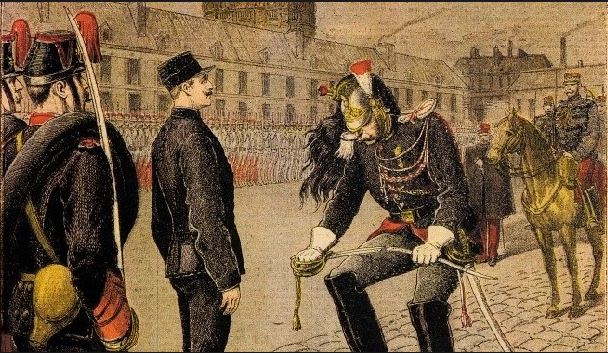
CaptureDégradation d’Alfred Dreyfus” from Le Petit Journal, Supplement Illustré no. 217, 1895 via Forward

KM: She’s working on archives, and letters and journals, isn’t she?

RL: And she met the daughter, who might not be alive now, knew her quite well.

KM: Let’s quickly review what happened in the Dreyfus case and try and put it in context. It’s in the 1890s in France and he was drummed out of the army as a Jew and imprisoned.

RL: And Émile Zola took up his case and wrote “J’accuse” and then Dreyfus was brought to trial and was released and then put back in prison.

KM: It was an enormous trial wasn’t it, with many transcripts?

i-accuse

RL: It’s one of those grey scandals which the French cling to forever. A hundred years later, it’s still fresh. It’s been written about many times and there are at least half a dozen books in print.

KM: There’s a long essay by Sartre, and all kinds of people who try to come to terms with this event.

RL: I think to be a respectable intellectual in France, you must. Mavis has new evidence, has seen some new material, which suggests a new interpretation.

KM: Obviously, it’s an ongoing project for her and a sign of her membership  in an international intellectual community, which is also how I see other people’s engagement with the case. Do you think that is her motivation, or could there be more personal reasons for her being involved, interested?

RL: Well, at some basic level, she is doing historical journalism, and she was a journalist.

KM: So she’s not Jewish; she went to a convent school?

RL: In fact, those potted little biographies for her books always start by saying she went to 17 schools. The first one when she was four was a convent, and there were altogether 17 in Montreal and the eastern United States.

KM: Was she kicked out of them?

RL: Next time I see her I’ll ask her, why 17? There must be some story there. Her father moved around? She was a quarrelsome student? She must have approved the figure 17,  because it appears on everything.

KM: There are so many enigmas for me about Mavis Gallant:  the 17 schools, the rootlessness, which is paradoxical as she is very rooted in one city, which didn’t begin as her own, and her seeing herself as a Canadian. Her characters move around, and then there is the very specificity of her details, which contrast with the rootlessness of the feeling in the stories. And that’s true all through the collection From The Fifteenth District. And it is set in a very specific district, the 15th arrondissement. But the stories themselves are set all over Western Europe, and yet that title story is a ghost story, for heaven’s sake, characters don’t even live there. They live in “other space.” So there are all these paradoxes at work.

Obviously, she’s kept on writing and I think she’ll continue to surprise us. If she is engaged with the Dreyfus book and it gets finished, she is not only doing historical journalism but making her mark on intellectual history, which is what the Dreyfus case is really about, isn’t it?

RL: I think that’s probably true. How consciously she approaches that I’m not sure.

KM: I think that’s one thing you feel with Gallant’s work, her tremendous intelligence. You don’t necessarily move toward her, she’s hard on her characters, there’s not immediately a great sympathy, although there is ultimately compassion, and you feel her intelligence, and it’s admirable.

RL:  She makes many people nervous, I think, because she’s very sharp and bright, so people feel a little hesitant about meeting her, about what she’s going to say to them and will they feel they have something silly or stupid. She wouldn’t do that but people think she might. It’s that general feeling that she doesn’t suffer fools gladly, that you ought to kind of watch it. When she’s talking to you, she listens carefully, and you need be conscious about what you say. Not because she’s going to write it into a story, but because she’s listening carefully, and she’s critical.

KM: Someone said something similar about Virginia Woolf, whom I’ve always assumed wasn’t critical, but listened very carefully. In Woolf’s time, they would say she was a person who could elicit your darkest secrets, and she would use them. Not against you, but they would be used. In that way she was dangerous, and I would think the same about Gallant. Writers are observers; there’s no doubt about that anyway. But certain writers could elicit your secrets and your wariness could make you blurt out things. And perhaps those things might in the end be used against you.

RL: I’ll always be careful what I say to writers.

KM: I’m delighted to hear that!

The papers Gallant is placing at the Fisher Library are not full of personal details, but you would think so much of the information in her stories comes about through her keeping notebooks about people, and then using these notes later. It’s exciting to think that her work comes out of a kind of memory repository, rather than something else.

RL: Well, she doesn’t keep things for the sake of having 97 boxes. When she gets a letter, I am sure she doesn’t keep it unless it matters.

KM: So the Fisher collection is small but important?

RL: Yes and it has been used and is likely to be used more. There is a book on her.

KM: Janice Kulyk Keefer, Reading Mavis Gallant? I haven’t read it.

RL: Neither have I but we keep track of the people who use the collections and there’s already a whole file folder of people who have looked at her papers for one reason or another.

KM:  So a critic or a student will come and look at the papers, and then they’ll be able to deduce her working method among other things?

RL:  Yes, they might. I think anyone doing anything serious on her would have to be in touch with her, as you wouldn’t find enough in the papers, although it depends on what you are looking for. It’s a conscious archive, which I rather like, because it means a writer has taken some real responsibility rather than leaving it up to a curator or an archivist to decide at some point in the future what is to be saved and so on.

KM: You actually get rid of materials that people give you?

RL: No, no we don’t, but someday someone’s going to have to. The mountain of paper will become overwhelming to the point where someone will have to make real decisions and that probably won’t be me. Every writer varies so much, but it’s interesting, that someone so consciously forms her archive. So her archive is a little bit like her stories.

KM: I was going to say it sounds as if she is all of a piece. She’s a highly conscious and a highly responsible person. That certainly sheds a very important light on her, because I don’t think you know her as conscious or responsible from her stories, so some of these other things are very very important.  Thank you, Richard. I am very much looking forward to talking to Mavis Gallant next.

—Richard Landon & Karen Mulhallen

Richard Landon (1942-2011) was the Director of the Thomas Fisher Rare Book Library and Professor of English. He taught courses on aspects of the history of the book and bibliography for many years in the University of Toronto’s Graduate Department of English and the Faculty of Information. Among his publications are Bibliophilia Scholastica Floreat (2005), Ars Medica (2006), “Two Collectors: Thomas Grenville and Lord Amherst of Hackney” in Commonwealth of Books (2007), “The Elixir of Life: Richard Garnett, the British Museum Library, and Literary London” in Literary Cultures and the Material Book (2007), and articles in the History of the Book In Canada (2004-2007).

Karen Mulhallen

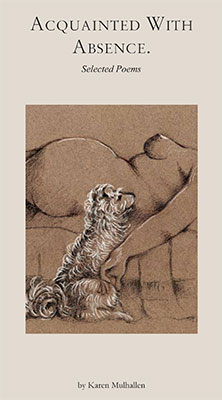
Karen Mulhallen has published 16 books (and numerous articles), including anthologies, a travel-fiction memoir, poetry and criticism. She has edited more than 100 issues of Descant magazine. She is a Blake scholar, a Professor Emeritus of English at Ryerson University and adjunct Professor at the University of Toronto. Douglas Glover edited and wrote an introduction for her book of selected poems Acquainted With Absence and several of her poems have appeared on the pages of Numéro Cinq.



Mar 172014
 

Karen Mulhallen

Code Orange is a hospital term, a warning to staff indicating a bomb threat, a radioactive spill, a person with mental issues is loose in the halls of the hospital. Sometimes it means everyone should evacuate a soon as possible. Karen Mulhallen’s “Code Orange Emblazoned Suite” is among other things a meditation upon the possibility that we are living in a Code Orange world, that we should all get ready to evacuate, though in the event she finds moments of beauty even in the midst of war.

…………………..…some old god
rising  tall below the Red City,
or his companion, younger, seated still
smiling archaically before the caves

Karen Mulhallen is an old friend, a child of Souwesto (as am I), that triangle of cultural territory that stretches south of Toronto to Windsor and north to Alice Munro country. She is a Blake scholar, founder and publisher of Descant Magazine in Toronto, and a prolific poet, undersung, protean, brilliant. I edited her collection of selected poems Acquainted With Absence and wrote the introduction, which you can read here, and tells you all you need to know.

dg

I began to write the Code Orange poems as a response to the invasions of Afghanistan and the media flurry of photographs. There was such a disjunction between what one saw and what one was told to see that the formality of the quatrain seem to create a frame around the physical beauty, a beauty which was destroyed not only by the Taliban, but also by all the invading forces. “The Elegy” which follows on the death of the book man, and perhaps on the death of libraries, also required some classical interventions. Iambic pentameter, but also blank verse stanzas in the way of Milton’s Paradise Lost with intervention within passages of psalmic structures, their repetitive harmony: “perhaps he felt, perhaps he felt.” Throughout the whole suite I was drawn to the hymns of my childhood, spent on hard pews, snuggled in damp proximity to my nana’s big black sheared beaver coat on cold wet snowy days. And finally, as I moved through the whole sequence I felt a need to explore other stanzaic forms, the two-line, the four-line, even for moments William Carlos William’s three-lined, stepped stanza. I needed all of these to contrast to the media bullets which were pervading my consciousness as I wrote. My most recent title for the sequence is “The Code Orange Emblazoned Suite” since to emblazon is to embellish, but to blazon a body is to hack that body into pieces to create fragments as trophies.

—Karen Mulhallen


To emblazon is to embellish
but to blazon a body is to hack
that body into pieces to create fragments as trophies.

 §

In the sweet, (In the sweet), by and by, (by and by),
We shall meet on that beautiful shore, (by and by),
In the sweet, (In the sweet), by and by, (by and by),
We shall meet on that beautiful shore.

§

Two gates there are that give passage to fleeting dreams;
 one is made of horn, one of ivory.
The dreams that pass through sawn ivory are deceitful,

 bearing messages that will never be fulfilled;
The dreams that pass through the gates of polished horn
are future truths for the dreamers who can see them.
Homer, The Odyssey, Book XIX


I

The First War

Afghanistan, first war of the twenty-first century
in our shame little did we anticipate the rewards
those dailies pounding out
the propaganda brought us

faces of startling beauty. Some man,
some woman, some children, each assembled
so that Vermeer waking from his northern grave
would have gasped with joy.

Here a lip, there a profile,
always the superb curve of the head
blowing demonic rhetoric to smithereens,
not by a smart bomb,

but by a smarter one, some old god
rising  tall below the Red City,
or his companion, younger, seated still
smiling archaically before the caves

and tunnels and frescoes, in the rubble
of the Valley of Bamiyan, his hands
resting on the knees of his crossed legs,
his pakhool brim rolled and set

at a cocky angle, his thumbs and first fingers
forming an eternal oval, the other
six fingers extended to catch the rain
of his own blessings.

.

II

Revolutionary Meeting at the Royal Ontario Museum

After we met you, under the Moorish cupola,
in the foyer of the palatial Art Deco museum.
After we stood silently, Simon, Mairi and I—
Simon, Jewish, Glaswegian, a Londoner,

Mairi, his wife, Christian, Scottish, a Londoner,
I, the Canadian, mongrel yoking of Mediterranean
and  Caucasus, sea, desert, mountain: people of the book all.
Have we given away too much?

You come rushing in, lanky like a colt, getting its first legs,
your wonderful smile, your brown teeth,
late, held up by an eager interviewer,
asking more and more and more.

We ascend to the restaurant, overlooking the street,
four displaced persons, one a refugee, all perched
in Toronto’s shopping danger zone, where clothes
change hands for thousands of dollars,

and begin to order lunch, but first, you say, something to drink—
La Heim, Prosit, Cheers. I give you Simic, Louvish, Lakowitz,
Laucke, MacDonald, Nejedsky, Nelles and Naylor.
You don’t eat much, and Simon doesn’t drink,

so Mairi and I do our best to right the balance,
as you begin to discuss artillery and your interview.
You are wearing a black sweater and black jeans.
You are always in black, I’ve noticed, and the two of you talk

about your brothers, the right wing Israeli—
the father  Moishe Dayan’s right hand man—
and the Bosnian General, you spoke to him only last night,
carefully, evading the war, your exile, your Moslem wife,

your children. Your beautiful thin face, its Oriental eyelids
heavily laced, like the intricate ethnic lines of a Serbo-Croatian-
Bosnian-Montenegrin topographical map. You are used to interviews,
and your brother whom you love, so you talked of fishing,

never mentioned the two-page spread in Le Figaro
that other morning. You’ve been on the road two years
fleeing the war, Italy, Belgium, Scotland, England,
Canada. Now here, Toronto, a real pause,

Luna, and Darius, happy, Amela, not too lonely;
you always out front, on the road, on the stage.
That long Parisian print interview, the war,
the death of your mother, the sorrow of Sarajevo,

opening it that morning, having poured out your heart,
to find opposite your own hollow cheeks, bloodshot eyes
creased and rimmed in wrinkles, your brother’s round
well-fed cheeks, greased and smiling like a pig.

.

III

The Bookman’s Passing

The sinews no longer hold flesh and bones together—
these are all prey to the resistless power of fire
which burns the body to ashes, once life slips from the  bones;
and the soul takes wing as a dream takes wing,
and afterward  hovers to and fro.
Homer, The Odyssey, Book XI

There is something final about an obituary.
Not the brief death notice.
It is the testimonials—a sentence or two, please—encapsulating—
What would you say he was?
How was? How important?
How would you characterize? When did you meet?

And then the career path, marriages,
significant others.
Born on a farm, you say? A real horse trader?
Shaggy. Loved to smoke and drink…never before noon—
Are you sure?

Cancer, a pity—common enough these days—
So, a generation—
But wait a minute—a library—nearly a million volumes—
manuscripts—pictures, ephemera—
The house that Richard built.

There were many stops on that last road.
Sometimes you were at home, taking the sun on your deck.
Enjoying a drink at last, after so much treatment.
And your hair, beginning to grow back, whisps of white beard.

St Michael’s Hospital, where I came early one morning,
bearing the Farmers’ Market  flowers.
Your face smeared with peanut butter, yoghurt—
who would have thought you’d have an appetite?
But you were farm bred, all appetite:
The dance of libido and intellect, a real farm bred appetite,

and that’s the nature of a true horse trader.
You got it, sport those cowboy boots, that Stetson hat,
stompin’ Richie has got the mojo,
and he’s making a whole world of words.

Mount Sinai Hospital where meals appeared punctually:
Breakfast at 7:30, lunch at 12:30, dinner at 5 p.m.
Marie on the bed holding your head,
Sweetheart, sweetheart, I am here.

And first you were eating. Emptying the trays,
the meals, the treats from Harbord House,
and other friends’ small packaged offerings.

But there were no nuts at the last stop, at Perram House,
except the bereaved. The end of life hospice,
no charge, and no expectations.

I feel like I am in transit—
     You are in transit.
I am crossing the border, the time zone between north and south.
You can’t come here because you would disappear—
     I will meet you anywhere.
Last sighting, Wednesday, Toronto, Perram House,
heading for Room 8, 4 Wellesley Place.

The pick up ambulance arrives promptly at 10 a.m.
In the street, in front of Perram House, a film is being shot
as the ambulance arrives from Mount Sinai hospital.

The attendants move him out of the ambulance.
They carry him across the divide, between the film crew,
the cameras, the electrical lines, the catering van and dressing rooms,

the outside and the inside, the before and the after,
the now and the not now.

They are nearing the front  door of Perram House;
the elevator to the second storey is out of order:
Perhaps he felt the air in the street, as he became agitated.
Perhaps he felt the hesitation at the portal.
Perhaps he felt the line between then and now, before and after.
Perhaps he sensed the beginning of an ending.

Nothing convenient in a death.
Moments later, in the parlour, he died.

The parlour, they said, was just like home.
Pavilioned in splendour,
like the Ancient of Days,  girded with praise:
So the earth with its store of wonders untold
bountiful is—what tongue could recite
how streams from the hills, descend to the plain
………………………………..and are sweetly distilled, in the dew and the rain.

.

IV

Suburban Hospital

For the past two days I had been thinking about the story
told to me by a friend last Wednesday evening.
It was a story about a doctor, a Chinese woman
who had examined a very young girl in the emergency department
of a suburban hospital  in the north east of a large urban centre.

The girl had bleeding from her anus; the doctor found a two-inch tear.
It was odd, she thought, how could there be such a tear?
As she talked to the girl, who was nearly silent,
she noticed that her head was tilted strangely,
her neck tipped to one side.

The more she looked at her, the more uneasy she became,
not about the anus, but about her head.
She called another friend, a doctor with access to an MRI machine,
and she sent the girl for an immediate MRI.

The results were astonishing.
On one half of the girl’s head there was a tumour
which was growing down the neck  from the brain stem.
It was a tumour of the sort sometimes found in AIDS patients.

She called in the girl’s mother; she talked to the girl.
The girl had been repeatedly raped and sodomized,
first by her father, and then by her father and her older brother.

The mother denied the story; the girl refused to repeat it for the police.

There is a green hill far away, outside a city wall
where the dear lord was crucified, who died to save us all.

.

V

The End of September

Early evening, and we meet to talk over the last events.
You said, you said, he said, he said,
I said, I said,
………….the years
………all have their lists, and learn
….learn to put aside lists, list to
the list, what’s at issue here,
what’s to be seen,
seen, seem, scene, difference,
different desires, different capacities,
sense, a sense, the sense of an ending:

Arranged I wait, as the light falls,
as the light falls on College Street, in Toronto.
…..A yellow room, the waiter’s sickled skin,
your face, your face with its tiny lines,
my face
…….our years together:
Hail, hail and farewell.

.

VI

How Beautiful With Earrings

I was thinking of that afternoon
when Nancy and  Ethel and I sat in the sunlight
of the gravel court of those old barns
with the raised garden beds and espaliered trees
at the Priory of Notre Dame d’Orsan
and drank champagne

and of Nancy and Ethel and me on another afternoon
or maybe it was all one afternoon
or maybe I have merged all our afternoons
seated at tables on the gravel court
near the green glade in Nohant by George Sand’s house

and Nancy was wearing a black and white printed dress
and at her throat and on her ears
a necklace and earrings also in black and white—
some geometric design of African origin
in bone and wood

and as Nancy smoked, the sun dappled in the courtyard
and we three talking in the grace of that softness
and the light falling all around and the green glade
just beyond and the raised beds
just over there

and the little puppet theatre just inside the house
a house where she had loved the composer
but insisted on wearing the trousers

and I exclaim how beautiful you are
Nancy in pools of light, Nancy in black and white
here in this speckled gravel place
Ethel does not miss a beat chimes
so beautiful no sense jealousy.

Then, it is a fall day, New York, noon,
Gramercy Park brunch, Ethel’s ninetieth year,
her small apartment, her crazy driving
from Connecticut, her beautiful gold earrings,
how beautiful Ethel in old
gold earrings, Adam swooping her up
in his  long strong young arms, so beautiful
farewell  oh green eyed creatures
of the green glades, farewell.

.

VII

In Slow Motion

Seeing you at table, a lunch
before Christmas, wondering if you remember,
surprised that I have.

You are much taller than I remember
I much smaller than I feel
as we walk west  along Bloor Street
that summer night

decades ago, a summer evening,
my blue tube top, my long white
silk skirt, turquoise Hawaian shirt,
long black straight hair,

pushing my white bicycle
along the wide sidewalk west
from the great glass hall, out
of the Courtyard Café

into the gentle night, from the glitter
and the Basque salad  you conjured for me
when it was no longer on the menu
and we talked and talked

and someone once said we were meant
for each other, but it was never so,
so out of the dining room, out of the hotel
in slow motion toward my white apartment

in slow motion toward my golden bed,
in slow motion, in slow motion
holding your cock, remembering her bangs,
as we kiss and part.

.

VIII

The Writer’s Saturday Night

Sure enough over night the canal had frozen
and there was ice in the Ottawa River
when I awoke after an evening at dinner
at the residence of the Turkish Ambassador;

I was due to read later that day
at the Sasquatch Performance series
and all the way  here I’d dreamt I’d forgotten my book
but read Jean Rhys over and over

learning who called the shots, who cringed,
who felt the need of a fur coat for cover.

I was on a bit of a roll with Sea Light
and with the Chateau Laurier;
I had a champagne cocktail in the bar
then headed out to the Ambassador’s house.

Darkness was coming at the Sasquatch bar
the house was full and I dove right in
opening up with the light on the lake
and the birth of the world. Water, water, everywhere

time bound in to the flow of the tides.
There was an odd smell as I surfed my text,
but the audience was rapt
and I kept right on

to the final ebb and flow of the surf.
Then they took me sweetly by the hand and asked me to
come back again to read to them, real soon,
but I knew I had done my last gig in a subterranean space

with a backed up sewer
and I hopped back on that rolling train
right down  to my lake and the city
where the lights never go out.

.

IX

Cherries in Snow

The man in The New Yorker  ad
seated on a folding wooden chair

scarf tied in a knot at his neck,
shows cherries in the snow.

He holds a single cherry by the stem
in the  fingerless glove of his left hand

and in his right a simple wooden bowl
brimming with fruit.

He leans back on the chair
boots barely laced, legs splayed—

a good cap upon his head.
He is looking out at us.

Contented, conspiratorial smile,
dark beetle brows.

A friendly face, intelligent
shrewd but not unwelcoming.

The snow is white, a few trees
visible in misty distance near horizon.

An admirable open tweed top-
coat, ditto knotted sweater.

He is wedged right at the front of the magazine
just after a photograph of Ralph Lauren

advertising his own American—Made in England—
Purple Label Collection.

Cherry man has slipped in to The New Yorker
just before the Table of Contents

which this month, September,
and not winter, as in his photograph,

features men in blue and asks
Are we too hard on cops?

Should we take the kids out of the jails?
What really killed Princess Di?

Is the new Getty Art Centre too  good for Los Angeles?
Can technology set Tibet free?

And so, with a kind of crazy piety
he holds his piece, leans back

offers us cherries in winter,
peaches in spring.

It’s not about weather,
it’s packaging.

And for that he’ll answer to the world.

You bet.

 —Karen Mulhallen

Karen Mulhallen has edited more than 150 issues of Descant magazine. She has published eighteeen books, including books of poetry, and collections of criticism, as well as two visual arts catalogues.  Her essays on the arts have been published in North America and Europe. A new volume of her poems is due out from Black Moss Press in Fall of 2014.


Sep 182013
 

1. I live in a virtual world outside my real country and in a place where I get my mail addressed to another place entirely. For lack of a literary community, I invented one: the online magazine Numéro Cinq. It started out as a student blog for a class I taught, then it became a literary blog, then it became a magazine. It keeps shedding its skin. It’s a community. I have re-found old friends, formed new friendships, become a patron for new writers, resuscitated the forgotten, changed people’s lives for the better and made myself a very busy person.

Read the rest via Five Things Literary: The Virtual Literary World, with Douglas Glover | Open Book: Ontario.

Aug 192011
 

There is a mystery, nature’s shadow, that haunts our relationship with our pets. So often they are the reservoirs of the love, pity and dreams of connection for which we are not allowed an outlet in our ordinary lives. The fierce intensity of this relationship is easy fodder for satire, but the utter strangeness of the attachment subverts easy criticism. There is something exceedingly human about our love for small, furry non-humans. Human beings use language, make art and keep pets. Go figure.

Karen Mulhallen is an old and dear friend. DG and his sons have stayed at the cottage in Irondale and the house on Markham Street. We knew Lucy (pictured with Karen in the accompanying photograph; NB dg’s dog is named Lucy, too) and Starlight and Dawn and Dusk, the whole menagerie and their successors. So these poems have a special, personal importance. Karen has published 16 books (and numerous articles), including anthologies, a travel-fiction memoir, poetry and criticism. She has edited more than 100 issues of Descant magazine. She is a Blake scholar and a professor of English at Ryerson University in Toronto. DG edited and wrote an introduction for her book of selected poems Acquainted With Absence. Her most recent collection, The Pillow Books, will be published by Black Moss Press this fall (see cover at the bottom of this post; see also three poems from this book published on NC in February).

The current poems published below are from an even newer book, Domestic Love, of which Karen writes: “It is about our relationship to domestic animals, cats dogs etc. The history of visual art is so rich in human interactions with their pets. And there are some wonderful prose and poetry books which also explore this. I thought, having written so many things which include pets it was time to devote an entire book to our relationship with these creatures with whom we are so privileged to share our lives.”

dg

.

Poems from Domestic Love

By Karen Muhallen

.

Irondale,
May on the Haliburton Road Number 23
No Exit

Carpet:
A fallen bird’s egg, broken blue
white stars of snow drops
masses of trilliums dog-toothed yellow
violets pendulous bells, the deep yellow fuzz of dandelions
moss, spikes and fur, acid green softness
violets deep
forget-me-knots
myrtle light
sky blue cumulus puffs
a few threads of cirrus
beaver pond a blue eye trees at far shore
waterlily pads in the morning gold
dried pods of rushes ellipse of pond
milk weed
verticals and horizontals of fallen trees
wind, hardwood
scrub with elder flower pods
white birch
lake caught from elevation

Road:
No Exit Road
hump, rise and fall and then fall no more.
Over the quiet a bird calls,
a plane leaves a stream a double wake,
alone on the lake one power boat
time and it passage
from light to dark.
The fox crosses as the sun rises from right to left
taking gold on his tale

Woman:
Six in the morning and no one on the lake,
gold spreads
shore approaches shore
bird calls and calls again,
chorus begins.
The birch tree is white, luminous white against the even
morning light which spreads
down the hill to the eastern shore.
Every sapling, every green branch
distinct.

Gold becomes greener, hill becomes
clearer, bird song
sweeter.

I lift my eyes to the hills whence
cometh my peace, comforts do increase,
gold moves off from shore becomes
dark mirror moves toward
the south. North becomes day
gold takes the lake, silver
birches spread their limbs, tall
white. Birdsong becomes even, continuous
No exit from Road 23.

The fox crosses down as the sun rises right to left
taking the gold on his tail
road and trees are dark, the black top smooth
then the city spires arise
on the road a small mound of dead fox.
One option, no exit,
out out brief candle.

Once there was a carpet,
..there was a road,
..there was a woman;
..and nobody loved as much as she,
..but me I loved him more…

 .

Spitz of the Cimelia

It was a misty early morning when the boy first saw the shadow
move from the stand of willows behind the burnt red of the
dogwoods near the pond’s edge across the grass toward his
bedroom window.

Not yet nine o’clock and not a school day and he blinked the sleep
from his eyes and looked again
but there was nothing there.

The mist never lifted that morning, the sky was an even light grey,
and the trees, black willows
arms stood dark but blurry in the density of the watery air.

All night the sound of the rain had entered his dreams,
and this morning there was still a drip drip drip from the trees
and the roofs of the farm buildings lying low on the land,

not far from the quaking bog.
The birds began their commotion despite the grey of the morning,
and one of the farm cats, a male, the large orange tabby

began to yowl near the back door.
All early winter they would leave their wet mittens
and soaked boots on the small side porch.

Gradually a boot or a mitten would disappear from the heap, and
throughout that early winter morning departures for school would
become moments of crisis, one child or another

hopping on mismatched footgear down the lane to the school bus.
He was only seven, going on eight, his brother was five and in
kindergarten, one older sister, only a year older,

and at home a little sister, a toddler.

One late spring day, when the day lilies were just in bloom, we
were out in the woods playing and stopped to eat our lunches,
peanut butter sandwiches. Out of the brush streaked a comet of
white fluff

and the sandwich was gone. He was ready.
After that we went to the woods to see him, and we always
took him his own lunch of peanut butter sandwiches.

And we were not afraid, though he was a wild dog.
A wolverine, perchance.
A good dog, as Beowulf might say.

As the bog flowers began to appear, pitchers opening to swallow
the first insects of summer, he led us deeper and deeper into the
woods and one day showed us his cache,

his cimelia
of all the lost boots and mittens.
He was aerialist, master of the woods and grasses,
leaping in the air to catch a field mouse,

all summer he was our companion in the woods and the vly
but  each day with us he moved closer and closer to the house
and then he began to sleep out on the porch until winter came.

As cold deepened he moved inside
usually slept next to my bed, the lower bunk.
He would not be in the same room as my father,

nor any other person over six feet tall
even though my father fed him most of the time.
Table scraps, never dog food.

He refused dog food.

We were four, but he hung out with me most of the time
because I did the most  things a feral dog would be interested in-—
woodsy things.

His name was Duffy, but I don’t remember how he got it.
He was a whitish spitz, sort of a cross between a Finnish spitz
and the yappy cotton candy dogs you see.

Canis pomeranus,  according to Linnaeus, not nearly so big
as a Siberian husky, or one of those Asian Chow-Chows
but his tail curled up and he had a thick coat and small ears.

Spitze are wolves of course, but he never barked like a wolf.
And if he were in touch with his ancestors he wouldn’t say.
He did not like cats, but he was otherwise purely virtuous.

The quaking bogs were our playgrounds.
The one nearest to Oneonata is completely closed over by moss,
with no trees until you get right to the edge.

In the middle it’s like being on the sea on a huge underinflated
air mattress. Its border is all cattails, large sausage spikes rising up
nine feet, rushes with their rounded stems and small yellow

flowers. Thick mats of sedges in circular mounds moving out from
the shore of the bog, their sharp edges cut us as we played, and the
bulrushes protruded from the watery bits of the bog.

The part I didn’t tell is the one instance a dog ever talked to me.
I was ten, just about to turn eleven, and out by a stream
on our farm, the sky was a very deep blue above the cumulus

clouds but their bottom edges were slate grey and threatening,
suddenly I thought he was there with me, saying goodbye.
Though neither his presence nor his talking was finite

or organical, as Blake would say.
And I never saw nor heard of him again.

.

Elegy for Starlight

Like a flight of geese you came through a February blizzard
A small black white and bronze mass of carapace
with bright blue eyes

I warmed you by the fire as they departed.
Home, home at last.

If I were to write the chronicle of your life
staving off the maw of Father Time

devouring always his young hostages to fortune
it would be to begin now, one year after your passing

while grief is fresh, but tears
have ceased, or so I would believe.

This morning the far western shore
replicates, duplicates itself

in the glass of water.
You are my Pangaea;
I your Gondwanaland.

And now to put an end
to all my journeying

open the window
let the warm love in.

This morning at last
the lake is glass on the far side
ripples nearby, light mist rising.

This Sunday morning
just before departure

the lake at last gave back
that quiet I had sought

the mist had gone;
it was now sheer glass

so smooth a passing motorboat
made scarce a mark  or sound

to the west someone was gently
tapping, hanging perhaps a

picture of the mind or of the
thumbnail fawn toad

that hopped across my path
as I ascended to depart.

.

A Delight of Pigs
Overcomes Household Stigma

Singularity being the Mark of Cain in human society,
the only solution is the acquisition of a household of warm fur

Markham Street Household of large-haired warm females
language not confined but defined by barking growling hissing
chattering whistling and cooing.

Steady diets of fish and organic vegetables for Miss Lucy.
Steady diets of organic greens, melons and good books
for all other inhabitants.

Collage being the ultimate post-modern art form, democratic
and encouraging of viewer participation invites you to enter
Markham Street interactive space and play with the pigs
Dawn and Dusk

who being toupees on eight feet are easily distinguished
by colouring, Dawn of course having an orange face
and her sister a puff of smoke as light falls.

To bury one’s face in a guinea pig’s back is to smell
a meadow of wild flowers on a warm summer day

The story of how Dawn and Dusk came to live in a corner
of the dining room will have to wait for another episode of
How the House Turns

but it should be stated that Dawn and Dusk, aka the Little Girls,
prefer the corner of the dining room to the great outdoors,
to their antique carved wood Rajasthan dovecote in the garden,

to the kitchen and the living room, and might
even prefer the dining room to the grasslands of Peru
where their ancestors roamed free and mucky
for most of their organic filled green grass lives.

For Dawn and Dusk, the fly in the proverbial ointment
is the giant: ‘Pssst, Sis here comes the Giant’.
The giant like the pigs is warm blooded with immense

circular green and yellow hands off which tumble lettuces, alfalfa sprouts, melons, green peppers, apples, sliced green grapes,
coriander, swiss chard, and in spring and in summer

the sweetest of fresh grasses, lemon balm and parsley.
Before Dawn and Dusk came to live in their two-storey palace condominium, it was the home of Starlight.

Starlight had blue eyes, huge testicles, and a little penis
which only appeared when his belly was gently pressed.
Starlight took tea regularly with the giant,

and the giant white fuzzy called Miss Lucy.
In the evening, he lay on the white sofa with the giants
and he smiled, and sometimes contently pooed and peed

on whomever he lay upon. The white sofa
was Starlight’s favourite corner of the universe
because it also came with a big book

which the giant of the large hands held up conveniently
for him to chew. His favourite book was The History of Reading,
though he also had a nibble on Through The Looking Glass Wood.

Alas, Starlight passed over, much to the sorrow
and the continuing depression of the giants,
but the chewed corner of his favourite book remains.

—Karen Mulhallen

Feb 092011
 

Karen Mulhallen

Here are three achingly poignant yet transgressive poems frommy old friend Karen Mulhallen, yes, dear friend, extraordinary woman-of-letters, poet, Blake scholar, and publisher and editor of the amazing Toronto-based literary magazine Descant (this summer’s issue marks the magazine’s 40th anniversary). Karen has published close to a dozen books of poems, the latest, her selected poems entitled Acquainted With Absence, published in 2009, was edited and introduced by dg (see poems from that book published earlier on NC). These new poems are from Karen’s forthcoming collection, The Pillow Books (forthcoming 2011 with Black Moss Press).

dg

February/Raise High The Red Lantern

He is coming. Raise it high
My red lantern burns in the bright light of day
disappearing in the glare of the sun.

in the evening the lantern of the Other Wife
bursts through the darkness.
Her light more brilliant than any other lantern.

I am the Daylight Wife.
Take my light.

Continue reading »

Mar 242010
 

acquainted

Karen Mulhallen

This is my introduction to Karen Mulhallen’s book of selected poems Acquainted With Absence, published last year by Blaurock Press in Canada. I selected the poems, did some editing and wrote this introduction.

dg

/

This isn’t a book, it’s a keen and a lament. It’s words shimmering over the void. It’s whistling in the dark. It’s lusty, lorn, fearful, lonely, melancholy, defiant, ebullient, mischievous, loopy, solemn, comic, mysterious, fragile, erudite, and grand. In “Letter V” (from In the Era of Acid Rain, 1993), the poet addresses an interlocutor: “You complain of my limited subject matter. Death, you say, it’s always death. Let’s hope we can keep up the supply of men, to fuel your ruminations.” To which the poet replies: “But, my dear, you are mistaken. It is not death but union, mating, bridgeworks, which is my subject. Yin and Yang. The severing of bridgeworks, my lament.”

Love and death, then are the subjects, and they are the same, for love implies loss, and death reminds us always of the living thing that was before and the two together are located at the limits of language where each word suggests its opposite and together they create diapasons of wholeness and loss. In the poem “Sheba Oenone” (from Sheba and Solomon, 1984) from which the title of this book is taken, Sheba addresses Solomon after returning to her desert kingdom.

The chronicler warned me
Of the return from your kingdom
Too long you will remain, she said,
After dark is dangerous.

She has remained too long in Israel, the lover’s realm, and, home now, she addresses him as if from the Land of the Dead in a series of paradoxes interspersed with the physical signs of arousal. So that love, loss and desire form a triumvirate of modalities defining the poet’s impossible state.

When it is damp, the water sinks
Eyes flicker
When it is dry, the fountain sprays
Veins pulse
When it is sunning, the prisms crack
Core throbs
When it is darkling, the stars shine
I am waiting.

Acquainted With Absence is about longing for the mysterious one, the fatal flawed lover, it is about travel–the poet goes away and writes back, the lovers call from far away or visit and disappear or hover just beyond reach–it is about the deaths of loved ones, a litany of loss with which we are all, yes, familiar, though for each of us the litany is different. That first book Sheba and Solomon seems now so significant, though it’s early and a kind of trailing harbinger–much later the books come faster–but it’s about a pair of legendary lovers whose courtly affairs mixed with affairs of state seem to belie the passion and eros that inspire the poems. Impossible loves are the only kind, it seems, in Karen Mulhallen’s poems, yet in Sheba’s realm eros has a bite, and an impishly libidinal smile hangs over heart and bier.

These are poems culled from each of the poet’s books, also some are uncollected, and one is unpublished till now. The result is a Frankenstein if we assume that the author’s intent was to create a separate living organic whole with each collection. A very elegant and original Frankenstein, to be sure, a Rudolf Nureyev of a Frankenstein, though no less the child of a radical surgery. I have put the arms and legs from one book with the heart and ears of another. The things I have left out haunt this collection and me. There is a rough narrative arc that is only notionally chronological (the author has had a notable life–Woodstock childhood, Blake scholarship, academic career at Ryerson University, more than thirty years of fostering the country’s writers with Descant Magazine, marriage and aftermath, romances, periods of creative sequestration, fierce, loyal friendships, wanderings, and, always, the writing). But I start with a poem from the author’s first collection and try to dance through marriage, lovers, family deaths and deaths of friends, and travels, vectoring toward that moment when she herself perished, technically, at least, in a diving accident and then came back. (Examining her afterwards in Toronto, doctors discovered her skull to be populated with several mysterious and charmingly named UBOs, Unidentified Bright Objects.)

Ripped from their settings and reordered intuitively (my intuition) the poems now hint at an autobiography that is not Karen Mulhallen’s autobiography but somehow recollects her emotional passage, her obsessions and the idiosyncrasies of an original and remarkable mind. Reading and rereading her, one begins to notice, beyond the narratives of love and death and the concrete references to loved ones and beloved places (ripped from context, the loved ones and beloved places become mysterious and mythic–the lover is a Demon Lover and the earth is Gaia, fecund, damp, sensual), insistent recurrences: water, islands, plant lore, horses, seahorses, even dogs–lovely to watch the imagery unfold into myth, comedy, eros and personal anguish.

Bear with me. An aside on horses. Watch the web and reiteration of words:

Each day on the beach the horses appear.
There are four of them, and a man.

Horses came with the dawn, hyracotherium,
and the dawn horse was small,
only four hands tall from withers to ground…

This is from “The Horses of the Dawn” (from Sea Light, 2003) in which the poet observes four Arabian horses on a Caribbean beach and her mind casts back to the earliest horse (she is always going back to the beginnings of things and tracking the eons forward). And it speaks to a parallel moment on the Toronto Islands in a gorgeous blank verse piece “The Changing Light at Gibraltar Point” (also from Sea Light):

The horses appear at the verge, closer to the studio window than to lake. The light is
strong, the lake is blue, cirrus clouds at horizon, beyond them a pale blue lofty sky. The
black raises its head…

And then, with a modulation of tone (the horse, by the logic of poetic structures, metamorphoses into sea horse, sea monster, part of the brain and a lover’s penis), to this poem “The Sea Horse” (from the book Sea Horses, 2007):

The Sea Horse

preoccupies me
its sweet curve at the edge of the crook of your loins and your thigh
enfolded like the hippocampus, a sea monster/
sea horse, no need to lift up to aggression,
so easily it can be asked to dance;
in repose it is simply at rest,
and age carries that tranquility
in its most sweet form

In Acquainted With Absence, the horse-sea horse-penis brings to mind flutes (for obvious reasons) and iguanas (which, the poet reminds us, have two penises and can be made into an aphrodisiac soup–mentioned twice), but the horse is also death (in a tanka she wrote as part of a multi-year back-and-forth poetic collusion with her friend Virgil Burnett–Renga Talk, 2007):

Death’s the grand stallion
leading us, not to finis,
but to ever, anon–

And at the end of the book it becomes the poet herself.

Wind

on the grass/
my fingers on these keys.

I have come to the place where what I desire
is not what others desire.
I have not yet reached the place where I know this instinctively,
but it is now part of my deep knowledge of myself
And of my relation to the world.

Some Sable Island horses do not drink from the freshwater ponds.
They dig their own holes for their water.

The title of this poem is “Wind” (from Sea Horses) which resonates with an earlier poem called “Winds” (from Sea Light) in which the poet touches on horses and horse latitudes, the verb “horsed” (to be placed in irons), horsing around and horseshoes, but the tone, the somber sublunary self-consciousness, recalls this tanka.

I wonder if I
am lonely, living as I
do. What do you think?

Is it wrong to be alone
always? Is solitude a vice.

For which there is an answer:

You’re right, of course, what’s
needed now is pleasure, of
almost any kind–love,

travel, friends, poetry, sun,
food, art, beauty, music, wine.

I indulge myself in following the horse motif (and there is more to it than I have mentioned) not because I think horses mean anything in the way of a hefty symbol but because with any good book of poems you can take a thread and begin to untangle the skein and it will lead you everywhere else in the book. Who can tell the deepest leanings of the poet’s mind, or would want to, except to say there is joy in metaphor, metamorphosis (a kind of pun, really) and the play of language? “Horse” is a word, and in the end the horses lead us back to the solitary poet and her Mediterranean pleasures (Woodstock, after all, is in Canada’s deep south–we are sun-lovers and pleasure-seekers, the whole lot of us), pleasures which, in the style of the book, take on a melancholy air of bravado. In “Dirge of the Polar Bear” (War Surgery, 1996), the poet writes:

I confess I am old:
In particular, this morning,
as I catch myself in the glass of ice and ocean,
as I begin musing, a-musing
on anabasis, the long march,
the eternal return of my alitros,
my rascal.

Pinpricks of light, entire rainbows
on the points of ice, prisms of air
where Socrates leads the dead to judgement
in the Phaedo, enchanted each by his own genius
entering the realm of myth
led by a daimon, the demon of self
our rascal, our genius, guide
into a territory where ghostly ice shrouds rise up
with each gust across the lake.

The poems in this book date from the 1960s to yesterday and the poet went through several stages of development corresponding to allegiances, discoveries and experiments: Charles Olson’s open field writing–that essay “On Projective Verse”, Whitman’s New World long line, William Carlos Williams’ three-line stanza, James Merrill–unlike many Canadian writers, Mulhallen is willing to admit the richness of American writing. But she is just as likely to be thinking of Thomas Wyatt or Yeats or Keats. The Grace of Private Passage (2000), for example, is written with a lot of those Williams three-line stanzas. The Caverns of Ely (1997, 2000) has a Tennyson poem in the back of its mind, but also contains two Michael Drayton poems, a line from a Jean Rhys novel and a passage of Laurence Sterne’s A Sentimental Journey rendered as poetry .

having been in love almost all my life
may I go on so ‘til I die

Sometimes Karen Mulhallen’s poems look like poems and sometimes they look like prose, although the prose look of, say, “Letter V” is illusory–the poem is written in blank verse buried in a somewhat Miltonic long line of iambic pentameter phrases; the lines run although the ear can pick up the line and stanza breaks and the caesuras throughout. Sometimes she explodes her lines with spaces to create open field poetry. Sometimes the ends of lines stand in for punctuation–periods or commas. Sometimes she runs capital letters at the start of each line and sometimes she doesn’t. All these variants have been left as they were despite the occasional incongruity in the current setting because to homogenize them would have insulted the original organic integrity of inspiration and the poet’s delight in self-transformation and growth. And what you find if you read carefully enough is a text in which the vectors of intention, influence, allusion, word-play, context and specificity (of place, time and gesture) criss-cross to form a densely layered and fascinating poetic matrix.

But this is house-keeping, and I really mean for this mysterious book and the passionate intelligence of the poems to carry themselves without explanation or caveat. Karen Mulhallen is a magnificent poet, prolific, protean and deeply, intensely personal. She is a metaphysical poet, concerned with ends and existence, yet she grounds everything in the specific and the concrete. Just to remind you of how this works, here are lines from “The Caverns of Ely” which echo the wind/horse pattern, quote from a Jean Rhys novel, speak of love and the writing of poetry and close with taking down the laundry.

The wind came up strong today, when you were absent–
I wanted to say away, but feared the closure of a rhyme–
I felt the sadness in the wind, so much sadness in the wind,
and thought of sending cards inscribed to all whom I love
‘It is very windy here’,
as I gathered the laundry from the line.

Everything (love, line, word, laundry, poet) hangs in the windy air between I and you, and the space between is absence, a state of being that informs every poem in this book. To be is to be in a relation and to write is to bridge the gap (watch the “bridge” pattern throughout the book). The paradox (the romantic paradox) is that if there were no gap, if love succeeded, there would be no room for poetry. Think of those courtly troubadour poets singing rhymes to their chaste and irreproachable lovers, the mystical she/other who might be a real woman, or God, or an occasion for a line. Then mull the implications of this elegant turn at the end of the brilliant “Spel Against the Author of Spel Against Love Poems” (from Modern Love, 1990) wherein the poet evades the lover in order to make the writing of love poems possible.

So I write this spel against the speller
I keep silent
evade you here in the light
where my mind is
and not in the body
losing itself to darkness and dreams
to the writing of love poems
I loved you with so bright a light
so wise
I could not write.

—Douglas Glover

/
/

Mar 122010
 

carpaccio-dog

Okay, I am feeling a little OCD. But here is the second painting with Carpaccio’s dog. It’s in the gondola bottom right. This painting is called “Healing of a Madman.” It’s in the Galleria dell’Accademia. Notice the strange Venetian chimney pots. I find them disturbing. I think they are disturbing because Carpaccio seems to be drawing a parallel between the human figures and the chimney pots. Do we detect here a whiff of autism in a painter clearly more comfortable with dogs and chimney pots than people? (I suggest this knowing that it will set off a firestorm in the claustrophobic world of Venetian art criticism.) What about Carpaccio’s dog thing anyway?

Here are two Karen Mulhallen poems from her book of selected poems Acquainted With Absence. The form is the tanka.

dg

/

Accompanied by
his little dog, Carpaccio
goes everywhere.

and so would I too:
Abroad with dog, heart’s desire.

§

Carpaccio’s little
dog is always on my mind,
or at least a world

where small beasts dwell. Desire is
mortal, love not quite fleeting.

— Karen Mulhallen

Karen Mulhallen

/
/

Mar 112010
 

I went to Venice with a doughty band of Vermont College of Fine Arts students in the summer of 2008. Unlike most visitors to the sinking city, I did not hang out on the beach looking for young Polish boys. In fact, I did not see the beach. Faced with large, confusing situations (life, for example), I try to focus on tiny goals. I went to Venice intending to find one bar and one painting; my friend Karen Mulhallen (see her poem in an earlier post) had suggested both. Right away, I could not find the bar. I got separated from the group. I wandered aimlessly in foetid, miasma-ridden back alleys that always seemed to end at a canal. I saw black clad beggar women, a sinister blind accordion player with a wedding party, chess sets in the shapes of animals or Saracen armies. Sometimes in the distance I would see VCFA students who would wave wanly in my direction. The heat was terrific. I felt as if I were in a Thomas Mann story. I felt as if there wasn’t enough passion in my life. I drank too much coffee. After many hours of wandering, I found what I was searching for, the Scuola di San Giorgio degli Schiavoni, a sort of guild hall for Slovene immigrants (long ago). It was closed. I wandered in the old Slovene quarter, saw a woman walking away from me down an alley that led to a canal who seems, in the photo I took, not to be wearing underpants. I saw stray dogs and a couple making out on a bench in a weedy square. The sun was hot. By chance (I later realized) I took a second photo of the woman. I felt that she was my Tadzio, that she would lure me to some malarial doom. At a stall that sold fine, ancient works of art to discerning tourists, I bought a kitchen apron with Michelangelo’s David on the front and a Venizia baseball cap. I returned to the Scuola which was now open. The inside was like a large square chapel with huge paintings on the walls, all by Vittore Carpaccio depicting the truly exciting life of St. Jerome. The last on the right as you come in showed St. Augustine in his study (how St. Augustine comes into the life of St. Jerome I don’t know). St. Augustine sits at his writing desk amid piles of books, pen in hand. He’s staring off to his left, slightly amazed. You can’t quite tell what he’s looking at. There’s a window; perhaps he’s spotted a woman going by without any underpants. But his eyes aren’t aimed at quite the right angle. He could be looking at that the orrery suspended above the window. Mostly he’s just looking. The painting is called “Vision of St. Augustine” which makes me think, you know, that it’s meant to imply that he was short-sighted or perhaps myopic. The study seems outsized and empty. Books along the wall, a special reading chair with a lectern (looks like a piece of exercise apparatus). At the back, there is some sort of home entertainment centre. In the middle of the bare floor sits a diminutive, fluffy, white dog staring up at the saint. Unlike the saint’s eyes, the dog’s are focused, deliberate, curious and intelligent. The dog looks just like Karen’s dog Lucy. As I was examining the painting, two beautiful Venetian women came in with plastic sheets and ladders and covered it up “for restoration.” They climbed ladders, put on attractive white masks that made them look even more beautiful, mysterious and Venetian and set to work with tiny instruments. I stumbled out into the blazing sunlight with my precious Michelangelo art work under my arm. There is another Carpaccio in the city, with the same dog. I could have gone on, but time was late and my students, no doubt, had been missing me.

dg

Feb 082010
 

Karen Mulhallen

This is a poem by Karen Mulhallen whose book of selected poems Acquainted With Absence came out in 2009 (I selected the poems and wrote the introduction). Karen is an old friend, publisher of Descant, the venerable Toronto magazine, a Blake scholar and a poet (look her up) who also had a dog named Lucy once upon a time. Karen and I both come from southwestern Ontario. We both know the Halton Sand Hills and the definition of a turtleback. For years we’ve met for lunch at Southside Louie’s on College Street, a favourite haunt of my boys.

dg


Solomon’s Judgement

Start, don’t arrive
Give, don’t receive
Sow, sow, never harvest
Burn, don’t be consumed.

To be impoverished, but not to cheat
To be disappointed, and again to trust
To be thirsty, yet not to drink
To live once,
and still die a hundred times.

Have faith, live in sin
Hurt, ask no forgiveness
Break, do not bend.
Frozen veins
the summer’s heat
escape

Waiting for the one who never comes
Still among lightning
singing.

—Karen Mulhallen, from Acquainted With Absence

/
/