Aug 012015
 

FK Interview

I live by the salt water, and look out every day on a rock where seals sunbathe; my distance vision is impressionistic, the bodies lounging where rock meets wave might as well be mermaids.   Traditionally half-fish, half-woman, and drop-dead gorgeous, mermaids, at some point, got confused with the traditionally half-bird, half-woman sirens, whose singing voices were notoriously beautiful. Both animal-woman forms caused shipwrecks, or brought bad luck, although some could bestow boons, as well. In today’s popular imagination, the mermaid/siren is commonly thought of as possessing great physical beauty and an irresistible soprano, and she seems to have lost her danger along the way. Weeki Wachee Springs, in Florida, has been featuring professional mermaids in an underwater stage with glass walls since 1947. There are now mermaid schools in Los Angeles, Montreal, Colorado, and the Philippines, among others. Students pick out a colorful monofin and dive in. Mermaiding is now a verb, a hobby, a job. It seems all fantasy, fetish, and sparkle. But I was interested in a mermaid’s interior life. And now, my friend has become one. A mermaid. So I thought I’d ask her.

Fides Krucker is an internationally acclaimed singer specializing in contemporary vocal repertoire. Based in Toronto, she is also a teacher, writer, and vocal composer.  Her current role is the Mermaid in DIVE, a work she co-created with writer Richard Sanger and composer Nik Beeson.

— Julie Trimingham


Fides Krucker singing “The Pearls” from DIVE.

.

Fides Krucker singing “Lyghea’s Idyll” from DIVE.

.

Julie Trimingham (JT): Before you were a mermaid, you were a girl in baker’s whites. You’ve told me about arpeggiating in front of your first singing teacher, an Italian soprano who would clasp her left breast, squeeze it, and demand,  at the end of your run, Another one for baby Jesus! I love this image. Can you please elaborate?

Fides Krucker (FK): When I was young, hardly twenty, I ran my father’s bakery. This was industrial baking, we made thousands of croissants an hour… flaky, buttery, high-end ones… but it was not glamorous or romantic in any way. Lots of flour in the air and in my hair (which was big and curly at that time). I’d show up for singing lessons still in my baker’s whites…a short sleeved dress, apron, little socks and safety shoes…practical! Maria would actually do what you describe as she taught…the squeeze, the ‘baby Jesus’… What I wish I had done in those first lessons was just imitate the way she sang…not her sound… but her healthy vocal process. She had been taught in Italy and came to Canada as a teenager. She had such an opulent voice, and the real ‘bel canto’ approach. I was only with her a few years as she did not seem ‘intellectual’ enough for my tastes. Silly me! If only I had been ready to understand how healthy she was in her animal body, embodying a sustainable singing technique due to a pure and uninterrupted line of operatic training. She would have been a great mermaid.

JT: The Pastry Chef in DIVE, is she drawn from your life?

FK: There is a pastry chef in the original story, but he is male. Even though the scene is not from my life, when I sing the vowels of all those Italian and French pastries, I take them quite personally! The words taste good! Panettone, tiramisu, cream puffs and eclairs I used to bake and brioches , cannoli and palm-leaves, I simply love to eat…I’m a bit sweet and flaky myself.

I ended up marrying too young (the first time) thanks to a cheesecake I had made and given to a cousin, who gave it to a Sicilian friend…who proposed. I think agreeing to that marriage was how I got myself out of the bakery. I did not know how to say ‘no’ to my father, so accidentally said ‘yes’ to another man. I wasn’t raised by a feminist, you know! I was impulsive and unconscious at that time. It has taken a lifetime to try and change that!

JT: DIVE is based on The Professor and the Siren, by Giuseppe di Lampedusa (http://www.nybooks.com/books/imprints/classics/the-siren/). The story follows the lovelorn narrator as he walks into a bar and strikes up a conversation with an old professor. The Professor tells a story of how he once fell in love with a mermaid. He did not follow his love, and he now regrets the dry life he’s lived. The narrator later learns that the Professor has subsequently jumped into the drink, presumably to chase some fishy tail. You are the mermaid, yes?  

FK: Oh yes I am! And just at the right time in my life! I am undoing so many things that no longer serve me, and she is part of the undoing.

The mermaid I play in DIVE is amoral. (With the exception of Disney’s Ariel I imagine all sirens and silkies live somewhere outside of human rights and wrongs). She is fun to inhabit, she gets to break all sorts of vocal rules, and she will have a great costume. In the script she tells us that she is Lighea, the daughter of Calliope. No little mermaid here…she is descended from the biggest muse of all.

You know, a mermaid is utterly undomesticated. She is not domiciled. She inhabits the ocean. She lives far beyond of my idea of ‘house’. To bring her to life I have to use this house, my body.

Mermaid

JT: How did you become her?

FK: The mermaid’s songs were a real collaboration between Nik, the composer, and myself. I improvised, singing with wolves and with whales. I imitated their sounds and I let myself be wild…I ululated, howled and shrieked. The mermaid is a stand-in for the parts of me not yet fully present…for the parts of me I have learned to hide because they seem dangerous or threatening to society, to men, to other women. This is not because the sounds I am making are inherently rough or aggressive or damaging…it is because they’re real…and unfettered.

JT: What is the hardest thing about being a mermaid?

FK: Getting past predictable behaviour. I realize how conditioned and patterned I can be. Sometimes I overreact, sometimes I repress. These are not part of the mermaid’s repertoire. She is animal and divine. An extra challenge is that this mermaid appears as jilted girlfriend, pastry shop waitress, barmaid and house keeper, as well as her elemental self. I play them all, and in each of these assigned female roles, there needs to be a little of her pointy teeth and fishy scent.

One thing I dearly love about this mermaid is that when she asks Rosario to come with her under the sea and he says he can’t, she simply slips back into the water and goes about her business. I can feel her sadness, but still, she lets go and returns to her element…swims in what is current.

JT: Are you worried about ocean acidification, or is it only the crustaceans that are complaining?

Yes, I am worried. When I was at college, I took Marine Biology. I thought for a few years that this would be my career. Embodying this big mermaid reminds me of that early passion, takes me out of Toronto, and plunks me back into the ocean. I remember scuba diving at Race Rocks, off the southern tip of Vancouver Island. We were in the water at least twice a week swimming with the extraordinary invertebrate life….colours and shapes galore…sensitive anemones, prickly sea urchins, sluggish sea cucumbers, and masses of bull kelp. Acidification absolutely affects any sea creature that makes a shell. It upsets other processes in virtually all varieties of sea life…reducing an organism’s ability to reproduce, heal, grow and respond to stress. Sea life is sensitive life! We need to listen.
Dive

JT: DIVE is set in Mussolini’s Italy.  What’s the relationship between fascism and your mermaid?

FK: That’s a great question. Fascism refers to a bundling together in order to find strength. This is a good idea. But the fascism or ‘bundling together of peasants’ in Italy at that time was under the dictatorship of Mussolini.

The mermaid is elemental. She is as wild and powerful as a storm, she has an intrinsic violence. In the way she uses her voice, we can tell that she knows how to reign that violence in. Mussolini just rages and roars. I suggested to the composer that we stretch out his voice to really explore the sounds within his yelled speeches. This made them more musical and more animal all at once. Nik did beautiful work with this stretched vocal material, and I respond as the mermaid to it through my own stretched, nonconforming sounds. Mermaid and Mussolini go toe to toe, howl to howl.

JT: Mermaids can’t spread their legs. What do you make of this?

FK: Heaven! Peace of mind! Power! A different type of intimacy…and maybe a little loneliness?

In ancient Greece a woman’s voice was equated to a woman’s vagina. A physician from that time would say that you could hear when a woman was menstruating, thanks to the sound of her voice. Women were also expected to speak in pleasing tones within the city walls of Athens. Women did not have the vote, could not own property. They were not full citizens. To make loud sound they had to leave civic space. Out in nature or in the suburbs they could engage with the ritualistic female sound called the Ololyga. This high piercing cry would have functioned cathartically, a communal blowing off of steam.

So a mermaid making any sound she pleases…dangerous sound to boot…and not spreading her legs, seems logical and useful to me. Very undomesticated. It makes me want to re-read the Lysistrata. The women in Aristophanes’ play withhold sex as a way to try and secure peace and end the Peloponnesian War. That’s a whole society of women closing one mouth with the hope that the words coming out of the other will be heard and heeded. This strategy has been used in modern times to protest violence and corruption and effect change…Nigeria, Kenya, Togo, South Sudan, Liberia, The Philippines and Colombia.

JT: Mermaids don’t wear clothes.

FK: My voice is an intimate thing. It is my familiar. It knows me and my job is to be naked with it and let it be naked. And then know where I left my clothes!

JT: Your mermaid screams and groans as well as sings. 

FK: Screaming is a human survival tool. It sounds alarm. Growling, shrieking, sobbing, whining, these non-verbal sounds express exactly what is going on for us.

JT: When you are singing, where does the song come from?

FK: The place that aches behind my chest. Maybe this is my heart! But it feels more like soul or even a very specific intelligence. It is not always listened to or respected…by me, by others.

The ache is is a disciple of the emotions, learning all of their curves, no matter how painful, or how riskily bright and optimistic.  It is devoted to the spaces between the notes on the page.

JT: Diving into the ocean is deep work. What do you think, Mermaid?

FK: This morning, that sentence makes me tired. I am too aware of all the work that needs to be done…in relationships within the family, within society, with the planet itself. For me, a woman with two legs, I am glad that I can go for a vigorous walk and let go of worry for a while.

The mermaid in our piece takes on big things, she represents big things, and even though I try to house her when singing…and many of us are housing these big thoughts and feelings every day…there is only so much any one person can do.

I am so grateful for art…for its ability to point things out and its audacity to imagine…and if that can inspire truthful and hopeful conversation within community, well, that is even better. That’s what I am interested in now…imagining a more expansive and flexible and integrated existence for us all.

— Fides Krucker & Julie Trimingham

Watch a bit of DIVE at http://www.nikbeeson.com/dive/

CDs available at http://www.nikbeeson.com/merch/

Sonic Theatre Performance
July 30 – August 9
Array Music Studio
155 Walnut Avenue, Toronto

For more information on the upcoming performances go to  http://bit.ly/1KrirH0 or http://www.fideskrucker.com/DIVE/

Trimingham_Julie

Julie Trimingham is a filmmaker and writer.  Her first novel, Mockingbird, was released in 2013. Way Elsewhere, a collection of fictional essays, is forthcoming from Lettered Streets Press. She loves writing for Numéro Cinq. Stories she has told at The Moth Story Slam are posted at www.julietrimingham.com.

Oct 162014
 

goldwing[1]

Numéro Cinq at the Movies readers should recognize Julie Trimingham‘s name from one of our first entries when we featured her lovely, haunting triptych of films beauty crowds me, a pseudo-adaptation of the poems of Emily Dickinson.

In keeping with Numéro Cinq’s penchant for reflecting on the creative process, NC at the Movies is asking filmmakers we’ve featured to reflect on why they make movies, what compels them to tell the visual stories they tell. Presented with that question, Julie Trimingham came back to us with a triptych (she likes to work in threes) of articles that look at her relationship with film: “Rosebud,” “The Horror,” and “Raising Hell.” This month NC at the Movies features her first article, “Rosebud.”

Reading Trimingham’s reflections on film is for me like reading someone else’s love letters. It led me to reminiscing about my own film loves, and here, specifically, the moments that have made me gasp and filled me with wonder. We’d love to hear about your favourite film moments of wonder in the comments.

— R. W. Gray

.

Part 1: Rosebud

.

As a new mother, I used to dream of the apocalypse. B-movie stuff, but real enough to my sleeping self. The world on fire, thugs on the loose and armed to the hilt, bony-backed dogs on the prowl. I was always running with my infant son in my arms, trying to save him from whatever disaster impended. Waking life seemed much the same, with similar failure. The knowledge that despite my best efforts, the oceans are acidifying, the soil is dying, the aquifers are drying, all hell is breaking, and human idiocy and barbarism continue apace, that I cannot save the world for my son, almost crushed me. My fear of collapse zeroed in on my own body. Legs going numb. Tongue heavy. Short of breath. Heart too quick. When my palms turned itchy and bright red in a hysterical gesture of  stigmata, I called a counselor; although she specializes in troubled children, she was the only such person I knew in town and I thought she might provide direction. Turns out, she sidelines in Jungian analysis for adults,  and she was willing to take me on.

And it turns out that Jung is all about dreams, about decoding images projected from the subconscious. Dreams are films unspooled at the back of the mind; anxiety is a harshly lit breaking news broadcast in my frontal lobe: both are communications sent by far-flung outposts of my self. My analyst Sharon acts as translator with Jung’s Dreams Memories Reflections (which lies as yet unread on my nightstand), as an app for the subconscious.

The more I think about dreams, the more I think about the films I’ve watched and the films I’ve made, and how they have, in turn and in part, made me. Although my first film, about a young woman born with a tail, likely sprang full-formed from my twisty subconscious, later films have hints of external influence. I can draw a smudged line between Peter Greenaway’s The Falls, a strange pseudo-documentary about people who turn into birds after the apocalypse, and my own ficto-documentary about a singer who spreads her copper wings.

Falls,-The

It’s been pointed out to me that I must like Bergman (I do) because one of my black and white films features a couple fighting as they drive home in the night rain. I’m the product of a mother who loves American Technicolor musicals, so how could I not want to shoot an imaginary plane-ful of synchronized stewardesses?  But these are image-to-image, film-to-film correspondences, and I keep being drawn back to the idea that film might inspire or inform a psyche, a self.

As I suspect we all do, I carry inside myself a mash-up of images and scenes culled from movies I’ve watched. The clips that stick, the films that I am likely misremembering now as I work through these thoughts, tend to bend in the direction of wonder. And of brutality. Metabolized over years, these images have worked their way into my blood, bones and brain. They are spliced into an internally projected, constantly revised reel of my own dreams, memories and reflections, all of which then make their way into my own work, which in turn can be read as a waking dream.

Wonder, brutality. Is it as simple as the beauty and truth formulation? Wonder as beauty ratcheted up, as an experience so big and so deep that it becomes mysterious, miraculous? And brutality as the hardest kind of truth, the ugliest and most naked: of man stripped bare of humanity. Are these the things that take our breath away?

Rosebud is the word made with Citizen Kane’s last breath; it is also the word that begins, that causes, that animates the film. That word is Kane’s alpha and omega, and the entire film is about wondering what that one word means. We are suspended for almost two hours in a state of unknowing, of being led by Orson Welles’ tracking shots in a spiral that leads to the center of Kane.

Citizen Kane poster

A bud, like a self, unfolds from the center. To be struck with Stendahl’s syndrome is to experience dizziness, to faint, to be overcome by beauty. That syndrome is the namesake for the man who wrote that beauty was la promesse du bonheur, he didn’t say it was happiness itself. A bud is a rose that has not yet bloomed: its beauty is the promise of a rose. The cook who lives next door to me makes a dessert of wild roses that grow by the sea: a candy glass made from rosewater syrup, a sweet foam whipped from the hips, all of it then scattered with petals. 13 Ways of Eating a Rose. And then the flower is gone, swallowed. All you’re left with is memory. Orson Welles, Rosebud on his lips, dies trying to name, to call up the memory and metaphor of his childhood, his happiness, his time of wonder.

Rosebud still

I saw my first movie when I was six and was amazed to see versions of my self – the children in Small Change – writ large upon the screen. In François Truffaut‘s film, a toddler climbs onto the sill of an open window several stories up, entranced by a cat just out of reach. The toddler slips, plummets. The neighborhood gasps. The camera pans down, an agonizing moment of anticipating a smashed skull, blood on the sidewalk. But there the baby is, sitting up, laughing. A moment of astonishment, resilience and delight that I have held onto, now for decades. Escape to Witch Mountain was undoubtedly mediocre, but it was the first movie I watched from the back seat of the family station wagon at the drive in, and it has given me forever the image of a child levitating, saint-like, in a tree.

magnolia

Frogs fall from the sky in P.T. Anderson‘s Magnolia. The artless photographer frames overlooked beauty in Patricia Rozema‘s I’ve Heard the Mermaids Singing.  A woman wandering through Tivoli’s spectacular water gardens disappears into a fountain in Kenneth Anger’s Eaux d’Artifice. All of Maya Deren’s Meshes of the Afternoon. (A year-long stint as a volunteer at Anthology Film Archives on the Lower East Side of Manhattan imprinted me with classic experimental films). The loveliness of the wintered Ontario forest stops Julie Christie in her snowshoeing tracks in Sarah Polley‘s Away from Her. The heart-rending music in Krzysztof Kieslowski’s Double Life of Veronique and in Bleu is not so much soundtrack as character or catalyst.

DLV singing

The Ice Storm has a young teen so dreamy and astonished by life that he doesn’t even notice when the football is thrown to him during a game.

When I was in film school, we learned to edit on an old Steenbeck, a hulking machine operated with foot pedals and manually loaded reels. Film clips, the actual, physical strips of frames that constituted takes of each scene, hung from clothes pins in a bin. You’d work in a cramped room with the overhead fluorescents off, squinting at the crude backlit screen, cutting and taping frames together.  Each bin was organized by act or scene.  As I write this, I notice that I’m hanging these clips of childhood and mystery, of incomprehensible beauty, all together. The bin fairly glows.

But how quickly the sublime flips into something darker: Julie Christie’s character is lost in the forest because she’s losing her mind.  As Weronika, the Polish double, solos and hits an impossibly high note, she collapses and dies, pang-ing the French Veronique with an ineffable sense of loss. The boy in Ang Lee‘s film will be electrocuted by a line felled in the ice storm at whose loveliness he has stopped to marvel.

tumblr_lsmqm2zFQq1qzyw6so1_r1_500

I have become a believer in the notion that filmmaking is an act of orchestrating chance, of listening and serving, as much as it is a deliberate construction, and that something more than light and sound are imprinted on film stock.

I remember shooting “beauty crowds me” in the shower room of an old army barracks; the set was closed: it was just me, my (now ex-)husband/producer, a steadi-cam operator, and women in various states of nakedness. One woman drags another across the floor; one washes another’s back; the bathers move as if underwater. Occasionally they look straight into the camera. The viewer is complicit, implicated, acknowledged. Listening to Sarah MacLaughlin on a boombox, Carey, the camera op, pas-de-deuxed with Denise, the protagonist, as she made her way towards the shower, slowly shedding her clothes.  Emily Dickinson’s short poem has absolutely nothing to do with bathing:

Beauty crowds me til I die
Beauty mercy have on me
If I should expire today
Let it be in sight of thee.

The words have always struck me as a prayer, a plea for wonder. My aim was to have Denise catch sight of some beauty that hovered out of frame, next to where you, the audience, might be. (Naked because it seems like that is the state of a soul when, like Whitman,  it stands cool and composed before a million universes.) Between takes, the women would slip into  jewel-toned bathrobes and hang out in the barracks common room with the crew. It was an enchantment: we all surrendered en masse to the music, to each other, to the poet speaking across time. When wrap was called, we emerged into a changed world: snow had been falling, and was now thick and softly blue in the twilight.

maxresdefault

Somebody once said to me after watching the film, I don’t know where I just was, but I was there. There is something alive in the air, in the collective energy of cast and crew and story and moment, that is captured,  then shared with the audience. I’ve often thought that film’s trick of transport is reason enough to call a crew together, to paint walls, to shop for props, to dress up and choreograph, to run lines, to fire up the lights and roll camera. The cumbersome apparatus of filmmaking – machinery, logistics, personnel, budget, schedule – finds its end in a beam of light. A beam of light through which you can pass your hand yet one that moves us. Sometimes we even fall in love with the world anew.

Experiences of wonder can open us up, make us bloom. Don’t ask me to explain, but I believe that it keeps the apocalypse at bay.


—Julie Trimingham

.

DSC_0053 - Version 3Julie Trimingham was born in Montreal and raised semi-nomadically.  She trained as a painter at Yale University and as a director at the Canadian Film Centre in Toronto. Her film work has screened at festivals and been broadcast internationally, and has won or been nominated for a number of awards.  Julie taught screenwriting at the Vancouver Film School for several years; she has since focused exclusively on writing fiction. Her online journal, Notes from Elsewhere, features reportage from places real and imagined. Her first novel, Mockingbird, was published in 2013.

.
.

Nov 252013
 

Trimingham_Julie

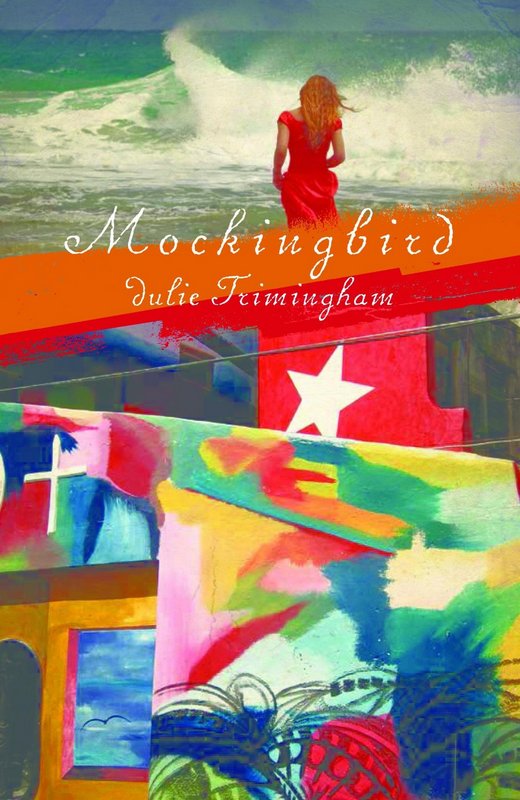
Filmmaker and author Julie Trimingham’s new book, her debut novel, Mockingbird was recently released from MP Publishing.

91SCxrxOUIL._SL1500_

You might remember Julie from my Numéro Cinq at the Movies post on her gorgeous triptych of films Beauty Crowds Me.

Aritha Van Herk describes the book as

teeming with yearning, with the indescribable smells and tastes of Cuban ardor. This tale of passion and its smudged fate, its undeniable allure, intensifies with each improvised move, so that readers have to gasp for breath, yet cannot help but follow this impossible seduction, and the center of gravity that shapes the beauty known as longing.”

You can see a trailer for the book here:

Congratulations, Julie.

— R . W. Gray


Nov 102011
 

.

Julie Trimingham’s film triptych “beauty crowds me”

Introduced by R. W. Gray


In Julie Trimingham‘s triptych of poetic short films, words become breath and thought, visuals flare into being, fall away, then return and hang and haunt. The films take Emily Dickinson’s poems as their source for inspiration, but the words are given to us as an intimate voice over, repetitively and meditatively delivered.

I have to confess a sort of skepticism about the clash / collaboration between art forms; such collisions seem to colossally fail more than find beauty. In particular, the danger of bringing film to poetry is that the moving image can easily literalize the words, or, conversely, the words can dominate the visual medium. Trimingham’s collisions work for me because they aren’t too grounded in one form or another.

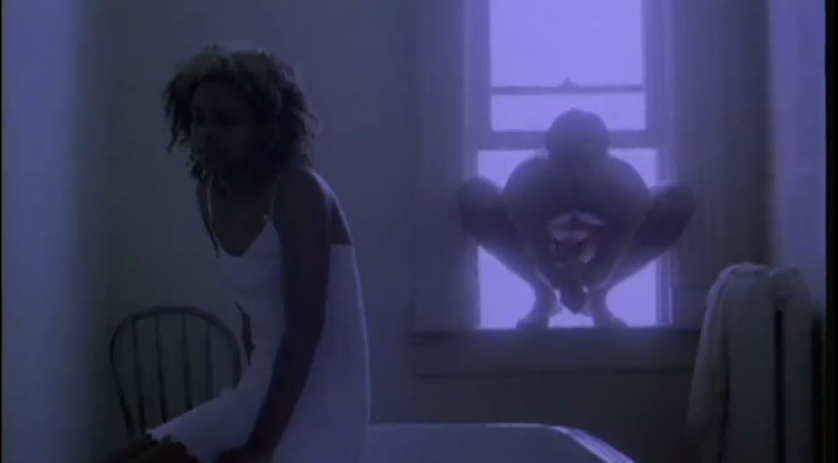
The action is poetic, and by that I mean improbable, unrealistic, yet familiar. In “I heard a fly buzz,” the second film, the claustrophobic dance of the couple who can never leave their apartment, their bed, the tub, and their movements choreographed, both uncanny (in moments he seems like a fly on the window sill or on the tub) and sublime.

Continue reading »