Herewith a cogent, revelatory, insightful essay on the inner complexities of novel construction, to be precise, the often ignored (unthought, unimagined) techniques of character gradation and grouping. Don’t scratch your heads and ask what character gradation is. It never fails to amaze me how few people who want to be writers have the vaguest idea of how a novel is put together. Plot and subplot, for example. How are they related, how is the subplot introduced through the text? Too many proto-novelists naively assume that a novel is just a 300-page story (um, without having thought much about what a story is either). Character gradation and grouping is related to subplotting; it’s a technique for deploying other characters (plots) as devices that reflect the concerns and themes of the main plot characters. It’s a form that helps the novelist invent content and also create a consistence and cohesive thematic whole. It is an old technique (though few readers actually notice it).
Robin Oliveira has thought long and hard about the structure of novels. She is a former student of mine, a graduate of Vermont College of Fine Arts, who rocketed into the ranks of published novelists with her well-received Civil War novel My Name is Mary Sutter. Her second novel, based on the painters Mary Cassatt and Edgar Degas, is due out with Viking next year. She has contributed to Numéro Cinq from the outset. And it is always wonderful to have her back.
dg
For the most part characterization in novels has not been discussed in terms of coherence, that is, in the scientific meaning of the word as the intermolecular attraction that holds molecules and masses together. Coherence is important because a novelist must corral the differing, wayward elements of a novel into a whole, making associations and connections between characters and events. An efficient way to do this is through character gradation and grouping.
Character gradation is a cousin of the tried and true literary device of comparing and contrasting characters, but it is more than that. In his book The Enamoured Knight, Douglas Glover explains that parallel and contrasting characters do not just share traits, but that “traits are varied, diminished or intensified from one character to another, that is, they are graded.”[1] I like to think of gradation as a spectrum, with the full shade of a trait, from fully realized to fully opposed, deliberately manifested in the population of a novel. This spectrum is crafted by the careful writer in order to flesh out the themes and story question presented. Grading ensures that the novel’s central issues reappear again and again in a number of guises. In essence, grading does the difficult work of achieving the coherence necessary to reinforce the meaning of the book. In addition, groupings and cross-groupings have a kind of cascading effect that helps to build momentum. As Glover explains, “The effect of character grouping and gradation is…to create a thematic and structural cohesiveness, a critical intensity of focus which prevents the long story (with all those extra characters) from sprawling and dissipating its energy.”[2] These gradations cause echoes, reminding the reader of how the characters are connected and also what they have at stake, what emotional issue is tantamount, and ultimately what the story is about.
Character gradation is the child of echoing and repetition, which E.K. Brown discusses in his book, Rhythm in the Novel. In his first chapter, “Phrase, Character and Incident,” he comes to the conclusion that repetition, combined with variation of action or character trait or even phrasing, establishes the “rhythmic process, the combination of the repeated and the variable with the repeated as the ruling factor.”[3]In his discussion of James and Thackeray, he makes another point, which is that “flexibility” and the use of “antithesis” “irradiates the characters.”[4] Therefore, variation of character traits combined with alternating groupings of characters achieves a sense of connectedness that is a powerful tool when devising a novel’s population. This coherence not only solidifies theme, as Glover says, but these variations and repetitions graded on a spectrum amplify the story, which gives the novel vibrancy and the sense of a larger world.
With these principles in mind, I begin my discussion of gradation and cohesion as manifested in novels by Jane Austen, Anne Tyler and Mark Haddon with assertions fundamental to my thinking on characterization. They are: that a novel is a story about people, and people act in such a way as to secure that which they desire. They desire something because of who they are, where they have been, who they love, of what they have been deprived, what they perceive they need, and what they do not consciously understand about themselves (though the author does, or will come to, as the characters develop). That a novel by design is a cohesive entity. That nothing is inserted into a novel by accident. That each element of the story serves the larger whole. That a novel or story is built, brick by brick, rather than spilled onto the page, and each brick is the result of who the characters are and what they want; their desire dictates plot.
With these assertions in mind, I will argue that in Austen’s Pride and Prejudice, Anne Tyler’s Dinner at the Homesick Restaurant, and Mark Haddon’s The Curious Incident of the Dog in the Night-time, character gradation is a fundamental and indispensable tool.
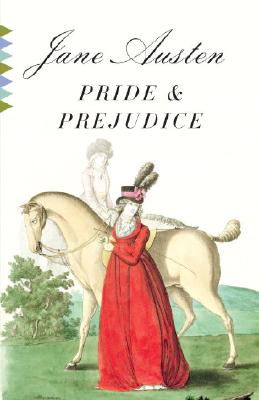 In Pride and Prejudice, Austen populates her novel about the Bennet family daughters’ romantic fortunes with neighbors, family friends and extended family. But it is how she characterizes them that gives the novel its cohesive feel of being about one thing. The story revolves around the question that if one wishes to marry for love, as Elizabeth and Jane Bennet do, how does one choose a marriage partner when faced with class and financial obstacles?
The principal characters in this story are the two eldest daughters of Mr. and Mrs. Bennet, Jane and Elizabeth, and the two men with whom they will fall in love, Mr. Bingley and his friend Mr. Darcy. Again, if we think of gradation as a spectrum, diminished to heightened, or opposite to opposite, we see how Austen crafted her principal characters. Notice how alike Jane and Bingley are, and how singular Mr. Darcy and Elizabeth are; how opposite Jane and Elizabeth are, how dissimilar the two male friends are. Elizabeth is lively, playful, witty and can easily see peoples’ base motivations, though she fails to perceive, at first, Mr. Wickham’s base character. She is a more vibrant character than Jane, who is sweet, kind, never finds fault in anyone, and would never ascribe dishonorable reasons for anyone’s actions. Mr. Bingley, who will eventually marry Jane, is described in terms similar to Jane: he is gentlemanlike with a pleasant countenance and excellent manners. Mr. Darcy, Elizabeth’s opponent and future husband, is deemed by all to be proud, class-conscious and disdainful of those beneath him; different from Bingley, but like the vivacious, independent-thinking Elizabeth in that both share the trait of pride, causing them each to prejudge the other, resulting in dual, unfavorable impressions that are not easily unseated.
Austen uses these principal characters’ gradations to craft a spectrum of attitudes toward the story question. She employs this method by setting off Bingley and Darcy as opposites, though they are also grouped as friends. This opposition is interesting, since they are not opponents in this story. They are parallels. Bingley’s courtship of Jane runs a very close second plot to the Darcy/Elizabeth romance. But from the beginning, Austen writes: “Between him and Darcy was a very steady friendship, in spite of a great opposition of character.”[5] They act out this opposition of character in a variety of ways: Darcy refuses to dance at a party where Bingley dances every dance; Bingley falls in love with Jane immediately despite her poor family connections while Darcy must overcome his pride; Bingley yields to his friends’ and sisters’ opinions, while Darcy defies them.
Jane and Elizabeth are at odds as well, though they are grouped as sisters. Jane quickly falls in love with Bingley, while Elizabeth initially despises Mr. Darcy before comprehending his true character and falling into love. Jane pines away for Bingley in London, accepting her fate, while Elizabeth visits Darcy’s home, Pemberley, accepts dinner invitations from him, and fights his aunt, Lady Catherine de Bourgh, even when Elizabeth has no evidence that Darcy is in love with her. These articulate variations are a type of repetition. Both the sisters are in love, they are in love with two friends, yet their personalities and actions are dissimilar. Furthermore, Austen groups each pair of lovers. Jane and Bingley are parallels. As Mr. Bennet says to Jane, “Your tempers are by no means unlike. You are each of you so complying, that nothing will ever be resolved upon; so easy, that every servant will cheat you; and so generous, that you will always exceed your income.”[6] Elizabeth and Darcy, however, remain in opposition, and everyone is amazed when they are engaged—sisters, father, mother, friends, relations. But the careful reader knows that they acted in the same way, just as Jane and Bingley did: they each disliked the other at first. This variation of action and intention in groups has a wonderful, dynamic effect on the novel as the reader experiences all the permutations of love and desire.
How does this pair of lovers feel about marrying despite class and financial obstacles, the story question at hand? Again, they are graded. Jane and Bingley provide the calm backwater to the more tempestuous love affair between Darcy and Elizabeth. For Bingley and Jane there is no obstacle. Jane wishes to marry for love, falls in love and remains true despite the class and financial obstacles in her path. Bingley perceives neither class nor financial obstacles, and is only persuaded not to marry Jane because his sisters and Darcy, who are very conscious of the issue, persuade him that Jane is not in love with him. Elizabeth and Darcy, however, confront the issue and each other. When Darcy proposes the first time, and Elizabeth wisely but pridefully turns him down, Darcy verbalizes the class and financial differences between them, saying he is proposing in spite of them.
Reinforcing the central question of how to choose whom to marry, Austen presents a series of couples to echo the two main couples. Elizabeth’s dear friend Charlotte Lucas, who eventually marries Mr. Collins—Elizabeth’s second cousin who proposes first to Elizabeth and then, when refused, applies to the acquiescent Charlotte—is drawn in opposition to Elizabeth by a differing perspective on marriage. Charlotte believes that “Happiness in marriage is entirely a matter of chance…It is better to know as little of the defects of the person with whom you are to pass your life.” Elizabeth counters, “It is not sound. You know it is not sound, and that you would never act this way yourself.”[7] But Elizabeth is wrong. Charlotte will and does act exactly in this way, marrying Mr. Collins, a man invariably described as absurd, conceited and obsequious. This direct opposition of Charlotte to Elizabeth, though they are friends, serves to dramatize the story conflict and further illuminates Elizabeth’s desire to marry for affection, not money or class associations. Were Charlotte merely a friend who did not wish to marry, she would have no parallel plot, and Charlotte as a character would neither resonate nor reflect on the story question. But she is constructed in such a way that she serves as an antithesis to Elizabeth’s desire to marry for love, then enters into a marriage that will serve as the antithesis to her marriage to Mr. Darcy, all the while being grouped with Elizabeth as a dear friend.
Furthermore, Austen inversely mirrors the Charlotte/Mr. Collins marriage to the coupling of Mr. and Mrs. Bennet. In the elder Bennet marriage, it is Mrs. Bennet who is universally considered absurd, and Mr. Bennet the man who chose poorly. Mr. Bennet, however, upon learning that Collins and Charlotte were about to be married, thinks “Charlotte Lucas, whom he had been used to think tolerably sensible, was as foolish as his wife….”[8] But while Mr. Bennet believes himself to be sensible, he is as foolish as Charlotte, a sober person marrying for the wrong reasons. Elizabeth contemplates her parents’ marriage thusly: “Her father, captivated by youth and beauty, and that appearance of good humour, which youth and beauty generally give, had married a woman whose weak understanding and illiberal mind, had very early in their marriage put an end to all real affection for her. Respect, esteem, and confidence, had vanished for ever.”[9] So, ultimately, Mr. Bennet was the foolish one, not his wife. This question of who exactly is the foolish one again reinforces the story question of how to choose a desirable marriage partner. This inverse mirror reinforces the theme and aspiration of both Jane and Elizabeth that choosing well in marriage will provide the only possibility of future happiness, and fattens the peoplescape, or population, of Austen’s novel.
Yet another iteration of a poor coupling is that of Lydia, Elizabeth’s youngest sister, with the officer George Wickham, a dissipated fortune hunter who preyed first on the young Miss Darcy, the very minor character Miss King, and finally Lydia, who was deluded and silly enough to behave without any deliberation, on the basis of flirtation alone. Lydia’s actions serve as the brightest opposite to the more sober method of obtaining a husband adopted by both Jane and Elizabeth, and Wickham and Lydia as a couple are the stunning opposites of both Bingley and Jane and Darcy and Elizabeth.
The Gardiners, Elizabeth’s aunt and uncle, are yet another couple echoing the main couples, serving as an example of a fine partnership to which Elizabeth and Jane aspire. They are also relatives. Darcy has an aunt, too, Lady Catherine de Bourgh. Note the symmetry here, another kind of grouping. But here is where the similarity ends. While the Gardiners are egalitarian and helpful, Lady Catherine is autocratic and obstructive. Where the Gardiners hope for the union of Darcy and Elizabeth, Lady Catherine campaigns against it. Where the Gardiners cooperate in helping Darcy mend the miserable connection of Wickham and Lydia, thereby tacitly agreeing to a union between the two families, Lady Catherine visits Elizabeth to sunder the possibility of her marriage to Darcy and to decry the poor family connections that Darcy also once disdained. At the close of the novel, Mr. and Mrs. Gardiner are grouped with the Darcys as representative of the happiest of couples, as well as Jane and Bingley.
These couples populate the novel as echoes of the main characters, providing numerous contrasts to the way Jane and Elizabeth are going about their romantic affairs, showcasing imprudence and resignation (Charlotte) and foolishness (her mother and Lydia) in order to highlight Jane’s and Elizabeth’s more prudent approaches. Their stories of course are subplots, but they are subplots because of how they mirror and magnify the main characters’ plots, and they mirror and magnify those plots because their desires and character traits are grades of the main characters and their conflict. These multiplications not only populate the novel but also give it coherence, imparting that sense of a whole world with teeming inner connections.
Austen also groups individual characters. Elizabeth’s three younger sisters are all shades of Mrs. Bennet. Austen echoes Mrs. Bennet’s character in the headstrong, silly Lydia. Lydia is a younger variation of Mrs. Bennet, who also once loved a redcoat: “I remember the time when I liked a red coat myself very well—and indeed so I do still at my heart; and if a smart young colonel, with five or six thousand a year, should want one of my girls, I shall not say nay to him.”[10] When the regiment leaves Meryton and Lydia is pining for the loss of the officers’ society, Mrs. Bennet says, “I cried for two days together when Colonel Millar’s regiment went away. I thought I should have broke my heart.”[11]
Kitty is first grouped with Lydia—considered by their father to be “two of the silliest girls in the country.”[12] —but toward the end of the novel, when she is “removed from the influence of Lydia’s example, she became, by proper attention and management, less irritable, less ignorant and less insipid.”[13]
Mrs. Bennet has lesser echoes in her sister Mrs. Phillips, whose behavior is likewise “vulgar”[14], and in Lady Lucas, who echoes Mrs. Bennet in her singular desire that her daughter Charlotte be married, no matter what the cost.
The other sister, Mary, is a minor echo of Mr. Collins and, though it is never directly stated, is the obvious marriage partner choice for her double. She sounds like Mr. Collins when she speaks: “ [Lydia’s elopement] is a most unfortunate affair; and will probably be much talked of. But we must stem the tide of malice…loss of virtue in a female is irretrievable—that one false step involves her in endless ruin….”[15] He stupidly ignores her, underpinning the theme that most people make foolish marriage choices.
I think it is important to note that the techniques of grouping need not be as obvious as those previously discussed. Notice that Austen makes Mary seem the best choice for Mr. Collins only by inference. Mary’s opinions are his opinions; when she speaks, she mimics his self-righteousness. Never are the two described as being alike, yet every reader knows that Mr. Collins should have chosen Mary, an association achieved merely by this more subtle method of grouping.
Elizabeth’s suitors are also graded. Mr. Collins appears at first to be primary on the least desirable. However, Mr. Wickham, at first grouped with Bingley in appearing to be the best choice for Elizabeth, is revealed instead to be the worst when Darcy reveals Wickham’s attempted elopement with his younger, vulnerable sister. And when Wickham instead succeeds in eloping with Lydia and extorting a fortune from Darcy, Mr. Bennet has this to say of him: “He is as fine a fellow…as ever I saw. He simpers, and smirks and makes love to us all. I am prodigiously proud of him. I defy even Sir William Lucas himself, to produce a more valuable son-in-law.”[16] This reevaluation regroups Mr. Wickham at Mr. Collins’ end of the spectrum. A fainter echo is Colonel Fitzwilliam, who is presented and grouped with Mr. Bingley as a better alternative to the proud, disagreeable Darcy. In Charlotte’s mind, Fitzwilliam was “beyond comparison the pleasantest man,”[17] but in the end, he remains nothing but a faint echo of Mr. Bingley and yet another contrast to the incomparable Darcy.
The lesser characters of Miss Bingley and Mrs. Hurst serve as opposites to Elizabeth. Miss Bingley wishes to marry Darcy and goes about it all the wrong way, using teasing and jealousy in an attempt to alter his emerging affection for Elizabeth. Mrs. Hurst is an echo of her sister, and her marriage to the frequently drunken Mr. Hurst echoes the ill-advised marriages of other couples in the novel.
In summary, in Pride and Prejudice, grouping and regrouping of the characters magnifies the theme of the novel and coheres the whole.
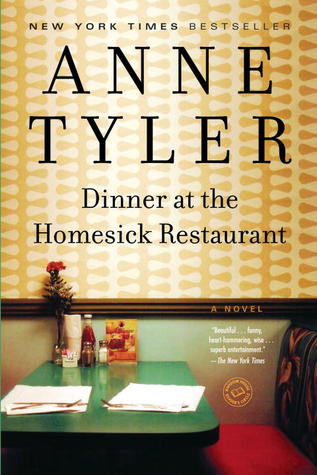 Dinner at the Homesick Restaurant, by Anne Tyler,is the multi-generational story of the Tull family: Pearl, the matriarch, her husband Beck and their three children, Cody, Ezra and Jenny. Like Austen, Tyler uses character gradation to enhance, emphasize and reinforce her novel’s essential question, which is: Can a family, divided by a history of pain, come together? Like Pride and Prejudice, Dinner at the Homesick Restaurant is populated by family members, their spouses and friends. But Tyler’s novel employs a more interior POV and hence the characterization is less firm. The reader’s view of the characters in Dinner shifts as the characters regard themselves and each other at different points in their lives. Memories are unreliable, conflicting; assessments change, not in the way that Elizabeth’s opinion of Mr. Wickham and Mr. Darcy changes, but in a more complex, unstable way. Therefore, the characters can be viewed only in their shifting relations to one another. But this shifting characterization still provides its own kind of cohesiveness, because the shifting groupings further link each of the characters one to the other. In effect, Tyler has taken this technique to its most articulate expression, further enhancing her story of this unstable, troubled family. It is important to note that Tyler tells the story in third person, shifting from one character’s view point to another as the novel progresses, a perfect approach in this instance since Dinner is the story of a broken family. Still, Tyler’s employment of character gradation works in much the same way that Austen’s does. The foundational principle is the same: repetition and variation of character traits in order to group the characters to reinforce theme and story.
Dinner at the Homesick Restaurant begins with Pearl’s story. The matriarch is on her deathbed, having willed herself to die by deliberately catching pneumonia through self-induced immobility. Intermittently conscious, she reviews her life: her relationship with the husband who deserted her, and her life with their three children, Ezra, Cody and Jenny. We learn that Pearl experienced moments of explosive anger, that she was never very happily married, that she considered herself unreliable, at times, as a mother. She wonders why her children did not find themselves a substitute mother: “You should have got an extra mother, was what she meant to say.”[18] Before she dies, she instructs Ezra to call everyone in her address book, knowing full well that the only one left alive is Beck, the absent husband. It is this dual wish/act—dying and having Ezra call her estranged husband—that will ultimately unite this sundered family.
The characters in this novel shift associations as in a kaleidoscope of literary Venn diagrams, in which character traits and associations are grouped and regrouped again and again. The shifting and regrouping, both of desire to reunite and the characters’ assessments of one another, are so fluid that they are difficult to outline. As in Pride and Prejudice, the groupings in this novel are based on desire. In this case, the groups shift on the basis of whether or not reunion is desirable. In the first grouping, Pearl and Ezra want the same thing, for the family to be reunited. Pearl wants the family to be together so much that she does not tell the children that their father has left, and pretends to them and the neighborhood that someday Beck will return. Ezra spends the novel trying to unite the family over meals, adopting the traditional mother role and thereby becoming the substitute that Pearl insists her children need. He is also grouped with her by both her and his siblings. We’re told that “Ezra was her favorite, her pet…The entire family knew it. ”[19] And Pearl thinks Ezra will stay with her, “the two of them bumping down the driveway, loyal and responsible, together forever.”[20]
But the novel’s Venn diagrams constantly shift as the characters make associations with the other characters. At various times, Ezra is grouped with Luke, (Cody’s son) and Ruth, the woman Cody will steal from Ezra. However, as soon as Cody marries Ruth, his regard for her, and therefore the way he associates her, changes. Where once he grouped her with Ezra, he now groups her with his mother, using the same description he used to describe Pearl. Later, Cody reassociates Ruth with Ezra because she, too, tries to feed him. But just after Cody steals Ruth from Ezra and marries her, he encounters an old girlfriend whom he had dropped because he thought she preferred Ezra instead of him. As soon as she relates that she had always considered Ezra “a motherly man,” Cody develops an heretofore unheard-of affinity for Ezra because “she really hadn’t understood Ezra; she hadn’t appreciated what he was all about.”[21] You see the cascade effect here, the kaleidoscope. One character is grouped to another, is grouped to another, then is regrouped again. These subtle cascading impressions link Cody to Ezra, enhancing in the end the plausibility of this damaged family being able to reunite. Gradation, therefore, serves to cohere and reinforce the story question.
Pearl is grouped with others beside Ezra and Ruth. Pearl and her daughter Jenny are both characterized as tidy, though later Jenny will abandon that trait when she becomes a substitute mother to her third husband’s brood of children, whose mother abandoned them, an act which creates two more groupings: one of abandoned children and another of parents who abandoned their families. To further reinforce the theme, Becky becomes a substitute mother to all of Joe’s children, a split off from Pearl thinking they all should have found a substitute. Also, Jenny leaves her first husband Harley and never tells the family, just as her mother did when Beck left. And Jenny loses her temper with her daughter just as Pearl did with her: “’No,’ said Becky, and Jenny hauled off and slapped her hand across the mouth, then shook her till her head lolled, then flung her aside and ran out of the apartment…All of her childhood returned to her: her mother’s blows and slaps and curses, her mother’s pointed fingernails digging into Jenny’s arm, her mother shrieking, ‘Guttersnipe! Ugly little rodent!'”[22] In another cascade, Jenny’s daughter Becky later develops anorexia, as Jenny had as a child—Jenny was once referred to as looking as if she had come from Auschwitz. And to further illustrate how complex the groupings are, in an even more convoluted reflection, Jenny thinks Cody perceives that everything she says “carries the echo of their mother.”[23]
The men, too, are linked in this cascading fashion. Previously, we observed the cascade from Ezra to Luke and Ezra to Ruth. Tyler groups Cody with Beck—the father he could never please—in that he takes a traveling job like his father and ends up living the life he lived as a child, unconnected to his neighborhood. Unlike his father, however, Cody takes his family with him wherever he goes, echoing Ezra’s desire that the larger family be reunited. Note here the subtle method of grouping by action. While Darcy and Bingley acted in opposite ways, Cody and Beck act alike. Yet Cody would never be able to consciously admit that he is anything like his father. Indeed, he prides himself on being the exact opposite. But he is the same. While Ezra takes on motherly qualities, Cody takes on paternal characteristics. It is a way for the reader to see the grouping without the character ever being aware of it; indeed, if Cody ever admitted to being like his father, I am not certain he could survive the psychological blow. Toward the end, when Ezra has invited Beck to the restaurant for the funeral meal just as Pearl wanted and Beck, feeling out of place, leaves, it is Cody who ultimately finds his father and, more importantly perhaps, recognizes his son in his father: “There was Luke, as if conjured up, sitting for some reason on the stoop of a boarded-over building. Cody started toward him, walking fast. Luke heard his footsteps and raised his head as Cody arrived. But it wasn’t Luke. It was Beck. His silver hair appeared yellow in the sunlight, and he had taken off his suit coat to expose his white shirt and his sharp, cocked shoulders so oddly like Luke’s.”[24] This grouping has, again, the effect of delineating the associations between characters and answering the story question of whether or not a family can reunite after pain. And the answer is, Yes. Cody, the one who feels most responsible for the breakup of the family, the one who develops the paternal qualities, the one who thinks, “Was it something I said? Was it something I did? Was it something I didn’t do, that made [Beck] go away?,”[25]and the one regarded by his mother as “Always cheating, tormenting, causing trouble…”[26] is the one who ultimately invites Beck back into the family circle.
Other characters’ situations reflect and comment on the Tull family situation. Echoing the abandoned children plot are Joe’s children, most specifically embodied in Slevin: Slevin is Jenny’s stepson, whose mother walked out on them, an inversion of Jenny’s history. Mrs. Scarlatti is portrayed as Ezra’s substitute mother because she is also husbandless and had a deceased son who was a soldier, as Ezra is about to become at one point. She also acts as Ezra’s mother, calls him her dear boy, and upon her death leaves him her restaurant, supporting his dreams in a way that Pearl could not. And Ezra attends Mrs. Scarlatti in the hospital (as he will later tend his mother on her deathbed). Mrs. Payson is also presented as a surrogate: “[Ezra] has been like a son to me.”[27] In a further iteration of the substitute mother idea, Ezra replaces the waiters in the restaurant with “cheery, motherly waitresses.”[28]
These connections, Venn Diagrams, and shifting groupings have the effect of, again, “reinforcing theme,” as Glover says. These groupings are wrapped up with desire: Ezra wants the family to stay together, as does Cody, as does Jenny, as does Pearl. Tyler sets her characters to act as one whole as they stumble about trying to achieve this. Again, it is character associations and gradation that accomplish the task of coherence most successfully.
 We even find this device of character gradation in Mark Haddon’s book, The Curious Incident of the Dog in the Night-time, which would at first seem impossible, because this story is narrated by an autistic, savant teenager, whose disability is distinguished in part by an inability to discern character. To illustrate how deep a challenge the use of gradation is in this instance, when Christopher, the narrator, describes his two teachers, he writes, “Siobhan has long blond hair and wears glasses which are made of green plastic. And Mr. Jeavons smells of soap and wears brown shoes that have approximately 60 tiny circular holes in each of them.”[29] This characterization is not even characterization. It is merely a description, telling us nothing of who these people are. As Christopher tells us at the beginning of the narrative, he cannot read any other emotion than happy or sad, that all others are far too complex, lead to confusion and cause him to resort to screaming and groaning as coping methods, or to retreat by going outside at night to pretend that he is the only one in the world. Therefore, it would seem impossible that character gradation could be used as a literary device to convey theme and enhance cohesion in this novel. But character gradation is nonetheless a significant element in the book and Haddon uses it seamlessly, without ever unraveling the autistic cocoon. Haddon employs this device to answer the story question in this novel, just as Austen and Tyler did. The story question in this case at first appears to be Who killed Wellington?, the neighbor’s dog, but percolating underneath is the question of which even the narrator is unaware, though the reader is made aware of it immediately. It is the question of whether or not Christopher is going to survive emotionally in a world in which he is handicapped.
Because Christopher’s disability prevents him from being able to speculate about the other characters’ thoughts, feelings and motivations, Haddon must resort to subtler ways of grading and grouping characters. Though Christopher is unable to grade himself, he can, however, grade himself against someone who is not a fully developed, three-dimensional character. Throughout the book, Christopher compares himself to Sherlock Holmes, a two-dimensional character in another story in which a dog gets killed, The Hound of the Baskervilles.
He says,
I also like the Hound of the Baskervilles because I like Sherlock Holmes and I think that if I were a proper detective he is the kind of detective I would be. He is very intelligent and he solves mysteries and he says
The world is full of obvious things which nobody by any chance ever observes.
But he notices them, like I do. And it says in the book
Sherlock Holmes had, in a very remarkable degree, the power of detaching his mind at will.
And this is like me, too, because if I get really interested in something, like practicing maths, or reading a book about the Apollo missions or great white sharks, I don’t notice anything else.[30]
Christopher not only compares himself to Sherlock Holmes, he compares the act of writing his book to Sherlock Holmes solving a mystery:
Also Doctor Watson says about Sherlock Holmes
His mind…was busy in endeavouring to frame some scheme into which all these strange and apparently disconnected episodes could be fitted.
And that is what I am trying to do by writing this book.[31]
He can also grade himself in relation to characters he himself imagines. He fantasizes about the kind of people he wishes populated the world. In his dream, “there is no one left in the world except people who don’t look at other people’s faces and don’t know what these pictures mean [in the text there is an illustration of complex facial patterns indicating shades of emotion] and these are all special people like me. And they like being on their own and I hardly ever see them because they are like okapi in the jungle in the Congo, which are a kind of antelope and very shy and rare.”[32] Christopher is saying that he is special like these imagined people and that they are shy and rare. It is an indirect way for Christopher to state that he is shy and rare. It is the most intimate thing he will say about himself, but he expresses it in a dream.
When it comes to real people, not literary characters, Christopher ungroups himself. He is never like anyone else. For instance, he might be going to school at a Special Needs school, but he is unlike any of the other students. “All the other children at my school are stupid.”[33] But while Christopher doesn’t grade or group characters, Haddon does, and he does this by making us aware of parallels and contrasts Christopher is not aware of. For example, at another point in the book, Christopher says that he does do stupid things: “Stupid things are things like emptying a jar of peanut butter onto the table in the kitchen and making it level with a knife so it covers all the table right to the edges, or burning things on the gas stove to see what happened to them, like my shoes or silver foil or sugar.”[34] Here, Christopher is unaware of himself, but Haddon deftly uses this list to group Christopher with the classmates he scorns and to convey how Christopher is seen not only by society, but by his parents, too. Christopher knows he is not stupid, because he plans to sit for “A Level maths” and pass them, yet society regards him as stupid. He may not be willing to make the association himself, though he does without fully expressing it—he says, “I’m going to prove I’m not stupid”[35]—yet Haddon groups Christopher with his Special Needs classmates to make us reflect on the essential question of whether or not Christopher will survive in a society which regards him as incapable and odd. Haddon also groups Christopher with other characters in the book. Christopher says he is different from others because “the pictures in my head are all pictures of things which really happened. But other people have pictures in their heads of things which are real and didn’t happen….”[36]
But as Christopher’s dream about the okapi-like people suggests, Haddon is grouping Christopher with those Christopher is ungrouping himself from. This is most clear when Christopher reports, as an example of how “others” think, a fantasy very like his own: “And Siobhan once said that when she felt depressed or sad she would close her eyes and she would imagine that she was staying in a house on Cape Cod with her friend Elly, and they would take a trip on a boat from Provincetown and go out into the bay to watch the humpback whales and that made her feel calm and peaceful and happy….”[37]
Through these fantasies, both of which involve rarely seen animals, Haddon subtly groups Siobhan with Christopher. This grouping reinforces the story question yet again, because one of the reasons Christopher begins to come out of his autism is that Siobhan encourages him to investigate the death of Wellington, an investigation that forces him at first only minimally out of his shell—talking to the neighbors—but ultimately leads him to the previously impossible solitary train trip to London to find his mother. By encouraging him to investigate and write the book we are reading, Siobhan enables Christopher to believe in the end that he can move away to a university in another town. She has helped him to survive. They are a team. Siobhan and Christopher act in the same way, dream the same things, work toward the similar goal of solving both the small mystery of the death of Wellington and the larger mystery of his survival.
All of these groupings are indirect—implied rather than stated—but there is one direct instance of grouping in the novel, that of Christopher and his father. But Christopher does not make this connection, his father does. When Christopher is unable to control other people, when they cross the bubble of his self-protection, he becomes angry and hits. He hits a policeman, he hits his father, he hits a girl at school. When his father is revealed as the murderer of Wellington, and the two get into a fight, his father says: “But, shit, Christopher, when that red mist comes down…Christ, you know how it is. I mean, we’re not that different, me and you.”[38] Not only does this passage reveal that his father and Christopher are alike, it reinforces the subtler meaning that although Christopher is shy and rare, he is not as unlike others as he thinks he might be.
Through Christopher’s efforts to place himself in the world by comparing himself first to the two-dimensional Sherlock Holmes and then to okapi, the reader understands that Christopher will always be isolated; however, we also believe that Christopher will survive because in the end he is able to face the future and make plans and hope: “And then I will get a First Class honors degree and I will become a scientist. And I know I can do this because I went to London on my own, and because I solved the mystery of Who Killed Wellington? and I found my mother and I was brave and I wrote a book and that means I can do anything.”[39] There is a tension in the novel between what Christopher understands about himself—that he is different and always will be—and the possibility of being able to make his way in the world. At the beginning, we fear he will be unable to. But by the end, the possibility exists that he will have a bright future. This change in Christopher and in our attitude toward his future is because of the shifting and grouping of characters.
Therefore, even in a novel narrated by an autistic savant, character gradation exists,not as densely, perhaps, as in Dinner at the Homesick Restaurant and Pride and Prejudice, but in all three of these novels, grouping and gradation serve to cohere the theme and answer the story question.
To what end, all this? What does it matter if a character is grouped, graded or opposed? Just this: in our daily lives we meet people randomly. The important and the unimportant pop in and out, at important and unimportant times. We begin our days with the letter carrier or the clerk at the grocery store, or our spouses after a quarrel or our teenagers sullen over some unrevealed irritation (as teenagers have). Our daily lives have only the cohesion we assign it. But whereas we have little or no control over the people in our lives, a novelist has all the control over all the lives in a novel, and this constitutes an obligation to the reader that the world in which she immerses herself will be one of cohesion and import; that the author will not introduce characters willy-nilly; that the author will have something to say, a story to tell, and that the fictional world will be contrived in such a way that it will make sense of the story dilemma presented.
Novelists promise the reader something that real life rarely yields: the illusion that a reader can make sense of her own life. And an effective tool for accomplishing this magic trick is by constructing subtle associations and connections between characters that reinforce meaning and intent, that help solve the characters’ problems, that yields light on the confusion and tumult of everyday life and helps the reader understand what drives mankind to weep, love, adore, disdain, despair, abandon and sometimes yield to the hope that life matters in some shimmering way. But a writer cannot achieve this mystical, ephemeral thing without precise craft. I submit that character grouping and gradation, as daughters of echo and repetition, underpin our fiction with a sturdy backbone that will achieve the goal not only of illumination, but of coherence.
—Robin Oliveira
Robin Oliveira is the author of My Name is Mary Sutter, winner of the 2007 James Jones First Novel Fellowship, the 2011 Michael Shaara Prize for Excellence in Civil War Fiction and the 2010 Honorable Mention from the David J. Langum, Sr. Prize in American Historical Fiction. A Registered Nurse, she also holds a B.A. in Russian, and an MFA in Writing from Vermont College of Fine Arts. She lives in Seattle, Washington with her husband, Drew, but longs to live in Paris where she recently traveled to do research for her historical novel on Mary Cassatt and Edgar Degas, just published by VIKING.
 Helena Kelly
 Lucy Worsley

 Jane Austen by her sister Cassandra, c. 1810. Courtesy of Wikipedia.