Aug 052017
 

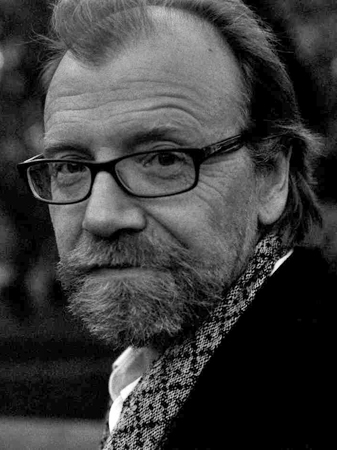
George Saunders

.

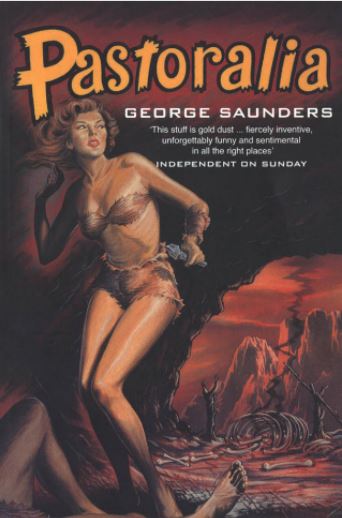
Reading, around the same time, Pastoralia (2000) by George Saunders, “Money” by Douglas Glover (The Brooklyn Rail, 2015), and “The Evil Gesture,” by Russell Working (Numéro Cinq, 2017), I have the sense that each of the stories could have been written by either of the other authors. What is it about these stories, characters, and prose styles that makes them appear to have come from the same hand?

I have to answer, verisimilitude—a word that appears in Saunders’ title story, when the guy playing caveman in the theme park gets a memo from his boss:

In terms of austerity, it says. No goat today. In terms of verisimilitude, mount this fake goat and tend as if real. Mount well above fire to avoid burning. In event of melting, squelch fire. In event of burning, leave area, burning plastic may release harmful fumes.

In terms of verisimilitude, indeed. Saunders in the earlier story “CivilWarLand in Bad Decline” features a narrator whose job (at another theme park) is “verisimilitude inspector.” Which I suppose is what I want to be in this essay.

While Saunders’ premise is typically absurdist—a middle-American couple has a precarious job at a theme park playing cave people, a kind of kitsch Flintstones—the lens of the characters is our given anchor in that sketchy reality, and so it comes across with a convincing punch.

In Glover’s “Money,” a miserable con-man named Drebel is painted faithfully, without fanfare, just as he is (“His favorite words were liquidate and fester”). Even as Drebel imagines himself (at the end) as “a demonic messenger, an immense black figure towering above a smoking, lifeless plain,” we have seen him from the inside out, knowing him, for all his self-serving crimes, as fellow human.

Russell Working’s protagonist, a boy named Jordan, invites us to inhabit his existence for a spell, fixated on his quest to go trick-or-treating, thwarted by the funeral of his uncle Aaron, beheaded in Afghanistan.

Russell Working

In each of these stories our immersion in the characters is so complete that we become them, and in that merger the larger themes of exploitation, evil and violence are absorbed in our experience: not so much cogitated but integrated.

Other masters of ironic realism come to mind. Thomas Mann launched a career with his unstinting recreation of bourgeois life in Buddenbrooks; wherein all the weaknesses and limitations of the society and its citizens are exposed to full view. Invited to see the unforgiving truth of our commonplace nature, we can smile with scorn, yet earn the gift of distance from such foibles. We emerge with a larger capacity to see the failings not only of others around us, but then also ourselves, because the muscle of discernment has been well toned.
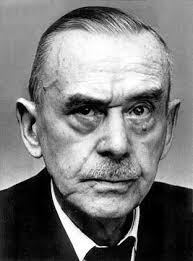
Thomas Mann

In the case of Mann’s last work, The Confessions of Felix Krull, Confidence Man, the verisimilitude of character works to earn the roguish con-man our sympathy because we have been so hospitably welcomed into his, yes, confidence. In this merger, again, comes sympathy, empathy, forgiveness of sins—because he and we are one.

The verisimilitude is achieved with a recreation of the culture, whether in the manner of Saunders’ (or Glover’s, or Working’s) fabrications of superficial Americanisms, or Mann’s faithful rendering of the furnishings and fixations of the German bourgeoisie. Along with the convincing setting, whether elaborate or sparse, the diction of the characters and narration is organically suited to convey the same conditions and values, exposed to the witnessing eye.

Realpolitik and the Moral Imperative

In his own essays and interviews, Saunders notes that an early influence was Isaac Babel, and he also cites Tolstoy, particularly Resurrection. Babel’s Red Cavalry (1920, rpt. 2003) offers the war correspondent’s firsthand depiction of the Polish front under the assault of the murderous Cossacks—the leading wave of the Bolshevik Revolution trying to export itself by force upon its western neighbor. This unnecessary campaign, presented with complete reportorial objectivity, is at once horrifying and galvanizing. In response I feel with vicarious rage and repulsion the contrary of this bloody senseless human history—rather, the necessity to shout the moral imperative, to love one’s fellow human. But first we must taste the fresh blood of murder.
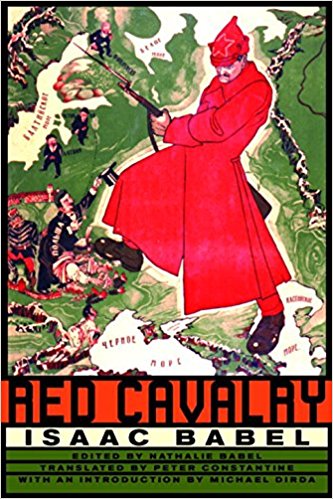
Between battles, Babel rides with the Cossack horsemen across fields of rye littered with corpses, sparkling in the sun. They find lodging in ruined villages, each with its churches desecrated, its women raped, its foodstocks looted, its prisoners shot point-blank or slashed with sabers, its livestock slaughtered summarily for the single pleasure remaining for the syphilitic soldiers: eating.

These men so degraded by war inveigh to their superiors about injustices concerning ownership of horses; they stumble in bloodsoaked rags, insisting on slogans of the people’s party; they sleep when they can on piles of louse-ridden hay; they gnaw at green meat, awaiting the next village to plunder. And they long, like Babel himself, for home and the peaceful life.

Babel’s war, like every war, is hell on earth. The enormity of its suffering stands in contrast to the comfort of our privileged existence, apart from such madness and strife, coercion and fear. Yet our private fate, in war and peace, is compromised just as it is in the collective evil of war. In Babel’s pithy phrase, “To save his own goods and chattels a man will gladly set fire to another man’s hide.” (Glover’s Drebel stands as exhibit A of this uncomfortable truth.) And regardless of one’s own circumstances and moral choices, the arrival of hell looms in the chaotic demise of one’s own body, subject to the nonpetitionable torture of decay, that universal finality of death.

Literary realism, to be complete, it seems, must, like Saunders in his latest work, the novel Lincoln in the Bardo, bravely make a centerpiece of death. The frequent theme and device of Saunders’ short stories, complete with likeable zombies and unfortunate Asian women strung on wires as lawn ornaments, is precisely that dark heart of reality, giving us the gut punch that will wake us past the corporate-speak and juvenile pablum that passes for speech in our day. Death is a wakeup call for all.

Luckily we get to try it out first, while we have the luxury of living, if we try on the world as it is according to Babel, or Tolstoy, or the characters of Saunders’ world. That world, so truly painted and finely drawn, in spare lines, yet in details and phrasing so breathing and alive, is none other than ours.

In the face of human depravity and suffering, if one fully identifies with its victims and perpetrators, one is moved to the moral imperative of human love, instead. Saunders quotes Tolstoy to that effect:

“If once we admit—be it only for an hour or in some exceptional case—that anything can be more important than a feeling of love for our fellows, then there is no crime which we may not commit with easy minds…. Men think there are circumstances when one may deal with human beings without love. But there are no such circumstances.”[1]

Yet, Saunders qualifies the temptation to assign too much moral or thematic impulse to the creation of the story.

The assumption trickles down that artists have this viewpoint we want to ram down your throat.… I’m not really trying to say anything. Most people assume you have an intention and then you execute. There are some writers like that. But for me, I’m trying to not have an intention. I just have a little fragment and start working with it to see where it goes. When I’m done, sometimes I go, Wow, I said that? I didn’t know I thought that.[2]

In the end, the purpose is more “literary” (Babel), objective in the sense of Buddhist “witnessing,” and  “simple… almost invisible.” [3] The morality is not expressed but felt, in the successful literary rendering of reality, no matter how disturbing: “Love, at least in the fictional sense, is… clearer sight.”[4]

Praxis and Witness

In Babel’s notes published with the Red Cavalry stories, I’m struck by certain phrases that seem like a manifesto for minimalist realism:

Simply a story… Very simple, a factual account, no superfluous descriptions.
No continuity… Pay no attention to continuity in the story.

Short chapters saturated with content.

[and from the concluding remarks by his daughter, Nathalie]: “Babel’s ultimate aim in the stories … was literary effect.”

What can we make of this confluence of realism and literary effect? If the aim is verisimilitude, then it seems almost as if writers achieving that aim would sound the same as each other: as indeed the school of Raymond Carver spawned a generation of barebones writing, lean of telling and laconic of both narrative and dialogue… or Hemingway before him, another primary influence Saunders cites in a New York Times Magazine interview.[5]

Yet intrinsic to the “literary effect” of the realist is each writer’s given praxis. For Saunders, that means stylistic devices such as the use of extra question marks; jargon such as “due to,” “plus,” and “per”; speech authentically bastardized from media and corporate tropes; the use of capital letters for the iconic branding of everyday aspects of mundane American life. And there is that particularly American flavor to the thoughts, actions and speech of the characters. Parroting trends in the superficial culture, steeped in bureaucratese, fearful of stepping out of conditioned roles.

Compared to Babel’s graphic tapestry of setting, elemental in its rye fields full of corpses, its ruined churches and commandeered farmhouses, Saunders’ settings are stage sets for the play of the characters in dialogue or monologue; outlines constructed only for context, as the real world that is created resides in the characters themselves. The character is the world, and herein lies Saunders’ spiritual depth of compassion for any and all personalities enacting the divine and wacky human (or animal: dog, fox…) experiment.

In the absence of elaborate framing of setting, or any kind of authorial interpretation offered, there is allowed on the part of the reader a complete identification with the character/subjects. The monologues in the form of letters, reports, columns, or diaries all immerse the reader in the world of the character, richly rendered to allow us to experience fully the living of that life.

Saunders has said, in a recent CBC interview,[6] that it is detail which, because it makes the character come alive, earns them sympathy from the reader. Thus Saunders distinguishes between realistic description, and “nondescript” writing.

In terms of irony, it is the humor which flavors the reader’s final evaluation, knowing that no malice is intended, but only truth—which is understood dispassionately, or compassionately, as we are invited with Saunders to simply witness all that is—in the Buddhist way that Saunders is known to subscribe to.

Absurdist Therapy

A key dimension of Saunders’ realism is the absurdism embedded within it: a natural discovery given the inherent absurdities of American culture (“America has always been nuts.”[7]). And it is the absurdist dimension that gives free reign to the writer’s unique imagination, that sets him apart from contemporaries who might strive only for a more limited realistic approach.

The writer gets no points just because what’s inside the box bears some linear resemblance to “real life”—he can put whatever he wants in there. What’s important is that something undeniable and nontrivial happens to the reader between entry and exit.… Our most profound experiences may require this artistic uncoupling from the actual. The black box is meant to change us. If the change will be greater via the use of invented, absurd material, so be it.[8]

The absurdist imagination allows not only the distinctive style of the writer to emerge; it encourages us to question everything. In this more profound state of decoupling from a reality that is at once both transparent and weird, we are jarred from our own comfort zones of self-satisfaction and denial.
“If you have a negative tendency and you deny it, then you’ve doubled it. If you have a negative tendency and you look at it… then the possibility exists that you can convert it.”[9] The truth will set us free: or at least, it gives us the possibility of freedom, if we so choose.

Does George Saunders translate this stance from its spiritual, aesthetic and moral grounding into any kind of real-world political action imperative? Or is it left for each of us to find our best way forward, better attuned to the lives of others?

The latter course is pointed to by

the idea of abiding, of the way that you can help people flourish just by withholding judgment, if you open yourself up to their possibilities, as Saunders put it, just as you would open yourself up to a story’s possibilities.[10]

—Nowick Gray

.
.
Cited and Selected Works

Douglas Glover, “Money” (The Brooklyn Rail, 2015)

Russell Working, “The Evil Gesture” (Numéro Cinq, 2017)

Isaac Babel, Red Cavalry (1920, rpt. 2003)

Thomas Mann, Buddenbrooks (1901); Confessions of Felix Krull, Confidence Man (1954)

George Saunders:

CivilWarLand in Bad Decline (1996) (short stories and a novella)

Pastoralia (2000) (short stories and a novella)

The Brief and Frightening Reign of Phil (2005) (novella)

In Persuasion Nation (2006) (short stories)

The Braindead Megaphone (2007) (essays)

Tenth of December (2013) (short stories) 

Fox 8 (2013) (novella)

Lincoln in the Bardo (2017) (novel)

George Saunders Interviews

“George Saunders Has Written the Best Book You’ll Read This Year”, Joel Lovell, The New York Times Magazine, January 3, 2013.

2014 George Saunders interview with Jon Niccum, Kansas City Star.

“Adjust Your Vision: Tolstoy’s Last And Darkest Novel,” George Saunders, NPR, January 6, 2013.

Radio Interview with George Saunders on “Read First, Ask Later” (Episode 27).

“George Saunders: On Story,” by Sarah Klein & Tom Mason, Redglass Pictures, The Atlantic, December 8, 2015.

CBC interview, Q, 13 April 2017.

.
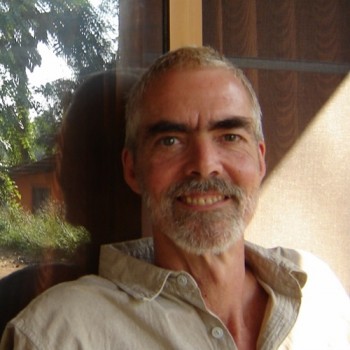
Numéro Cinq production editor Nowick Gray is a writer and editor based in Victoria, BC. His writings span an eclectic range of themes, structures and styles in fiction and creative nonfiction. Educated at Dartmouth College and the University of Victoria, Nowick taught in Inuit villages in Northern Quebec, and later carved out a homestead in the British Columbia mountains, before finding the “simple life” in writing, travel, and playing African drums. His mystery of the Arctic, Hunter’s Daughter, was published in 2015 by Five Rivers. Visit his website at nowickgray.com or Facebook page at http://facebook.com/nowickg

.

.

Footnotes    (↵ returns to text)

  1. Tolstoy quoted in Saunders, “Adjust Your Vision: Tolstoy’s Last And Darkest Novel,” NPR, January 6, 2013.
  2. Saunders in interview with Jon Niccum, Kansas City Star, January 11, 2014.
  3. Saunders in interview with Jon Niccum, Kansas City Star.
  4. CBC Radio, Q, 13 April 2017.
  5. “George Saunders Has Written the Best Book You’ll Read This Year,” Joel Lovell, The New York Times Magazine, January 3, 2013.
  6. CBC Radio interview.
  7. CBC Radio interview.
  8. New York Times Magazine interview.
  9. New York Times Magazine interview.
  10. Joel Lovell, New York Times Magazine interview.
Feb 012013
 

Maggie Kast

Here’s an essay by Maggie Kast that has the immense virtue of leaning, in part, upon a book I love, E. K. Brown’s Rhythm in the Novel. Consider, especially, the section on the narrator as a symbol which, by implication, draws into focus the artful and artificial aspect of all narrative. And the section on words as arbitrary symbols (with the lovely George Szirtes quotations). And then begin to ask yourselves what is left that is not symbol.

dg

§

=

Symbol as Action

The word, “symbol” traces its origin to Greek syn, as in “synthesis,” meaning together, and ballein the verb, “to throw.” The object that gave rise to the word was a coin consisting of two halves joined or thrown together, promising fulfillment of an agreement between two parties. The noun, symbalon, came to mean a badge of identity, much as the donkey and elephant symbolize U.S. political parties today. The verb, symballein, calls our attention to the action aspect of “symbol,” the way symbols induce movement from outward sign to inner reality, from manifest to hidden.

According to French phenomenologist Paul Ricoeur, “…symbol is the very movement of the primary meaning that makes us share in the latent meaning and thereby assimilates us to the symbolized, without our being able intellectually to dominate the similarity.”[1] Symbols invite us to look behind, beyond or within them for that hidden meaning, and they do more than invite. Charles Baudelaire sensed a special power in nature’s “forest of symbols,” such as the wood that “with knowing eyes keeps watch on every move,” as he says in his poem, “Correspondences.” [2] Baudelaire’s sense of being seen reflects the symbol’s power to interact, to move the viewer or reader from outward manifestation to unseen sense.

Fixed and Poetic Symbols

Semiologist Pierre Guiraud differentiates between the signs he calls technical, which signify by a fixed code and have a single meaning, and poetic or aesthetic signs, which signify by a much looser sort of interpretation. For example, at the beginning of Madame Bovary, Flaubert describes Charles’s cap: “It was…one of those poor concoctions whose mute ugliness contains depths of expression like the face of an imbecile. Egg shaped and stiffened with whalebone, it began with three circular, sausage-like twists, then alternate diamonds of velvet and rabbit fur…” and the description continues with exquisite and devastating detail.[3] Guiraud points out how these words create a picture in our minds. Both words and picture signify the cap, the words arbitrarily and the picture congruently. But the cap also signifies in a different way: it’s the sign of Charles’s clumsiness, which is a sign of his relations with Emma, which is a sign of a certain form of marriage. Thus the words and picture designate the cap by a fixed code, but the cap signifies clumsiness, Emma, marriage and more, as part of a vast network of signs both technical and aesthetic.[4] “Everything is a sign,” says Guiraud, “a luxuriant sprouting of signs; trees, clouds, faces, coffee-mills…are enameled with layers of interpretation which twist and knead the semantic dough.”[5] Theologian Paul Tillich is comparing technical and  aesthetic symbols when he says, “Wrong symbolism makes us look away from one thing to another for which it is a symbol, while genuine symbolic power in a work of art opens up its own depths and the depths of reality as such.”[6]

E. K. Brown, in Rhythm in the Novel, distinguishes between “banner” symbols, which remain fixed throughout the work, and “expanding symbols,” whose “repetition is balanced by variation . . .in progressively deepening disclosure.” As an example of the latter, he talks about the role of hay in E. M. Forster’s novel, Howard’s End. Initially hay distinguishes two groups of characters in a fairly superficial way: one allergic to the plant and the other not. Later a wisp of hay joins with “the bunch of weeds, the trickling grass, the grass on the Six Hills and the bumper crop of hay,” to point to the primacy of nature, intellect and art over “telegrams and anger,” which typify the businessman’s relationship to “organizations and committees, things.” Finally, with the triumphant harvest of hay at the end and the revelation that Howards’s End and its gardens will be passed on as the original owner had intended, even though this means the property will go to the son of a clerk, hay (and other plants) expand to signify justice, respect for the past and connections among people.[7]  Ricoeur identifies three sources for this kind of expanding symbol. “First of all,” he says, “it is the sun, the moon, the waters—that is to say cosmic realities—that are symbols.” Grass, hay and other aspects of nature could surely be included in this category. Secondly, symbols come from dreams that “plunge beneath the private archeology of a subject into the common representations of a culture.” Third, symbols arise from the poetic imagination.[8]

Thus symbols can move us from an outside, accessible to the senses, to a hidden inside, either by congruence between the two or by an arbitrary connection. They can arise from nature, the cosmos, dreams or the imagination, and their codes can be fixed or multiple, expanding and fluid.

Tension within Symbols

According to liturgical scholar Nathan Mitchell, the human need to be seen is fundamental to the nature of symbols. Basing his understanding on the psychology of Erik Erikson, he speaks of the primal urge to gaze and be gazed upon by the parent. Humans develop “rituals of recognition” to insure the presence of the gazing other, but this presence always implies a threatened separation, as the child grows and separates from the parent. Thus ritual symbols may signify a presence, but their shadows simultaneously signify an absence, and the symbol’s double effect can put together realities that appear to be contradictory. “A symbol,” Mitchell says, “is thus a kind of pivot, a point of exchange that permits people to confront an enormous range of ambiguous experiences: presence and absence, belonging and separation, acceptance and abandonment, and ultimately life and death.”[9] When the two things “thrown together” by a symbol are opposites, the tension between the parts can propel a reader or viewer to a new level of perception or understanding. A narrator with contradictory identity provides a literary example of such a symbol.

Narrator as Symbol that Holds Together Opposites

The first-person narrator of Isaac Babel’s Red Cavalry stories is in one sense the author, for he did ride with the Red Cavalry and wrote journalistic pieces for the Krasny Kavalierist, The Red Cavalryman, the newspaper distributed to the fighters of the Cavalry during the Russian-Polish campaign of 1920.[10]  However, Babel, a Jew, wrote these pieces under the Russian, gentile nom-de-plume of Kiril V. Lyutov, a persona Babel adopted in his daily life at this time as a way of deflecting the ruthless anti-Semitism of his Cossack colleagues. According to translator Peter Constantine, “There is the ‘I’ of Isaac Babel and the ‘I’ of Kiril Lyutov, the very Russian war correspondent (who might go so far as admitting that his mother is Jewish).”[11] This contradictory “I” is a symbol that draws the reader into contact with a hidden reality, the “twoness” of Babel’s life with the Red Cavalry.

A second conflict divides Kiril Lyutov.  He is a young intellectual of the new Soviet Union, whose role as a journalist is to incite his fellow fighters to action by means of propaganda and Bolshevik slogans. In one of these reportages he writes, “Beat them, Red Fighters, clobber them to death, if it is the last thing you do!” He supports and admires the Fighters, but he also makes fun of their crude speech, stupidity and brutality.  In Babel’s short story “My First Goose” the unnamed, first person narrator feels this same ambivalence. He views the Division commander, Savitsky as “gigantic,” his “long legs look[ing] like two girls sheathed to the neck in riding boots.” The narrator envies his “steely strength and youthful complexion,” while Savitsky greets him with the Cossack’s contempt for Jews: “You’re one of those Mama’s boys…with glasses on his nose, too, uh. A lousy little squirt!” The Cossacks continue to make fun of the journalist, informing him of their standards for conduct: “But if you mess up a lady—a real clean little lady—then you’ll see how popular you are with the boys.” The narrator lies down to read from Pravda the text of Lenin’s speech at the Second Congress of the Comintern.

In order to gain acceptance from the Cossacks, the narrator then kills a goose, seeing “its head burst under my boot and its brains spilled out.” At the Cossacks’s request, he reads Lenin’s speech aloud, savoring “the concealed curve in Lenin’s straight approach.” The narrator sleeps entangled with the Cossacks for warmth, apparently reconciled, but ends the story in pain: “Only my heart, bloodstained from the killing, whined and dripped misery.”

Both the killing of the goose and the reading of Lenin’s speech bring the narrator closer to the Cossacks, whose friendship he both wants and despises. The conflicted narrator of this story draws us into Babel’s world and permits us to experience his need to be both Jewish and Russian, both an enthusiastic Communist and a disparaging critic of the military leadership, both an admirer and a despiser of Cossacks. Tensions within the narrator permit us to confront the ambiguity of his world and character, each half of the symbol pointing to its opposite.

Words: Arbitrary Symbols

Hungarian poet, George Szirtes, observes, “I cannot help feeling that what language theorists tell us must be true, that language is a very thin integument or skin stretched over a mass of inchoate impressions, desires and anxieties. I cannot help feeling that the gap between signifier and signified is potentially enormous, and that the whole structure of grammar and syntax is a kind of illusion that hides this unpleasant fact from us.”[12]  He is referring to the early-20th-century work of Ferdinand Saussure, who differentiated between signs like gestures and drawings that resemble the thing signified, and words, whose relationship to things is entirely arbitrary. Saussure pointed out that a word is linked to a concept without any natural connection between them. Unlike gestures or visual images, words have no similarity to the concepts they signify.[13]

I suspect that Szirtes’ switch from Hungarian to English at age eight shocked him into this awareness of the arbitrary relationship between words and things. For native speakers of a language it takes a moment of reflection to recognize that a table could just as well be called “cup” or a horse, “cow;” yet these capricious connections are at the root of the working of verbal signs and symbols.

Contradictory Nature of Metaphor

In a lecture she gave in 1934, Gertrude Stein lamented the problems of writing poetry in a “late age,” when the words “moon” and “mountain” no longer give one the moon or mountain.[14] Late or early, writers have always used all kinds of tropes in an effort to bring the reader “in touch” with things. Inevitably, they fail, for metaphor is inherently contradictory, in the sense that my love is and is not a red, red rose, and Juliet is and is not the sun.

Scholars of metaphor question the traditional belief that language is literal first and figurative second. In the proceedings of a multidisciplinary symposium on the subject, philosopher W.V. Quine says, “It is a mistake to think of linguistic usage as literalistic in its main body and metaphorical in its trimming.” He says that we acquire language by applying words to events or objects first loosely and often inappropriately, then with better and better fit. I can attest to this from the experience of reading to my three-year-old. In a picture book, three people stand on a curb in the rain, and one of them says, “Here comes a taxi.” It took me weeks to figure out that she was referring to that picture whenever she saw three people in a row and said, “Look, a taxi.”

According to Quine, cognitive discourse comes last. He says, “The neatly worked inner stretches of science are an open space in the tropical jungle, created by clearing tropes away.”[15]  Mitchell puts it more fancifully:  “…we need to think of language not as a stern disciplinarian who orders ideas into neat logical rows, but as a rebellious animal that struggles to free itself.”[16] Philosopher Karsten Harries, in the same symposium on metaphor, says, “Metaphor speaks of what remains absent…the dream of an unmediated vision,” in which we could get objects into our heads directly, without the arbitrary go-between of words. Thus, “metaphor implies lack,” and the absence that is implied by an effective symbol can be traced to the metaphorical nature of language.[17] “What makes a symbol possible,” says Mitchell, “is the hole, the cipher at the heart of language, to which metaphor inevitably leads us.”[18] The hole, the cipher and the lack are precisely what Gertrude Stein lamented, that words fail to connect in any but arbitrary fashion to concepts, much less to things, the unreachable realities of existence.

The passion to eliminate absence, to close the gap between language and reality, to “let things speak to us,” is expressed with agonizing necessity by Hugo von Hoffmansthal in his “Letter” (known in English as “The Lord Chandos Letter”)[19]. After some years writing poetry, von Hoffmannsthal lost the sense of connection first with abstract words like “soul” and “body;” later all words “disintegrated in my mouth like rotten mushrooms.” Finally, “isolated words swam about me; they turned into eyes that stared at me and into which I had to stare back, dizzying whirlpools which spun around and around and led into the void.” At the same time, he had moments of direct perception: “A watering can, a harrow left in a field, a dog in the sun, a shabby churchyard, a cripple, a small farmhouse—any of these can become the vessel of my revelation.”

Conclusion

The arbitrary nature of language dooms the search for unmediated access to things and can lead to regret, as with Stein, or to breakdown, as with von Hoffmannsthal. Symbols, however, abound in the treasure houses of the imagination, dreams, nature and the cosmos; requiring only that one accept multivalence and contradiction as essential aspects of the world. Symbols invite and draw us from their outward manifestations to their hidden depths. Holding together contraries, they can reveal both presence and absence.

The reader or writer who wanders in this forest of ambiguity can hope to hear “mute things speak” or be grabbed by von Hoffmannsthal’s transcendent “half-filled pitcher, darkened by the shadow of a nut tree.” Though words may seem a whirlpool leading to a void, they permit the construction of playful castles suggestive of the things inside.

—Maggie Kast

—————————-

Maggie Kast is the author of The Crack Between the Worlds: a dancer’s memoir. She received an M.F.A.—Writing from Vermont College of Fine Arts, and her  stories have appeared in The Sun, Nimrod, Rosebud, and others. Her  essays have appeared in America, Writers Chronicle, and Image. She’s currently at work on a novel, I Never Knew You Had a Girl, an excerpt of which is just out in Red Claw Press’s anthology Seek It: Writers and Artists Do Sleep.


Footnotes    (↵ returns to text)

  1. Ricoeur, “The Hermeneutics of Symbols and Philosophical Reflection,” International Philosophical Quarterly Vol. 2 (1962), 194.
  2. Baudelaire, “Correspondences,” tr. Walter Martin in Complete Poems (New York: Routledge, 1997), 19.
  3. Flaubert, Madame Bovary, tr. Mildred Marmur (New York: Doubleday, 1997).
  4. Pierre Guiraud, Semiology, tr. George Gross. (London and Boston: Routledge and Kegan Paul, Ltd., 1975), 43.
  5. Guiraud, op. cit.
  6. “Art and Ultimate Reality” in Diane Apostolos-Cappadonna, ed., Art, Creativity and the Sacred (New York: Crossroad, 1984), 224.
  7. (Toronto, Canada: U Toronto Press), 46-52.
  8. Symbolism of Evil, tr. Emerson Buchanan (New York: Harper & Row, 1967), 11.
  9. Nathan Mitchell, O.S.B. Cult and Controversy: The Worship of the Eucharist Outside Mass (New York: Pueblo Publishing Company, 1982), 377-382.
  10. Isaac Babel, Lyubka the Cossack and Other Stories, tr. Andrew MacAndrew (New York: New American Library, 1963).
  11. Peter Constantine, Forward, The Complete Works of Isaac Babel, ed. Nathalie Babel, tr. Peter Constantine (New York: W. W. Norton & Company, 2002), 32.
  12. George Szirtes, “Formal Wear: Notes on Rhyme, Meter, Stanza and Pattern.” Poetry CLXXXVII: 5 (February 2006), 417.
  13. Paul Cobley and Litza Jansz, Introducing Semiotics (Cambridge: Icon Books, 1997.)
  14. Gertrude Stein. America, ed. Gilbert A. Harrison (Washington, D.C.: Robert B. Luce, Inc., 1965), 90-91.
  15. W. V. Quine, “A Postscript on Metaphor” in On Metaphor, ed. Sheldon Sacks (Chicago: University of Chicago Press, 1979) 160.
  16. Mitchell, op. cit., 393.
  17. Karsten Harries, “Metaphor and Transcendence” on On Metaphor, 88.
  18. Mitchell, op. cit., 395
  19. The Lord Chandos Letter and Other Writings, tr. Joel Rotenberg (New York: New York Review of Books, 2005) 117-128