Feb 232010
 

Capture

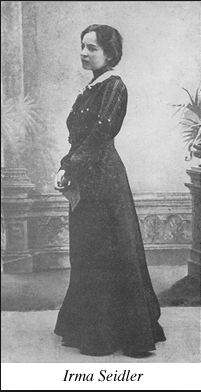
This is a revisiting of the post on Kierkegaard and Regine Olsen and the essay Georg Lukacs wrote about them. When I read the essay last week, I saw it as a cunning proto-deconstruction (ie. deconstruction before deconstruction was invented) of Kierkegaard’s gesture of renouncing Regine to ensure her future happiness. Over the weekend, I discovered a biographical essay about Lukacs, “Georg Lukacs: The Antinomies of Melancholy” by Levee Blanc in Other Voices, v.1, n.1 (March 1997). What we find out here is that while Lukacs was writing about Kierkegaard’s “real” reasons for dumping Regine, Lukacs himself was dumping Irma Seidler for the same reasons he attributes to Kierkegaard, ie. that happiness and domestic union might interfere with his philosophical work. In his notes from this period, Lukacs wrote:

Scruples: the impossible nature of marriage…Dread of the destructive influence of happiness, dread that it is beyond my capacity to get my bearings in a broader-based life.

And in a letter to Irma that positively reeks of the freshman romantic poseur and macho intellectual bravado, he writes:

There are people who understand and do not live, and their are others that live but do not understand. The first kind cannot ever really reach the second even though they understand them, and the second can never understand the essence, but then, it doesn’t matter. The feeling of love or hate, the liking somebody or the possibility of learning to like someone, exists, but the categories of understanding do not exist for them.

The message loop then is that in the Lukacs essay on Kierkegaard, Lukacs writes Kierkegaard as channeling Lukacs, but who knows what Kierkegaard really thought?

Regine Olsen eventually married and survived Kierkegaard. Irma Seidler was not so fortunate. Just a few years after Lukacs dumped her, she killed herself by jumping off a bridge in Budapest.

I am trying to draw some lessons from this.

  • No matter how hard we try, we never leave high school behind.
  • There is still something to Lukacs’s critique of the gesture, the pose: all tragic heroes will have terrible home lives because their grand gestures never take into account close human relations. Think, King Lear. Think, Oedipus.
  • There is, on the other hand, something insidious about the barely tacit premise that women and marriage somehow interfere with a man’s ability to think. I am reminded how in one of his novels Lawrence Durrell has a character say, “Women are incapable of categorical thought.” Lukacs seems to be coming close to this in his letter to Irma. There is some evidence here that testosterone causes brain damage. Many women, I think, have remarked on this in the past.
  • And this is not to mention the broken symmetry of Lukacs’s argument about gesture. Somehow deciding to renounce a woman so you can think better is a gesture, a heroic self-creating choice, while the alternative, opting to hang with a someone and think at the same time, is not a gesture, not a heroic self-creating choice, but a kind of muddled life-chaos. There is something fuzzily tautological about what he gets to call a gesture. And this is one of the basic problems with Existentialism as a philosophy; it cheats by surreptitiously applying a secondary value system. Existentialism says choice creates value. But then some choices are better (more authentic) than other choices. (Not, of course, that Lukacs was an Existentialist, but his analysis of Kierkegaard and gesture is about the roots of Existentialism and he works within the premises.)
  • Finally, avoid bridges.

dg

Feb 202010
 

My favourite part is the girl who says, “I see you. I see you. I see you.”

Though I can’t quite put my finger on it, there is something ineffably sad about this (aside from the obvious comedy). It’s a parody of a reality TV show about really stupid people re-enacting a really obvious Hollywood reiteration of the Romance of the Noble Savage old-style Euro-colonial racism, thus a parody of an imitation of an imitation of a bad idea. It reminds me of Don Quixote, of course, who is imitating characters in a romantic adventure novel about knights in armour long after people had forgotten what those thugs-in-chain mail  were really like. And Dostoevsky said Don Quixote was the saddest book of all.

Maybe it’s this: our inability to feel real unless we are acting a role, our need for a gesture or form that gives us substance. When we see this in others, it’s comic. But it’s the kind of comedy that expresses a latent fear, in this case the fear that if we look too closely the Self will seem unbearably empty.

dg

Feb 192010
 

Regine Olsen

A few posts and comments back, I counseled people to step back from taking sides in certain sorts of public cultural debates, to take the Hegelian approach and rise above and restructure the argument itself. I just reread Georg Lukacs essay “The Foundering of Form Against Life, Søren Kierkegaard and Regine Olsen” which, as you might expect given Kierkegaard’s antipathy toward Hegel, suggests the opposite view, or at least constructs an opposite view. (Full disclosure: Lukacs was an Hegelian.)  The opposite view is that the gesture (form) can crystallize or shape life, or attempts to do so, while mostly life presents itself as a muddle of motives and options. This is the germ of the  Existentialist idea of creating value by making choices, by committing oneself. The bulk of the essay is an analysis of Kierkegaard’s gesture of renouncing his beloved Regine Olsen. Not only did he renounce her, but he pretended to be a cad, an inveterate seducer, so that she could more easily give him up in her own mind and get on with her life. If there was a chance that she thought Kierkegaard really loved her, she might wait for him or be uncertain about getting into another relationship. Kierkegaard loved her all the while. The gesture was a concrete act, a kind of heroic pose, and a choice he made. But Lukacs is cagey about tracking the uncertainties and ambiguities in the situation (this is where life beclouds the gesture). Kierkegaard performed the gesture because he thought he would ruin Regine’s life, but it seems also clear that he realized that she might clutter his life with pleasure (possibly happiness) and domesticity. So the gesture wasn’t entirely self-sacrificing. Through the rest of his life Kierkegaard waffled in his heart. He never wanted to see Regine because he didn’t ever want to remind her of the happiness they had hoped for or in case she might doubt that he was a cad and seducer; but it seems clear Regine never really quite bought his story and at least sometimes suspected that it was all a pose (Kierkegaard starts to look a bit comic). And once Kierkegaard wrote her a long letter explaining everything (was he hoping to reignite the old passion?), but Regine discussed the letter with her husband and decided to send it back unopened. So the gesture, examined in its particulars, seems less monolithic, less heroic, and less pure than when viewed from afar.

Reading this story from a contemporary standpoint, one is also surprised at the male comedy of Kierkegaard presuming to decide what is right for Regine without, um, actually talking to her. We don’t ever do that today, do we?

Also this is my sly way of introducing Lukacs who was an interesting thinker. See his book The Theory of the Novel which he tells you himself not to think of as a guide.

—Douglas Glover