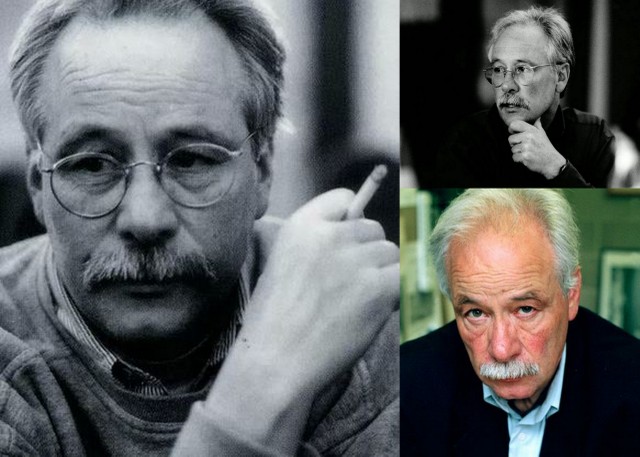
 W. G. Sebald
The movie writer/director Ron Shelton once told me he figured he had enough material for a movie when he had enough for twelve movies. Something like that must be at the back of Patrick Madden’s essays because he will wander and digress and quote and ponder and talk about himself and reflect and quote again. This essay is notionally about W. G. Sebald’s discursive, essayistic novels, especially The Rings of Saturn, but then Patrick wanders off and talks about the nature of the essay itself, the nature of creative nonfiction, the fictional aspects of nonfiction and the nonfictional aspects of fiction, and the way he likes to write his own essays (maybe a dozen different topics—you count). In effect, he incarnates the form (of the essay) in his discussion of the essay and Sebald as essayist in the most amiable and slyly convincing manner. “Walking, Researching, Remembering” is, yes, an extremely amiable and charming tour de force, which, to me, also has the advantage of drawing attention to one of the differences between North American and European fiction — the Europeans (see Kundera’s The Art of the Novel) have never been averse to mixing their essays with their novels, whereas North Americans have been stunned into minimalism by that show-don’t-tell nonsense. Don’t get me started.
dg
In his book Understanding W. G. Sebald, Mark McCulloh contends that “Even more than The Emigrants, The Rings of Saturn defies description; it does not seem to fit into any conventional prose or fiction category.” This sentiment has found its way into praise and criticism from the beginning, ever since Sebald’s books began to appear in English. Yet I disagree; unless we remove the essay from the ranks of “conventional” genres, it fits what Sebald wrote very aptly. But I would do well to begin by defining terms.
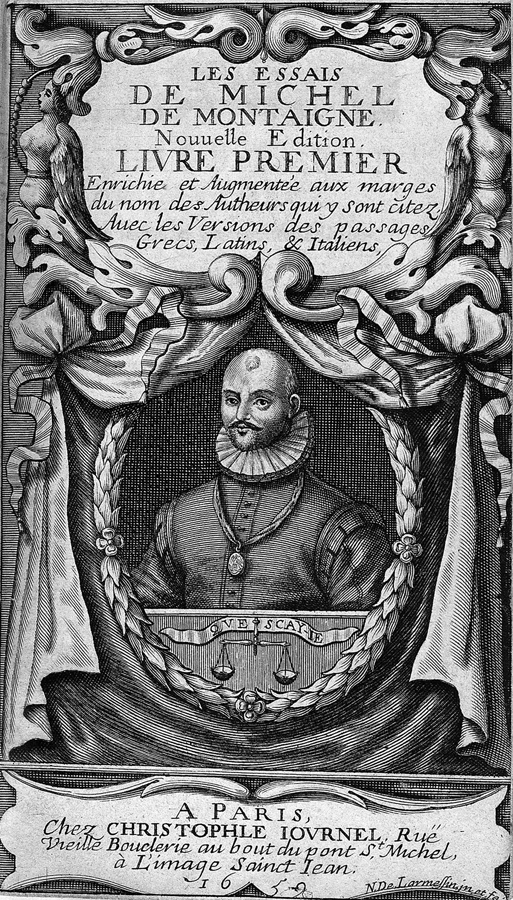
The word essay has been misused and abused for long centuries since Montaigne appropriated it to describe his writings. School teachers and children use it to mean a written test of knowledge, usually with an expected correct answer. Colleagues of mine use it to refer to academic articles, which may have somewhat in common with essays, but which are quite different in direction and intent. In fact, the best theoretical works on the essay, including those written by Georg Lukacs, Theodor Adorno, and William Gass, pit the essay in opposition to this very thing. This is how I’ve grown to think of the essay, not as non-fiction, but as non-article. It is a malleable literary form that admits experimentation and imagination. More on this in a minute.
It is not usually my nature to make arguments. I’m more likely to content myself with leisurely explorations that churn up questions but not answers. So I expect to go back and forth, circle around my claim, perhaps contradict myself (it was Walt Whitman who declared it so memorably, but we should remember that Montaigne made a genre out of it). And, speaking of Montaigne, here’s his justification for drifting, rambling a bit:
It is the inattentive reader who loses my subject, not I. Some word about it will always be found off in a corner, which will not fail to be sufficient.
In any case, before I get lost in the branches, let me return to the trunk of my argument: Sebald was an essayist. I’ll focus my here today on my favorite of his books, The Rings of Saturn, but not only on that book. I’ll divide my argument into two considerations: Fiction vs. Nonfiction and The Essay as Form.

#
Part I: Fiction v. Nonfiction
Although it’s rarely professed explicitly, far too many of my academic colleagues seem to espouse a one-drop theory of creative nonfiction: if a writer invents even a small detail, the prose is deemed fiction. Of course, this view immediately becomes problematic, as any nonfiction writer will attest to inventing dialogue, or crafting it to recall approximately what was said, not offer a verbatim transcript. A more theoretical view argues that all writing is fiction, either because it is a made thing or, more in line with our colloquial definition, because it is a recreation in words of an exterior reality. This is sometimes fun to ponder, but I think we’re arguing about the wrong thing. After all, poetry is not divided along factual lines; it is a literary form that admits invention as well as re-creation.
Nevertheless, the essay as a literary genre has been swept up in the current trend of “creative nonfiction,” and as it has traditionally been a nonfictional genre—one that utilizes real-life experience as a springboard to thinking—this has come to be a sort of requirement or expectation. I am not saying that this is always a bad thing—in my own writing I make it a point to stick to the facts as I remember or can discover them—but that the essay form is big enough to admit some fictionalizing.
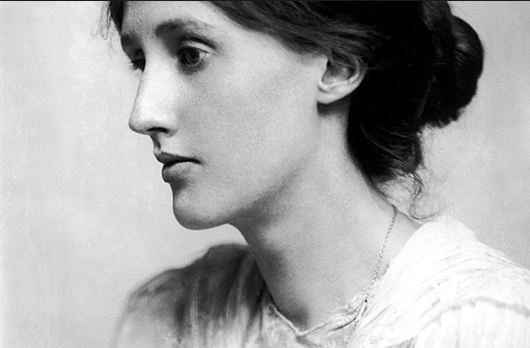 Virginia Woolf
#
Fictionalizing essayists
An easy case may be made for essays that use fiction in a way that is not deceptive. Take, for instance, Virginia Woolf’s “Street Haunting,” whose plot is utterly undramatic—she goes in search of a pencil—and yet whose technique is highly imaginative—she invents thoughts and backgrounds for the strangers she encounters along the way. No critical reader believes that Woolf knows the details she writes. She obviously makes them up. Similarly, no critical reader believes every detail in a James Thurber essay, or a Christopher Morley or Robert Benchley or David Sedaris. And what can we make of Joseph Addison writing in the voice of a shilling that has traveled the world or of George Orwell perhaps borrowing the haunting central scene of “A Hanging” from a comrade’s recollection? What of Ian Frazier writing as one of Elizabeth Taylor’s ex-husbands? Or as a coyote captured in Central Park!? Essayists have been utilizing fiction for as long as the essay has existed.
There is also the question of an essayist’s persona. Much is made, directly and indirectly, of Sebald’s narrators. Critics are careful not to associate author and speaker, to make such an amateur’s conflation. Yet, I would argue that an essayist always speaks through a persona, at least through a necessarily partial version of him- or herself. Was Sebald as neurotic or morose as his narrators? No, say those who knew him. Was he as interested in history and biography? He must have been, to write his books. Martin Swales assures us that “the persona clearly overlaps with the author…there is a good deal of shared identity between the narrative voice and the person who wrote and published the text.” Mark McCulloh assents: “The self-references, the literary references, the references to art and music, and the seemingly tangential digressions are indeed drawn from the author’s life and researches” (82). Most readers I know seem to agree and accept this notion. But again let’s look at a few examples of old to trouble this question:
Charles Lamb wrote his essays under the pen name Elia, an Italian immigrant, a clerk, a person very much like “the real” Lamb, but not entirely. To complicate matters further, “Charles Lamb” appears as a third-party in some of Elia’s essays, including “Christ’s Hospital Five-and-Thirty Years Ago,” written by Elia to debunk an overly sunny Lamb composition on the same subject. A third level of difficulty arises as Elia appropriates Samuel Taylor Coleridge’s troublesome experiences as a youth at the boarding school both Coleridge and Lamb attended. This resembles very much the nature of Sebald’s ficionalizations: conflating two acquaintances to create the painter Max Ferber (whose name was changed in the English translation to be less recognizable), and two others to create Austerlitz, changing the names of certain characters, moving buildings, rearranging events, etc. There are other examples, too, of essayists trying on fictional personas, perhaps most notably Oliver Goldsmith, an Irishman posing as a visiting Chinese man writing about eighteenth-century England. Edith Maude Eaton performed a similar self-revision, writing as Sui Sin Far. Violet Paget wrote her essays as Vernon Lee, and other women likewise wrote as men. And while critics may argue the literary merits and meanings of their works, the question of their genre seems to have been settled. They wrote essays.
#
Sebald’s nonfiction
Still, lots of us want to know what really happened, whether Sebald wrote true to life. On the one hand, it seems naïve, unsophisticated, to wonder if or to hope that Sebald’s books are nonfiction. On the other hand, this very question has given a number of academics projects to investigate and write about. And they seem to enjoy their quests. Certainly I enjoy reading Jo Catling’s revelation that the Eccles Church Tower Sebald places in Dunwich is really far north of there; Silke Hostkotte’s puzzlement at the library date-stamp on the newspaper that Sebald supposedly bought in Switzerland; Adrian Daub’s conclusion that the Eastern Daily Press article about Major George Wyndham LeStrange must be a forgery created by Sebald. These researchers seem genuinely pleased with the treasure hunt Sebald has left them. I myself have twice set out on my own brief treasure hunt, a tour of some of the places Sebald (and his narrator, if you prefer) visited in The Rings of Saturn.
Thankfully, then, a lot of interviewers were interested in just this very subject, and Sebald was never coy. Carole Angier, in an interview for the Jewish Quarterly, asks about the real people behind the four narratives in The Emigrants. They were real, says Sebald, “with some small changes.” He explains these changes, adding that “What matters is all true…The big events…you might think those were made up for dramatic effect. But on the contrary, they are real.” He adds “The vast majority of factual and personal detail that I use is very viable.” Nevertheless, Angier has her answer: the book is fiction.
Very well, the books fit that bill, but it is still heartening to hear Sebald detail the nonfictional elements of his books. Ninety percent of the images are authentic (41), he says. His narrator’s travels mirror his own travels. He does a great deal of historical research, searching for connections. Sometimes these connections present themselves from the long shadows of memory. Certain epiphanies “can be achieved only by actually going to certain places, by looking, by expending great amounts of time in actually exposing oneself to places that no one else goes to” (85). “The changes that I made, i.e., extending certain vectors, foreshortening certain things, adding here and there, taking something away, are marginal changes, changes of style rather than changes of substance” (38).
 Theodor Adorno
#
Part II: The Essay as Form
There must be something, then, that distinguishes the essay as a genre. In terms of form, the simplest way to distinguish genres is by their shape on the page. My children can tell a poem from a play from prose. They can also tell country music from jazz from rock-n-roll. This is where the essay differs from the short story or the novel.
Theodor Adorno, as I have mentioned briefly, begins his “Essay as Form” railing against the tendency of humans to categorize, compartmentalize, and therefore cage. He singles out what he calls a German binary: art is irrational, science is knowledge. This is not only a German tendency, nor is it relegated to the past, of course. Adorno returns regularly to this dichotomy: on the one hand the systematic article, on the other, art, and in the middle, the confluence of the two, in good deconstructivist style, is the essay, free of restraint or obligation to either camp. The “intellectual freedom” here symbolized by the essay seems as much praise and rebellion as description, and Adorno’s tone is often exasperated, his words a counterattack on those “enemies of the essay” who “hire out to stupidity as a watchdog against the mind” (4). Central to Adorno’s idea of the essay form, then, is its fragmentariness (a mirror of fragmentary reality), its intuitiveness, its “luck and play” (4), its individuality, its uncertainty, its incompleteness, its focus on the “transient and ephemeral” (10), its dealings in experience, its contingency, its situatedness within culture, its immediacy, its skepticism, its non-linearity, its direct treatment of complexity, its resistance to reduction, its grounding in language, its musical logic, its self-reflexivity, its heresy. He is often quoted for this last sentiment, with which he ends his essay on the essay: “The essay’s innermost formal law is heresy” (23). He means, I think, a rejection of the norms of thought, of the fear of thought, of the fear of losing the solid ground created by the illusion of objective knowledge. The essay is cast in relief (perhaps with a double meaning: “standing out” and “refreshing”) against the rigid systems of science, positivism, the reification of methodical provable truth. An essay, in this sense, is a kind of anti-genre, or at least, in O. B. Hardison’s words, a “protean” form.
Georg Lukacs, who preceded Adorno and who offers many similar statements, seems to deal specifically with an essay that begins with an external, not a personal subject, much as Sebald’s work is derived from studies of other people, places, and events. Lukacs’s rendition of the science/art split hinges on his statement that “science offers us facts and the relationships between facts, but art offers us souls and destinies” (3). He justifies the need for essays in contrast with drama (or, I imagine, fiction) by pointing out that some reactions can be shown visually and aurally, but thought is invisible. Thus the essay deals with the inner workings of a mind. The essay is needed also as intermediary between concepts (abstractions) and things (concretions), between image and significance. For Lukacs, then, the essay form is marked by its questioning, its avoidance of didactic or simplistic answers, its fragmentariness, its humor, its modesty, its consideration of the quotidian, its irony, its fight against tradition, its visionary nature, its friction with fact (perhaps this is key), its interruptions, its primacy of point of view over feeling. He sees the essay as process, not product, journey, not destination. The essay, according to Phillip Lopate [Against 75], “allows one to ramble in a way that more truly reflects the mind at work,” struggling, grasping, circling, but never preaching.
Adorno deals with the misguided view of essay as simply nonfiction when he writes, “The bad essay tells stories about people instead of elucidating the matter at hand” (6). Lukacs would seem to agree: “Every event [is] only an occasion for seeing concepts more clearly,” he writes (14), and “The idea is the measure of everything that exists….Only something that is great and true can live in the proximity of the idea.” (16). Both writers stress that the essay is an ordering of things already present, not a creation ex nihilo. This calls to mind an Sebald interview with Michael Zeeman, [Netherlands TV, 12 July 1998] in which he says, “Making in prose a decent pattern out of what happens to come your way is a preoccupation, which, in a sense, has no higher ambitions than, for a brief moment in time, to rescue something out of that stream of history that keeps rushing past.” To Zeeman’s amazement, Sebald claims that as he’s writing, necessary and fitting items seem to present themselves to him. He quotes (he thinks) Adorno: “If you’re on the right track, then the quotations come and offer themselves to you; you don’t have to look for them.”
#
Others’ statements about Sebald’s form
I hope you have read some of Sebald’s works, have marveled at their complexity and swooned in their beauty. If you’re like me, you’ve noticed that the traits Adorno and Lukacs (and others) attribute to the essay fit Sebald. Critics and academics have made similar statements to describe Sebald’s strange prose.
Susan Sontag said The Emigrants was “like nothing I’ve ever read…an unclassifiable book, at once autobiography and fiction and historical chronicle. A roman d’essai?” Margo Jefferson of the New York Times wondered about categorizing Sebald’s books: “What does one call them? meditations, elegies, mutations grown from memoir, history, literary biography and prose poetry.”
W. S. Merwin said that Sebald’s writing conjures from the details and sequences of daily life, and their circumstances and encounters, from apparent chance and its unsounded calculus, the dimension of dream and a sense of the depth of time that makes his books, one by one, indispensable. He evokes at once the minutiae and the vastness of individual existence, the inconsolable sorrow of history and the scintillating beauty of the moment and its ground of memory.
Michael Silverblatt, in a radio interview, comments that “The wandering that the prose does, both syntactically and in terms of subjects, reminds me a bit of my favorite of the English essayists, de Quincey: the need, in a sense, to almost sleepwalk, somnambulate from one center of attention to another, and a feeling in the reader that one has hallucinated the connection between the parts.”
J. J. Long, in W. G. Sebald: Image, Archive, Modernity finds in The Rings of Saturn an anti-Cartesian parallel between the narrator’s ambling and the narrative’s form: “He wanders with no ostensible purpose or goal, following the dictates of the land, inadvertently doubling back on himself, inexplicably tracing out the same route time and again, and striking out only to end up back where he started…The Rings of Saturn, like the journey it recounts, is filled with diversions, recursions and a refusal of teleology.” The book, he says, “consists almost entirely of digressions.” The narrator’s walking “is deliberately inefficient and, one might say, anti-disciplinary. This tendency to explore byways rather than make beelines goes hand in hand with a narrative technique that is multiply digressive: it repeatedly shifts focus, as each digressions is soon abandoned in favour of another digression or a brief return to the story of the journey itself; it frequently changes the context within which phenomena are understood, evoking a parallel mythic temporality that transfigures the quotidian object-world and produces a split attention, a kind of distraction, in both the narrator and the reader; and it frequently gets sidetracked into length enumrations of physical objects” (140).
Mark McCulloh, in Understanding W. G. Sebald, makes similar claims about Sebald’s digressiveness, adding that The Rings of Saturn declares its subject from the outset, another essay commonality, thus eschewing suspense and drama, that it, like Thomas Browne’s work, pursues enigmatic interconnections, “casting doubt on virtually anything that is readily apparent” (61). “The book is thus an associative, digressive, and allusive journey through East Anglia,” he concludes.
Charles Simic notes that “[Sebald] never hesitates to interject some interesting anecdote or bit of factual information arrived at by some not-always-apparent process of association. He does this without forewarning, transition, or even paragraph break” (146)
Or hear Martin Swales [“Intertextuality, Authenticity, Metonymy? On Reading W. G. Sebald” from The Anatomist of Melancholy ed. Rüdinger Görner]: “Random meetings, memories involuntarily triggered, chance thoughts—these are the stuff of his imaginative universe.” And “In a curious way, the Sebald text stays where is has been from the outset; it does not quite go anywhere, in other words.”
#
Sebald’s statements on his method of writing
It’s not only the critics who see Sebald’s books as digressive, associative, logically non-linear. When Sebald discussed his writing style and methods, he likewise seemed to be describing essaying. Consider what he told Joseph Cuomo:
I never liked doing things systematically. Not even my Ph.D. research was done systematically. It was done in a random, haphazard fashion. The more I got on, the more I felt that, really, one can find something only in that way—in the same way in which, say, a dog runs through a field. If you look at a dog following the advice of his nose, he traverses a patch of land in a completely unplottable manner. And he invariably finds what he is looking for. … So you then have a small amount of material and you accumulate things, and it grows, and one thing takes you to another, and you make something out of these haphazardly assembled materials. And, as they have been assembled in this random fashion, you have to strain your imagination in order to create a connection between the two things. If you look for things that are like the things that you have looked for before, then, obviously, they’ll connect up. But they’ll only connect up in an obvious sort of way, which actually isn’t, in terms of writing something new, very productive. You have to take heterogeneous materials in order to get your mind to do something that it hasn’t done before. That’s how I thought about it. Then, of course, curiosity gets the better of you.
Later in that same interview, he describes his “escape,” as it were, from the demands of academic life: “The preoccupation with making something out of nothing, which is, after all, what writing is about, took me at that point. And what I liked about it was that if you just changed, as it were, the nature of your writing from academic monographs to something indefinable, then you had complete liberty” (99). His dichotomy seems to be the same as Adorno’s: article vs. essay.
In “An Attempt at Restitution,” published in English in Campo Santo, Sebald describes his method or procedure as “adhering to an exact historical perspective, patiently engraving and linking together apparently disparate things in the manner of a still life” (200). To Arthur Lubow, he once explained, speaking specifically of a 1918 German army map: “I don’t think I shall be able to understand it, but I want to marvel at it,” which seems to me the fundamental impulse behind the essay.
#
Textual evidences from The Rings of Saturn
The plot of The Rings of Saturn is the author takes a series of walks in the countryside of southeastern England. Not much really happens to invite drama or excite our sense of the exotic, but this book is not about plot, it’s about keen observation, happenstance research, memory and meditation. One need only turn to the book’s contents page to get a sense of the breadth and depth of the subjects it mulls. Take, for instance, chapter 3: “Fishermen on the beach – The natural history of the herring – George Wyndham Le Strange – A great herd of swine – The reduplication of man – Orbis Tertius.” Already the work displays its digressive, meandering nature.
I read The Rings of Saturn as I was living for a year in Uruguay, riding the buses downtown each morning, finding books in the National Library and the used book shops, interviewing former revolutionaries about their pasts. I found in Sebald a tempered, beautiful prose that swept me up in its rhythms and convolutions, that seemed to perfectly reproduce the author’s mind processing the accidental sights and insights that crossed his path. Along for the journey with Sebald are Thomas Browne, Rembrandt, Jorge Luis Borges, Joseph Conrad, Roger Casement, the Dowager Empress. Underlying the meandering (on land and in mind) are considerations of the strange geometric form called a quincunx, the intrigue behind the coming of silk worms to the West, the strange resonances between Sebald’s life and the life of one Michael Hamburger, the unstoppable decline and decay of cities and lives and all that man may hope to build up, the shadow cast by death.
One of my favorite passages, one that made me laugh out loud, is this: Sebald is very tired after a day of traipsing about, so he falls asleep in an armchair watching a BBC documentary about Roger Casement. He is left with only vague, ethereal notions of what he had heard as he drifted off to sleep, but he’s interested enough to want to write about him. He says, “I have since tried to reconstruct from the sources, as far as I have been able, the story I slept through that night in Southwold.” Then he goes on to tell the story of Casement at great length.
And here is a Sebaldian moment for you: When I first wrote the above passages, for a brief book review, I repassed the section of the book in which Sebald parallels his life to Michael Hamburger’s, but I could not find the name Hamburger, only Michael. I thought I remembered Hamburger in any case, so I did what any self-respecting twenty-first-century essayist would do. I googled “Michael Hamburger.” The top results were all obituaries. I clicked on the one from the Guardian. Sure enough, this was the man I was looking for. He had just died that very week.
#
Fin
I am self-aware enough to recognize that part of my drive to see Sebald’s writing as essay is selfish, a wish to claim him as part of my tribe, so that maybe some of his glory will shine on me. But weren’t more prominent critics performing a similar feat by claiming genrelessness for Sebald? Wasn’t their real message that “Sebald is great”? I don’t think there’s anything wrong with participating in a genre, especially one as malleable as the essay. And after all, genre definitions are more like recommendations or descriptions, not prescriptions. So when I say that Sebald works for me as an example of an essayist par excellence, that his works serve as models to scores of nonfiction writers as well as fiction writers, all I’m really saying is “Sebald is great,” a rather unacademic thing to say, but I wager it’s what we’re all saying, underneath it all.
—Patrick Madden
 Patrick Madden walking
Patrick Madden teaches at Brigham Young University and Vermont College of Fine Arts. His first book, Quotidiana, won an Independent Publisher Book of the Year award, and his essays have been published widely in journals and anthologies. He’s completing his second book, Sublime Physick, and an anthology, with David Lazar, called After Montaigne: Contemporary Writers Cover the Essays.