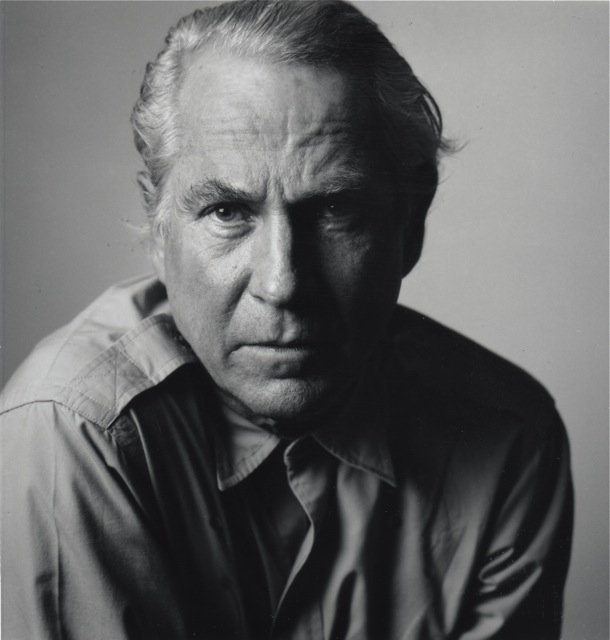
Gordon Lish photo by Bill Hayward
One gets tired of all the logrolling articles about Gordon Lish’s editorial dramatics and possibly malign influence on the likes of Raymond Carver, Barry Hannah or Amy Hempel. They are refulgent with schadenfreude and envy. He bought my novel The Life and Times of Captain N for Knopf on the strength of 50 pages and was decent and helpful to me. He would phone me, launching into monologues in that deep, stentorian voice. “Douglas, you have a contract with Knopf, the finest publisher in America, you have nothing to worry about. You are writing to God.” Something like that, meant, I am sure, to encourage me, although the effect was often rather more alarming. These phone calls were terse and epigrammatic (sometimes, though, he would talk about his wife dying or his troubles with his son) — and distracting. I ended up taking notes and putting some of what he said in the novel (the dwarf Witcacy occasionally speaks Lishian).
I don’t say he was perfect; he had some very eccentric ways. But through the editorial process and an interview I did with him later, I realized he had a method, a theory behind what he was saying, that he was not anything like the middle of the road, tell-a-good-story, sentimental realists that are so commercially successful in America. His own best fiction is monologic, obsessively recursive, relentlessly pushing the story and images forward, yet seeming to invent out of a few initial narrative axioms. He loved to cut words, he talked about the whiteness of the page, and about limiting explanation in order to reveal mystery. Mystery is a word that has a special meaning to him. Above all he was thinking about art, not the market.
We publish here a long and comprehensive essay, not about the the Lish-Carver debate circus, but a thorough and honest look at Lish’s theory of composition. Lish hasn’t written this down anywhere. Jason Lucarelli, a young writer from Scranton, Pennsylvania, had to work with class notes published by former Lish students, interviews with Lish and interviews with some of his former students. And then he looked at the writing, Lish’s own work, and the work of people he edited or taught. This is really the first essay of its kind, the first to take Lish seriously as a theorist and try to parse what he says. Lish comes out of an era, the sixties and seventies, the golden age of American experiment, the high modernist years of Hawkes, Barth, Barthelme and Coover (among others). But he is also deeply influenced by French critical theory, especially Deleuze and Guattari and Julia Kristeva. He has had a profound influence on American writers, something like Gertrude Stein in the 1920s. Jason Lucarelli here begins to balance a rather one-sided view of the man who was once known as Captain Fiction.
dg
.

“…a topic he took up had to be thought through to the end, everything involved in it had to be gone over point for point before he could be satisfied, to take up a topic means to think it though to the end, no aspect of it must be left unclarified or at least unclarified to the highest degree possible…” – Thomas Bernhard, Correction
“Let us endeavor to sum up. How much repetition does it take?” – Diane Williams, “Scratching the Head”
W HEN I STARTED LEARNING TO WRITE, callow and rebellious like an adolescent, I wanted to repudiate tradition, deny the classics, and discover my art only in what was new and original. I found my natural bent in the modernist aesthetics of Gordon Lish and, especially, people he taught and edited — writers who seemed to me to be in full cry against every convention. Yet when I put my mind to studying Lish, painstakingly decoding his enigmatic nomenclature, I very slowly began to realize that what seemed like an eccentric focus on recursion and “attack sentences” was actually a brilliant way of re-describing the compositional process, how the repetition of words and sequences of events progress toward a naturally developed short story with a coherent plot structure. I gradually began to understand that what he was saying was not so very different from the advice of the classicists — good writing is, after all, good writing. Lish’s genius is in making it strange that we might see it better.
Fiction editor at Esquire from 1969 to 1976, editor at Alfred J. Knopf from 1977 to 1995, publisher and editor of The Quarterly from 1987 to 1995, Gordon Lish edited, taught and championed writers like Raymond Carver, Barry Hannah, Gary Lutz, Amy Hempel, Diane Williams, and Christine Schutt. Lish also taught private fiction writing classes where he talked at length about a compositional toolbox he called consecution, a writing process of “going forwards by looking backwards.” Decoded, consecution seems to mean moving forward in a story while keeping in mind what has gone before through the use of repetition.
Christine Schutt—whose first collection of stories Nightwork was one of the last books to be published by Lish at Knopf—was also one of Lish’s students. She defines Lish’s concept of consecution in the following way:
Each sentence is extruded from the previous sentence; look behind when you are writing, not ahead. Your obligation is to know your objects and to steadily, inexorably darken and deepen them…Query the preceding sentence for what might most profitably be used in composing the next sentence…The sentence that follows is always in response to the sentence that came before. (Believer, 71)
For Schutt and Lish, consecution is about continually coaxing action, conflict, and interest out of prior sentences by bringing out what is implied or suggested in what has already been written. Lish further outlines the type of plot-profitable narrative material most beneficial to a story when he says:
Examine your objects for the tension inherent in them, the polarity, the natural conflict, the innate conflict, what is already there, and in the unpacking of this tension, you will reveal…the whole of your story, and how each unpacked object relates in [the] story to every other object. (Lish Notes, 47)
This “relationship” between objects is the same relationship discussed by Viktor Shklovsky when he says, “A literary work is pure form. It is…a relationship of materials” (Theory of Prose, 189). Douglas Glover says that, “In many stories, much of the material is used again and again” (Copula Spiders, 36). This relationship between and recycling of materials begins at the sentence level and extends outward over the work as a whole. Progressive construction and narrative logic evolves out of clearly represented relationships between materials while indicating what these relationships mean within the context of the rest of the work.
Consecution involves repetition at the sentence level and at the larger structural level of a narrative. The recursive compositional methods of Lish’s principle of consecution are a means of using form to create content.
Starting the Narrative Riff
The start of any story is in its initial sentence, the goal of which is to create interest and draw readers into the world of the story while also announcing, in some way, the essential desire, topic or structure of the story. Lish calls the initial sentence of a story an attack sentence. In a set of class notes transcribed by Tetman Callis, a student who enrolled in one of Gordon Lish’s private fiction workshops, Lish is quoted as saying, “Your attack sentence is a provoking sentence. You follow it with a series of provoking sentences” (Lish Notes, 15). By provoking sentences Lish means sentences that initiate intention, action, opposition, and conflict—all words on loan from Douglas Glover.
Lish continues, “You take the initial sentence, your object, and you extrude and extrude, unpack and unpack, reflect and reflect, all in ways thematically and formally akin to the ways in the attack, the opening, the initial sentence” (Lish Notes, 41). In other words, the attack sentence starts the riff of the narrative, then what follows pushes the narrative forward through a kind of narrative logic that says whatever comes to the page must be a function of what is already present on the page. Consecution is about unpacking or revealing more and more of what is implied—the natural conflict, the innate conflict, as indicated by Lish—in what has already been written.
Lish refers to the process of querying the preceding sentence for what might be profitably used in composing the next sentence as refactoring. Refactoring is the mental process of finding a better or clearer way to word something through continually reinventing upon the initial conditions established in the attack sentence of the story. Think of refactoring as sentence-by-sentence refining, or exposing and excavating of details in the text only hinted at in the prior sentences. The objective of each successive sentence of the narrative is not to fill the narrative space with inconsequential details, but narrative details that further develop character, motive, and conflict.
In the lecture notes transcribed by Tetman Callis, Lish is also quoted as saying, “Curve back in your stories in every possible way: thematically, structurally, acoustically” (Lish Notes, 4). This is not only the key to consecution but to all forms of fine writing. When Lish says “curve back” he means repeat references to hints or clues deposited by earlier sentences through methods of consecution that aim at profitably extending the construction of the plot, the theme, the image or word patterning, or simply words mentioned previously.
Douglas Glover explains more of what should be considered narrative material:
Stories have a liner component based on the forward movement of plot and time. But the stuff, the textured density of material draped over this bare bone of plot, often takes on a churning, recursive quality. Words, thematic topics or motifs, images and memories start up and then recycle through the story, coming back again and again, with variation. (Copula Spiders, 36)
These materials naturally develop relationships as they repeat and recycle throughout a narrative. Glover’s compositional premise is in line with Lish’s consecution. Glover continues to articulate Lish’s recursive compositional method of “curving back,” adding:
A rule of thumb: during composition, when a gap opens up and the story seems to resist moving forward, reach back into the earlier text of the story, find something to bring in again and proceed from there. This recycling or juggling of a basic set of materials contributes to the overall effect of unity and coherence in the story. (Copula Spiders, 36)
This “juggling of a basic set of materials” is accomplished through compositional techniques of consecution that aid in the progressive development of a story by “curving back” or “reaching back.” These same strategies are at the heart of consecution.
Methods of Consecution
The main technique of structural consecution concerns the repetition—or recycling—of relevant plot elements or motifs through the progressive, step-by-step repetition of a story’s main desire and resistance pattern. Glover defines story plot as “a structure of desire and resistance (conflict) in which the same desire and the same resistance meet in a series of actions (events)” (Copula Spiders, 85). Glover uses words like “goal,” “intention,” and “motive” to describe desire while he defines resistance as “the force pushing against the achievement of the concrete desire” (5). Parallels between the main plot and subplot of a narrative are another technique of structural consecution.
A technique of structural consecution at the level of the sentence involves the use of a but-construction—a Douglas Glover term—to create tension at the level of the sentence. Glover defines a but-construction as “the use of the word ‘but’ or cognate to create contrast or conflict between what comes before and what comes after” (106). Lish’s name for this narrative turn is a swerve, meaning to contend with. But-constructions help formulate contrast and surprise or juxtaposition and opposition as a way of adding a surprising turn in the momentum of the narrative.
Parallelism at the level of sentences and paragraphs is another technique of structural consecution that uses sentence-to-sentence repetition in the form of parallel construction (using the same pattern of words to juxtapose or compare equal ideas), tautological repetition (rephrasing an idea using an alternate choice of words), and anadiplosis (ending a passage or paragraph with one word and following that passage or paragraph with that same word).
The thematic method of consecution is the technique of repeating references to the desire and resistance pattern of the story with the aim of adding narrative depth by exploring and questioning character action and motive and general story meaning. Another technique of thematic consecution is the use of rhetorical questions through varying forms and points of view that help to develop deeper insights into the narrative while opening up the possibility for new and surprising action. Another technique of thematic consecution is the use of aphorisms, or stylized assertions that offer insight into the actions and motives of characters in a story, and thereby providing observations about overall story meaning. Aphorisms can help enforce a story’s theme. Image patterning is a technique of thematic consecution that repeats the same image, word or set of words in altered contexts.
The acoustical method of consecution involves, as Christine Schutt says, taking narrative direction from sound. She says, “As a writer, I find that sound can give me meaning, narrative direction. Produce a sentence with any sound and respond to it” (Believer 67). Acoustical techniques include alliteration (the repetition of stressed first-syllable-sounds), assonance (the repetition of vowel sounds), and consonance (the repetition of consonants). Dating back to the classical Greeks, these ancient techniques are often used in harmonious and poetical combinations of sounds within the same sentence or paragraph.
At the level of the sentence, consecution focuses on carrying or pushing forward plot-profitable narrative material, like thematic passages, as the story progresses. At the level of the story as a whole, consecution aims at the progressive step-by-step development of the desire and resistance pattern relative to what has gone before.
As Gordon Lish, in his roundabout way, says, “A story must be about what it is about and continue to be about what it is about” (Lish Notes, 38).
Example Texts and Story Analysis
While these recursive principles abound in all examples of fine writing, I thought it would be interesting to look for examples of all three methods of consecution in writers edited by Gordon Lish or who studied under him—writers whose writing strategies were heavily influenced by Lish’s teaching and insights into composing prose under the methods of consecution. My examples of structural, thematic, and acoustical consecution will come from four stories: Gordon Lish’s “The Death of Me,” Barry Hannah’s “Water Liars,” Christine Schutt’s “Daywork,” and Gary Lutz’s “I Crawl Back to People.”
Gordon Lish’s “The Death of Me” is a story written in the past tense and told by a first-person narrator who remembers the event that evidently became known as “The Death of Me.” The story reads like a monologue or voice-driven fiction. Lish uses an unconventional plot, or, what is essentially a non-plot. All external action has occurred up to the start of the narrative, which begins with the narrator stating his desire (“I wanted to be amazing.”). The monologue traces the progression of that desire as it meets resistance inside the narrator’s obsessive mind. The boy narrator wants to be amazing and has become amazing by winning every field event during his camp’s annual day competition. However, after becoming the only boy ever to win every event in the day competition, the narrator begins to feel everyone around him forgetting his achievement. Lish’s narrative employs consecution at the sentence level where he employs techniques such as parallel construction and tautological repetition to slowly work his way through the ongoing desire and resistance pattern inside the mind of the narrator. At the end of the monologue, the narrator waits with his father and mother for the head of the camp, who comes to shake the boy’s hand. Then the head of the camp goes away and the narrative ends.
Barry Hannah’s “Water Liars” is written in the past tense in a first person, reminiscent point-of-view. “Water Liars” is self-referential and uses repetition to create meaning through the story’s thematic connections. The story begins in a monologue style similar to Lish’s “The Death of Me,” though without the obviously repetitive sentence constructions. The narrator begins by telling us what occasions typically send him down to Farte Cove where old men tell lies and invented tales on the dock. The plot begins when the narrator reveals that he is still upset over his wife’s revelation on the morning after his thirty-third birthday, a birthday that seems important to the narrator “because we all know Jesus was crucified at thirty-three.” On that morning, the narrator’s wife revealed that he was not her first sex partner as she had sworn when they married ten years before. The external action of the story begins in a scene in Farte Cove where the narrator and his friend Wyatt listen to “a well-built small old boy” tell a story about high school kids boozing, smoking dope, and swimming naked. Hearing this story reminds the narrator of his wife and the high school kids who had trespassed against her in the days of her youth. Then “a new, younger man, maybe sixty but with the face of a man who had surrendered” tells a story about being frightened during a fishing trip by “unhuman sounds” coming from shore. When the man went in search of the source of the sounds on shore, he discovered his daughter having sex with another man behind a bush. The other old liars are outraged at this story because it is not a lie. But the narrator feels a kinship with the old man who told the story because, as it turns out, they were both crucified by a sexual truth. The final line of the story coupled with the earlier reference to Jesus being crucified acts as the story’s resolution and evidence of Hannah’s use of thematic consecution to aid in plot development.
Christine Schutt’s “Daywork” is a present tense single scene story told by a first-person female narrator. The external action begins when the sisters enter the attic with the desire of cleaning out the attic, including their mother’s old, unused appliances—the medical and prosthetic devices she relied on to aid in her mobility. Conflict arises when the sister agree that they might be too early in taking apart their mother’s house since she is not yet dead. Each device or appliance in the attic triggers memories of the mother’s hospital trips and her long struggle with sickness and death. The items in the attic (“…these parts of mother that seem a part of her still…”) also trigger the subdued conflict between the sisters over varying care tactics (the narrator buys her mother cigarettes while the other sister spoon-feeds her), and the conflict each sister feels over sending their mother away to live under someone else’s care. Throughout the text, Schutt uses rhetorical questions—a technique of thematic consecution—in which the narrator calls attention to separate instances of resistance against the sisters’ desire to simply clean out the attic. Schutt’s use of image and word patterning links associations between the different appliances littering the attic. By the end of the narrative, the narrator realizes that the sisters are finally cleaning out the attic in the way that their mother wished she could have done herself: “Hose down, no care.”
“I Crawl Back to People” by Gary Lutz is written in the past tense and told by a first person narrator who recalls four separate love affairs all ending in failure. The title itself—“I Crawl Back to People”—is a tip-off to the technique of structural consecution Lutz uses in the story; after each relationship ends for the narrator, another one begins and the narrator moves on to someone new. The story is divided into four sub-headed sections containing parallel plots that detail the rise and fall of relationships. The first lover Leatrice leaves the narrator after discovering a hint in a dream or a diary that the narrator would not be having her much longer. The narrator takes her to the airport, and afterwards, begins searching other people for signs of her. In the second section about a male lover named Caulen, the narrator moves in with him and begins sending Caulen off to bars alone for reasons unknown to the narrator. The narrator’s third relationship with a female named Kell begins with mutual feelings of “I’m not going anywhere,” which eventually progresses to “I won’t keep you.” The final fourth lover is named Faisal, a woman the narrator loves but who eventually grows tired of the relationship and asks the narrator for a lift to the airport. In each story, there is an overlapping theme of the narrator continually looking for remnants of former lovers on the next one. The final section ends with the notion that the narrator has likely reconstructed his most recent lover’s features all wrong in memory, which suggests that the narrator is looking for remnants of someone that he or she cannot even accurately recall.
Techniques of Structural, Thematic, and Acoustical Consecution
I. Plot Structure as the Main Technique of Structural Consecution
Techniques of structural consecution at the level of the work as a whole include the step-by-step progression of the main plot via repetitions of the desire and resistance pattern, and plot doubling in the use of sub-plots and parallel plots.
On the “progressive structure” of plot construction, Viktor Shklovsky says, “The story usually represents a combination of circular and step-by-step construction, complicated by development” (Theory of Prose, 57). By “circular” Shklovsky means “action” and “counteraction,” another way of understanding Glover’s idea of plot as a repetition of a primary desire and resistance pattern. The step-by-step development of the desire and resistance pattern occurs within a series of scenes or event sequences in which, says Douglas Glover, the “central conflict is embodied once, and again, and again” (Copula Spiders, 24). The progressive construction of scenes or event sequences extends the desire and resistance pattern, which develops intensity over the course of the narrative.
Gordon Lish, Gary Lutz, Barry Hannah and Christine Schutt eschew the conventional scene-by-scene embodiment of the same desire meeting the same resistance. Instead, they choose to subvert the conventional linear progression of the desire and resistance pattern of conflict in favor of variation of form.
Let’s look at the progressive step-by-step development of the plot in Gordon Lish’s “The Death of Me.” The desire and resistance pattern occurs in a linear series of steps inside the mind of the narrator. The narrator’s concrete desire is initiated in the opening lines: “I wanted to be amazing…I had already been amazing up to a certain point. But I was tired of being at that point. I wanted to go past that point.” The narrator’s desire to be “amazing” is refined when the narrator becomes “the best camper in the Peninsula Athletes Day Camp.” This desire develops a step further when the narrator says, “I was better than all of the other boys at that camp and probably all of the boys at any other camp and all of the boys everywhere else,” and then refined even further when he says, “I felt like God was telling me to realize that he had made me the most unusual member of the human race…” Recognition for the narrator’s “amazing” feat comes in the form of a shield with five blue stars of which the narrator is the “only boy ever to get a shield with as many as that many stars on it.” Suddenly, the narrative momentum shifts and the narrator encounters resistance inside his own wobbly, obsessive mind. First, the narrator feels himself “forgetting what it felt like for somebody to do something which would get you a shield with as many as that many stars on it.” Then he feels “everybody else forgetting—even my mother and father and God forgetting.” More resistance occurs when the narrator says, “I felt like God was ashamed of me.” The narrator attempts to thwart this internal resistance when he says, “I had to be quick about showing God that I could be just as amazing again as I used to be and that I could do something, do anything, else.” Instead, the narrator oscillates between “lying down on the field,” “killing all of the people” or “going to sleep and staying asleep” until his parents are dead and there is a new God in heaven who likes him better than even “the old God had.” This indecisiveness represents the plateau of action and counteraction inside the narrator’s mind, and when his parents ask him where they should go, or what they, “as a family,” should do, the narrator says, “But I did not know what they meant—do, do, do?” which is repeated again, “I did not know what to do” and again, “I could tell my parents did not know what to do.” While the narrative continues for a few more paragraphs, this is where the desire and resistance pattern ends. In “The Death of Me,” Lish depicts the desire and resistance pattern, or action and counteraction, in an internal fight within the mind of the narrator using techniques of repetition in the form of parallel construction and tautological repetition.
Another technique of structural consecution is the repetition or reflection of a story’s main plot within the sub-plot. In Barry Hannah’s “Water Liars,” the main plot concerns the narrator and his inability to handle the truth of his wife’s past lovers: “I was driven wild by the bodies that had trespassed her twelve and thirteen years ago” (8). The sub-plot concerns the man on the dock who discovers his daughter having sex with another man. After the man tells his story, the narrator says, “He had a distressed pride. You could see he had never recovered from the thing he’d told about” (10). The conflict between the narrator and his wife mirrors the conflict between the man on the dock and his daughter. Coupled with a reference to the narrator turning the age of Jesus when he was crucified (“Last year I turned thirty-three years old…I had a sense of being Jesus and coming to something decided in my life—because we all know Jesus was crucified at thirty-three”), the last line of the story ties the main plot and the sub-plot together: “We were both crucified by the truth.” This level of repetition works on the structural and the thematic level. On repetition of this sort, Viktor Shklovsky says, “In spite of this symmetry, the repetition carries a different nuance the second time around, thereby revealing the full meaning of the story’s structure” (Theory of Prose, 58).
In another similar parallel or repetition in “Water Liars,” when the narrator in hears a story on the dock at Farte Cove concerning naked teenagers smoking dope and swimming, he is instantly reminded of his wife: “I could see my wife in 1960 in the group of high schoolers she must have had. My jealousy went out into the stars of the night above me” (10). This repetition represents a perfect instance of “recycling” or “reaching back” with the purpose of referencing and advancing the main desire and resistance pattern, which concerns the conflict between the narrator and his wife over the lovers she had before him.
Let’s look at structural consecution using parallel plots. On parallel structure, Viktor Shklovsky says, “In a story built on parallel structure, we are dealing with a comparison of two objects” (Theory of Prose, 120). In the case of Gary Lutz’s “I Crawl Back to People,” Lutz relates four parallel plots concerning the “displacement of one object by another” (Theory of Prose, 120). “I Crawl Back to People” contains four sub-headed sections titled for the narrator’s lovers: Leatrice, Caulen, Kell, and Faisal. Each sub-headed section is a depiction of a failed relationship that leads up to another depiction of a failed relationship. Lutz’s parallel plots are based on the same object being brought back in a different way, the same set of issues embodied in a different character.
Besides the repetition of plot structure, each parallel plot carries repetitive details of characters that are seemingly created through comparison. As Shklovsky might say, these details act as a way to “transition from one plot line to another” (Theory of Prose, 138). For example, the narrator cannot tell whether Leatrice was “on the mend or not yet finished being destroyed”; Caulen was “the type not ruinable ordinarily”; Kell “was none too grubby for having dug herself out from other people”; and, finally, Faisal “had suffered at all the right hands.” In the first sub-headed section, the narrator drives Leatrice to the airport after their relationship ends. In the final sub-headed section, the narrator drives Faisal to the airport after their relationship ends.
After Leatrice leaves, the narrator says, “In a couple of days I was already picking her out by the piece here and there on other people…” This is the narrator’s desire—to find pieces of former lovers on other people. After the narrator’s fourth lover Faisal leaves, the perhaps-purposely-genderless narrator is told that, “I would turn up something nicely remindful of her dry-boned elbows or collusive knees on somebody nearer my own age.” The narrator’s desire in this sub-headed section mirrors the narrator’s desire initiated after Leatrice left. While the narrator’s desire is to find these “remindful” remainders of previous lovers on other love interests, resistance occurs when the narrator finds reminders only to lose them once the relationship ends. In an after-story where the narrator meets a kid of seventeen after Leatrice leaves him, the narrator says, “In fact, it was this kid, a high schooler, that I mostly got her dwindled down to by the end of that first summer.” The “her” here is Leatrice, and there are two more instances where the narrator succeeds in finding a “piece” of her: “I could get him to feed me the seizing feel of her sometimes.” And again: “I milked his arms for further thrill of her farewell.” These are all repetitions of the narrator’s central desire.
The fourth section, concerning a female named Faisal, begins with, “There were holes in what I felt for people, and it was through these holes that I slid finally toward this fourth,” which is, essentially, an aphoristic statement that mimics the parallel plot pattern of each sub-headed section. “There were holes in what I felt for people…” is also peculiarly thematic in the way that it references the narrator’s desire to turn up “remindful” remainders of former lovers on new one. When skeptics of the relationship between the narrator and Faisal ask, “What does she see in you?” the narrator responds with, “I told them I was doubling for somebody.” The narrator’s response carries a hint of irony, since the narrator’s new lovers seem to be filling in for the ones of the past. Finally, the narrator’s assertion of the fourth lover (“I have probably got her features collated all wrong in memory anyway”) suggests that the cycle of thematically parallel relationships will never end.
II. Techniques of Structural Consecution at the Level of the Sentence
Techniques of structural consecution also happen at the level of sentences and paragraphs; these include parallel constructions, tautological repetitions, but-constructions, and the use of anadiplosis.
Douglas Glover defines a parallel construction as “a means of using the same pattern of words to show that two or more ideas have the same level of importance. This can happen at the word, phrase, or clause level” (E-mail from Douglas Glover). My first example of a parallel construction is an example at the sentence level: “I wanted to be amazing. I wanted to be so amazing. I had already been amazing up to a certain point. But I was tired of being at that point. I wanted to go past that point. I wanted to be more amazing that I had been up to that point” (160). In this series of parallel constructions, Lish begins with the attack sentence, “I wanted to be amazing,” which initiates the narrative by naming the desire of the narrator. While Lish adds slight variation to the next sentence, the sentence uses a parallel pattern of words to the one that preceded it (“I wanted to be so amazing.”) In the third sentence, Lish adds the phrase “up to a certain point,” further unpacking the circumstances surrounding the narrator’s desire within another parallel construction (“I had already been amazing up to a certain point.”) With each repetition, Lish lures readers deeper into the world of the story by baiting them with the narrator’s intensifying desire “to be amazing.” Each addition to the following parallel construction becomes the obsession or base formulation of the following parallel construction: “I had already been amazing up to a certain point. But I was tired of being at that point.” After a sentence turns the narrative momentum on a but-construction, Lish repeats “point” from the prior sentence (“I had already been amazing up to a certain point”) and introduces motive with “I wanted to go past that point.” The next sentence refines the desire again (“to be more amazing than I had been up to that point”). With each consecutive parallel construction, the narrator’s motive increases in intensity.
The next example of a parallel construction—an example at the clause level—comes directly after the first example:
I wanted to do something which went beyond that point and which went beyond every other point and which people would look at and say that this was something which went beyond all other points and which no other boy would ever be able to go beyond, that I was the only boy who could, that I was the only one. (160)
In this example, Lish elongates the construction on the clause level. In the first half of the parallel construction (“I wanted to do something which went beyond that point and which went beyond every other point and which people would look at and say that this was something which went beyond all other points…”), Lish elongates the sentence by inserting the conjunction “and” between a range of restrictive phrases that quickly raise the narrator’s motive in steps: “…to do something which went beyond…” 1.) “…that point…”; 2.) “…every other point…”; 3.) “…all other points…” The parallel construction continues on with the added contingent: “…and which no other boy would ever be able to go beyond, that I was the only boy who could, that I was the only one.” The narrator’s desire grows throughout the sentence until he arrives at a place attainable by no one other than himself.
The next example of a parallel construction continues along the same desire line: “It was 1944 and I was ten years and I was better than all of the other boys at the camp and probably all of the boys at any other camp and all of the boys everywhere else” (160). Here, Lish also refines the circumstances regarding the narrator’s desire “to be amazing” within consecutive clauses. The narrator was “better than all of the other boys” 1.) at the camp; 2.) at any other camp; 3.) everywhere else. Again, Lish uses the conjunction “and” in order to link the range of restrictive clauses. Lish might call each move within a parallel construction “refactoring the attack sentence,” but basically he is using repetition as a way of refining the narrator’s desire while feeling his way toward the story.
Viktor Shkolvsky refers to tautological repetition as an “impeded, progressive structure” with a “peculiar poetic cadence” and which “reveals a need for deceleration of the imagistic mass and for its arrangement in the form of distinct steps” (24). He also says that within tautological repetition “a parallel is often established, not between objects or actions of two objects, but between an analogous relationship between two sets of objects, each set taken as a pair” (25).
First, let’s look at Lish’s use of tautological repetition in “The Death of Me”: “They said that I was the only boy ever to get a shield with as many as that many stars on it. They said that it was unheard-of for any boy ever to get as many as that many stars on it” (161). This example offers a further refinement of the narrator’s desire (“I wanted to be amazing”) by establishing relationship between the narrator becoming the 1.) “only boy ever” 2.) “to get a shield with as many as that many stars on it.” At this point, the narrator has reached the pinnacle of his being “amazing,” and Lish employs tautological repetition to linger on this moment for added emphasis.
The next example of tautological repetition also comes from Lish:
My parents kept asking me where did I want to go now and what did I want to do. My parents kept trying to get me to tell them where I thought we should all of us go now and what was the next thing for us as a family to do. My parents kept saying they wanted for me to be the one to make up my mind if we should all of us go someplace special now and what was the best thing for the family, as a family, to do. (162)
In this example, the overall progressive structure of the narrative is also decelerated. The impeded progress of the narrative concerns where to go and what to do now that the narrator has reached the pinnacle of his achievement. The narrator is caught between action and inaction, and Lish uses tautological repetition as a way to emphasize the narrator’s internal conflict. Interesting enough, these tautological repetitions are also couched in a series of parallel constructions.
Here is an example of tautological repetition with slight variation from Schutt’s “Daywork”: “Here they are tiled against the attic walls: the legs, the arms, the clamshell she wore instead of a spine. Here is some of mother leaned up in the attic” (57). Schutt’s use of tautological repetition has a way of refocusing on and refining a specific detail in the narrative for emphasis, which is, in this case, the mother’s old medical devices that haunt the sisters as they clean the attic.
A but-construction is a grammatical swerve that torques a story’s progression with subversion, conflict and surprise. According to Douglas Glover, the use of a but-construction “demands content that might not initially be there in order for completeness” (Copula Spiders, 72). The use of a but-construction is a way of creating content—and conflict—at the level of the sentence. Again, a but-construction creates contrast or conflict between what comes before the “but” or cognate and what comes after.
Let’s look at a but-construction from the passage I previously referred to from “The Death of Me”: “I had already been amazing up to a certain point. But I was tired of being at that point” (160). Here, the narrator’s emotional state changes from a contentment at “being amazing up to a certain point” to being “tired of being at that point.” The but-construction undercuts the previous sentence and adds conflict to the narrative by suggesting that the narrator’s success in being amazing is not enough, that he is not satisfied, and that he is motivated to do something else. Lish applies the same sort of contrast in the next example of a but-construction: “They said that it was unheard-of for any boy ever to get as many as that many stars on it. But I could already feel that I was forgetting what it felt like for somebody to do something which would get you a shield with as many as that many stars on it” (161). In this example, Lish combines the but-construction with repetition (“…as many as that many stars on it…”) for easy-to-follow refinement and subversion as the narrator feels himself forgetting his “amazing” achievement. The but-construction initiates the issue of “forgetting” that intensifies to the point where the narrator is afraid that everyone is forgetting about his achievement.
Now, let’s look at an example of a but-construction from Barry Hannah’s “Water Liars”: “I could not bear the roving carelessness of teenagers, their judgeless tangling of wanting and bodies. But I was the worst back then” (10). This but-construction juxtaposes the behavior of teenagers—which, because of the recursive pattern of relation in Hannah’s text, also includes the “high schoolers [his wife] must have had”—with the narrator as himself as a teenager, whose behavior was “the worst.” The association provides temporary comfort to the narrator, who is bothered by the number of his wife’s past lovers. This but-construction is a crucial turn in the narrator’s desire and resistant pattern of conflict.
Let’s look at a cognate of the but-construction in which the narrative momentum of the text turns on “yet”: “It makes no sense that I should be angry about happenings before she and I ever saw each other. Yet I feel an impotent homicidal urge in the matter of her lovers” (8). The narrator introduces reason into his first statement (“It makes no sense…”) and then undercuts his previous assertion in the sentence that follows (“Yet I feel…”). This swerve helps increase the narrator’s conflict while developing the main desire and resistance pattern of the narrative.
Anadiplosis, another technique of consecution at the level of the sentence, is an ancient Greek device in which the last word of a preceding sentence is used in the beginning of the succeeding sentence. Schutt uses this technique a few times throughout “Daywork.” For example, here: “…the patched on nipples from when her breasts had seams and looked shut as drawstring purses. / Purses, there are none here in the attic…” (59) Here again: “…the nurses have been turning Mother, keeping Mother clean in a clean bed. / The nurses, I half expect to see them in the attic…” (63). Then another example with variation: “‘…Remember, will you, visit.’ / One of the visitors…” (58) Anadiplosis helps with continuity between narrative sequences, while also informing the narrative direction of the next narrative sequence.
III. Techniques of Thematic Consecution
Thematic consecution adds a deeper level of coherence and unity to a story with passages that offer insight into story meaning. On thematic material, Douglas Glover says, “A thematic passage is any text in which the narrator or some other character questions or offers an interpretation of the action of the story. Characters in the story explore the meaning of the story by asking questions of their own impulses and actions” (Copula Spiders, 37). These questions are sometimes literally asked through the use of rhetorical questions. Other techniques of thematic consecution that reinforce theme or overall story meaning include the use of image or word patterning and aphorisms. Glover says, “Authors use repeated images, words and concepts to reinforce the thematic encoding of a text” (125).
Rhetorical questions are a technique of thematic consecution that increase thematic narrative depth while opening up the opportunity for surprising new motivation that might aid in the development of the plot or the desire and resistance pattern of conflict. As Douglas Glover notes, rhetorical questions often take the shape of inquires like, “What am I doing? Why am I doing it? Why is that other character doing what he is doing? What does this look like? What does it remind me of?” (Copula Spiders, 7). Rhetorical questions speculate on character motive and overall story meaning. Glover continues, saying, “Thought is action. Characters don’t necessarily have to be right in their assessments, they just have to be true to themselves in the context of what’s gone before.”
Let’s take a look at two examples of rhetorical questions from Schutt’s “Daywork” that explore the theme of the mother’s dying. The first example: “What does Mother want? we wonder. For what cruel attentions does she still lie down?” (59) In this example, the long amount of suffering the mother has endured throughout her life is brought up as the sisters speculate on how long the mother means to live. Another rhetorical question: “Oh, why should it be strange how, loving death the way she has, our mother wants to live?” (64). While the sisters have withstood the mother’s long amount of suffering, this rhetorical question, from the point-of-view of the narrator, seems to suggest that the mother lives by “loving death.” This particular rhetorical question opens up the possibility for new action while speculating on the larger truth of the mother’s existence. Together, these rhetorical questions present the conflict the sisters feel over their mother’s way of living through sickness.
Aphorisms are another technique of thematic consecution that offer insight into the actions and motives of characters in a story, or observations about meaning in the story that result in references to the story’s theme. On aphorisms, Douglas Glover says, “Aphorisms are short, pithy, somewhat artificial statements…stylized forms of thought, or conjecture, mostly structured on the contrast of opposites…” and are good for “rendering thought vigorously, concisely and authoritatively” (37 and 76). An example of an aphorism comes from Gary Lutz’s “I Crawl Back to People”: “What I mean is that people shaded into each other pretty easily, and all I had to do was find her somewhere there in the gradients” (119). A bit ambiguous at first, the first half of this aphoristic phrase references the thematic nature of one relationship displacing the prior one, while the second half reveals character motive through the narrator’s desire to find traces of former lovers on new ones.
Regarding image or word patterning, another technique of thematic consecution, Douglas Glover says
Image (or word) patterns begin with mere repetition and accumulate meaning by association and juxtaposition, splinter or ramify, sending out subsidiary brand patterns, and finally, discover occasions for recombination or intersection of the various branches in…tie-in lines. (Copula Spiders, 95)
Schutt and Hannah use a variation of word patterning by using the same word or set of words within altered contexts, often splitting the main image into associated images throughout the text. Sometimes, these word patterns have a way of reinforcing the narrative’s thematic coding, and other times, these word patterns help to initiate motive and deepen overall meaning.
In “Water Liars,” Barry Hannah uses a variation of word patterning as a technique of thematic consecution, though Hannah’s use of word patterning also progresses the desire and resistance pattern of conflict concerning the narrator and his wife by creating parallels that aid the structure and form of the narrative.
Hannah initiates the main word pattern in the title: “Water Liars.” The main pattern continues in the first sentence: “When I am run down and flocked around by the world, I go down to Farte Cove off the Yazoo River and take my beer to the end of the pier where the old liars are still snapping and wheezing at one another” (7). The main pattern of “liars” continues, but with “lie”: “The lineup is always different, because they’re always dying out or succumbing to constipation, etc., whereupon they go back to the cabins and wait for a good day when they can come out and lie again…” Another reference: “On the other hand, Farte Jr., is a great liar himself.”
The main pattern splits into a subsidiary image of “ghost people” and “ghosts”: “He tells about seeing ghost people around the lake and tells big loose ones about the size of the fish those ghosts took out of Farte Cove in years past.” Then another branch pattern begins with “crucified” (portions of text in italics increase the significance of the image or word with history): “Last year I turned thirty-three years old…I had a sense of being Jesus and coming to something decided in my life—because we all know Jesus was crucified at thirty-three” (8). Here, the narrator establishes a significant parallel between his age and the age of Jesus when he was crucified. In the same scene, Hannah develops a branch pattern with “truth,” arranging a pattern of opposites, or juxtapositions: “On the morning after my birthday party, during which I and my wife almost drowned in vodka cocktails, we both woke up to the making of a truth session about the lovers we’d had before we met each other” (8). The branch pattern also reveals the conflict of the narrator’s wife having lied to him over how many lover she had before him: “For ten years she’d sworn I as the first,” or, in other words, she lied.
Hannah’s word pattern extends to include “liars,” “ghosts,” “crucified,” and “truth,” of which subsidiary branch patterns include “lies” and “sworn.” Hannah brings the main pattern back around to “liars”: “Then I’ll get myself among the higher paid liars, that’s all” (9). This is ironic—the narrator has been lied to, though he claims to be a liar himself.
Toward the end of the story, while on the dock with his friend Wyatt, the narrator overhears two old men on the dock tell stories about “ghosts,” continuing the branch pattern. The first story involves a man named Doctor Mooney having “intercourse” with a “ghost” while the second story involves the “ghost” of “Yazoo hisself.” What follows is a series of tie-in lines that serve an important structural purpose. First, comes the story from “a new, younger man…with the face of a man who had surrendered.” The man says, “We heard all these sounds, like they was ghosts” (10). This word pattern with “ghosts” seems to extend along the similar path as the ones before. Instead, the source of the sounds is revealed not to be ghosts, but the man’s daughter having intercourse with another man: “My own daughter, and them sounds over the water scarin us like ghosts.” Hannah ties the word pattern of “ghosts” and “truth” together when an “old geezer” on the dock asks, “Is that the truth?” Then again from the narrator: “He’d told the truth.” And finally, in the most important plot-profitable tie-in line: “We were both crucified by the truth” (11). Here, the narrator feels allied with the man at the dock who tells the true story of discovering his daughter having intercourse with another man. This tie-in line references the structural consecution technique of parallel plots between the main plot, which concerns the narrator and his wife over the narrator’s inability to cope with the truth of his wife’s earlier sexual relationships, and the sub-plot, which concerns the man on the dock who “never recovered from” discovering his daughter with another man. Hannah’s use of word patterning works two-fold by advancing the thematic coding of the text with “lies” and “truth,” and also progressing the parallel conflict between the narrator and his wife, and between the man on the dock and his daughter.
The next examples of image or word patterning come from Christine Schutt’s “Daywork” and concern the main image pattern of “the attic”: “We enter the attic at the same time, which makes it all the more some awful heaven here, cottony hot and burnished and oddly bare except for her appliances, the parts our mother used to raise herself from bed” (57). Here, the main image “the attic” begins and splinters into a subsidiary image pattern of “appliances” and “parts,” which is given meaning through revealing history. The next reference to “the attic”: “We make such terrible confessions, my sister and I, which is why we are uneasy in the attic in the presence of these parts of Mother that seem a part of her still, quite alive and listening in on what we talk about” (59). The image of “the attic” and “parts” are tied together for the significant reason that being in “the attic” means being in the presence of “these parts of Mother” that aided in her mobility around the house. References to “the attic” are related to setting while references to “parts” and “appliances” are related to the mother’s history with being ill. There are an additional four references to “the attic” throughout the text, but it would be best to trace the subsidiary image patterns. First, the subsidiary pattern with “appliances”: “So what are we going to do with these appliances, these sheets?” (63) Then, the subsidiary pattern with “the parts”: “Dark bags full of Mother’s house—so much we don’t know what to do with we throw out: old clothes cut to fit over the parts that Mother buckled on” (58). In this subsidiary pattern concerning “parts,” another pattern branches off from “Mother’s house.” An additional two references to “Mother’s house” occur in the text. The next example concerns a subsidiary pattern with “the attic walls”: “Here they are against the attic walls: the legs, the arms, the clamshell she wore instead of a spine” (57). Here, the main pattern of “the attic” splits into “the attic walls” where the pattern of “appliances” is extended by the naming of these “appliances.” Another pattern branches off “the attic walls” with a reference to “the legs”: “I look at Mother’s legs, how they stand up by themselves in the attic” (62). “Mother’s legs” is an extension of the subsidiary image pattern concerning “parts” and “appliances.” An additional reference to “the attic walls”: “She is looking at the hinged machinery hooked on the attic walls: a cane with teeth, a bedside pull, a toilet seat with arms” (58). Again, in this reference to another subsidiary image pattern of “the attic walls,” the “machinery” image pattern is detailed in similar fashion to the “appliances” pattern. Image patterning allows the details of the text to pursue themselves into other details later in the story that add depth and significant history when one image is tied to another. Schutt’s compositional patterning of images adds to the cohesion of the single scene story of sisters cleaning out their mother’s attic.
IV. Techniques of Acoustical Consecution
The final method of consecution, acoustical consecution, involves ancient recursive techniques in which sounds repeat in the form of alliteration (repetition of first syllable sounds), assonance (repetition of vowel sounds), and consonance (repetition of consonants). Viktor Shklovsky, advocating for poetical techniques in prose, cites Nietzsche’s aphorism on “good prose” in which Nietzsche says that only in the presence of poetry can one write good prose (Theory of Prose, 21). In a lecture delivered to writing students at the University of Columbia about the strengths of focusing on the effects of sounds in composing prose, Gary Lutz says:
The words in the sentence must bear some physical and sonic resemblance to each other—the way people and their dogs are said to come to resemble each other, the way children take after their parents, the way pairs and groups of friends evolve their own manner of dress and gesture and speech. (Believer, January 2009)
In acoustical consecution, sounds repeat when one word discharges something within itself into successive words in the same sentence. Whether in the composition of poetry or prose, writers often use multiple acoustical techniques within the same sentence or sequence of sentences. Before I highlight the effects of alliteration, assonance, and consonance at work in the same sentence, I would like to highlight examples of each effect separately, starting with alliteration.
On alliteration, Lutz says, “Avail yourself of alliteration—as long as it remains ungimmicky, unobtrusive, even subliminal. Such repetition can be soothing and stabilizing, especially in a sentence whose content and emotional gusts are anything but” (Believer, January 2009). An example Lutz’s use of alliteration: “Go-betweens impart important impromptu breadth to any population, keep cities backed up and abrim” (123). The alliteration is evident with the inclusion of “impart,” “important,” and “impromptu,” though Lutz also uses a slight variation of alliteration with “breadth,” “backed,” and “abrim.” Another example of alliteration from Lutz: “You get better and better at dialing down the light to the point where passerby decide the place is probably closed” (121). Here, the alliteration within the sentence also overlaps between one set of words (“dialing,” “down,” “decide”) and another set of words (“point,” “passerby,” “place,” “probably”). As Lutz says, the content and emotions of these sentences do not pack much of a punch, and so he relies on the repetition of sounds to briefly carry the momentum of the narrative.
On assonance, Gordon Lish says, “The force of English lies in its vowels. You want to resonate the stressed assonances in your work, in a phrase, a clause, a paragraph, a sentence…” (Lish Notes, 45). Similarly, Lutz says, “…reserve assonance for the words in a sentence deserving the greatest stress…” (Believer, January 2009). An example of assonance in a fragment from Lutz: “Jollied a lone, focal mole along the slope of the nose” (124). The assonance is evident in the force of the “o” in “jollied,” “focal,” and “along” and the “oe” sound in “lone,” “mole,” “slope” and “nose. A similar effect of assonance is created in this sentence from Schutt’s “Daywork”: “But we look and look at how the blistered skins of covered bins and trash bags have gone yellow” (57). The assonance is seen in the shared “i” between “blistered,” “skins,” and “bins.”
Now an example of consonance from Lutz: “I milked his arms for further thrill of her farewell” (120). Lutz’s use of consonance is evident in the shared “l” between “milked,” “thrill” and “farewell.” Another example of consonance from Lutz: “We were together one spring, briefly, tickledly, and then it came to her—in a dream, in a diary entry; I forget, that I would not be having her very much longer” (119). Lutz uses the consonantal sound of the shared “y” between “briefly,” tickledly,” “diary,” “entry,” and “very” to drive the rhythm of the sentence.
Finally, let’s look at a sentence bringing together the combined effects of alliteration, assonance, and consonance in another sentence by Lutz: “I could make out the timid din of who she had already been, a hum of harms hardly done” (123). The alliteration effects in the sentence: “hum,” “harms,” and “hardly,” “din” and “done.” The assonance effects in the same sentence: “timid,” “din,” and “been,” “harms” and “hardly.” Finally, the effects of consonance concerning the consonant “d” in the same sentence: “timid,” “had,” “already,” “hardly.” In this example from Lutz, the combined effects of alliteration, assonance, and consonance create a wholly recursive effect of sound throughout the entirety of the sentence. Christine Schutt says that she takes narrative direction from sounds. In a sentence that is so busy with overlapping effects, it’s easy to see how these sounds might have driven the narrative direction of the sentence during composition.
While acoustical consecution holds effects for strong prose at the most fundamental level of composition, Lutz advises against searching solely for sound when composing sentences without keeping in mind how this smaller technique works most effectively in the larger structure of narrative form. In Lutz’s lecture to writing students at the University of Columbia, he says, “Such a fixation on the individual sentence might threaten the enclosive forces of the larger structure in which the sentences reside…” Something similar might also be said about the techniques within structural and thematic consecution at the level of sentences. In fact, what Lutz warns against is what Viktor Shklovsky also warns against when he says, “Images alone or parallel structures alone or even mere descriptions of the events do not produce the feeling of a work of fiction in and of themselves” (Theory of Prose, 52). Douglas Glover takes this point a step further when he says, “The structures which lend plausibility, focus and meaningful density to a piece of writing are primarily structures of repetition and it is by repetition that we know that reality through our ability to apply consistent and predictable descriptions to it” (127). While the techniques of structural, thematic, and acoustical consecution provide readers with a self-referential map for finding their way through a story, they are techniques that are repetitions—or reflections—of the development of a story’s plot. The logical sequence of events as a depiction of the step-by-step progression of the desire and resistance pattern of conflict is the main feature of narrative, and the recursive details relative to the ongoing action (desire) and counteraction (resistance) are what bind the narrative with unity and cohesion.
Conclusion
Reaching back into the text to pull forward something deposited earlier that can be used to further flesh out the world of the story is the heart of narrative logic. On narrative plausibility, Gordon Lish says:
In the business of world-making, logic is everything…Nothing can be there that you don’t put there, so be careful about what you put there, and be careful about what you assume is there but is, in fact, in the eye of your mind and not in the words on your page. (Lish Notes, 31)
Even with the structural, thematic, and acoustical methods of consecution in my pocket, my problem still lies in improving the situation between what I think is on the page and what actually ends up on the page. More advice from Lish that points to another limp of mine while composing drafts of stories: “You must learn to look and see if what you are writing is appropriate to the form of your story, or if it is mere decoration, empty and pointless fluff” (20). The point here, of course, is learning to write while staying true to the content or structure initiated in the attack sentence of the story, and never leaving the surface of the true narrative as it develops in the moment. As far as I can see, this will always be my struggle. The very least of what I have learned from Gordon Lish through the mouth of Douglas Glover is that the work is never over.
—Jason Lucarelli

Jason Lucarelli
.
Works Cited
Callis, Tetman. “The Gordon Lish Notes.”1991.
Glover, Douglas. Attack of the Copula Spiders. Biblioasis. 2012.
Hannah, Barry. Long, Last, Happy. New York: Grove Press. 2010.
Lish, Gordon. Collected Fictions. New York: OR Books. 2010.
Lutz, Gary. I Looked Alive. Black Square Editions and The Brooklyn Rail. 2010.
Shklovsky, Viktor. Theory of Prose. Illinois: Dalkey Archive Press. 1990.
.
Jason Lucarelli lives in Scranton, PA. He is in the final stages of completing his MFA in Creative Writing from the Vermont College of Fine Arts.
.
.