Jun 142011
 
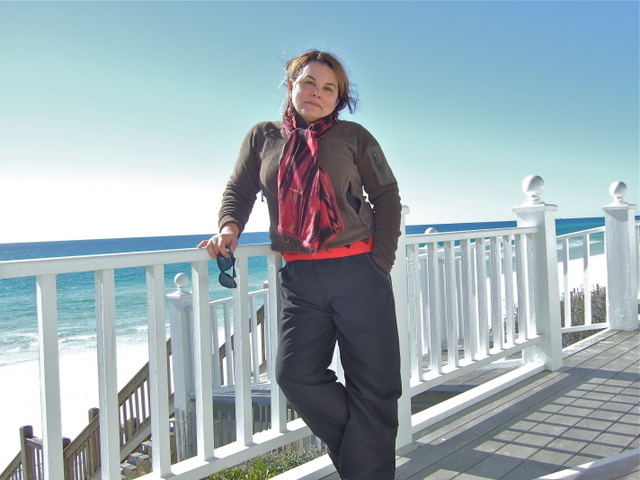
Casper Martin & friend.

Casper Martin & friend.

Here are two witty and hilarious short stories by Casper Martin, a student of mine at Vermont College of Fine Arts this semester. It’s a rare student who delights me this much, makes me chuckle and admire, but Casper has an outrageous sense of humour and a slightly pomo aesthetic that puts a premium on reversal and surprise and jokes that make you think. Both these stories were written from an exercise I sometimes give students. If you want to try to look it up, the exercise along with an essay on the short story (“Short Story Structure: Notes and an Exercise”) can be found in my book Attack of the Copula Spiders and Other Essays on Writing (Biblioasis, 2012). It will also be reprinted in a book of my essays coming out next year. In any case, these two stories, brief and stripped down, are elegant in their simplicity and concept. Both stories turn a genre on its head. The kid gunslinger (practicing his chops on the town’s ONLY tree) and the encounter with the Angel of Death. The Angel of Death story is particularly intriguing because it manages to combine a tale about death with a story about sex, seduction, comedy and the spirit of life. I’ve never seen such a positive, lively and unsentimental death bed scene. This is something else.

dg


Gunslinger

.

Ambitious, young Mathew Singleton lusted to be a gun fighter—Kid Matty—but he had never killed a man.  He saw that as an obstacle to his success, an obstacle he had to overcome as quickly as possible, while he was still young and his reflexes were still sharp as needles.

He rolled a forty-five-caliber cartridge between his thumb and forefinger, thinking he wanted to be the one to deal out those round-nosed lead bullets in a time without safety or protection.  The only defense was to shoot faster and hit your target.

Mat didn’t worry about getting killed.  He thought everything would take care of itself if that happened.  When he thought of the possibilities, he understood that he couldn’t kill a drunk or a storekeeper.  He had to kill a gunfighter.  He didn’t want to be known as an assassin of ordinary people.

Young Mat walked into the Still Water Saloon and surveyed the crowd.  His eyes fell upon Davey McBride, a gunfighter so famous he could be found in his own dime novels.  Mat’s heart jumped inside him.  McBride sat at a poker game with his back to the wall.  Young Mat walked over and began staring at McBride.  Mat wondered if this would be the moment of his death.  McBride said, “Take a seat.  This game needs new blood.”

Mat resisted saying he didn’t have the money.  Money hadn’t seemed important until this instant.  He said, “I want to kill you.”  And he almost fell over in fear of what he had said.

McBride looked him over, measuring.  He said, “You get right to the point, don’t you, kid?”  When Mat didn’t answer he said, “Why don’t we play poker instead?  There’s less tears in poker than gun play.”

Mat thought he had gotten around playing poker, but there it was right in his face again.  He still didn’t want to admit he had no money.  Mat almost closed his eyes, but he knew he had to keep his eyes on McBride.  He thought this would be the moment of his death.  He said, “I mean it.  I want to kill you.”

McBride studied the kid.  He said, “Ever body wants to kill me.  Don’t worry about it, kid.  It’s OK as long as you don’t act on that desire.  Come on.  Take a seat.  Play some poker.  You might get to like me.”

Mat thought of drawing and shooting, but now he kind of liked McBride.  McBride was shuffling the cards.  He thought he could kill him right then.  With McBride’s hands above the table and away from his gun Mat knew McBride would be slow on the draw, but Mat wanted to win a fair fight.  Mat decided he couldn’t get out of being broke.  He said, “I don’t have enough money to play poker with you.”

McBride said, “Well then, you should get a job, earn some money and come back and play poker with me.”

Mat heard laughter behind him.  He held his hands out to his sides like he was going to draw his gun and fire.  He said, “Are you making fun of me?”

McBride said, “I don’t make fun of people.  I have enough people who want to kill me.  I’m just giving advice on how to get money so we can play cards.”

Mat was back to not knowing what to say.  He said, “I want to kill you.”  And he walked out between the swinging saloon doors.

Two days later Mat was back at the Still Water.  He sat down at the poker table with McBride.  McBride said, “You took my advice.  I can see it in your eyes.  You got a job, you earned some money and now you want to give it to me.  Very good.  That’s much better than wanting to kill me.”

Mat said, “I took money from the offering plate in church.  If you have fast hands, you can put a little in with one hand and take a lot out with the other and nobody notices a thing.”

McBride said, “I better watch you, kid.  You must have really fast hands.  I don’t like that in people who want to kill me.”  McBride paused.  When Mat didn’t answer, he said, “How much did you get from the church?”

Mat didn’t want to say that he made up the story and still didn’t have money to play poker.  He said, “I don’t think I want to give you the money I stole from church.  I think I better hang onto it and put it back in the offering plate on Sunday.”

McBride smiled at him.  He said, “I think I like you.  You’re an upstanding citizen.  You probably don’t want to kill me.”

Mat didn’t hesitate.  He said, “I want to kill you.”

McBride said, “What you got for a gun?”

Mat said, “A Colt 45 1873 Peacemaker.”

McBride said, “You want to kill me with a Peacemaker?  That just doesn’t sound right.”

Mat said, “Forty grains of black powder moves a 255-grain round-nosed lead bullet right along.  I been practicing on the old elm tree just outside of town.  You should see the holes in it.”

McBride said, “So that’s you who’s killing our tree.  It’s not an elm.  There isn’t an elm in this whole state.  It’s a cottonwood.  Maybe if you kill it, you’ll get a taste for killing, but a tree’s not a man.”  McBride paused.  Mat said nothing.  McBride went on, “I have no passion left in me.  I don’t hardly want to draw a gun, but I will.  Don’t make me do it boy.”

Mat said, “I seen your book, The Merchant Of Death.  I know all your tricks, old man.”

McBride laughed.  He said, “Learn to read.  That book’s not about me.”

Mat said, “Yeah, well I know all the tricks in that book.  That’s all I need for you.”

McBride laughed again.  He said, “That book’s about Whiplash O’Keefe.”  McBride paused and then said, “I killed him.  Are we going to play cards or not?”

Mat walked out of the Still Water through the swinging doors.

The next day, as Mat shot the cottonwood tree, he began to wonder whether killing McBride might be a bad plan.  Mat put a bullet into what looked like a squirrel hole and a dove flopped out dead.  He saw its blood where it fell on the ground.  The sight shocked him.  He wondered how it would feel to kill a man.  He could move his gun hand quickly and his aim was sure, but he wondered about aiming at a man instead of a tree.  He saw McBride’s face in his mind and he nipped a small branch from the cottonwood, catching it precisely where it met the trunk, just where he imagined hitting it.

Mat liked to shoot things, but he didn’t know if he loved it.  He never sighted down the barrel, always shooting from the hip.  He wondered whether that was what he was doing with McBride, shooting from the hip.  Maybe he should take his time and study the situation before going any further, but shooting from the hip seemed to work against the cottonwood.  He sighted down the barrel at a small branch and hit nothing.  He had no idea where the bullet went.

The next day, Mat was back at the Still Water and McBride was sitting at the same poker table.  Mat said, “Do you ever move?  This is the only place I’ve ever seen you.”

McBride said, “I been known to move pretty quick.”

Mat couldn’t see McBride’s hands.  His heart sped up.  He said, “Put your hands where I can see them.”

McBride said, “Why should I?”  When Mat just stood there with his hands out to his sides like he might draw, McBride said, “Don’t be afraid.  I don’t want to kill you.”

Mat said, “Yeah, well, I want to kill you.”

McBride looked like he was getting angry.  He said, “What’d I ever do to you?”

Mat said, “It’s nothing personal.  I just want your job and killing you is the only way I know to get it.”

Clearly angry now, McBride said, “Are you stupid?  Killing a man is as personal as it gets.  You’re taking everything he ever had and everything he’s ever going to have away from him.”

Mat said, “It’s just business.”

McBride said, “What business you in?  It doesn’t pay very well.  You have to steal from the offering plate in church to get money to play poker.  My job’s sitting here playing poker.  How you going to do my job with no money?”

Mat was getting angry.  He thought of pulling his gun right then, but he couldn’t see McBride’s hands.  He suddenly realized that McBride wanted him to pull his gun.  McBride wanted to kill him right then.  Mat said, “So long.”  And he turned to walk out.

McBride called after him, “Don’t go away angry.  I’ll buy you a whisky.”

Mat turned around.  He said, “I never could understand why men drink whisky on a hot day to quench their thirst.”

McBride said, “Thirst’s got nothing to do with it.  Have one.  You’ll see.”

But Mat wasn’t listening.  The desire to live pulled him through the swinging doors.

Mat was back at the cottonwood shooting it again.  Someone in town yelled at him.  “God dammit, stop killing this town’s only tree.”

Mat shouted back, “Fuck you sod buster.”  Then he said quietly, “Or storekeeper, fuck you too.”

Mat understood for the first time that it was the only tree in the whole town.  It wasn’t right in the town, but he couldn’t think of another tree in the area and he was killing it just so he’d be able to kill McBride.  He wondered if he would be able to kill McBride.  He put his Colt 1873 Peacemaker in its holster and then drew and fired as fast as he could.  It felt very fast and he hit the squirrel hole the dove had been in.  He could see splinters come out when the bullet hit.  He did it time after time.  Each time seemed faster than the last and he hit everything he aimed at.  It felt smooth and effortless.  He knew he could do it all day, but then when he went to reload the Peacemaker, he only had two bullets left and no money to buy more.

Mat had to wonder what he was doing.  Why did he want to kill MacBride?  Did he want to be the one sitting at the poker table talking to kids who wanted to kill him?  He only had a vague idea how to play poker.

And did he want to be in a town that only had one tree?  He was ready to pack it in.

As Matt walked back into town, he saw McBride in the street.  He said, “Glad to see you’re not stuck to that poker table.”

McBride said, “You still want to kill me, kid?  Now’s the time.  I heard you say you want to kill me one time too many.”

Mat began to take in the situation.  He was in the middle of the street.  McBride was in the middle to the street.  They were about twenty yards apart, facing each other.  McBride had his hands out at his sides, ready to draw.  Mat had only two bullets in his gun.  He couldn’t help but worry he might need three shots to kill McBride.  He said, “Wait a minute.”

McBride said, “You turning yellow after saying you want to kill me so many times?”

Mat was getting angry.  After the way he had been shooting at the cottonwood, he thought he could probably beat McBride, but he knew many men, including Whiplash O’Keefe, had thought that.  He tried to remember The Merchant of Death.  Maybe it contained a secret that would save him, but his mind emptied.  He said, “Can’t we talk about this?”

McBride said, “I want to kill you, you yellow dog.  And it’s personal.  You understand that now?”

Mat could see the round-nosed lead bullets in McBride’s gun belt.  He wonder whether he feel it when one hit him.  Mat said, “I don’t want to kill you any more.”

McBride said, “Too late.  I want to kill you.  Draw or turn around and walk out of town with nothing but the shirt on your back.”

Mat didn’t know why, but he said, “OK.”  And before he knew it, he saw McBride’s hand going for his gun.  It looked slow, but Mat knew it was fast and without thinking he felt himself going for his gun.

Mat expected to see his bullet hit McBride the way he had seen his bullets hit the cottonwood, but he saw dust kick up in front of McBride and then he saw blue sky.  He watched a dove fly over.

Mat didn’t know what had happened.  Nothing hurt, but he was lying on his back and couldn’t sit up and he had to cough a little.  Then he saw McBride standing above him.  McBride said, “I got you through the lung.  I’m losing my touch.  I was aiming at your heart.”

Mat said, “Why’d you draw on me?  I wasn’t ready.”

McBride said, “The one who draws first wins.  Remember that, kid.”

Mat didn’t say anything.  He thought about shooting McBride.  Mat wanted to put a bullet through McBride’s Adam’s Apple.  He still had one bullet, but he didn’t know where his gun had gone.  McBride said, “What’s your name?  I should know who I kill.”

Mat said, “Call me Kid Matty.

§

The Angel of Death

.

Old Gustavo Kintenilla lay in his deathbed in Holy Family Hospital.  He thought, Jesus, I wish I could get laid one more time.  Maybe if I take Viagra and grab the nurse.  But wait a minute — I don’t have any Viagra and the nurse is stronger than I am.  She lifts me up to bathe me.  That’ll never work.

She bathes me, so she’s seen my naked body and it had no effect on her.  Christ Almighty, the body that used to drive women crazy had no effect.  She could have been doing the laundry.  That’s how exciting she found me.  I might as well be dead.  She sees me as dead, just waiting to be carried off.

Maybe if I could get a boner, if she saw my manhood in its glory, maybe that would change the context from bath to sexual encounter.  He began to fondle his penis, hoping to make something happen, but he got no response.  It felt like something soft and warm that had nothing to do with him.  He thought, Jesus, I wish I had just one Viagra pill.  But then he thought again and wished for two or three, but he began to worry that he would never see even one.

 ♣

At midnight that night, a beautiful apparition appeared in the room with him.  He said, “Are you bringing me my Viagra.  I knew my prayer would be answered.”

She said, “I heard no prayer.  I am the angel of death.  I am here to take you.”

He said, “The grim reaper?  Here for me?”

Hovering above the bed, she said, “You don’t rate the grim reaper.  You’re an ordinary man.  You get an ordinary angel.  Me.”

Gustavo felt some dissatisfaction on the angel’s part.  He said, “Do you love your work?”

She burst into laughter that sounded bitter and said, “I won’t have to do it forever.”

Gustavo worked the bed to get himself into a sitting position.  He felt a touch better.  He said, “How long have you been doing this?”

The angel looked puzzled.  She said, “I can’t remember a time when I wasn’t doing it.  I walk the endless corridors of dead, but that doesn’t matter.  I have to take you now.”

Gustavo thought he heard tears in her voice.  He said, “What’s the rush?  Why not take a little time?  Make your job enjoyable.”

When she didn’t answer him, he said, “You could fuck me and then take me.  You might like it; increase your job satisfaction.”

She hesitated and then said, “Mr. Kintenilla!  We have standards.  I can’t do that.”

He was sitting up, almost leaning forward toward the angel.  He said, “You had to think about it.  I saw you considering it.  Call me Goose.  All my friends call me Goose.”

The angel of death was touching herself in a provocative way.  She said, “You’re not my friend, Mr. Kintenilla.”

He smiled at her.  He said, “No wonder you’re unhappy.  You have no friends.”  He paused.  “You could fuck me if you wanted to.  I know you want to.  I see you touching yourself.  Wouldn’t you like a man to touch you?”

Still touching herself, the angel said, “Who wants to fuck an old man on his death bed?”

He said, “You could restore me and fuck me as the man I used to be.  I was a handsome man.  I know how to pleasure a woman.”  He felt his groin coming to life.  He said, “Look here.” And he pointed to a bulge in the sheets.  He said, “Just talking to you is bringing me back.  I haven’t had a boner in years without Viagra.”

Breathing hard, she said, “I have to go now.  I’ll be back for you, Goose.”

 ♣

The next night at midnight the angel was back.  She looked lovelier than Gustavo remembered, heavenly.  He said, “You look so beautiful.  I could die happily in your arms.”

She said, “You mean in my pussy, don’t you?”

He said, “I think I’m in love.”

She said, “You don’t know what love is.”

He said, “What do you love?”  She looked down and didn’t answer, so he said, “I could rub your shoulders.  They do that for me.  I know how they do it to me.  I could do it to you.”

She hesitated again.  Then said, “No touching allowed.”

He said, “You’re the hesitant angel.  You know what you want.  Why not take it?  The touch of a man’s hands won’t hurt you.”  And he felt himself growing stronger, more in control as she turned her back to him.  He kneaded her shoulders with fingers that hadn’t felt so strong in years.

The angel said, “Oh.  Ooh.  Ooooh.” And pulled away from him.

He pulled her back to him.  He said, “Just a little more.  This is good for me too.  Don’t deny me this.”  He pushed more deeply into her shoulders.  He said, “Too deep?  Does it hurt?”

She said, “I feel no pain.”  And she leaned into him.

He cupped her breast.  He could feel no bra under her robe.  He slipped his hand beneath her robe and caressed the warm roundness of her breast.  His arms felt firm and strong.  He played with her nipple between his thumb and forefinger.

She pulled away and said, “Stop that!  Mr. Kintenilla, I told you, no touching.  Now I have to take you.  Your time is up.”

He said, “Call me Goose.”

She said, “Brace yourself.  This always comes as a shock.”

He moved to embrace her.  She backed up.  He said, “Don’t take me now.  I know you want me.  I felt the passion in you.  Let me make you feel good.”

She said, “Damn you, Goose.”  And she was gone.

 ♣

Goose thought, I am dead already.  This is heaven.  Or is it hell, with a cock-teasing, beautiful angel who let’s me fool around, but will never go all the way?  Lordy, I want her pussy so bad I could cry.  I would love just one more fuck before I die.  But instantly he knew that was a lie.  As he felt his blood moving inside his body for the first time in years, he knew he wanted more than one fuck.  He wanted to go on fucking forever.  But then he thought he might be a delusional old man playing out his last fantasies in his mind, that he might be dreaming all of this.  Then he thought, if it’s a dream, please let me fuck her in my dream.  At least, give me that.

The next night at midnight, she was back.  He said, “Is midnight my time?  Half past is just as good, don’t you think?”

She said, “You’re overdue.  I’m behind schedule.”

He said, “Heaven can wait.”

She looked him in the eyes.  She said, “How do you know you’re going there?”

He felt stronger than ever.  He jumped up and out of the bed as though he were a youth.  He stood behind her with his arms around her, a hand on each breast.  He said, “Hell can wait forever.  Let’s run away together.  Love will provide.”

She scoffed.  “What do you know of love?  You just want to fuck me.”

He said, “You want it too.  You’re restoring me so you can enjoy it.”  He got one hand under the front of her robe and began massaging her pudendum.

She said, “Oh.  Ooh.  Ooooh.”  And she tried to pull away from him, but he pulled her back and pressed his penis up against her buttocks.  He got one finger into her.  He nuzzled her ear lobe and then bit it gently.

He said, “Are you ready for this?”

She jerked away from him, much stronger than he thought.  He knew he could never control her.  She, “I can’t do this.  I am the angel of death.  Damn you, Goose.”  And she was gone.

 ♣

Goose cursed himself for asking.  Why didn’t he just do it?  He could feel her desire, her willing it to happen, but he had to say something and bring her rational mind into it.  How stupid could he be?

He dreamt of her that night.  He said to her, “Your pussy is exquisite.”

She said, “What did you expect?  I’m an angel.”

Then she turned ugly and became death.  He wanted to look away, but he didn’t.  He knew his death was coming.  There was no hiding from it.

Then she became beautiful again and he was a young man pursuing her, wondering if he would ever get her.  He thought he would.  Getting a finger in was a good sign, but then he thought it might just scare her away.  She hadn’t left him on the best of terms, but she did call him Goose.  He felt warm and full of hope.  Then he slept without dreams.

 ♣

The next night at eleven twenty five she was back.  She said, “Your time is midnight.  You’re going tonight.  We have half an hour.”

He said, “I love the word we.  I think that’s thirty-five minutes we have.  Maybe we can do it twice.”

She said, “Gather ye rosebuds, Goose.”

And he did.

The next morning the day nurse who had come to know Gustavo Kintenilla saw his empty bed.  She looked at the framed picture of him as a young man his children had brought in and she said to the night nurse who was leaving, “Goose was a handsome man.”

The night nurse looked at it and said, “He was.  He must have broken some hearts.”

The day nurse said, “Did he go peacefully?”

The night nurse made a face.  She said, “No.  I checked on him just before midnight and he was writhing around the bed.  I couldn’t restrain him.  Who knew he was so strong.  And then at midnight he was gone.  Just like that.”

The day nurse said, “I hope he wasn’t in pain.”

—Casper Martin

.

Retired from software development at Bell Labs, Casper Martin lives in Andover, Massachusetts, with his wife, two dogs and four cats. A binge writer who hesitates to talk about the muse, he tries to understand what it is that moves him or leaves him stagnant as he fails to write on a regular schedule. After he heard the poets read at VCFA, he thought he might be able to fake what they were doing so he embarked on a three-semester jaunt through poetry where he discovered his voice tended to be invective. He now suspects faking it is no easier than producing the genuine article, and hopes to demonstrate the truth of that assertion by producing a real poem some day. Probably the kindest thing that can be said of his writing career (which began in 1973 in a creative writing course at Indiana University) is that he has great stamina. He hopes to graduate from VCFA in January after 7 (yes 7!) semesters.

.
.


Mar 192011
 

Christy Clothier is one of my former students and a dual-genre graduate from Vermont College of Fine Arts in fiction and nonfiction. A small, feisty woman,  Christy taught me more about the nature of the military, returned soldiers, trauma and its aftermath and life than perhaps I wanted to know. Her memoir is riddled with sadness, injustice and  innocence betrayed.  Just to give you a taste: there is an incredibly telling moment in an early chapter when she realizes she feels safe amid the horrors of boot camp because no one is allowed to hit her. The chapter I selected is perhaps one of the most benign. Another chapter, the one dealing with her near-rape by a Navy Seal, has been published elsewhere (see below) and turned into a play. Christy served in the US Navy from 1997-2003 as an air traffic control tower supervisor. She writes short stories, research articles and essays that connect childhood abuse with military service and trauma. Christy’s writing has appeared in Inquiry and Powder: Writing by Women in the Ranks, from Vietnam to Iraq, from which her essay “The Controller” was adapted for the play Coming in Hot, currently touring the United States through 2011. Christy lives in Colorado with her dog, Jauss, named after a famous author.

dg


Excerpt from Trail of Breadcrumbs:

Why I Joined and Left the US Navy

A Memoir by Christy Clothier

From the air, Naval Air Station San Clemente Island resembles a malignant mole on the skin of an ocean freckled with small islands. Twenty-five sinewy miles of salt and rock, San Clemente rose nearly 2000 feet above the sea after tectonic shifts deformed the region. The sea continuously feeds on the island’s borders and leaves behind erosion’s bite marks. Large sections of earth are left to hover over the water like a ship’s plank before breaking off daily into the sea.

A small military community works on top of this unstable foundation. Where untouched sand dunes named Castle Field once lied, the Navy took over. First, they covered the area with white rocks and small shells and used the makeshift airstrip for emergency landings only. Today, the runway sits on land renamed Sherman Field and paved over with a 9,300 foot concrete runway capable of supporting the heaviest warcraft. That was where I was headed.

A one-way flight from the Naval Air Station North Island, Coronado, California, to Naval Air Station San Clemente Island takes approximately 30 minutes. The refitted Orion P-3 levels just above the first cloud layer, skimming the frothy blue-white haze as though it were riding the crest of a wave. I do not peek out the oval windows. I shut the plastic screen. The familiar scent of industrial fabric on the seat back in front of me lulls me into an uncomfortable sleep, until the P-3 plunges into the froth of clouds on final descent. I ride the white rush until I land with a hard screech on the rocky surface below.

On the tarmac, the view gets only flatter. Aluminum buildings still look as they would from the window seat on a plane, all sides and roof. The island is the shape of a landfill. Dust settles in thin coats on the World War II relics, tanks that mark the fields like billboards.  Macadam Road snakes six miles along sharp cliffs and deep canyons from the airfield down to the pier at Wilson’s Cove. The remainder of the island is sectioned off, either unused by the military or inaccessible to individuals without prior authorization. The entire island sits beneath an invisible barrier, airspace designated as Warning Area 237. Dangerous flight activity occurs from the surface of San Clemente Island up to 5000 feet in the sky and for 10 nautical miles in every direction. Without authority, no one flies in or out of San Clemente’s airspace.

I had been in the Navy for a year and a half, all of that time spent at Chicago’s boot camp and Pensacola’s Air Traffic Control School. I was an E-1, the lowest rank in the military. I knew my official title was Air Traffic Controller Airman Recruit (ACAR). I knew to dress properly in my uniform, how to pass military inspections and ATC exams. I knew not to do anything without being told. I stood alone outside the airport terminal and waited for someone to claim me.

Continue reading »

Dec 162010
 

Here’s a lovely “What it’s like living here” piece from Robin Oliveira, former dg student, Vermont College of Fine Arts MFA graduate, winner of the James Jones First Novel Fellowship and author of the novel My Name is Mary Sutter

For a complete list of “What it’s like living here” texts, click here.

dg

What it’s like living here

By Robin Oliveira on Cougar Mountain, just outside Seattle

You live on Cougar Mountain, the first mountain on the right as you leave Seattle. The children—your reason for moving to the mountain—have moved out, and yet you cling to the house in which you raised them, unable to let go of the memories. Cougar Mountain hovers between wilderness and civilization. Sometimes you wake up in the middle of the night to yapping coyotes surrounding and terrifying some poor mammal they then eat. Before they die, the animals cry, a sound so human you leap from your bed and peer out the window. Black bears sprawl on the hillside behind your house, watching passing cars. Startled deer wander in the former meadows houses now occupy. They seem puzzled, these animals, incapable of altering their patterns in the face of encroachment. One day, on a bike ride, you gut out the steep climb from Puget Sound to the top of Magnolia, a hill long ago urbanized. A cougar has been spotted in the park, where for days, the fields of tawny grass camouflage him. You wonder what ancient memory has led him back into the city. You are sad when the park rangers capture the animal. Where do they take it? You don’t know. Maybe to your mountain, where the historical society exhibits pictures of the old days, when men hunted cougar for sport, then hung them upside down and posed beside them. Another day, flames shoot above the red cedar and Douglas fir behind your house. You turn on all the hoses and water the roof while your husband and neighbor attempt to douse the advancing fire. The flames lick thirty feet high; you breathe smoke; embers fall onto your shoulders and into your hair. Then the fire trucks arrive and unleash a spray of white foam that in two minutes extinguishes the blaze.

Now that the children are gone, you have all day every day to work. In your office, you turn on a sun light to ward off S.A.D., seasonal affective disorder, which struck you down about the middle of the nineties, fifteen years into your interment under the drizzly menace that is the Pacific Northwest sky. With the fake sunlight bathing your retinas, you write. Ten thousand luxes a day are the prescription for your well-being—about thirty minutes worth—but you indulge and keep the light on all day. When the real sun breaks from behind the clouds, you play hooky. Microsoft money has littered the mountain with mansions of ridiculous dimension, but you climb on the paths above them, through preserved corridors of wilderness, where it is still possible to meet a cougar or a lone coyote, so you carry a stick. You climb until you see the fingerling glacial lakes that strike northward and the snow-topped Cascade Mountains, coolly indigo against the eastern sky. To the west, the Olympic Mountains shimmer jagged against the western horizon. If you had a pair of binoculars, you could see the Space Needle floating beneath them.

Continue reading »

Oct 062010


It’s a pleasure to introduce my former student (and Vermont College of Fine Arts graduate) Jill Glass to Numéro Cinq. Jill lives in Los Angeles, writes about Los Angeles, thinks about Los Angeles and even seems to like it there. “The Use of Moralized Cityscape in Los Angeles Literature” is a marvelously intelligent essay on the use of place in fiction, the moralizing of place for fictional purposes (a literary effect called paysage moralisé) and, in particular, the way authors like Joan Didion, Gavin Lambert and Nathanael West re-imagine Los Angeles as a literary universe unto itself. Make sure to look at the notes and bibliography which extend the reach of the essay far beyond its topical orbit. This was Jill’s critical thesis at Vermont College, one of the best I’ve seen.

dg


THE USE OF MORALIZED CITYSCAPE IN LOS ANGELES LITERATURE

By Jill Glass


“I look at the writers who came, when they came, why they came, what they found and how they responded to the city. I am interested in the way the place—in all its apparent oddity—shaped the writer’s imaginations and how their imaginative renderings shaped the city, structured it in image and myth as the city of dream, desire and deception.”[i]

–David Fine, Imagining Los Angeles.

It was failure that brought Nathanael West to Los Angeles in the mid-1930’s, after his first novel, The Dream of the Balso Snell, was little read and poorly reviewed and his second, Miss Lonelyhearts (1933), was not the breakthrough many anticipated. Critically praised, the novel seemed poised for success when West received news on the eve of release that his publishing house, hit hard by the economic depression, had declared bankruptcy. Months later, when the book came to market, it had lost all momentum. In an unexpected development, Twentieth Century Fox bought the film rights, and West followed his novel to Hollywood to oversee its transition from page to screen.

The Depression had been good to the film industry. Americans, desperate for diversion, crowded the theaters where they were fed images of Los Angeles life as one of material comfort, escapism and eternal sunshine, the locus of the American Dream. This was not what West saw when he arrived. His Los Angeles was “a grotesque half-world of outcasts and hangers-on, misfits and freaks, exotic cultists and disillusioned Midwesterners,” a jumble of incongruous architectural styles—pagodas and chalets–stacked side by side in rugged canyons, a fantasyland gone awry, the lines between movies and reality badly blurred, a city devoid of cultural or literary definition.

Heightened and distorted, this became the central imagery for his seminal work, The Day of the Locust. The book was published in 1939, a defining year for Los Angeles literature. Raymond Chandler released his novella Red Wind, elevating pulp crime fiction to an art form. His Los Angeles was “a big hard-boiled city with no more personality than a paper cup…no worse than others, a city rich and vigorous and full of pride, a city lost and beaten and full of emptiness.”[ii] John Fante published his second novel, Ask the Dust, the first book to focus a tender eye on the down-and-outers, the immigrant denizens of the city’s downtown flophouses and cafeterias. “Los Angeles, give me some of you! Los Angeles come to me the way I came to you, my feet over your streets, you pretty town I loved you so much, you sad flower in the sand, you pretty town.”[iii] But the Los Angeles of West’s imagination was a bleaker place, a moral black hole–the embodiment of what he saw as the spiritual and material betrayal of the American dream during the years of the Great Depression, a city where people “realize they’ve been tricked and burn with resentment…Nothing can ever be violent enough to make taut their slack minds and bodies. They have been cheated and betrayed. They have saved and saved for nothing.”[iv]

With The Day of the Locust, a black, surrealistic, social satire, West created his own genre—Hollywood Apocalypse. A short 126-page novel, the chapters range from one to eleven pages in length. Written in third-person omniscient, past tense, the story is told from the point of view of Tod Hackett, part moral-innocent, part artist-prophet, a recent graduate of the Yale School of Fine Arts, who has temporarily set aside his aspirations towards serious art to work as a set designer at a second-rate Hollywood studio. As he takes in Los Angeles, he marvels at the blatant artifice of the architecture and the inhabitants. He dismisses the masqueraders, people who parade the streets in costumes that belie and disguise their social standing, but is fixated on the migrant middle-class Midwesterners who “have come to California to die.” He plans to use them as the subjects of the masterpiece he will someday paint in the style of Daumier or Goya, a fantasized catastrophe he has titled “the Burning of Los Angeles.”

He falls in with an assortment of oddballs–a veritable laundry list of Hollywood clichés—an over-the-hill Vaudeville clown, a child actor, a cowboy, a dwarf, and Faye Greener, a scheming, untalented extra with delusions of stardom.

Tod becomes obsessed with Faye, joining her circle of suitors, a group of misfits and has-beens, including Homer Simpson, a sickly Iowan newly arrived in Los Angeles in search of a health cure. It is a losing proposition. Faye makes it clear that Tod has nothing to offer her since he is neither wealthy or good-looking or connected. Her rejection fuels his depraved and lustful fantasies, and after an evening of group flirtation at a Hollywood Hills campsite escalates into violence, Tod chases Faye into the woods with the fantasy of raping her.

Faye’s father dies and she moves in with Homer Simpson in an arranged relationship–food, lodging and expensive clothes in exchange for her companionship. She takes advantage of Homer’s vulnerability and manipulates him into letting two of her other suitors move into his garage.

Tod determines to break off with Faye. His desire for her makes him feel as desperate as the people he is trying to paint. He turns his attention back to “The Burning of Los Angeles,” searching the churches of Hollywood for new subjects. He is disturbed by what he sees—fanatical congregations worshipping false-prophets.

Continue reading »

Footnotes    (↵ returns to text)

  1. Fine, David. Imagining Los Angeles. Albuquerque: University of New Mexico Press, 2000. ix.
  2. Chandler, Raymond. “Red Wind.” Writing Los Angeles. Ed. David L. Ulin. New York: Literary Classics of the United States, 2002. 170.
  3. Fante, John. “Ask The Dust.” Writing Los Angeles. Ed. David L. Ulin. New York: Literary Classics of the United States, 2002. 220.
  4. West, Nathanael. The Day of the Locust. New York: New Directions, 1962. 178.
Oct 052010
 

.

October, 2010

Dear DG,

Thanks for your email. You ask about Milan. What it’s like living here. You ask for descriptions, for photos…. Enclosed please find my views :


“Duomo” means cathedral.

A Gothic version wrought with grimacing monsters presides in central Milan. Recently renovated, the marble shines a bright white in direct sunlight, blushes at dawn, or grows ruddy in the gloaming of nightfall.

Pickpockets roam the piazza spread out like a large, bumpy placemat beneath the Duomo. Their glittery black eyes home in on the naïve tourist. Hand to your pocket, or arm firmly over purse, please. You have treasures to lose.

Merchandisers sell Inter, Milan, Juve soccer scarves—blue&black, red&black, white&black—from small wooden kiosks; marketers ring the perimeter with fluorescent neon in pink and blue that exhorts purchases of Gucci, Prada, Sony. Close your eyes to (un)subliminal messaging. Times are tough. Save your dough.

Pigeons squat on the equestrian bronze of King Vittorio Emanuele. White streaks drip from his greened shoulders. Hurry past, head hunkered down.

Seven o’clock shadows lengthen and grow violet while the sun sinks. Cut across the cobblestones of the piazza, wind through pickpockets, tourists, merchandisers, marketers, and pigeons. Climb the steps, enter the Duomo through tall bronze doors, choose the side altar where the Renaissance panel of the Virgin and her Son hangs. Light a candle below the image. Kneel. Even if you’re not Catholic, even if you’re not religious.

The smoky sputter of burning wax. The golden light ringing bowed heads like glowing halos. The sting of incense wafting from the main altar—hundreds of yards away—where evening mass reaches a crescendo.
 The intonation of millions of prayers, seven hundred years’ worth, reverberates in the cavernous, vibrating enclave.

You listen, knees against the stool, fingers laced together on the rail.

Dive in, again today, as you have every day since disaster struck. Add to the swirling mix.

When you finish, fall back into your wooden pew.

You remember that John Ruskin hated the aesthetics of this place. That Oscar Wilde called it monstrous in taste. But that Mark Twain, like you, scoured the thousands of niches decorated with statues of saints, and bugs and birds, and all of nature, and knew here, in the Duomo, he wasn’t alone.

“Salsamenteria” means Sauce-eria.

A new one, near the recently-opened Abercrombie and Fitch, waylays the hungry in a narrow street not far from the Duomo. Salt-cured pig haunches hang from hooks on the walls and rafters in the ceiling. Brown paper mats plaster square oak tables. Kegs of cheaper wine sprawl on a hutch to the left of the bar, bottles of finer wine march across a shelf.

Study the menu taped to the window.

Coppa, it says. Prosciutto, Culatello di Zibello. Tortellini, Ravioli. Lambrusco. Bardolino. DOP–the best of the best. 5 Euros. 6 Euros. 10 Euros. 3.5 Euros. 2 Euros. 4 Euros. 3.9 Euros. Eat. You need to eat. Mangia. Mangia. Keep your strength up.

Take a break from your vigil. Enter. Choose a table for one near the door.

Black eyes, black hair, brown skin. The waitress from Kenya, poised to serve. Pencil on pad.

Order a sandwich. Select some wine.

Pink slabs fall from thick slices of peasant bread. Green sauce—made from parsley, capers, oil and anchovies—glistens in a finger bowl on the middle of your table. Unkegged Bardolino fizzes in the white ceramic bowl the graceful Kenyan girl serves it in.

Dip your sandwich into the oily green, slurp the slick red.

Forget while you eat and drink. Listen to the clinking in the kitchen, the tap of forks against ceramic plates. Watch the girl glide and whirl.

Chew.

And when wine splats on your blouse like blood (drops of crimson on white gauze) blot and wipe in the room with the skirted stick figure on the door.

Remember.

Hurry out to evening mass at the Duomo.

“Ca’Granda Policlinico” means Hospital.

Designed in the Renaissance by Filarete, the Florentine, with perfect courtyards, graceful loggias and brick fretwork, the first Ca’Granda is where the ill of the city was nursed back to health. Now university students occupy Filarete’s harmonic spaces, while the Ca’Granda has migrated across the street to become the Ca’Granda Policlinico and occupy dozens of buildings of eclectic styles and dubious periods.

Rush your teenage boy here one ill-fated Monday. See how he is classified code red.

Tell the doctors: He’s healthy. Nothing like this has ever happened before.

Tell the doctors: His heart’s fine. But then listen to it beat 200 times a minute.

Wait, sitting on linoleum lit by neon.

An orderly changes rumpled blue sheets on an abandoned gurney. An infant, red with fever, cries in its father’s arms. A small pink girl in a wheelchair, her broken wrist held to her chest, fusses at her gold-jewelry-laden-black-leather-jacketed mother. And a blond boy lies down the hall, behind closed doors, in intensive care, monitors hooked to his chest and fingers.

Wait, sitting on linoleum lit by neon.

Relatives of the injured arrive. One, with stiff gray hair and sturdy brown pumps, holds the infant so his father can go to the men’s room. The pink girl’s burly grandfather bellows into his cellphone. The mother in black and gold lights a cigarette beyond sliding glass. Soon, her exhaust curls up through the night.

Your husband calls. He’s home, caring for your youngest. How is our boy? He asks.

Ask a nurse, How is my boy?

Then wait, sitting on linoleum lit by neon.

“Parco” means park.

A nineteenth-century park—the parco Sempione—sprawls around the Castello Sforzesco, the imposing castle that was built in the early Renaissance where Leonardo da Vinci frescoed rooms for Ludovico il Moro. The parco encompasses the Triennale Art Museum too, and DeChirico’s beach house sculpture.

On sunny autumn afternoons boys bring their dogs to the happy corners of Parco Sempione and run. Disks of red plastic spin through the air, dogs fetch, their pink tongues curling and flapping.

Don’t worry about curbing your dog here—no one does. But check your shoes—wipe them on the graveled walkways—when you quit the grass.

On sunny autumn afternoons boys play soccer on the grassy knolls of Parco Sempione. Under the elm, off to the side. And here, one boy, a teenage boy with blue eyes and a chipped front tooth who plays soccer in autumn crumples one graying afternoon. His chest thumps at two hundred beats a minute—like a golden hummingbird’s—while the parco fades into black.

Call 118 when this happens. Climb into the wailing vehicle. Bump over old, winding streets, ancient alleys, circular passageways, through centuries of urban sprawl and nonexistent urban planning. At rush hour.

Say faster, please faster, as you watch your boy’s lips turn blue.

Hold his hand, whisper a prayer when you see his eyelids twitch.

Plan to light a candle at the Duomo every evening until he wakes.

Best,
Natalia


—Natalia Sarkissian

.
.

Sep 202010
 

A former student of mine (from the days when I used to race home from the Vermont College summer residency and teach novel-writing for a month at the New York State Summer Writers’ Institute at Skidmore College), Darin Strauss, has a new and rather startling memoir just coming out.

Half A Life by Darin Strauss, Interview – The Daily Beast.

I have linked elsewhere to his little essay on my novel structure class.

dg

Aug 192010
 

Jason DeYoung

It’s a pleasure to offer here this shocking and deeply comic little story by my former student and recent VCFA graduate Jason DeYoung (above with his son Harrison). “Mariska’s Tongue” was originally published in Gargoyle, No. 53 (2008).  It reads like a cross between a segment from The Twilight Zone and something Donald Barthelme or Julio Cortazar could have written. Chief among its charms is the evidence herein of a deeply disturbed mind at work (would that we could all find our inner cannibal and let it out on the page).

dg

/

When I saw it on the menu, I knew I had to have it.  Tongue. When the waiter came to fill my water glass, I asked him what kind of tongue was it. “Human,” he said. I believe I gasped a little like some expectation had been fulfilled.  I was not nonplus, however.  The waiter had answered curtly, and when he picked up my water glass, he parried my eyes, and I sensed he didn’t want to give any explanation for this item.

In general, on a menu the indelicate items appear below what are the best things at the restaurant, maybe in the lower left column or tucked in among more mundane, unsatisfying things—squash salad, yuck. There is a rule I have: Order what the restaurant specializes in.  For instance, if it’s a steakhouse, order steak.  I do not stray from this rule, typically.

Everything conspired against ordering the tongue, the listing for which occupied a section of the menu that fully conveyed that it wasn’t the restaurant’s specialty.  The tongue dish wasn’t cheap either at $25.00 a serving, and I was short on cash.

Looking up, I saw that the waiter was still filling my water goblet; the dark hair on his rock-colored fingers looked like hunched, over-fed horseflies, and his eyes were narrowed on the goblet’s sliver-clear rim.  “Do you recommend the tongue?” I asked, when he was finished pouring.  “For some,” he said.  He was terse and respectful.  He turned on his heels and limped back into the kitchen.

I looked again at the un-dramatic listing for tongue, and then put my menu down and sipped a little of the ice-water.  How could I not take this opportunity to have human tongue?  My god, what would it be like, taste like? What would it be served with?  I looked back to the menu.  It would come with a side tomato salad and wild rice.

When the waiter returned and asked if I was ready to order, I said, “I’ll have the tongue.”

“And how would you like it cooked, sir?”

“How do you suggest?”

“It is very lean meat.  I would said medium rare, for you.”

“For me?”

“Yes.”

“What does that mean?  For me?”

“With respect, you do not seem to be the type to eat his meats cooked at a rare temperature.”

I smirked at the waiter, and asked him how he knew I didn’t eat rare meat, thinking he would give some observation about me, something keen and complimentary, something I’d secretly cultivated about myself but that no one else had picked up on or said anything to me about.

He tapped his nose with the ball end of his pen and gave an overly familiar smile: “You are a tourist, sir.  I can smell a tourist.”

What gall! “I live here, in the city, the same as you,” I stammered.

“Very well. Rare tongue,” he said, without missing a beat, without a hint of reproach.  He was obviously practiced at giving obsequious responses to petulant outrages.

“No, no.  I do not eat my meats rare. I want it medium rare. I’m not a tourist.”

“Of course.” He limped back to the kitchen.

I sat there stewing, wondering if I should just leave. I furious over the waiter’s presumptuous attitude, and how he’d said tourist like it was an insult.  It was true, in a way.  I’d just moved here from a stay in Russia.  I’d just broken it off with this curly-headed, overweight Russian woman I’d been with since my second year out of college.  Though she was much older than I, she wanted me to marry her, but she had terrible habits that I couldn’t stand, such as that she plucked her gray pubes and collected them on the dark tile sink counter as if she was planning some wig or weaving.  I’d say, “Mariska, what the hell!  You think there’s some hair fairy for the middle-aged?  What’cha gonna do when you got a whole gray bush?”  She’d say, “I do not und’rstand you ‘Merry-cans.”  Then she’d come over and rub my head and press her sweat-moist jelly body to mind.  I liked her.  She was generous and loving.  But have you ever seen a collection of glossy gray pubes plucked from a soft bed of blond hair?

The waiter returned finally, his face much swarthier than I remembered, my meal plated in the dishes he carried.  He sat the plate and bowl down without care, but not without decency—they didn’t rattle as they settled. There before me was a heat-swollen, grilled tongue that sizzled and smell wonderfully, nestled within tan long-grain wild rice with a side tomato salad.

I tried to put Mariska out my head.  But she was there now, she was on my mind, and though I don’t know why, the tongue reminded me of her all the more.  Its length, its readiness, its presences was too much like Mariska.  In some grime outpost of my imagination, I thought of it as Mariska’s tongue.

I stared at it, a long, un-sliced meaty tongue.  Its sizzles subsided.  I needed a moment, so I started with the tomato salad and then nibbled on the wild rice around it.  But I was starting to have difficultly bringing myself to look at it. A human tongue.  No, no: a human’s tongue. Right there on my plate. Sanctioned by the restaurant, and by the state, I suppose.  I looked around at the other patrons in the restaurant.  I didn’t see another serving of tongue on anyone’s plate.  They all had companions, and they all looked contented.  As I scanned the room, I saw only one other person alone, and he sat two tables across from me.  He had a jowly toad’s face, and winked knowingly at me as I noted his meal.

I stopped looking around and finished my side dishes. I even sopped up the oil and vinegar in the bottom of the salad bowl with bread before I took a long glance at what I thought of as Mariska’s tongue.  It took on the stale, wizened appearance of something you’d want to flush.  It just made me think more about that jolly gal who loved me, and who I knew would take me back without a second thought.

I’d left her, I thought at the time, like an outlaw.  On the night of our first anniversary, we went to a Turkish restaurant and ordered everything we desired on the menu.  We ate our feast with the speed and intemperance of trough-fed pigs.  Afterward we went home for a bread pudding I’d made earlier that day.  As she kissed the back of my neck and swore her love, I stirred together a simple syrup to go on top of the bread pudding.  We test tasted the syrup many times.  She giggles, “You have stuff on you face.”  “Your,” I corrected, and let her lick the syrup from my cheek. As she moved back, I caught an unflattering glance of her.  Her face looked beaded in blemishes and jaundiced. I stepped back.  She was a crone in the poor Russian lighting. She giggled. I hurried her through dessert, making her drink as much imported Cognac as I force down her throat.  She could hold her liquor, and it just made her more randy.  The drunker she got the more clearly her flaws presented themselves to me—every stray hair, every small blemish, all of the imperfections coalescing into something utterly grotesque that unpleasantly spread across a glowing face-palette of ruddy flesh. Before she got a chance to force me to bed, I slipped into the kitchen, tucked the un-tallied rubles she kept hidden in a container in the refrigerator into my satchel, and bolted for the apartment door, all the while she was refreshing herself for me.  I ran practically stark mad across the winter grey courtyard of her Soviet-era apartment building under the gloom of the midnight sun.

“Is there something wrong, sir?”  I look up and there was that laconic and insulting waiter, hanging over me like a gawking spectator.  I could see the dirty black hairs that jutted out of each dark nostril like the soot-covered bristles of a chimney sweep’s broom.

“How can you serve this kinda thing?”

“It is what you requested, is it not?”

“Aren’t there laws against serving human flesh?”

“Not in this country, sir.”

“What about natural laws?  What about the laws of decency or respect.”  Sweet, plump Mariska, welcoming and jovial, weighed heavily on my mind.

“Please sir, temper your voice.”

“Fuck my voice. You served me a human tongue!”  The other patrons now looked up.

“But that is what you ordered.”

He had me there.  I had ordered it.  Just because it was available to me, I still had the choice not to order it.  But I loved the exotic.  Exotic.  Poor Mariska.  She was Russian, and I was not (I’d fuck a Martian).  I looked back down at the tongue.  It was dry now except for a thin layer submerged in its own bloodied juices.

“Sir,” —the waiter was unflappable, by now I’d be calling me all sorts of ugly names— “can I get you something else.  Perhaps a stiff drink?  A hamburger or a steak?”

“That drink sounds good.”

“Of course, and consider it on the house.”  He turned and limped toward the bar.  He left the dished tongue there in front of me.  I pushed it away.

But I won’t lie.  Across the table, out of my immediate reach, it seemed to attract me. I wanted it. I pulled it back and picked up my knife and fork. I steadied myself over it.  It was here, after all. There was no giving it back to the owner to have it reattached.  I closed my eyes.  Natural laws be damned.  Rebel, rebel: the outlaw moaned in my head.  And just then I felt a hand clap me on my back.  “You from out of town or something?”

I look up to see the man who’d winked at me making his way around to the chair at the opposite end of my table.  He sat down slowly—he spoke slowly.  “You don’t cut tongue,” he said with the grace of man who had never been hungry.  “That’s not how you eat it.  You take it in your hand.” He demonstrated by outstretching his fingers like he was holding a large invisible hotdog.  “You show it respect.  Someone will never speak again for your gullet’s pleasure.”  His broad, moonlike face smiled over the table at me. He was the type of man I admired, the kind who never seemed to suffer damp wrinkles in his shirts or a moment of uncertainty while making plans.  I did as he instructed. I picked up the char-stiffened meat; its tip hanging slightly wilted. “Yes, that’s right.”  The man gave me a proud smile. My god, his teeth were prefect.

Like a last kiss from a lover, I put the tip of the tongue in my mouth and tasted its juices.  Spiced and sweet.  The waiter arrived with my whiskey, as I was about to sink my teeth into the tongue.  He stood there with a slight smirk on his face peering at me.

What can I say?  I ate it.  Sweet Mariska on my mind the whole time.  The outlaw in my head singing a happy saloon song as every bite of that tongue was chewed and tongued by my own and pushed down my throat. As I ate it, the waiter told me that the best tongue comes from those in their twenties, after salvia had tenderized it, but before it toughens.  “Yet, generally, what is served here is of somewhat lower quality.”  I wouldn’t know the difference, I told him.

I got to know the waiter and the other patron a little. We made paced and protective conversation. The broad-faced man had traveled through Russia, too.  I told him a little about Mariska.  He said, “I do love the Russian woman.  Dirty in the sack, dirty in the kitchen.”

The waiter asked how the tongue was.

“It was very good.  It reminded me somewhat of skirt steak, but with a more workaday texture.  It was really quiet exciting to eat, however.”  Sated and enjoying myself, the guilt I felt over Mariska and eating human tongue had vanished. “I was a little surprised that I had difficulty eating it at first.”

“Most do. You shouldn’t worry so.  And I apologize about the ‘tourist’ remark.”

It was like we were old pals now.  I’d learned both their names and knew they were both unmarried, like myself.  “Would you like to see how we prepare tongue?” the waiter asked.

“Would I!”

They took me to the kitchen.  I considered this a rare treat, much like the tongue.

In the kitchen, a pair cooks dithered over stoves and prated to one another. I couldn’t hear what they were saying. Their aquiline, heat-scarred faces were ruddy in the brightly lighted kitchen.  The waiter walked to a prep station in the rear of the kitchen and lifted what looked to be garden sheers.  He scrutinized their cleanliness.  He took a small sponge, rubbed out a spot on the tool, and then beckoned me to come closer.

“This is what we use to remove the tongue.”  He held aloft the large pair of cutters. “We have to make sure it is clean to avoid infection.  We’re not in the murder business, you know.”

“Intriguing,” I said. “So you remove the tongues, here, in the kitchen?”

“Yes, and this is what we use to hold the tongue.”

“Whoa.” It was a pair of pliers with imbedded spikes that sparkled like polished jewels.  He held both tools.  The cutters were in his right, the pliers in his left.

“If you like, I could demonstrate on you.”

“That’s okay.” Not taking him seriously in the least.

“But sir,” he came closer. “Someone gave up her tongue for you.”

“But I’m not that giving.”

“But she was.  And that is how it works.  You get tongue only if you give it.”  The waiter lunged toward me. “You tourists never know the rules!”

I ran for the door only to find the moon-faced man and the two ruddy-cheeked cooks standing in front of it.  “Out of my way!” was the last thing I said.

—Jason DeYoung

/
/
/

May 042010
 

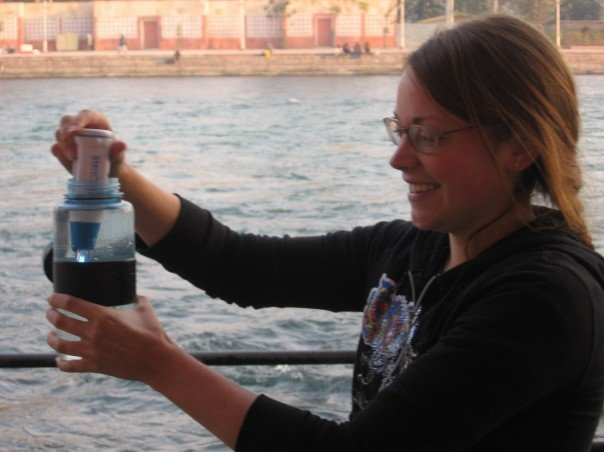
kate_waterKate McCahill on the Ganges

It’s a huge pleasure to introduce Kate McCahill who is a former student of mine at Vermont College of Fine Arts (she hasn’t graduated yet). Before coming to VCFA, Kate traveled in India, and when she came to work with me, she was writing a series of essays about that experience (with a book hovering in the near distance). These essays were remarkable for their structure and verve, their plots and their attention to character and detail. This is one of my favourites.

The big news for Kate, though, is that she’s just been awarded the Mary Elvira Stevens Traveling Fellowship, funded by Wellesley College (Kate’s undergrad school). Kate expects to get about $15,000 to finance a writing trip from Guatemala to Patagonia.

dg

/

The day I met Teddy, the heat and the grimy streets of Pune had mixed a muggy haze outside, which leached its way into the bookstore, slicking our foreheads and necks. As I examined the travel section, the bell above the door clanged and Teddy came in, stood for a moment in the doorway, backlit by the sun, and then walked over, close to where I stood, so close I could hear him breathing. I watched from the corner of my eye as he scanned the horror novels and selected an old hardcover. I caught a glimpse of the curling binding: Carrie, by Stephen King.  The bell above the bookstore door clanged again; hot wind blew in.

Teddy was a tall black man with close, tight curls and white teeth save for a brown one towards the molars, which he’d learned to hide by keeping the left side of his mouth closed. Because of this, he talked with only half his mouth, and that, combined with the rotting tooth behind full lips, gave him a sly, crafty look. We were four hours northeast of Mumbai, in a city known mostly for an ashram, built by the guru Osho.

Teddy’s eyes sidled to mine as we browsed, but I looked away. Aman had warned me of certain people on my first night in Pune. There were those who came to Pune for the money there could be made selling drugs to hippies at the ashram, or slipped pills into their coffees at the German bakery, or took them away by motorbike into the night. Aman was a friend of a friend, a second cousin of a farmer I’d met while still in Dehra Dun, and I figured he was exaggerating a little, trying to scare me into being extra-careful. But I took the horror novel in Teddy’s hands as a sign nevertheless. The books on the shelf before me bore beaten bindings and dated titles, and I set my attention on those. The USSR Today, one stated gloomily. Myanmar: Temples of Splendor, read the cracked yellow spine of another. When I tugged it down, opening the long cover that drew stickily back, a flattened moth broke off and spiraled to the floor. The pages showed Technicolor tourists admiring a crumbling, sunlit temple.

Those books were like the maze-like, rutted streets outside, the old men on rickety gray bicycles, even the street-children, their cries at once pitiful and joyful, and the beggars with their practiced wheedling. I would remember each one as an enduring, Indian staple: worn by time, accustomed to crowds, doggedly resilient. Teddy, on the other hand, was fresh, with pearl buttons on his Western shirt and pointy shoes on his feet. “Have you read this?” I heard him ask. I looked up; he waved Carrie. I couldn’t help it: I smiled, shook my head, and pretended to look grim. He wasn’t like the enduring things of India, standing so tall in the bookshop, and speaking English, too.

“What’s wrong?” Teddy asked, seeing the look on my face. “What’s it about?” His question was mockingly innocent. Even if you knew nothing about Carrie, the cover, with her body stained red, told you everything. “Just joking,” he said at my raised eyebrows, and flipped fast through the pages like he was just seeing how long it was, how closely set the type.

“So, you can’t stand the gore?” he asked after another moment. When I looked at him, he winked. Be careful, Kate, a little voice said. But Teddy continued talking, and I kept listening. “That Stephen King—he’s something else,” he remarked, lowering his voice a little as an elderly Indian couple brushed past us. “He’s American, like you?”

I could tell by the way he said it that he knew the answer, but I nodded anyway. His own accent sounded imprecise—a little off-kilter, rolling and round. He was from South Africa, if I had had to guess.

He looked at me like he was waiting to hear me ask where hewas from, but I remembered Aman’s warning and said nothing. When I looked up from the Myanmar book again, he’d bent to examine the rest of the Stephen King section. I slid my book back beside the others on the shelf, and as I walked towards the door to leave I ran my fingertips along the soft spines once more. Just before I reached the end of the stack, the pad of my first finger caught on the broken coil of a spiral-bound book, and I drew my hand back. I thought I felt a tiny spark as my fingers left the book. I stopped, peered at it, then eased it out from between the other books. It was a loose-leafed notebook, the kind you buy in American drugstores. I felt Teddy glance over, but in that moment, nothing could keep me from lifting the cover and looking inside. There was something funny about that notebook, I just knew.

Handwriting choked the inside cover and the very first page: all Sanskrit and all in pencil, delicate marks made by a trembling hand. The words spilled onto the next page, and then the next and the next. In places, the writing ran over itself, and as I turned the pages the characters grew smaller and began to march up and down the margins and snake between each coil of the binding. It was as if the writer had had the book as his only source of paper for a very long time.

“Someone’s journal,” I heard Teddy whisper beside me.

“Maybe,” I said. Put it back, the little voice said, and leave Teddy. That’s what Aman would want you to do. But I just couldn’t take my eyes from those pages. The notebook felt both heavy and flimsy, like the words were weighing the cheap paper down. Teddy didn’t try to take the book, didn’t say anything else, and together we looked at the pages the way little kids look at picture books without reading the words. The tightness of those words; their growing frenzy.

Towards the very end of the notebook, we came across a nearly clean page, startling and white like a flat, smooth stone in grass. The lines resembled the veins on a wrist, and the only other thing there was a signature at the lower right. The signature was both scratchy and looping, if that can describe it: hard at its points, but soft in its curves. How had it happened, this page? I heard Teddy’s breath quicken a fragment. Had the writer waited as he filled up every other page for the person who would sign their name on the only blank one? I imagined a prisoner, or someone exiled. Someone banished. Was it a hastily scribbled prayer?

Teddy brushed the signature delicately with one calloused thumb. I reached out myself and felt the way the writing cut into the page. It was impossible to tell whether the signature was a man’s or a woman’s, in the way it both rolled and cut into the page. I glanced at Teddy; he shrugged. When I looked down again I felt a little chill, even in the hot store: looking at that page was like seeing a secret.

I felt guiltier and guiltier as I held the book in my hands. What was it doing on these shelves, anyway? I glanced towards the counter at the young shopkeeper, who was typing into her cell phone intently, perched on a stool with her legs crossed. I closed the book, knelt down, and slid it onto the lowest shelf, taking care to tuck it in so that it wasn’t easily visible to a browser. Teddy didn’t protest. It didn’t occur to me to even ask whether the book was for sale: I simply assumed it was not. For one selfish second I imagined waiting for Teddy to leave, and then slipping the book into my purse, hurrying back to Aman’s and holding it open again, this time alone.

We stood there for a while, looking at the place where I’d slid the book back. Teddy finally broke the spell. “Want to grab a chai?” he asked, and I felt relieved that he’d broken the strange book’s spell. What could be said, after all, except that those pages had held a mystery? All of a sudden I was aware again of the shouts of chai-wallas outside and the shotgun explosions of motorbike engines in the street. No, I didn’t have time to drink chai, meditations started in an hour and I still had to meet Aman beforehand. I shook my head.

“Can I at least get your name?” Teddy asked, and I gave it to him. What the hell; we’d already shared one secret. “I’m Teddy,” he replied, and plucked Carrie back up off the shelf. “I’m taking this one,” he added, grinning.

“Good luck with that,” I said, and without looking again for the spiral-bound book on the shelf, I left the store and went back out into the sunshine.

The ashram wasn’t like the rest of Pune, which was built, as far as I could tell, around the wide, trash-littered, dried-up river that divided the city. Aman lived on the northern side, opposite the ashram, up a little street lined with apartment buildings built in the seventies. Most of Pune’s streets were unpaved—except for the wide avenues that circled the city center—and were crowded with vegetable stands and bidi shops, vegetable-wallas and munching cows. If you walked from Aman’s flat away from the river and up the hill a ways, it was like stepping back in time: no cars, just cows and bike rickshaws and a crumbling red temple, centuries old. Strings of marigolds for sale. But the ashram was always gleaming, always manicured, perpetually gated to keep in the scented flowers, the shining floors, and the servants in their clean white linens.

Beggars gathered at the ashram gates, but of course they could never go in; two guards planted there day and night made sure of that. You could feel the shift as soon as you entered; gone were the noisy cars, the shouting hawkers, the trash on the ground. Fake waterfalls obliterated all unpleasant noise. Neatly shaven grass; tall, carefully-planned stands of trees.

I was late to meet Aman after the bookstore, even though I’d been rushing. It always took longer than I thought it would to race back to the flat and change into my red robe. Everyone at the ashram had to wear the red robe, even the guards and front-desk agents. The robe was to keep us all looking the same, all equals I suppose, but when you walked around the city you sure could tell who was part of the ashram and who wasn’t. The most devout in the ashram wore their red robes everywhere. Personally, I hated my robe, which chafed against my skin and made me sweat profusely, but when I didn’t wear it to the ashram Aman took offense. He’d given it to me as a gift, and wore his each day, washing it carefully in the evenings and putting it out on the little balcony to dry in the night.

I didn’t tell Aman about Teddy as we sat sipping our tea before meditation. I didn’t mention the notebook either. I wanted to keep it a secret, preserve the mystery. I held it in my mind like a precious stone, something to be guarded and saved. Instead, Aman and I just drank our tea and talked about our schedule: noon meditation, another at two, and then the White Robe ceremony in the evening.

Aman had taken great pains to ensure that I attended at least one White Robe ceremony. In the first few days I’d arrived, we’d both been too exhausted; meditation at five AM followed by afternoons of touring Pune tired us both out. But today, Aman was determined. The morning before, he’d sent me across the street to his neighbor’s, a woman who lived with her teenaged daughter. They lent me a white robe stamped with cream-colored flowers. Aman laundered it again for me after I brought it home – just in case, he’d said. In case of what? I wanted to ask, but bit my tongue. Deep down I knew why. While Aman’s apartment was clean right down to the shoes lined up by the door, the neighbor’s house was really a two-room flat, smaller than Aman’s and stinking of cigarettes, the windows shut tight to preserve the air conditioning. I didn’t mind the smell, just the close, freezing air. The television blared.

Aman drank down the last of his tea now and we made our way to the meditation room. It was just as the website pictured: the whole room sparkled with mosaics made of mirrors. Aman and I showed our ID cards at the door, removed our shoes, and went in; thirty people or so already sat cross-legged on the low, wide steps that rose toward the back of the room, their eyes closed. Silently, Aman and I joined them, and he settled into a cross-legged position. His breathing soon deepened and slowed. I closed my own eyes.

I tried to let me thoughts slip from me, but my legs fell asleep right away, still unused to the position. I cracked my eyelids open: everyone around me kept their backs straight and their hands folded. Someone dimmed the lights and a gray-haired woman wearing lots of turquoise jewelry lit a candle up front, clicked two little chimes together, and the room fell into an even deeper quiet, steady breath the only sound.

But I couldn’t keep my mind still. This wasn’t like the yoga I’d practiced up in Rishikesh, in an old man’s living room that became a studio every afternoon. In this glittering space, thoughts crowded in on me and raced around. Little twinges in my muscles and on my skin grew into itches, cramps, and I wanted to stretch so badly but knew that if I did, I would bump the people around me, break them from their trances. The candle smelled sickly sweet, and the room grew very warm with all of the bodies. Notice your breath, I reminded myself, but my thoughts just shot away from me again like little film reels. I was hungry. What were my parents doing, right now? And where was that scarf I bought in Thailand? I hadn’t seen it lately. My mind circled over itself, and then I remembered the journal. I thought of the words that filled the pages, and then startling empty one. I settled on the thought of slowly turning the notebook’s pages. I imagined touching the penciled words. Teddy’s breath on my neck. When the gray-haired, turquoise clad woman touched the chimes together again, I blinked in the light with everyone else, like waking up from a dream. I hadn’t emptied my mind, but I’d come close, had thought only of that creamy blank page for the final long minutes of the session.

Aman never spoke about his actual meditation. When I tried to ask him, on our second day together, what he tried to think of when he meditated, where he tried to send his mine, explaining that I was struggling with the concept, he’d shrugged. “We each find our way,” he’d said, and though he was never short of words anywhere else, we both avoided further discussion of the hours we spent in inward silence. After this meditation, we talked of yoga later on, of his adopted son who was planning a visit later in the week, and of where we’d take our lunch. We ambled to the German bakery, still in our robes, and ate soup together at a long table where other soul searchers, also in their robes, talked and ate too. Outside the German bakery, vendors displayed long racks of red and white robes for sale. I tried not to meet their eyes on the way out.

Aman liked to wash before the White Robe ceremony, so after we’d attended the second meditation and eaten dinner, which Aman purchased in tins from the same neighbor who’d lent me the robe, he went into the bathroom. I could hear the water running as I took off my red robe and slid on the white one. At least it was cooler, sewn of thin cotton instead of the red robe’s scratchy polyester. Aman emerged from the bathroom eventually, his hair slicked back with water, his white robe cloaked over him. He’d ironed the robe that morning; I told him it looked nice. He told me mine did too. Then we walked back across the river to the ashram, where a hundred other people in white robes waited outside of the big auditorium, its silhouette reflected in the meditation pool that lay before it.

You weren’t allowed into the auditorium until right before the White Robe ceremony, so while Aman chatted with old friends who’d donned the white robe for years, I recognized an Israeli girl, Eti, that I’d met in a yoga class the day before. She, too, was looking around, standing a little apart from everyone, so I went over to say hello. She always toted a huge backpack, and it was no wonder, with the number of robes we needed here. She smiled when she saw me coming over, and we talked about the mall, where she’d been that morning. “I just could not get up for this morning meditation, you know?” she said. “Maybe tomorrow!” And then the doors were opening and people began flowing in along both sides of the meditation pool.

It took quite a while to get to the door, because everyone needed to remove their shoes and place them in cubbies, then grab a handful of tissues for when the breathing meditation got started. People murmured and mumbled in line, but no one spoke too loud or laughed, unwilling perhaps to break the stillness of our reflections in the meditation pond. Slowly we made our way up the stairs and into the cavernous auditorium lobby. I unlaced my sneakers and tugged them off, tucking my socks inside, and stuffed them beside Eti’s in an available cubby. We started to follow the other white-robers inside.

“Miss,” I heard a woman call from behind me. Eti and I turned; the woman was talking to me. “Miss,” she said again, and beckoned with her hand for me to come back. Eti and I looked at each other; I shrugged, and she found a place on the floor.

“I’m sorry, miss,” the woman was saying, as I pushed back through the doorway, against the flow of the white robes. “You can’t attend the ceremony today.” She glanced at my robe. “It’s the flowers, these little flowers here. The robe needs to be totally white, just plain.” She shrugged her shoulders and legitimately tried to look sympathetic. Sorry, they’re the rules, her look said.

“Are you serious?” I asked her, and a few heads turned. I was making a commotion, but I just could not believe it. After Aman washed the robe? After the neighbor lent it to me? The woman nodded. “Sorry,” she said, out loud this time, and then coolly moved her gaze from my face to monitor the others who still trickled in. I glanced through the doorway; Eti had craned her neck from where she sat and was watching me, confused. I didn’t see Aman anywhere. I held up my hands at Eti, the universal gesture for who knows? Eti waved, smiled a little smile that genuinely seemed sorry, and I was at least grateful for that as I laced my shoes back up and left, taking the stairs two at a time, my face aflame.

Mostly, I was annoyed—after the initial shock of being banished wore off—that I didn’t have a change of clothes. I figured, as I tried to steady my breath and slow my beating heart, that I had two choices. I could go home, or I could wait for the White Robe ceremony to end so I could still walk back with Aman. After pondering the walk home alone, across the bridge beneath the dimming sky, I chose to wait, and so I walked out the ashram gates, white robe and all, and down to the German Bakery, where I thought I’d get a coffee and try to find a magazine, or a person to talk to, that would take my mind away from this mess.

Stupid white robes, I muttered as I walked past the beggars, who must have sensed my frustration because they didn’t even bother to approach me. Or maybe they just figured I was stingy. Or, maybe even beggars hold off when someone’s having a conversation with herself. Damn freaking flowers, I mumbled as I entered the German Bakery, and what finally stopped my cursing was the sight of Teddy, standing there at the counter plain as day and talking with the girl serving coffee.

He turned and grinned, recognized me immediately, then took a moment to look at my white flowered robe. He studied my face. “Everything okay?” he asked carefully. I must have still been red in the face.

“I’m okay,” I said, then blurted it out. “I got turned away from the White Robe ceremony just now.” He grimaced.

“Was it the flowers?” I nodded. “How’d you guess?” I asked, half sarcastic.

“I’ve been to a few of those White Robe’s in my time,” Teddy said. He put on a grim doctor’s face: “I’ve seen this a few times before.” I laughed at his tone, which compared the ceremony to a serious condition that lacked a cure.

“It’s silly,” I admitted, “but I was so embarrassed! It really sucked, you know?”

“Let’s have a coffee and make fun of the ashram,” Teddy said. I couldn’t help but laugh, and nodded yes. A coffee was what I needed, all right. For those moments I forgot all about the empty page in the journal and the little voice that warned me about Teddy, and instead just felt happy that Teddy was there, for sly as his half-smile was, he was being kind. He bought two coffees, and we looked around for somewhere to sit. All the chairs were full, tables littered with dirty cups and newspapers.

“Let’s go outside,” Teddy suggested, so I followed him out the door and we sat down on the sidewalk outside of the coffee shop, lowering ourselves carefully so as not to spill the steaming contents of our mugs.

“So what do you do here, Teddy?” I asked him as we sipped. I could smell chocolate emanating from the bakery.

“I’m a PhD student,” he answered. I was surprised, but then I knew nothing about him. “Anthropology,” he added, anticipating my next question. “I’m especially interested,” he paused, put down his books, stretched his hands out before him, “in the palms.”

“You read palms?” I asked, before I even realized the words were out of my mouth. Sure enough, he looked offended.

“I don’t just read palms,” he insisted, like he’d dodged the question all his life. “I read them in the traditional, voo-dooey way, yes,”—he wiggled his fingers in the air to emphasize voo-doo—“but my degree has many levels. Astrology, physiology, human biology, psychology…” the list petered out. He set his coffee down beside him and leaned back on the heels of his hands. “It’s a complicated degree,” he finished, and drew a pack of cigarettes from his pocket.

I watched him strike a match and light a cigarette. As an afterthought, he offered the pack to me. I shook my head. “So, what can you see in the palms?” I asked him. I looked at my own; they were sweaty, for one thing, with a few scooping lines.

“Oh, you can read many things,” he finally said vaguely, maybe still miffed at me. He drew on his cigarette and blew the smoke out into the street. He took another drag, exhaled.  “Many things,” he said again, this time as if to himself, drawing the words out like swoops of honey pulled from the jar. I guessed he’d decided to make me beg. He turned and looked at me for a long moment, his gaze uncomfortably piercing. I looked away.

“You don’t have to tell me,” I said. I reached for his pack of cigarettes and took one out. He struck the match.

“It’s not that I don’t want to tell you,” he finally said. “It’s that…” he paused, dragged. “I’m afraid to tell you what the palmist sees.” I waited for him to explain. The cigarette tasted smooth and had a thick gold filter.

“Everyone wants their palm read,” Teddy said, “but when they hear what the lines mean, they often see them as…” he waved his hands, looking for the right word. “As ugly,” he finished. “People are afraid of the truth in the lines.” He looked over, down at my hands. I was touching the lines of my left hand with my right fingers. When I noticed the movement, I lifted my cigarette to my lips.

He grinned at that. “Do you really want me to read it?” he asked.

“Yes,” I said, and then I realized that I meant it. I guessed I wanted to hear what was so bad, the way we’re compelled to stare at car accidents we pass on the freeway.

“You sure?” he asked. “Because I will. I’ll tell you what it says.” His voice was still lighthearted, and I nodded.

“Okay then, hand it over. Ha, get it? Hand it?” He snickered. I fake-laughed. “I get it,” I told him, and stuck my left palm out.

He flicked his cigarette into the gutter. “Get rid of yours, too,” he said. “I need to see both.” I obeyed, tossing the golden butt in behind his. He rubbed my outstretched palms with his thumb, as if to draw out the lines. For a very long time he stared at them, looking back and forth between my two hands.

“It’s a very interesting hand,” he muttered finally. “A very, very interesting hand.” Again he went quiet, pressing my palms again with his thumbs. Then he let both hands fall.

“You will have an ordinary life,” he said with a shrug. He wouldn’t meet my eyes.

“That’s it?” I checked my palms again myself; what was so wrong with them? “Tell me, Teddy,” I urged. “I won’t be hurt.” Even then I think I knew that was a lie.

“Yes, you will,” he affirmed, and inhaled deeply, let the breath out slowly. “This is why I never read the palm of a friend,” he said, and went for his cigarettes again. “They never leave me alone, after that.”

But I wanted to know! I had to know. “Please tell me,” I said, and now I really was begging. What could be so terrifying in the lines?

“Okay,” he finally said, after a few long drags on his new cigarette. “Okay. I can tell you about here, because the hand is always changing to show the present. Here,” he reached for my right palm and poked a finger into the longest line, “in India, you are afraid. You are suspicious. And, you are often alone?” he looked at me. I nodded. “But, you feel as though you are searching for something here?” he continued. “And,” he added, “you worry you’ll go home without it.” Again he looked at me, confirming. I nodded yes. “You’re expecting something. Not expecting,” he laughed, “as you Americans say, but expectant. You’re waiting for something.”

“That doesn’t sound so horrible,” I said. It was all I could think to reply. Only later would what he’d said would really sink in; all throughout India, I felt challenged by the constant eyes upon me, the crush of people always.

“There’s something else,” he told me. “Something happened, before you were born.” He let the words sink in for a moment, then continued. “Maybe something happened with your parents, or in your family, or something. I think,” and he paused, took a drag, let the cigarette fall. “I think it was something bad.”

Ever since that moment, I’ve wondered what he meant when he said that. My parents lost a child before me; is that what so darkened my palm? But Teddy was standing now, his coffee cup empty. He stretched his arms high and glanced down at me. I must have looked bewildered, because he said, as if to comfort me, “Don’t worry, Kate. Luck will be on your side.” He mumbled something about how he had to meet his friend inside. “You okay?” he asked. I nodded. “See you, Teddy,” I called softly as he walked away, but I can’t be sure whether he heard.

Instead of returning to the ashram, I walked towards the city center, letting my mind wander into everything I passed. I just couldn’t think too much of what Teddy had said, I just couldn’t. Yet his words were like the empty page of the journal we’d found together: meaningless without context, yet important too, somehow. The most frightening thing was his hesitation, and what he withheld. I thought of the meditating rooms, and tried to send my mind to the quiet tranquility they claimed to hold. I took in the world around me, and walked for miles.

The walk to the city center was always rich for the senses. Food-sellers tended stands from dawn until dusk and the cigarette and sweet shops stayed open through the night. Boats on the river pulled up to the banks, and bums and sadhus slept on the shores, shaded by day and protected from the wind by night with trees and boulders.  Taxis pulled up from the train station; buses came through from Bombay and sometimes from as far away as New Delhi.  The wealthier, more modern side of Pune came next, with paved roads and expensive restaurants, a shopping mall and a university. Aman’s side of the river had bumpy, narrow streets, the buildings alongside crumbling from a dozen layers of paint. I thought that old paint made walls more beautiful, because you could see every color of paint ever used on the place—cream was popular, and yellow and blue. The paint told a history of the building it clung to, and judging by the number of layers around here, that history was usually long. Thin old men pedaled bike rickshaws as I approached the city-center, their sandals flapping on their feet.

The center, when I reached it, pulsed with people bicycles, a score of buses, cars that slunk through the crowds. The visitors ambling around the mall were dressed in Western clothes; almost everyone wore sunglasses, their skin tanned. I forgot about my white robe and let myself observe: the women walking here could have stepped onto Fifth Avenue and would have been admired for their beauty, their cutting-edge style. I hadn’t seen Louis Vuitton since Hong Kong, and suddenly I was surrounded. There was Jimmy Choo and Vera Wang, draped over the wrists and arms and heads of the women who glanced at me, taking in, I guess, the silly robe and the sweat at my hairline. Clearly what they thought of me was not much; they didn’t interrupt the flow of chatter into their cell phones, just raised curved eyebrows or half-smiled to themselves and turned their eyes down, amused. Still, I liked the walk, a striking contrast to the crowd Aman’s street. The woman here picked their way along in stilettos, the men in polished loafers. I imagined them pausing for a bag of mangoes or a pack of American cigarettes before hurrying on down towards the bridge to catch a rickshaw that would rush them back to the city center’s magnetic glitter.

I remembered the wealth I’d encountered in America: a few friends with houses like mansions, a ride in a limousine, dinner at an elegant restaurant with my parents, one night in a four-star, silk-sheeted hotel with my boyfriend.  Here in Pune, amidst all this downtown glamour, I felt a pang at the disconnect. How strange it seemed to have known such comfort, in a place where such a level was now inaccessible to me. I had little money, and my pack at Aman’s contained everything I’d needed, this whole time I’d been traveling. It struck me that everything I had could fit in one bag and meant nothing.

I got lost in the winding streets of Pune, and it was dark before I took a rickshaw back to Aman’s flat across the river. He’d been worried sick about me, it was clear; when I knocked on his door, he opened it immediately, relief in his eyes. His hair was greasy, like he’d run his hands through it over and over. He’d changed out of his white robe, but still had his black sneakers on.

“Oh, Katie,” he gushed, before I was even inside. “I heard about the robe.” He looked me over. “I guess I should have known. They’re very strict about the white robe.” He went to the stove to start tea. “Oh, Katie,” he went on as he filled the kettle, “Where were you? Oh, I’m so sorry. I apologize. What a long night you must have had.” He turned to look at me, to check whether indeed I’d had a long night, and perhaps to hear where, exactly, I’d been. But I couldn’t think of an excuse. How could I tell Aman that a palmist had seen something bad in my hand, and I’d wandered the city as a way to escape? I apologized, explained that I’d gone to the library and lost track of time. As we sipped our tea, I thought of being banished from the White Robe ceremony, but spared Aman the details.

Aman and I resumed our routine. For three more days we rose in the morning, walked across the river to morning meditation, then sipped tea at the ashram. I walked around the city again, this time with Eti, and together we strolled through the mall. Malls are universal things, I realized in Pune. The shops are just an excuse to gossip, to waste time, to escape from whatever burdens your home life brings to you. Each shop window was painstakingly decorated, the costumed models thin and exuberant. Aman and I did not attempt the White Robe ceremony again; we didn’t ever again speak of the night I’d been turned away.
But the ashram wore on me. Beyond the issue of the flowers on my robe, there were the fees, and the guards at the door, and the aging hippies who floated around, seeking nirvana. There was the overpriced tea, the glittering meditation room, the pristine, manicured lawns. This was not what I’d come to India to find; the closest thing to peace I’d encountered so far was the illicit blank page in the journal, the one I could settle my mind upon. After my seventh day in Pune, I told Aman I’d be leaving. I told him while we both stood in the kitchen that night, preparing tea. He was sorry, wishing I would stay so as to more fully experience the ashram, but in the end he relented, helping me to book a train ticket online to Goa, where I planned to meet a friend.

That night, Aman and I went out to dinner, I guess to commemorate my final night in his city. Aman selected a touristy place in the city center, where he was practically the only Indian man ordering dinner, but we had a fine time in any case. We both grew jolly with Kingfisher beer, and I paid the tab in order to thank Aman once more for his hospitality. We took a rickshaw back home, and then Aman lay down in his hammock and I shut out the lights. I packed the rest of my things; my train left at five the next morning. I wished, right before sleep came, to see Teddy again, of all things, and then my alarm was going off, and it was time to wake up and get going.

Aman still slept as I crept out the door. I scribbled a note on the pad beside the phone: Aman: thanks for everything. Will call when I get to Goa. Then I let myself out, closing the door quietly behind me, and then I saw the envelope on the ground.

Whoever had left it had tucked it halfway under the door. I thought it was an electricity notice, or some apartment document, but when I picked it up and lifted the open lip, I saw that it wasn’t anything Aman was meant to see. I drew the page that was inside from the envelope, knowing what it was and at the same time hoping it was anything but.

It was the empty page, with the signature in the lower right corner.

The edge of the paper was ruffled from where it had been torn from the notebook. Now ripped from its context, it had clearly been folded and smudged. It resembled trash. I held the envelope and the piece of paper with trembling hands. I remembered my train. With the papers still clutched in my hands, I ran down the stairs, through the gate, and out into the main road, where I caught a rickshaw that would take me to the station.

I don’t have the empty page anymore. When I got to Goa, I looked up the address of the bookstore and mailed it back. I don’t know why Teddy tore the page from the book, or how he knew where to leave it. But the story has stuck with me, even as my time in the ashram has fallen away. That ashram was a place where I failed, spiritually and logistically, but Teddy and the empty page remain unanswered questions in my mind. Maybe, holding that book in my hands, with Teddy looking over my shoulder, I did find what I was seeking in India. No, the memory of that moment has never left me. I think of Teddy now, his sly half-smile, and realize that perhaps its purpose was both sad and true: the gesture’s most basic intent was to hide something ugly from the world. And I can only hope that whoever wrote that journal will someday come to claim it again. I’ve prayed that they will open the cardboard cover, checking for the scrawled name, and find that page just where they left it, torn from the spiral rings but still intact, blessed in its comparative bareness.

—Kate McCahill

/
/
/

Apr 272010
 

jacob-10-09_115-edited

Jacob Paul is a former student of mine, a VCFA graduate, a ferocious mountain climber, and the only person I know who was in the World Trade Center when the planes hit on 9/11. 

This is a hot-off-the-press excerpt from his first novel Sarah/Sara, a book that reflects Jacob’s own orthodox Jewish upbringing, his love of Nature’s astringent extremes, and, yes, the haunting mystery of political terror and death.

dg


August 10

What will become of me? Yesterday, I skipped out on Shabbat. I wrote all day, cooked over my stove, didn’t da’aven. Basically, the only violation that I could conceivably have done, but didn’t, would have been to travel in my kayak.  And that’s the one thing it might have made some sense to do (though the fog was really too thick to travel; it seems to be fog season here). Today, on the other hand, I da’avened three times, morning, noon and night (the distinctions between which I’m coming to accept as any sense of ongoing wonder at this unmitigated day bores me now).  It makes no sense.  I don’t transgress smartly.

And here is the other thing that doesn’t quite jive. Those days on which I da’aven, do follow my structure and order, are my best; and yet I so rarely bother to pray anymore. But really, today was a perfect day. I woke up on time; promptly washed my hands and said the bruchah for that; doused myself in mosquito repellant; said Shemah and Shemonah Esrai; ate, saying bruchahs before and benching afterward; rowed out past the breakers in the fast sea like I am trained; pulled ashore for lunch saying bruchahs before eating, benching afterward, and then saying Shemah and Shemonah Esrai before getting back in the boat.

The afternoon session on the water was equally productive. I felt strong and elected to row rather than sail, blissfully blanking my mind in an exegesis of physical endurance. A small pod of white whales breached intermittently on my left – generally a common sight but anomalous in the dense fog – atomizing a sardine-scented mist that drifted in wisps of otherwise indiscernible wind and precipitated along the lee side of my boat and myself. I really stink now.  And then past that interlude, and late in the day, I rounded a rock-corniced jetty, a jumble of leaning shattered gray rock testifying to a lost glacier’s ocean border. On its far side, a concavity of black sand beach steeply shelters the facing side of a frigid trickle rushing through tundra from the hills. I set up camp on a step in the beach’s curve well above the high-water mark. Above the beach, all still passes for summer, but the sun will set soon, and once it starts to do that, darkness grows like a bad habit, staying out a little longer each night until it loses itself in a months long binge of black night and effervescent celestial light and death-cold.

I prepared a dinner of rice and beans cooked with butter and rehydrated eggs and ate it wrapped in flour tortillas. Gradually, while I ate, lifting fog uncloaked a broadening landscape. Finished eating, I benched and da’avened for the third time, leery of saying nighttime prayers proscribed for sometime after three stars come out, in what passes for broad daylight here. Finished with the day’s obligations, feeling good, swaddled in fleece, top, bottom, head and toes, and able to see the landscape for the first time in a while, I delicately felt my way down the deep rut my hull carved on the way up to what passes for surf here, my down booties finding there slightly less tenuous purchase than on the rest of the steep slick sand.

Near the waterline, the grade relented and I comfortably walked along surf-scum tailings towards a large flat rock I’d noticed on the way in.  The rock was about four feet high, and I easily climbed on top of it. Scanning the now-visible horizon, my intention was to lose myself in a meditation on my mother. I perused the ocean in front, beach and jetty to the left, mountains behind, wondering what she might think if confronted with this brutal landscape, empty of people, jagged and raw and colorful. She’d made fun of it for years. I continued my revolving watch. To my right, where the beach abruptly ended in a scrub of brush, I saw the glint of glass. I focused. Yes, the low sun caught something amber and reflective. I thought, well here’s evidence of people; trash is everywhere. I thought to go pick it up and pack it out, but figured that with all the corroded oil drums I’d passed and not thought to remove, what difference could this infinitely smaller relic make?

But I have all the time in the world, in a certain sense. There’s nothing for me to do, really, once I’ve rowed for the day. I was under no obligation or discipline to stay on my rock, thinking about my mother, and staring off into space (literally, when the clouds clear, the horizon here ends in space. I’m confident of it).  So I sort of slid-slash-jumped off the rock, smashing out twin bootie prints that seeped water like a rotten hull, and picked my way across to the shrub.

I have to say, I’ve never felt so self-consciously awkward as I did walking over, completely unobserved, to investigate this oddity in the bush. After several weeks of purposeful motion, this luxurious amble made me feel guilty. And how innocent and clear my mind was then. Because this is what I found in the shrub: my whiskey.

Abba and Eema, if you guys are watching over me, please explain what this all means. Am I being tested? Am I meant to hurl the bottle back into the surf whence it reemerged having so successfully followed me here? Am I supposed to carry it out as trash? Or am I being regranted the right to drink having had a recovery of sorts these past several days? Or is the world in fact entirely random as my mother believed? No, I’m way to creeped out to believe that this is entirely accidental.

And have I mentioned how pissed I am that in two week’s hard effort rowing – has it been two weeks since I cast off the booze? I should check this journal – I’ve made no better time than a drifting bottle. Though, in my defense, I have at my best rowed twelve hours in a day while this bottle has plugged ahead twenty-four seven, no rest stops for it. Or has it? Can’t it be possible that it too washed ashore from time to time, only to be sucked out by a changing tide, all the while wondering whether it would be better to go backwards or forwards or just stop for once and for all? Could it not have in fact been carried by a playful polar bear great long distances?

Ursus Marinus may well have seen that glinting, highland confection and taking it for a reflective bauble playfully pushed and batted it along the frozen shoreline, carrying it like a dog’s toy baby on long northward detours to ice floes past the 85th parallel. Perhaps he showed it to his friends, and in the face of their ridicule – what ferocious white bear, god of the natives, carries a manmade, glass liter bottle around with him – abandoned it back to the waves. Or maybe he had it beside him as he lurked on top of a seal’s breathing hole and when making that fateful lunge, slipped, tragically on the smooth, rolling glass, and succeeded in losing at once both libation and dinner. And maybe the seal, inquisitively trailing the stream of bubble accompanying the bottle’s temporary plunge, pushed its savior along the bottom of the ice until it reached open sea again, bidding it alas farewell, safe home, good journey. Or maybe the bear stashed the bottle here temporarily. Or maybe it wasn’t a bear at all but some people in a boat, or on a beach, who found my whiskey and expecting some special message in that buoyant bottle instead found the best of clan McCallan, aged in oak twelve years. And those people, as they passed this piece of shore, stashed the bottle for safekeeping (unlikely, the bottle hardly seemed stashed, it looked as if it had been entrapped on the backwash of wave, held back in a sieve of stunted willow as the water dropped. No, if in its journey it encountered other humans, they did not willing leave it there. And yet, they may have parted with it as willingly as I, taking that piece of dangerous trash far out into the ocean and dropping it, hopefully to never return.

Or perhaps Hashem, creator the universe, simply ceased the bottle’s existence once I cast it from me, and now, for reasons only known to the divine, has recreated it in my path.

I don’t know.

I also don’t know whether to have a drink or not.

I don’t think I’ll throw it back just yet.

August 11

Like a donkey after a carrot, I followed The Whiskey bottle duct-taped to my bow all day. It sits there, glowering, an ever-watchful, never-sleeping bowspirit; baruch Hashem.

/

August 12

White-knuckled, not-sleeping, hanging-on-for-dear-life, tehillim-reciting me is still here. And so is It, unopened. Baruch Hashem.

But I passed a long abandoned sod and wood hut today. Something I expected to see far more of than I have. I stopped there for lunch. A track where the last visitors hauled boats out persisted above the waterline. I reached and circled the hut. Behind it, meadows broken by rain-pools stretched back at a gentle but increasing slope into the foothills of the mountains, which are growing ever nearer. In a week or so, I expect to reach their near-confluence with the ocean, which will be the closest I come to the tree line on this journey, one of only two stops in towns, and the Canadian border. The hut’s roof was well set into the small rise of land on which, and undoubtedly, from which, it was built. It faced out towards the water. I went inside, an easy feat in the absence of doors. Ancient cigarette filters – lone survivors of butts long pilfered for remnant tobacco – mixed with bits of fur and random decomposition on the floor.  The space would have been claustrophobic had the front opening been closed and the sod washed away from the wood walls. In other words, restored, the hut would have been quite unpleasant.

Yet there were conveniences and comforts that made sense for a small outpost on a near empty arctic shore. The center of the floor was carved in lower, the way snow caves are, so that cold air sinks out of the structure. The walls were well shaped to accommodate sitting backs and stacks of fur. A small oil fire in here would be very warm. No longer. This place is like nature now. For decades, passing itinerants, what few there are, have probably used it to get out of the wind, maybe cook a meal. But no one vests an interest in maintaining the hut, or what others like it persist. No one counts on it as a point of return. No, nomadic arctic life is a failing experiment, even amongst those born into it. What am I doing here?

—Jacob Paul

From Sarah/Sara pages 98-103, courtesy of Ig Publishing, Copyright 2010

/
/

Jan 182010
 

I am still reading Adorno’s essay on Spengler.

Jonah and I went to see The Book of Eli Saturday night and then last night, pursuing our quest for the roots of dystopian movie-making, we rented Mad Max Beyond the Thunderdome. The Mad Max movie was infinitely superior–wittily baroque and light at the ending with great 80s music (sounded like Maurice Jarre). The weirdly touching ironies of the “tell” are parodic, human and funny (the girl framing each cave drawing with sticks tied together at the end of a pole). Both movies have the same plot: stranger wandering through dried up, post-apocalyptic landscape comes to a town run by evil-doers and adventures happen. Both strangers are really good at fighting. But The Book of Eli is a violent pseudo-Christian strangeness. It reveals the paranoia, selfishness and self-righteousness behind some (not all) recent threads of Christian discourse (surprising to a Canadian who grew up in a country where Christian-based political parties fired the push for universal medical care in the 1950s). Denzel, intent on his mission (to save the book), can’t stop to help a woman being raped and murdered by a bunch of motorcycle thugs. Whereas Mel as Mad Max gets into trouble repeatedly for showing pity and forgetting to save his own skin. There are no children in The Book of Eli, but Mad Max is surrounded by innocence. (Both movies make young women look great in animal hides and rags.)

I’m not sure what this has to do with Adorno except that in my head I keep thinking about how he tells us the culture industry has rolled over for the unnameable powers of repression contained in our late stage capitalist so-called democracy, pouring out infotainment, reality tv and comforting or distracting folk tales which lull our pulverized synapses. All the modern dystopian, end-of-the-world movies have happy endings, often sneakily Christian (remember the “arks” that save the world at the end of John Cusack’s latest).

Mad Max Beyond the Thunderdome doesn’t escape unscathed by Christian symbolism. The cave painting of Captain Walker is Christ on the cross. What does this mean? The Bible is a paradigm of a novel with a happy ending? The Biblical message has turned inexplicably dark between the 1980s and 2010?

dg