Jun 132017
 

Keilson the pioneer, surviving through pluck, fortitude, nerve, and extreme good fortune, is also Keilson the orphan, the homeless person, lost and abandoned. His very language in the diary entry confirms that sense of a split self. —Dorian Stuber

1944 Diary
Hans Keilson
Translated by Damion Searls
MacMillian, 2017
256 pages; $25.00

.
In 1944, the writer and psychotherapist Hans Keilson was in hiding from the Nazis in Delft, Holland. Unlike many Jews in Holland who had gone to ground—including the teenaged Anne Frank only forty miles away in Amsterdam—Keilson was able to live openly, under the name of Johannes Gerrit van der Linden. He was fortunate to have fallen in with a resistance group that specialized in forging documents. One of its members, Leo Rietsma, agreed to house Keilson, and for almost a year Keilson lived with Rietsma and his wife Suus, ostensibly as tutor to their children.

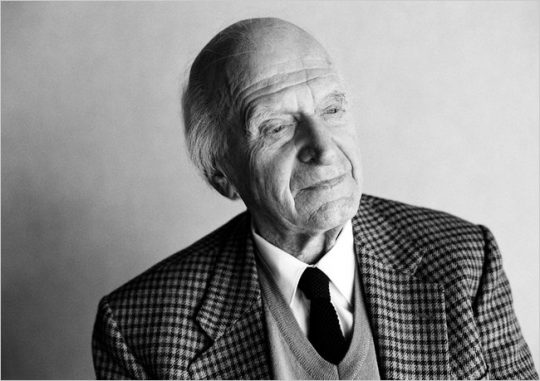
For most of that time, from March through December 1944 Keilson kept a diary. After the war he forgot all about it. Many years later, towards the end of his long life—Keilson died in 2011 at the age of 101—it resurfaced and appears now in an excellent English translation by Damion Searls under the title 1944 Diary.

Keilson lived an extraordinary life. Born in 1909 in a small town in eastern Germany near the Polish border, Keilson moved to Berlin in the late 1920s to study medicine but was unable to complete his degree once the Nazis came to power. Instead, he trained as a gymnastics and swimming instructor and worked on his first novel, Life Goes On, published in 1933 but banned the following year, like all books by Jewish writers. Most importantly, he met a divorcee named Gertrud Manz, whom he later described as “an adult woman I could talk to as an adult man and who treated me as such.” It was Manz who persuaded Keilson to leave Germany for Holland in 1936.

In some ways, Keilson flourished in Holland, quickly mastering Dutch and gaining a residency card. He continued to write, publishing under various pseudonyms, and worked a series of jobs. But even though more successfully integrated than most émigrés, Keilson did not have it easy. He had to live apart from Manz—the couple had not been allowed to marry in Germany because of laws against intermarriage and they couldn’t in Holland either because they weren’t Dutch—even when their daughter was born in 1941.

From May 1940, when the Nazis conquered Holland, Keilson went into hiding. But his parents—he had managed to get them out of Germany in 1938—felt themselves too old for such subterfuge. They were deported to the transit camp at Westerbork and later murdered at Auschwitz. When he was writing the diary Keilson did not yet know their fate, but he suspected it; he regularly refers to the heartbreak of losing them (”Intense longing… for my parents. I talk to them sometimes. Oh, much too late!”; “If only I knew whether they were still alive”). This intuition of having himself been orphaned, together with his medical training, enabled his resistance work: he counseled children and teenagers in circumstances similar to his own, helping them ”get through the problems that erupted due to their long periods in hiding.”

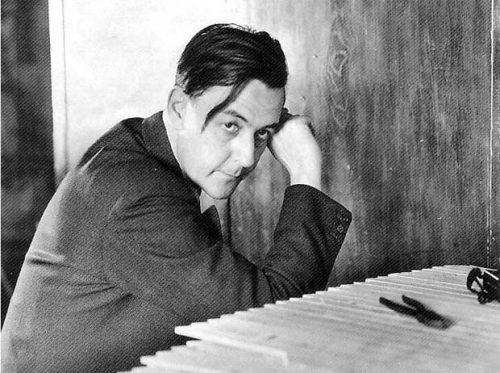
Hans Keilson c. 1940

He pursued similar therapeutic work after the war, as a psychiatrist in an organization dedicated to helping child survivors of the Holocaust. In 1979, he finally earned the doctorate the Nazis had denied him years earlier with a monograph on traumatized children that remains influential today. Keilson didn’t stop writing altogether—he published two more novels and a memoir—but medicine replaced literature as his life’s work.

In 1944, however, this outcome was far from certain. Over and over again in the diary Keilson wonders what will become of him. Not whether he will survive the war—although that anxiety thrums in the background—but what he will do with himself once it’s over. At one point, he unleashes a flurry of questions: “Which nationality? Be a doctor? Go back to school? Exams? Surely not that. Will they give us citizenship in Palestine? And then what? Plant orange trees? A chicken farm? Not me.” He zigzags between thinking of himself as a writer and as a doctor, worries how he will support his family, and dreams of security, precisely the quality he lacks in his current life, where everything is at once static and transitory.

For these reasons, 1944 Diary is as much an investigation of its author’s psychology as a document of its period. Keilson has surprisingly little to say about his daily activities, and even less about the war as a whole. (Even the most dramatic section—detailing a Nazi razzia or roundup in the streets around his hiding place—while he narrates in real time in interrupted by a bizarre and unsettling dream sequence.) In part, this reticence stems from the need to keep his resistance work secret should the diary ever fall into enemy hands. But mostly it’s a function of his conviction that what matters most in life is the inward struggle to represent experience. In an entry from September 23rd, after referencing the Battle of Arnheim, Keilson comments: “These events, however much they grip me, are no longer my real life.” What matters is “the other, main life—the human being, the poem, people together.”

Above all, Keilson values the idea of humanity, of being able to see another person “in their full humanity” rather than “in terms of a specific function.” But what did that mean for him? From what position should he strive to encounter that humanity? Keilson feels split: he is at once an artist and a family man, a poet and an “upstanding citizen and doctor.” The citizen, he sometimes laments, will be the death of the artist. Then he recalls his father’s last words to him—“Don’t forget: You are a doctor!”—and resolves to keep pursuing medicine. But he fears that won’t fulfill him. For months, he swings between the two positions, “always undecided, now being one and seeking the other, now being the second and seeking the first.”

Compounding this uncertainty is his love life. Shortly before beginning the diary, Keilson met a young woman named Hanna Sanders, who was in hiding at the home of two other members of the resistance cell, a ten-minute walk from his lodgings with the Rietsmas. Keilson and Hanna enter into an intense affair that lasts until Keilson returns to Gertrud and left his hiding place in Delft for one closer to her. Not coincidentally, the diary breaks off with this decision, as if to confirm that its function was to help Keilson work through the affair. In one of the first entries—unusually it is given a title, “No fear”—Keilson writes:

No more whitewashing. I’m saying what I say to myself in secret. The blank sheet of paper’s power to inhibit the writing and thinking process has been overcome. I will write down my thoughts and experiences. My conscience is not turned off, but it is no longer afraid of expressing itself.

Keilson doesn’t offer excuses for the affair (his separation from Gertrud, the uncertainty of life during war); he knows what he is doing is wrong. Yet he is inescapably drawn to Hanna. The relationship is as intense as it is truncated: Hanna’s movements are more restricted than his, the pressures they face are immense, and she knows about Keilson’s family life. In some dim way, Gertrud seems to have known about the affair, too: on one of the few occasions they are able to see each other, Gertrud begs Keilson, “’Please, no problems, not now.’”

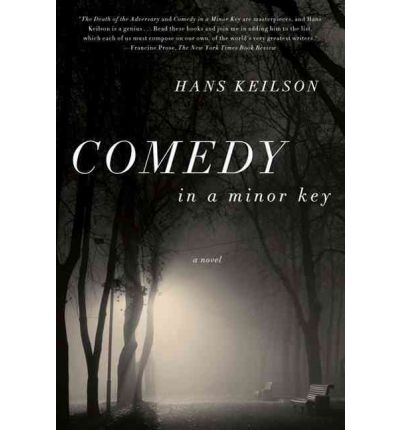
But Keilson makes problems, vacillating between Gertrud’s “deep maturity, understanding, empathy” and Hanna’s “loving affection and devotion,” as well as her forcefulness (this is as much physical as emotional: he “can’t stop thinking about the strong, uninterrupted stream I heard when she was sitting on the toilet “). The conflict torments him but it’s also productive. Poems pour out of him. He writes a novella in just a few weeks (it would be published after the war as Comedy in a Minor Key). At his most self-serving, Keilson justifies his infidelity as necessary for his art—suggesting that his productivity “depend[s] on living out a perpetual split”—but in general, as befits a therapist, he is clear-eyed and unsparing in his self-reflection. He never shies from presenting the darker aspects of his personality, noting more than once his “own sadistic tendencies,” which he calls a “deep bitter wound, almost like pleasure, at making another person suffer.”
Because Keilson is so open about his failings, we almost always sympathize with him. Keilson rarely compares Gertrud and Hanna, and never plays them off each other. Our interest in these women is a function of his own rather than something we arrive at by reading against him. Each is smart and talented; we understand why Keilson loves them both. Gertrud was a graphologist—in later years Keilson frequently told the story of the first time she saw Hitler’s handwriting: “’This man is going to engulf the world in flames’”—and Hanna was a translator, bringing Katherine Mansfield, among other writers, into Dutch.

The evenhanded self-scrutiny Keilson brings to his self-portrait is even more fully evident in his interactions with others. He counsels Leo and Suus’s nine-year-old daughter Hannie when she breaks into fits of terror at the idea of God (Keilson finds her response entirely reasonable). He intervenes in a tense situation between Suus and the other Jewish member of the household, a woman named Corrie Groenteman who worked as their maid. Corrie takes to her bed in tears at Suus’s disparagement and class resentment; Keilson reminds Suus that the “woman crying upstairs” had “her children in Poland, her home life torn apart, he family destroyed.” He is calm, judges as little as possible, diffuses hostility as best he can, concluding “My attitude was: They just have to be taught the understanding they lack.”

His work as a therapist surely helped him imagine points of view different from his own. This tendency comes out most strongly in an extraordinary entry describing Keilson’s encounter with J. C. A. Fetter, a pastor and psychoanalyst whose parish helped Jews. Keilson visits Fetter at his church in The Hague to ask him to pass some money on to Gertrud. He catches Fetter at the end of his rope; before long Fetter lashes out at Keilson: “Always these Jews… they rejected Christ, they excommunicated Spinoza—over and over again, they’ve provoked extraordinary responses from other peoples…It’s too much, it’s too much! Jews all the time, we can’t take it any more.”

Fetter’s outburst is classic anti-Semitism. But while we might be horrified, Keilson is not. He doesn’t accept Fetter’s rant, but he doesn’t reflexively reject it, either. Rather than screaming at him or turning away, he reaches out. First, Keilson points out, referring to Fetter’s own psychoanalytic experience, that people don’t ask for help unless they are desperate. He reminds Fetter that he, Fetter, had once supported the Nazis but had broken with them on “their solution to the Jewish question.” Rather than accusing him, he soothes him: “As a result of my open admissions… Fetter slowly came back to his senses.” It’s a remarkable piece of large-spiritedness and humanity in a situation where these responses were in short supply even among those who were mostly doing the right thing

Of course, Keilson isn’t always enlightened. He admits frankly to “deep satisfaction” at the destruction the Allies are meting on German civilians: “I’m filled with overpowering rage a lot of the time: Wipe ‘em out!” He dreams of revenge and even fantasizes about returning to Germany after the war as a kind of psychological spy, a person “to whom [the Germans] were mercilessly, unguardedly revealing their deepest secrets. That would be the greatest pleasure imaginable.”

More complicated still are his ambivalent feelings about his hosts, people he lives in such proximity to and to whom he is indebted—they have risked their lives for him—yet for whom he exists in the role as a subordinate, even underling. When in the midst of the Hongerwinter, the Hunger Winter, the famine of 1944-45, Leo miraculously comes home one day with a goose, the mood in the house improves dramatically, yet Keilson confesses “I felt terrible, violent envy over how it was divided up.” Later, on his 35th birthday, he broods over Leo and Suus’s indifference: “an utter lack of warmth and spontaneous kindness.”

Even though Keilson was free to move around the country—though he always risked having his papers found out as false or, more likely, being press-ganged as an able-bodied young man to serve the German war effort—he was still trapped. One day he runs into the author Marianne Phillips on the street—she too was living under a false identity—and the mutually admiring writers make plans to see each other. But when Phillips suggests visiting him at home, Keilson falls silent:

“I have to ask my people if that’s okay,” I said, a bit sheepishly.

“Me too,” she said,

Something snaps between us. The happy anticipation is gone.

My people. As if Keilson and Phillips are pets. Keilson has already reflected on why he reacts with shame when his poems are praised: “I realized that I have been living like an animal, a dumb beast, for a long time now, for years, almost.”

The diary is filled with similar expressions of anxiety and despair. Hearing a reference to “mass murders in Polish concentration camps” on a radio report from England, Keilson, atypically bitter, imagines a grim future:

We should take Jewish children when they’re still young and build up their immunity with small doses of gas, the Jewish state should, for the next pogrom! But who knows, the goyim will probably just use electricity then.

In what might be the darkest moment in the book, he is suddenly overcome by a vision of “a book full of gas, killing everyone who reads it.”

§

Damion Searls has done a great service in bringing this fascinating and gripping book to English-language readers. In addition to his vivid and powerful translation, Searls provides clear and helpful notes, along with a thoughtful introduction and afterword. My only criticism is that Searls misrepresents Keilson by downplaying his anger, fear, and shame. These emotions are almost as prevalent as his broadmindedness and enlightenment, but they don’t fit with Searls’s conclusions. For Searls, Keilson’s diary embodies the triumph of the individual over history, offering “a testament to finding one’s way amid horrors and conflicts of all kinds. Human struggles can outweigh even the Holocaust, world war, the Dutch Hunger Winter.”

But Keilson is anything but triumphant. Indeed, his experience allows us to think about the limits of even relatively lucky individual victims of Nazi persecution. In an entry from March 1944, Keilson remembers reading Kafka’s story “The Great Wall of China” and being moved to tears by the line “We sit dreaming at the window and wait for that message.” Despite his good fortune, despite his active resistance to fascism, Keilson is aware that events have made him an onlooker on his own life, a man who dreams at a window, waiting for a message. And when the message comes it might be too late, might not even be for him.

In the diary’s last entry, Keilson admits that “for six months now I’ve known that the war won’t simply end for us, with me coming back unscathed to an unscathed family in an unscathed home.” Yes, humans must struggle as best they can, as Searls puts it, but that struggle might not outweigh historical trauma. In one of his first entries, Keilson had already offered an extended meditation on what his diary—and by extension, he himself—can and cannot do:

The times when I write in this diary are my true moments of contemplation. It is a wellspring, my only chance to escape the lies. Yet still so far from the truth of my nature. All the unlived possibilities too, which haven’t been able to form my nature. Is longing enough? For me, it’s just a sign that I’m not yet totally a lost cause. I’m often in such uncharted territory, and then feel like a pioneer, far from my homeland. With courage, strength, endurance, venturesomeness, otherwise he wouldn’t be a pioneer. And then at night, by the campfire, a feeling of abandonment, homesickness, alienation steals over him. He gets used to it slowly, or never. Someday his children will be locals. I’ve had more than enough of this feeling already.

I once heard Jeremy Adler, the son of the writer and scholar H. G. Adler, who survived Theresienstadt, Auschwitz, and Buchenwald, say that unlike most of the writers we associate with the Holocaust, his father was a grown man when he was deported at age thirty-one. (Elie Wiesel, by contrast, was only fourteen, and Primo Levi twenty-four.) He had lived longer, stored up more experience, and been able to complete an education in a way many survivors, mere teenagers or young adults when their lives were uprooted and their worlds destroyed, had not.

Hans Keilson, thirty-four years old when he began his diary, was in a similar position. His life experience led him to see complexity everywhere. Keilson the pioneer, surviving through pluck, fortitude, nerve, and extreme good fortune, is also Keilson the orphan, the homeless person, lost and abandoned. His very language in the diary entry confirms that sense of a split self—as he moves deeper into his metaphor, Keilson’s pronouns shift from first to third person. But Keilson’s “I” was always also a “he”—he was always self-divided, not just from personal predilection or constitutional uncertainty, not just from intellectual commitment to Freud’s understanding of the unconscious, but more powerfully from his historical position as one who seems on the face of it not to have been a victim but was all the more wounded because his fate was so much better than so many others, even the rest of his immediate family.

“To see the other person in their whole humanity”—this ability, amply on display in this remarkable document, was Keilson’s great gift, not least when the other person was himself. Thankfully, 1944 Diary is not a book of gas, killing everyone who reads it. But neither is it a book of life, affirming individual resistance to terror and oppression. The odour of gas always threatens to waft from the page.

—Dorian Stuber

N5

Dorian Stuber teaches at Hendrix College. He has written for Open Letters Monthly, The Scofield, and Words without Borders. He blogs about books at www.eigermonchjungfrau.wordpress.com.

.
.

May 142017
 

Everyone knows the best conversations come on long walks, where speech naturally matches pace, and where silences are almost always comfortable. Walking was thus the ideal way for Seelig to draw out the reticent and mistrustful Walser. —Dorian Stuber

Carl Seelig
Walks with Robert Walser
Translated by Anne Posten
New Directions, 2017
$15.95; 127 pages

.
For years readers seemed regularly to be rediscovering the work of the idiosyncratic Swiss modernist writer Robert Walser (1878—1956). To be sure, Walser had always had his partisans—readers who delighted in the syntactical and tonal shifts of his quicksilver and devious prose. Already in 1929, for example, the cultural critic Walter Benjamin made Walser the subject of a perceptive and still influential essay. More recently, W. G. Sebald included a lyrical meditation on Walser in his collection of linked essays, A Place in the Country. Yet Walser remained relatively unknown. Even though the great Austrian writer Robert Musil once described Kafka as “a special writer of the Walser type,” Kafka not Walser became a literary and cultural adjective.

In the last decade, however, Walser has become a fixture, not least in the English-speaking cultural world. (This is a turn Walser himself, who never travelled further than Germany in his whole life, and who wondered, “Why should writers travel, as long as they have imagination?” could surely never have anticipated.) Yet I don’t think it’s right to say Walser is now canonical. Something more interesting has happened to him. He inspires creative homage rather than dutiful respect. His most ardent admirers aren’t academics but rather contemporary filmmakers, visual artists, and of course writers. This resurgence has been made possible by the dedication of translators like Damion Searls, Tom Whalen, and above all, Susan Bernofsky, who have made more of Walser’s work available in English than ever before.

But perhaps nothing demonstrates Walser’s unlikely ascent more than this edition of Carl Seelig’s Walks with Robert Walser, first published in 1957 and now translated into English by Anne Posten. English-speaking audiences are getting not just Walser’s own books but also books about him. And this book is definitely worth it. To use a word much favoured by Walser himself, it’s delightful. In it, Seelig resurrects the nearly forgotten Walser and lovingly shows him in all his contradictory but mostly charming moods.

Born into a wealthy family, Seelig was a writer, editor, publisher, and patron to writers across the German-speaking world. His correspondents included Joseph Roth and Kafka’s close friend Max Brod. In 1949 he helped Albert Einstein compile a best-selling autobiographical volume.

Undoubtedly, however, his greatest legacy is his friendship with Walser. Seelig, who became Walser’s literary executor, orchestrated the first Walser rediscovery: the current revival wouldn’t have been possible without Seelig’s attention to the man and his work.

Seelig first corresponded with Walser in 1922. But they didn’t meet until 1936. In the intervening years, Walser had been admitted to the psychiatric clinic Waldau near Bern and then transferred to a sanatorium in the Appenzell. He had written nothing since entering Waldau. Seelig, who “felt the need to do something for his work and for him personally,” arranged with the head doctor to be able to go for a walk with Walser.

Over the next twenty years, until the writer’s death on Christmas Day in 1956, Seelig and Walser met several times a year to go for extensive day-long rambles across eastern Switzerland. Walks with Robert Walser records their itineraries, their conversations and, indelibly, their meals. Walking in Switzerland, then as now, is a civilized affair: even on the remotest mountaintop a refreshing inn or a café awaits.

Walser had always been a passionate walker, as he described in his brilliant autobiographical novella The Walk (1913). In the 1920s, as his mental health frayed and his writing began to dry up, Walser ever more desperately sought solace in walking. He once made it from Bern to Geneva in a single night without stopping, and, another time, again in the middle of the night, from Bern to the top of a mountain in the Bernese Oberland, where, as he later told Seelig, he “blithely devoured a piece of bread and a can of sardines.”

Walking was thus the ideal way for Seelig to draw out the reticent and mistrustful Walser. Everyone knows the best conversations come on long walks, where speech naturally matches pace, and where silences are almost always comfortable. In his description of their first walk, Seelig called silence “the narrow path on which we approach[ed] each other.”

Seelig seems to have been a true mensch: gentle, kindly, and unassuming. We never see him make demands of Walser or expect anything in return for his interest other than the pleasure of the older man’s company. Seelig’s literary talents seem to have been fairly modest, but in Walks with Robert Walser he wisely sticks to a straightforward style and, as his title suggests, focuses his attention firmly on his companion rather than himself.

For the most part Seelig lets Walser be himself, though he can’t help but occasionally prod the older man to resume writing, suggesting for example that the asylum would surely make great material for a novel. (Walser dryly responds, “I should hardly think so.”) Later he asks again: if it could be arranged for Walser to leave the asylum, would he start writing again? Walser is categorically and characteristically evasive: “There is only one thing to do with this question: not answer it.”

Over and over, Walser declares himself satisfied with his life: “In the asylum I have the quiet I need… It suits me now to disappear, and inconspicuously as possible.” He rejects Seelig’s proposal to arrange for Walser to have a room to himself: “ I wish to live with the people and to disappear with them. That is the proper thing for me.” He takes seriously the work asked of him in the asylum—sorting lentils and gluing together paper bags, among other menial tasks—and becomes grumpy when it is interrupted by anything other than the chance to go walking. He seems reasonable, interested in the world, eminently sane.

Robert Walser, c. 1898

Yet he is also withdrawn, sometimes moody, unresponsive to the news of the deaths of his brother Karl and sister Lisa, the siblings he was closest to. He vividly describes the tribulations that led him to be institutionalized: “During my last years in Bern I was plagued by wild dreams—thunder, shouting, a choking in my throat, hallucinatory voices—so that I often woke screaming.” And when Seelig asserts Walser’s literary importance, the writer becomes so agitated—“Quiet, quiet! How can you say something like that! Do you really think I believe your society lies?”—that Seelig has quite a job of it to soothe him.

Seelig has more success getting Walser to talk about what he has written than anything he might write in the future. Walser proves a shrewd, though sometimes harsh reader of his own work: “That is the error of my novels. They are too whimsical and too reflexive, their composition often sloppy.” He describes his writing process, explaining he couldn’t write to commissions: “Everything must simply grow out of me without being forced.” He speaks admiringly of writers, like Dickens and Gottfried Keller, about whom “one is never quite sure whether to laugh or cry.” When Seelig rightly suggests Walser is such a writer himself, Walser begs him not to make such comparisons: “Don’t even whisper it. It makes me want to crawl into a whole, being named in such company.”

Yet Seelig is right, both about sudden shifts in register that characterize Walser’s prose and its general brilliance. Although he also wrote four novels, Walser is best known for the hundreds of miniatures he wrote for European newspapers in the decade before and after WWI. In these small prose pieces, Walser—who once called himself “a clairvoyant of the small”—considered in sometimes rhapsodic and sometimes arch prose encounters with ordinary things: one of his most beautiful pieces is called “Ash, Needle, Pencil, and Match.” He also drew liberally on his own experiences: working as a bank teller, enjoying a balloon ride with his publisher, studying at a school for would-be servants.

Example of Robert Walser’s Microscript

For this reason, to write about Walser’s writing is invariably to write about his life, even though it was by his own account singularly modest and largely undramatic. His prose, almost always told by a first person narrator who like Walser is bemused and surprised by the world’s richness, is at once autobiographical and not, neither fiction nor non-fiction. He offered a fine description of the strengths of his own work when he told Seelig:

I am immediately wary of writers who excel at plot and claim practically the whole world for their characters. Everyday things are beautiful and rich enough that we can coax poetic sparks from them.

With their vivid first-person narration, wealth of observation and reflection, and total disregard for the trappings of conventional plot or character, Walser’s texts anticipate those of contemporary writers like Lydia Davis, Teju Cole, and Ben Lerner.

But in traipsing with Walser through the Swiss landscape, Seelig reminds us that Walser is a small giant of world literature only because he is grounded in such a particular place. For me, Walser exemplifies a particularly Swiss impishness, the kind I encountered regularly in my Swiss relatives, most of whom came from the villages near Biel, the little city where Walser was born and where he spent many of his most productive years. These relatives loved to tease, to take the piss out of everyone and everything, even while they espoused a conventional morality that often descended into sententiousness. Walser’s genius is to ironize these conventional sentiments, so that readers never quite know to take what seem like ingenuous, almost artless exclamations of delight, especially since they reverse so quickly into sharp criticisms of all manner of conventional pieties, from bestsellers to car culture to banking regulations.

Yet although the ideal reader of Walks with Robert Walser will already know and love Walser’s work—anyone who doesn’t will without doubt want immediately to seek it out—and will therefore be intrigued by Walser’s assessment of that work, the real attraction here is Walser himself. By the time Seelig knew him, Walser had largely withdrawn from the world, in his younger days he had cut quite a figure in artistic and even high society. From 1905 Walser joined his brother Karl, an artist who found fame as the set designer for the theater director and impresario Max Reinhardt, in Berlin, where he spent most of the next eight years. The Walser brothers were famous for eating everything at the parties they were invited to or crashed. Their refusal to follow rules of genteel decorum extended to the literary world. Walser impressed the playwright Frank Wedekind with a canary yellow checked suit and mocked Hugo von Hoffmansthal, whom he is said to have asked whether he ever got tired of being famous.

We get glimpses of that impish young man from the provinces in Seelig’s portrayal of the much older mental patient. We watch Walser devour eight tartlets in a single sitting. We observe his horror of overcoats (even with 20 cm of snow on the ground he refuses to wear one) and his love of umbrellas (“under an umbrella one can feel quite at home”). We see him steering clear of barking farmyard dogs, adding “Have you noticed that dogs nowadays are much quieter than they used to be, as if electricity, the telephone, the radio and such robbed them of speech?” And we see him warm up to the patient and kind Seelig, revealing the excitable boy inside. At the end of their outing on April 15, 1938, Walser “shakes my hand several times, runs after my train, and waves until it disappears around the corner.”

Above all he eats. Despite the privations of the war years (on a walk in January 1943 Walser is “amazed” that he and Seelig “need ration cards for a portion of cheese”), food seems plentiful, and he and Seelig eat and drink with gusto. A typical passage reads: “Lunch at Schäfli in Trogen. We both have a huge appetite and clean every plate: the oatmeal soup, the bratwursts, the mashed potatoes, the beans, and the pear compote.” They’ll have a few drinks, smoke a cheroot or a cigar, and then walk ten more miles. None of the food and drink is particularly fancy, but it’s devoured with the gusto and glow of wellbeing of those who have been out in the fresh air no matter the weather.

Earlier I named some of the excellent translators who have tackled Walser’s difficult works in recent years. All of them follow in the footsteps of the great Christopher Middleton, the poet and scholar who was the first to translate Walser into any language. In an entry dated Good Friday, 1955, Seelig tells Walser that Middleton has translated two of his texts “with admirable subtlety,” Walser answers “with a curt ‘Really!’”(In the original, Walser says “So, so!”, a response that acknowledges the interlocutor without committing to agreeing with what he’s said; it’s the very phrase my uncle would use all the time when our conversations reached an impasse and, in its passive aggression, quintessentially Swiss.).

Robert Walser, 1949

Anne Posten—admittedly translating Seelig’s Walser rather than Walser himself—is not quite up to the high standards of English language Walser translations. Her work is more dutiful than excellent. She struggles in particular with Walser’s Swiss idioms. Some of these are impossible to translate (Znüni, literally “a little something at nine o’clock,” is a second breakfast: calling it a “morning snack” is reasonable; I don’t know anything that can capture the full sense of this lip-smacking diminutive except maybe Paddington Bear’s “elevenses,” though that is too twee even for the Swiss). Others are easier to translate, but Posten misses the mark. A Grind is a head, even, depending on context, a mug; Posten’s “noggin” sounds impossibly quaint. And the Postauto is a bus, not a mail van.

Writing this review I came across a reference to a translation of Seelig’s book in progress by a Bob Skinner. I don’t know anything about Skinner or the fate of his translation. Presumably it’s been nipped in the bud by this one. (None of the links I’ve found online to the text of his draft work anymore.) That’s too bad, because the excerpts I’ve seen are terrific, more lively and vivid than Posten’s.

Take this excerpt from the entry for February 5, 1950. Here is Skinner:

In a confectioner’s Robert rolls a shapeless cigarette which starts a little fire when it’s lit. A couple nearby snickers; they think he’s a hick. He says that in the sanitarium he’s now sorting and untying string for the Post Office. This work is all right with him; he’ll take what comes.

And here is Posten:

In a pastry shop Robert rolls a misshapen cigarette. Since it isn’t well tamped, it flares a bit when lit. The couple next to us begins to giggle; they apparently take Robert for an unworldly farmer. He tells me that now he sorts and unravels twine for the post office. But he is content with the work. He simply takes what comes.

Seelig’s original reads:

In einer Konditorei rollt sich Robert eine unförmige Zigaretten. Da sie nicht gut gestopft ist, gibt as beim Anzünden ein kleines feuer. Ein benachbartes Paar beginnt zu kichern; es halt Robert offenbar für einen weltfremden Bauern. Er erzählt mir, dass er jetzt in der Anstalt Schnüre für die Post sortiere und aufknüpfte. Aber ihm sei diese Arbeit auch recht. Er nehme eben, was komme.

Posten’s version is more faithful to the original than Skinner’s. She keeps the explanation of the poor tamping, which Skinner cuts out, and “an unworldly farmer” translates “einen weltfremden Bauern” literally. But the passage is better with the elision, and “hick” is punchy and effective. When it comes to the string, “untying” is a better translation than the portentous “unraveling.” And saying the work is “all right with him” reads better than “he is content with the work.” Skinner makes Seelig come alive. In fact, he seems to be a better writer than Seelig is himself.

But if Posten’s translation sometimes disappoints, this sensation is quickly overcome by gratitude to her and the publisher for bringing the book into English. We’re lucky to have it.

Walks with Robert Walser is a joyous and affirming book. Readers will be left feeling as Walser does when, at the end of one of their excursions, exclaiming over the beauty of the day, he tells Seelig, “Are we not returning richer than we left?”

—Dorian Stuber


Dorian Stuber teaches at Hendrix College. He has written for Open Letters Monthly, The Scofield, and Words without Borders. He blogs about books at www.eigermonchjungfrau.wordpress.com.

.
.

Dec 062016
 

henry-green

I would argue that we should understand Green as a writer who suspends the literary categories of his time.—Dorian Stuber

green_loving_2048x2048

Loving
Henry Green
New York Review of Books, 2016
224 pages; $14.00

.
The English novelist Henry Green wrote nine beautiful and elliptical novels, all worth reading, but Loving (1945) is the best of them, indeed, one of the best English novels of the 20th century. This new edition—part of a welcome plan to reissue his works in the US—is cause for celebration.

Loving is set during WWII at a sprawling estate in Ireland called Kinalty Castle. Kinalty is owned by the ironically named Tennant family; fittingly, the Tennants are newcomers who have purchased rather than inherited the property. Mr. Tennant is dead; his son is fighting in the war. Mrs. Tennant lives with her daughter-in-law, Violet, Violet’s two small children, and a large group of servants.

In classic upstairs-downstairs fashion, the masters are not particularly important in the book (indeed, they are off in England for much of the time). Instead the servants are front and center, and we follow their sometimes rancorous, sometimes affectionate relationships. There’s Charley Raunce, recently ascended from the position of footman to butler, full of bluster and fear and the occasional kindness who finds himself out of his depth when a flirtation becomes something more. There’s Agatha Burch, the much put upon head housemaid, who oversees Edith and Kate, the two lovelorn under-housemaids. There’s Mrs. Welch, the alcoholic and suspicious cook. There’s old Nanny Swift, who took care of Violet as a girl and now looks after her girls. There’s Albert, the pantry boy, naïve, kind, and touchy. And there’s Paddy, the Irish lampman (the house has no electricity), who only Kate troubles herself to understand.

Much of the material for Loving came from Green’s childhood; servants had always been part of his life. Born Henry Vincent Yorke in 1905—he took his deliberately banal pseudonym as a way to separate his writing and business lives—Green grew up at Forthampton, the family seat in Gloucestershire.

In his memoir Pack my Bag, Green claims, “Most things boil down to people, or at least most houses to those who live in them, so Forthampton boils down to Poole, who did not live in but was gardener about the place for years.” Young Henry was fascinated by Poole, even though the man did not like Green’s mother and spoke badly about her to the boy. (The family legend is that he never forgave her for making him bowl sugar beets across the lawn for her to shoot at.) Green, who adored his mother though he seldom saw her, was torn apart by these calumnies yet unwilling to repudiate the one who made them.

It seems that Green knew already at a young age what he would explore in this novel in particular: that loving is a messy business, bound to lead to hurt feelings. In his life and writing alike Green was at home with complexity, especially in terms of social class. Green, who memorably described himself as “a mouthbreather with a silver spoon,” at one stroke both acknowledging and ironizing privilege, said that his childhood taught him “the half-tones of class”. It’s fair to say that Green knew the family servants, to whom he devotes the first pages of his memoir, better than either his mother, whose primary interests were shooting and riding and with whom the boy spent only one precious hour a day, or his father, a formidable Victorian polymath who pursued an interest in archaeology while running a company that cleverly manufactured both beer-bottling equipment and bathroom plumbing.

Young Henry was sent to Eton, where his contemporaries included Eric Arthur Blair, who would himself take a pseudonym and publish under the name George Orwell. Later he went up to Oxford, where he befriended Evelyn Waugh and shared rooms with Anthony Powell. He hated both schools. At Oxford he drank a lot, went to the movies twice a day, and wrote his first novel, Blindness, before leaving without a degree. He went to work the floor of the family factory in Birmingham, an experience he fictionalized in his second novel, Living. Later Green moved from the factory floor to the office, rising to become managing director.

Green published his memoir in 1940, when he was only thirty-five, because he was convinced he would be killed in the coming war: “surely it would be asking much to pretend one had a chance to live.” Happily he did live, and even thrived. He published five books during the war years and during the Blitz served courageously and happily in the Auxiliary Fire Service. But Green’s production slowed markedly after the war. He wrote three more, increasingly laconic books (the last two composed almost entirely in dialogue). Then, after 1952, silence, even though he lived for another twenty-one years. Jeremy Treglown, Green’s excellent biographer, vividly describes him in his last years as a vagrant in his own home, drinking because he couldn’t write and unable to write because of his drinking.

The downward trajectory of Green’s life is at odds with the sly pleasures and enlivening strangeness of his prose. The first thing readers of Loving will notice is its vivid dialogue. Here’s Edith revealing to Kate her feelings for Raunce:

‘All right then I’ll learn you something, Edith said and she panted and panted. ‘I love Charley Raunce I love ‘im I love ‘im I love ‘im so there. I could open the veins of my right arm for that man.

And here’s Miss Burch responding to Kate’s half-fearful, half-longing speculation about what would happen to them should the Germans invade:

‘Mercy on us you don’t want to talk like that,’ Miss Burch said. ‘You think of nothing but men, there’s the trouble. Though if it did happen it would naturally be the same for the older women. They’re famished like a lion out in the desert them fighting men,’ she announced.

These examples are moving and funny and a little alarming—characteristic of the emotional roller coaster the book puts us through. The absence of punctuation paradoxically makes the pauses and emphases clearer. Green delights in the clichés and hackneyed images (“I could open the veins,” “They’re famished like a lion out in the desert”) of speech without looking down on the speakers.

But the novel’s narrative voice is even more memorable than its representation of speech. To be sure, narration is simply opposed to speech in the novel. Sometimes narration apes the agrammatical or idiomatic qualities of speech, such as when it uses adjectives as adverbs: “He picked it up off the floor quick”; “He stood face averted then hurried smooth and his quietest to the roll-top desk.” Sometimes it takes on the rhythms of speech, its unpunctuated flow: “Bert stood motionless his right hand stiff with wet knives.”

But sometimes the narration is stranger than anything we find in its speech. Whereas the latter aims at clarity, the former finds meaning in obscurity. Such uncertainty is especially true of its unsettling of traditional English-language syntax. In this example from early in the book, Kate and Edith come across Paddy asleep in the old stables. The windows of this room are covered in cobwebs. As, it seems, is Paddy himself:

Over a corn bin on which he had packed last autumn’s ferns lay Paddy snoring between these windows, a web strung from one lock of hair back onto the sill above and which rose and fell as he breathed.

Note the excess of qualifiers in the first half of the sentence: Paddy snores “over a corn bin” and “between these windows”; the placement of that last modifier emphasizes the phrase “snoring between these windows,” which highlights in a peculiar, excessive way the specificity of an action. “Snoring,” after all, is hardly dependent on place. (In fact, the verb here is not “snoring” but “lies snoring”: the inversion of subject and verb—“Over a corn bin… lay Paddy snoring” is odd, almost archaic.) Also typical, and related to this ambivalent specificity, is the demonstrative “these” rather than the definite article “the,” a tendency the critic Frank Kermode once described as Green’s way of hinting that the text is singular, not easily reducible to something else.

Certainly the most singular quality here—though it is in fact typical of Green’s style—is the sentence’s unstable grammar. The sentence pivots (or collapses, as the case may be) on the comma after “windows.” What comes after it—“a web strung from one lock of hair back onto the sill above and which rose and fell as he breathed”—seems at first to be a subordinate clause, but on re-reading proves to be something else, something agrammatical. Adding that ungainly phrase “and which” turns this subordinate clause into the dominant clause for the sentence’s final bit of information. Bewilderingly, “web” is both a predicate referring to Paddy (it is strung from a lock of his hair to the sill above) and a subject in its own right (it rises and falls as he breathes). On a first reading we expect the final “and” to connect “above” to another preposition (so that it would read something like: “the sill above and beyond him”). When this expectation is foiled, we stumble over what comes next, the adjective clause “which rose and fell as he breathed.”

Green’s prose disguises its strangeness as ordinariness. He’s not an overtly ostentatious writer. Yet his ostensibly straightforward prose is profoundly unsettling and unusually hard to parse. The longer we pause over a sentence like this one the weirder it seems. In this way, he reveals himself to be one of the most genuinely experimental writers in the English tradition, writing prose that both demands and resists interpretation. (Webs being a conventional figure for interpretation, we could read the spider webs in this scene as a joke about our felt need to make sense even of things that resist sense.)

What is true of Loving’s syntax is true of its use of plot and character as well. Neither of these attributes is as straightforward as it seems. In general, Loving is not much concerned with plot. Even the question of whether Raunce will get together with Edith—the event that most approximates a conventional plot arc—is supplanted by the more intriguing but more difficult to answer question of what the two even want from each other. Several subplots are braided around the Raunce-Edith relationship, each of which rises to a crescendo of antic complexity that would be more at home in a P. G. Wodehouse novel but each of which fizzles out before coming to any resolution.

Take, for example, the business with the peacocks. The castle’s extensive grounds are ornamented by some two hundred of the birds. When they suddenly disappear, Mrs. Tennant summons Raunce for an explanation. Raunce, new at his job and insecure, as well as constitutionally shifty, does not want to tell her what has really happened: namely, that the nephew of the cook, a belligerent nine-year-old recently evacuated to Kinalty from London to escape the bombing, has strangled a peacock that had the temerity to peck at him, and that Paddy, the Irish lampman, has locked the rest of the birds up for safekeeping.

In his interview with Mrs. Tennant, Raunce equivocates about the convoluted, variously incriminating event. Unsatisfied, Mrs. Tennant continues to mull over the matter. She confides to her daughter-in-law that Raunce seemed afraid of something, adding:

“Frightened of what I’d like to know? I put it to Raunce. But he couldn’t or wouldn’t say.”

“Which is just like the man,” the younger woman interrupted. “Always hinting.”

Violet’s insistence here reflects her unshakable belief that everyone is always talking in code about her affair with a neighbouring landowner. The exchange between Mrs. Tennant and Violet is typical: Loving’s characters repeatedly talk at cross-purposes. But the passage is unusual in that by explicitly referencing hinting it talks openly what is otherwise hidden: that Loving challenges our interpretive abilities. Everything is a hint, nothing is a clue.

The novel’s distinctive narrative voice is particularly vexing. Unlike many writers of the period, Green doesn’t have much use for free indirect discourse: his third-person narration doesn’t slip into and out of the perspective of particular characters. We rarely have access to what characters are thinking or feeling. Consider a passage in which Raunce studies the notebooks left behind by the previous butler, Eldon, and learns that Eldon has been systematically cheating his employer, for example about her whisky:

Not only had Mr. Eldon never credited her with the empties, that was straightforward enough, but he had left whole pages of calculations on the probable loss of the volatile spirit arising from evaporation in a confined space from which the outside atmosphere was excluded. He had gone into it thoroughly, had probably been prepared for almost any query. Charley appeared to find it suggestive because he whistled.

Admittedly, we could read this material as coming from Raunce’s perspective: the aside “that was straightforward enough” could certainly be his. Yet the passage’s use of names is puzzling: we might expect Raunce to call Eldon “Mr.” but he in fact is anything but deferential to his predecessor’s memory. Something like “the old man” would have fit better. And why Charley, rather than Raunce, which is what the text usually uses? Moreover, the description of the evaporation—“the probable loss of volatile spirits”—doesn’t sound like Raunce at all, he’s nowhere near that articulate. Are we supposed to think Eldon has written something like this in the notebooks that Raunce is parroting, as if reading aloud? Impossible to say: we know almost nothing about Eldon.

But the strangest thing here is the passage’s final sentence. Just when we would expect the prose to inhabit Raunce’s consciousness most clearly so as to tell us what he makes of the situation, we’re left with nothing but uncertainty: Raunce “appeared to find it suggestive.” Why doesn’t the text know?

Green answered this question in a radio interview from the 1950s:

And do we know, in life, what other people are really like? I very much doubt it. We certainly do not know what other people are thinking and feeling. How then can the novelist be so sure? … We get experience, which is as much knowledge as we shall ever have, by watching the way people around us behave after they have spoken.

For Green, art follows life. All a narrator can do is to observe what people say and how they behave and then make guesses about the relationship between them. Loving is littered with such expressions of narrative uncertainty:

“Well now if it isn’t Arthur,” this man said hearty and also it appeared with distaste.

“And that reminds me,” he went on seeming to forget he had just given another reason for his presence.

Then she added as though unable to help herself, “It should do you a mort of good.”

Miss Burch fixed a stern eye on Kate so much as to say a minute or so ago just now you were about to be actually coarse.

“Ah Mrs Jack,” Miss Burch put in as though sorrowing,

“It was Edith,” he answered at random and probably forgot at once whom he had named.

On the one hand, these narrative amplifications tell us much more than a simple “he said” or she replied.” Moving down our list of examples, we learn that one man dislikes someone called Arthur, though he pretends he doesn’t; another man can’t keep his stories straight; a woman is at the mercy of her (at least ostensible) concern for another person; and so on down the list.

And yet on the other hand they tell us much less. We learn only that characters seem to say things in a particular way, with particular consequences or implications. “Seems” and its variants “Seeming” and “seemingly” appear regularly; they are accompanied by similar expressions of doubt: “it appeared,” “so much as to say,” “as though,” “probably.” We always have to choose between the specificity of these descriptions and the hesitant manner in which they’re offered. Whenever the narrative tells us something it casts doubt on that telling.

This is, to say the least, disorienting for the reader. When Edith and Raunce argue over whether to give back a missing ring they’ve stumbled upon, Edith throws the ring into the fire before hastily rescuing it:

“Ouch it’s hot,” she said, dropping the thing on the rug. They stood looking down and from the droop of her shoulders it could be assumed that her rage had subsided.

Are we able to ignore the suggestion that Edith is no longer angry? Once the hint’s been made, aren’t we forced to take it? But hints can’t be hints if they’re really just disguised orders. We have to hear the “it could be assumed” as much as the “her rage had subsided.” Loving doesn’t let us naturalize its repeated qualifications. We have to take them seriously, for the book’s aim is to force us not just to read about but also to experience the uncertainty that its characters feel towards each other and in relation to their historical moment, in which it is by no means clear how the war will end.

This uncertainty is mirrored in Green’s title. Whether we take it as a gerund or as a progressive verb, “loving” is hard to pinpoint. The noun would refer to an abstraction that doesn’t just apply in a single case. The verb would describe a continuous action nullified or completed were it ever to stop and therefore without beginning or end. Words like “loving”—Green titled several of his novels in similar fashion: Living, Party Going, Concluding—suspend meaning. Like Raunce in Violet’s description, they are “always hinting” but never resolving.

I would argue in similar fashion that we should understand Green as a writer who suspends the literary categories of his time. True, he was published by Leonard and Virginia Woolf’s Hogarth Press and possessed like many modernist writers a brilliant, inimitable style. And yes, he had gone to school with or traveled in the same social circles as many of the leading writers of the 1930s and wrote social comedies that sympathize with the working class. Yet Green is neither a modernist nor a social realist. He wriggles free of categories, the true strangeness of his prose not always evident until we slow down to see it has been hiding in plain sight.

Yet it wouldn’t be right to say, as earlier readers have done, that Green is like no one else. (The American novelist and screenwriter Terry Southern, for example, famously called him not a writer’s writer but a writer’s-writer’s writer.) Instead, Green is like a handful of other English writers from the middle part of the century who don’t fit into prevailing narratives of twentieth century literature, writers who subtly distort realism without abandoning it, writers like Ivy Compton-Burnett, Elizabeth Bowen, and Barbara Comyns. Like them, Green hints that there is still much to be discovered in a literary tradition too often thought of as timid and unadventurous.

—Dorian Stuber

N5

ee5dd2a0-4260-4ff5-bcca-eb49f4d01f3c-3

Dorian Stuber teaches at Hendrix College. He has written for Open Letters Monthly, The Scofield, and Words without Borders. He blogs about books at www.eigermonchjungfrau.wordpress.com.

.
.