Mar 072014
 

Desktop44

I kept hearing his name, usually associated with the question, “Have you read…?” Have you read Reality Hunger? Have you read the new Salinger biography? Have you read How Literature Saved My Life? I believe the word is buzz.

By almost any standard, David Shields has been enjoying quite a ride. Since 2010, when Vintage Books published Reality Hunger: A Manifesto, Shields has written or edited 5 books. Most recently, he co-authored Salinger with Shane Salerno.  Shields also appeared in the PBS documentary produced and directed by Salerno.

On occasion, Shields has been pilloried by the controversy surrounding Reality Hunger, a book comprised mainly of appropriated and loosely attributed quotes by various writers and artists. He is unabashedly proud of the book, calling it one of his most personal and passionate. After exchanging a series of emails and speaking with him on the phone, what becomes readily apparent is that Shields cares intensely about reading and writing. His books are an extension of his deep abiding search for meaning, an exploration he calls a ‘radical epistemology.’

Shields’ writing pushes boundaries, often enflaming critics and detractors. At the same time, his style continues an ongoing conversation with literature that is certainly not new. Our interview ranges from Stanley Kubrick to Walter Benjamin, from Virginia Woolf to J.M. Coetzee, from V.S. Naipaul to David Foster Wallace. Shields is a prolific writer, a thoughtful and deep reader, and an artist not afraid to transcend boundaries.

–Richard Farrell


RF: Anne Carson writes, “I’ll do anything to avoid boredom.”  There’s a similarity of intent between Carson’s work and your work.  And what’s interesting is that you both do a lot of the heavy lifting for you readers, so that what is produced is anything but boring. The work appears effortless, but I suspect the exact opposite is true.

DS: That’s high praise, on a number of levels. People say, “Oh what did you do, come up with this clever idea and then look for passages that would fill up the book?” I don’t see how that kind of book would be any good. It would just been a one-trick pony. A lot of my friends, quite justifiably, think of Reality Hunger as my most personal and my most passionate book.

The book began when I started teaching a graduate course in fiction-writing at the University of Washington. I had this huge blue binder of full of quotations of stuff I really liked: passages from Heraclitus to D’Agata that were articulating and embodying what began to feel like a new aesthetic: not fiction, not as journalism, not scholarship, but essay as “radical epistemology.” Work that uses the frame of “nonfiction” to explore the most serious questions about existence: What’s real? What’s knowledge? What’s memory? What’s truth? What’s a self? How much can a self know about another self?

So I was gathering all these quotes. The packet was full of repetitions of the same quotes, misspellings, doodles. I started organizing passages into little rubrics or chapters. And year by year this course packet deepened, and then I realized I had the rough draft of a book, at which point I really went to work on it.

It’s a strange book. People think it was some kind of IED, some sort of attention-getting mechanism, but I thought twenty people would read it. I thought it would get published by a university press. It was intended for fellow writers and readers and students: for those of us bored by conventional fiction and conventional nonfiction, here’s a way forward. But because of the book’s purposeful withholding of standard citation, the book developed a kind of bad-boy aura.

reality-hunger

RF: You take the novel to task pretty hard in places, but I don’t think you’re attacking the novel so much as you’re attacking genre. Is your argument more about genre than it is about fiction versus nonfiction?

DS:  Right. One of the book’s epigraphs is from Walter Benjamin: “All serious works of literature either dissolve a genre or invent one.” I think it’s so ridiculous that so many people who are supposedly serious writers get praised for being Dickensian writers or Tolstoyan writers. Dickens and Tolstoy were great writers, but the reason they’re great is that they pushed the form forward, “altered the face of an art form” in Pauline Kael’s phrase. This is even truer for Flaubert or Virginia Woolf or Beethoven or Monet or Picasso.

I listened to a guide in the National Gallery who was asked what makes Mark Rothko a great painter. And the guide ended up saying, “Rothko’s great because he changed the weather for everyone who came after him.” Everyone afterward had to deal with Rothko. That’s the standard I’m trying to hold up for myself and fellow artists. It’s not that I have some minor quarrel with writer X, Y, or Z. The novel is supposed to be something new. That’s what “novel” originally meant. And yet it’s become unbelievably formulaic. I really care about the future of literature, and I’m trying to push it in an exciting direction and away from a dead direction.

RF: I wrote a portion of my critical thesis in graduate school on Leonard Michaels’s “In the Fifties.”  I read it and treated it as fiction. After all, it was included in a story collection. But then a classmate of mine treated the same piece as a nonfiction list essay.  This really annoyed me for awhile, until I recognized how little these distinctions mattered. It’s simply an elegant piece of writing.

DS: The only thing that matters is how Michaels arranged the material into a meditation on how the private narcissism of the fifties became the public violence of the sixties. I think that’s all that really matters. Plath. Catullus. Berryman. Whitman. We grant poetic license to the speaker. I’m seeking the same freedom for the essay as we’ve always had for the poem.

01-14literature_full_600

RF: Patricia Hampl talked about starting out as a nonfiction writer.  She said they didn’t know where to put her books when she first started out. I know you quote her in How Literature Saved My Life. I had the chance to spend some time with her in Vermont a couple of years ago and heard her say that it shouldn’t be called creative nonfiction, but non-poetry, because the writing is closer to poetry.

DS: I think I quote her in Reality Hunger rather than in the later book. She talks beautifully about how related the poem and the essay are. Both are meditative, contemplative, consciousness-drenched forms.

I’ve learned a lot from Trish. So many people, when they write an essay, think if they just the story of what happened, that in itself is compelling, but it’s not. Hampl is very good on this, as are Gornick, Lopate, D’Agata.

The essay is a meaning-making machine. That’s what’s so exciting about it.  It says, Okay, I served in Fallujah or my sister is an alcoholic, whatever the situation is—some aspect of dramatic existence. But then what the essayist has to do is to wrench that into meaning, often by wiring the material through the self, by making the self complicit with the experience. It’s not reportorial journalism; it’s not academic scholarship, although it might partake of both. You’re trying to arrive at nothing less than wisdom, which I think is what makes the form so, so exciting.

If you write a bad essay, people think, I really don’t like you. But if people really like your essay, and you’ve said tough-minded things about yourself and others, and people still connect to you, that’s a very serious embrace between writer and reader. That’s a serious, existential act. You actually have made the world significantly less lonely. David Foster Wallace is really great on this: We’re existentially alone on the planet. I can’t know what you’re thinking and feeling. You can’t know what I’m thinking and feeling. And writing is a bridge constructed across the abyss between the loneliness.

Wallace goes awry when he goes on to say, “Don’t worry, all the little contrivances of fiction are hoops we can jump through and still cross the abyss of human loneliness.” It’s completely obvious that far and away Wallace’s best work is found in his essays.

Did Trish Hampl critique anything of yours?

RF: She read a fiction story of mine and tore it up pretty good, but that opportunity, to have such an experienced writer cut through all the “workshop bullshit” and tell you the truth—that was invaluable.

DS: It’s interesting that you mention “workshop bullshit,” because it’s absolutely the prevailing mode of contemporary literary discourse. Just read “major” reviewers: they’re basically still reviewing work according to the workshop model, which for me has nothing to do with what it feels like to be alive now. There are works of fiction that definitely surprise me and that I love with all my heart and soul. Say, Ben Lerner’s Leaving the Atocha Station.

RF: I once heard Robert Vivian talk about “vestibular space,” which is the space you pass through before you enter the sacred places you write from. Do you ever contemplate your vestibular spaces?

DS: I do unbelievable amounts of research before I sit down to write, even something quite short. I gather all this material, and I just gather all the notes: stuff from the web, books that I read, journalistic reportage. I develop this huge, very rough, very loose, inchoate mess of stuff. I find that a terribly useful process. That’s my vestibule, for sure.

Then I just marinate in it, to mix metaphors. I just spend a huge amount of time with that material. I develop material around a very broad topic: death or love or art or celebrity. Then I try to find the very occasional passages that have for me some potential, some life. I often color code the passages, endlessly rewriting them. Then I try to put the passages into a trajectory both within a chapter and within the book. In a way it’s not time- or cost-effective, but I need that endless luxuriating in the material. Other people can apparently just sit down and write a five-thousand word essay and, in a way, I’m just amazed they can do that. It’s not the way my mind works. I seem to need all those data points, just to hold in my hands. A box of rocks, say; I find the 127 rocks that really glint and throw off light. Then I shape the rocks, sharpen them, and then I put them, very crucially, into the right order. For better or worse, that’s how my mind thinks.

RF: There’s a documentary about Stanley Kubrick called Boxes; it documents the trove of material the great director gathered around him when shooting a scene. For one particular scene in Eyes Wide Shut, Kubrick had thousands of photographs taken of doorways and gates in England. He spent months documenting and examining these photos for a single shot in a single scene. I think there might be some resonance between Kubrick’s method and your own.

DS: I’d like to watch that documentary, but it also sounds like a bit of a cautionary tale. One can definitely get trapped in one’s own processes. I certainly like some Kubrick quite a lot. Dr. Strangelove is great, as is Lolita.  But there are some films in his last couple of decades in which he got so attuned to his own mental processes that the work suffers. I’d have to go back and watch all of Kubrick.  For all I know, those films hold up beautifully.  He’s obviously a major artist.  But I can see how, in this process, which I do, and which Kubrick does in his own way, there’s a real danger that that all you’re doing is staring at your own reflection.

That risk interests me, but I work incredibly hard to avoid those traps.  I try to make sure the work is about something more than my own reflection.  If you write a poem, there is a danger that you’re performing only a series of technical verbal maneuvers; when you write a novel, there is a danger that you’re only carnival-barking, merely entertaining. And if you write personal essay or even literary collage or collage essay, you run the risk that you “writing only about yourself.” You want to go so deeply into yourself that you come out the other end into a “universal” space, or as Montaigne said, “Every man contains within himself the entire human condition.” That may sound grandiose, but in the great essays, we recognize that nothing less has happened.

RF: A lot of the experimental work pushes boundaries.  That seems to be what you are drawn to, both as a reader and as a writer.  Is that true?

DS: I’m definitely not interested in experiment for experiment’s sake. V.S. Naipaul says, “If you want to write seriously, you have to be willing to break the forms.” Coetzee deconstructs his own work: it’s not great because it never deformed the medium in order to say what only he could say. If you’re not doing that, why bother? Writing ought to be a deadly serious act of investigation and exploration. It shouldn’t be you with your little sewing kit trying to make a perfect little hand puppet. “Is this workshop-worthy? I’ve put all my soldiers into a perfect order, but I’ve produced this perfect little dead thing.” That can’t be a living model.

—David Shields & Richard Farrell


farrell

Richard Farrell is the Creative Non-Fiction Editor at upstreet and a Senior Editor at Numéro Cinq (in fact, he is one of the original group of students who helped found the site). A graduate of the U.S. Naval Academy, he has worked as a high school teacher, a defense contractor, and as a Navy pilot. He is a graduate from the MFA in Writing Program at Vermont College of Fine Arts. His work, including fiction, memoir, essays, interviews and book reviews, has appeared in Hunger Mountain, New Plains Review, upstreet, Descant, and Numéro Cinq. He teaches at Words Alive and the River Pretty Writers Retreat in the Ozarks. He lives in San Diego.

David Shields is the New York Times bestselling author of fifteen books, including The Thing About Life Is That One Day You’ll Be DeadSalinger (co-written by Shane Salerno); Reality Hunger, named one of the best books of 2010 by more than thirty publications; Black Planet, a finalist for the National Book Critics Circle Award; Remote, winner of the PEN/Revson Award; and Dead Languages, winner of the PEN Syndicated Fiction Award. He lives with his wife and daughter in Seattle, where he is the Milliman Distinguished Writer-in-Residence at the University of Washington. His work has been translated into twenty languages.
 

Nov 042013
 

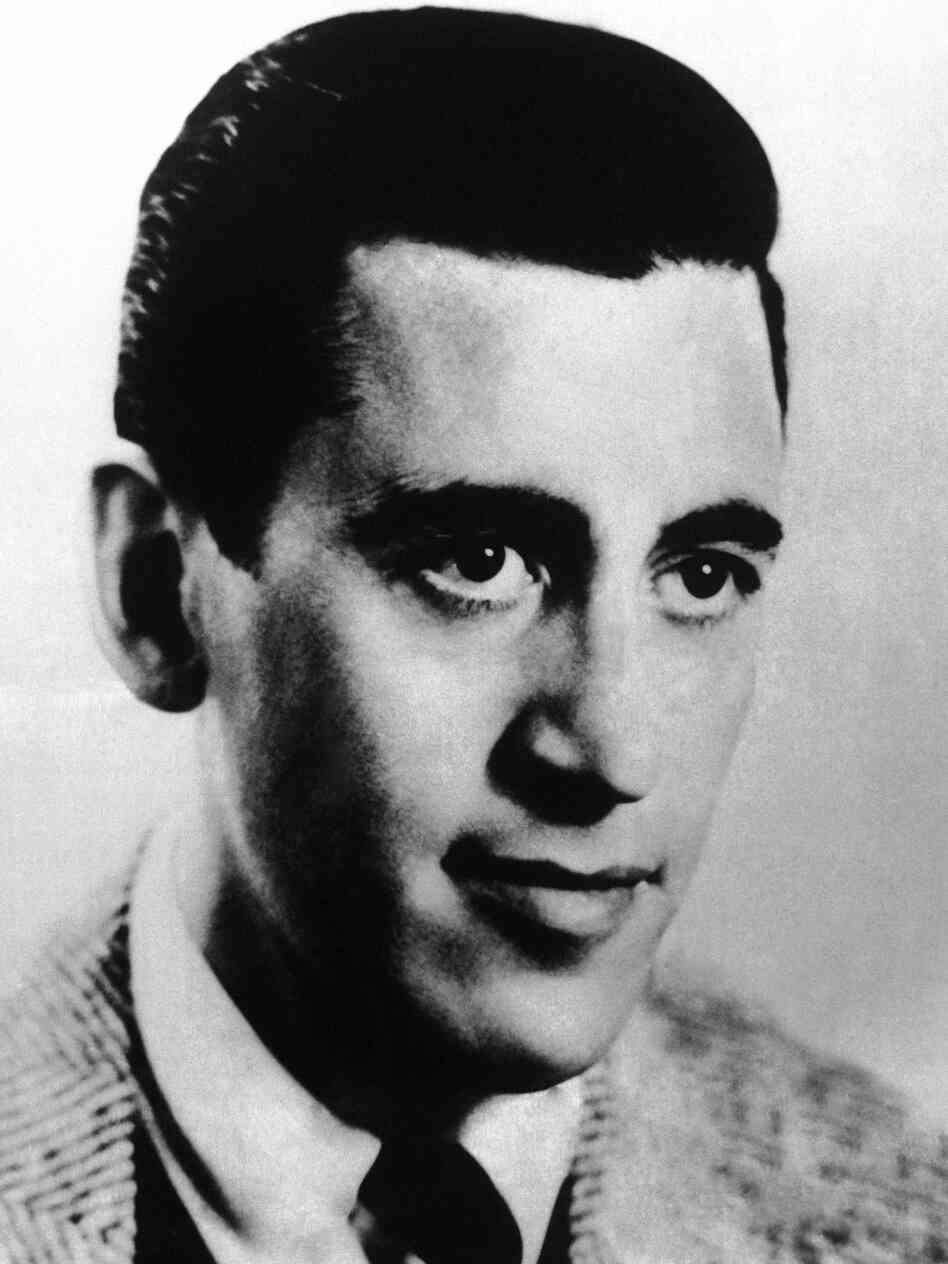
Sarah Sheard commented on Timothy Dugdale’s review of Salinger in the current issue of NC and brought to my attention this fascinating NPR story about a young writer and her correspondence with J. D. Salinger. The young writer in question was Marjorie Sheard, Sarah’s aunt. Wonderful to get this cross-reference, the little story, the moment. You can also read Tim’s review and view Sarah’s comments.

dg

Salinger’s first letter to Marjorie Sheard is dated Sept. 4, 1941.

“Dear Miss Sheard,” he writes. “Your warm, bright letter just reached me. Thanks very much. It’s unfair to authors that you write only to Aldous Huxley and me.”

Sheard had written to praise stories of Salinger’s that she’d seen in Esquire and Collier’s magazines. Like Salinger, she was in her early 20s and wanted to write fiction. He gives her advice: “Why don’t you try writing something for Mademoiselle or one of the other feminine magazines? Seems to me you have the instincts to avoid the usual Vassar-girl tripe those mags publish.”

He put his parents’ address (1133 Park Ave., on 91st Street in Manhattan) in the upper-right corner. He has typed the letter neatly — no cross-outs or erasures.

“He would have made a great secretary,” Kiely says.

Salinger, clearly thrilled to get a fan letter this early in his writing career, ends his note this way: “I hope you’ll always read my work with pleasure. So glad you liked the Esquire piece. I write for Marjorie Sheard and a few others. The fact that Esquire’s circulation is 600,000, and Collier’s is in millions is purely coincidental.”

Kiely thinks these letters reveal who Salinger was before Catcher in the Rye made him a literary star.

Read the rest at Pen Pal Of Young ‘Jerry’ Salinger May Have Been First To Meet Holden : NPR.

Nov 022013
 

Desktop28Salerno, Salinger & Shields

Salinger final cover.JPG

Fame is a mask that eats the face – John Updike

Salinger
by David Shields and Shane Salerno
Doubleday; 331 pp; $37.50.

I was on YouTube the other night and I happened upon an old video that reminded me of this book and its subject. The clip was from 1969. Hugh Hefner was hosting the British group, Deep Purple, at his mansion in Chicago. Hef had a TV show back then, late night, a very loose piece of broadcasting that nonetheless was suffice with all the vibrations that drew millions of gents to Playboy. It was just before Hefner decamped to LA. Once amongst the palms, Hef traded in his tux for silk pyjamas and withdrew from the public eye almost altogether. He holed up in a mansion that ran on werewolf’s clock and a sybriate’s appetites. Hef built his own space-time continium in that mansion, a swinger’s paradise that gave American what it wanted without the swinger having to give himself up to America.

Perhaps that is what Salinger was after when he retreated to a modest cottage in New Hampshire not long after the publication of Catcher in the Rye. In this massive oral history, cobbled together from an unbelievable variety of sources, Shields and Salerno give us a Salinger who lost himself in an imaginary family, the Glasses, even while his own young family looked on with dismay and bewilderment.

Jerome David Salinger began well in life. His people had money and he had the looks and smarts to make the most of that advantage. Two events, not unrelated, conspired to lay him low. First, he fell for Eugene O’Neill’s daughter, Oona. Salinger wanted her badly and hit her with his best shots, including what would become his preferred method of mashing – love letters. The radiant debuttante was unmoved, however, and cast her lot with Charlie Chaplin who married her a month after she turned eighteen. The thirty six year difference between them proved to be nothing; they had eight children and the marriage flourished for thirty four years until Chaplin departed the limelight for good. For Salinger, the rejection was particularly galling, as he was trapped in Europe fighting WWII when he learned of his defeat at the hands of the old musical hall rascal. Chaplin was everything Salinger would prove not to be – sociable, entertaining, comfortable in fame yet able to best its worst to the benefit of his privacy.

If O’Neill permanently marked Salinger with a lust for nubile flesh, WWII gutted his psyche. Salinger lived through the worst the war had to give a soldier. He survived a number of nasty combat episodes as the Allies moved to finish off the Nazis. Then he participated in the liberation of one of Hitler’s concentration camps.

The biographers state early and often that Salinger understandably cracked up. Jilted and spooked, Salinger came home to America unsuitable for American life. But his madness gave the literary world two bona fide treasures. In 1948, the New Yorker published A Perfect Day for Bananafish, a short story that blew the New York literary scene out of the water. Salinger was no Norman Mailer. He didn’t pride himself on coming out of WWII a hardened existential warrior. And he wasn’t Vonnegut who managed to take his own case of shellshock and transmute it into absurdist literature suffuse with playful, almost childish humanity. To the contrary, Bananafish is a communique from the front lines of untreated and untreatable PTSD. We learn that the first half of the story came in a crucial revision process demanded by The New Yorker editors. The comely young wife of Seymour Glass tries to convince her anxious mother that Seymour, tormented by his war experiences, is getting better. Then the reader joins Seymour on the beach where he is entertaining a little girl with stories about a make-believe fish. Glass returns to his Miami Beach hotel room, takes a look at his napping wife and blows his brains out with a service revolver. Salinger was rubbing something very nasty in the face of America, a war-weary country that didn’t want to think about its brave veterans eating a gun after they’ve covertly ogled little girls on the beach. America was on the make, with flag and Jesus and easy credit on hand to sanctify the ascent and quell the primal doubts of modern existence. Salinger wrote in an authentic voice, deeply troubled yet unyielding in its alienation from American life and fatal disappointment with the world at large.

Catcher in the Rye was Salinger’s moment of truth for that voice. His short stories had bought him enormous goodwill and standing in the publishing world. He had become a staple at The New Yorker. Now he could truly reveal himself, the arrested adolescent who went to war and came home with yet another set of mental handcuffs, a troubled kid who nonetheless found a way to bear witness to the prison life of his mind in edgy prose spiced with profanities. Holden Caulfield was raging against the hypocrisies of his time. And American youth were all ears. They were mad as hell and didn’t want to take it anymore. Fuck the squares and the Russians and the bomb and apple pie. Shields and Salerno do a lovely job of piecing together how the book barely managed to make it to the presses as publisher after publisher balked at Salinger’s aggrieved prep-school dropout. When Catcher came out, the response was sensational. In less than five years, the book was being banned by schools all over the country. What Salinger had started with Bananafish, he finished with Catcher.

And then Salinger escaped New York to Cornish, New Hampshire. Years passed, then decades. While Salinger tried to capture his beloved Glass family under glass, the world tried to capture the elusive Salinger. Where had he gone? Why? Hefner went away to live out the fantasy he sold on the newsstands. Salinger went away to escape the collective fantasy of the successful author, a fantasy that shadowed his writing and weighed heavily on his compromised mind. By removing himself, he hoped, the work was left to speak for him.

But is that really true? As the book moves into its final third, Shields and Salerno provide ample evidence that Salinger was a rabid protector not just of his privacy but also his mythos. Just as Hefner fights to keep his mid-century image frozen in the public mind, so did Salinger. Holden must not grow up. He must not be seen dealing with the awful drudgery of adulthood. He must not be an old man toiling on idiosyncratic oddities. Salinger duked it out with a would-be biographer all the way to Supreme Court and emerged victorious. He took on his own daughter who wanted to air the soiled family laundry. He played footsie with publishers, big and small. And he continued to cultivate young female pen pals.

Old hard-ons die hard. No biography of Salinger would be complete with an appearance by Joyce Maynard, the ambitious literary ingenue who moved in with JD as the Summer of Love was falling apart. Here Shields and Salerno allow Maynard to give a full account of her romance, if you can call it that, with Salinger. We might have heard it all before but never in such a rich context. Looking at pictures of teenage Joyce, you can just imagine what she did for Salinger, eternally on the make for a new and improved Oona. In Bananafish, Salinger shamelessly advertised his addiction to innocence, female innocence, the kind of innocence that didn’t wear a baby doll nightie or get pregnant. And ultimately that is what caused Salinger to send Maynard packing – the realization that her innocence was not only fleeting but in flight, it could cause him the grief of more fatherhood. She wasn’t a real person; she was a place to indulge his delusions. At least Hef invited his ladies into a heated jacuzzi to get the same kicks. The Maynard saga ends with the lamentable Joyce driving up to New Hampshire, looking for closure. By then she had been dining out on her liaison with Salinger for decades. She gets what she came for with a fuselade of expletives and a door slammed in her face.

This is not a standard celebrity biography written by some Fleet Street hack eager to bring his subject down a peg or two. Nor is it a hagiography looking to give us a buffed-up JD Salinger who heroically fought to keep his literary quest pure and unsullied by the machinations and madness of fame. It is a cunningly ramshackle collection of all the source material one expects from a biography lashed together in chronological order but with no singular authorial voice. The authors don’t serve you drinks in a boat; you’re swimming in their water but the current is copacetic. Shields is an old hand at this sort of thing. In works like Reality Manifesto, he outlined a galvanic form of creative non-fiction where the reader and the writer have to do real work on the page, the former providing the potential for a meaningful collage, the latter putting it together, just barely.

Why Salinger now? The authors intimate that posthumous goodies from the Salinger vault are about to be released. No doubt this will excite some in the literary community while others will yawn. Salinger, after all, never fulfilled his promise. To use a term that he liked to use on others, he didn’t really measure up. Neither committed to the Jewish heritage of his father or the Roman Catholic heritage of his mother, Salinger lacked a compelling bassline to his writing unlike Roth, Bellow or Hemingway who all played deep and aggressive notes of an actual ethnic or moral heritage. Perhaps that’s why Alexander Portnoy is far more compelling than Holden Caulfield. Portnoy doesn’t whine that he’s misunderstood; he jacks off on the subway to show he plays by his own rules.

That said, time has proven that Salinger was probably wise to disappear. Fame is a game that has become unbelievably coarse and cruel. If not fame, people will gladly settle for infamy. Just ask Mark David Chapman. Nobody escapes from it, old or young, talented or talentless, the once proud star or the forever pathetic nobody. TMZ has a seemingly bottomless pit of cretinous young paparazzi eager to earn their bones confronting celebrities with inane barbed questions mixed with ingratiating urban patter.

Salinger also is a reminder that at one time America was a society that read, that knew the names of authors and cared deeply about their work. Literary fame was the result of actual accomplishment. Today, middling authors lay their lives bare on social media platforms for fans, setting an ugly standard that better authors feel obligated to oblige. Aren’t the books enough? In the end, perhaps not even the books were enough for Salinger. But they kept him alive long after he pulled the trigger on Seymour Glass, the man he probably was.

—Timothy Dugdale

———————-

Timothy Dugdale is a professional copywriter and brand manager. He writes literary fiction and composes electronic music under the pseudonym Stirling Noh. Visit him at: http://noh.atomicquill.com

Nov 302011
 

.

The Answer I Found in a Fortune Cookie:

Toward a Digital Conception of Nonfiction

By John Proctor

.

I don’t know whether this is an ancient Chinese proverb or a mass-manufactured brainchild of an underpaid copywriter somewhere in Chicago. I do know that it was inside my fortune cookie after I had lunch at Hunan Delight about a year ago, and it changed the way I look at nonfiction. Perhaps I shouldn’t be so quick to gather meaning from mass-produced slips of paper, but isn’t that what books are made of? I come from a family of electricians and mechanics, and though I can barely keep the oil changed in my car and frequently need my wife’s help to operate my MacBook, I know this much: Digital circuits work in bits of information, each bit working into the systematic logic of the circuit. If any bit doesn’t logically fit, the circuit will malfunction. Each bit, though, works in a continuous  strand, but has its own infinitely variable sequential order. I teach a class on convergent media, and one of the things we talk about is how digital online media have changed the way we read, and think. One of the ways we talk about this is by making a distinction between “analog reading,” in which a person reads something from beginning to end without stopping, and “digital reading,” in which a reader stops to analyze a piece of writing into interlocked units.  The first reading of anything is usually mostly analog; subsequent readings, if they happen, are usually digital.

Two years ago, I started writing creative nonfiction in earnest. My first and most looming problem was that I didn’t really know what creative nonfiction was. I’d spent most of my life writing journals, poetry, criticism, fiction, and some freelance journalism, in that basic order. When I applied to MFA programs, most were in fiction. I’d seen the term “creative nonfiction” in passing, and had mostly thought it an unjust term – if it’s creative, can it be truly called nonfiction? And if it’s nonfiction, where’s the room for creativity on the writer’s part? Nonetheless, I was finding myself drawn more and more to nonfiction – about my own life, but also the world I saw around me. In the movie Sideways, a man tells the main character, a novel writer, “I like nonfiction. There is so much to know about this world. I think you read something somebody just invented, waste of time.” I found myself agreeing with the nonfiction reader. But I still felt a bit justified in distrusting a genre that is younger than I am – Lee Gutkind, the “Godfather of CNF,” says he’s been using the term “creative nonfiction” loosely since the 1970s, and the National Endowment for the Arts made the term official in 1983 in order to justify handing out fellowships for it.

That’s where the fortune cookie comes in. If the nonfiction writer’s subject is the world, and his or her place in it, the first responsibility of the writer is to reduce the world into workable units. Much like a reader must read something numerous times to piece out the analog parts and then find the digital circuit at work, the nonfiction writer must find the story-units in the world and then fit them into a working digital circuit of the writing.  In telling the myriad stories the world and the self contain, one of the writer’s first steps is shaping and condensing systematic and narrative units. For our purposes here I’ll coin the term “digital nonfiction” for this process – if an essay or a memoir or a news story (and, universally, the world) can be thought of as a digital circuit, and if all the millions and millions of stories are the analog parts, then the creativity of the nonfiction writer is primarily on how the writer sorts – or lists – those analog stories.

Continue reading »

Aug 242010
 

from Robert Collins, “The Novel: Rewound and Remixed,” The Sunday Times 4 July 2010

Less than a century ago, James Joyce and Virginia Woolf took the 19th-century realist novel and forged it into the blinding experimental thunderbolt of high modernism. Ninety years later, with more novels being published than ever, and most of them uniformly aiming for the same realist goal, it’s as if Ulysses, Finnegans Wake and Mrs Dalloway had never happened. Where did the zeal for unfettered innovation go? Even in the brilliantly able hands of David Mitchell, Zadie Smith or Ian McEwan, the novel has regressed almost completely to its realist origins. With commercial expectations in publishing more desperate and unforgiving than ever, the room for experimentation has shrunk to virtually nil.

A recent book, Reality Hunger, by the American author David Shields, has generated febrile literary chatter about the novel’s future. Shields argues that the form, tied to phoney invention and creaky artifice, is no longer a viable medium for the tastes of the hyperconnected age, with its urge towards hybridisation and cross-pollination. Nonfiction — memoir, the lyric essay, rap, all freed from fiction’s dusty strictures — is where it’s at.

Read the rest at Surplus Matter here.

dg